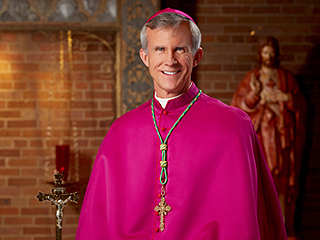
FATHER PHILLIPS TO SEEK JUSTICE EITHER THROUGH THE CHURCH’S CANONICAL SYSTEM OR THE STATE’S CIVIL SYSTEM

Featured Image
Lisa BourneLisa BourneFollow Lisa

NEWS

Falsely accused traditional priest ousted by Cdl. Cupich appeals to canon law

CHICAGO, Illinois, June 26, 2018 (LifeSiteNews) – The Chicago Catholic priest removed from ministry by Cardinal Blase Cupich in what some are calling a political move to suppress a traditional Catholic community has sought recourse against the cardinal’s act via Canon Law.

Cupich’s March removal of Father Frank Phillips, CR, as pastor of St. John Cantius Parish and Superior of a religious community housed at the parish were not only unfair and unjust, a letter from Phillips’ canon lawyer said, the act should be considered null and void under Canon Law. Father Phillips had been deemed guilty in advance, it said, punished and publicly defamed without due process or cause.

The April 29 letter from Phillips’ canon lawyer to Cupich was obtained, reported onand printed in full by Catholic blogger Oakes Spalding, who is also a St. John Cantius parishioner. The full text is included below.

“What is more, the verbiage of your decree and other public writings appear contradictory, and unfounded in canon law,” the letter to Cupich, Archbishop of Chicago, states. “Hence, this perceived lack of clarity and linearity – also in reference to the erroneous application of the dictates of the prescribed canon law process – gives way to, and even further provokes profound confusion amongst the faithful, causing unnecessary scandal and division.”

The letter demands that the Cardinal “restore” Phillips as pastor at  St. John Cantius.

“As a final resolution of the entire, baseless matter, this could prove persuasive to avoid litigation that potentially would involve the Archdiocese in the secular courts,” the letter states.

Spalding pointed out that Cupich acted before Phillips’ religious congregation commenced its formal investigation, and that because Phillips’ had already been deemed guilty, testimony by any of the priests and brothers of Phillips’ local religious community – many of whom would potentially be knowledgeable about the likelihood of any improper conduct on the priest’s part – was ruled out in the investigation into the misconduct allegations.

“Of course it sounds unjust,” he wrote. “It also frankly sounds bizarre.”

“If there had been an effort on the part of the Archdiocese to “get” Fr. Phillips,” Spalding said, “something that no one, arguably, has any certain or direct evidence for, one would imagine that the effort would have been more intelligently managed.”

Cupich removed Father Phillips as pastor of St. John Cantius in Chicago and Superior of the associated religious order, the Canons Regular of St. John Cantius, March 17, also pulling Phillips’ priestly faculties to perform public ministry.

Cupich’s stated reason for Phillips’ removal was “credible accusations of improper conduct involving adult males.” No further information on the allegations, accuser or accusers has been released.

Cupich assigned the investigation to the Congregation of the Resurrection (the Resurrectionists), of which Phillips is a member, though Cupich retains canonical authority as cardinal archbishop of the locale where Phillips serves.

The review board concluded May 26 that Phillips had “not violated any secular criminal, civil or canon law,” according to the independent non-profit group Protect Our Priests, formed to support Phillips in his defense.

“We now prayerfully await the response of His Eminence, Blase Cardinal Cupich, Archbishop of Chicago, for the return of our pastor,” the group said in its June 20 statement on the review board’s findings, which have not been released.

Despite the reported findings, the Archdiocese of Chicago declined to reinstate Fr. Phillips and confirmed that his faculties for ministry would remain withdrawn – the news was delivered via a letter in parish bulletins over the weekend from Father Gene Szarek, Provincial Superior of the Congregations of the Resurrection.

“We accept the Archdiocese’s decision that Father Phillips’ faculties for public ministry will remain withdrawn and that he will not return as pastor of St. John Cantius and as Superior of the Canons Regular of St. John Cantius,” his letter stated.

The archdiocese did not respond to LifeSiteNews’ inquiry into why Cardinal Cupich is keeping Phillips from public ministry.

The archdiocese did, however, communicate with the Chicago Tribune on the matter.

The Tribune reports that spokeswoman Paula Waters said although Phillips was not found to have violated any Church or secular law; there was other information that warranted his removal and a continued ban on his administering sacraments in public within the archdiocese. Waters declined to give specifics of the findings on Phillips, the report said.

“There are standards for behavior,” Waters had said.

She continued, saying the review board “did not recommend that he be returned as the pastor of St. John Cantius. And so, based on their recommendation that he not return and on other factors, the cardinal decided that his faculties to minister would remain withdrawn.”

Last Friday, Phillips’ attorney Stephen Komie told the newspaper Phillips had been “cleared 100 percent” by the review board, reiterating the investigation had found no violation of any civil, canon or criminal law on the part of Phillips.

There was “no justification” for the allegations, Komie said.

Komie further disputed the archdiocese’s claim that the review board recommended Phillips not be reinstated, saying, “They did not make any recommendations. They returned a straight report.”

Spalding remarked how the letter from Phillips’ canon lawyer to Cupich is dated six weeks after Cupich’s March removal of Phillips, and also pointing out the letter came six weeks before the archdiocese’s announcement that Phillips would remain withdrawn from public ministry.

The current status of the case is not known, he said, nor is it known whether Cupich has replied to the letter as it had asked, or if he did, what his reply may have contained, “But we do know that Cupich must have recently acted in spite of it.”

Cupich would have demonstrated “precipitous judgment,” the letter said; if he did as he was reported to have, and told Phillips’ religious community April 7 that the investigation of the diocese indicated that “Fr. Phillips is guilty.”

This statement by Cupich would have been made prior to the review of the allegations conducted by Phillips’ religious congregation at Cupich’s direction.

Further, the letter said, Cupich’s informing the media of his March decision to remove Phillips prior to the completion of any investigation, whether diocesan or by the religious order, “blatantly constitutes a violation of Fr. Phillips’ privacy and all rights relative to the preservation of his good name; a clear manifestation, in the minds of many Christifideles, of either an animus against Fr. Phillips, or a high level of suspicion and a low level of skepticism was present during the decision making phase, or, perhaps, a mixture of both …”

Phillips had asked in the letter for Cupich to reverse Phillips’ removal from ministry and reinstate him in his roles at St. Cantius, and advised that if Cupich did not restore him, further recourse would be pursued.

Phillips also suggested a public statement from the archdiocese communicating a positive end to the matter once it had concluded and confirming restoration of his status. Aside from pursuing a Canon Law case, if Cupich refused to reverse his decision, the letter indicated that litigating in the secular courts was not out of the realm of possibility.

It can be assumed that Phillips is in the process of pursuing a canon law case, Spalding said, regardless of Cupich’s recent decision to permanently pull Phillips’ faculties.

“But given that the recent decision by Cupich itself appears manifestly suspect, in view of the actual results of the investigation by the Resurrectionists, one also imagines that it cannot but help Fr. Phillips in this separate case,” he said. “That Cupich exhibited “precipitous judgment” and perhaps even an “animus” against Fr. Phillips three months ago can only acquire additional plausibility against this new background.”

The Protect our Priests group is collecting funds for Father Phillips’ legal defense, and separate GoFundMe page has been established as well for Phillips’ legal defense.

***

LAW OFFICES

Alan R. Kershaw, Ph.B., J.U.D., J.D.

Advocate of the Apostolic Tribunal of the Roman Rota Practicing in the Supreme Court of Cassation

Rome, 29th April 2018

H.E . Blase J. Card. Cupich Archbishop of Chicago 835 North Rush Street Chicago, IL 60611-2030 U.S.A.

Re: Rev. C. Frank Phillips, C.R.

Your Eminence,

Greetings in the Risen Christ!

I have been retained by Fr. C. Frank Phillips, C.R., to defend him in the canonical forum. Attached herewith is a copy of the mandate of appointment. Should you require an original of the mandate, kindly let me know and I will have one delivered to your offices.

Fr. Phillips has instructed me to contact you with regard to his current status in the Archdiocese of Chicago, and as the Founder of the Canons Regular of St. John Cantius.

Before proceeding, indubitably it is salutary to recall certain recent, salient, and undisputable events.

  • February 26, 2018 Fr. C. Frank Phillips was called by Fr. Dennis Lyle and Fr. Jeremy Thomas of the Priest Vicar Board, informing him that accusations of improper conduct had been made against him.
  • The afternoon of March 2nd Fr. Phillips, accompanied by his civil lawyer, met at the Chancery with Fr. Dennis Lyle, Fr. Jeremy Thomas, and Sr. Joan McGlinchey. Also present was Fr. Gene Szarek, C.R., in his capacity as Provincial General of the Congregation of the Resurrection. Fr. Phillips did not respond to the allegations, nor, as you know, was he legally obliged to.
  • Ten days later, on March 12th You announced your decision “to remove the faculties of Reverend C. Frank Phillips, C.R., which means he can no longer remain as the pastor of St. John Cantius and the superior of the Canons Regular”.
  • On March 16th you wrote to the “Parishioners, Staff and Friends of Saint John Cantius Parish”, informing them: “that I have had to withdraw Reverend C. Frank Phillips’ faculties to minister in the Archdiocese of Chicago”, and that you “took this step after learning of credible allegations of improper conduct involving adult men”.
  • The news of Fr. Phillips’ removal was soon in the local, State, national and international media: “In a statement to parishioners, Cardinal Blase Cupich explained that he had made the decision to « withdraw » Phillips after learning « of credible allegations of improper conduct involving adult men ». Anne Maselli, a spokeswoman for the archdiocese, said in an email that the allegations do not involve minors.” (Chicago Tribune, March 19, 2018; amongst others see also: Newsweek, March 19, 2018; Crux, March 20, 2018).
  • Within the time limits foreseen by canon law, on March 26th Fr. Phillips formally petitioned you to “either revoke or emend your decree” (can. 1734), and to “engage in a process of mediation which can resolve this issue without further canonical action” (can. 1733, §1).
  • The Saturday following Easter you met with the members of the Canons Regular, and during the course of the meeting, with reference to Fr. Phillips, you reportedly expressed to those present that the investigation of the diocese indicates that he is guilty. It is also my understanding, that you strongly recommended to the members of the Canons Regular to not give witness testimony before the Review Board.
  • On the 10th and 12th days of April the “Review Board”, or investigative panel constituted by the Superior of the Congregation of the Resurrection, Rev. Fr. Gene Szarek, interviewed Fr. Phillips’ detractors, and other persons, including Fr. Phillips, who was accompanied by his civil lawyer. Not surprisingly, Fr. Phillips denied the allegations, just as all innocent people refuse to confess to illicit actions they did not commit. To date, the Panel’s final report has not been presented, but it is forthcoming.

* * * * *

As Your Eminence knows, canon 1717 CJC recites: “§1. Whenever an ordinary has knowledge, which at least seems true, of a delict, he is carefully to inquire personally or through another suitable person about the facts, circumstances, and imputability, unless such an inquiry seems entirely superfluous. §2. Care must be taken so that the good name of anyone is not endangered from this investigation.”

In your letter/decree of March 12, 2018 to Fr. Gene Szarek, C.R., you generically signify: “Considering the complaints of inappropriate conduct recently brought against the Reverend C. Frank Phillips, CR […] I hereby withdraw all of his faculties to engage in any ecclesiastical ministry in the Archdiocese of Chicago, and remove him of pastor of St. John Cantius Church”; therefore: “I will appoint a parish administrator until the matter currently under investigation is resolved”, and, “I will appoint someone to serve as superior of the Canons Regular on an interim basis”.

Furthermore, you express the presumption “that an investigation will be undertaken by your office into the allegations made against Fr. Phillips and the exact nature of his conduct. I ask that you keep me apprised of your progress and the ultimate outcome of your inquiries”, and close with your “prayer for a swift resolution to this matter”.

Also worthy of note is your appointment of Reverend Scott Thelander, SJC, also done on March 12th, “as administrator of St. John Cantius Parish and Superior ad interim”, and you convey your assurances “to visit with the Canons Regular as soon as I can to ask your suggestions and recommendations for moving forward with a permanent arrangement for the position of Superior”.

* * * * *

Primo ictu oculi your decree, the singular administrative act dated March 12, 2018, is ipso jure null and void under canon law. Attentive study of the facts and related documents further confirms this conclusion.

Canon 1717 explicitly mandates: « §1. Quoties Ordinarius notitiam, saltem veri similem, habet de delicto, caute inquirat ».

Præprimis, in Fr. Phillips’ case there does not appear to be any canonical “delict” to speak of.

Second, although there was no apparent or discernable « notitia delicti » you reportedly asserted to the members of the Canons Regular on Saturday, April 7th that the investigation of the diocese indicates that “Fr. Phillips is guilty”. If this corresponds to the truth, then a precipitous judgment was expressed, or better reiterated by your good self, albeit in absence of a delict and without a preventive « inquisitio circa facta et circumstantia et circa imputabilitatem».

Canon 1717 also explicitly mandates: « §2. Cavendum est ne ex hac investigatione bonum cuiusquam nomen in discrimen vocetur ».

Prescinding momentarily from whether you ordered an « investigatio prævia» into the allegations of non-existent « delicta », on March 12th you asked Fr. Gene Szarek, C.R., to “keep me apprised of your progress and the ultimate outcome of your inquiries”, on the presumption “that an investigation will be undertaken by your office into the allegations made against Fr. Phillips and the exact nature of his conduct”. Therefore, prior to the completion of any investigation, whether diocesan or by the religious order, you proceeded to inform the media of your decisions as set forth in your March 12th decree. This, Your Eminence, blatantly constitutes a violation of Fr. Phillips’ privacy and all rights relative to the preservation of his good name; a clear manifestation, in the minds of many Christifideles, of either an animus against Fr. Phillips, or a high level of suspicion and a low level of skepticism was present during the decision making phase, or, perhaps, a mixture of both; which reprovingly gives way to a reversed burden of proof, i.e. Fr. Phillips must prove his innocence rather than the reprobate accusers having to prove his culpability. To be clear, this is not simply an opinion, or a defense tactic of the undersigned patrocinium, but rather an easily verifiable current of valuation widely shared amongst the faithful, in particular by those who personally know Fr. Phillips, together with all those who are familiar with and participate in the good works of the Canons Regular SJC in Chicago, and elsewhere.

Canon 193, §1, CJC clearly establishes: “A person cannot be removed from an office conferred for an indefinite period of time except for grave causes and according to the manner of proceeding defined by law”.

Thereby, with regard to Fr. Phillips’ case, one legitimately queries: Where is the “grave cause”? And, why was the requisite “manner of proceeding defined by law” set aside, and not followed as prescribed by the Codex?

Ad rem, given the facts outlined herein it is indubitable that your March 12th decree is irreparably vitiated sive in procedendo sive in decernendo.

Ultimately, in the exercise of his priestly ministry Fr. Phillips has acted in accordance with canon 529, §§ 1-2, CJC, and has conducted himself in an exemplary fashion, reflecting the Magisterium and exhortations of Pope Francis; that is to be selfless and reach out to help others, regardless of their status, to be compassionate and always act with brotherly love especially towards those who find themselves in difficulty on the path of life.

If Your Eminence, as Ordinary of the Archdiocese of Chicago, prior to giving the March 12th decree had conducted a preliminary investigation, prompting the restrictions, scilicet the canonical sanctions, imposed on Fr. Phillips, then it can only be valuated as superficial and incomplete. Hence, your decree is lacking factual foundation (Cfr. canons 48-51 CJC).

What is more, the verbiage of your decree and other public writings appear contradictory, and unfounded in canon law. Hence, this perceived lack of clarity and linearity – also in reference to the erroneous application of the dictates of the prescribed canon law process – gives way to, and even further provokes profound confusion amongst the faithful, causing unnecessary scandal and division.

* * * * *

In light of the arguments heretofore articulated sive in jure sive in facto, on behalf of Fr. Phillips and in defense of his person and interests, You are hereby respectfully petitioned to revoke your March 12th decree in its entirety and, to said effect, restore Fr. Phillips’ status quo ante as Pastor of St. John Cantius and Superior of the Canons Regular SJC.

As a final resolution of the entire, baseless matter, this could prove persuasive to avoid litigation that potentially would involve the Archdiocese in the secular courts.

Indubitably, Fr. Phillips has been egregiously defamed by his reprobate detractors, including those who have “jumped on the band wagon” ostensibly hoping to have found an opportunity for fraudulent monetary gain.

The damage to Fr. Phillips’ reputation has indeed been compounded by those same wide reaching media reports which have caused and continue to consternation and astonishment amongst the Christifideles. Hence, it is left to Rev. Fr. Phillips to discern if and what further action should be taken to restore his good name.

On this point, Fr. Phillips suggests and would appreciate drafting any eventual joint communication to the faithful in the Archdiocese, regarding the positive resolution of all contrasts and his status.

However, should Your Eminence not deem the above arguments to carry sufficient weight for the reasonable and justifiable revocation of your March 12th decree, then by these presents Fr. Phillips makes formal hierarchical administrative recourse against your decree of March 12, 2018.

In closing, I take the opportunity to quote the words of His Holiness, Pope Francis, expressed in his recent letter to the Chilean bishops, wherein he asked forgiveness, acknowledging “that I have made serious mistakes in the assessment and perception of the situation, especially because of the lack of truthful and balanced information”.

From a professional perspective, and with legitima suspicione, I ask myself whether Your Eminence too has been misled by a deplorable “lack of truthful and balanced information”. Should this prove to be the case, then to the mind of Fr. Phillips’ supporters the moment to rectify matters must be seized immediately to underscore the fact that “zero tolerance” is not merely a one-way policy.

With a prayer for a positive resolution of all issues, I look forward to your

reply.

In Domino addictissimus,

Alan R. Kershaw, R.R.Adv.

Posted in Uncategorized | 2 Comments

MEET AMERICA’S FASCISTS, YOU ALMOST CERTAINLY WILL, IT IS ONLY A QUESTION OF TIME

June 26, 2018, 12:05 am

Posted in Uncategorized | 1 Comment

BRAVO BISHOP JOSEPH E. STRICKLAND, MAY YOUR TRIBE INCREASE !!!

Bishop_Joseph_E_Strickland_EWTN_US_Catholic_News_11_29_12

Here is an excellent homily preached by Bishop Joseph E. Strickland, Bishop of the Diocese of Tyler in Texas on the Solemnity of the Birth of Saint John the Baptist.  Bishop Strickland not only preached the homily himself in the Cathedral of the Diocese, he sent a copy of his homily to every priest and deacon in the Diocese AND DIRECTED that they preach his homily instead of one of their own at every Mass on that Solemnity.

I doubt that such a wonderful homily on the subject of the marital act between husband and wife has ever been preached by any bishop (archbishop or cardinal) in any cathedral in any diocese of the United States before.

Bishop Strickland is truly a good bishop.  His homily is just another example of how he teaches his people and governs his Diocese.  I hope that he remains Bishop of Tyler until he retires because his people would be devastated if he were to be transferred and promoted to a bigger archdiocese, but the good of the Church Universal would benefit from such a transfer.

I encourage you to watch this Vimeo, you may never have the opportunity to hear one like it in a church.

https://vimeo.com/stphilipinstitute/review/277109172/66bac52fb7

Posted in Uncategorized | 2 Comments

HAVING BEEN FORTIFIED SPIRITUALLY FOR YEARS BY ROLLING ROCK BEER (THE SUCCESSOR TO ST. VINCENT BEER) IN MY MONASTERY AT LATROBE I AM 100% IN SYMPATHY WITH FATHER ANDREW BUSHELL AND APPALLED BY THE ACTIONS OF THE MENTALLY RETARDED BUREAUCRATS OF THE MASSACHUSETTS DEVELOPEMENT FINANCE AGENCY

Jeff Jacoby

Pundicity

The businessman in the cassock

by Jeff Jacoby
The Boston Globe
June 24, 2018


http://www.jeffjacoby.com/21318/the-businessman-in-the-cassock

IF YOU WERE looking for someone to successfully manage a promising company, it would be hard to find a candidate with a better array of credentials and know-how than Andrew Bushell.

Father Andrew Bushell, the founder of Marblehead Salt Co. and Marblehead Brewing Co., and his dog Theo.

He’s a natural-born entrepreneur, with wide and varied experience both in and out of the business world. He founded and successfully managed a $2.5 billion investment firm. He worked as a management consultant for McKinsey & Co. After 9/11, he took a hiatus from the high-pressure world of finance and venture capital, immersing himself instead in the high-pressure world of war-zone journalism to cover Afghanistan and Pakistan for The Economist. And when, after years abroad, he returned to his New England hometown, he came up with an idea for a unique local business: making and selling gourmet salt from Atlantic seawater. Like Bushell’s other endeavors, the Marblehead Salt Company flourished, with annual sales growing at a 25 percent clip and the salt winning raves from foodies.

So when Bushell approached the Massachusetts Development Finance Agency last year with an application for loans to grow yet another Marblehead business venture — a craft brewery and taproom — officials might have been expected to welcome him with open arms. According to MassDevelopment’s website, after all, the agency was created to “help foster real estate and business projects that generate economic benefits for local communities and the state.” Given Bushell’s stellar track record, financing for Marblehead Brewing Co. should have been a no-brainer.

It wasn’t.

The brewery applied for two loans. It intended to use the funds from one to improve its property in downtown Marblehead, and the other to purchase additional brewing equipment, in order to increase production from 700 barrels of beer in 2018 to 2,500 barrels by 2023. MassDevelopment said no. It demanded that the brewery enlist private backers who would personally guarantee the repayment of any loans. Bushell and Marblehead Brewing did so, providing the state with guarantees equal to three times the value of the loans applied for. The state demanded that the company’s brewing equipment, worth $1.6 million, be put up as collateral. Bushell agreed to that too.

And still the agency says no.

Why? Because Bushell — more accurately, Father Andrew Bushell — is an Orthodox Christian monk. And the Commonwealth of Massachusetts is flummoxed by a loan applicant whose business chops are everything a state development agency dreams of, but whose mission and appearance are not at all what it’s used to.

Marblehead Brewing is a for-profit corporation. Like any other commercial brewery, it pays taxes and must keep its federal, state, and municipal licenses current. It won’t survive if it can’t turn a profit. But turning a profit isn’t its highest purpose. Supporting the work of the church is.

Bushell is the 192nd chairman of the St. Paul’s Foundation, a monastic Christian charity more than 1,000 years old. Under Bushell, it has focused in recent years on easing the misery of Syrian refugees, providing food for 2 million displaced people, and supplying hundreds of thousands of tents and blankets for the homeless. The foundation also supports the Guitars Project, a charitable endeavor that provides guitars and musical instruction to hundreds of mostly Muslim children in the Middle East who have been displaced by violence. (Profits from Marblehead Salt have been donated to local causes as well, including the Marblehead Festival of the Arts and the anti-addiction work of the Marblehead Health Department.)

Marblehead Brewing is located at the Shrine of St. Nicholas, the first Orthodox Christian church in Marblehead. The church and the brewpub share the same building — the drinking establishment with its tables and tap is in the front room; the church, complete with altar and icon, is in a more private interior space — but they are separate entities, with different tax ID numbers, bank accounts, and legal profiles. The brewery is a secular, for-profit business. The church and the foundation are nonprofit religious entities that are among Marblehead Brewing’s shareholders. In launching a commercial brewery to sustain the work of his church, Bushell is following the classic example of Trappist and Benedictine monks who for centuries have supported themselves through brewing and winemaking.

MassDevelopment has no problem with beer companies. It has provided financing for quite a few of them, including Notch Brewing in Salem, Tree House Brewing in Charlton, and Night Shift Brewing in Everett. But a brewing company run by an Orthodox monk who wears a black cassock, lives under a vow of poverty, and has devoted his life — and exceptional business talents — to God appears to give state officials the heebie-jeebies. According to Bushell, agency officials have told him his loan will not be approved “because you’re a church” and the state doesn’t want to be in the position of suing a church if a loan weren’t repaid. Through a spokeswoman, MassDevelopment declined to comment for this column.

Rejecting Bushell’s application because of his religious vocation may well be illegal under the First Amendment. It is unquestionably short-sighted.

“Entrepreneurs come in many shapes and sizes, and not all fit the typical business model,” says Glenn Hutchins, a tech investment superstar who is a director of the New York Fed and sits on the executive committee of the Boston Celtics. In a phone conversation the other day, Hutchins sang the praises of Bushell’s beer, Marblehead Ale No. 2. He was even more enthusiastic about the monk’s ability to “take a blank sheet and turn it into something impressive.”

To a talented financier like Hutchins, hardheaded business acumen isn’t to be discounted because it serves a larger, spiritual devotion. He knows better than to judge an entrepreneur by his cassock. If only Massachusetts bureaucrats were as clear-sighted.

(Jeff Jacoby is a columnist for The Boston Globe).

Posted in Uncategorized | Comments Off on HAVING BEEN FORTIFIED SPIRITUALLY FOR YEARS BY ROLLING ROCK BEER (THE SUCCESSOR TO ST. VINCENT BEER) IN MY MONASTERY AT LATROBE I AM 100% IN SYMPATHY WITH FATHER ANDREW BUSHELL AND APPALLED BY THE ACTIONS OF THE MENTALLY RETARDED BUREAUCRATS OF THE MASSACHUSETTS DEVELOPEMENT FINANCE AGENCY

WHEN THE WOLF SAUNTERED INTO THE HOME OF THE LITTLE RED HEN THE HEN ATTACKED AND GOT EATEN FOR HER STUPIDITY

DNQH4ABX0AAbqm1

What happened at the Red Hen was nothing like the Christian baker case

Mike Huckabee June 25, 2018 Share: Email Tweet Facebook

I wish I didn’t have to comment on the inexcusably rude treatment of a Virginia restaurant owner in asking my daughter Sarah and her family to leave, simply because she disagrees with their politics.  But it became a major news story and seems to be part of a growing trend on the left, as these increasingly desperate losers ramp up the hysterical attacks (“Everyone who does anything I don’t like is worse than Hitler!!”) to cover for the fact that the policies they espouse in all areas are being exposed as hopeless failures, and more and more people are catching on that they’ve been conned. Their fury over their ever-declining influence has reduced them to the level of angry adolescents, screaming, “It’s not fair!!” and lashing out with temper tantrums.

If they can’t even behave like civilized adults, then I can’t imagine voters will entrust them with the vast powers of the federal government (aside from Maxine Waters’ constituents.)  Seriously, does this woman not even remember that one of her own colleagues, Rep. Steve Scalise, missed quite a bit of work after being shot by an unstable Bernie Bro, hopped up on anti-Republican propaganda until he attempted to pull a massacre at a charity baseball practice?  But I digress…

http://www.foxnews.com/politics/2018/06/24/maxine-waters-pushes-supporters-to-fight-trump-wh-says-people-will-absolutely-harass-trump-staffers.html

I’m not going to mention the name of this restaurant because they don’t deserve any more free publicity.  But I do want to share a few reactions:


First, I am immensely proud of Sarah and her family for the graceful and dignified way in which she responded to this unconscionable (and possibly illegal) discrimination.  Note that she didn’t throw a fit, pull rank, threaten anyone or file a lawsuit.  She simply left quietly and ate elsewhere, I’m sure at a place where both the hospitality and the food were far superior.

I’d also like to implore her supporters not to lower themselves to the opposition’s level by making threats or vandalizing the restaurant’s website or Yelp page.  The owner wanted publicity.  Don’t give it to her.  Instead, simply grant her wish of never having to serve anyone whose politics she disagrees with.

I’m also relieved this was a quiet, non-violent incident.  There have been other shocking incidents of violent mobs harassing and threatening members of the Administration, forcing them to flee restaurants.  Those people need to be arrested and prosecuted.  As for those trying to gin up more ideologically-based violence (looking at you again, Rep. Waters), they are a perfect illustration of the Supreme Court’s exemption to the First Amendment, that inciting a riot (i.e., yelling “Fire” in a crowded theater) is not protected free speech.  It’s also not something that any decent human being with a maturity level above age five does.  Even the reliably liberal Washington Post recognized the dangers of such incendiary rhetoric and condemned it in an op-ed.  And no, whining, “Trump started it!” doesn’t make you sound more like an adult.


Finally, I want to respond to the idiotic claims by the left that conservatives “have it coming” because this is just like that Christian baker who declined to make a same-sex wedding cake.  No, it’s nothing like that.  I know that people who use the word “nuanced” a lot don’t seem to understand what it means, so I’ll attempt to explain the nuances of the two cases clearly and in words short enough that even a liberal intellectual can understand:

The baker in question never ejected anyone from his store for being gay.  He made it clear that everyone was welcome to the part of the store that serves the public, and he would happily sell them anything in the store.  What he declined was a separate contract job custom-designing a cake that he felt violated his religious beliefs, for the same reason he refuses to use what he considers his God-given talent to design Halloween cakes or cakes that personally attack people.  His objection to being forced to accept the custom contract job was based on his First Amendment right to be free from the government forcing him to violate his religious beliefs, not on some nonexistent right to ban gay people from the public area of his shop because he doesn’t like them personally.

I wonder if leftists who are cheering the restaurant owner for ejecting my daughter’s family from a public accommodation just because she didn’t agree with their politics even realize that they are making a very different argument that goes far beyond the defense of the Christian baker.  In fact, they are making the same argument one would use in defending Southern lunch counter owners of the 1950s who refused service to black customers.

Although, come to think of it, those Southern lunch counter owners and the officials who defended them were Democrats, too.  I guess some things never change.

https://www.westernjournal.com/sarah-sanders-calls-out-restaurant-owner-after-being-denied-service/

Another irrelevant opinion that inexplicably made news over the weekend came when former Obama ethics watchdog…(sorry, I had to quit typing for a minute until I could stop laughing) Walter Shaub tweeted that my daughter Sarah violated five federal laws by using her official Twitter account to tweet what had happened to her and her family at that Virginia restaurant.  Shaub seems to be laboring under the delusions that Sarah both threatened and endorsed the restaurant (a neat trick, but she did neither) and that she was the first to identify the restaurant, in an attempt to spur mindless rightwing mobs to attack it.  If true, that would be the height of irony, since she was just one of a rising number of Republicans being attacked by mindless leftwing mobs.  But it’s not true at all.


In fact, the restaurant identified itself first, with a staffer tweeting the story to the world.  It was only after it made news that Sarah was inundated with requests for comment or confirmation by the media.  Since responding to media inquiries IS her official capacity, she did so, in a completely dispassionate way (she did not call for any retribution against the restaurant owner.  That sort of reprehensible and illegal incitement to violence is the province of leftists such as Maxine Waters.)

I’m really not surprised that partisan attacks are more in Mr. Shaub’s wheelhouse than researching facts, after reading his history and scrolling through his Twitter feed.  He left his position after clashing with Trump and amid accusations of covering up for Hillary Clinton.  When not attacking my daughter with bogus accusations of violating federal laws, he’s tweeting his adventures in Texas as part of a big protest of the enforcement of immigration laws.  The slogan of the organization he’s backing, which is prominent in his posts, is “We Demand Families are Reunited and Free!”  Notice this doesn’t stop at merely calling for reuniting families, but for setting them free, even though they violated federal immigration law.

So to recap:  the “former director of the Office of Government Ethics” under Obama (pause for laughter) thinks that for a Republican to write a tweet in full compliance with the demands of her job is a quintuple federal offense, but entering the US illegally is not only fine but should be rewarded.

Now I finally understand why Obama seriously believed that he had a “scandal-free administration.”

Posted in Uncategorized | Comments Off on WHEN THE WOLF SAUNTERED INTO THE HOME OF THE LITTLE RED HEN THE HEN ATTACKED AND GOT EATEN FOR HER STUPIDITY

IMHO I BELIEVE THAT ROBERT GEORGE WAS HONESTLY TRYING TO BE CHRIST-LIKE IN PROFESSING HIS LOVE FOR FATHER MARTIN WHILE HATING FATHER MARTIN’S SIN, BUT SINCE ROBERT GEORGE IS NOT CHRIST HE ALLOWED HIMSELF TO BE USED BADLY, INNOCENTLY HELPING THOSE WHO WILL RADICALIZE THE COMING OCTOBER YOUTH SYNOD TO PROMOTE THE LGBT CORRUPTION OF THE WORLDS YOUTH

DOUG MAINWARING

Featured Image
BLOGS,

Is Robert George wrong to vouch for pro-LGBT priest James Martin?

June 25, 2018 (LifeSiteNews) – When a respected conservative Catholic academic appeared to vouch for a pro-LGBT priest, confusion and controversy erupted in some Catholic circles.

A chummy tweeted photo of Princeton’s Prof. Robert P. George with Fr. James Martin, SJ triggered a discussion among those who are far more accustomed to agreement than disagreement with each other.

While the whole affair is likely uncomfortable for everybody involved, it raises some important points for reflection.

1]  Prof. George’s credentials, orthodoxy and motives are above reproach.

It would be hard to name anyone alive today who has fought harder for Catholic orthodoxy, marriage, and religious and academic freedom in this country than the man who occupies the McCormick Chair in Jurisprudence at Princeton University.  Prof. George is also the founding director of the James Madison Program in American Ideals and Institutions, and recently served as chairman of the United States Commission on International Religious Freedom (USCIRF).

Prof. George is a big deal, so many Catholics pay close attention to what he says and does.

2]  Were the terms established by Prof. George that resulted in him supporting Fr. Martin framed incorrectly from the start? 

Fr. Martin has devoted his life to preaching gay liberation theology in the Catholic Church.  Those who have paid attention to the ministry he has carved out for himself have watched him promote ideas that reject church teaching and best pastoral practices.

So last October Prof. George publicly challenged him.

In retrospect, the questions put to Fr. Martin by Prof. George in a Public Discourse article to test the Jesuit’s faithfulness to church teaching may have been framed incorrectly, allowing too much wriggle room.

Months later, Fr. Martin responded in America Magazine with an article that sounded as if it had been cut and pasted from the Catholic Catechism.  It seemed at first as if he had had a change of heart.  He easily passed Prof. George’s test with flying colors, and so now Prof. George dutifully, respectfully attests to his Catholic orthodoxy.

But Fr. Martin watchers see no resulting change in his words or actions.  He continues to promote pro-LGBT ideology at odds with Church teaching.

Just last week Martin made two public statements which call into question his orthodoxy:

First, he sent out a Tweet praising his own parish for producing a booklet where people assert they are born gay, where men call each other “husband,” and a man who is HIV positive thinks church teaching is wrong when it asks for homosexuals to be chaste.

Second, when the Vatican incorporated the term ‘LGBT’ into its Youth Synod document––the first time in the history of the Catholic Church––Martin observedthat for orthodox Catholics “It will be harder to object now,” to the infiltration of gay ideology.

Either of these statements on their own are cause for grave concern.

It’s easy to see why judgments about Fr. Martin remain all over the map.

3]  Did orthodox Prof. George prematurely give his seal of approval to a heterodox priest? 

In itself, the photo which triggered all this is not intrinsically problematic––just two handsome smiling guys.  But unstated messages were read into the photo due to the simmering controversy which preceded it.

Austin Ruse, President of C-Fam, penned a reaction for Crisis Magazine critical of Prof. George’s Tweet:

It was a shocking photo. There was Jesuit James Martin with his arm around Professor Robert George of Princeton, both of them grinning ear to ear.

Professor George published the photo on his Twitter feed and it appeared this beacon of orthodoxy had given his imprimatur to the heterodoxy of James Martin, who has quite famously opposed Church teaching on homosexuality.

Janet Smith, renowned defender of Humanae Vitae, agreed with Ruse, saying on Facebook, “Robert P. George is wrong on this one.”

Others, including some of Prof. George’s Twitter and Facebook followers, expressed varying degrees of dismay, but most agreed on one thing:  Prof. George just gave undue credibility to Fr. Martin’s promotion of gay liberation theology.

One of George’s Twitter followers responded:  “Your outreach and bridge building is commendable, but I can’t shake the feeling that working with Martin does nothing but allow him to leech credibility from you.”

Another said, “I respect you greatly. But the flaws in Fr. Martin’s philosophy and theology are not just little things that can be tweaked.”

Clearly, the photo and subsequent online discussions pulled the scab off a festering disagreement among orthodox Catholics.

In this equation of Prof. George + Fr. Martin, it appears that Fr. Martin has derived all the benefit––having perhaps been given a desperately needed leg up from a prominent conservative Catholic in order to gain broader acceptance of his message––while Prof. George derived little, leaving some wondering if his good will was taken advantage of.

4]  Some chaste same-sex attracted Catholics feel the sting of friendly fire.

Austin Ruse continued:

Professor George ought to know the bruising he has caused among those who believe James Martin brings confusion and even scandal to the question of homosexuality. Those of us fighting to keep Martin out of our parishes now have to contend with George’s imprimatur. And I have heard from several ex-gays who are crushed and even angry with Professor George and who believe he has cut their legs out from under them.

Full disclosure:  I am one of them.

I do not think Prof. George intended to do this, but he has demoralized the folks who do a herculean job––and who personally put the most on the line––by standing up against the lies and empty promises of the gay liberation theology championed by Fr. Martin.  These are the chaste same-sex attracted men and women who daily, diligently identify and uncover and interpret the untruths and odd silences of Jesuit Fr. Martin and his ilk.

These would include the men and women of Courage, the Church’s Apostolate to the same-sex attracted, and others such as the courageous Joseph Sciambra, a valiant warrior bringing the bright light of Gospel truth to the dense dark LGBT world of San Francisco.

I don’t think Fr. Martin has ever said one kind word about the mission of the Courage Apostolate or has even acknowledged its existence.

Ruse went on:

Joseph Sciambra attends gay pride parades wearing a “God Loves Gay Men” t-shirt and handing out rosaries. He loves these men so much that he exposes himself to abuse. He told me, “I am done with Martin and all those who collaborate with him. It is very clear what Martin is up to.” He says it was priests just like Martin who confirmed his homosexuality that led to Sciambra’s lost decade in the bowels of the sex-drenched gay world. He says the opinions of Catholic elites—priests, prelates, and lay academics—are “utterly devoid of any knowledge about the actual reality of the gay experience.”

“Many will be led astray by this increasing influence which puts the ‘New Ways Ministry’ model of LGBT acceptance to the fore,” noted Catholic author Leila Marie Lawler on Facebook, “and the ‘Courage’ model of healing wounds in the dustheap.”

5]  Prof. George has adamantly defended his stance, but has not successfully settled the controversy    

Prof. George responded to Austin Ruse and others by writing a lengthy article for Public Discourse in which he explained his reasoning, but failed to put the issue to bed.  In fact, it reignited discussion.

Whatever ambiguity or perhaps error there may have been before his recent piece in America, Fr. Martin has left no room for detractors (or, for that matter, supporters) to suppose that he believes marriage can be between persons of the same sex or that homosexual conduct can be morally good—propositions that are clearly in defiance of Catholic teaching. […]

If Fr. Martin is lying, which I resolutely do not believe he is, then he, of course, is answerable for that to God. But please note that by the same token, anyone who falsely accuses him of lying is also answerable to God.

There are many––myself included––who have such a long history of dealing with and reporting on Fr. Martin’s promotion of gay liberation theology within the Church that we can’t easily wrap our heads around the notion that he is a faithful promoter of Catholic orthodoxy.  Understandably, many of us are “from Missouri” on this (‘show me’ State) and will remain so until Fr. Martin’s statements prove otherwise. That will take a considerable amount of time, and I hope Prof. George gets that.

Prof. George has also previously said that anyone who doesn’t buy into Fr. Martin’s claim of faithfulness to Church teaching is “churlish,” which has the effect of diminishing their objections.  Yet there are many reasons, including a long history, which invite skepticism from reasonable people of faith.

Joseph Sciambra responded to Prof. George’s tripling down on Facebook, by pointing out:  “James Martin wants to ‘dialogue’ with certain sectors of the LGBT community. Those who agree with him – he wants de-pathologize; those who disagree with him, he never misses an opportunity to pathologize. He claims that ex-gays need to deal with their ‘own junk.’”

Sciambra’s statement is accurate, and it demonstrates why it’s hard for many to suddenly assent to Martin orthodoxy.

6]  Prof. George’s words will be weaponized against those who defend orthodox teaching and pastoral practices.  

The various pro-LGBT efforts in dioceses and  parishes around the country have now been given conservative cover for their LGBT ‘ministries.’

Prof. George’s now very public friendship with Fr. Martin will pave the way for more speaking engagements for the Jesuit

Most troubling, it will be used as a cudgel to squelch criticism by orthodox Catholics of Fr. Martin and all other efforts to normalize homosexuality and transgenderism within Catholicism.

7]  Will this be used to immunize the upcoming World Meeting of Families (WMOF) in Dublin against criticism for its pro-LGBT stance?

Fr. Martin’s presentation, titled “Exploring how Parishes can support those families with members who identify as LGBTI+,” is perhaps the first instance of the Vatican seemingly denying the reality that there are only two genders.

It’s the participation of people like Fr. Martin that spurred orthodox Catholics to plan a simultaneous conference featuring authentic Church teaching, which will be held nearby.  The alternate conference, hosted by Ireland’s conservative Lumen Fidei Institute, aims to defend the Church’s teaching on sexuality.

Regarding the Jesuit priest’s presence at the WMOF, Lumen Fidei head Andrew Murphy said, “I think any faithful catholic would be deeply disappointed to have someone who has caused so much confusion with his various interventions and so much harm to the body of the Church by this confusion,” according to The Tabletreport.

“I’ve spoken to many clergy in Ireland, America and in England who cannot believe that such a man would invited with Vatican approval,” continued Murphy. “All we can say is that this man doesn’t represent the teaching of the church and he is heavily influenced by the anti-Catholic homosexualist lobby.”

Prof. George’s recent comments regarding Fr. Martin will most likely be employed as a shield that WMOF organizers can use to deflect criticism.

8]  Likewise, will the perceived George/Martin bromance be touted to blunt criticism of the LGBT-affirming Vatican Youth Synod?

It has just been learned that for the first time in history, Vatican officials have seemingly embraced the notion that some people are born gay, lesbian, bisexual, and transgender via the inclusion of the term “LGBT” in the preparatory document for the Holy See’s upcoming Youth Synod.

This is a stunning turn of events, undermining centuries of Church teaching and pastoral wisdom.

The mere act of employing the term”transgendered,” and “gay” instead of “same-sex attracted” defies not only Scripture and the Magisterium, but natural law.

Pro-LGBT New Ways Ministries issued a statement which suggests that the Vatican’s first ever use of the term LGBT can be “traced to the effect that Fr. James Martin’s book Building a Bridge has had on church discussions.”

Fr. Martin himself was quick to praise, “the first apparent use in a Vatican document of the term ‘LGBT,’” adding, “This kind of progress comes from a church willing to listen.”

9]  We’ll see where this goes.

All this comes at a crucial time in the history of the Church, when LGBT ideology seems to be overtaking Catholic orthodoxy, insinuating itself even within the Vatican.  This is not a good time for faithful Catholics to find themselves at odds with each other.

Posted in Uncategorized | 1 Comment

A HETERO-MONOGAMIST DARES TO COME OUT OF THE CLOSET, YOU HAVE TO ADMIRE HIS COURAGE ALTHOUGH SOME MIGHT CALL HIM FOOLHARDY


Out of the Hetero-Monogamy Closet – I’m Here, She’s Dear, Get Used To Us


As the dark ages of heterophobia are waning, our society is evolving, for the good, to the point where it can now accept me and my ilk. I cannot deny it any longer-I am-joyfully- coming out of the hetero-monogamy closet.

Yes! I am faithful to my wife and I always have been since the day we were married 45 years ago. I have always felt different around those who, with absolutist certainty, preached: self-fulfillment;  freedom;  liberty;  self-worth;  my-body-my-self;  God-made-me-this-way;  if-it-feels-good-do-it; I-gotta-be-me; do-it-my-way; grab-for-all-the-gusto-you-can;  grab [another partner(s)] now; do-not-judge; and I-choose-my-morality. Why they want to impose these on me I do not know. Why they try to use the legislatures and the courts to force their morality down my throat is beyond me. I am not not normal.

I knew deep in my heart and in my soul I was different. This is something I can turn on and off, it is a matter of my choice, my free will. This – the ability to voluntarily choose what I do –  is the way I was made by God ,with free will. God did not make me a hetero robot- and so I have come to believe it cannot be bad. I knew I was free to choose, it felt so natural. And I chose – over and over, again and again – to love my wife, and only my wife. This actually was fairly easy – because she is lovable.

I know many will heap opprobrium on me, and some will even condemn me – “How can you be so selfish as to love just one?”  “Please shut up and stop spewing your hate speech.” So, I would like to begin a dialogue with those who are not like me, even though the grip of monagaphobia for some is overwhelming and the response from some heterophobes is often shrill, scary, and even violent.

I am a  monogamist. Hath not a monogamist eyes? I am heterophilic. Hath not a heterophile hands, organs, dimensions, senses, affections, passions? Fed with the same food, hurt with the same weapons, subject to the same diseases, healed by the same means, warmed and cooled by the same winter and summer as others lovers? If you prick a monogamist, does he not bleed? If you tickle a heteropphilic,  does she not laugh? If you poison us, do we not die?

Hopefully such a dialogue will spawn a movement to have the constitutional right to monogamy and right to heterophilia  recognized legally or discovered by some divine-wise current day justices.  These could be rights  hidden in 1781 in the shadows of some part of the Commerce Clause or in the Bill Of Rights, or simply created from whole cloth as rights have been created since 1973.

If necessary, these new/old rights can be enforced by the government with concomitant retroactive compensation for past injustice, reparations for my mental anguish (pulleeeesee, don’t call me a “crybully”). Of course, in addition to the reparations, there should be future preferential treatment. If 7 guys can create the new “right to abortion,” and some guys and gals can find the “right to  marriage” hidden for some centuries in penumbras and shadows of what our forefathers wrote, why can’t they discover the right to hetero-monogamy, perhaps included in the interstices of freedom of assembly, two assembling and becoming one hetero flesh?

I look forward to Hetero-Monogamy History Month.  Surprisingly – although this truth has been ignored for some decades now – there were monogamists who played major roles in our nation’s storied birth and growth, although this included relatively few politicians, actors, actresses, celebrities, talk show hosts, and journalists.

I relish the thought of the educational materials to be produced by tax-funded organizations for kindergartners that will portray hetero- monogamy in a tender, welcoming, accepting light and provide instruction, in graphic detail, about the mechanics of hetero-monogamy. I cannot wait for “Tommy Has One Mother and One Father,” “See How Happy Sally Is With Her [One] Mommy and [One] Daddy,” and “The Illustrated Joy of Hetero-Monogamous Sex.”  And the movies and TV shows  – happy, gentle monogamist parents who always speak quietly and happy nonjudgmental smiling heterophilic children who all share their ice cream and candy with everyone.

I am still wondering where they will take the middle schoolers for field trips to view those who do hetero-monogamy without shame, without blame. Is it, however, beyond hope, too much to wish for:  new Monogamy Scout troops and Heterophile Scout camps?

I cannot wait for “Monogamy Challenged” parking spaces at WalMart. Uncommitted adults in a car, not allowed.

And think of the changes in the Church! We will be accepted as simple loving souls who, although we have not achieved the ideal of married love, we are on our way, and, gradually, we will get there. We will be able to engage in PDAs just like everyone else, even as we receive Holy Communion together. We will be celebrated in the  just,  welcoming,  accepting, merciful parishes. And they will, thanks be to God, again integrate us, visibly and publicly,  into the daily community life of the Church!  Imagine the pastors who will come to understand us where we are and console us with the magisterial knowledge that  – although the ideal is still a ways off for us – what we have and what we choose to do is, here and now, God’s will for us. Deo Gratias! No one can be condemned forever!

And note: no one, absolutely no one, plans parenthood as well as monogamists, in cahoots with God.

Heterophilic monogamy has become the love that dare not be mentioned, the “love without a name.” For some a stifling, nasty, dirty, slimy, smarmy thing, never to be mentioned on a cake or on any pastry. But, in private, for decades I have quietly reveled in it, glorying in the love of my one wife while keeping my mouth shut for fear of reprisal, fear of ridicule.

I can no longer be silent. Now I dare…. I’m here, she’s dear, get used to us.

Posted in Uncategorized | 3 Comments

IT IS NOT A SIN TO EXPERIENCE SAME-SEX ATTRACTION TO ANOTHER PERSON. IT IS A SIN TO LIVE AN ACTIVE HOMOSEXUAL LIFESTYLE. WE MUST LOVE THE SINNER AND HATE THE SIN. UNFORTUNATELY TOO MANY PEOPLE HATE BOTH THE SINNER AND THE SIN. PERHAPS OUR LORD WILL JUDGE SUCH A HATER MORE HARSHLY THAN HE WILL JUDGE THE SINNER

The Witherspoon Institute
Public Discourse

In Defense of Spiritual Friendship and Revoice
by Ron Belgau
within Religion, Sexuality
Jun 24, 2018 08:00 pm http://www.thepublicdiscourse.com/2018/06/21927/
The process of sanctification in this life is not necessarily about eradicating fallen desires. Rather, we form Christian character when, relying on God’s grace, we refuse to consent to temptations to sin, either in thought or in deed.

The Revoice Conference, to be held in St. Louis at the end of July, will provide support for lesbian, gay, bisexual, or same-sex-attracted Christians who accept and try to live by traditional Christian sexual ethics. The Spiritual Friendship blog, which I co-founded with Wesley Hill, will sponsor a pre-conference. As a result of pre-conference publicity, a number of Christian writers have vociferously criticized the conference and the Spiritual Friendship blog for being too compromised by gay identity politics.

Revoice founder Nate Collins has already addressed the controversy here. As the co-founder of Spiritual Friendship and a speaker at Revoice, I respond to critics’ charges in this essay.

Augustine or Freud?

Although I disagree with parts of his theology, and think some of his criticism is misdirected, Denny Burk’s “Is Homosexual Orientation Sinful?” (his answer, in short, is “yes”) goes into much more depth than recent critiques, though the arguments are similar. Burk frames the critique of our work in Augustinian terms. However, many of the ways he and our other critics have misunderstood our project are the result of an unconsciously Freudian understanding of love, desire, and sexuality. I therefore begin with what I see as the key distinctions between these two approaches.

St. Augustine begins the Confessions by saying to God, “you have made us for yourself, and our heart is restless until it rests in you.” The major theme of the Confessions is Augustine’s exploration of how his various desires—to be loved and to love, to indulge in pleasure, to gain fame, to know philosophy—were ultimately a restless search for God. And this was the case despite the fact that these desires, twisted by the Fall, led him into pride, idolatry, false belief, fornication, and many other sins.

There is no doubt that disordered sexual desire played an important role in Augustine’s struggles in his youth and young adulthood, and was a serious obstacle for him in submitting to Christian faith. But it’s easy for modern readers, formed by a post-Freudian sexual culture, to misunderstand the way that Augustine conceives of his desires.

For Augustine, loves that are properly ordered to God and neighbor are rooted in reality and bring peace and flourishing; disordered desires are rooted in illusion and lead us away from our true good. As he wrote in the Confessions:

Human friendship is also a nest of love and gentleness because of the unity it brings about between many souls. Yet sin is committed for the sake of all these things and others of this kind when, in consequence of an immoderate urge towards those things which are at the bottom end of the scale of good, we abandon the higher and supreme goods, that is you, Lord God, and your truth and your law. These inferior goods have their delights, but not comparable to my God who has made them all.

To pursue pleasure at the expense of rightly ordered love not only costs us the highest good of God’s love, but also corrupts human love. Augustine wrote that his own youthful (heterosexual) lust “polluted the spring water of friendship with the filth of concupiscence.” So for Augustine, our desire for pleasure—particularly sexual pleasure—can be a powerful distraction from our true good, which is found only in God’s love and in well-ordered human loves.

In contrast, Sigmund Freud believed that the most important human drive was the libido, or desire for pleasure, particularly sexual pleasure. Because unrestrained libido would lead to chaos, our parents and civilization force us to repress this desire, and this repression, he thinks is the cause of most neuroses. Though this raw desire for pleasure can be sublimated into “higher” loves, like romantic love, marriage, and even celibacy, the foundation of these loves remains the libido.

So in Augustine’s picture, God is love, and human beings are created in God’s image, created to love God and to love each other. In turning from these true goods to lesser but more immediate goods like pleasure, we deprive ourselves of our true fulfillment. In Freud’s view, on the other hand, we are animals who desire pleasure, and our “higher” emotions are an attempt to fence in our instinctive desires to conform to the demands of civilization.

Spiritual Friendship

The Spiritual Friendship blog takes its name from a series of dialogues by a twelfth century monk named Aelred of Rievaulx, whose spirituality was heavily shaped by Augustine.

It was one of Augustine’s basic insights that evil is a perversion of good. In this way, people tend to think of homosexuality as a perversion of marriage, and this is, in many respects, true: sexual love only conforms with God’s plan for human nature when expressed in marriage between a man and a woman.

Wesley Hill, Eve Tushnet, and I argue that homosexuality is also a perversion of friendship. The normative form of same-sex love between those who are not blood relations is friendship—like that shared by Ruth and Naomi, David and Jonathan, and Jesus and the beloved disciple.

Eve Tushnet recently observed:

We’re constantly being told that same-sex sexual desire is disordered, which I accept, as I accept all that is taught by Holy Mother Church. But when people . . . try to tell you how to order your desires, they always try to get you to keep the expression of desire the same, but change the object. This is the “become straight” option, if “option” is the word I want. There is another way for desire to become ordered: same object, different expression. People who long for same-sex love and intimacy should maybe be encouraged to learn how to do that, since it is good, and holy, and beautiful.

Aelred’s primary focus in the dialogues is on how to cultivate holy and Christ-centered friendships, and how such friendships can help friends grow in virtue. However, Aelred also treats sexual sin—particularly homosexual sin—as a distorted form of friendship.

But it is not just that distorted friendship can lead to sexual sin; the most important point we took from Aelred was that rightly ordered friendship can be a school of virtue, including the virtue of chastity. And this finds plenty of support in contemporary Catholic teaching, which says that “the virtue of chastity blossoms in friendship,” and specifically commends friendship for those with homosexual inclinations. In the summary of Catholic teaching just linked, I wrote:

There are at least two ways of thinking about a relationship like this. The first is to say, “The only context where sexual intimacy is appropriate is between a married man and woman. These sexual feelings are directed to the wrong object.” This zeroes in on the specifically sexual aspect of the relationship, and neglects the broader context of the friendship . . .

The other is to say, “Same sex friendship is a union of souls, not of bodies. These specifically sexual desires cannot be fulfilled in this relationship; the true purpose of this relationship is spiritual friendship.” This approach focuses first on the love between the persons, and asks how that love can be purified. It is more in keeping with the priority of love in Christian ethics and anthropology, and also makes more sense in light of the teaching cited above.

Consider the challenge of inculcating the virtue of chastity during adolescence. We recognize that most adolescents’ emotions and desires are not well-ordered. But for straight adolescents, we try to point them toward healthy ways of expressing their desire to be loved and to love, and steer them away from danger. If the Church only emphasizes the sinfulness of homosexual sex (or even desire), we give adolescents struggling with sexual desires for their own sex no guidance about how to cultivate well-ordered loves.

The fact that most of us will have to abstain from romantic and sexual relationships for life creates unique pastoral challenges. Christian teaching on friendship provides important resources for addressing these concerns.

We understand the turn to spiritual friendship as an Augustinian purification that turns toward a real good, not as a Freudian sublimation that tries to keep as much disordered libido as we can without crossing a line.

Vocation or Identity?

In a letter to a friend, C.S. Lewis affirmed the traditional view that all homosexual sex is sinful. But he also wrote that “in homosexuality, as in every other tribulation,” God’s works can be made manifest. That is, “every disability conceals a vocation, if only we can find it, which will ‘turn the necessity to glorious gain.’” The Spiritual Friendship blog is an attempt to understand what that vocation might be.

As God is increasingly marginalized in our culture, fewer and fewer people understand their life as a response to a call from God; instead, they seek to create their own subjective identity. Interestingly, more and more Christians, including our critics, speak of “identity in Christ” rather than in the traditional relational language of vocation. Those who have absorbed a Freudian view of sexuality from the surrounding culture will see their “sexual orientation” (which sex they typically desire sexually) as one of the deepest, most important things about themselves, because it describes the wellspring of all their other desires.

But this is not how we see ourselves. Most Spiritual Friendship writers acknowledge an enduring pattern of same-sex sexual temptations. But rather than understanding this as the core of our identity, we have sought to reframe our self-understanding in light what the Bible and Christian tradition teach about human love and human sexuality.

Desire vs. Will

In “Is Homosexual Orientation Sinful?” Denny Burk offers a purportedly Augustinian argument that all “sexual possibility” must be removed from a friendship for it to be God-honoring. If he is saying that when our sanctification is complete in heaven, there will be no possibility of homosexual sin, then I agree. But if we are talking about life on earth, then he is holding out a standard that neither Augustine nor Calvin would expect to be met in any other struggle with temptation and sin.  

Burk’s argument focuses on the eradication of the desire for sin, which is to say he views homosexual orientation as sinful rather than merely disordered. In City of God, however, Augustine recognized that even good men will struggle with temptation throughout life, at some times more intensely, at others less so. He did not teach that we can destroy all evil desire [malam concupiscentiam], “but can only refuse consent to it, as God gives us ability.” He also recognized that “however valorously we resist our vices, and however successful we are in overcoming them, yet as long as we are in this body we have always reason to say to God, ‘forgive us our debts.’”

Thus, for Augustine, the process of sanctification in this life is not necessarily about eradicating fallen desires. Rather, we form Christian character when, relying on God’s grace, we refuse to consent to temptations to sin, either in thought or in deed. “You are my friends if you do what I command.”

Ongoing struggle with temptation is an unavoidable aspect of Christian discipleship. Spiritual Friendship writers have repeatedly emphasized, however, that they are committed to mortifying all lust. And though we don’t expect complete healing of concupiscence in this life, we have found that chaste friendship can help to rightly order our desires, because true friendship desires what is truly good for a friend.

By holding that desire and temptation are just as sinful as overtly sinful acts, Burk (as well as many similar critics) obscures the one thing Augustine thinks we must do: rely on God’s strength, and refuse consent to evil desires.  

Why Use the Word Gay?

So far I have not directly addressed the most significant source of misunderstanding with our conservative critics: our use of the word “gay.” Why not just focus on the language of spiritual friendship? In fact, we have spent a great deal of time explaining what we mean in the theological and philosophical categories of the Christian tradition. Our critics have mostly ignored this, insisting in the face of repeated denials that if we use the word “gay” we must mean that we view our sexual temptations as the core of our identity.

However, Christians not only need to understand God’s plan in creation and for sanctification; we also need to be able to engage with the surrounding culture in terms that it can understand. Consider the Apostle Paul: his letters contain sophisticated theological arguments about the Gospel, drawing extensively on Old Testament revelation. But when he preached on the Areopagus in Athens, he began by pointing to the temple to the unknown god, and quoted from pagan poets. He preached because he was “provoked” by the widespread idolatry of Athens. But he began with the good in this pagan worship.

This is the same strategy that we have taken, and we’ve said so explicitly in the past. In First Things, Wesley Hill argued that we need a bilingual pastoral theology, able to speak both the language of the created order and the language of experience. I made a similar point, also in First Things, about the need to speak both in terms of ontology (how things are) and phenomenology (how they seem to us).

The basic point here is that if gay relationships are, in part, a distortion of friendship, then there will be important points of contact between the sinful experience and what it can become, if sanctified. Rather than distance ourselves from the common experiences we share with lesbian, gay, and bisexual people, we try to invite them to take the Gospel more seriously by showing them how the distorted goods they experience could be sanctified.

Wesley Hill tried to make this point a few years ago in an essay titled, “Is Being Gay Sanctifiable?” While I would not have phrased the question just that way, and responded to his post in a way that I thought provided more nuance, Hill’s essay explicitly stated that same-sex sexual desire had to be mortified, and that he was talking about sanctifying other, non-sexual aspects of gay experience. Yet critics like Rosaria Butterfield and Denny Burk ignored that distinction, and falsely claimed he was treating homosexual desire itself as morally neutral. Even after we clarified this directly on several occasions, our critics have continued repeating this mischaracterization. 

This is also not a one-sided conversation about language. I have previously pointed out that the language of “same-sex attraction” blurs the boundary between sexual desires that must be mortified and other ways of being drawn to a person, which are compatible with chaste friendship. Blurring different kinds of attraction in this way actually reinforces the Freudian idea that all attraction springs from sexual attraction. Both sides of this debate need to examine how their language could convey the wrong message.  

While sexual orientation should not be the basis of an all-encompassing identity, it does lead to different life experiences that produce unique challenges. To say, as Denny Burk does, that there is nothing unique about gay Christians—that our orientation, in fact, makes us more like everyone else rather than different—is to deny us ways to describe our unique, and challenging, experiences. It is particularly surprising that such criticisms often come from evangelicals, given how important personal testimonies are in the evangelical style of proclaiming the Gospel—a style that I grew up with and find very effective.

It may well be that it is imprudent to use terms like “gay,” “lesbian,” and “bisexual” to describe our experiences. But I would be more likely to be convinced by arguments against our use of language if our critics actually engaged with the positions we have articulated, rather than simply and mistakenly asserting that we make our sexual desires the core of our identity.  

Conclusion

I certainly don’t think that our project is beyond criticism. Testing and refinement are needed in deepening our understanding of Scripture and Christian tradition: “test everything; hold fast what is good.” But many of our critics aren’t actually identifying real problems in our writings. Rather, they claim that we hold views that we have explicitly repudiated. This does not help refine our understanding either of Christian anthropology or of good pastoral practice. It is at best misleading, and distracts us from the very pressing issues Christians face with regard to gay, lesbian, and bisexual people in contemporary society. 

I don’t believe my primary vocation is to respond to unreasonable critics. Spiritual Friendship and Revoice exist to help Christians—many of whom have experienced unjust rejection by other Christians—to understand how their own desires to be loved and to love can be sanctified. When I make prudential judgments about what language to use, I think more about what will help the prodigal son than what will satisfy his elder brother. However, if the recent onslaught of unreasonable criticism of Spiritual Friendship and Revoice has spurred me to articulate the theology behind our message more clearly, then I am grateful that what they meant to harm, God has used for good. 

Ron Belgau is the cofounder, with Wesley Hill, of the Spiritual Friendship blog (spiritualfriendship.org). He studied philosophy at St. Louis University, where he also taught ethics, medical ethics, and philosophy of religion. He was invited to speak at the 2015 World Meeting of Families during Pope Francis’s visit to the Philadelphia, and has spoken throughout the United States, as well as in Canada and the Great Britain. In addition to Spiritual Friendship, he has been published in New Oxford Review, Notre Dame Magazine, First Things, Ethika Politika, and contributed a chapter to Venus and Virtue.

Posted in Uncategorized | 2 Comments

JUSTICE, CHICAGO (CUPICH) STYLE !!!!!! THE INVESTIGATION FOUND FATHER PHILLIPS INNOCENT OF ALL THE ACCUSATIONS AGAINST HIM…………… YET HE RECEIVES THE ‘DEATH PENALTY.’

Posted in Uncategorized | Comments Off on JUSTICE, CHICAGO (CUPICH) STYLE !!!!!! THE INVESTIGATION FOUND FATHER PHILLIPS INNOCENT OF ALL THE ACCUSATIONS AGAINST HIM…………… YET HE RECEIVES THE ‘DEATH PENALTY.’

SOME MEN PLAY GOLF OR WATCH BASKETBALL GAMES ON TV; I LIKE TO READ ABOUT QUANTUM MECHANICS. IF I GO TO HEAVEN MY FIRST QUESTION I WILL PUT TO THE LORD IS: “IS ‘GRAVITY’ ANOTHER OF YOUR NAMES?”

Theology and Quantum Mechanics

By Dan Fărcaşiu

THE REMNANT

30 June 18

A central element of quantum mechanics is the uncertainty principle. To formulate it in a crude, qualitative way, the principle expresses the limitation of the precision with which physical properties of particles can be determined. The physicist who formulated (discovered) it, Werner Heisenberg, noted that a particle can be described by its position and its momentum, the first revealing where the particle is, the second how it is (one of the factors of momentum is mass) and how it moves (the other factor is speed).

The product of uncertainties of the two cannot be smaller than a certain limiting value. Then, if we strive toward limitless precision in describing the momentum, we lose all ability to determine the position.

Rationalized at first as limitation in measuring, because of inherent imprecision of the methods and instruments used, particularly because the operation of measuring disturbs the measured object, the uncertainty was found to be inherent to wavelike systems, in which, as quantum mechanics has shown, particles are included.

The idea was for some scientists hard to accept. Albert Einstein spent a sizeable effort trying to shoot it down. His proposals of experiments that would disprove the principle and their corresponding refutation by his colleagues are interesting not only from a scientific viewpoint. For example, to a medieval man, the idea that there are limitations to human knowledge seemed natural. To a man educated in the spirit of the “Enlightenment,” such limitations are hard to accept. Heisenberg did not have such problems. It is worth noting that he was a deeply religious man.[1] There are such correlated properties in other things or phenomena. For example, in sound waves, the pair is frequency and time: the longer a musical note is sustained, the more precisely is its frequency known. A clever use of this limitation, affecting radio waves, benefits many patients in MRI tests. In magnetic resonance experiments, atomic nuclei are irradiated and absorb energy at various frequencies depending upon molecular structure and environment.

Accuracy in measuring those absorptions requires that enough time is spent on each of them, say one second per hertz scanned. If the signals are spread over several thousands of hertz, a scan would last for hours. Moreover, most of the time is spent scanning regions where is no signal. In this manner, the method is practically useless, especially because to achieve adequate intensity several scans have to be run and added up. To make it practical, the entire range has to be excited at once. For this purpose, a very strong sharp pulse is sent through the sample at a precise frequency in the center of the range of interest, for an extremely short time (microseconds).

Because of the uncertainty principle, the radiation actually produced is tens of thousands hertz wide, thus covering the whole range. Then, instead of measuring the energy absorbed, the signals emitted by the excited nuclei when they relax, at the same frequencies as those absorbed, are recorded simultaneously. The recording process is conducted over a sufficiently long period (seconds), so the frequency of each signal is determined precisely. The processing of these signals may produce the image of a kidney, showing whether it contains a stone or a tumor.

Of interest for the present discussion is the application of the uncertainty principle to chemical reactions. To undergo a chemical transformation, a molecule absorbs energy, usually by collision with other molecules. Part of the energy is distributed among the atoms and bonds within the molecule.

The process is reversible, as the excited molecule loses energy in other collisions. When the energy content reaches a certain value (“passes a barrier”), the molecule can undergo a chemical reaction and the deactivation through collisions gives the reaction product. At any moment there is a distribution of the energy content and of positions. In some rare, special cases, the variability in position of atoms in the starting compound may bring the atoms in the arrangement existing in the product, even though the energy is lower than the barrier. Deactivation through collisions leads then to the reaction product. It is said that the molecules “tunnel” through the barrier, instead of crossing over it.

An interesting parallel can be found between quantum mechanical tunneling and modern theology.

It has been well understood from apostolic times that salvation requires:

– Faith and baptism. (“The man who believes… and accepts baptism will be saved; the man who refuses to believe… will be condemned.”[2]).

The Fathers of the church summarized the elements of faith in the Creed.

The Law of the Old Testament (The Ten Commandments) is an element of Faith as well.

– Reception of the Holy Eucharist, the true body and blood of Christ, not some symbol of it.[3] From the beginning[4]. and to this day, this revelation has been a stumbling block for many. The manner in which this mystery is accomplished and the manner in which the power to effect it is transmitted have also been revealed, such as to assure Christ’s presence among His people to the end of time (“usque ad consummationem sæculi”).

The requirements received and transmitted by the Apostles are exclusionary. Those who do not fulfill them will not be saved. Also exclusionary (and detailed) are the commandments of purity.[5] This non systematic and summary enumeration is meant to reemphasize what Christ pointed out: the path to salvation is neither smooth nor easy.[6] A thesis opposite to the New Testaments and the Fathers of the Church has been put forward in the last century, essentially opening the Heaven for everybody. As an example, heard about ten years ago in a homily at a church on Long Island’s North Shore, Hindus recognize a supreme spirit and even consider the incarnation of that spirit; as we know that such characteristics describe only Christ, the Hindus, implicitly, are somehow Christianlike. The same theology is reflected in measures of the French episcopate of about thirty years ago. Before the Muslims reached a critical mass in France and became intolerant and violent, some dioceses and religious orders turned over to them churches to be transformed into mosques.

More recently, Jorge Bergoglio has promised salvation to atheists,[7] constant adulterers,[8] and men who lie with men.[9] The development is natural coming from a bishop who espouses what I would call the theology of the belly, in which God’s plan for man is the satisfaction of man’s telluric needs and urges.

These positions remind us of quantum chemistry: one can acquire salvation either by climbing the (sometimes arduous) path of faith, sacraments, and actions, or “tunneling” under the barrier without those requirements.

Like in chemical reactions, the Church has always maintained that there are special cases in which someone might acquire salvation without formally belonging. I would think that those people did in some form fulfill the requirements laid down by Christ, undergoing at least a spiritual conversion, just we don’t know it.

Both for chemistry and eternal salvation, the “alternative” path is extremely rare.

As a consequence, there is no reaction for which a chemical engineer would design a process and an installation based on tunneling. Likewise, telling someone that he can count on salvation foregoing faith, baptism, and sacraments, is cruelly misleading him. Christ’s commands cannot be altered by some sophist- cum- theologian, nor by some assembly of clerics.

Alternatively, if tunneling were a widely accessible pathway, no molecules would react by activation to cross a barrier and no one would run processes requiring high temperatures and pressures.

Likewise, if people could tunnel wholesale into Heaven, the Vatican should close shop.

For if being a good Hindu or an upright Zoroastrian could assure inheritance in the kingdom of God, the incarnation of the Son of God would have been superfluous and His sacrifice on the cross — an absurdity. ■


Posted in Uncategorized | Comments Off on SOME MEN PLAY GOLF OR WATCH BASKETBALL GAMES ON TV; I LIKE TO READ ABOUT QUANTUM MECHANICS. IF I GO TO HEAVEN MY FIRST QUESTION I WILL PUT TO THE LORD IS: “IS ‘GRAVITY’ ANOTHER OF YOUR NAMES?”