A MOVIE REVIEW

THE CATHOLIC WORLD REPORT

The most unexpectedly religious film of the year

One would have to be blind not to see a number of religious motifs in John Krasinski’s absorbing film “A Quiet Place.”

Emily Blunt and Millicent Simmonds star in a scene from the movie “A Quiet Place.” (CNS photo/Paramount)

I went to see A Quiet Place, John Krasinski’s new thriller, with absolutely no anticipation of finding theological or spiritual themes. I just wanted a fun evening at the movies. How wonderful when a film surprises you! I don’t know if I can find the golden thread that draws all of these themes together into a coherent message, but I think one would have to be blind not to see a number of religious motifs in this absorbing film.

The basic structure of the narrative is laid out in simple, deft strokes. We learn that a terrible plague of fierce, devouring creatures has descended on the earth. Where are the monsters from? Outer space, maybe? We’re never told—which makes the story more compelling. The few people who have survived the holocaust have learned that the creatures, though blind, are extraordinarily acute of hearing. Therefore, the key to survival is silence. Our attention becomes focused on the Abbot family, two youthful parents and three small children, making their quiet way through a beautiful but dangerous open country. When the youngest of the kids flips a switch on his toy rocket, causing buzzing sound to pierce the silence, one of the beasts devours him just before his terrified father can save him.

We flash-forward several months later, and we watch the Abbots (can the name have possibly been accidental?) going about their lives in what could only be characterized as a monastic manner: no conversations above a whisper, elaborate sign language, quiet work at books and in the fields, silent but obviously fervent prayer before the evening meal, etc. (I will confess that this last gesture, so thoroughly absent from movies and television today, startled me.) Given the awful demands of the moment, any gadgets, machines, electronic entertainment, or noisy implements are out of the question. Their farming is by hand; their fishing is done with pre-modern equipment; even their walking about is done barefoot. And what is most marvelous to behold is that, in this prayerful, quiet, pre-modern atmosphere, even with the threat of imminent death constantly looming, a generous and mutually self-sacrificing family flourishes. The parents care for and protect their children, and the remaining brother and sister are solicitous toward one another and toward their parents. The young girl even regularly risks her life to pay silent tribute to her fallen brother at the spot where he was killed.

Monsters and beasts in the more reflective horror movies are evocative of those things that frighten us the most: illness, failure, our own wickedness, death itself. How wonderful that a Hollywood movie would suggest that what is needed to keep the darkness at bay in our time is silence, simplicity, a return to the earth, prayer, and care for one another.

The central drama of A Quiet Place is that Mrs. Abbott is expecting a child. The entire family realizes, of course, that a wailing infant would, given the circumstances, mean almost certain death for all of them. And yet, they decide not to kill the child at his birth but to hide him and mute his cries in various ways. When so many in our culture are willing to murder their children for the flimsiest of reasons, when the law gives full protection even to partial-birth abortion, when people blithely say that they would never bring a baby into such a terrible world, the monastic family in this film welcomes life, even into the worst of worlds, and even when such an act is of supreme danger to them. As the baby is coming into the light, the mother finds herself alone (watch the film for the details) and in the most vulnerable situation, for one of the beasts has made its way into their house. As she labors to give birth, the devouring animal lurks. I was put immediately in mind of the scene in the book of Revelation, where Mary is in the throes of child birth as the dragon patiently waits to consume the child.

As the abbess is struggling to give birth, the abbot has gone in search of his endangered children. He finds them, to his horror, trapped in an abandoned car, one of the beasts clawing at them through the roof, like the T-Rex in Jurassic Park. After mouthing the words, “I love you; I have always loved you” to his daughter, who gapes at him through the car window, the father screams, drawing the monster to himself. This act of self-emptying love, which serves to liberate his children from danger, is beautifully evocative of the speculations of the Church Fathers regarding the death of Jesus. In his act of self-sacrifice on the cross, the fathers argued, Jesus lured the dark powers into the open and away from the human beings who had been in their thrall. Along similar lines, in an odd working of plot or Providence that can be likened to the efficacy of Christ’s sacrifice, it becomes clear in the wake of the father’s death that he has left behind for his family the means by which the monsters can be defeated.

I have no real idea whether any or all of this was in the mind of the filmmaker, but I do know from John Krasinski’s Wikipedia page that he is the son of a Polish-Catholic father and an Irish-Catholic mother and that he was raised a devout practicer of his faith. So until definitively shown otherwise, I am going to maintain that A Quiet Place is the most unexpectedly religious film of 2018.

About Bishop Robert Barron 133 Articles
Bishop Robert Barron is an auxiliary bishop of the Archdiocese of Los Angeles and the founder of Word on Fire Catholic Ministries. He is the creator of the award winning documentary series, “Catholicism” and “Catholicism:The New Evangelization.” Learn more at www.WordonFire.org.
Posted in Uncategorized | 2 Comments

JEWS FOR JESUS

The Untold Reason Why Jewish People Do Not Believe Jesus Is The Messiah!

Hundreds of years after the time of Jesus, a legend in the Talmud teaches that Jesus was a false Messiah, a sorcerer, who led the people of Israel astray and seduced them to idolatry.

For almost 2000 years hardly any Jewish person would dare to question this myth, but rather accepts it blindly.

Truly, this brainwashing works so well that every Jew thinks that it is ok to believe in anything except for Jesus. But what if there is something here that they didn’t tell you?

What if the actual reason why the Rabbis rejected Jesus is being hidden from you?

What if Jesus is the best kept secret in Judaism, hidden on purpose from all of us?

We all are witnesses of the exclusiveness that the Rabbis created for themselves in their tradition. But this is not something new. It was like that already 2000 years ago.

Jesus was the only one who dared to stand up against the religious oppression by breaking down the walls that rabbinical tradition had put up. Jesus opened the door to God for everyone: for the simple ones and even for the Gentiles. And so today, thanks to Jesus, millions of Gentiles from all over the world, from different cultures and countries believe in the God of Israel and find a future, hope, comfort, joy and everlasting life in the very same Jew who lived here, in Israel, 2000 years ago. (We dedicated another video to the fact that the Rabbis depict Jesus as a sorcerer who led Israel into idolatry that you can watch here.)

Now we would like to reveal the actual reason why Jesus was rejected by the religious leaders of his time.

Contrary to the rabbinical explanation and according to the descriptions in the gospels of the NT the actual reason why the Pharisees rejected Jesus as Messiah lies in the fact that the religious leaders of his time were corrupt. All they cared about was control, power and to make money at the expense of the people. Jesus threatened the exclusiveness of the sect which they had created. They knew that if the people of Israel accepted and followed Jesus, they’d lose their power, their influence, their control, their honored position and of course, their source of income.

But how can we know who was right?

It’s actually not that hard at all. First, let’s go 2000 years back in time. While the religious leaders at Jesus’ time, the Rabbis, were busy coming up with legalistic traditions and rules, isolating their  people from the world and defying the Gentiles, Jesus on the other hand, talked about grace, modesty, compassion and love. While the Rabbis were busy with oppressing and intimidating the people making them view God as some kind of moral monster who only wants to punish, Jesus talked openly about the fact that all need the love and forgiveness of God.

Forgiveness that is based on God’s grace and compassion, not on our own human attempts to impress him with all kinds of ceremonies and habits.

Where others threw stones Jesus forgave.

While others blamed the poor for their own suffering, Jesus had fellowship with the outcasts, willingly listened to their troubles, healed the lepers and ate with the families of the rejected ones.

Where others only saw prostitutes, tax collectors and worthless fishermen, Jesus saw a group of people with the potential to change the world.

Like every religion, the religion of the rabbinical tradition tries to develop the idea that God cares only about the members of their sect and hates the rest of the world. They wanted to make all of Israel believe that God cares only about Jews. In fact, the Rabbis have been claiming for 2000 years that only the Jews are important and that God doesn’t care about Gentiles, that they are not important and that their purpose lies in serving us, the Jews.

Jesus stood up against the claim that there is a group of people who are better or more important in God’s eyes than other people. No matter if they’re Rabbis or Popes, Jesus and the NT calls them to love, grace and compassion, mercy and peace among people. This threatened the intimidation and the oppression imposed by the rabbinical tradition.

And what about you?

Are you offended by Jesus’ sayings?

Like this one:

“Blessed are those who hunger and thirst for righteousness, for they shall be satisfied. Blessed are the peacemakers, for they shall be called sons of God… Love your enemies and pray for those who persecute you…” (Matthew Chap. 5, NT)

Or how about this request of the NT:

“Be kind to one another, tenderhearted, forgiving one another…” (Epistle to the Ephesians, Chap. 4, NT)

Does that really sound bad?

Whoever takes courage and reads the NT will notice that Jesus was gentle, modest, sensitive, compassionate, loving and showed great kindness and compassion.

But what did make him angry was the use of God’s name in vain and the religious oppression on the part of the Rabbis of his time.

They were coming up with rules, habits, ceremonies and strange traditions that were forced upon the simple people, claiming that this is God’s will. They took power for themselves and controlled the people by spreading fear and threatening economically those who followed them. And all this was done in God’s name.

Sound familiar?

Power corrupts

Many of the Rabbis of the Sanhedrin and the priests of Jesus’ time were hypocritical, corrupt, liars, and thieves. Their deeds, done in God’s name, were in contradiction to the OT. But Jesus was not the only one who thought that way. Reading, for example, what Josephus wrote, a Jewish Historian at the time of the 2nd temple, we see that this was a dark time of political corruption and wickedness.

The high priests’ appointments were purely political, based on power and manipulation, and that the temple had become a market place. When they noticed that Jesus had power to perform miracles in the name of the God of Israel and that they could not, they became jealous and feared to lose their position. They did not want to lose their power and control over the people of Israel. They did not want to lose their honorable position and the respect they received from so many people. And they knew that if the people of Israel were to follow Jesus, the Messiah, they will lose everything. And for that reason the religious leaders of rabbinical Judaism 2000 years ago, and until today, reject Jesus and the fact that he’s the Messiah.

The Dead Sea scrolls, dated to the Second Temple period, also contain severe criticism against the corrupt leaders of Judaism of that time.

This might be hard to believe, but even the Talmud, Tractate Pesachim 57, admits and attacks with determination the corruption among the priestly families in Israel at the time of Jesus.

In a lecture given by Professor Rachel Elior, Hebrew University, on the Dead Sea Scrolls, she says that the  mere discovery of these scrolls in the Judean Desert, is proof of the poor condition the temple priesthood was in. According to Elior, scrolls written by the Sadducean priesthood describe how they had to flee for their lives and hide from the new priests who replaced them by force. In Prof. Elior’s opinion, when we find in the scrolls  references to a war between “Sons of Light” and “Sons of Darkness”, the “Sons of Darkness” are the corrupt priests who caused a spiritual decay and the destruction of the temple.

According to the book of Numbers, chapter 20, the priesthood was supposed to be passed on from father to son, and the High priest ministered until the day of his death. However, according to the Encyclopaedia Hebraica the spiritual leadership in Israel  during the Second Temple period was so corrupt that the appointment of the High Priest was controlled by a group of rich and privileged priestly families from which most of the priests came. According to Tractate Yoma 8 and 9 the high priests bought their position from the political rulers and took turns every year.

In other words, the Sages themselves admit that the spiritual leadership at Jesus’ time was corrupt.

They used to harass the people without mercy. The way the NT writings describe the level of corruption that the Rabbis and priests had reached during the Second Temple period is being backed up both from historical sources and the Talmud itself.

This is what Jesus fought against. And because of that he was rejected by the religious leaders.

It’s important to understand that just like the prophets in the OT, one of the tasks of the Messiah was to point out the sins of the religious leaders, rebuke them and show the people their real face. So is it really that surprising that they rejected and killed him?

But gladly enough, God is an expert in turning bitter into sweet.

He used the rejection and the death of the Messiah to bring about healing and forgiveness.

Just like the sacrifice on the altar offered in the temple for the sins of the people, so is the Messiah the eternal sacrifice. Not only for our sin but for the sins of the whole world. The blood that was shed because of our sin has made for us a new covenant.

Rabbi Isaac Liechtenstein, who lived in the 20th century, main rabbi of Hungary, was willing to swim against the tide. Though it was forbidden he read the NT. These are his words:

“I used to think that the NT is an unclean book, a source of pride selfishness, hate, antisemitism and violence. But when I opened this book, I felt it capture my heart in a special and wonderful way. All of a sudden glory and light filled my soul. I was looking for thorns, but I found roses, pearls instead of stones, I found love instead of hate. Instead of revenge, I found forgiveness. Liberty, instead of slavery.” (Rabbi Isaac Liechtenstein)

Amazing, right?

When a Rabbi shows courage and instead of blindly following the habit of rejecting the Messiah he does take and read the NT with an open heart, his life changes completely. He does not try anymore to force rules and odd traditions on people as if we could impress God by doing so. Rather, he understands that the peace the Messiah has come to give is first of all internal for only in that way can our relationship with God be restored.

To sum it up: Since the corrupt religious leaders of Jesus’ time did not want to lose their power and control they didn’t have another choice but to reject God’s Messiah and to get rid of him. However, God used this to bring a perfect sacrifice, forgiveness and atonement.

Thanks to the Messiah this good news would not be exclusive but spread throughout all the nations of the earth. The Jewish Messiah became a blessing to the Gentiles. This God who created, upholds and loves all of his creation loves so much that he revealed himself to humanity and gave his life in the person of the Messiah, for Jews and Gentiles.


Eitan Bar

Eitan Bar

Eitan Bar is a native Jewish-Israeli who was born and raised in Tel Aviv, Israel (1984). Graduated with his B.A. in Biblical Studies from Israel College of the Bible (Jerusalem, 2009), his M.A. in Theology from Liberty University (2013) and is now pursuing his Doctorate with Dallas Theological Seminary. Eitan currently serves as ONE FOR ISRAEL’s Director of Media & Evangelism. (From 2006 to 2013, Eitan worked for CRU, in which his roles included serving as Israel’s VLM-SLM leader.)

Eitan’s professional background is in “Multimedia Design and Visual Communications” working for various secular advertising agencies in Tel-Aviv.

Eitan is the producer of:
1) I MET MESSIAH (Jewish testimonials).
2) Answering Rabbinic Objections to Jesus.

Follow Eitan’s public updates on Facebook:

Posted in Uncategorized | 2 Comments

Here is your little dose of satire to help you survive the latest Bergolian assault on your sanity with his Apostolic Letter: “Goad and Insult”

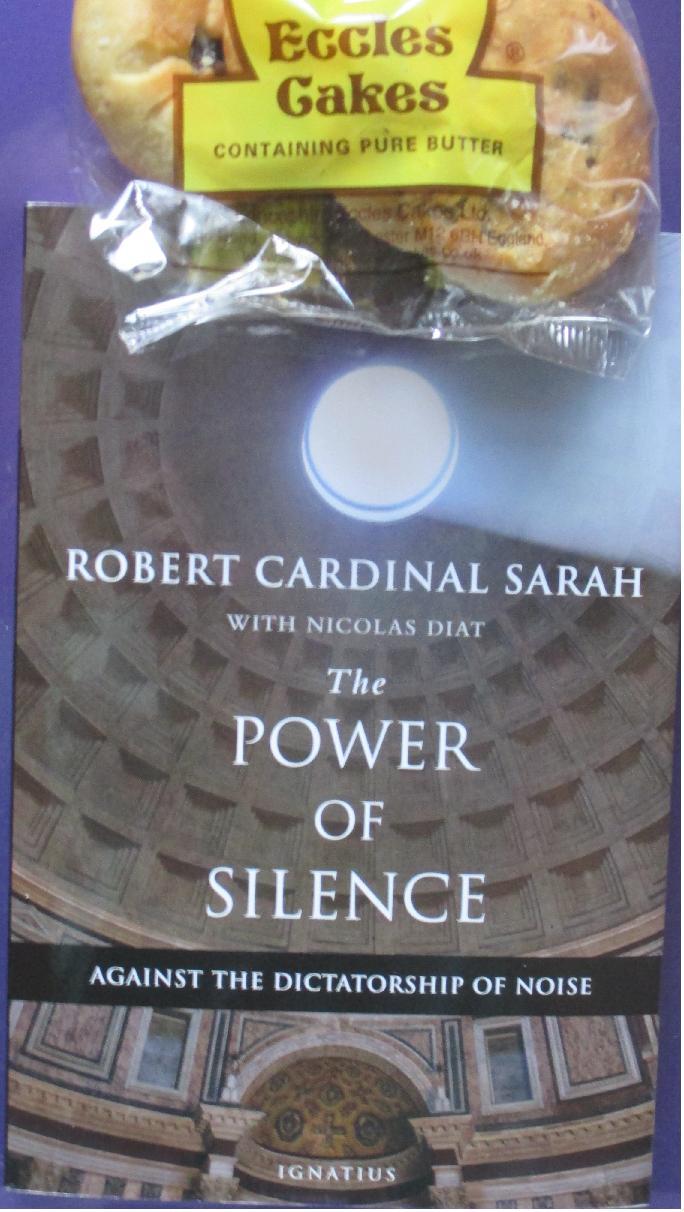
Eccles and Bosco is saved


Gaudete et Exsultate – Goad and Insult

Posted: 10 Apr 2018 09:24 AM PDT

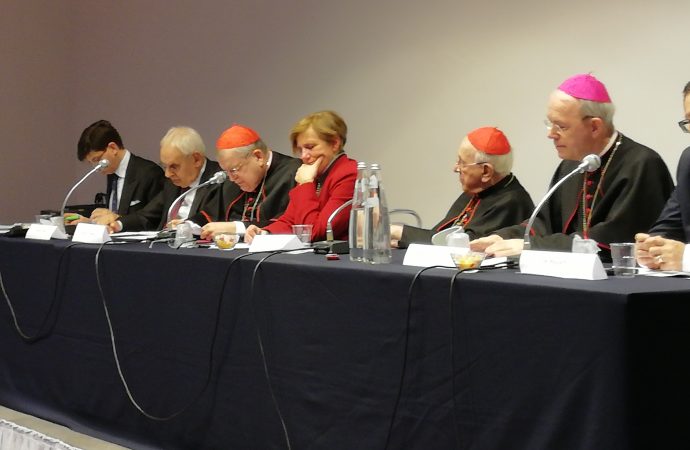
This is the latest instalment in our “How to be a good Pope” series, and explains how you can issue a Call to Holiness, while at the same time settling a few scores.Five years into your reign, things may not be going too well. Your great work Appassionata Erotica was not received as enthusiastically as you had hoped, and you have a pile of unanswered dubia, filial corrections, letters, e-mails, etc. to deal with. Why, they’ve even organized a conference in Rome with the theme: “Is Pope Fred bonkers, or simply thick?” This is supposed to deal with some doctrinal questions in as tactful a way as possible.

Amoris Laetitia conference

Trying to understand Appassionata Erotica.

Also, some cheeky blighter has written a book called The Megalomaniac Pope. You don’t intend to read it, but you have a feeling that those skilled in textual analysis may detect traces of criticism in it.

Pausing only to phone up Booze-lager, your man in the Order of Malta, asking him to put a live scorpion in a certain author’s bed, you rush off to write your exhortation “Goad and Insult”. This contains:

1. Some recycled stuff from previous speeches, homilies, rants, interviews with Scalfari, etc.

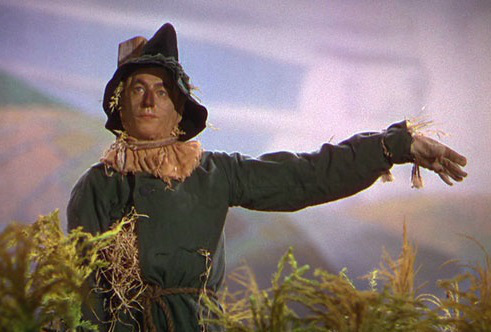
2. Some attacks on straw men, which your spin-doctor Fr Spidero will interpret as referring to Burke, Sarah, Pope Benedict XVI, St Paul, Jesus, and various other people who have offended you.

3. A huge dossier contributed by Spidero, which proves that you are holy and nobody else is.

scarecrow

As a scarecrow, I wish to complain about these papal attacks on straw men.

Now, the two heresies you are most found of mentioning – a complete mystery to 99% of Catholics including yourself – are Gnosticism and Pelagianism. So mutter in dark tones that some people are guilty of these ancient heresies. It’s far more serious than abortion (and anyway, your friend Emma Banana has asked you to go easy on that one from now on).

Perhaps for a change you could accuse your critics of Triclavianism. This is a medieval heresy that three, rather than four, nails were used to crucify Christ and that a Roman soldier pierced Him with a spear on the left, rather than right side (unless someone on Wikipedia has been having a little joke).

Cardinal Sarah's book

You’ve disagreed with your predecessors. Next, disagree with your successors.

Now, the biggest thorn in your side at present is probably that African chap with the girl’s name. Let’s call him Cardinal Sally. He’s very fond of Silence, and has written a whole book about it. This goes against everything you stand for – why, you can’t keep silent for more than 30 seconds at a time – so attack Silence. Who are silent? Nuns. Right, let’s take a kick at the nuns. You might even start a new order, the Pope Fred Order of Screaming Nuns, who are forbidden ever to remain silent.

You might also want to take a kick at the Vatican librarian, who shushed Spadaro when he started singing Italian drinking songs in the Sex-and-Shopping section. That’ll teach her!

Anyway, you get the idea. Offend as many faithful Catholics as you can – call them obsessive, absorbed and punctilious if they try to keep the commandments – while pointing out that you alone are truly holy. As long as James Martin, Massimo Faggioli, and Austen Ivereigh praise you, nobody else matters!

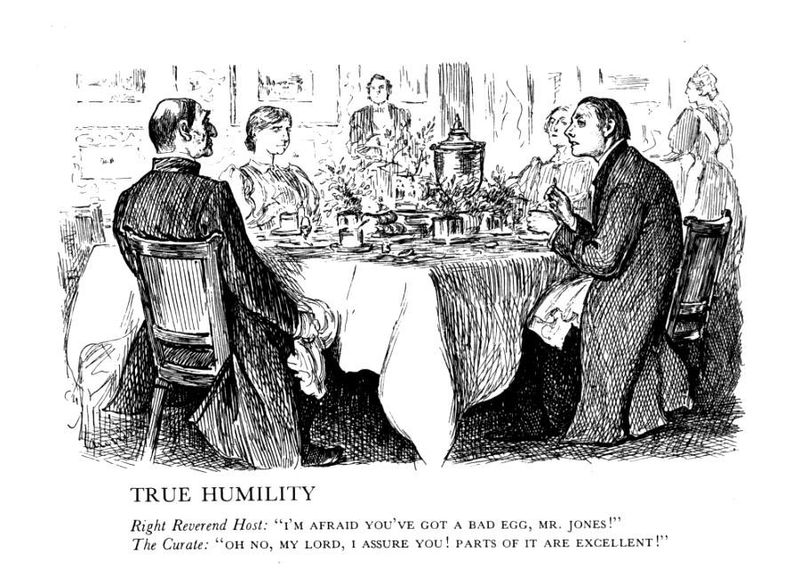
curate's egg

“I’m afraid you’ve got a bad Apostolic Exhortation, Fr Jones.”
“Oh no, Holy Father, parts of it are excellent.”
 

Posted in Uncategorized | Comments Off on Here is your little dose of satire to help you survive the latest Bergolian assault on your sanity with his Apostolic Letter: “Goad and Insult”

JESUS SPEAKS, LISTEN TO HIM

El_Greco_021-large

Be With Me

I wish you could have been at Bethlehem.
You could have held Me and kept Me warm.
And I would have smiled at you.
You probably would not have wanted to hand Me back to My mother.

I wish you could have been with us at Cana.
My mother was there.
I made some really fine wine, and
We could have shared a cup together.

I wish you could have been at the Last Supper with Me,
When I ordained men, My apostles, My priests, and
We could have broken bread together, and
Then you could have received Me, totally, in My Eucharist.

I wish you could have been at the foot of the Cross,
With My mother and John, My priest.
You could have tried to comfort me and
I would have told you how much I love you.

I wish you could have been there on the mountain,
When I ascended into Heaven.
There I sent My priests, My apostles, to the world,
And where they are now I am there in person.

I wish you could have been at the tomb
That first Easter morn.
When the stone moved,
You would have been blown away by My Sonrise.

But all those times are past,
Gone now.
Still, I wish you will be with Me here, and
I will be with you, in person.

I wish you could be with Me at My Mass,
When My sacrifice is again presented to My Father.
I am there in person in My priest.
You can come, be with Me, and receive Me.

This Holy Sacifice of Mine
Is not only time past.
This time is now, and I am here in person.
Be with Me.

by Guy McClung on Mar 22, 2018

Catholic Lane
Guy McClung is a granddad who loves his children and grandchildren, and as a Patent Attorney helps people develop inventions. He lives in  Texas with his wife Karen who has stayed with him for 44+ years.  © Copyright 2018


Posted in Uncategorized | Comments Off on JESUS SPEAKS, LISTEN TO HIM

I GAVE THIS INTERVIEW TO CHURCH MILITANT SEVERAL YEARS AGO BUT WHAT I SAID IN IT IS MORE VALID AND IMPORTANT NOW THAT IT WAS THEN


Posted in Uncategorized | 5 Comments

A DAY IN THE LIFE OF A VETERAN OF WORLD WAR II

unnamed(146)

I had an unusual experience today.  In retrospect I find it very interesting and perhaps you will also after reading this.

I had a doctor’s appointment in Corpus Christi today at 1:00 PM and so I skipped lunch because I did not want to see a doctor immediately after eating a meal; it is not good for the digestion of food one has just eaten.

After the appointment with the doctor I went to Sam’s Club to do some shopping and then I went to have lunch at the Hibachi Grill which has the best buffet in Corpus Christi.  Naturally I ate too much since I had not eaten anything since 6:00 AM and the food was good.

Finally I started to drive home to Sinton at 4:00 PM in a steady rain.  The traffic was heavy on I-37 and  since I was beginning to get very sleepy with a full stomach and because driving in heavy traffic at 75 mph with macular degeneration was not a very wise thing to do, I looked for a place where I could exit the Interstate and take a short nap in my car.

At that moment I spotted the highway sign informing drivers that the next exit was the one to take for the State of Texas Veteran’s Cemetery.  It was opened just a few years ago and is quite beautiful.

I exited the Interstate and pulled into the Veteran’s Cemetery.  The only parking space was in front of the mausoleum.  So I parked there, push the seat back all the way and fell into a very deep sleep.

In my sleep I heard the sound of Taps being played on a bugle.  Since subconsciously I knew that I was in a cemetery and the playing of Taps always accompanies the burial of a veteran, in my unconscious state I figured that I had died and Taps was being played as I was being buried in the State Cemetery.  All my predecessor bishops are buried in the crypt of the Cathedral and so I wondered in my dream if Francis had denied me that privilege because of my posts on Abyssum.

Before I had a chance to explore that thought any further in my dream, my brain told me “You fool, they are playing Taps because it is 6:00 PM and they are closing the cemetery for the night.”

Not wishing to spend the night in the cemetery I woke up, turned on the ignition and made a hasty exit through the one gate that was still open.

I am confident that in the future whenever I hear a bugle playing Taps it will bring back memories of my nap in the Veterans’ Cemetery.

Posted in Uncategorized | 7 Comments

A MODEST PROPOSAL FROM ONE OF MY LONG-TIME READERS; HE WANTS MY OPINION


My wife has long complained that when I go to confession I don’t spend enough time in the confessional.  She believes she has a better memory for my faults.
 
I approached the assistant pastor in my parish (one of nature’s gentlemen), and discussed her idea of wives telling the priest the sins of their husbands. 
 
Also, the logistics of priests’ having to bring their lunches into the confessional, and maybe even a razor and shaving cream. 
 
But I think it fails on the grounds of occupational health and safety.  The Bishops would be concerned about a lack of vitamin D among their priests caused by lack of exposure to the sun.
Posted in Uncategorized | 6 Comments

FIGHTING BACK. A FAITHFUL READER OF ABYSSUM IN AUSTRALIA SENDS US A SAMPLE OF HOW HE IS FIGHTING THE LIBERALIZATION OF THE CHURCH IN AUSTRALIA. THIS IS AN EXAMPLE OF WHAT YOU SHOULD BE DOING IN THE USA

258d6-four-horsemen

Dear Bishops
See below how the bishops in Caribbean countries are fighting back against international pressure to enforce same-sex ‘marriage’.  And winning.
How did we succumb so easily to this unnatural evil?
It could be argued that our defence of divine law was less than inspired (see link below).  I heard nothing definite from the pulpit during the campaign, and there is a criticism that much of the printed material could have been written by atheists.  There was little mention of the real reasons why sodomy is evil, and not too much about the eternal consequences.
Now that the Caribbean and Bermuda have shown the way, is there a plan to campaign for reversal of this disgusting law?  Should there be such a plan?  Or is the Church more or less resigned to a new reality in which perversion is prevented as good, and the defence of Christian marriage a hate crime?
Are the Caribbean bishops doing the will of God?  If so, should we not do the same?
Richard Stokes


Attachments area

Richard Stokes

Attachments10:57 PM (8 hours ago)

Attachments area
Posted in Uncategorized | 3 Comments

WHERE DO WE GO FROM HERE, NOW THAT THE PRELATES WHO SPOKE AT THE ROME SYMPOSIUM OF 07 APRIL 18 HAVE CALLED FOR ACTION?

holy-face3

    Recently many educated Catholic observers, including bishops and priests, have decried the confusion in doctrinal statements about faith or morals made from the Apostolic See at Rome and by the putative Bishop of Rome, Pope Francis.  Some devout, faithful and thoughtful Catholics have even suggested that he be set aside as a heretic, a dangerous purveyor of error, as recently mentioned in a number of reports.

Claiming heresy on the part of a man who is a supposed Pope, charging material error in statements about faith or morals by a putative Roman Pontiff, suggests and presents an intervening prior question about his authenticity in that August office of Successor of Peter as Chief of The Apostles, i.e., was this man the subject of a valid election by an authentic Conclave of The Holy Roman Church?  This is so because each Successor of Saint Peter enjoys the Gift of Infallibility. 

So, before one even begins to talk about excommunicating such a prelate, one must logically examine whether this person exhibits the uniformly good and safe fruit of Infallibility.  If he seems repeatedly to engage in material error, that first raises the question of the validity of his election because one expects an authentically-elected Roman Pontiff miraculously and uniformly to be entirely incapable of stating error in matters of faith or morals.  So to what do we look to discern the invalidity of such an election?  His Holiness, Pope John Paul II, within His massive legacy to the Church and to the World, left us with the answer to this question.


His Apostolic Constitution (
Universi Dominici Gregis) which governed the supposed Conclave in March 2013 contains quite clear and specific language about the invalidating effect of departures from its norms.  For example, Paragraph 76 states:  “Should the election take place in a way other than that prescribed in the present Constitution, or should the conditions laid down here not be observed, the election is for this very reason null and void, without any need for a declaration on the matter; consequently, it confers no right on the one elected.”  From this, many believe that there is probable cause to believe that Monsignor Jorge Mario Bergoglio was never validly elected as the Bishop of Rome and Successor of Saint Peter—he never rightly took over the office of Supreme Pontiff of the Holy Roman Catholic Church and therefore he does not enjoy the charism of Infallibility.

What makes this understanding of Universi Dominici Gregis particularly cogent and plausible is the clear Promulgation Clause at the end of this Apostolic Constitution and its usage of the word “scienter” (“knowingly”).  Universi Dominici Gregis thus concludes definitively with these words:  “.   .   .   knowingly or unknowingly, in any way contrary to this Constitution.”  (“.   .   .   scienter vel inscienter contra hanc Constitutionem fuerint excogitata.”)  [Note that His Holiness, Pope Paul VI, had a somewhat similar promulgation clause at the end of his corresponding, now abrogated, Apostolic Constitution, Romano Pontifici Eligendo, but his does not use “scienter”, but rather uses “sciens” instead.  This similar term of sciens in the earlier abrogated Constitution has an entirely different legal significance than scienter.]

This word, “scienter”, is a legal term of art in Roman law, and in canon law, and in Anglo-American common law, and in each system, scienter has substantially the same meaning, i.e., “guilty knowledge” or willfully knowing, i.e., criminal intent.  Thus, it clearly appears that Pope John Paul II anticipated criminal activity in the nature of a sacrilege against a process which He intended to be purely pious, private, sacramental, secret and deeply spiritual in its nature. This contextual reality reinforced in the Promulgation Clause, combined with:  (1) the tenor of the whole document; (2) some other provisions of the document, e.g., Paragraph 76; (3) general provisions of canon law relating to interpretation, e.g., Canons 10 & 17; and, (4) the obvious manifest intention of the Legislator, His Holiness, Pope John Paul II, tends to establish beyond a reasonable doubt the legal conclusion that Monsignor Bergoglio was never validly elected Roman Pontiff.  This is so because:

1.  Communication of any kind with the outside world, e.g., communication did occur between the inside of the Sistine Chapel and anyone outside, including a television audience, before, during or even immediately after the Conclave;

2.   Any political commitment to “a candidate” and any “course of action” planned for The Church or a future pontificate, such as the extensive decade-long “pastoral” plans conceived by the Sankt Gallen hierarchs; and,

3.  Any departure from the required procedures of the conclave voting process as prescribed and known by a cardinal to have occurred, was made an invalidating act, and if scienter (guilty knowledge) was present, also a crime on the part of any cardinal or other actor, but, whether criminal or not, any such act or conduct violating the norms operated absolutely, definitively and entirely against the validity of all of the supposed Conclave proceedings.

This Apostolic Constitution, Universi Dominici Gregis, which was clearly applicable to the acts and conduct of the College of Cardinals in March 2013, is manifestly and obviously among those “invalidating” laws “which expressly establish that an act is null or that a person is effected” as stated in Canon 10 of the 1983 Code of Canon Law.  And, there is nothing remotely “doubtful or obscure” (Canon 17) about this Apostolic Constitution as clearly promulgated by Pope John Paul II.  The tenor of the whole document expressly establishes that the issue of invalidity was always at stake.  This Apostolic Constitution conclusively establishes, through its Promulgation Clause [which makes “anything done (i.e., any act or conduct) by any person  .   .   .   in any way contrary to this Constitution,”]  the invalidity of the entire supposed Conclave, rendering it “completely null and void”.

  So, what happens if a group of Cardinals who undoubtedly did not participate in any acts of disobedience against Universi Dominici Gregis were to meet, confer and declare that, pursuant to Universi Dominici Gregis, Monsignor Bergoglio is most certainly not a valid Roman Pontiff.  Like any action on this matter, including the initial finding of invalidity, that would be left to the valid members of the college of cardinals.  They could declare the Chair of Peter vacant and proceed to a new and proper conclave.  They could meet with His Holiness, Benedict XVI, and discern whether His resignation and retirement was made under duress, or based on some mistake or fraud, or otherwise not done in a legally effective manner, which could invalidate that resignation.  Given the demeanor of His Holiness, Benedict XVI, and the tenor of His few public statements since his departure from the Chair of Peter, this recognition of validity in Benedict XVI seems unlikely.

In fact, even before a righteous group of good and authentic cardinals can decide on the validity of the March 2013 supposed conclave, they must face what may be an even more complicated discernment and decide which men are most likely not valid cardinals.  If a man was made a cardinal by the supposed Pope who is, in fact, not a Pope (but merely Monsignor Bergoglio), no such man is in reality a true member of the College of Cardinals.  In addition, those men appointed by Pope John Paul II or by Pope Benedict XVI as cardinals, but who were latae sententiae excommunicated because of illegal acts or conduct causing the invalidation of the last attempted conclave, would no longer have voting rights in the College of Cardinals either.  The actual valid members in the College of Cardinals may be quite smaller in number than those on the current official Vatican list of supposed cardinals.

In any event, the entire problem is above the level of anyone else in Holy Mother Church who is below the rank of Cardinal.  So, we must pray that The Divine Will of The Most Holy Trinity, through the intercession of Our Lady as Mediatrix of All Graces and Saint Michael, Prince of Mercy, very soon rectifies the confusion in Holy Mother Church through action by those valid Cardinals who still comprise an authentic College of Electors.  Only certainly valid Cardinals can address the open and notorious evidence which points to the probable invalidity of the last supposed conclave and only those cardinals can definitively answer the questions posed here.  May only the good Cardinals unite and if they recognize an ongoing Interregnum, albeit dormant, may they end this Interregnum by activating perfectly a functioning Interregnum government of The Holy See and a renewed process for a true Conclave, one which is purely pious, private, sacramental, secret and deeply spiritual.  If we do not have a real Pontiff, then may the good Cardinals, doing their appointed work “in view of the sacredness of the act of election”  “accept the interior movements of the Holy Spirit” and provide Holy Mother Church with a real Vicar of Christ as the Successor of Saint Peter.

N. de Plume
Un ami des Papes

______________________

Posted in Uncategorized | 19 Comments

TEXT OF THE TALK GIVEN BY BISHOP ATHANASIUS SCHNEIDER AT THE ROME SYMPOSIUM ON 07 APRIL 18

Bishop Athanasius Schneider
Bishop Athanasius Schneider in Rome, April 7, 2018 Diane Montagna/LifeSiteNews
Diane MontagnaDiane Montagna

NEWS,

Bishop Schneider: The Pope is not the “owner” of truth but its “servant and vicar” (FULL TEXT)

ROME, April 7, 2018 (LifeSiteNews) — The Pope is not the “owner” of truth but its “servant and vicar,” Bishop Athanasius Schneider said today in Rome. Popes in modern times have therefore always insisted on their duty to defend the truth and to protect the Church from errors and heresies.

Speaking at a symposium titled ‘Catholic Church: Where are you heading?,’ Bishop Schneider recalled the words of Pope St. Leo XIII to remind participants that the Pope’s chief duty consists “in professing openly and unflinchingly the Catholic doctrine, and in propagating it to the utmost of [their] power.”

In his talk (see definitive English text below), Schneider drew upon a rich collection of texts from the third-century bishop and martyr St. Cyprian of Carthage, to the dogmatic constitution Pastor Aeternus of the First Vatican Council, to the writings of John XXIII, in order to underline the importance of the Petrine office as the ‘cathedra of truth.’

“The charism of truth is entrusted by God first to St Peter and to his successors, the Roman Pontiffs, whose seat is consequently called the cathedra of truth par excellence,” Schneider said.

Popes for more than a millennium therefore made an oath at the beginning of their ministry, vowing “to change nothing of the received Tradition” and to “excommunicate” themselves should they go against this oath.

It is urgent that this papal oath be reistituted in our times, Schneider added.

Yet through “the inscrutable permission of Divine Providence” Satan has in the course of history attacked the ‘cathedra of truth,’ sometimes leading to a “temporary and limited eclipse of the Papal Magisterium” when some Popes have made “ambiguous doctrinal statements.”

Here below is the definitive English text of Bishop Schneider’s talk today in Rome.

The Apostolic See as the cathedra of truth

Bishop Athanasius Schneider

Rome, April 7, 2018

(Definitive English text)

The Fourth Ecumenical Council of Constantinople taught: “In the Apostolic See the Catholic religion has always been preserved unblemished, and sacred doctrine been professed. … in it all true strength of the Christian religion is found” (From the formula of Pope Hormisdas, endorsed by the Fathers of the Fourth Council of Constantinople). And the First Vatican Council taught: “The See of Saint Peter remains always immune from every error by virtue of the divine promise made by the Lord, Our Savior, to the Prince of his disciples: ‘I have prayed for you that your faith might not fail; and when you have turned again, strengthen your brethren.’ This indefectible charism of truth and faith was therefore divinely conferred to Peter and his successors in this Chair, in order that they might exercise their exalted office for the salvation of all, so that the entire flock of Christ, taken from the poisonous pastures of error, might be nourished with the food of heavenly doctrine and that, after having eliminated what leads to schism, the entire Church might remain one and, supported on its foundation, might stand firm against the gates of hell” (Pastor aeternus, chap. 4).

Since the mid-third century, Saint Cyprian has used the term “cathedra” to indicate the power of the Roman Church, by virtue of the Chair of Peter from which, he says, the unity of the hierarchy derives (cf. Ep. 59, 16). Saint Jerome also wrote: “I decided to consult the Chair of Peter, where is found that faith that the mouth of an Apostle has exalted; I now come to ask for nourishment for my soul there, where once I received the garment of Christ. I follow no other primacy than that of Christ; for this reason, I put myself in communion with your beatitude, that is, with the Chair of Peter. I know that on this rock is built the Church” (Letters I, 15, 1-2).

The charism of truth is entrusted by God first to Saint Peter and to his successors, the Roman Pontiffs, whose seat is consequently called the cathedra of truth par excellence. Given their ministry of truth, the Roman Pontiffs must continually be aware that they are not the owners of the cathedra of truth, but its servants and vicars. The characteristic feature of the ministry of the Apostles consists in being “pastores vicarii,” as the preface of the Apostles says: “Quos operis Tui vicarios eidem contulisti praeesse pastores.” The Petrine ministry in the Church is essentially a vicarious ministry. Therefore, the Roman Pontiff is called the “Vicarius Christi.” Saint Gregory the Great (+ 604) was fond of speaking of the bishop of Rome as the “vicar of Saint Peter” (Registrum Epistolarum XII, 7). Pope St. Gelasius I (+ 496) stated that the Roman Pontiff must first of all be a “minister catholicae et apostolicae fidei” (Ep. 43).

The following oath that Popes for more than a millennium have made at the beginning of their apostolic ministry is impressive and extremely timely: “I vow to change nothing of the received Tradition, and nothing thereof I have found before me guarded by my God-pleasing predecessors, to encroach upon, to alter, or to permit any innovation therein. To the contrary: with glowing affection as her truly faithful student and successor, to safeguard reverently the passed-on good, with my whole strength and utmost effort; To cleanse all that is in contradiction to the canonical order that may surface; To guard the Holy Canons and Decrees of our Popes as if they were the Divine ordinances of Heaven, because I am conscious of Thee, Whose place I take through the grace of God, Whose Vicarship I possess with Thy support, being subject to the severest accounting before Thy Divine Tribunal over all that I shall confess; I swear to God Almighty and the Savior Jesus Christ that I will keep whatever has been revealed through Christ and His Successors and whatever the first councils and my predecessors have defined and declared. I will keep without sacrifice to itself the discipline and the rite of the Church. I will put outside the Church whoever dares to go against this oath, may it be somebody else or I. If I should undertake to act in anything of contrary sense, or should permit that it will be executed, Thou whilst not be merciful to me on the dreadful Day of Divine Justice. Accordingly, without exclusion, We subject to severest excommunication anyone – be it ourselves or be it another – who would dare to undertake anything new in contradiction to this constituted evangelic Tradition and the purity of the Orthodox Faith and the Christian Religion, or would seek to change anything by his opposing efforts, or would agree with those who undertake such a blasphemous venture” (Liber Diurnus Romanorum Pontificum).

In modern times the Roman Pontiffs have insisted on the duty of the Popes to defend the truth and to protect the Church from errors and heresies. Leo XIII taught: “Amid such reckless and widespread folly of opinion, it is, as We have said, the office of the Church to undertake the defense of truth and uproot errors from the mind, and this charge has to be at all times sacredly observed by her, seeing that the honor of God and the salvation of men are confided to her keeping. But, when necessity compels, not those only who are invested with power of rule are bound to safeguard the integrity of faith, but, as St. Thomas maintains: ‘Each one is under obligation to show forth his faith, either to instruct and encourage others of the faithful, or to repel the attacks of unbelievers’ (S. Thomas, Summa theologiae, II-II, quaest. 3, art. 2, ad 2). To recoil before an enemy, or to keep silence when from all sides such clamors are raised against truth, is the part of a man either devoid of character or who entertains doubt as to the truth of what he professes to believe. […] Nothing emboldens the wicked so greatly as the lack of courage on the part of the good. Moreover, want of vigor on the part of Christians is so much the more blameworthy, as not seldom little would be needed on their part to bring to naught false charges and refute erroneous opinions, and by always exerting themselves more strenuously they might reckon upon being successful. After all, no one can be prevented from putting forth that strength of soul which is the characteristic of true Christians, and very frequently by such display of courage our enemies lose heart and their designs are thwarted. Christians are, moreover, born for combat, whereof the greater the vehemence, the more assured, God aiding, the triumph: “Have confidence; I have overcome the world” (Jn 16:33). […] The chief elements of this duty consist in professing openly and unflinchingly the Catholic doctrine, and in propagating it to the utmost of our power” (Encyclical Sapientiae Christianae, January 10, 1890).

Pope John XXIII taught: “All the evils which poison men and nations and trouble so many hearts have a single cause and a single source: ignorance of the truth—and at times even more than ignorance, a contempt for truth and a reckless rejection of it. […] Anyone who consciously and wantonly attacks known truth, who arms himself with falsehood in his speech, his writings, or his conduct in order to attract and win over less learned men and to shape the inexperienced and impressionable minds of the young to his own way of thinking, takes advantage of the inexperience and innocence of others and engages in an altogether despicable business. […] The weapons of truth and honesty, then, must be used in defense against these weapons of evil. We must strive zealously and relentlessly to ward off the impact of this great evil which every day insinuates itself more deeply. […] Some men, indeed do not attack the truth willfully, but work in heedless disregard of it. They act as though God had given us intellects for some purpose other than the pursuit and attainment of truth. This mistaken sort of action leads directly to that absurd proposition: one religion is just as good as another, for there is no distinction here between truth and falsehood. ‘This attitude,’ to quote Pope Leo again, ‘is directed to the destruction of all religions, but particularly the Catholic faith, which cannot be placed on a level with other religions without serious injustice, since it alone is true’ (Leo XIII, Litt. enc. Humanum genus). Moreover, to contend that there is nothing to choose between contradictories and among contraries can lead only to this fatal conclusion: a reluctance to accept any religion either in theory or practice. How can God, who is truth, approve or tolerate the indifference, neglect, and sloth of those who attach no importance to matters on which our eternal salvation depends; who attach no importance to pursuit and attainment of necessary truths, or to the offering of that proper worship which is owed to God alone? So much toil and effort is expended today in mastering and advancing human knowledge that our age glories—and rightly—in the amazing progress it has made in the field of scientific research. But why do we not devote as much energy, ingenuity, and enthusiasm to the sure and safe attainment of that learning which concerns not this earthly, mortal life but the life which lies ahead of us in heaven? […] Once we have attained the truth in its fullness, integrity, and purity, unity should pervade our minds, hearts, and actions. For there is only one cause of discord, disagreement, and dissension: ignorance of the truth, or what is worse, rejection of the truth once it has been sought and found. It may be that the truth is rejected because of the practical advantages which are expected to result from false views; it may be that it is rejected as a result of that perverted blindness which seeks easy and indulgent excuses for vice and immoral behavior.” (Encyclical Ad Petri Cathedram, June 29, 1959, 1-2).

Throughout the course of history Satan, the father of lies, continually attacks the Church, and especially the cathedra of truth, which is the Chair of Peter. Through the inscrutable permission of Divine Providence the attacks of Satan against the Roman cathedra have in rare cases had the effect of a temporary and limited eclipse of the Papal Magisterium, when some Roman Pontiffs have made ambiguous doctrinal statements, thereby causing a temporary situation of doctrinal confusion in the life of the Church.

One can see this possibility expressed in the following words taken from the Exorcism against Satan and the rebel angels, written by Pope Leo XIII in 1884. The original text says: “Behold, the ancient enemy and murderer strongly raises his head! Transformed into an angel of light, with the entire horde of wicked spirits he goes about everywhere and takes possession of the earth, so that therein he may blot out the Name of God and of His Christ and steal away, afflict and ruin into everlasting destruction the souls destined for a Crown of Eternal Glory. On men depraved in mind and corrupt in heart the wicked dragon pours out like a most foul river, the poison of his villainy, a spirit of lying, impiety and blasphemy; and the deadly breath of lust and of all iniquities and vices. Her most crafty enemies have engulfed the Church, the Spouse of the Immaculate Lamb, with sorrows, they have drenched her with wormwood; on all her desirable things they have laid their wicked hands. Where the See of the Blessed Peter and the Chair of Truth have been set up for the light of the gentiles, there they have placed the throne of the abomination of their wickedness, so that, the Pastor having been struck, they may also be able to scatter the flock.”

On the morning of October 13, 1884 — exactly thirty-three years before the final Marian apparition at Fatima and the extraordinary miracle of the sun — Pope Leo XIII, while he was assisting at Holy Mass in thanksgiving for the one he had just celebrated, had a vision that is now famous. Satan appeared before God asking him for permission to act undisturbed for a hundred years in order to destroy the Church, which permission was granted to him. The Pontiff then saw swarms of demons fall on the basilica of St. Peter, to invade the Petrine See. Immediately after the vision the Pope composed the prayer to Saint Michael the Archangel, which he ordered to be recited at the end of each low Mass, and the famous exorcism, from which the quotation just cited is taken. The dramatic phrase ‘on the See of most blessed Peter’ would later be removed by Pius XI in order to avoid scandal for the faith, but today at the very least it is prophetic.

Let us conclude with the following prayer of Dom Prosper Gueranger: “Holy Apostle! Calm the wildness of the tempest, lest the weak should take scandal. Beseech Our Lord that he permits not the residence of thy Successor to be disturbed in that Holy City, which has been chosen for so great an honor. If it be, that her inhabitants deserve punishment for their offenses, — spare them for the sake of their brethren of the rest of the world; and pray for them that their Faith may once more become what it was when St. Paul praised it and said to them: Your faith is spoken of in the whole world” (Rom. 8:1) (The Liturgical Year, 1887 edition London, p. 436-437).

Translation by Diane Montagna of LifeSiteNews (All rights reserved).

Posted in Uncategorized | 3 Comments