CREEPING ROT IN BEAUTIFUL NORTH ITALY

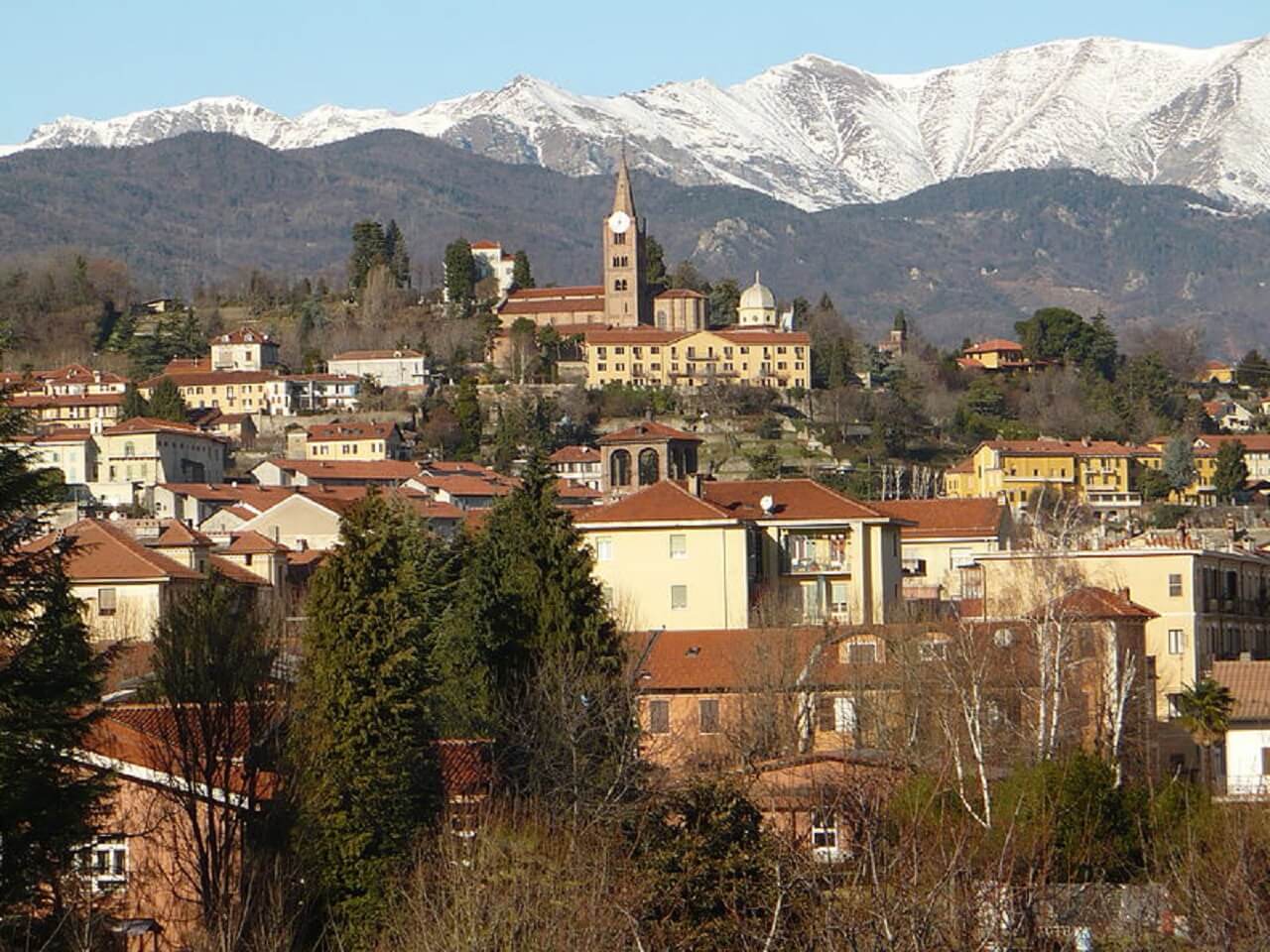
Pinerolo, Italy: Another Scandal Cries Out for Answers to the Dubia

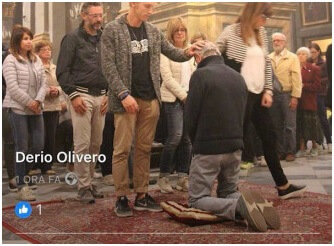
Last Sunday [February 11, 2018], an interesting interview appeared on Vita Diocesana Pinerolese [the website of the Diocese of Pinerolo, Italy, near Turin in the Piedmont] (Anno 9, N.3) in which the newly appointed bishop, Derio Olivero, comments on the documents of Piedmont Bishops’ Conference furnishing guidelines for the application of the apostolic exhortation Amoris Laetitia. La Bussola Quotidiana already reported on the Bishop of Pinerolo previously, when, prior to being installed as bishop, he was blessed by the people.

Some quotes from this interview have impressed us, which seem to be indicative. One of these we find really brilliant: “The marriage thus continues to be indissoluble [indissolubile] but not unbreakable [infrangibile].” We’re sorry – we didn’t quite get that. It seems we didn’t get the memo that there is a new category of breakability or unbreakability. Does this mean that if two people get married, they are in some sense indissoluble, but we can break it up (in every sense)? And then what happens? The next sentence is illuminating: “For those who are united in a new union there can be a way that leads also to their being fully integrated.”

This sentence has a logical consequence, readily understood by the interviewer, who in fact asked, “Could that way lead to considering giving a blessing to that new union?” Bishop Olivero responded, “In the document of the Piedmont Bishops’ Conference this is not contemplated, but I believe that could be a good solution. After a short journey [cammino] we could foresee giving a blessing that would signify recognizing the validity of the relationship.”

Does this mean, in practice, that in addition to the first valid sacramental marriage of one or both partners, the Church would add a rite to put a seal or rubber stamp on the second union? Speaking of Amoris Laetitia, the bishop expounds on what seems to him to be its two great novelties. “The first: It is no longer possible to say that all those who find themselves in so-called irregular situations are living in mortal sin, because there are many questions to consider. There is no longer automatism. There is only a case-by-case analysis. The second: The grace of God is also at work in the lives of the divorced and remarried.”

“These two great principles open the door to the possibility of making a journey of welcoming and accompaniment that is able to assist them with discernment (it is the conscience of the individual that decides, not the conscience of the priest) to evaluate the possibility of an integration that leads to return to the sacraments.” Thus, in the understanding of this bishop, the priest, who is presumed to be the confessor, has not one word to say about the state of the person who has come to him for guidance.

One wonders what has happened to the Sacrament of Reconciliation and why it should even be retained. And if the conscience of the individual decides, what is the purpose of diocesan marriage tribunals? If I am convinced that my first marriage was not valid, why should I spend money and time going through the process with the diocese? And look at this last quote: “Amoris Laetitia goes outside juridical logic. A couple who in conscience are fully living their new union in all of its aspects can come to the sacraments, after a short journey. This helps us to understand that the sacraments are not a reward for those who are good.”

In light of these interpretations, it seems that it is evident and urgent to have a response from the pope to the five dubia, which thus far has been denied. Perhaps it is opportune to recall them, because each of the five dubia touch on the points developed by Bishop Olivero.

First: It is asked if, following what is affirmed in Amoris Laetitia 300-305, it is now possible to grant absolution in the Sacrament of Penance and thus admit to Holy Communion a person who, bound by a valid matrimonial bond, is now living more uxorio with another person, without following the conditions foreseen by Familiaris Consortio 84 and restated in Reconciliatio et Paenitentia 34 and in Sacramentum Caritatis 29. Can the expression “in certain cases” in footnote 351 of paragraph 305 of the exhortation Amoris Laetitia be applied to the divorced who are in a new union and who continue to live more uxorio?

Second: After the post-synodal exhortation Amoris Laetitia (304), is the teaching still valid of the encyclical of St. John Paul II Veritatis Splendor 79, based in Sacred Scripture and the Tradition of the Church, on the existence of absolute moral norms, valid without exception, which prohibit intrinsically evil acts?

Third: After Amoris Laetitia 301, is it still possible to affirm that a person who lives habitually in contradiction with a commandment of the Law of God, such as, for example, the commandment forbidding adultery (Matthew 19:3-9), is in an objective state of grave habitual sin (cf. Pontifical Council for Legislative Texts, Declaration of June 24, 2000)?

Fourth: After the affirmation of Amoris Laetitia 302 on the “circumstances that mitigate moral responsibility,” is the teaching still valid of the encyclical of St. John Paul II, Veritatis Splendor 81, based in Sacred Scripture and the Tradition of the Church, according to which “[c]ircumstances or intentions can never transform an act intrinsically evil by virtue of its object into an act ‘subjectively’ good or defensible as a choice”?

Fifth: After Amoris Laetitia 303, is the teaching still valid of the encyclical of St. John Paul II, Veritatis Splendor 56, based in Sacred Scripture and the Tradition of the Church, which excludes a creative interpretation of the role of conscience and affirms that the conscience is never authorized to legitimize exceptions to absolute moral norms that prohibit actions that are intrinsically evil by virtue of their object?

Originally published at La Nuova Bussola Quotidiana. Translated here from Italian by Giuseppe Pellegrino.

Print Friendly, PDF & Email
Posted in Uncategorized | 2 Comments

HE PROTECTS HIS SANITY WHILE HE DRIVES THE REST OF US CRAZY

Featured Image
Shutterstock.com
Diane MontagnaDiane MontagnaFollow Diane

Pope Francis: I avoid reading heresy accusations “for the sake of my mental health”

ROME, February 16, 2018 (LifeSiteNews) — Pope Francis has acknowledged accusations of heresy and what he calls “doctrinal resistance” within the Church,  but has said he chooses to ignore it to protect his mental health.

“There is doctrinal resistance,” the Pope told a group of his fellow Jesuits at a meeting on Jan. 16, but “for the sake of mental health I do not read the websites of this so-called ‘resistance.’”

“I know who they are, I am familiar with the groups, but I do not read them, simply for my mental health. If there is something very serious, they inform me so that I know about it,” he said.

Pope Francis’ comments came in a private meeting with 90 Jesuits in Santiago de Chile, during his recent apostolic visit to South America. Their conversation was transcribed by Fr. Antonio Spadaro, editor of La Civilta Cattolicà, and was published in Italian with the Pope’s approval on their online site on Thursday morning.

During the question and answer exchange in Chile, a Jesuit from the Argentine-Uruguayan province asked the Holy Father what “resistance” he has encountered during this pontificate, and how he is handling it.

In response, the Pope said it is important to consider if there is a “grain of truth” in the push-back he receives, and that sometimes what at first glance seems to be “resistance” is actually “a reaction arising from a misunderstanding, from the fact that there are some things one needs to repeat and explain better.”

“But when I realize that there is real resistance, of course it displeases me,” he said. “Some people tell me that resistance is normal when someone wants to make changes. The famous ‘we’ve always done it this way’ reigns everywhere, it is a great temptation that we have all faced,” he added.

“I cannot deny that there is resistance. I see it and I am aware of it,” he told his fellow Jesuits.

Pope Francis continued: “There is doctrinal resistance, which you all know better than I do. For the sake of mental health I do not read the websites of this so-called “resistance.”

“I know who they are, I am familiar with the groups, but I do not read them, simply for my mental health. If there is something very serious, they inform me so that I know about it. You all know them … It is a displeasure, but we must move ahead. Historians say that it takes a century before a Council puts down roots. We are halfway there,” he said.

The Pope added: “When I perceive resistance, I try to dialogue, when dialogue is possible.”

“But some resistance comes from people who believe they possess the true doctrine and accuse you of being a heretic,” he said. “When I do not find spiritual goodness in these people, because of what they say or write, I simply pray for them. It pains me, but I do not dwell on this feeling for the sake of mental hygiene.”

Heresy charges  

Last September, a group of 62 clergy and lay scholars took the rare step of presenting Pope Francis with a “Filial Correction,” charging him with permitting the spread of seven heresies, at least by omission, about marriage, the moral life, and the reception of the sacraments.

The filial correction, in the form of a 25-page letter, was delivered to the Pope at his Santa Marta residence on August 11, 2017. No similar action has taken place within the Catholic Church since the Middle Ages, when Pope John XXII was admonished for errors which he later recanted on his deathbed.

Expressing “profound grief” and “filial devotion,” the group of clergy and lay scholars “respectfully insist[ed]” that Pope Francis condemn the heresies that, in their view, he has directly or indirectly upheld, and that he teach the truth of the Catholic faith in its integrity.

The initiative provoked admiration and consternation among Catholics and drew considerable attention in secular media outlets — including the AP, BBC, CNN, Fox News, Drudge Report, Huffington Post, and Daily Mail.

The number of signatories quickly grew to 250 scholars, some from prominent institutions around the world. Pope Francis has issued no response.

Dubia or “doctrinal opposition”?

One year earlier, on Sept. 19, 2016, American Cardinal Raymond Burke, along with Cardinal Walter Brandmüller and recently deceased Cardinals Joachim Meisner and Carlo Caffarra, sent five questions, called dubia (Latin for “doubts”) to Pope Francis and Cardinal Gerhard Müller, then prefect of the Congregation for the Doctrine of the Faith.

The cardinals said the aim of the dubia was to clarify “contrasting interpretations” of Paragraphs 300-305 in Chapter 8 of Amoris Laetitia, which are its most controversial passages relating to admission of remarried divorcees to the sacraments, the indissolubility of marriage, and the proper role of conscience.

They made the initiative public on Nov. 14, 2016, when it became clear the Holy Father would not respond. Many defenders of Pope Francis interpreted the dubia as a kind of opposition to him.

One of the four, American Cardinal Raymond Burke, said in an interview following their public release that the Church is “suffering from a tremendous confusion on at least these five points,” that have to do with “irreformable moral principles.”

As cardinals, we “judged it our responsibility to request a clarification with regard to these questions, in order to put an end to this spread of confusion that is actually leading people into error,” he said.

Burke also stated that the four cardinals wrote the letter “with the greatest sense of our responsibility as bishops and cardinals,” but also “with the greatest respect for the Petrine Office, because if the Petrine Office does not uphold these fundamental principles of doctrine and discipline, then, practically speaking, division has entered into the Church, which is contrary to our very nature.”

Less than three months before his death, Italian Cardinal Carlo Caffarra, the founding president of the Pope John Paul II Institute for Studies on Marriage and the Family, wrote a second letter to the Holy Father on behalf of the four cardinals, requesting a private audience to discuss their deep concerns over the publication of Amoris Laetitia. Pope Francis did not respond to the request.

Here below we offer our readers a LifeSite translation of the key exchange containing the Pope’s comments during his Jan. 16 conversation with his fellow Jesuits.

***

A Jesuit of the Argentine-Uruguayan province asked: What resistance have you encountered during your pontificate, and how have you handled it? Have you discerned?

When faced with difficulty, I never call it “resistance,” because that would mean giving up discerning, which is what I want to do instead. It’s easy to say that there is resistance and not realize that in the push-back there can also be a grain of truth. And so I let myself be helped by the push-back. Often I will ask someone: “What do you think of this?” This also helps me to put many things into perspective which at first sight seem to be resistance, but in reality are a reaction arising from a misunderstanding, from the fact that there are some things one needs to repeat and explain better… It may be a defect of mine that sometimes I consider some things obvious, or I make a logical leap without explaining the process well, because I am convinced that the other person has immediately grasped my reasoning. I realize that, if I go back and explain it better, at that point the other person says, “Oh, yes, I agree ….” In short, it is very helpful to examine thoroughly the meaning of the push-back.

When, instead, I realize that there is real resistance, of course it displeases me. Some people tell me that resistance is normal when someone wants to make changes. The famous “we’ve always done it this way” reigns everywhere, it is a great temptation that we have all faced. For example, we all lived through post-Vatican II. The opposition after Vatican II, which is still present, has this aim: to relativize, to water down the Council. I am even sorrier when someone enlists in a resistance campaign. And unfortunately I see this too. You asked me about resistance, and so I cannot deny that there is resistance. I see it and I am aware of it.

There is doctrinal resistance, which you all know better than I do. For for the sake of mental health I do not read the websites of this so-called “resistance.” I know who they are, I am familiar with the groups, but I do not read them, simply for my mental health. If there is something very serious, they inform me so that I know about it. You are all aware of them … It is a displeasure, but we must move ahead. Historians say that it takes a century before a Council puts down roots. We are halfway there.

Sometimes we ask ourselves: but has that man, that woman, read the Council? And there are people who haven’t read the Council. And if they have read it, they haven’t understood it. After 50 years! We studied philosophy before the Council, but we had the advantage of studying theology after it. We experienced the change in perspective, and there were already the Council documents.

When I perceive resistance, I try to dialogue, when dialogue is possible. But some opposition comes from people who believe they possess the true doctrine and accuse you of being a heretic. When I do not find spiritual goodness in these people, because of what they say or write, I simply pray for them. It pains me, but I do not dwell on this feeling for the sake of mental hygiene.


Another Jesuit asked Pope Francis: Holy Father, you have been a man of reform. In what reforms, besides that of the Curia and the Church, can we as Jesuits best support you?

I believe that one of the things the Church needs most today, and this is very clear in the perspectives and pastoral objectives of Amoris Laetitia, is discernment. We are accustomed to “you can or you can’t.” The moral [approach] used in Amoris Laetitiais the most classic Thomistic moral teaching, that of St. Thomas, not of the decadent Thomism like the one some have studied. In my formation, I also received a way of thinking that was “up to this point you can, up to this point you cannot.” I don’t know if you remember [here the Pope looks at one of those present] the Colombian Jesuit who came to teach us moral at the Collegio Massimo. When it came to speaking about the sixth commandment, someone dared to ask the question: “Can engaged couples kiss?” If they could kiss! Do you all understand? And he said, “Yes, they can! There’s no problem! They just need to  put a handkerchief between them.” This is a forma mentis of doing theology in general. A forma mentis based on limits. And we are bearing the consequences.

If you have a look at the panorama of the reactions aroused by Amoris Laetitia, you will see that the strongest criticisms made against the Exhortation are on the eighth chapter: can someone who is divorced [and remarried] receive Communion or not?” And yet Amoris Laetitia goes in a completely different direction. It does not enter into these distinctions and poses the problem of discernment, which was already at the foundation of classical, great, true Thomist moral theology. And so the contribution I would like from the Society is to help the Church grow in discernment. Today the Church needs to grow in discernment. And the Lord has given us as a family this grace to discern. I do not know if you are aware of it, but it is something that I have already said at other meetings like this with Jesuits: at the end of the generalate of Fr. Ledóchowski, the climax of the Society’s spirituality was the Epitome. In it, what you had to do was all regulated, in a huge mix between the Formula of the Institute, the Constitutions and the rules. There were even the rules for the cook. And it was all mixed, without hierarchy. Fr. Ledóchowski was a close friend of the Abbot General of the Benedictines, and once when he went to visit him, he brought him the writing. A short time later, the abbot looked for him and said: “Father General, you have killed the Society of Jesus with this.” And he was right, because the Epitome removed any capacity for discernment.

Then came the war. Fr. Janssens had to lead the Company in the post-war period, and he did it well, as best he could, because it was not easy. And then came the grace of the generalate of Fr. Arrupe. Pedro Arrupe with the Ignatian Spirituality Center, the magazine Christus and the impulse given to the Spiritual Exercises renewed this family grace which is discernment. He went beyond the Epitome, he returned to the lesson of his fathers, to Favre, to Ignatius. In this, the role of the Christus magazine at that time must be acknowledged. And then also the role of Fr. Luis González with his Spirituality Center: he went around for the whole Society to give Spiritual Exercises. They were opening their doors, reviving this aspect that today we see has grown considerably in the Company. I would tell you, remembering this family story, that there was a time when we had lost — or I do not know if we had lost it, let us say that we did not use very much — the sense of discernment. Today, give it — let us give it! —  to the Church, which needs it so much.

Posted in Uncategorized | 1 Comment

THE FISH ROTS FROM THE HEAD DOWN

City of Matera. Illustration image.

City of Matera. Illustration image. / Stefano Gasparotto – stock.adobe.com

Rota official sentenced for possession of child pornography

Monsignor Pietro Amenta is a prelate auditor of the Court of the Roman Rota, the highest court of the Church in matrimonial matters.  He was sentenced on Thursday, February 15 by a judge in Rome for possession of images of child pornography, reports the daily Il Messaggero .

Having chosen to plead guilty, Monsignor Pietro Amenta, 55, of the diocese of Matera (southern Italy), received a suspended sentence of 14 months in prison.

According to the Roman daily, the affair broke out one evening in March after an altercation, when an 18-year-old Romanian boy accused a man of groping him while he was in a market.

Known to the police

To explain his ambiguous gestures, the man, who turned out to be a priest, first argued that there was not much room between the stalls, and that was the reason for the physical contact.  He fled, pursued by the young man.

Both were then caught by an off-duty municipal officer, before the arrival of a carabineros car.  On being questioned by the officers the young man complained that he had twice been groped by the priest.

A Vatican spokesman:  “The pope meets “victims of sexual abuse” several times a month.”


During the carabineros’ inquiries, it became clear that the young Romanian had no police record and was not known to the Italian police, while the monsignor, a prelate auditor at La Rote since 2012, had already been the subject of a complaint for obscene acts in 1991 and, in 2004, for sexual harassment. In 2013, he had also filed a complaint after being robbed by two transsexuals.

Investigations at the Vatican

During a search of his home, the carabinieri then found on his computer 80 pornographic photos with minors in the foreground.  He denied having downloaded them, but then he then chose to make a deal with Italian justice officials.

Since the case concerned the Italian justice system, the promoter of justice of the State of the Vatican City had no comment but revealed in early February that his staff was currently investigating two cases of pedophilia involving people working for the Vatican.


The Vatican investigates two money laundering cases.  So far, only one case was known: that of a priest of the nunciature in Washington targeted by an investigation for possession of child pornography.


“The investigations initiated are at the preliminary stage and are carried out conscientiously, with the most absolute secrecy, out of respect for all the persons concerned”, assured the prosecutor Gian Piero Milano, expressing the “determination” of the Vatican justice in the material.

++++++++++++++++++++++++++++++++++++++++++++++++++++++++++++++++++++++++++++

AMENTA Mons. Pietro

Titolo: Mons.
Nome: Pietro
Cognome: AMENTA
Tipo: Presbitero diocesano
Luogo di nascita: Grottole (MT)
Data di nascita: 18-11-1962
Data ordinazione: 27-06-1987
Email: pietro.amenta@gmail.com

Incarichi

++++++++++++++++++++++++++++++++++++++++++++++++++++++++++++++++++++++++++++
 73129444
Pope Benedict meets in 2012 with the officials and staff of the ROMAN ROTA, The Church’s highest Court deciding matrimonial cases referred to it by dioceses around the world.
{ The case of Monsignor Pietro Amenta is only the latest in the long series of cases which reveal the presence of homosexual men occupying offices throughout the Curia of the Church in Rome.  What is so disturbing about this reality is that there is also evidence that they are not just personally engaged in sinful homosexual activity but that they are promoting the worldwide LGBTG agenda for the radical change of moral norms throughout society around the world, not just in the institutional Church.
There has probably always been men with a homosexual orientation serving as priests, bishops and cardinals in the Vatican curia, but one would like to believe that the vast majority of them lived chaste lives with the help of God’s grace.   In 1995 while I was in the Sacristy of Saint Peter’s Basilica getting vested to Celebrate Mass at the Chair of St. Peter for the Wednesday Pilgrims’ Mass, one of the Popes Master of Ceremonies entered the Sacristy and passionately kissed one of the serves on the lips.  I was shocked, but anticipating Francis’ dictum “Who am I to judge” I decided that the server was a family member of the Monsignor and I reserved judgment, but I thought it was unseemly.  But now I think that what I saw was a symptom of the sickness which now permeates the Vatican Curia.  To be a homosexual and chaste is one thing, to be homosexual and sexually active is another thing and to be homosexual, homosexually active and to be promoting the LGBTG agenda in the Vatican is an abomination.
What is so disturbing about the present situation is that there does not seem to be any followup on all the investigations by the Vatican police force.  Few get punished for sexual transgressions  and some that have been punished have been restored to their former positions by Francis.  He condemns sexual crimes in his homilies and press conferences but then restores clerical sex abusers to their offices.
More and more often I am hearing the old saying:  “A fish rots down from the head.”
Which prompts me to look up the saying in the Idioms Dictionary. }
FISH ROTS FROM THE HEAD DOWN a or the fish rots from the head down Meaning It refers to failing organizations and how the blame of it should be on its ‘head’ that is its leadership. It does not talk about the biology of the fishes and should not be used as a literal meaning. This is because an actual fish starts to rot from its guts and not head according to piscine biology. Example Sentences The company was bound to be closed sooner or later considering the kind of mangers that they had hired. A fish rots from the head down after all. A leader has to be of a strong will and good character otherwise as it is said, the fish rots from the head down. The whole organization would then have to suffer because of it. His maid servant doesn’t do anything as asked for. But the fish rots from the head down, look at how unorganized his own life is. Origin Although not certain, the origination of this proverb may be associated with Sir James Porter’s work that was published in 1768 called ‘Observations on the religion, law, government, and manners of the Turks’. It is a popularly used for big organizations nowadays instead of for individuals. But using it for individuals would not be wrong. Source: theidioms.com
Posted in Uncategorized | 3 Comments

PEOPLE MUST HEAR THE WORDS SINCERELY SPOKEN: “IT IS GOOD THAT YOU EXIST.”

“I can’t help but think of how exactly right Pope Benedict XVI was when he said that people MUST hear the words sincerely spoken: “It is good that you exist” and believe them because they are backed up with real love. Without that, we become monsters….[and say] we saw the awful thing you did, but we also saw that you had been failed.” ~Elizabeth Scalia, the Anchoress.

Image may contain: 1 person, closeup


Nikolas Cruz

I was deep into a project yesterday and didn’t see the news out of Florida until almost midnight. So horrible. Again, so horrible.

On Social media I am seeing some people express understandable fear, anger and anxiety about this shooting, but this is the first time I can recall where people are also expressing a sense of pity for the shooter. In truth, I am grateful to see it — that such compassion risks exposing itself in the face of derision and rage is heartening because I believe we’re going to have to add something like “compassionate awareness” to our cries for “stricter gun laws” and “more money for mental health” situations.

I suspect we feel pity for Nikolas Cruz, even as we mourn his actions, because unlike the Columbine killers, who had “stable homes and everything they could want” this kid Cruz seems to have been dealt from the short deck, and while he was reported to teachers for being “creepy” and expelled from school, and even reported to the increasingly inept-seeming FBI, it doesn’t look like anyone bothered to think, “What’s going on with this kid, anyway?” He just got shipped to a different school and forgotten, eyeballed and forgotten.

Perhaps we are looking at Cruz and realizing that yes, he’s just the kind of creepy kid we wouldn’t want around us. He’s not like the Columbine kids who knew how to seem normal around adults. His mis-fit to society is all over him. It screams out of his eyes, and we don’t want it near us.

Possibly because we feel a bit indicted by it, by that misfit.

I recall with deep regret a time I called the cops on a clearly troubled 13 year old and breathed a sigh of relief when he ended up in state custody. I was a young, anxious mother and I just wanted him gone. But I’ve often wondered what became of him. Today I am regretting that I just wanted a “problem” moved away from me — that I didn’t even try to see the human boy who lived within that problem. God help me.

We do this all the time as a society. We pass along the people who are difficult or creepy or who we just don’t really want to deal with, until they get the message loud and clear: “No one cares that you exist. In fact, we kind of wish you didn’t.” And once that message is absorbed, who knows to where the mind and soul will travel?

This is the equivalent of throwing a person away. As with abortion, it is not bothering to see the human being, just “getting rid of the problem.”

Certainly, the evil one will be right there to exploit that disposal..

This is one of those awful situations… We must and should abhor what has happened, and take nothing away from the tragedy of it, or our apparent impotence in the face of this ongoing danger. On the other hand, you look at Cruz and think — or at least I did — “tragedy begets tragedy; hurt people hurt people.” I can’t help but think of how exactly right Pope Benedict XVI was when he said that people MUST hear the words sincerely spoken: “It is good that you exist” and believe them because they are backed up with real love. Without that, we become monsters. Without that, we end up seduced by whatever will accept us.

Unfortunately, too often it takes an act of violence to get the wounded people, and the mentally ill people the help they need. And by then, it may be too late — there are young lives tragically lost and shattered families. And a young life tragically come apart, likely because of something wrong in the family — and yes, can we say it? A hunger for the knowledge of something greater than ourselves to look to.

How does a 19 year old driven by his own demons ever come around to believing (or even hearing) “It is good that you exist” so he can live the rest of his life out — imprisoned, of course — with some understanding that “yes, we saw the awful thing you did, but we also saw that you had been failed.”

I was just going to write, “There are no words.” But clearly there are. We need to start talking about how victims create victims. Gun laws alone won’t fix this. There’s lots of ways a person full of pain can kill a crowd of others. These horrible days arise from a terrible void within a person. God have mercy on Cruz. God have mercy on us all. May he bless and sustain these grieving families, and impart his wisdom on this needful country. Amen?

Posted in Uncategorized | 5 Comments

HERE IS TODAY’S DOSE OF SATIRE TO HELP YOU SURVIVE THE FLOOD OF INSANE SPEECH COMING OUT OF THE MOUTHS OF CARDINALS

Eccles and Bosco is saved


Pope Francis becomes a constitutional monarch

Posted: 14 Feb 2018 10:59 AM PST

Catholics have the difficult task of reconciling the following two propositions:1. The Pope is the Vicar of Christ, the successor of St Peter, the big cheese of the Universal Church, and an all-round infallible bloke.

2. Pope Francis spends all his time making a fool of himself, his knowledge of Catholic doctrine is at best hazy, and he has the mindset of a South American dictator.

As a result of the GLORIOUS REVOLUTION OF 2018, the Pope is henceforth a constitutional monarch, whose duties are limited to opening supermarkets, having tea with visiting dignitaries, and carefully avoiding the expression of an opinion on any subject whatsoever.

Pope Francis and Queen Elizabeth

“And what do YOU do?”

In the end, a Pope limited to purely ceremonial activities (for example, he may offer Mass, but is forbidden to preach a homily) is a lot less trouble all round. “But won’t we miss the encyclicals and apostolic exhortations?” you ask. Well, actually, no we won’t. We are already bombarded with far too much stuff from popes. Given that Catholic teaching does not and *cannot* change, why do we need more verbose stuff with Latin titles to tell us this?

Ah, you may say, some issues never arose in previous centuries. Do transgender men cause climate change? Is it sinful to eat crocodiles on a Friday? How about crocodile-skin handbags? Should we destroy the Daleks, or would they be saved if they switched to wind power?

Dr Who and Davros

A Doctor of the church discusses theology with a leading Jesuit.

Well, there’s no point asking the Pope to rule on these issues. Synods don’t seem to be the answer, as Cardinal Baldisseri will only rig them. Ho hum, it may be all down to Ignatian discernment (= guesswork) after all.

Anyway, these are minor issues, and can be sorted out, provided that the general policy is conservative, i.e., change nothing.

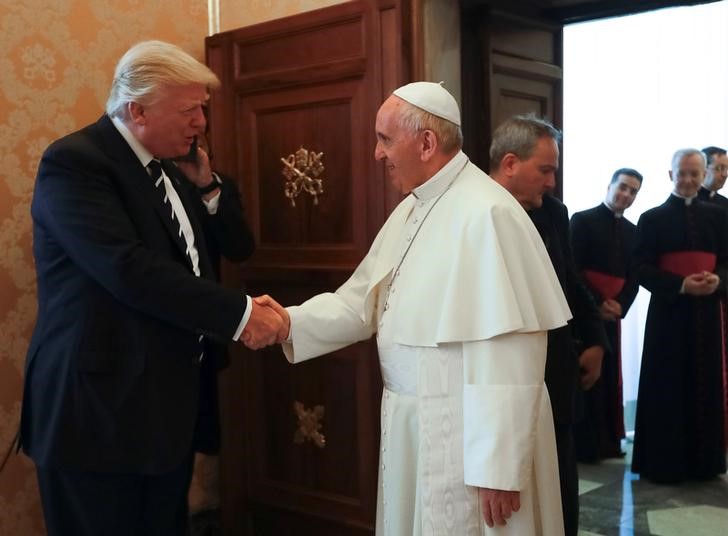
Pope and Trump

“Have you come far?”

The Pope will of course be allowed to make a Christmas broadcast, just as his opposite number Queen Elizabeth, the Supreme Governor of the Anglican Church does.

“In January we visited Chile, and I had great pleasure addressing cheering crowds, which in some cases ran into double figures. I had such a good time that I have persuaded my friend Archbishop Scicluna to go there for a little winter break. We have also been making friends with the Chinese, and they tell us that from now on they will save us the trouble of appointing bishops, but simply pick them from the Central Committee of the Communist Party! Why didn’t we think of that before? Also I opened a new abortion clinic on the invitation of my good friend Mrs Bonino…”

Pope and crown

Uneasy lies the head that wears a crown.

Yes, from now on Catholicism makes a lot more sense. And when we get a new Pope, we can go back to the old system.

Valentine’s Day massacre to go ahead

Posted: 14 Feb 2018 04:29 AM PST

In Chicago, Cardin Al Capone has confirmed that, even though it is Ash Wednesday, the traditional Valentine’s Day massacre will go ahead.Cupich and big crozier

Cardin Al Capone – and isn’t that the biggest crook you ever saw?

As we’ve been told ad nauseam today is both Ash Wednesday, the start of Lent, and St Valentine’s Day, the day for buying chocolates, flowers, gin, scrubbing brushes, copies of Building a Bridge, etc. for your loved one, depending on their inclinations and how much you love them. But can we celebrate both at once?

Following his sensational lecture at the Von Heretic institute in Cambridge, at which he told the world that, although “strictly speaking” chastity is required (don’t you love that phrase?), it must sometimes be abandoned, Capone is now preparing to massacre the Catholic faith in other ways.

Pope and Cupich

“Did I appoint Cupich as a cardinal? Silly me, I mean Chaput!”

In particular the great man – the cardinal who put the “bile” in “papabile” – is launching a series of Amoris Laetitia seminars, to tell the US Bishops how to interpret it. A cheaper option would be to pulp all copies of AL and admit that it is a turkey, but… well, it’s too late now. Or is it?

Catholics are looking forward to seeing how the Vatican will celebrate Easter on April 1st (All Fools’ Day). It’s possible that an all-star line-up of celebrity fools will be present in Rome – Cupich, Marx, Kasper, oh the list is too long to give in detail. Then perhaps Pope Francis will surprise us by admitting “You’ve all been fooled! Amoris Laetitia was just a joke designed to test you! Now I know which of my cardinals to put up against the wall.” And out will come the papal machine-gun.

Cupich glasses

Out of respect for his office, Capone will be offered a blindfold.

No, I think not.

Posted in Uncategorized | 2 Comments

You know that there must be something good about The Benedict Option if Cupich hates it so much.

Benedict Option ‘A Matter Of Global Import’

Monday night’s Benedict Option event at a church hall in Paris went well. The hall was full, and people seemed interested. Last night, I went down to Tours, and had a lovely time speaking to folks. I stayed with the family B., a real Benedict Option Catholic family. It is so, so encouraging to meet fellow Christians who see things like I do, and who are enthusiastic believers, as well as quite obviously “creative minorities,” as Benedict XVI told Christians to be in the post-Christian world. That family, and others I’m meeting here, are such an inspiration.

On the train back to Paris, I discovered that Sandro Magister, the widely read Vatican journalist, wrote today about The Benedict Option. It’s a knockout column. Here’s how it starts:

“The Benedict Option” has now crossed the Atlantic and become a question of global import. A question that is certainly of no little account, because it concerns the future of Christianity in an ever more post-Christian era.

The American Rod Dreher, author of the proposal and of the book, is now traveling around France on a conference circuit and has given an exhaustive interview to the Catholic magazine “la Nef.” His book has been translated into French, and will soon be available in other languages.

But it has been the frontal attack that “La Civiltà Cattolica” has unleashed from Rome against “The Benedict Option” that has ratcheted up even more the level of the controversy.

Dreher is not Catholic. He used to be, now he is Russian Orthodox. But it is above all in the Catholic camp, and initially within the Catholicism of the United States, that his proposal made a splash and produced a very heated discussion.

It is a proposal, in fact, that radically brings into question – in addition to contrasting them with each other – both the current pontificate of Francis and that of his predecessor, Benedict XVI.

The Benedict of the “option” is not pope Joseph Ratzinger, but Benedict of Norcia, the great saint of the 5th and 6th centuries who was able to generate a formidable rebirth of Christian faith and culture in the chaos that followed the collapse of the Roman empire, that rebirth which the other Benedict, the pope, evoked masterfully in his memorable address of September 12 in Paris, at the Collège des Bernardins, essentially proposing that the Catholics of today grasp and revive his lesson, at the present juncture of civilization.

It comes as no surprise, therefore, that from Rome, from a pope like Francis who is the standard bearer of an opposite vision, “The Benedict Option” should have been thrust onto the index through that organic mouthpiece of Jorge Mario Bergoglio which is “La Civiltà Cattolica” directed by the Jesuit Antonio Spadaro.

Read the whole thing.

The rest of the piece examines the argument between myself and a couple of Jesuits around La Civiltà Cattolica. Regular readers of this blog will already be familiar with it.

What I especially like about Magister’s article is that a Vatican journalist of his stature to has said that the Benedict Option is the vision around which the older, Benedict XVI vision of the Catholic Church, is coalescing in the age of Pope Francis and his “new paradigm.” I am honored that Magister thinks so, and am profoundly pleased that with this essay of Magister’s, Benedict XVI no doubt will know now that this ex-Catholic who nevertheless believes in his cultural vision am on his side.

I did not seek to pose The Benedict Option in contrast to Pope Francis, or in criticism of him. You won’t find in the book one word of criticism of Pope Bergoglio. But Francis’s top allies — the Jesuits of La Civiltà Cattolica, and Cardinal Cupich of Chicago — have laid down the gauntlet. This struggle is important. This morning, I spoke to a veteran Catholic journalist in Paris, who told me, “The battle is here, now.” Indeed it is.

Posted in , .

Hide 8 comments

8 Responses to Benedict Option ‘A Matter Of Global Import’

  1. Jonathan Davis says:

    Ive recently thought of one of the reasons you might be getting so much Catholic hierarchy: From the eyes of some of these Catholic leaders, you left the Church when things got tough, while they stuck it out.

    Right or wrongly, you “quit” Catholicism, and perhaps this is part of where the projection of Benedict Option as the Quitters option comes from, the mischaracterization that you so often rail against

    [NFR: You’re totally wrong about that. The Catholic hierarchs who have criticized me (exactly one, that I know of: Cupich; the two Jesuits are not hierarchs) are quite liberal. That’s why they dislike my book. Read Magister. — RD]

  2. pèlerin says:

    Yes. Time to fight. God bless you, Rod. May your you meet with great sucess in your travels, spreading this message. I am praying with you.

  3. Bernie says:

    Rod, I’m happy your book tour in France is going well, and I’m especially happy to hear that leading Catholic voices think highly of the Benedict Option.

    As an update, Cardinal Cupich is organizing three seminars for about 20 U.S. Bishops to push his agenda about which you recently posted. We have to push back. Here’s what the Cardinal is doing:

    http://www.ncregister.com/daily-news/cardinal-cupich-launches-amoris-laetitia-seminars-for-us-bishops

  4. C. L. H. Daniels says:

    Congratulations, Rod. It must be very gratifying to have your work taken seriously by so many people. I think it deserves the recognition it has gotten, and yourself likewise.

    Personally, I’m grateful to you for all that you have written here these past 4-5 years since I first discovered your blog. Your work has made a difference in my life, and I appreciate it.

  5. John says:

    You may not like me to say this but you write with a Roman Catholic mind and heart. (As you know, once baptized into the faith makes one part of it for ever.)

  6. Joan from Michigan says:

    As a teenager I was told that if, in your efforts to change society, you haven’t encountered any opposition, you probably haven’t accomplished much. So I guess congratulations are in order.

  7. TR says:

    I’ll buy the theological difference between Benedict and Francis (though I also think it’s between Euro-centric and Third World concerns as well). But I don’t think for a minute that Benedict was serious about “downsizing.” Or, to put it another way, the institutional church would never consciously allow such downsizing to happen.

    And I suspect the Catholics you’re talking to in France are ultra-nationalistic, right wing, and have a long family history of same. It’s part of the French landscape and not really a reaction to anything particularly recent.

    But I’m glad you’re enjoying time among people who actually have read the book or at least know what the hell you’re talking about. Refreshing, I’m sure.

  8. Maine Catholic says:

    Rod your rebuttal is well said. It is amazing how many people in the Vatican seem to be still living in the 1960’s. Do they watch or read the news at all?

Posted in Uncategorized | Comments Off on You know that there must be something good about The Benedict Option if Cupich hates it so much.
FIVE YEARS AGO TODAY

SUCCESSOR-jumbo-2

February 11, 2013

Posted in Uncategorized | 2 Comments

HERE IS TODAYS DOSE OF SATIRE TO HELP YOU THROUGH THE DAY

Eccles and Bosco is saved


Pope Francis is now popular again

Posted: 13 Feb 2018 07:09 AM PST

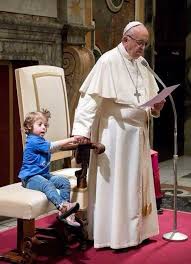
Following recently-reported events, Pope Francis’s popularity rating, which had dropped to 2% as a result of events in Chile and China (etc.) has now shot back up to 98%.This was largely caused by his unprecedented step in holding hands with a little girl with Down’s syndrome, when she interrupted his papal audience.

2Pope

“It’s just adults I can’t stand.”

The range of comments we have received includes the following:

“Isn’t Pope Francis wonderful? Any previous pope would have told the kid to push off. I’m not a Catholic, but I can see that he is my kind of pope. Of course I am also pro-choice, and would have seen no problem with aborting this kid!”

“Yes, the Spirit of Vatican II has entered the Church and changed all the paradigms! Before the 1960s, it was an excommunicable offence to interrupt a papal audience, and the child would have been locked up in a dungeon. Now, however, we are opening gates, building bridges, and knocking down walls.”

“That’s one in the eye for all the pope-bashers! Francis may not have a clue about doctrine or civilised behaviour towards his colleagues, but he’s a darned fine babysitter!”

Robert Kelly and kids

A traddy pastor, who doesn’t want to be interrupted by children.

Rumours that the whole event was staged by Fr Spadaro as a way of reviving the Pope’s flagging popularity are of course exaggerated. However, there is a plan afoot to invite the world’s most glamorous mass-murderer, Kim Yo Jong, to a papl audience, in the hope that some of her charisma can rub off on Francis. Moreover, she may be able to give him some useful tips for dealing with Marcantonio Colonna, the Dubia cardinals, the filial correctors, Cardinal Zen, …

Kim Yo Jong

A meeting of the Pontifical Academy for Life.

Posted in Uncategorized | 1 Comment

DO NOT WATCH THIS VIDEO IF YOU HAVE A WEAK STOMACH

notre_dame_paris

Posted in Uncategorized | 3 Comments

Like a loose barrel of gunpowder rolling on the deck of the Barque of Peter in a pitching sea, Cardinal Cupich continues to damage the Church.

The Clarity of Cardinal Cupich

Crisis Magazine

Cardinal Blase Cupich of Chicago is all for clarity. It has been a consistent theme, as when in September of 2017 he issued a decree banning guns in all parishes, schools and other facilities across the archdiocese “so there would be absolute clarity on our position.” His official statement put “clarity” in italics. When he was bishop of Rapid City, he called for “civility and clarity” in discussing legislation that would limit abortion, but he was somewhat unclear in explaining that the law “must recognize both the suffering of the unborn children in abortion and the suffering of the pregnant women in dire circumstances.” The bill was defeated 55 percent to 45 percent. As bishop of Spokane, he spoke clearly in prohibiting the use of the traditional Latin liturgical books in the Paschal Triduum. He made very clear his disapproval of seminarians and priests demonstrating against Planned Parenthood: “Decisions about abortion are not usually made in front of clinics.” In 2012, his pastoral letter on a state referendum to legalize same-sex “marriage” said: “I also want to be very clear that in stating our position the Catholic Church has no tolerance for the misuse of this moment to incite hostility towards homosexual persons or promote an agenda that is hateful and disrespectful of their human dignity.”

Clarity requires effort because it requires honesty, which can be a costly commodity. So George Orwell said: “The great enemy of clear language is insincerity. When there is a gap between one’s real and one’s declared aims, one turns as it were instinctively to long words and exhausted idioms, like a cuttlefish spurting out ink.” Clear expression issues from clear thinking, which in turn requires conforming thought to reality. This was a primary concern of the Master in his holy agony, for he prayed to the Father that his Church never fudge the truth: “Consecrate them in the truth. Your word is truth” (John 17:17).

The Superior of the Society of Jesus, Fr. Arturo Sosa Abascal, seems wary about the unclear tenor of Christ’s teaching about marriage (Matt. 19: 3-9), because “no one had a recorder to take down his words.” Consequently, what Christ said must be “contextualized,” because human reality “is much more nuanced” and “never black and white.” Jesus did say, without the benefit of recorders other than the Evangelists: “Heaven and earth will pass away, but my words will not pass away” (Matt. 24:35). There is nothing nuanced about that, but Jesus was not a member of the Society of Jesus.

In an interview the day before he lectured on the exhortation of Pope Francis, Amoris Laetitia at the Von Hugel Institute for Critical Catholic Inquiry in Cambridge England, on February 9, Cardinal Cupich hoped that his words “might bring some clarity for people who have raised questions, and then also to raise a challenge for them to also take a second look at the document.” In the lecture itself the cardinal quoted Amoris Laetitia, n. 38: “Many people feel that the Church’s message on marriage and family does not clearly reflect the preaching and attitudes of Jesus, who set forth a demanding ideal yet never failed to show compassion and closeness to the frailty of individuals.” A year earlier, on February 14, 2017, Cardinal Cupich said that the pope’s exhortation “expresses with absolute clarity marriage doctrine in full fidelity to traditional Church teaching.” One supposes that Cardinal Cupich’s lecture in Cambridge was intended to explain why the Exhortation’s clarity was unclear to so many around the world, even though they have the benefit of recording machines and all the social media, which Jesus lacked, although his voice could be heard by thousands on hilltops and seashores.

In the Von Hugel lecture, which was recorded and thus cannot be nuanced, Cardinal Cupich said by way of apophasis that “It goes without saying….” and then went on to say that Amoris Laetitia will also mean rejecting “an authoritarian or paternalistic way of dealing with people that lays down the law, that pretends to have all the answers, or easy answers to complex problems, that suggests that general rules will seamlessly bring immediate clarity.” There is clarity again, in all its frustrating opaqueness. And after rejecting authoritarianism and paternalism, the cardinal invoked Vatican II’s Dogmatic Constitution on the Church, n. 25 to declare that an innovative interpretation of Amoris Laetitia by the bishops of Buenos Aires, which, by virtue of “the publication in Acta Apostolicae Sedes [sic]” of the papal letter commending it, qualifies as an official Church teaching “which all are obliged to abide by and be in conformity with.”

It should be, and I think it is, clear as night and day, that Jesus would not have been crucified had he been more nuanced. There are those who have twisted themselves into pretzels trying to make clear by subtlety, with their own frail command of classical letters, that the official Latinity of Amoris Laetitia proves that it is faithful to authentic doctrine, and is not as flawed as its critics claim. This is on a par with Edgar Nye’s opinion that Wagner’s music is better than it sounds. Excuses like that are defeated by Pope Francis himself who told those Argentinian bishops that their eisegesis “explains precisely the meaning of Chapter VIII.”

Cardinal Cupich called Amoris Laetitia a “radical change” and Cardinal Parolin said “It’s a paradigm shift and the text itself insists on this, that’s what is asked of us—this new spirit, this new approach!” The exclamation point conveys His Eminence’s enthusiasm. Cardinal Cupich asks for a more “holistic” application of the Gospel, in fact using the term ten times without a clear definition of what it means. There have indeed been paradigm shifters in Christology, but there have been no Doctors of the Church among them, and none has been salubrious in the annals of grace. To skim the surface, they have included Arius, Nestorius, Priscillian, Montanus, Mohammed, Waldo, Luther, Calvin, Jansen, Joseph Smith and Phineas Quimby who coached Mrs. Eddy.

Those who have studied the early Modernist period, might assume that the Von Hugel Institute has as its eponym the Baron Friedrich von Hugel, mentor of the Modernists Alfred Loisy and George Tyrrell. Actually, it was named for his brother, Anatole, who was a distinguished naturalist. The baron himself managed to keep his balance, while using the active if neurasthenic minds of younger theologians like guinea pigs, watching them degraded while maintaining his own claims to fidelity. The tedious von Hugel (even his English writings are cadenced as impenetrably German) visited John Henry Newman at least three times, and on each of these occasions he found Newman melancholy, concluding that Newman could not be a saint since saints must be joyful. “I used to wonder how one so good, and one who had made so many sacrifices to God, could be so depressing.” One biographer remarked with astuteness beyond the reach of the humorless baron, that the only evidence we have of Newman being demonstrably depressed was when he was visited by von Hugel.

This writer writes these words hastily, and knowingly exposes himself to imputations of illogic, irascibility and uncharity. Of only the last I vitally excuse myself, for I mean no irreverence or ill intent as a parish priest commenting on superiors. In the fullness of charity, I suppose that Cardinal Cupich is so occupied with the essential works of mercy incumbent upon a spiritual leader of many, that he may have availed himself of the advice of others inadequate to the task of preparing his attempts at clarification. The one complaint I invoke, albeit a strong one since much of my life’s studies have been nurtured by an intuitive friendship with John Henry Newman, who in an unworthy simile is to me as Philip Neri was to him, is that Cardinal Cupich has cited Newman on conscience to represent the very opposite of what Newman lived and exhausted himself to declare: that conscience must be informed by the Holy Ghost and not left to wander about like a ghost of the subjective human ego, validating uninformed impulses. In his Letter to the Duke of Norfolk, Newman distinguished between the operation of conscience and the exercise of private judgment. Such distinctions may be too delicate for hasty doctors of theology, but they are matters for which men were made martyrs. Errors must not be the template for the formation of consciences innocent and malleable. Chesterton warned: “The more doubtful we are about whether we have any truth, the more certain we are (apparently) that we can teach it to children. The smaller our faith in doctrine, the larger is our faith in doctors.”

In his revision of the Arians book, Newman explained in more detail what he meant by consulting the faithful on doctrine, and it is far different from soliciting the views of confused people who think truths are ideals beyond their reach. As a beacon of clarity, Newman knew that Christ is a Saviour and not an Idealist. The word “consult” is, in its Latin root, to consult with or to take counsel in the sense of submission to a truth, as one consults a barometer or takes one’s pulse. Newman said this himself. Conscience is not a license for invention or epistemological fabrication, and consultation of the faithful is not a survey to warrant a “paradigm shift.” Ronald Knox prefaced his translation of the Bible: “The teaching office of the Holy Spirit does not consist in imparting to the Church the knowledge of hitherto unknown doctrines, in addition to the deposit of faith, but in making our knowledge of doctrines already revealed fuller and more precise.”

Cardinal Cupich likes the term “cherry picking” as a reproach. On February 1 in Holy Name Cathedral, as he had done in 2004 in Rapid City, he faulted Pro-Lifers for “cherry-picking” instead of accepting the entire “seamless garment” theory. In 2017, he spoke against “cherry picking” in immigration issues. But Amoris Laetitiacherry picks in citing only one part of the Summa Theologica II-II, q. 140, in a way that posits the exact opposite of what Aquinas meant, just as Cupich cherry picks Newman on the “aboriginal vicar of Christ.” Cupich cites Gaudium et Spes,” n. 16 which calls conscience “the most secret core and sanctuary of a man … (where) he is alone with God, whose voice echoes in his depths.” As Newman was one of the greatest masters of English prose, that kind of lame poesie would have appalled him. It also is sourced from a document parts of which Pope Benedict once called downright Pelagian.

The clarification of doctrine is a risky business. In his novel Loss and Gain, Newman invented a “little, prim, smirking” character, a preacher in Oxford University named the Reverend Dr. Brownside: “As a divine he seemed never to have had any difficulty in any subject; he was so clear or so shallow that he saw to the bottom of all his thoughts: or, since Dr. Johnson tells us that “all shallows are clear,” we may perhaps distinguish him by both epithets.”

Let us be perfectly clear: Dr. Brownside existed only as a sketch on paper, unlike the Bridegroom of the Church who, even without the corroboration of a recording machine, is believed to have “taught as one having authority and not as the scribes.”

(Photo credit: Paul Haring / CNS)

Posted in Uncategorized | 3 Comments