THANK YOU, THANK YOU, THANK YOU !!!

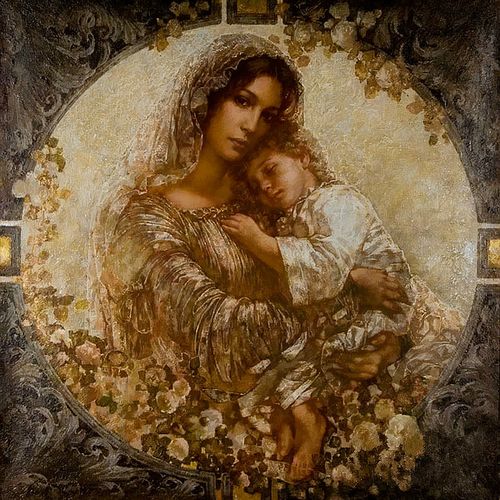
03c94-mary2band2bjesus2b4


Thank you, one and all, for your prayers for the success of my spiritual retreat.

From my perspective it was a great success, thanks in no small part to your prayers.

I returned home in Sinton, Texas late yesterday after six wonderful days in the Texas Hill Country.  Having spent most of my life along the coast of the Gulf of Mexico at elevations varying from minus ten feet below sea level to twenty feet above sea level the mere act of ascending hills and mountains is more than symbolically  “going up” to meet the Lord as Moses did.  

I had 24 hours a day to do nothing but pray and reflect on the Trinity of Persons in God, Our Blessed Mother and my relationship to each of them.  Because the 100th Anniversary of the greatest of the miracles of Fatima occurred during my retreat I read and reflected in particular on Our Blessed Mother’s messages to the Church and the world.  The mystery of Fatima deepened for me but even so I found myself more deeply in love with Our Blessed Mother than ever before.

I also gained some further insight into the nature of the present crisis in the Church and with a lot of help from the Holy Spirit I hope to be able to share the fruit of my reflections with you in the future.

The only downside to my spiritual retreat is that upon returning home upon turning on my cell phone and computer I found that I now have almost 1,000 email and other messages waiting for me.  In my cabin in the Hill Country I had neither cell phone, internet or television service so I was really alone with God and our Blessed Mother.

Please be patient with me as I try to catch up.

Blessings,

+Rene Henry Gracida


Posted in Uncategorized | 7 Comments

REQUEST FOR PRAYERS

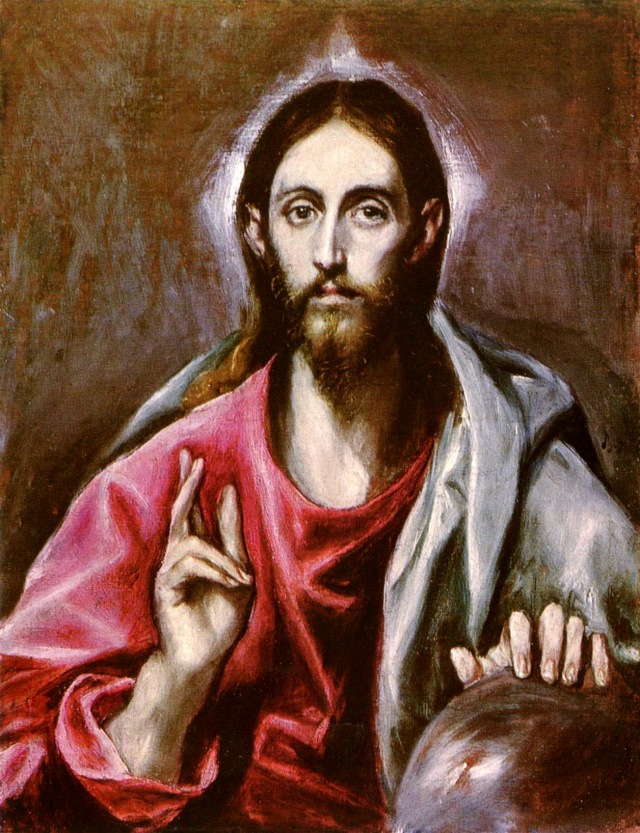
El_Greco_021-large


I WILL BE ON SPIRITUAL RETREAT FROM OCTOBER 12 THROUGH OCTOBER 18.

ABYSSUM

Posted in Uncategorized | 10 Comments

THIS HALLOWEEN CELEBRATE GOODNESS AND FUN, NOT EVIL AND FEAR

Halloween and the presence of darkness

It is fall and the leaves are falling off the trees. At the end of October, it has become customary to celebrate Halloween. The celebration of this day is a uniquely American thing. In fact, our Halloween is a combination of a number of festive days that originated in Europe which were then mixed together in the New World.

Of course, the word Halloween means “All Hallow’s Eve,” the day before the great Catholic feast of All Saints Day on Nov. 1. Whereas All Saints Day is a celebration of holiness, Halloween seems to have taken on the opposite approach recently. As every year passes, it appears that many seem to think of this day as a celebration of death, violence and evil.

Now, I am not saying that there is anything wrong with children dressing up in a decent costume and going door-to-door looking for candy. It is the stuff of family traditions and memories and it is fun! However, it is alarming how the culture of Halloween has otherwise changed in recent times. An observation:

More and more, I see houses decorated with dead bodies, tombstones, figures hanged from nooses in trees and demons and devilish figures on the front lawn. I am not talking about decorating with cornstalks, pumpkins, scarecrows, or even “friendly ghosts,” but with evil, scary and wicked things. The question that comes to my mind is: “Why would somebody want to do this?”

Certainly it is a fad, and like all fads the use of one’s intelligence is optional. But still, why do so many people feel so compelled to decorate their homes with symbols of death, evil and violence? Are they laughing at death or are they worshipping it?

Perhaps people don’t even realize what they are doing. It seems to me that a person who decorates his or her house in this manner had better do some soul searching. Perhaps they might ask themselves, “Why am I so fascinated with death? Why do I have figures of evil and violence in my front yard? How does this reflect my Christian faith which abhors violence, looks to the resurrection of the dead, and which stands in opposition to the Devil?”

Perhaps those who feel compelled to decorate their houses in such a manner or to wear devilish or violent costumes are just mindlessly following the crowd. Such a pity. I assume that those who fall into the glorification of death at Halloween would never think to visit an actual cemetery and pray for those who have died.

My guess is that individuals who spend hundreds of dollars decorating their houses each year and making them as evil looking as possible probably are not donating hundreds of dollars to care for the innocent victims of evil and violence around the world. And my hunch, and this is just a hunch, is that there is a direct correlation between the violence, death and evil that is sometimes depicted around our homes or in our costumes at Halloween — and the presence of darkness in our souls.

Fr. Girotti, who serves as vicar for canonical services and associate moderator of the Curia, is author of “A Shepherd Tends His Flock.”

Posted in Uncategorized | Comments Off on THIS HALLOWEEN CELEBRATE GOODNESS AND FUN, NOT EVIL AND FEAR

IT IS TRAGIC WHEN A PHYSICIAN COMMITS SUICIDE, IT IS ALSO TRAGIC WHEN A PRIEST COMMITS SUICIDE. PRAY FOR YOUR DOCTOR, PRAY FOR YOUR PRIEST

Wholly Healthy: Sometimes the Healer Needs Healing

This column departs a little from the normal subject matter of “Wholly Healthy” in that it’s a plea not for healthy behavior, but for healthy physicians.

Over the years, medicine has become increasingly complex. Mind you, the “saving lives and easing suffering” part just keeps getting better. We can do more than ever. In the 24 years I’ve practiced, the scientific and clinical advances have been breathtaking. And yet, for a number of reasons, the practice of medicine and the life of the physician have become increasingly difficult.

There is, of course, the constant threat of malpractice litigation. It is very depressing for those who endure such lawsuits, no matter which side wins. In addition, physicians constantly struggle against insurers, both private and government-administered, to get their patients the care they need and to receive fair payment.

Administrative burdens and guidelines (and costs) have grown tremendously over the past couple of decades. Indeed, the independent physician is becoming a rarity, as many doctors have little choice but to practice as employees.

Computerized record systems (the ones your doctor looks at the entire time you’re in the office) are 1) very frustrating to practitioners and 2) frequently not used by them. Poorly designed computer systems take doctors away from the bedside and keep them at work long after the last patient leaves. In fact, research suggests that physicians in training are starting to spend more time at keyboards than they do with human beings.

The medical education process itself is long and arduous, requiring students in the prime of their life to give up more than a decade of their lives in order to complete training. The rigors of education and the frustrations of practice are also very hard on physicians and their families. Substance abuse and divorce are all too common.

But perhaps most troubling of all is the fact that in America today we lose the equivalent of one medical school class each year to suicide. Around 300 to 400 physicians kill themselves every year in the U.S., and various combinations of the factors listed above lead to their deaths.

Bottom line? Pray for your doctor. Speak to him or her in words of encouragement and kindness. Invite your physicians to your church and include them in your community. It seems to me this is a largely untapped mission field, “white for the harvest.”

Remember: Sometimes the healer needs the healing. And next time you seek medical care, try to give back some spiritual care. It will be more appreciated than you know.

Posted in Uncategorized | 1 Comment

THE FASCISTS OF THE LEFT WANT YOU TO PAY FOR BIRTH CONTROL AND ABORTION WHILE THE BIRTH RATE OF THE NATION SINKS BELOW POPULATION REPLACEMENT AND IMMIGRANTS COME IN TO FILL THE GAP: INSANITY !!!

Jeff Jacoby

Pundicity

If you can pay for aspirin, you can pay for birth control

by Jeff Jacoby
The Boston Globe
October 11, 2017

http://www.jeffjacoby.com/20409/if-you-can-pay-for-aspirin-you-can-pay-for-birth


IT HAS BEEN 52 years since the Supreme Court ruled, in Griswold v. Connecticut, that government may not ban anyone from using contraceptives. The freedom to use birth control is protected by the Constitution’s “fundamental right” to privacy. That freedom is a matter of settled law, and hasn’t been challenged in the slightest by President Trump or his administration.

But you wouldn’t know that from the hysteria that erupted when the White House last week acted to uphold the conscience claims of employers who object to funding some types of contraception on sincere moral or religious grounds.

“The Trump administration just took direct aim at birth control coverage for 62 million women,” stormed Cecile Richards, the president of Planned Parenthood. On Twitter, Hillary Clinton accused Trump of showing “blatant disregard for medicine, science, & every woman’s right to make her own health decisions.” Elizabeth Warren, denouncing “this attack on basic health care,” claimed that the GOP’s top priority is to deprive women of birth control. “News flash to Republicans,” Warren sneered. “The year is 2017, not 1917.”

News flash to Warren, et al.: There is no attack on health care, and no in America is being deprived of birth control. You are losing nothing but the power to force nuns to pay for your oral contraceptives. As a matter of common decency, you should be ashamed of demanding something so outrageous.

Access to birth control may be deemed within the First Amendment’s “emanations” and “penumbras,” as the Supreme Court put it. The right to religious liberty, however, is not merely implied by the words of the Constitution. It’s explicit. As a matter of economics and public policy, the Affordable Care Act mandate that birth control be supplied for free is absurd. But ramming that mandate down the throat of Christian colleges, Little Sisters of the Poor, and others with grave religious objections was worse than absurd, it was unconstitutional.

In carving out an exemption to the ACA mandate for employers with genuine moral qualms, the Trump administration is belatedly halting five years’ worth of bullying by the federal government. “To the greatest extent practicable and permitted by law,” the administration’s new religious guidance makes clear, “religious observance and practice should be reasonably accommodated in all government activity.” It is disturbing to see “reproductive rights” hardliners react with such fury to treating nuns with respect and sensitivity. Especially since birth control will remain as available and affordable as ever.

Religious concerns aside, the new White House rule leaves the birth-control mandate in place. Trump’s “tweak won’t affect 99.9 percent of women,” observes the Wall Street Journal, “and that number could probably have a few more 9s at the end.” Washington will continue to compel virtually every employer and insurer in America to supply birth control to any woman who wants one at no out-of-pocket cost.

The Little Sisters of the Poor, an order of nuns who care for low-income elders, went to court to challenge the Obamacare mandate requiring them to supply forms of birth control that would violate their religious beliefs.

Yet there is no legitimate rationale for such a mandate. Americans don’t expect to get aspirin, bandages, or cold medicine — or condoms — for free; by what logic should birth control pills or diaphragms be handed over at no cost? It is true that a woman’s unwanted pregnancy can lead to serious costs, but the same is also true of a diabetic’s hyperglycemia. Should insulin be free?

By and large, birth control is inexpensive; as little as $20 a month without insurance. For low-income women who find that too onerous, the federal government’s Title X program provides subsidized contraception to the tune of nearly $290 million per year. American women are not forced to choose between the Pill or the rent. And access to birth control, as the Centers for Disease Control reported in 2010, was virtually universal before Obamacare.

The White House is right to end the burden on religious objectors. But it is the birth-control mandate itself that should be scrapped. Contraception is legal, cheap, and available everywhere. Why are the feds meddling where they aren’t needed?

(Jeff Jacoby is a columnist for The Boston Globe).

— ## —

Follow Jeff Jacoby on Twitter.

“Like” Jeff Jacoby’s columns on Facebook.

Want to read more Jeff Jacoby? Sign up for “Arguable,” his free weekly email newsletter

Related Topics:  Abortion and Reproduction, Health, Health Care, and Medical Insurance

Posted in Uncategorized | Comments Off on THE FASCISTS OF THE LEFT WANT YOU TO PAY FOR BIRTH CONTROL AND ABORTION WHILE THE BIRTH RATE OF THE NATION SINKS BELOW POPULATION REPLACEMENT AND IMMIGRANTS COME IN TO FILL THE GAP: INSANITY !!!

COMEDIANS USED TO ASK “IS THE POPE CATHOLIC?” NOW THEY ASK “IS THE POPE COMMUNIST?”

Staino

Settimo Cielodi Sandro Magister

The Communists the Pope Likes. And Vice-versa

[ Emphasis and {commentary} in red type by Abyssum ]


In recent days a couple of surprising things have happened in Rome. And they are instructive in their way.

The first is the beginning of the collaboration with “Avvenire,” the newspaper of the Italian episcopal conference, of the satirical comics author Sergio Staino, with a Sunday strip entitled “Hello, Jesus!”

Here the surprise lies in the fact that Staino is an unwavering communist, was a “flower child” and a champion of free love, was until a few months ago the director of “L’Unità,” the defunct newspaper of the Italian communist party and then of the parties that succeeded it, and is the honorary president of the UAAR, the Union of Atheists and Rationalist Agnostics.

The absentminded Jesus of his strips still lives in Nazareth with Joseph and Mary, gives his father a hand in the woodshop, but his head is already elsewhere, looking to the time when he will leave to finally become – in Staino’s words – “the first of the socialists, the first to fight for the poor.”

Interviewed in “Avvenire” on the day of his debut, Staino recounted that some time ago, when Pope Francis, during a “long telephone conversation” with Slow Food founder Carlo Petrini, was told that back in 1948 Staino’s mother had been denied sacramental absolution for having voted for the communist party, the pope burst out laughing: “Tell the mother of this friend of yours that I will give her that absolution.”

This does not change the fact that his {Staino’s} arrival has provoked a deluge of protests. Including that of the newspaper’s editor, in the person of the secretary general of the Italian episcopal conference, Bishop Nunzio Galantino, whose words were reported to the readers of “Avvenire” by the paper’s director, Marco Tarquinio: “I do not agree, because I do not understand just what added value comes to our newspaper from Staino’s strips.”

And it is precisely here that the instructive part of the affair can be grasped. Because now there is proof that Galantino’s power over the episcopal conference and over its newspaper no longer counts like it did when Pope Francis appointed him secretary general and de facto his sole lieutenant, with the effect that every word and decision of his came down as if from the pope himself.

Today the episcopal conference has a new president in the person of Cardinal Gualtiero Bassetti, who indeed for his part is very close to Francis and much more skillful in understanding and seconding his wishes.

While Galantino’s fall from the pope’s graces is still more evident, and the Staino case is glaring proof of this.

Not only, in fact, did the director of “Avvenire” decide on his own, without having “asked for authorization beforehand from the editor,” but he defended in the pages of “Avvenire” the justice of this decision of his, moreover making public the uninfluential contrary opinion of Bishop Galantino.

To whom he said goodbye at the very moment he was welcoming Staino, for his part “absolved” by Pope Francis.

*

The second episode saw another newspaper in the leading role, “Il Manifesto,” the only one in Italy that proclaims alongside its masthead: “Communist daily.”

On Thursday, October 5 – such a coincidence, right at the hundredth anniversary of the “October Revolution” – “Il Manifesto” went to the newsstands with a book containing three speeches by Pope Francis to the “popular movements,” which he convened for the first time in Rome in 2014, then in Bolivia in 2015, and then again in Rome in 2016.

Interviewed by “Avvenire,” the director of “Il Manifesto,” Norma Rangeri, explained the decision:

“We feel these messages of the pope to be our own, and we want to bring to our readers the radicality and simplicity of these words of his. […] They contain a new idea of politics, the pope also cites Esther Ballestrino de Careaga, for her conception of politics. She is a communist of Paraguayan origin.” (And she was a chemistry teacher of the young Jorge Mario Bergoglio, who met her two daughters during his visit to Paraguay, in July of 2015).

The readers of Settimo Cielo are already extensively informed about Francis’s speeches to the “popular movements” and his political vision:

> Bergoglio, Politician. The Myth of the Chosen People

But further information can be gleaned from their publication by “Il Manifesto.” Because in the book, in addition to the speeches, there are an interview and a postscript that enhance the overall picture, the first with the Argentine Juan Grabois and the second by the Italian scholar Alessandro Santagata.

Grabois, 34, the son of an historic Peronist official, today directs the Confederación de Trabajadores de la Economía Popular and has been close to Bergoglio since 2005, meaning since the then-archbishop of Buenos Aires was at the head of the Argentine episcopal conference. After he became pope, Francis appointed him as a consultant to the pontifical council for justice and peace, now absorbed into the new dicastery for promoting integral human development. And he, Grabois, is the most active in tying together the threads of the convocations of the “popular movements” around the pope.

The idea began to take shape immediately after Francis’s election. After the inaugural Mass of the new pontificate – at which there was also present in the front row, along with the heads of state, the Argentine Sergio Sánchez, head of the Movimiento de Trabajadores Excluidos – Grabois says that he was contacted by Archbishop Marcelo Sánchez Sorondo, chancellor of the pontifical academy of sciences, he too Argentine and more impatient than ever to enter into the circle of the new pope’s favorites.

Sorondo asked Grabois to help him organize a seminar at the Vatican entitled “Emergenza esclusi,” which was held in December of 2013 and was attended by Joao Pedro Stédile, leader of the Movimento dos Trabalhadores Rurais Sem Terra in Brazil.

This seminar was the preview of the subsequent first convocation around Pope Francis in Rome of the “popular movements,” a network of a hundred organizations from all over the world but mostly from Latin America, to a large extent the same as at the memorable anti-capitalist and anti-globalization gatherings in Seattle and Porto Alegre.

To organize this and the subsequent meetings, a committee was created made up of Grabois, Stédile, and two other activists: Jockin Arputham of the National Slum Dwellers Federation and Charo Castelló of the Mouvement Mondial des Travailleurs Chrétiens. Plus the Jesuit Michael Czerny, now the undersecretary of the department of migrants and refugees at the dicastery for integral human development, a department over which Pope Francis has retained personal managerial authority. In Grabois’s judgment, the role of Fr. Czerny has so far been “of vital importance for connecting with the various popular organizations.”

In the book published by “Il Manifesto,” both Grabois and Santagata point out that many of the “popular movements” on which the pope relies are critical toward the Church as an institution and opposed to Catholic dogmas on questions like abortion or homosexual rights. But “such contradictions do not affect the work of the meetings too much, because this is focused on specific issues related to the struggle for land, housing, and work.”

A fourth convocation of the “popular movements” was scheduled for Caracas in October of this year. But it was postponed on account of the disaster into which Venezuela has plunged.

In compensation they began to hold meetings not on a global but on a regional scale. The first was held in Modesto, California from February 16-19 of 2017 for the movements of the United States. Another was held from June 20-21 in Cochabamba, Bolivia, for the movements of Latin America.

With the encounter in Modesto, Pope Francis took part by videoconference, reading a speech perfectly in line with the three previous ones.

He didn’t show up, however, for those who came to Cochabamba. But with regard to these meetings on a regional scale, Santagata writes:

“As [Vittorio] Agnoletto told me, at the last meeting at the Vatican criticisms were raised over this proposal of building networks that, in his judgment, risk giving rise to a series of ‘empty boxes’ in competition with the organization of the World Social Forum.”

Agnoletto, elected in 2004 to a five-year term in the European parliament among the ranks of Rifondazione Comunista, was for a long time an Italian representative on the international board of the World Social Forum created in Porto Alegre, and has taken part in various meetings at the Vatican on these issues.

Between the World Social Forum and the “popular movements” dear to Pope Francis there is in fact increasing friction. In the judgment of Grabois, the former “has betrayed its essence to transform itself into a sequence of rituals or tourist activities for militants.”

While the latter, the movements blessed by the pope, would be today the only ones capable of “promoting the communal organization of the excluded to build from the bottom up the humane alternative to a marginalizing globalization.” Even at the cost of straying from the “strict confines of official democracy” and adopting “practices that could be criminalized by states.”

(English translation by Matthew Sherry, Ballwin, Missouri, U.S.A.)

Condividi:
  • Facebook
  • Twitter
  • Google Bookmarks
  • FriendFeed
  • LinkedIn
Posted in Uncategorized | Comments Off on COMEDIANS USED TO ASK “IS THE POPE CATHOLIC?” NOW THEY ASK “IS THE POPE COMMUNIST?”

JACQUES MARITAIN FAMOUSLY SAID “RECEIVE HOLY COMMUNION FOR WHAT AILS YOU” AND I ADD “RECEIVE IT IN A CELEBRATION OF THE TRADITIONAL LATIN MASS”

The Traditional Mass: A Remedy for Modern Man’s Spiritual Ills


CRISIS MAGAZINE

King Henri IV, after a long and bitter fight for the French Calvinist cause, finally sought to quell the fires of religious war by adopting his country’s traditional faith. “Paris is well worth a Mass,” he is rumored to have said, confirming the impression that he continued to reject Romanish ritual in his heart, even as he placed the strength of the monarchy and peace of the realm ahead of his personal convictions.

As Catholics, we know that Henri erred in at least two ways: first, by concluding that it profits a man to gain any portion of the world at the cost of his soul (see Mark 8:36); and second, by considering the Mass to be something of little account.

Regarding the first point, our faith teaches that “the sufferings of this time are not worthy to be compared with the glory to come”; that this glory, which “shall be revealed in us,” is ours in hope if we are “joint heirs with Christ”; and that this inheritance is ours when we “are in Christ Jesus,” and he in us (Rom. 8:1-18).

How is this communion with Christ achieved? The Second Vatican Council reminds usof the perennial teaching that our salvation depends on both the doctrines and sacraments of the Church—and above all on the Eucharistic liturgy, “the summit toward which the activity of the Church is directed [and] the font from which all her power flows.”

Between the means of salvation and the ever-changing fashions and fetishes of the world it should not be difficult to decide where our ultimate allegiance lies. Yet the Church always has its Henris: members (even princes) willing and sometimes eager to deny and denigrate her saving doctrines and disciplines in order to curry the favor of a fallen humanity.

When the very integrity of the Church seems shaken by the scandal of highly placed churchmen scheming to subvert infallible dogmas such as the indissolubility of marriage, it may seem odd to focus on matters of liturgical controversy. In any case, haven’t these disputes been more or less settled by various measures of Popes John Paul II and Benedict XVI, liberating the ancient form of the Roman Rite from de facto banishment and providing for the worthy celebration of the rite’s newer version?

In his latest book, Noble Beauty, Transcendent Holiness: Why the Modern Age Needs the Mass of Ages, Peter Kwasniewski argues that the liturgical damage control administered by these holy popes, though laudable in itself and fruitful in many ways, is only the initial stage of a far larger restoration that must take place if the Church is to strengthen her connection to Christ, whose strength she so desperately needs if she is to convert the modern world to him.

As those familiar with his writings have come to expect, Kwasniewski skillfully interweaves the fruits of his scholarly studies, personal reflections, and heartfelt exchanges with his fellow Catholics into an elegant and moving account of the damage the Church has done to herself in recent decades by abandoning her own heritage, liturgical and otherwise.

Boldly, yet persuasively, Kwasniewski demonstrates how the sudden and sweeping changes imposed since the 1960s on modes of public worship—changes often grounded in shoddy scholarship, advanced by deceitful maneuvering, and imposed by bureaucratic fiat—have contributed to the ascendency of theological modernism within the Church and a consequent decline in signs of spiritual strength—vocations, Mass attendance, conversions, and witness to the world.

Without assuming a simple cause and effect relationship, Kwasniewski amply demonstrates how liturgical innovations—some mandated by the new liturgical books, others smuggled in during the process of their implementation—systematically undermine beliefs and habits vital to the development and nourishment of souls in spirit and in truth. The near exclusive use of the vernacular, the simplification and elimination of theologically rich and biblically grounded texts and symbols, the priest’s versus populum stance, the multitude of options and encouragement of improvisation, the invasion of the sanctuary by laymen, the incessant prodding of the laity to respond to verbal cues in prescribed ways—all these features and more constitute a subversion of the theocentric orientation that has defined Christian liturgy from the time of the Apostles.

To those who object that we must not idolize particular ceremonies—which, after all, were developed or adapted by human agency over the centuries—Kwasniewski masterfully answers that liturgy is an essential component of the Incarnational dynamic of salvation. Though he need not have done so, God chose to redeem mankind by taking flesh in the nature of a particular man, who preached the Gospel in a particular tongue in a particular land to particular disciples. Having died and risen, the God-Man sent his Spirit to a particular corps of men whom he commissioned to teach and govern in his name—dividing particular and unique gifts among those who love and obey him by loving and obeying his Church.

Although the palpable particularity of Christ and his Church are famously scandalous to those who would prefer a spirituality of petty platitudes, our faith insists that “there is no other name under heaven given to men, whereby we must be saved” (Acts 4:12). The bearer of that Holy Name, Jesus Christ, has chosen to reach out and rescue us—body and soul—through the sacraments and sacramentals administered by a Church obedient to his teachings and commands.

A right appreciation of the liturgy thus begins with the realization that it is a manifestation of the divine Logos given to us from above by the Father of lights (James 1:17), whose gifts constitute “sound words” “committed to [our] trust by the Holy Ghost,” to which we must hold firm “in the love which is in Christ Jesus” (2 Tim. 1:13-14).

In perhaps the most striking chapter of his book, Kwasniewski argues that the perfect model of our approach to the liturgy is Mary, who gave her fiat to the Incarnation of the Logos with all its consequences, even those she could scarcely see or comprehend. Like Mary, who “kept all these words, pondering them in her heart” (Luke 2:19), we need to be drawn by the liturgy into the contemplation of sublime mysteries through which he that is mighty will do great things to us (Luke 1:49). Only when we allow ourselves to be shaped by the liturgy—and hence by God—can we grow in the sanctity needed to proclaim the glory and do the works of God, allowing his light to shine before men and drawing all men to him.

Though development in the liturgy does take place, the only change compatible with the nature of liturgy is slow and organic rather than quick and mechanistic. From time to time, souls profoundly shaped by divine agency have contributed to the development of liturgical rites through inspired additions to or cautious pruning of what has been received. In this way, a number of differing but profoundly kindred rites have developed over the centuries. Before recent revisions to the Roman Rite, however, the Church has never permitted the rapid and radical revision of the primary means by which she approaches her divine Savior.

The recent “wholesale reconstruction and whole-cloth invention” of the liturgy, Kwasniewski points out, was effected under the influence of “two false theories: the Corruption Theory,” which repudiates centuries of liturgical development as resulting from human error, and “the Pastoral Theory,” which holds that liturgy must be adapted to the radically new mentality of modern man. Given that the masterminds of the revised liturgy despised and rejected the actual handiwork of God as embodied in the traditional Roman Rite, while aiming at a liturgy governed by the whims of men rather than the worthy reception of the divine Logos, it is no wonder that, despite the heroic efforts of countless faithful souls caught in the crossfire, the Church has suffered such drastic setbacks in the wake of the resulting liturgical revolution.

As Kwasniewski notes, modern man (who is, in the end, nothing but fallen man puffed up and egged on by a particular combination of flattery and technical facilitation) is driven to exert control over his environment and to seek comfort and pleasure anywhere he can find them. While this can indeed raise barriers to his participation in the traditional liturgy—with its ancient language, silent prayers, multilayered action, hierarchical structure, and complex symbolism—the very nature of this alienation from traditional modes of worship demands that we embrace them all the more intentionally. For the same things that alienate us from the ancient liturgy separate us from God—who is infinitely above us and beyond our comprehension, over whom we can exert no control, and whose superabundant love promises to sweeten and lighten the yoke of suffering rather than promising temporal comfort and pleasure.

How are we to recover the wisdom and graces of a liturgy all but lost to the vast majority of Roman Rite Catholics? Kwasniewski rightly refrains from attempting to predict the precise ways and means of divine providence. He does make clear, however, that the traditional Roman Rite—with or without organic adaptations, and celebrated in the manner prescribed by the popes and councils up to and including Sacrosanctum Concilium—constitutes the model to which all forms of the Roman Rite must conform if the Church is to receive and distribute the plenteous fruits with which her loving Lord wishes to feed a starving world.

For those intimidated by this conclusion, Kwasniewski walks us through various features of the traditional Mass that may at first feel foreign to us, and explains how they can serve as an invitation and lifelong training in the love and service of Our Lord. I leave it to the reader to peruse the particulars of his sage advice.

In the end, Kwasniewski has succeeded at showing both that conformity to modernity is not worth the loss of the traditional Mas, and that the salvation of modern man is worth the recovery of this same Mass. If “traditional liturgy is our lifeline, not only to Our Lord but to the entire history, heritage, culture, theology, and identity of the Roman Catholic Church to which we belong,” we ought to give thanks for the continued availability of this lifeline, and do our best (in accordance with our circumstances and duties) to put it to its intended use!

L. Joseph Hebert

By

L. Joseph Hebert is Professor of Political Science and Leadership Studies and Director of Pre-Law Studies at St. Ambrose University in Davenport, IA. He is former Editor in Chief of The Catholic Social Science Review published by the Society of Catholic Social Scientists. Dr. Hebert is the President of Una Voce Quad Cities.

Posted in Uncategorized | Comments Off on JACQUES MARITAIN FAMOUSLY SAID “RECEIVE HOLY COMMUNION FOR WHAT AILS YOU” AND I ADD “RECEIVE IT IN A CELEBRATION OF THE TRADITIONAL LATIN MASS”

THE RELATIVISM OF THE FOF IS CONDEMNED BY THE CDF’S DOCTRINAL COMMENTARY ON THE CONCLUDING FORMULA OF THE PROFESSIO FIDEI


The-Last-Judgment-by-Michelangelo

CDF Doctrinal Commentary – Professio fidei

DOCTRINAL COMMENTARY ON THE CONCLUDING FORMULA OF THE PROFESSIO FIDEI
Congregation for the Doctrine of the Faith

[ Emphasis in red type by Abyssum ]

[This commentary was issued coincident with the promulgation of “Ad tuendam fidem” by Pope John Paul II, modifying the Oriental and Latin codes of canon law.]

(1). From her very beginning, the Church has professed faith in the Lord, crucified and risen, and has gathered the fundamental contents of her belief into certain formulas. The central event of the death and resurrection of the Lord Jesus, expressed first in simple formulas and subsequently in formulas that were more developed,1 made it possible to give life to that uninterrupted proclamation of faith, in which the Church has handed on both what had been received from the lips of Christ and from his works, as well as what had been learned “at the prompting of the Holy Spirit.”2

The same New Testament is the singular witness of the first profession proclaimed by the disciples immediately after the events of Easter: “For I handed on to you as of first importance what I also received: that Christ died for our sins in accordance with the Scriptures; that he was buried; that he was raised on the third day in accordance withthe Scriptures; that he appeared to Cephas, then to the Twelve.”3

(2). In the course of the centuries, from this unchangeable nucleus testifying to Jesus as Son of God and as Lord, symbols witnessing to the unity of the faith and to the communion of the churches came to be developed. In these, the fundamental truths which every believer is required to know and to profess were gathered together. Thus, before receiving Baptism, the catechumen must make his profession of faith. The Fathers too, coming together in Councils to respond to historical challenges that required a more complete presentation of the truths of the faith or a defense of the orthodoxy of those truths, formulated new creeds which occupy “a special place in the Church’s life”4 up to the present day. The diversity of these symbols expresses the richness of the one faith; none of them is superseded or nullified by subsequent professions of faith formulated in response to later historical circumstances.

(3). Christ’s promise to bestow the Holy Spirit, who “will guide you into all truth,”constantly sustains the Church on her way.5 Thus, in the course of her history, certain truths have been defined as having been acquired though the Holy Spirit’s assistance and are therefore perceptible stages in the realization of the original promise. Other truths, however, have to be understood still more deeply before full possession can be attained of what God, in his mystery of love, wished to reveal to men for their salvation.6

In recent times too, in her pastoral care for souls, the Church has thought it opportune to express in a more explicit way the faith of all time. In addition, the obligation has been established for some members of the Christian faithful, called to assume particular offices in the community in the name of the Church, to publicly make a profession of faith according to the formula approved by the Apostolic See.7


(4). This new formula of the Professio fidei restates the Nicene- Constantinopolitan Creed and concludes with the addition of three propositions or paragraphs intended to better distinguish the order of the truths to which the believer adheres. The correct explanation of these paragraphs deserves a clear presentation, so that their authentic meaning, as given by the Church’s Magisterium, will be well understood, received and integrally preserved.

In contemporary usage, the term ‘Church’ has come to include a variety of meanings, which, while true and consistent, require greater precision when one refers to the specific and proper functions of persons who act within the Church. In this area, it is clear that, on questions of faith and morals, the only subject qualified to fulfil the office of teaching with binding authority for the faithful is the Supreme Pontiff and the College of Bishops in communion with him.8 The Bishops are the “authentic teachers” of the faith, “endowed with the authority of Christ,”9 because by divine institution they are the successors of the Apostles “in teaching and in pastoral governance”: together with the Roman Pontiff they exercise supreme and full power over all the Church, although this power cannot be exercised without the consent of the Roman Pontiff.10

(5). The first paragraph states: “With firm faith, I also believe everything contained in the Word of God, whether written or handed down in Tradition, which the Church, either by a solemn judgment or by the ordinary and universal Magisterium, sets forth to be believed as divinely revealed.” The object taught in this paragraph is constituted by all those doctrines of divine and catholic faith which the Church proposes as divinely and formally revealed and, as such, as irreformable.11

These doctrines are contained in the Word of God, written or handed down, and defined with a solemn judgment as divinely revealed truths either by the Roman Pontiff when he speaks ‘ex cathedra,’ or by the College of Bishops gathered in council, or infallibly proposed for belief by the ordinary and universal Magisterium.

These doctrines require the assent of theological faith by all members of the faithful. Thus, whoever obstinately places them in doubt or denies them falls under the censure of heresy, as indicated by the respective canons of the Codes of Canon Law.12

(6). The second proposition of the Professio fidei states: “I also firmly accept and hold each and everything definitively proposed by the Church regarding teaching on faith and morals.” The object taught by this formula includes all those teachings belonging to the dogmatic or moral area,13 which are necessary for faithfully keeping and expounding the deposit of faith, even if they have not been proposed by the Magisterium of the Church as formally revealed.

Such doctrines can be defined solemnly by the Roman Pontiff when he speaks ‘ex cathedra’ or by the College of Bishops gathered in council, or they can be taught infallibly by the ordinary and universal Magisterium of the Church as a “sententia definitive tenenda”.14 Every believer, therefore, is required to give firm and definitive assent to these truths, based on faith in the Holy Spirit’s assistance to the Church’s Magisterium, and on the Catholic doctrine of the infallibility of the Magisterium in these matters.15 Whoever denies these truths would be in a position of rejecting a truth of Catholic doctrine16 and would therefore no longer be in full communion with the Catholic Church.


(7). The truths belonging to this second paragraph can be of various natures, thus giving different qualities to their relationship with revelation. There are truths which are necessarily connected with revelation by virtue of an historical relationship; while other truths evince a logical connection that expresses a stage in the maturation of understanding of revelation which the Church is called to undertake. The fact that these doctrines may not be proposed as formally revealed, insofar as they add to the data of faith elements that are not revealed or which are not yet expressly recognized as such, in no way diminishes their definitive character, which is required at least by their intrinsic connection with revealed truth. Moreover, it cannot be excluded that at a certain point in dogmatic development, the understanding of the realities and the words of the deposit of faith can progress in the life of the Church, and the Magisterium may proclaim some of these doctrines as also dogmas of divine and catholic faith.

(8). With regard to the nature of the assent owed to the truths set forth by the Church as divinely revealed (those of the first paragraph) or to be held definitively (those of the second paragraph), it is important to emphasize that there is no difference with respect to the full and irrevocable character of the assent which is owed to these teachings. The difference concerns the supernatural virtue of faith: in the case of truths of the first paragraph, the assent is based directly on faith in the authority of the Word of God (doctrines de fide credenda); in the case of the truths of the second paragraph, the assent is based on faith in the Holy Spirit’s assistance to the Magisterium and on the Catholic doctrine of the infallibility of the Magisterium (doctrines de fide tenenda).

(9). The Magisterium of the Church, however, teaches a doctrine to be believed as divinely revealed (first paragraph) or to be held definitively (second paragraph) with an act which is either defining or non-defining. In the case of a defining act, a truth is solemnly defined by an “ex cathedra” pronouncement by the Roman Pontiff or by the action of an ecumenical council. In the case of a non-defining act, a doctrine is taught infallibly by the ordinary and universal Magisterium of the Bishops dispersed throughout the world who are in communion with the Successor of Peter. Such a doctrine can be confirmed or reaffirmed by the Roman Pontiff, even without recourse to a solemn definition, by declaring explicitly that it belongs to the teaching of the ordinary and universal Magisterium as a truth that is divinely revealed (first paragraph) or as a truth of Catholic doctrine (second paragraph). Consequently, when there has not been a judgment on a doctrine in the solemn form of a definition, but this doctrine, belonging to the inheritance of the depositum fidei, is taught by the ordinary and universal Magisterium, which necessarily includes the Pope, such a doctrine is to be understood as having been set forth infallibly.17 The declaration of confirmation or reaffirmation by the Roman Pontiff in this case is not a new dogmatic definition, but a formal attestation of a truth already possessed and infallibly transmitted by the Church.

(10). The third proposition of the Professio fidei states: “Moreover, I adhere with religious submission of will and intellect to the teachings which either the Roman Pontiff or the College of Bishops enunciate when they exercise their authentic Magisterium, even if they do not intend to proclaim these teachings by a definitive act.” To this paragraph belong all those teachings on faith and morals – presented as true or at least as sure, even if they have not been defined with a solemn judgment or proposed as definitive by the ordinary and universal Magisterium. Such teachings are, however, an authentic expression of the ordinary Magisterium of the Roman Pontiff or of the College of Bishops and therefore require religious submission of will and intellect.18 They are set forth in order to arrive at a deeper understanding of revelation, or to recall the conformity of a teaching with the truths of faith, or lastly to warn against ideas incompatible with these truths or against dangerous opinions that can lead to error.19 A proposition contrary to these doctrines can be qualified as erroneous or, in the case of teachings of the prudential order, as rash or dangerous and therefore “tuto decor non potest”.20


(11). Examples. Without any intention of completeness or exhaustiveness, some examples of doctrines relative to the three paragraphs described above can be recalled.

To the truths of the first paragraph belong the articles of faith of the Creed, the various Christological dogmas21 and Marian dogmas;22 the doctrine of the institution of the sacraments by Christ and their efficacy with regard to grace;23 the doctrine of the real and substantial presence of Christ in the Eucharist24 and the sacrificial nature of the eucharistic celebration;25 the foundation of the Church by the will of Christ;26 the doctrine on the primacy and infallibility of the Roman Pontiff;27 the doctrine on the existence of original sin;28 the doctrine on the immortality of the spiritual soul and on the immediate recompense after death;29 the absence of error in the inspired sacred texts;30 the doctrine on the grave immorality of direct and voluntary killing of an innocent human being.31

With respect to the truths of the second paragraph, with reference to those connected with revelation by a logical necessity, one can consider, for example, the development in the understanding of the doctrine connected with the definition of papal infallibility, prior to the dogmatic definition of the First Vatican Council. The primacy of the Successor of Peter was always believed as a revealed fact, although until Vatican I the discussion remained open as to whether the conceptual elaboration of what is understood by the terms ‘jurisdiction’ and ‘infallibility’ was to be considered an intrinsic part of revelation or only a logical consequence. On the other hand, although its character as a divinely revealed truth was defined in the First Vatican Council, the doctrine on the infallibility and primacy of jurisdiction of the Roman Pontiff was already recognized as definitive in the period before the council. History clearly shows, therefore, that what was accepted into the consciousness of the Church was considered a true doctrine from the beginning, and was subsequently held to be definitive; however, only in the final stage – the definition of Vatican I – was it also accepted as a divinely revealed truth.

A similar process can be observed in the more recent teaching regarding the doctrine that priestly ordination is reserved only to men. The Supreme Pontiff, while not wishing to proceed to a dogmatic definition, intended to reaffirm that this doctrine is tobe held definitively,32 since, founded on the written Word of God, constantly preserved and applied in the Tradition of the Church, it has been set forth infallibly by the ordinary and universal Magisterium.33 As the prior example illustrates, this does not foreclose the possibility that, in the future, the consciousness of the Church might progress to the point where this teaching could be defined as a doctrine to be believed as divinely revealed.

The doctrine on the illicitness of euthanasia, taught in the Encyclical Letter Evangelium Vitae, can also be recalled. Confirming that euthanasia is “a grave violation of the law of God,” the Pope declares that “this doctrine is based upon the natural law and upon the written Word of God, is transmitted by the Church’s Tradition and taught by the ordinary and universal Magisterium”.34 It could seem that there is only a logical element in the doctrine on euthanasia, since Scripture does not seem to be aware of the concept. In this case, however, the interrelationship between the orders of faith and reason becomes apparent: Scripture, in fact, clearly excludes every form of the kind of self-determination of human existence that is presupposed in the theory and practice of euthanasia.

Other examples of moral doctrines which are taught as definitive by the universal and ordinary Magisterium of the Church are: the teaching on the illicitness of prostitution35 and of fornication.36

With regard to those truths connected to revelation by historical necessity and which are to be held definitively, but are not able to be declared as divinely revealed, the following examples can be given: the legitimacy of the election of the Supreme Pontiff or of the celebration of an ecumenical council, the canonizations of saints (dogmatic facts), the declaration of Pope Leo XIII in the Apostolic Letter Apostolicae Curae on the invalidity of Anglican ordinations …37

As examples of doctrines belonging to the third paragraph, one can point in general to teachings set forth by the authentic ordinary Magisterium in a non-definitive way, which require degrees of adherence differentiated according to the mind and the will manifested; this is shown especially by the nature of the documents, by the frequent repetition of the same doctrine, or by the tenor of the verbal expression.38

(12). With the different symbols of faith, the believer recognizes and attests that he professes the faith of the entire Church. It is for this reason that, above all in the earliest symbols of faith, this consciousness is expressed in the formula ‘We believe.’ As the Catechism of the Catholic Church teaches: “‘I believe’ (Apostles’ Creed) is the faith of the Church professed personally by each believer, principally during Baptism. ‘We believe’ (Nicene-Constantinopolitan Creed) is the faith of the Church confessed by the Bishops assembled in council or more generally by the liturgical assembly of believers. ‘I believe’ is also the Church, our mother, responding to God by faith as she teaches us to say both ‘I believe’ and ‘We believe'”.39

In every profession of faith, the Church verifies different stages she has reached on her path toward the definitive meeting with the Lord. No content is abrogated with the passage of time; instead, all of it becomes an irreplaceable inheritance through which the faith of all time, of all believers, and lived out in every place, contemplates the constant action of the Spirit of the risen Christ, the Spirit who accompanies and gives life to his Church and leads her into the fullness of the truth.


Rome, from the offices of the Congregation for the Doctrine of the Faith, June 29, 1998, the Solemnity of the Blessed Apostles Peter and Paul.

+ Joseph Card. Ratzinger Prefect

+ Tarcisio Bertone, S.D.B. Archbishop Emeritus of Vercelli Secretary

1 The simple formulas normally profess the messianic fulfilment in Jesus of Nazareth; cf. for example, Mk 8:29; Mt 16:16; Lk 9:20; Jn 20:31; Acts 9:22. The complex formulas, in addition to the resurrection, confess the principal events of the life of Jesus and their salvific meaning; cf. for example, Mk 12:35-36; Acts 2:23-24; 1 Cor 15:3-5; 1 Cor 16:22; Phil 2:7, 10-11; Col 1:15-20; 1 Pt 3:19-22; Rev 22:20. Besides the formulas of confession of faith relating to salvation history and to the historical event of Jesus of Nazareth, which culminates with Easter, there are professions of faith in the New Testament which concern the very being of Jesus: cf. 1 Cor 12:3: “Jesus is Lord.” In Rom 10:9, the two forms of confession are found together.

2 Cf. Second Vatican Ecumenical Council, Dogmatic Constitution Dei Verbum, 7. 3 1 Cor 15:3-5.
4 Catechism of the Catholic Church, No. 193.
5 Jn 16:13.

6 Cf. Second Vatican Ecumenical Council, Dogmatic Constitution Dei Verbum, 11.

7 Cf. Congregation for the Doctrine of the Faith, Profession of Faith and Oath of Fidelity: AAS 81 (1989), 104-106; CIC, can. 833.

8 Cf. Second Vatican Ecumenical Council, Dogmatic Constitution Lumen gentium, 25.

9 Ibid., 25.
10 Cf. ibid., 22.
11 Cf. DS 3074.
12 Cf. CIC, cann. 750 and 751; 1364 § 1; CCEO, cann. 598; 1436 § 1.
13 Cf. Paul VI, Encyclical Letter Humanae Vitae, 4: AAS 60 (1968), 483; John Paul

II, Encyclical Letter Veritatis Splendor, 36-37: AAS 85 (1993), 1162-1163.
14 Cf. Second Vatican Ecumenical Council, Dogmatic Constitution Lumen Gentium,

25.
15 Cf. Second Vatican Ecumenical Council, Dogmatic Constitution Dei Verbum, 8

and 10; Congregation for the Doctrine of the Faith, Declaration Mysterium Ecclesiae, 3: AAS 65 (1973), 400-401.

16 Cf. John Paul II, Motu proprio Ad tuendam fidem (May 18, 1998).

17 It should be noted that the infallible teaching of the ordinary and universal Magisterium is not only set forth with an explicit declaration of a doctrine to be believed or held definitively, but is also expressed by a doctrine implicitly contained in a practice of the Church’s faith, derived from revelation or, in any case, necessary for eternal salvation, and attested to by the uninterrupted Tradition: such an infallible teaching is thus objectively set forth by the whole episcopal body, understood in a diachronic and not necessarily merely synchronic sense. Furthermore, the intention of

10/10/2017 CDF Doctrinal Commentary – Professio fidei

the ordinary and universal Magisterium to set forth a doctrine as definitive is not generally linked to technical formulations of particular solemnity; it is enough that this be clear from the tenor of the words used and from their context.

18 Cf. Second Vatican Ecumenical Council, Dogmatic Constitution Lumen Gentium, 25; Congregation for the Doctrine of the Faith, Instruction Donum Veritatis, 23: AAS 82 (1990), 1559-1560.

19 Cf. Congregation for the Doctrine of the Faith, Instruction Donum Veritatis, 23 and 24: AAS 82 (1990), 1559-1561.

20 Cf. CIC, cann. 752, 1371; CCEO, cann. 599, 1436 § 2. 21 Cf. DS 301-302.
22 Cf. DS 2803; 3903.
23 Cf. DS 1601; 1606.

24 Cf. DS 1636.
25 Cf. DS 1740; 1743.
26 Cf. DS 3050.
27 Cf. DS 3059-3075.
28 Cf. DS 1510-1515.
29 Cf. DS 1000-1002.
30 Cf. DS 3293; Second Vatican Ecumenical Council, Dogmatic Constitution Dei

Verbum, 11.
31 Cf. John Paul II, Encyclical Letter Evangelium Vitae, 57: AAS 87 (1995), 465.
32 Cf. John Paul II, Apostolic Letter Ordinatio Sacerdotalis, 4: AAS 86 (1994), 548. 33 Cf. Congregation for the Doctrine of the Faith, Response to a Dubium concerning

the teaching contained in the Apostolic Letter “Ordinatio Sacerdotalis”: AAS 87 (1995), 1114.

34 John Paul II, Encyclical Letter Evangelium Vitae, 65: AAS 87 (1995), 475. 35 Cf. Catechism of the Catholic Church, No. 193.
36 Cf. Catechism of the Catholic Church, No. 2353.
37 Cf. DS 3315-3319.

38 Cf. Second Vatican Ecumenical Council, Dogmatic Constitution Lumen Gentium, 25; Congregation for the Doctrine of the Faith, Instruction Donum Veritatis, 17, 23 and 24: AAS 82 (1990), 1557-1558, 1559-1561.

39 Catechism of the Catholic Church, No. 167.

Taken from:

L’Osservatore Romano

Weekly Edition in English 15 July 1998, 3-4

L’Osservatore Romano is the newspaper of the Holy See. The Weekly Edition in English is published for the US by:

The Cathedral Foundation L’Osservatore Romano English Edition P.O. Box 777
Baltimore, MD 21201
Subscriptions: (410) 547-5380

10/10/2017 CDF Doctrinal Commentary – Professio fidei

Provided Courtesy of: Eternal Word Television Network 5817 Old Leeds Road Irondale, AL 35210 http://www.ewtn.com

HOME – EWTNews – FAITH – TELEVISION – RADIO – LIBRARY – GALLERY – GENERAL ESPAÑOL

Posted in Uncategorized | Comments Off on THE RELATIVISM OF THE FOF IS CONDEMNED BY THE CDF’S DOCTRINAL COMMENTARY ON THE CONCLUDING FORMULA OF THE PROFESSIO FIDEI

WHEN ALL THINGS ARE RELATIVE YOU ARE FREE TO BELIEVE WHATEVER YOU WANT TO BELIEVE. IS THAT THE CATHOLIC FAITH ???


Did the Pope Just Indirectly Answer Both Prof. Seifert and One of the Dubia?

One/Peter/Five

FacebookTwitterGoogle+PinterestPocket

As we all likely know by now, Pope Francis is a little shy in more directly answering candid questions put to him about his moral teaching. So far, he has not responded to any of the filial and scholarly appeals, nor even to some proposed polite corrections. However, what is equally known is that he likes to speak through three of his closest advisers: Archbishop Manuel Fernàndez; journalist Andrea Tornielli; and Father Antonio Spadaro, S.J. (the editor of the journal Civiltà Cattolica, which is approved by the Vatican).

For example, the latter Jesuit priest has now once more spoken, and he has spoken in such a way and with such words that one can get the impression that he, by partly quoting the pope, has just answered the pressing and piercing question posed by Professor Josef Seifert, which also happens to coincide with one of the five dubia of the four cardinals.

On 6 October, Father Spadaro gave a talk in the United States at a conference hosted by the Jesuit Boston College – and with supportive participation from two of the newly made Cardinals, Blase Cupich and Kevin Farrel. The conference’s topic was about the papal document Amoris Laetitia, and it was seemingly intended to instruct and correct some of the still more resistant U.S. prelates concerning this controversial papal document. As Joshua McElwee from the National Catholic Reporter wrote on that day:

An Italian Jesuit priest known to be a confidant of Pope Francis says the pontiff thinks the Catholic Church can no longer issue general rules that apply to whole categories of people. [emphasis added]

This statement in itself is quite troubling, to say the least, because it seems to be a direct answer – in the name of the pope – to Professor Josef Seifert’s urgent request to the pope to answer whether, after what he wrote in Amoris Laetitia, he still believes that there are absolute moral norms, or standards, that apply in each and every case or whether an intrinsically evil act as such does not exist anymore. (The same question was essentially one of those five dubia posed by the four cardinals.) Otherwise, argued the Austrian philosopher, the Catholic Church is about to face and gravely experience the destruction of her whole moral edifice, and thus it would open the door to moral relativism. He even used the image of a “moral atomic bomb” in this context and showed that, subsequently, even such evil acts as abortion and rape would more easily find exemptions and evasions from being verbally condemned and actually punished.

Moreover, Professor Seifert had referred to this lax line of argument by citing paragraph 303 of Amoris Laetitia, according to which there might be times where irregular couples who have sexual relations realize that God at that point wishes them to continue these objectively sinful relations. Thus, Seifert had put his finger on one specific aspect and had asked only one specific question.

Father Spadaro seems to answer him. According to McElwee’s report, Spadaro also said

that the document recognizes that even people living in “irregular” family situations, such as divorce and remarriage, “can be living in God’s grace, can love and can also grow in a life of grace.”

While still quoting the pope, Spadaro also says:

We must conclude that the pope realizes that one can no longer speak of an abstract category of persons and … [a] praxis of integration in a rule that is absolutely to be followed in every instance,” said Spadaro, who was one of the first people to interview Francis as pope in 2013. [emphasis added]

“Since the degree of responsibility is not equal in all cases, the consequences or effects of a rule need not necessarily always be the same,” he said.

Thus it nearly seems as if these statements of Father Spadaro were a direct – and obstinate – response to the discussion raised by Professor Seifert. But even if they were not a direct response to Professor Seifert – who just last week reiterated his argument and question – it certainly confirms his grave concern and sense of alarm.

Should someone raise an objection with regard to the reliability of the McElwee report, let us consider that Father Spadaro himself had even openly retweeted that same McElwee article on his twitter, with exactly that very troubling message: “@antoniospadaro tells @BostonCollege event pope thinks you can’t issue general rules for whole categories of people.” Spadaro himself had written his own nominalistic twitter message on that same day where he says: “Ogni caso è singolare. Non si può dare regola generale che li abbracci tutti né costruire casistica del discernimento#AmorisLaetitia.” (“Every case is unique. One cannot grant a general rule which embraces all of them, nor construct casuistry of discernment.”) Father Spadaro surprisingly here still uses as a “meme” the 2+2 =5 image once more, and in spite of much criticism of this idea, that in theology, sometimes 2 plus 2 can be five, and even in spite of the critique coming from Cardinal Gerhard Müller, then-Prefect of the Congregation for the Doctrine of the Faith.

OnePeterFive‘s contributor, Hilary White, had a good set of separate responses on twitter to this Spadaro statement which sums up, also, Professor Seifert’s own concern:

If this is true, then the Ten Commandments, the Beatitudes, the Sermon on the Mount are all meaningless. This is Bergoglianism out of the closet.

In fact, if this is “true” then there is no truth. Nothing is true, including the idea that nothing is true. Anti-rationality eats itself.

If every case is judged separately & there is no moral law, can I buy a slave? Can I pollute the environment? Can I defraud the wage earner?

Such is the harvest, and such are the foul fruits, of Nominalism.

Thus it seems that Pope Francis and his advisers and close confidants are now insisting upon their erroneous doctrine and pastoral teaching, which is fundamentally undermining all the moral discourse and structure of the Church’s larger teaching.

If anyone would object that Spadaro is not here speaking for the pope (even though he claims it himself), let the pope come forth and be prompt to correct these grave statements from a man who often permissively speaks in his name. The pope would now have a moral duty to do so, otherwise he would become complicit, and not just tolerant.

Let us thus hope that the two remaining dubia cardinals now more fully see that this sort of response by Father Spadaro is a form of doubling down, and of hardening obstinacy, on the side of Pope Francis himself, which also calls for a fraternal correction. May this additional correction loyally come to pass this week. For, what is enough is enough, especially when we see and feel a moral earthquake a-forming.

Update: Shortly after publication of this article, Mr. Andrew Guernsey kindly sent to us translated quotes from an article published today by La Repubblica‘s Eugenio Scalfari – to whom Pope Francis repeatedly grants interviews, thus giving credence to his papal quotes. Guernsey points out that this article which contains quotes from Pope Francis has already been picked up by the “semi-official” Vatican organ, Il Sismografo. In this new article, Scalfari quotes Pope Francis with words which now even more directly give support for the fear that Pope Francis defends a sort of moral relativism:

Scalfari quotes Francis as saying: “We believers and of course above all we priests and we bishops believe in the Absolute, but each in their own way because each one has his own head and thought. So our absolute truth, shared by us all, is different from person to person. We do not avoid discussions in the case where our different thoughts confront each other. So there is a kind of relativism among us as well.

Posted in Uncategorized | Comments Off on WHEN ALL THINGS ARE RELATIVE YOU ARE FREE TO BELIEVE WHATEVER YOU WANT TO BELIEVE. IS THAT THE CATHOLIC FAITH ???

PRAY THE ROSARY FIRST OF ALL IN PRAISE OF GOD THE FATHER, THE HOLY SPIRIT, JESUS CHRIST AND HIS BLESSED MOTHER AND THEN PRAY IT AGAINST SOME OR ALL EVIL

Praying the rosary is not ‘controversial’. It’s our best weapon against evil

On Saturday up to a million Poles gathered at the Polish border to pray the rosary, for the salvation of Poland and the world. Our magazine carries a report here. The event also attracted the attention of the New York Times as well as the BBC website, which saw the event as “controversial”.

This rosary rally, organised by laypeople but endorsed by the hierarchy, took place on the feast of Our Lady of the Rosary, and on the first Saturday of the month, in the hundredth anniversary year of the apparitions at Fatima. With all these things coming together, it was too good an opportunity to miss. Moreover, the symbolism of praying at the border – showing Poland surrounded by prayer, and looking out to the world – was also powerful. We are always being told that we should go to the margins, are we not? Well, here was one group of people who did just that.

To what extent should this event be seen as “controversial”, though, to use the BBC’s lovely word? Was this some sort of nationalistic demonstration? Was it an Islamophobic one? For many of the participants, national concerns were not far away, nor was the question of Muslim migration. So, really we ought to examine these two issues, and see if these concerns are legitimate or not, and see too if these concerns are coherent with Christian charity or not.

Poland is a country rather different to, let’s say, Britain. In recent memory, it has been wiped off the map on several occasions. In 1939, it was partitioned between the Germans and the Soviets, both of whom did their best to make sure the country would never rise again. A generation previously, after the First World War, Poland fought a war of survivalagainst the Soviet Union. And no one, at least in Poland, has forgotten the Partitions, in which the Austrians, Prussians and Russians effectively carved the country up in the eighteenth century. If the Poles seem more attached to national sovereignty than most, who can blame them? Their sovereignty has been much disputed. Moreover, the question of Polish nationhood is deeply connected to the Catholic faith. Both in matters of ethnicity and religion, the Poles have been steadfast in resisting Russification. Can you blame them?

Currently, Poland has not gone down the same path as the Federal Republic of Germany when it comes to admitting migrants. Quite a lot of people are cross about this, not least in Brussels, but the Poles are surely entitled to make their own decision on this matter. In liberal societies consent is paramount. The Poles have not consented in this matter. (A lot of Germans have not either, but that is a different matter.) Everyone has to respect their right to withhold consent in this and other matters.

Given the above, it still is not right to link the praying of the rosary exclusively to these explicitly secular concerns. One prays the rosary for an intention, rather than against something. To pray for the salvation of Poland and the world (the two necessarily go together) is admirable. The Polish example should spur others to do the same. As for the anniversary of Lepanto, this should be seen as a positive, rather than a negative. The Ottoman state no longer exists, so marking the anniversary is not aimed at another country. The victory of Lepanto contributed to the liberation of the subject peoples of the Ottoman Empire (though this was a long time in coming), freeing them from a cruel, despotic and backward regime. The battle itself led to the immediate liberation of numerous Christian galley slaves. What is not to celebrate about that?

The Rosary is intimately linked to the victory of Lepanto, because Saint Pius V encouraged the faithful to pray for victory in this way. Praying for victory in war has long been the Christian way – it was certainly done in between the years 1939-1945, and I have seen prayer cards with the words “Give peace and victory to Britain and her Empire, and to your servant George V, our King”. Moreover, even today bishops in Nigeria are urging people to pray the rosary in the face of Boko Haram which is completely in keeping with Catholic tradition. Lots of people have been saying the same about ISIS.

Controversial? I don’t think so. Catholics have been doing these things for centuries. Let’s hope we continue doing them for centuries to come. As the website of the organisers of the Polish event reminds us, “the rosary is a powerful weapon against evil.” Let’s keep on using it!

Posted in Uncategorized | Comments Off on PRAY THE ROSARY FIRST OF ALL IN PRAISE OF GOD THE FATHER, THE HOLY SPIRIT, JESUS CHRIST AND HIS BLESSED MOTHER AND THEN PRAY IT AGAINST SOME OR ALL EVIL