IS “RIGIDITY” THE ONLY SIN IN FRANCIS’ MORAL THEOLOGY UNIVERSE

Evelyn Waugh would have understood the point of the filial correction

Yet these themes also play a major part in 20th-century English literature. Lady Julia Flyte in Brideshead Revisited spoke so movingly to her lover Charles Ryder about the gravity of adultery, in one of literature’s greatest break-up scenes:

Living in sin, with sin, by sin, for sin, every hour, every day, year in, year out. Waking up with sin in the morning, seeing the curtains drawn on sin, bathing it, dressing it, clipping diamonds to it, feeding it, showing it round, giving it a good time, putting it to sleep at night with a tablet of Dial if it’s fretful. Always the same, like an idiot child carefully nursed, guarded from the world. “Poor Julia,” they say, “she can’t go out. She’s got to take care of her little sin. A pity it ever lived,” they say, “but it’s so strong. Children like that always are. Julia’s so good to her little, mad sin.”

Our ancestors knew what we’ve long forgotten: sin isn’t an intellectual shuttlecock – something to bat around in the pages of magazines and university debate clubs. It can’t be rationalised or explained away.

Why? Because we don’t have to wait till Judgement Day to face the consequences of our sins. They infect our souls like a virus, and eat away at our moral courage like termites. The more we sin, the more likely we are to keep sinning.

That’s why Jesus Christ – the great physician, the carpenter’s son – gave us Holy Mother Church. She heals our souls through Reconciliation, and braces our resolve with the Eucharist. Sin is fast-acting, but so is grace. And the sacraments are its vehicles.

But to misuse the sacraments is worse than to not use them at all. St. Paul warns us that “he that eats and drinks unworthily, eats and drinks judgment to himself.” It’s the Church’s job to form our conscience, to teach us right from wrong.

And that’s the danger inherent in Amoris Laetitia. If the Church tells the laity that adultery might not always be that serious a sin, they won’t confess it. They certainly won’t amend their lives. If the Church then welcomes them to the altar-rail, she’s inviting them to eat and drink their own damnation.

God may forgive the faithful if they’re misled by their priests and prelates. But that stain on their souls won’t go away, as Julia Flyte reminds us. Adultery doesn’t stop being a sin just because we “draw the curtains on it.” Our conscience won’t grow stronger if we “put it to sleep with a tablet of Dial when it’s fretful.”

Sin has consequences. Waugh knew that. So do the authors of the filial correction. The question is, does the Pope?

Posted in Uncategorized | 1 Comment

A LITTLE HUMOROUS SATIRE TO HELP EASE THE PAIN

This is me, Eccles
This is me, Eccles

Monday, 25 September 2017

How to deal with a filial correction

This is part of our self-help guide, “How to be a good Pope“, and it deals with your approach to Correction.About a year ago you received some “dubia” from senior cardinals, asking you to explain Catholic teaching, with particular reference to your apostolic exhortation “The Joy of Sin”. As is traditional when Popes are asked to give leadership to their flock, you ignored the dubia entirely, and left it to your poodles – Spider, Bean, Ivory, and a bunch of ludicrously over-promoted cardinals – to gnaw the ankles of anyone who mentioned them.

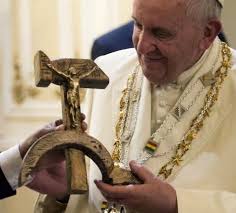
Pope with hammer and sickle

Time for some firm government at the Vatican!

Now things are getting more serious, as 62 devout Catholics trouble-makers have writtena long letter accusing you of spreading heresy on 7 counts. Your first reaction is one of relief – phew, they left out the other 35 charges – but it is all rather embarrassing.

The dubia issue was settled easily enough, and after a year a couple of the cardinals died mysteriously. Fortunately, you have an alibi. However, getting rid of 62 priests and scholars may not be so easy. Take them on a bus trip over a cliff? Invite them to a party with poisoned cakes? Mmm, we’ll have to think about this.

Cardinal murders

Not guilty!

Only one thing to do: issue a new Motu proprio, AD HOMINEM. This entitles people – if they are mates of the Pope – to hurl insults as they wish. The alternative is for us to argue that the letter is in error when it accuses you of being a naughty pope, but you haven’t actually got any arguments, have you?

Right, let’s attack Dr Joseph Shaw first. He’s a Latin Mass junkie, and so is obviously sneering at you because you can’t decline “unus-una-unum” (and many of your most notorious Jesuit friends can’t decline “sex”). You discard him.

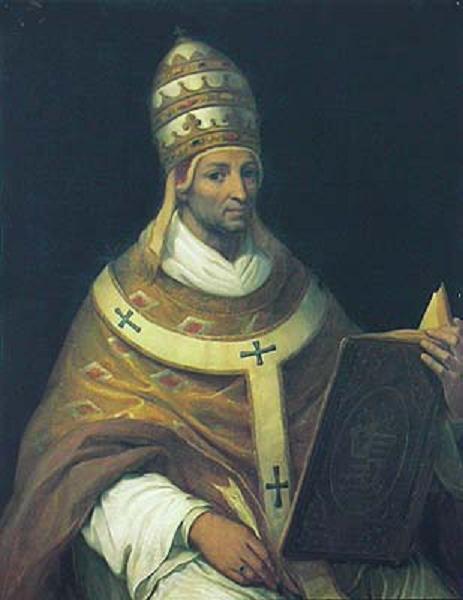
Pope John XXII

Our hero, Pope John XXII. From the days when popes were real popes.

Then there’s Deacon Donnelly, a.k.a. Protect the Faith (which turns out to be incompatible with protecting the Pope). He was stamped on a few years ago by Bishop Campbell, and asked to stop blogging and go for a completely voluntary period of rest and reflection, or else. He seems to have escaped his chains. You discard him.

Oh, and Fr John Hunwicke. I’ll bet he wrote all the clever bits of the letter. We can’t understand the Aramaic jokes on his blog, anyway. You discard him.

To be honest, you haven’t read the letter, and you don’t intend to read it. And now that you’ve blocked the Correctio Filialis website from being accessed in the Vatican (thanks for the idea to our dear friend Kim Jong-un!) nobody else will read it either!

Kim Jong-un

“I have received this letter signed by 62 scholars. We know where you live…”

O.K. team, you know what to do. Spider, deploy the sockpuppets. Bean, keep banging on about how you are more intellectual than the gang of 62. Ivory, play a floating role of tweeting odd comments and writing absurd articles for Crux. Get your mates at the Tabletand Fishwrap to help. Summon the cardinals from their LGBT meetings and get them to attack!

But you, Francis, must under no circumstances answer the letter, or even read it.

1 comment:

  1. Thank you for giving us a good laugh especially at times when we need it, dear Eccles. You know, there would be no one more proud of Pope Francis than me if he had the humility he’s always telling us to have and responded to the letter and the dubia and said, “you know what maybe you’re right and thank you for helping me a showing me where I’m going wrong” because I honestly believe first the dubia now this filial correction come from a place of love for both the Church and the Holy Father. I want to love my Pope but sometimes he makes it so hard when he keeps insulting and giving ammunition to anti-catholics to hurl at the rest of us. It’s very hard. Thanks again for the good laugh Eccles because I certainly needed it and thanks for helping me keep the faith. Pray for the Pope, there’s still time for him.

Posted in Uncategorized | 2 Comments

CRUX OF THE NEWS


Retired Texas bishop signs “filial correction” of Pope Francis

Retired Texas bishop signs “filial correction” of Pope Francis

Bishop Emeritus of Corpus Christi, René Henry Gracida. (Credit: Bishop René Gracida.)

A nonagenarian retired Texas bishop has added his name to a “filial correction” of Pope Francis submitted to the pontiff last month. The signatories have accused the pope of promoting heretical propositions in ‘Amoris Laetitia,’ his document on marriage. Bishop René Henry Gracida, Bishop Emeritus of Corpus Christi, says if Francis doesn’t respond to the petition, he would like to see the pope resign.

DALLAS, Texas – A 94-year-old World War II veteran is the first bishop in good standing to add his name to a “filial correction” sent to Pope Francis in August, and made public on Saturday.

Bishop René Henry Gracida, the Bishop Emeritus of Corpus Christi, joins Bernard Fellay, the head of the canonically irregular traditionalist Society of Saint Pius X, as the only bishops to associate themselves with the document.

The organizers of the petition said the “correction” was delivered to Pope Francis on August 11, and the pontiff never responded.

The 25-page letter accused the pope of advocating seven heretical positions in the 2016 Apostolic Exhortation Amoris Laetitia [“The Joy of Love”], which was issued after two bishops’ synods held on marriage and the family, which took place in 2014 and 2015.

The exhortation has been controversial since it was published, with debate surrounding whether or not the document allows persons who are divorced-and-remarried to receive communion without abstaining from sexual relations.

In September 2016, five months after Amoris Laetitia was published, four cardinals – Italian Carlo Caffarra, American Raymond Burke and Germans Walter Brandmüller and Joachim Meisner – asked Francis for a clarification on the issue. When no response was given, the cardinals made their five questions (called dubia) public.

Burke has said that if the pope fails to clarify his position, a formal “fraternal correction” would be presented by the cardinals. (Two of them, Meisner and Caffarra, have since died.)


So far, this “fraternal correction” has failed to materialize, and the editors of Rorate Caeli, the traditionalist website which published the English text of the “filial correction,” stated the lay-led initiative is the first step in “an initiative of a theological nature that will likely lead, God willing, to an initiative of a canonical nature from those who have the mandate to act.”

The seven propositions in Amoris Laetitia the “filial correction” claims are heretical, also surround the issue of giving communion to the divorced-and-remarried.

The document said the “two general sources of error which appear to us to be fostering the heresies” were a “false understanding of divine revelation which generally receives the name of Modernism” and “the teachings of Martin Luther.”

At the time the “correction” was delivered to the pope, there were 40 signatories, although 22 more had added their name to the document before it was made public on Saturday, including Fellay.

The signatories come from conservative and traditionalist circles, and are mostly priests and academics.

A few notable names were included on the list, including Ettore Gotti Tedeschi, the former president of the Institute for the Works of Religion, more popularly known as the “Vatican bank,” and Italian Monsignor Antonio Livi, former dean of the philosophy faculty at Rome’s Pontifical Lateran University.


Gracida was not one of the original signatories, but on Sunday publicly announced his “gratitude” for the initiative and his request to be added to the list on his blog, Abyssus Abyssum Invocat/Deep Calls To Deep.

“I extend my congratulations and gratitude to the originators of the Correction and I wish to have my name added to the list of those individuals who agree with the content of the Correction and want to be identified with it,” Gracida wrote in an email to the organizers, that was reproduced on his blog.

Gracida has also published several articles related to the “filial correction” on his website, including one encouraging the laity to sign a petition in support of the document.

“It is my hope that other bishops will sign on to this lay initiative and thereby reinforce the importance of this lay initiative in the mind of Francis and prompt him to speak and act in response to the initiative,” Gracida wrote in an email to Crux.

“As Blessed John Henry Cardinal Newman wrote in his Historical Tract on the Arian Controversy, it was the overwhelming resistance of the laity to the Arian heresy which eventually persuaded the majority of bishops ‘who were either Arian or semi-Arian’ to support the efforts of Saint Athanasius and the Pope that eventually led to the condemnation of the heresy at the Council of Nicaea,” the bishop said.


Gracida, a native of New Orleans, served in the 303rd Bombardment Group in the European theater of World War II, and participated in over 30 combat missions as a tail gunner and later a flight engineer.

After the war, he earned a degree in architecture, and then joined a Benedictine monastery for a short time, before being ordained a diocesan priest.

He was the founding bishop of the Diocese of Pensacola-Tallahassee, Florida, from 1975-1983, and then served as the Bishop of Corpus Christi, Texas, until his retirement in 1997.

Gracida was known as an outspoken conservative while in office, and was a vocal proponent of pro-life causes.

He made national news in 1990 when he formally excommunicated a director of an abortion clinic and an obstetrician working as an abortion provider who were both living in Corpus Christi. In 1994, he put a state legislator under interdict – meaning he was forbidden to receive Communion and other sacraments – for the legislator’s public advocacy of abortion.

He often clashed with his fellow bishops, both over his actions, and the management of a multi-million-dollar fund based in his diocese. (The other bishops of Texas supported legal action to force the fund to give more money to dioceses outside Corpus Christi. An agreement was made settling the issue shortly before Gracida’s retirement.)


Since his retirement, Gracida has continued to comment on Church affairs, and has maintained his current blog for nearly a decade. He has frequently criticized Francis.

“At this critical moment in the life of the institutional Church I do not see how it is possible for anyone who is well informed regarding the issues that are involved in the controversies surrounding the present pontificate to remain silent,” Gracida told Crux. “While I have every confidence that the Church as the Mystical Body of Christ will survive the present crisis as Our Lord promised Peter, I am not so sanguine about the number of souls that will be lost as a result of it.”

Gracida said he believed the Church must “more effectively and with greater compassion” teach, preach and apply “the magisterial doctrine that has been handed down through it for over 2,000 years,” but this did not mean “today’s faux mercy.”

Gracida told Crux he did not believe Francis would respond to the petition, adding he would like to see the pope resign.

​“I do not believe that absent Francis’s resignation, there can be a ‘next step’ for humans to take, the next step is for Jesus Christ to take,” he said.

Posted in Uncategorized | 3 Comments

WHAT KIND OF CATHOLIC ARE YOU ???

unnamed-2

The light turned yellow, just in front of him.
 
He did the right thing and stopped at the crosswalk, even though he could have beaten the red light by accelerating through the intersection.
 
The tailgating woman behind him was furious and honked her horn, screaming in frustration, as she missed her chance to get through the intersection. As she was still in mid-rant, she heard a tap on her window and looked up into the face of a very serious police officer.
 
The officer ordered her to exit her car with her hands up. He took her to the police station where she was searched, fingerprinted, photographed and placed in a holding cell.
After a couple of hours, a policeman approached the cell and opened the door. She was escorted back to the booking desk where the arresting officer was waiting with her personal effects.
 
He said, “I’m very sorry for this mistake.
 
You see, I pulled up behind your car while you were blowing your horn, giving the guy in front of you the finger and cursing at him.
 
I noticed the ‘What Would Jesus Do’ bumper sticker, the ‘Choose Life’ license plate holder, the ‘Follow Me to Sunday-School’ bumper sticker, and the chrome-plated Christian fish emblem on the trunk, so naturally I assumed you had stolen the car.”
 
Priceless.
Posted in Uncategorized | Comments Off on WHAT KIND OF CATHOLIC ARE YOU ???

START WORRYING. DETAILS TO FOLLOW.


September 20, 2017, Wednesday
The humans of Genesis 1, made in God’s image, were told to ‘fill the world and subdue it.’ That is what he called ‘majestic man,’ what we would call secular humanity, the dominating nature.


“In Genesis 2 the humans are created from the dust of the earth into which God breaths life.  They’re placed in the Garden of Eden not to subdue it and conquer it, but to guard it and protect it, and that Rabbi Soloveitchik called ‘covenantal man.’


“So he said these are always present in us, the secular urge to dominate and control nature and the religious urge to be in awe of nature.—British Rabbi Jonathan Sacks, in a July 13, 2017 talk (link) which we reproduce below


================


The Rabbi on Our Times: “Cultural Climate Change”

When you have a spare few minutes, this is a pretty reasonable and well-written description of a deep divide in our times, that arises in the very beginning — “majestic man” versus “covenantal man.”


A thesis worth thinking about…


The author is Rabbi Jonathan Sacks, 69, the emeritus chief rabbi of the Orthodox Jewish community of Great Britain.


(Below, a photo of Rabbi Jonathan Sacks with the German Pope, Benedict XVI)
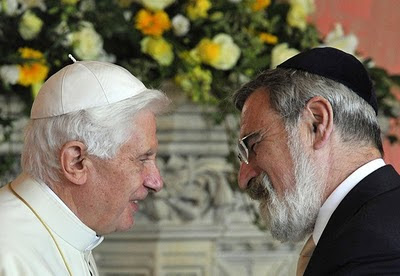


Jonathan Henry Sacks, Baron Sacks,  was born on March 8, 1948 (the same year as the creation of the State of Israel). He is a British Orthodox rabbi, philosopher, theologian, and politician. He served as the Chief Rabbi of the United Hebrew Congregations of the Commonwealth from 1991 to 2013.


Since stepping down as Chief Rabbi, Sacks has served as the Ingeborg and Ira Rennert Global Distinguished Professor of Judaic Thought at New York University and the Kressel and Ephrat Family University Professor of Jewish Thought at Yeshiva University. He has also been appointed as Professor of Law, Ethics and the Bible at King’s College London.


He won the Templeton Prize for 2016.


================
Cultural Climate Change
By Jonathan Sacks
July 13, 2017

There is an old Chinese curse which goes, “May you live in interesting times.”


We are living in interesting times.


Sometimes, I think the world has gone so crazy that the best account of it was that wonderful remark by Woody Allen: “More than any other time in history, mankind faces a crossroads. One path leads to despair and utter hopelessness, the other to total extinction. Let us pray we have the wisdom to choose correctly.”


Well, that’s how it seems sometimes.

Or it seems like my favourite Jewish text of all time, which goes, “Start worrying. Details to follow.”


Because the truth is we are living through one of the most profound revolutions in all of human history.


It is a time of political economic and social change brought about by the internet; a revolution which is the greatest and most fateful since the invention of printing in the West in the 15th century.


I sum it up in a single phrase: “Cultural climate change.”


We are worrying about our physical climate change and that climate change doesn’t just make things warmer. What it does is produce more extreme weather conditions, and so it is with cultural climate change.


It’s not just extreme heat, but sometimes it expresses itself in the cold and the wind and the rain.


An old pattern that has governed the West for four centuries is broken. A new one has not yet emerged and it has brought great damage to that spiritual experience that is our ozone layer.


The result is a revolution, which goes in many directions about the role of religion in society.

It is not so much a matter of more religion or less religion because the truth is, both are happening at once: a lot of people getting more religious, a lot of people getting less religious.


The result is a series of storms in the West and even more so elsewhere, in the Middle East, Asia and Africa.


I want to say why I think it has happened and what we can do about it to save the planet from cultural climate change.

So first of all, let me analyse what is happening.


The simplest answer I can give is that the West had three master narratives which we have held since the 17th or 18th century.


Today, they have all broken down.


Those three master narratives are, first: the world is getting progressively more secular.


Second: the world is getting more Westernised.


Third: to survive in the contemporary world any religion has to accommodate to society. It has to go with the flow.


Those three stories have held for four centuries.


But today each one of them is breaking down.

Let us take them one by one.


The secularisation thesis has been functioning for four centuries. It has four dimensions, one for each century. First of all came the 17th century, which saw the secularisation of knowledge. In science, there was Newton. In philosophy, there was Descartes, both of whom were not irreligious or anti-religious. They were very religious indeed, but they sought to base knowledge on non-doctrinal foundations. That’s the essence of Newtonian physics and Descartesian philosophy.

In the 18th century came the secularisation of power, in two great revolutions, the French in 1789 and, before that, the American in 1776. But the 18th century saw for the first time the separation of religion and power, or, as it was put in the United States, between church and state.


The 19th century saw the secularisation of culture. People built concert halls, art galleries and museums as a way of encountering the sublime without necessarily going to a house of worship. They were substitutes for the church.

The 20th century, beginning in the 1960s, saw the secularisation of morality, as the West broke free from its traditional Judaeo-Christian ethic, especially in relationship to the sanctity of life on the one hand and the sanctity of marriage on the other. However, four centuries of secularisation lead us to expect that the process will continue.


But it isn’t continuing because in the 21st century we are seeing, at least in the Middle East, Africa and Asia, the world getting more religious, not less.


We have begun an age of desecularisation.

The second metanarrative was Westernisation.


It said that any country that wants to enter the modern world has to become Westernised. That too has been true for four centuries, but today no longer, because what we’re seeing is four very ancient civilisations that had been eclipsed by the modern age suddenly returning with a vengeance.


By that, I mean China, India, Russia and Islam, whether in the Sunni form in Saudi Arabia or the Shia form in Iran.


All of those cultures believe that tomorrow belongs to them, not to the West.


So, that’s the second master narrative — Westernisation.

The third was accommodation.


That is, that any religion to survive in the modern world has to accommodate and adjust to the wider society.


Today, the opposite is the case.


For the last half-century, it has been conservative churches and Orthodox and Ultra-Orthodox synagogues that have been growing faster than liberal ones.


In Islam, it is the radical forms of Islamism that are flourishing, while the more moderate forms are in decline.


In each case, what we are seeing, and what we haven’t seen for four centuries, is not religion as accommodation, but religion as resistance.


It’s not religion making its peace with the world, but religion opposing the world, challenging the world or simply withdrawing from the world.


These are not small developments.


Half of the world is getting less religious. Half of the world is getting more religious and the tension between them is growing day by day.


That is cultural climate change and it’s the biggest thing to happen, certainly in the West, since the great wars of religion in the 16th and 17th centuries.


Why Has It Happened?

The second question that I then want to ask is: why has it happened?


Here I want to turn to two extraordinary prophets who saw it happening long before the rest of us did.


One of them was Alasdair MacIntyre, the great philosopher, once a Marxist, today a Catholic.


In 1981 Alasdair MacIntyre published one of the great books of the 20th century, After Virtue.


For me and many others it was a life-changing book.


Its argument was that the Enlightenment attempt to build morality on rational foundations, the Enlightenment Project, had, in fact, failed.


We were now, he said, entering a new dark age or, as he put it, it’s not the case that the barbarians are at the gates.


Actually the barbarians have been governing us for some time.


The only thing to do, he said, was to retreat into closed communities and do what Saint Benedict did in the sixth century, build monasteries.

That has become known this year, actually, as the Benedict Option.


Some of you will have seen or read the book with that title by Rod Dreher, and other Catholics like Charles Chaput have written the same thing. His book is called Strangers in a Strange Land.


Alasdair MacIntyre saw this happening in 1981.


The second one was 16 years earlier, by a great rabbi, no longer alive: Rabbi Joseph Soloveitchik. (Alasdair MacIntyre is alive and we wish him good health, or as we Jews say, “May you live to be 120.” Although my grandmother, my bubbe, used to go around wishing everyone, “May you live to be 120 and three months.” They used to ask, “Why the three months?” “I don’t want you to die suddenly,” she said.)


In 1965, Rabbi Soloveitchik published a book called The Lonely Man of Faith. He argued that the two accounts of creation in Genesis 1 and Genesis 2 are not simply different documents: they are two different dimensions of the human condition.

The humans of Genesis 1, made in God’s image, were told to “fill the world and subdue it.”


That is what he called “majestic man,” what we would call secular humanity, the dominating nature.


In Genesis 2 the humans are created from the dust of the earth into which God breaths life.


They’re placed in the Garden of Eden not to subdue it and conquer it, but to guard it and protect it, and that Rabbi Soloveitchik called “covenantal man.”


So he said these are always present in us, the secular urge to dominate and control nature and the religious urge to be in awe of nature.

Everyone read that bit of The Lonely Man of Faith, and they all assumed that Rabbi Soloveitchik was what we call a Modern Orthodox Jew. He was saying: that’s good stuff.


But always read the last chapter of any book.


People got him completely wrong because in the last chapter he said that until now, those two elements have always been part of each of us and we wrestle with them.


But today, he said, the majestic, secular man of Genesis 1 is so powerful, so dominant, that the covenantal, spiritual man of Genesis 2 simply can’t compete any more.


Therefore, if you want to keep your spirituality intact, you have to withdraw from the world.


That was the Jewish account 16 years before Alasdair MacIntyre.


Jews wouldn’t call it this, but it was the Jewish equivalent of the Benedict Option: withdraw from the world if you want to keep your faith.


These were real prophets because they saw it coming a long time in advance.

If I can lower the tone for a moment, I have this thing in my mind.


It is a scene in one of those Hollywood films where the hero is trying to escape from one car to another. He reaches out and puts his hand and his head in another car. His head is in that car and his legs are in the other car and they’re going along in parallel. Suddenly, there’s a traffic island in the middle of the road and the two cars have to go on either side of it.


That is what is happening to religion in society. For most of the time, we were able to have our feet in society and our head in religion or the other way around. But today the two cars are diverging. They can’t be held together any longer.


Those two voices told us in advance that this was going to happen and that is what I call cultural climate change — the walking in opposite ways of religion and society.


How Does This Affect the Contemporary World?

Now I simply want to ask: how does this affect us in the contemporary world?


The answer lies in three dimensions.


First, family.


Second, community.


Third, society.


What happens to family, community, and society when the West loses its faith, its religious faith?

The first one, family. I’m sure you know that in England, certain people believe that God is an old man with a white beard whose name is Charles Darwin. He is the patron saint of atheists.


One of the great ironies of cultural climate change is that if Charles Darwin were alive today, he would be one of the most passionate advocates for religion, not against religion. How is that?


Because for Darwin and natural selection, what is the test of adaptive fitness? The answer is reproductive success. You hand down your genes to the next generation. That for Darwin was the mark of fitness.


Today, the most secular area in the world is Europe. It is spectacularly failing to hand its genes on to the next generation. For a population to remain stable, the birth rate must be 2.1 for every woman of the population. At 2.1, you have stable population, zero population growth. Not one country in Europe has been anywhere near 2.1 for years. Throughout Europe the range is between 1.8 and 1.3, in some cases 1.2, the lowest of them all in Germany.

This is not only happening in Europe, where it has happened for two or three decades now. It’s even happening in the United States: recent figures from the National Centre for Health Statistics showed that the birth rate in the US is currently the lowest on record. The US is not quite where Europe is, but that move has begun.


In the US, the fastest-growing religious category is the “nones”, the young people who say “of no faith”. Why is this so? Why does religion make a difference to birth rates?


Well, it’s fascinating. People say that the most fulfilling dimension of your life, if you’re privileged to have that good fortune, is to be a parent. But did you know that people who have children are less happy during the child-bearing and child-raising years than people who don’t have children? That’s the paradox, because as the Jewish saying goes, “Without children, what would we do for aggravation?”

Having children or raising them involves enormous sacrifice of time, money, effort and energy.


Religious people understand the concept of sacrifice. We live by it. It’s part of our lives.


But people in a secular, consumerist, individualist culture find it much harder to live by sacrifice.


Nothing in the culture says sacrifice, and throughout history that is the reason why when a culture begins to lose its faith, its birth rate starts to decline.


This is not just happening now. It has happened throughout history.


It happened in Ancient Greece in the second century BCE.


It happened in Ancient Rome.


It happened in Renaissance Italy.


The people who’ve done the research say there is no case on record in which a secular society has been able to maintain its birth rates.


Within a century, every society, when it becomes secularised, starts to decline demographically.


So the 21st century is going to be more religious than the 20th century even if not one person changes his or her mind from being non-religious to religious.


It will happen for a simple reason: throughout the world today the more religious you are, the more children you have.

This is a global demographic fact.


This, incidentally, explains why levels of immigration to Europe, which has been the big storm hitting Europe for the last decade, are so high, higher than they’ve ever been before in history.


Europe hasn’t admitted immigrants because it’s more generous than any time in the past, but because it has lower birth rates than in the past.


Immigration is the only way Europe can counter its declining and ageing populations.


Europe Will Die Because it Wasn’t Mindful


Europe will die because it wasn’t mindful.


It misread Charles Darwin, took him as the patron saint of atheists and failed to realise that actually he was the prophet of reproductive success, of having enough faith to bring a child into the world.


That is how religion, or rather the loss of religion, is causing the contraction of the family.

Now society.


I want to stay with Darwin for a moment. There’s a famous problem that Darwin realised with his own theory. He was very honest and admitted this was a problem for his theory. It threatened to undermine the whole principle of natural selection.

I can at best explain Darwin’s doubt in terms of The Imitation Game, the film about Alan Turing and how they broke the German codes in the war. Benedict Cumberbatch plays Turing, alongside Keira Knightley.


At one point in the film, she encourages Turing to tell a joke, which he does as badly as I do.


The joke he tells is about two explorers in the jungle. Suddenly, they hear the sound of a lion. The first one runs off to find a place where both of them can hide. The second one starts putting on his running shoes. The first one says to the second one, “You’re crazy. You can’t run faster than the lion.” The second one says, “I don’t need to run faster than the lion. I just need to run faster than you.”


Here is the classic tension between the altruist, who wants to save both of them, and the survivalist, who just wants to escape himself.


Now, which of the two gets eaten by the lion? The altruist.

Darwin knew this and therefore according to Darwin’s theory altruists should have become extinct over time, because they are the ones who get eaten by the lion.


Yet Darwin realised that in every single human society ever known, it is the altruists, not the survivalists, who are admired.


This threatened to explode his whole theory.


However, in the end, he came up with the answer and he wrote it in his much later book, The Descent of Man.


I’m going to summarise what he said in today’s language.


The world did not yet know about genes, but in effect he said we hand on our genes as individuals, but we only survive as members of groups.


For a group to survive, it has to have altruism among its members. It has to have people who put the interest of the group above their private interest.

That is how Darwin solved the problem.


We need altruism to create groups and without groups we don’t survive.


This is a really interesting subject and it has become huge in research since the 1980s, in all sorts of disciplines — evolutionary psychology, economics and sociology. It involves game theory and a wonderful thing, the conversation killer of all time, called the iterated prisoner’s dilemma.


One way or another, people call it different things. Biologists call it reciprocal altruism. Sociologists call it trust. Economists call it social capital, when a society is full of altruists helping one another. That society is rich in social capital. When you’ve got a society of individualists who think mainly of themselves, it is poor in social capital.


The classic work on social capital was written in our time by a great sociologist at Harvard called Robert Putnam. He is famous for his observation that more people are going 10-pin bowling in America than ever before, but fewer are joining teams and leagues. He called his book Bowling Alone. That, for him, became the symbol of an individualistic society which is rich in individual life but poor in social capital. Poor in altruism, in other words. However, Putnam, like Darwin, is a very honest and thoughtful scholar, willing to challenge his own ideas.

So he published Bowling Alone as a book in 2000, but in 2010 he published another fascinating book, American Grace.


In this book, he says, “Social capital does exist in America. But where will you find it? In churches, in synagogues, in temples, in houses of worship.”


People who go regularly to synagogue or to church enjoy health benefits as well. One big survey in the US found that if you go regularly to a house of worship your life expectancy increases by seven years.

However, the truth is that if you are a regular goer to church, synagogue or other place of worship, you are more likely to help a stranger in need, give a meal to the hungry, shelter someone who’s homeless, find somebody a job, give to charity (whether the cause is religious or secular), get involved in voluntary work. The best predictor is not class, ethnicity, or education. The best indicator is: do you or don’t you go regularly to a house of worship.


Robert Putnam refined the thesis and said that it doesn’t matter what you believe: do you go?


An atheist who went regularly to church is more likely to be an altruist than a deeply-believing believer who keeps to himself. So if you’re an atheist in synagogue, you’re probably a decent kind of guy. We have lots of atheists in synagogue. Actually, one of them, the great, late, much-lamented philosopher at Columbia University, Sidney Morgenbesser, actually said when he was ill, “I don’t know why God is so angry with me just because I don’t believe in Him.”

Another example is the quantum physicist, Niels Bohr (another lapsed Jew). A friend once visited Bohr and saw over his front door a horseshoe. He said to him, “Niels, you can’t believe in that, can you?” And Bohr smiled and said, “No, of course I don’t believe in it. But the thing is, it works whether you believe in it or not.”


Essentially, that is what Robert Putnam said about religion: it works whether you believe in it or not, just so long as you go.


In other words, religion is the great source of community in the contemporary world.


If there’s one person who would not have been surprised by that, it is one of the greatest writers ever on America, Alexis de Tocqueville.


In 1832 when he published the first part of Democracy in America, he said that religion has huge influence in America because it supports altruism, whether in families or communities or voluntary associations of charities.


He gave it a lovely phrase: he called this  “the art of association”, of coming together. He gave the importance of that an even lovelier name. He said the art of association is our “apprenticeship in liberty”.

It is that ability to come together as communities to help one another that is our apprenticeship in liberty.


Today, this kind of community exists mainly in religion.


Let me give you a dramatic example of this.


In 2011, a British medical charity did a survey in Britain. It discovered that the average Brit between 18 and 30 has 237 Facebook friends. When asked how many of those you could rely on in an emergency, the average answer was “two”. A quarter replied one, and an eighth replied none.


Now, believe you me, Facebook has no bigger fan than me. I think it’s fantastic and wonderful and does bring people together.


But there is a difference between a Facebook friend and a real friend that you meet face-to-face.


The funny thing is that just when that report came out, it made me very mindful of something that happened in our local synagogue.

Three years earlier, in 2008, a young couple with three young children had joined our synagogue in London. They’d left New York because the young man had just been made head of Lehman Brothers Europe. Within two or three weeks of his arrival, there was no more Lehman Brothers. Three years later, he got up in the synagogue and made an impromptu speech saying, “My wife and I and our children are going back home after these three years in Britain. I want you to know that without this synagogue and the friends we made here, we could not have survived these three years. We’d uprooted ourselves completely. I had no job, no friends, no anything, and everyone in this synagogue reached out to help.”


You must know stories like that from your local church or your local house of worship.


Community is alive and well today, but in religious environments, and half of America today doesn’t have those supportive environments.

That is why two of the people whose views I most respect are so perceptive in America today.


Charles Murray on the political Right and Robert Putnam on the political Left came to the same conclusion, Murray in his 2012 book Coming Apart, Putnam in his 2015 book Our Kids.


Between them, they concluded that whilst half of America has supportive friends, communities and families, half doesn’t.


America, they argued, has become not one nation, but two nations.


It is a divided nation today.


So if you lose your religion, you see birth rates decline, but you also see community begin to decline.


What Is Society?

And so onto the third: society.


What is society? Over the past 50 years, political discourse has been dominated by two institutions, the market economy and the liberal democratic state.


But society is something different from the market and the state.


Society is about culture and our shared values and the way we act towards one another.


It is about, to quote that great phrase from Alexis de Tocqueville, “habits of the heart”.


It’s about our shared spaces in the public square, and the thing about society is, it isn’t the market or the state.

The market is about the production and distribution of wealth.


The state is about the creation and distribution of power.


Society is about relationships that don’t depend on wealth or power.


They’re the way we behave to others, to friends and neighbours and strangers without the market paying us to or the state forcing us to.


In Britain and America in the 19th and 20th centuries, we had very strong societies — strong collective identities, a shared moral code, strong voluntary associations. The English tended to take this for granted.


A 19th-century Englishman once wrote, “To be born an Englishman is to win the first prize in the lottery of life.”


But America, which received wave after wave of immigrants, had to work for this identity, this shared bond of society. You had a word for it and that word is a very interesting one. It’s a key word in American politics. That word is covenant.

Presidents often speak about it in their inaugural addresses.


John Quincy Adams did in 1825. Benjamin Harrison in 1889. Franklin D. Roosevelt in 1937. The most explicit one was Lyndon Johnson in 1965.


Listen to this small section of his inaugural address: “They came here, the exile and the stranger, and made a covenant with this land conceived in justice, written in liberty, bound in union. It was meant one day to inspire the hope of all mankind and it binds us still. If we keep its terms, we shall flourish.” The most famous expression of the American covenant is a phrase that is perhaps the key phrase of American politics: “We the people.”


It’s a phrase you never hear in Britain, but it’s a key phrase in American politics.


It’s there at the preamble to your constitution.


It was the leitmotif of Barack Obama’s second inaugural address. He used it five or six times.


“We the people” is a phrase that comes from a covenantal view of society because it embodies this notion of collective responsibility, that we’re all in this together and we’re all responsible for one another.


That’s a very rare and special and very religious idea.

Of course, it comes from Judaism and Christianity.


Covenant is a key word both in the Hebrew Bible and in the New Testament.


It became the basis of what the sociologist Robert Bellah called the “American civil religion”.


As America becomes less religious, the word covenant appears less often.


Absent the covenant, all we have left is the social contract.


The social contract is something different.


The social contract is like the contract you have with your mechanic or your dentist or the local supermarket.


You pay and receive.


You pay your taxes and you receive government services.


The parties argue about who has to pay less and who gets most services, but that’s just a contract.


It’s not a covenant.


It’s not about how “we are each responsible for one another”.


If we lose the social covenant, all we have left is the social contract.


Less and less gets done by private citizens on the basis of this sense of collective responsibility.


More and more work that was once done by families and communities is today done by the state. It’s outsourced to government agencies. The result is that you get a bigger state and smaller and smaller society.

That is really bad news because in the social contract, some win and some lose. The winners win and the losers lose big.


You don’t have this sense of shared identity, and the losers very often are the ones who don’t have access to networks of support. They are left vulnerable and alone.


As Arlie Hochschild writes, half the people find themselves as “strangers in their own land”.


The Three Categories

So we’ve gone through the three categories.


You lose your religion.


You begin to lose your families and the will and sacrifice to have children.


You begin to lose strong communities and you begin to lose the covenantal bond of society itself, this society of “we the people”.


If I am right, huge consequences follow.


It turns out that Western freedom, the thing that was born in England in the revolution of the 1640s and in America in 1775, is not the default setting of the human condition.


It turns out to be the highly specific outcome of a particular Judaeo-Christian tradition. You won’t find its exact parallels anywhere else.

Holland, of course, was also part of that covenant, but very few other countries. It was Puritan or Calvinist in origin and then subsequently modified by figures like Spinoza in Holland, John Locke in England, and later by Jefferson and his friends in America. That is a very, very special kind of freedom.


So let me sum up my argument.


We’re passing through one of humanity’s great moments, a cultural climate change.


The signs of it are that the weather patterns that existed for so long, the progressive secularisation, the progressive Westernisation, the progressive accommodation of religion to society — those weather patterns no longer hold.


We are entering one of the world’s great ages of desecularisation and it is the rise of non-Western cultures that will shape the 21st century.


The end result is — as Rabbi Soloveitchik and Alasdair MacIntyre and others warned us decades ago — that if you lose religion from the mainstream of society, you will lose the sanctity of marriage.


You will lose the bond of community and you will lose the social covenant that says e pluribus unum: we’re all in this together.

One thing is clear.


Religion is not about to die.


The religious have bigger families and stronger communities.


They’re going to grow in numbers and confidence in the course of the 21st century.


But the secular West is in real trouble.


It’s re-enacting a scenario played out many times in the course of history, in Athens and Rome in antiquity, and Renaissance Italy.


The same thing happens each time.


A culture or civilisation at the very height of its affluence and its creativity finds that people are becoming more individualistic. They become more hedonist. They become more sceptical of religious beliefs, and that causes a loss of social cohesion, social energy and social ideals.


No one said it better than a great American historian, Will Durant. As a young man he wanted to be a priest but actually became an atheist. So listen to what this atheist says — and it’s unbelievably powerful. After his huge study of the story of civilisation, he says:

“What happens at a certain point in history is that the intellectual classes abandon the ancient theology and, after some hesitation, the moral code allied with it. Literature and philosophy become anti-clerical. The movement of liberation rises to an exuberant worship of reason and falls to a paralysing disillusionment with every dogma and every idea. Conduct deprived of its religious support deteriorates into epicurean chaos and life itself shorn of consoling faith becomes a burden alike to conscious poverty and to weary wealth. In the end, a society and its religion tend to fall together like body and soul in a harmonious death. Meanwhile, among the oppressed, another myth arises and gives new form to human hope, new courage to human effort and, after centuries of chaos, builds another civilisation.”
It is a very sober warning for our times, though it was written 60 years ago.

So in a world like today, religion can do one of three things.


Number one, it can attempt to conquer society. That is the radical Islamist version.


Number two, it can withdraw from society. That is the Benedict option or the ultra-Orthodox option, or the Soloveitchik option.


Or number three, it can attempt to reinspire society, to do what Will Durant called giving people a new form of human hope and new courage to human effort.

If we adopt the first option, the radical anti-Western option, we will move straight away into the dark ages.


If we adopt the second option, we will survive the dark ages, but they will still be dark.


But if we adopt the third option of being true to ourselves and yet engaged in the public square, we have a chance of avoiding the dark and of countering cultural climate change.


Don’t Forget


By religion, I don’t mean religion as a substitute for science.


I certainly don’t mean religion in opposition to a free society. Don’t forget the architects of freedom in the modern world, in Holland, in England, and in America, Spinoza, Locke, and Jefferson, they did it in the name of religion, not as a protest against but in the name of religion.

So what do I mean by religion in the public square?


I mean simply religion as a consecration of the bonds that connect us, religion as the redemption of our solitude, religion as loyalty and love, religion as altruism and compassion, religion as covenant and commitment, religion that consecrates marriage, that sustains community and helps reweave the torn fabric of society.


That kind of religion is content to be a minority.


Jews have been a minority wherever we went for 2,000 years, and in the immortal words of Sir Elton John, we can all say as Jews, “I’m still standing.”


So religion can be a minority, but it can be a huge influence.


It doesn’t seek power; it seeks influence.


It’s engaged with the world; it’s not in retreat from the world.


If we can do that, we might just bring those two cars closer together.


We might just find that we can have our feet in society and our head in Heaven and we can bring the light that will vanquish the darkness.


That is the kind of religion the world needs right now.

{Emphasis in red type by  Abyssum }

This is the edited text of a lecture delivered at the Chautauqua Institution, New York in July. The Chautauqua Institution, a summer educational centre, convenes the critical conversations of the day to advance understanding though civil dialogue. For more information please visit www.chq.org or @chq on Twitter.


=============================


An I

Posted in Uncategorized | Comments Off on START WORRYING. DETAILS TO FOLLOW.

I WAS STATIONED AT MOLESWORTH IN BEDFORDSHIRE IN ENGLAND DURING WORLD WAR II, EVIDENTLY I STILL HAVE A FEW FRIENDS IN ENGLAND


WWII veteran bishop joins ‘filial correction’ signatories

Bishop René Henry Gracida, a friend of St John Paul II and Mother Angelica, expressed his ‘gratitude’ for the document

A retired bishop has added his signature to the “filial correction” of Pope Francis.

Bishop René Henry Gracida, now aged 94, was an auxiliary bishop in the Archdiocese of Miami, then Bishop of Pensacola-Tallahassee and finally Bishop of the Diocese of Corpus Christi, before retiring in 1997.

Before his priestly ordination, Bishop Gracida served as an airman in World War II, flying 32 missions over Nazi-occupied Europe – a story which, he has recalled, “fascinated” Pope St John Paul II when they met shortly before John Paul became Pope. The two became friends.

The bishop was also friends with Mother Angelica, and helped to keep her television network EWTN going after some US bishops tried to discipline the network. In Raymond Arroyo’s biography of Mother Angelica, Bishop Gracida is described as the “saviour” of EWTN.

At his blog, the bishop said that he had written to the organisers of the correction, offering then his “congratulations and gratitude”, adding: “I wish to have my name added to the list of those individuals who agree with the content of the correction and want to be identified with it.”

He told the Catholic Herald that he hoped “other bishops will sign on to this lay initiative and thereby reinforce the importance of this lay initiative in the mind of Francis, and prompt him to speak and act in response to the initiative.”

Bishop Gracida referred to Blessed John Henry Newman’s history of the Arian crisis, which describes how “it was the overwhelming resistance of the laity to the Arian heresy which eventually persuaded the majority of bishops ‘who were either Arian or semi-Arian’ to support the efforts of Saint Athanasius and the Pope that eventually led to the condemnation of the heresy at the Council of Nicea.”

He said: “At this critical moment in the life of the institutional Church I do not see how it is possible for anyone who is well informed regarding the issues that are involved in the controversies surrounding the present pontificate to remain silent.

“While I have every confidence that the Church as the Mystical Body of Christ will survive the present crisis as Our Lord promised Peter, I am not so sanguine about the number of souls that will be lost as a result of it.”

The correction, issued yesterday and originally signed by 62 scholars, priests, and other Catholic figures, addresses the Pope directly, saying that he was helping heresy to spread.

It does not accuse the Pope of being himself a heretic, but argues that ambiguities in the Pope’s document Amoris Laetitia, combined with certain actions – for instance, his declining to answer the dubia cardinals – may lead Catholics into heresy.

One theologian, who did not wish to be named, told the Catholic Herald that he had been asked to sign the petition but had chosen not to. “The charges are unanswerable,” he said. “It is a tragedy that the Pope’s proper counsellors, to whom it belongs to make such a correction, have not already taken this step themselves.”

A petition to support the correction has garnered more than 3,500 signatures at the time of writing.

Earlier today the Vatican denied blocking the website of the correction. The Italian news agency ANSA had claimed that computers were unable to access the page allowing new signatories to add their names. But the Vatican press office said this was only a quirk of the security system in the press room, which blocks access to forms requesting personal data.

Posted in Uncategorized | 4 Comments

FRANCIS IS CORRECTED

9:53 PM (10 hours ago)

to me


Sunday, September 24, 2017
“For there must be also heresies among you, that they which are approved may be made manifest among you.—St. Paul, First Letter to the Corinthians, 11:19


They, therefore, walk in the path of dangerous error who believe that they can accept Christ as the Head of the Church, while not adhering loyally to His Vicar on earth. They have taken away the visible head, broken the visible bonds of unity and left the Mystical Body of the Redeemer so obscured and so maimed, that those who are seeking the haven of eternal salvation can neither see it nor find it.” —Pope Pius XII, Mysticai Corporis Christi (On the Mystical Body of Christ), papal encyclical promulgated on June 29, 1943. In this eloquent encyclical, Pius XII emphasizes the importance of all Catholics adhering with loyalty to the Pope — the Vicar of Christ


“Christ did not wish to exclude sinners from His Church; hence if some of her members are suffering from spiritual maladies, that is no reason why we should lessen our love for the Church, but rather a reason why we should increase our devotion to her members… It cannot be laid to her charge if some members fall, weak or wounded. In their name she prays to God daily: ‘Forgive us our trespasses’; and with the brave heart of a mother she applies herself at once to the work of nursing them back to spiritual health. When therefore we call the Body of Jesus Christ ‘mystical,’ the very meaning of the word conveys a solemn warning. It is a warning that echoes in these words of St. Leo: ‘Recognize, O Christian, your dignity, and being made a sharer of the divine nature, go not back to your former worthlessness along the way of unseemly conduct. Keep in mind of what Head and of what Body you are a member.'” —Ibid.


The Pope Accused…


In a new act of opposition to the teaching of Pope Francis which risks opening the door to a dramatic split in the Catholic Church, the Argentine Pope has just been publicly accused of heresy by dozens of Catholic writers and scholars in a text they signed on July 16, delivered to Pope Francis on August 11, but only made public at midnight this morning, September 24, about three hours ago.


These Catholic critics of Francis are saying he has been influenced by the erroneous views of Modernism and are asking him to retract and correct his  teaching on seven specific points (see below), for the good of the Church.


It is not clear what Francis will do (though it is clear that he knew of this text since August 11 and did not recognize or acknowledge it in any way).


But if he were to reject these criticisms as wrong and out-of-bounds, and even, as the head of the Church, condemn the position of his critics, there would be a considerable risk of a split in the Church — something with many profoundly negative consequences for the worldwide Church…


In this sense, the present situation, which has emerged today, of public accusations of heresy made against the Pope, opens up dangerous scenarios.


The Catholic scholars charge Francis particularly with doctrinal error in his teaching on marriage, divorce, remarriage, and communion for divorced Catholics whose first marriages have not been annulled — points touched on in his admittedly controversial Apostolic Exhortation in early 2016 called Amoris Laetitia (“On the Joy of Love”).


This is the first time since 1333 — that is, the first time in nearly 700 years(!) — that a reigning Pope has been the object of such a formal denunciation for heresy, suggesting how deep the opposition to Francis has become. (In the 1300s, Pope John XXII, Pope from 1316 to 1334, was formally accused of heresy on a delicate point of doctrine, on the Beatific Vision — he said souls do not see God until after the Last Judgment, while his critics said souls have the vision of God immediately after death (link); he amended his teaching to take account of the criticism while on his deathbed.)


This shows how uncommon is this type of attack on a sitting Pope by prominent Catholic thinkers.


A group of 62 Catholic scholars and writers from around the world, just at midnight, issued a statement which accuses Pope Francis of teaching seven heresies (doctrines not in harmony with the traditional teaching of the Catholic faith), asking him to retract or correct these teachings.


The document is 25 pages long. It originally was signed by 40 Catholics, and now counts 62 signatures from 20 countries around the world.


The list of signatories includes Catholics such as Fr. Linus Clovis, Deacon Nick Donnelly, Christopher Ferrara, Dr. Ettore Gotti Tedeschi (the head of the Vatican bank under Pope Benedict XVI), Martin Mosebach (a prominent, prize-winning German author on the beauty of the old liturgy), Prof. Roberto de Mattei, and Bishop Bernard Fellay (notably, the single bishop to sign the document). The authors say additional signatures are being sought through a form on their website.


The title of the text is Correctio filialis de haeresibus propagatis (Latin for “Filial Correction of Heresies that Have Been Propagated”).


The complete text of this “filial correction” may be found at this link at a website set up specifically for this initiative: http://www.correctiofilialis.org/wp-content/uploads/2017/08/Correctio-filialis_English.pdf


This list of signatories strikingly does not include even one cardinal, and, as just noted, only a single bishop, and that one the somewhat controversial Bishop Fellay, head of the Society of St. Pius X (SSPX), the traditionalist Catholic group founded by the late French Archbishop Marcel Lefebvre after the Second Vatican Council, which Lefebvre criticized on a number of points.


This lack of signatures from prominent members of the Church’s hierarchy led one tradition-minded Catholic internet commenter to write a few minutes ago: “A handful of priests, an SSPX bishop plus the usual group of lay activists… It’s really no more than nuisance value to Francis.”


So, perhaps, in the end, the initiative, though it uses the powerful word “heresy,” may not have a profound or lasting impact.


Still, another American commenter, Steve Skojec, director of the onePeterfive website, had a different view, addressing the question of the statement’s possible impact this way (link):


“It is difficult to predict what, if any, impact this correctio will have on a papacy that has steadfastly ignored a [September 29, 2015] filial appeal with nearly 800,000 signatures [including 201 cardinals, archbishops, and bishops, link], the circulation of a theological censures document authored by 45 theologians and scholars amongst the entire college of cardinals [in July 2016, link], and the five dubia presented [to Pope Francis in September 2016] by four cardinals who have, as yet, not been able to even obtain a papal audience over a year after their initial intervention and in the wake of the deaths of two of their number.


“Nevertheless, the language used in this latest document advances the case further than anything that came before it, and some speculate that it may help establish that the Pope is guilty of public and notorious material heresy. If so, his failure to respond could be an important step in determining that the Pope is ‘incorrigible and pertinacious’ in the promotion of heresy, and possibly trigger additional remedial actions further down the road.” (link)


In other words, this text is being seen as one more step in a continuing vigorous opposition to the teaching of Pope Francis — one more step in a campaign that makes no bones about the fact that it aims to reverse the Pope’s teaching on several contested points, either during this present pontificate (via a retraction and amendment of the teaching), or after this pontificate is over…


In this sense, this document seems to clearly mark a dramatic new stage in the long-simmering battle between Pope Francis, along with his close advisors, and his critics.


Strong words have now been quite publicly spoken. Battle lines have been drawn…


Here is how the text begins:


“With profound grief, but moved by fidelity to our Lord Jesus Christ, by love for the Church and for the papacy, and by filial devotion toward yourself, we are compelled to address a correction to Your Holiness on account of the propagation of heresies [emphasis mine] effected by the apostolic exhortation Amoris laetitia and by other words, deeds and omissions of Your Holiness.”


And it later states: “We wish now to show how several passages of Amoris laetitia, in conjunction with acts, words, and omissions of Your Holiness, serve to propagate seven heretical propositions [emphasis mine].”


What are the “seven heresies” of which Pope Francis is being charged?


The text gives the “seven heresies,” presented in the Latin language, as follows (the Latin seems to be used to increase the formality of these charges of heresy, since Latin even today remains the official language of the Church). Here are the Latin passages:


Correctio


His verbis, actis, et omissionibus, et in iis sententiis libri Amoris laetitia quas supra diximus, Sanctitas Vestra sustentavit recte aut oblique, et in Ecclesia (quali quantaque intelligentia nescimus nec iudicare audemus) propositiones has sequentes, cum munere publico tum actu privato, propagavit, falsas profecto et haereticas:


  1. (1) “Homo iustificatus iis caret viribus quibus, Dei gratia adiutus, mandata obiectiva legis divinae impleat; quasi quidvis ex Dei mandatis sit iustificatis impossibile; seu quasi Dei gratia, cum in homine iustificationem efficit, non semper et sua natura conversionem efficiat ab omni peccato gravi; seu quasi non sit sufficiens ut hominem ab omni peccato gravi convertat.”
  2. (2)  Christifidelis qui, divortium civile a sponsa legitima consecutus, matrimonium civile (sponsa vivente) cum alia contraxit; quique cum ea more uxorio vivit; quique cum plena intelligentia naturae actus sui et voluntatis propriae pleno ad actum consensu eligit in hoc rerum statu manere: non necessarie mortaliter peccare dicendus est, et gratiam sanctificantem accipere et in caritate crescere potest.”
  3. (3) “Christifidelis qui alicuius mandati divini plenam scientiam possidet et deliberata voluntate in re gravi id violare eligit, non semper per talem actum graviter peccat.”
  4. (4) “Homo potest, dum divinae prohibitioni obtemperat, contra Deum ea ipsa obtemperatione peccare.”
  5. (5) “Conscientia recte ac vere iudicare potest actus venereos aliquando probos et honestos esse aut licite rogari posse aut etiam a Deo mandari, inter eos qui matrimonium civile contraxerunt quamquam sponsus cum alia in matrimonio sacramentali iam coniunctus est.”
  6. (6) “Principia moralia et veritas moralis quae in divina revelatione et in lege naturali continentur non comprehendunt prohibitiones qualibus genera quaedam actionis absolute vetantur utpote quae propter obiectum suum semper graviter illicita sint.”
  7. (7) “Haec est voluntas Domini nostri Iesu Christi, ut Ecclesia disciplinam suam perantiquam abiciat negandi Eucharistiam et Absolutionem iis qui, divortium civile consecuti et matrimonium civile ingressi, contritionem et propositum firmum sese emendandi ab ea in qua vivunt vitae conditione noluerunt patefacere.”

And here is the English translation of these passages, given by the text’s authors, describing the “seven heresies” of Pope Francis:


By these words, deeds, and omissions, and by the above-mentioned passages of the document Amoris laetitia, Your Holiness has upheld, directly or indirectly, and, with what degree of awareness we do not seek to judge, both by public office and by private act propagated in the Church the following false and heretical propositions:


1). ‘A justified person has not the strength with God’s grace to carry out the objective demands of the divine law, as though any of the commandments of God are impossible for the justified; or as meaning that God’s grace, when it produces justification in an individual, does not invariably and of its nature produce conversion from all serious sin, or is not sufficient for conversion from all serious sin.’


2). ‘Christians who have obtained a civil divorce from the spouse to whom they are validly married and have contracted a civil marriage with some other person during the lifetime of their spouse, who live more uxorio [Note: in the manner of a married couple, that is, engaging in intimate relations] with their civil partner, and who choose to remain in this state with full knowledge of the nature of their act and full consent of the will to that act, are not necessarily in a state of mortal sin, and can receive sanctifying grace and grow in charity.’


3). ‘A Christian believer can have full knowledge of a divine law and voluntarily choose to break it in a serious matter, but not be in a state of mortal sin as a result of this action.’


4). ‘A person is able, while he obeys a divine prohibition, to sin against God by that very act of obedience.’


5). ‘Conscience can truly and rightly judge that sexual acts between persons who have contracted a civil marriage with each other, although one or both of them is sacramentally married to another person, can sometimes be morally right or requested or even commanded by God.’


6). ‘Moral principles and moral truths contained in divine revelation and in the natural law do not include negative prohibitions that absolutely forbid particular kinds of action, inasmuch as these are always gravely unlawful on account of their object.’


7). ‘Our Lord Jesus Christ wills that the Church abandon her perennial discipline of refusing the Eucharist to the divorced and remarried and of refusing absolution to the divorced and remarried who do not express contrition for their state of life and a firm purpose of amendment with regard to it.’


===============


What do the signers of this document want Pope Francis to do?


They want him to reject these seven “heretical” positions that he is accused of holding and teaching.


They write: “At this critical hour, therefore, we turn to the cathedra veritatis, the Roman Church, which has by divine law pre-eminence over all the churches, and of which we are and intend always to remain loyal children, and we respectfully insist that Your Holiness publicly reject these propositions [emphasis added] thus accomplishing the mandate of our Lord Jesus Christ given to St Peter and through him to all his successors until the end of the world: “I have prayed for thee, that thy faith fail not: and thou, being once converted, confirm thy brethren.”


And they conclude: “We respectfully ask for Your Holiness’s apostolic blessing, with the assurance of our filial devotion in our Lord and of our prayer for the welfare of the Church.”


==============================


Here is the list of the 62 present signers of the document, from 20 countries


1. Dr. Gerard J. M. van den Aardweg
European editor, Empirical Journal of Same-Sex Sexual Behavior

2. Prof. Jean Barbey
Historian and Jurist, former Professor at the University of Maine

3. Fr Claude Barthe
Diocesan Priest

4. Philip M. Beattie
BA (Leeds), MBA(Glasgow), MSc (Warwick), Dip.Stats (Dublin) Associate Lecturer, University of Malta (Malta)

5. Fr Jehan de Belleville
Religious

6. Dr. Philip Blosser
Professor of Philosophy, Sacred Heart Major Seminary, Archdiocese of Detroit

7. Fr Robert Brucciani
District superior of the SSPX in Great Britain

8. Prof. Mario Caponnetto
University Professor, Mar de la Plata (Argentina)

9. Mr Robert F. Cassidy STL

10. Fr Isio Cecchini
Parish Priest in Tuscany

11. Salvatore J. Ciresi, M.A.
Director of the St. Jerome Biblical Guild, Lecturer at the Notre Dame Graduate School of Christendom College

12. Fr. Linus F Clovis,
Ph.D., JCL, M.Sc., STB, Dip. Ed, Director of the Secretariat for Family and Life in the Archdiocese of Castries

13. Fr Paul Cocard
Religious

14. Fr Thomas Crean OP STD

15. Prof. Matteo D’Amico
Professor of History and Philosophy, Senior High School of Ancona

16. Dr. Chiara Dolce PhD
Research doctor in Moral Philosophy at the University of Cagliari

17. Deacon Nick Donnelly MA

18. Petr Dvorak
Head of Department for the Study of Ancient and Medieval Thought at the Institute of Philosophy, Czech Academy of Sciences, Prague; Professor of philosophy at Saints Cyril and Methodius Theological Faculty, Palacky University, Olomouc, Czech Republic

19. H.E. Mgr Bernard Fellay
Superior General of the SSPX

20. Christopher Ferrara Esq.
Founding President of the American Catholic Lawyers’ Association

21. Prof. Michele Gaslini
Professor of Public Law at the University of Udine

22. Prof. Corrado Gnerre
Professor at the Istituto Superiore di Scienze Religiose of Benevento, Pontifical Theological University of Southern Italy

23. Dr. Ettore Gotti Tedeschi
Former President of the Institute for Works of Religion (IOR), Professor of Ethics at the Catholic University of the Sacred Heart, Milan

24. Dr. Maria Guarini STB
Pontificia Università Seraphicum, Rome; editor of the website Chiesa e postconcilio

25. Prof. Robert Hickson PhD
Retired Professor of Literature and of Strategic-Cultural Studies

26. Fr John Hunwicke
Former Senior Research Fellow, Pusey House, Oxford

27. Fr Jozef Hutta
Diocesan Priest

28. Prof. Isebaert Lambert
Full Professor at the Catholic University of Louvain, and at the Flemish Katholieke Universiteit Leuven

29. Dr. John Lamont STL DPhil (Oxon.)

30. Fr Serafino M. Lanzetta STD
Lecturer in Dogmatic Theology, Theological Faculty of Lugano, Switzerland; Priest in charge of St Mary’s, Gosport, in the diocese of Portsmouth

31. Prof. Massimo de Leonardis
Professor and Director of the Department of Political Sciences at the Catholic University of the Sacred Heart in Milan

32. Msgr. Prof. Antonio Livi
Academic of the Holy See
Dean emeritus of the Pontifical Lateran University
Vice-rector of the church of Sant’Andrea del Vignola, Rome

33. Dr. Carlo Manetti
Professor in Private Universities in Italy

34. Prof. Pietro De Marco
Former Professor at the University of Florence

35. Prof. Roberto de Mattei
Former Professor of the History of Christianity, European University of Rome, former Vice President of the National Research Council (CNR)

36. Fr Cor Mennen
Lecturer in Canon Law at the Major Seminary of the Diocese of ‘s-Hertogenbosch (Netherlands). Canon of the cathedral chapter of the diocese of ‘s-Hertogenbosch

37. Prof. Stéphane Mercier
Lecturer in Philosophy at the Catholic University of Louvain

38. Don Alfredo Morselli STL
Parish priest of the archdiocese of Bologna

39. Martin Mosebach
Writer and essayist

40. Dr. Claude E. Newbury M.B., B.Ch., D.T.M&H., D.O.H., M.F.G.P., D.C.H., D.P.H., D.A., M. Med; Former Director of Human Life International in Africa south of the Sahara; former Member of the Human Services Commission of the Catholic Bishops of South Africa

41. Prof. Lukas Novak
Faculty of Arts and Philosophy, Charles University, Prague

42. Fr Guy Pagès
Diocesan Priest

43. Prof. Paolo Pasqualucci
Professor of Philosophy (retired), University of Perugia

44. Prof. Claudio Pierantoni
Professor of Medieval Philosophy in the Philosophy Faculty of the University of Chile; Former Professor of Church History and Patrology at the Faculty of Theology of the Pontificia Universidad Católica de Chile

45. Father Anthony Pillari, J.C.L., M.C.L

46. Prof. Enrico Maria Radaelli
Philosopher, editor of the works of Romano Amerio

47. Dr. John Rao
Associate Professor of History, St. John’s University, NYC; Chairman, Roman Forum

48. Dr. Carlo Regazzoni
Licentiate in Philosophy at University of Freiburg

49. Dr. Giuseppe Reguzzoni
External Researcher at the Catholic University of Milan and former editorial assistant of Communio, International Catholic Review (Italian edition)

50. Prof. Arkadiusz Robaczewski
Former Professor at the Catholic University of Lublin

51. Fr Settimio M. Sancioni STD
Licence in Biblical Science

52. Prof. Andrea Sandri
Research Associate, Catholic University of the Sacred Heart in Milan

53. Dr. Joseph Shaw
Tutor in Moral philosophy, St Benet’s Hall, University of Oxford

54. Fr Paolo M. Siano HED (Historiae Ecclesiasticae Doctor)

55. Dr. Cristina Siccardi
Historian of the Church

56. Dr Anna Silvas
Adjunct research fellow, University of New England, NSW, Australia

57. Prof. Dr Thomas Stark
Phil.-Theol. Hochschule Benedikt XVI, Heiligenkreuz

58. Rev. Glen Tattersall
Parish Priest, Parish of Bl. John Henry Newman, archdiocese of Melbourne; Rector, St Aloysius’ Church

59. Prof. Giovanni Turco
Associate Professor of Philosophy of Public Law at the University of Udine, Member Corrispondent of the Pontificia Accademia San Tommaso d’Aquino

60. Prof. Piero Vassallo
Former editor of Cardinal Siri’s theological review Renovatio

61. Prof. Arnaldo Vidigal Xavier da Silveira
Former Professor at the Pontifical University of São Paulo, Brazil

62. Mons. José Luiz Villac
Former Rector of the Seminary of Jacarezinho

================

On the Unity of the Church (link)


By St. Cyprian, Bishop and Martyr


St. Cyprian was bishop of Carthage in North Africa from about A.D. 249 until his martrydom on September 14, 258


(Excerpts)


The Lord speaks to Peter, saying, “I say unto you, that you are Peter; and upon this rock I will build my Church, and the gates fell shall not prevail against it. And I will give unto you the keys of the kingdom of heaven; and whatsoever you shall bind on earth shall be bound also in heaven, and whatsoever you shall loose on earth shall be loosed in heaven.”


And again to the same He says, after His resurrection, “Feed my sheep.”


And although to all the apostles, after His resurrection, He gives an equal power, and says, “As the Father has sent me, even so send I you: Receive the Holy Ghost: Whose soever sins you remit, they shall be remitted unto him; and whose soever sins you retain, they shall be retained,” (John 20:21), yet, that He might set forth unity, He arranged by His authority the origin of that unity, as beginning from one.


Assuredly the rest of the apostles were also the same as was Peter, endowed with a like partnership both of honour and power; but the beginning proceeds from unity.


Which one Church, also, the Holy Spirit in the Song of Songs designated in the person of our Lord, and says, “My dove, my spotless one, is but one. She is the only one of her mother, elect of her that bare her.” (Song of Songs 6:9)


Does he who does not hold this unity of the Church think that he holds the faith? Does he who strives against and resists the Church trust that he is in the Church, when moreover the blessed Apostle Paul teaches the same thing, and sets forth the sacrament of unity, saying, “There is one body and one spirit, one hope of your calling, one Lord, one faith, one baptism, one God?” (Ephesians 4:4)


5. And this unity we ought firmly to hold and assert, especially those of us that are bishops who

[Message clipped]  View entire message

Posted in Uncategorized | Comments Off on FRANCIS IS CORRECTED

JOYFUL, FRUITFUL RACISM

Joyful, Fruitful Racism

September 17, AD2017 0 Comments

pope francis, pope, papal, papacy

Around the world, from the local parish to the highest levels of the Vatican, the papal exhortation Amoris Laetitia (AL) has been interpreted by some to justify, even to elevate to the level of virtue, actions of some of the faithful previously taught to be sinful. Examples include ongoing public adultery and public homosexual relationships. Also, some interpretations of AL, particularly Paragraphs 297, 299, 310 and 312, have been read not only to condone and accept, but to require, that such sinners – who in some cases according to the principles of AL are no longer sinning –  be “integrated” with “joyful and fruitful experience” into the public life of the ecclesial community.

Adultery, Yes. Racism, No?

Recently an anomaly has arisen – anomalous if the new moral principles of Amoris Laetitia are to inspire and govern the Church’s actions and, as AL states clearly,  apply to “everyone” in every “situation.”  On the one hand, there are those who preach welcoming forgiveness, merciful acceptance, and open inclusion of certain sinners; but on the other hand,  racist sinners are to be, and some now have been, condemned, segregated, and shunned.

Amoris Laetitia demands that sinners, and this must include racists, be welcomed always (AL, 299).  Racists, especially unrepentant racists, have not been welcomed with the unconditional mercy of AL.  Following recent violence in Charlottesville, Virginia, the U.S. bishops established a new Ad Hoc Committee Against Racism. Bishop George V. Murry of Youngstown, chairman of the committee,  said racism was America’s “original sin.” There have been many vehement, instant, and absolute condemnations, for example:

Bishop Daniel Flores, Brownsville, Texas: “Racism is a grave sin rooted in pride, envy and hatred. It suffocates the soul by means of expelling from it the charity of Christ.”

Bishop James Conley of Lincoln: “Pray for an end to the evil of racism. And pray, especially today, for its victims. Pray for justice and mercy in our nation.”

Cardinal Daniel DiNardo of Galveston-Houston, president of the U.S. Conference of Catholic Bishops, and domestic justice chairman Bishop Frank Dewane of Venice, Fla., issued a statement condemning “the evil of racism, white supremacy and neo-nazism.”

Father Trail, priest in the Archdiocese of Chicago: “All clergy have a duty and obligation to stand up for equality, to stand up for the downtrodden…We have to reclaim the moral authority to not be afraid to be in the public square and say we’re not going to stand for this. We’re not going to stand for bigotry and hatred and violence, that those go against God’s law.”

He also said that he welcomes voices in the church who condemn these actions.

Such condemnations are condemned by Amoris Laetitia: “By thinking that everything is black and white, we sometimes close off the way of grace and growth, and discourage paths of sanctification which give glory to God.”  (AL, 305).

Every Situation? Everyone?

By its own terms, Amoris Laetitia covers everyone and every action, including some  previously taught to always be sin, and some actions that in the past have been described as “intrinsic evils” for which circumstances and intentions cannot nullify or justify the evil.

But the Church  . . . is a place for everyone. (AL, 310).

No one can be condemned for ever, because that is not the logic of the Gospel! Here I am not speaking of the divorced and remarried, but of everyone in whatever situation they find themselves. (AL, 297).

I also encourage the Church’s pastors to listen to them with sensitivity and serenity, with a sincere desire to understand their plight and their point of view, in order to help them live better lives and to recognize their proper place in the Church. (AL, 312).

This  author has yet to find anyone at any level – papal, college of cardinals, Vatican congregation, bishops, priests, theologians, professors – who has publicly stated that it must be done, and it is morally correct, that  the principles of Amoris Laetitia are applicable to and must be applied to active, unrepentant racists in the same way that these principles have been used to justify ongoing adultery and accept ongoing homosexual activity .

The recent condemnatory  treatment of racists, by some – no matter how explained – undercuts the declared absolute scope of the new morality of  Amoris Laetitia.

Either:

(a). AL is mistaken in its statements that the new moral principles apply to everyone in all situations and that no one is condemned forever; or

(b). There are exceptions to AL moral rules, rules stated as absolutes, for which no exceptions are ever mentioned in AL; and there are  criteria or standards for  exceptions not explicitly presented.

Unstated Exceptions to AL’s New Absolute Rules

Nevertheless, it is difficult to imagine a further and more detailed future papal document explaining the how and the why of exceptions to AL’s absolute declarations that does not negate their status as rules, destroy their role as moral principles, and undermine their use as the foundation of a new ecclesiology.

Regarding racism, there are no statements in AL, including no ambiguous statement, like these:

The way of the Church is not to condemn anyone forever, except unrepentant racists.

I am not speaking only of the divorced and remarried, but of everyone in whatever situation they find themselves, except prejudiced bigots who never repent of their sins.

AL Mandated Integration – Supremacist EMs, Racist Ushers, Lector Bigots?

Amoris Laetitia explicitly requires that continuing adulterers be welcomed in the Church community and be allowed to take part in  – be “integrated” into – the life of the Church (AL, 299, 310, 312); this despite the fact that, in day-to-day ecclesial life, the ongoing adultery of these people will be public knowledge in the parish or diocesan community.  Racists, according to the clear implied requirements of AL, must not be excluded. To paraphrase the application of AL, Paragraph 299 to racists:

The participation of active racists can be expressed in different ecclesial services; which necessarily requires discerning which of the various forms of exclusion currently practiced in liturgical, pastoral, educational, and institutional framework, can be surmounted.

Paragraph 299 goes on to say that Holy Mother Church “welcomes them always.” As this ecclesial welcome is mandated now for public adulterers and some who publicly make it known that they voluntarily engage in homosexual activities, it is also true for baptized public racists – as it must be if the stated principles of AL are indeed principles that are to be accepted and followed. AL makes no exception for public racists and their actions, nor does it exclude them from God’s infinite mercy – ALL (with no asserted exception) are to be “integrated” into full participation in Church life. AL requires this not only with respect to adulterers, but if AL’s new moral principles are correct, with respect to everyone; e.g., public racists, abortionists, pederasts, torturers, pedophiles, serial rapists, and even schismatics and heretics – and to some of these who in their “internal forum,” after discernment by their pastor, believe they are not sinning and who will continue their actions.

Go And Sin On More

Amoris Laetitia proclaims that actions previously taught to be sinful can, depending on the circumstances and intentions of the actor, be non-sinful:

Hence it can no longer simply be said that all those in any “irregular” situation are living in a state of mortal sin and are deprived of sanctifying grace . . . A subject may know full well the rule . . . be in a concrete situation which does not allow him or her to act differently and decide otherwise without further sin.  (AL, 301).

It is possible that in an objective situation of sin . . . a person may be living in God’s grace. (AL, 305).

Discernment can recognize that in a particular situation no grave fault exists.  (AL,300; Footnote 336).

As it does for  some adulterers, AL must – unless it is changed, explained, or supplemented – be heard to proclaim that some racists do not sin. For AL there is no longer anything that is “intrinsically evil”. This is despite the fact that in the lead up to recent elections, the catholic bishops told us, in no uncertain terms, that racism and abortion were intrinsic evils – i.e., that there are no circumstances or intentions that could render these actions neutral or virtuous.

In some situations AL  accepts and provides justification for the ongoing adultery of some adulterers; thus, it must also must be heard to assert that some racists continue on in sanctifying grace and  that these racists may persist  in their racist actions while continuing to receive the sacraments.

Conclusion

The conclusions here follow from the meaning, intent, point, purpose and a correct interpretation of Amoris Laetitia. If it is alleged that these conclusions are in error, this cannot be the result of misunderstanding of the words of the text, or of faulty logic, or of errors in reasoning; but can only be the result of the ambiguity, for some the studied purposeful ambiguity, of Amoris Laetitia itself.

Photography: See our Photographers page.

About the Author:

Guy McClung lives with his wife of 43+ years in San Antonio TX helping inventors develop and patent their inventions. Following two stints in the seminary with the missionary Oblates of Mary Immaculate, total 5 years, he came to the realization that God was not calling him to that type of vowed obedience; so he left the seminary and got married. Seven children and eleven grandchildren later, he decided to try to write some words that would convey his thanks to God almighty for blessing after blessing after blessing.

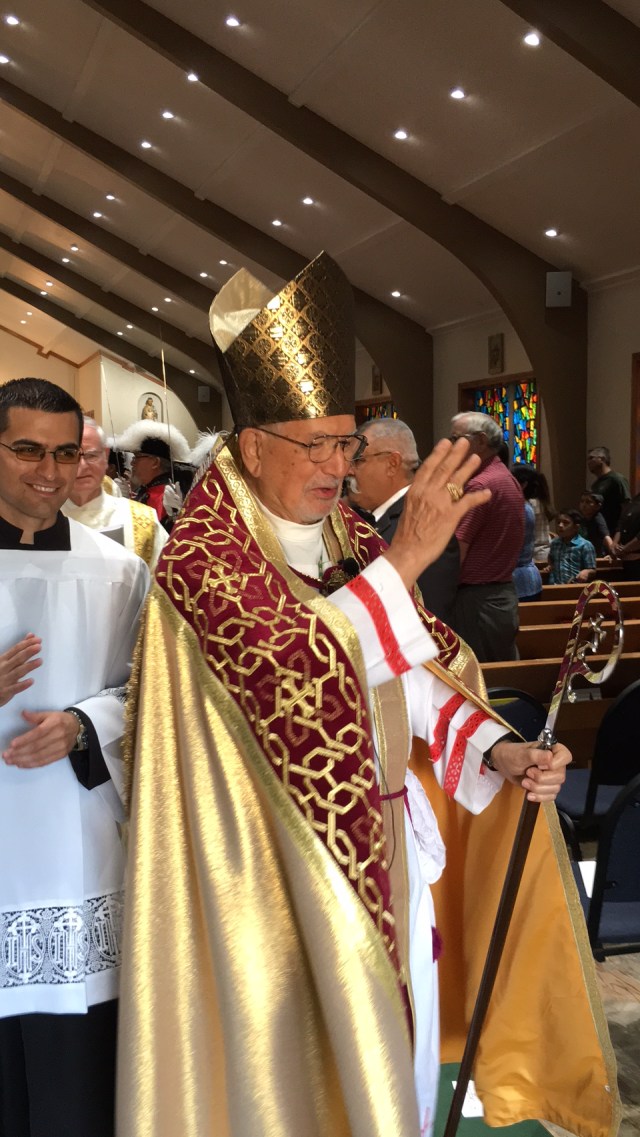
Posted in Uncategorized | Comments Off on JOYFUL, FRUITFUL RACISM

SIGN THE PETITION

Petitioning Pope Francis

On September 23, 2017, an international group of Catholic clergy and lay scholars issued a public correction of Pope Francis:

“Most Holy Father,” the letter begins, “With profound grief, but moved by fidelity to our Lord Jesus Christ, by love for the Church and for the papacy, and by filial devotion toward yourself, we are compelled to address a correction to Your Holiness on account of the propagation of heresies effected by the apostolic exhortation Amoris laetitia and by other words, deeds and omissions of Your Holiness.”

The full title of the document is Correctio filialis de haeresibus propagatis, which is translated as “A filial correction concerning the propagation of heresies.” It states, according to the authors, “that the pope has, by his Apostolic Exhortation Amoris laetitia, and by other, related, words, deeds and omissions, effectively upheld 7 heretical positions about marriage, the moral life, and the reception of the sacraments, and has caused these heretical opinions to spread in the Catholic Church.”

To read more about this document, go here.

Because it appears that the authors of the document intended to include only the signatures of credentialed theologians, pastors, and scholars who could add the weight of their academic expertise to the cause, we have created this petition to be signed by any and every member of the laity, no matter their station in life, in support of their effort. We, too, believe that we must “protect our fellow Catholics – and those outside the Church, from whom the key of knowledge must not be taken away (cf. Lk. 11:52) – hoping to prevent the further spread of doctrines which tend of themselves to the profaning of all the sacraments and the subversion of the Law of God.”

This is an informal petition of support of this effort, but every voice counts. Every signature matters. We hope you will join us in lending our own voices to this noble and worthy effort to defend Our Lord Jesus Christ, His divinely revealed truths, and the teachings of our Holy Mother Church.

This petition will be delivered to:

  • Pope Francis

Read the letter

Steve Skojec started this petition with a single signature, and now has 337 supporters. Start a petition today to change something you care about.

Start a petition

Updates

  1. 54 minutes ago
    250 supporters
  2. 10 hours ago
    Steve Skojec started this petition

Reasons for Signing


I support the theologians and add my signature here in accordance with Canon 212 §3. I thank these witnesses for their courage and pray for them and the Holy Father.

Andrew Leach, Eastbourne, United Kingdom
4 hrs ago

Report


Je suis catholique, j’aime l’Eglise telle que Jesus notre Dieu l’a enseignee et que nos peres doivent garder intacte jusqu’a Son retour.

Ginou GEORGES-SALIBA, longueuil, Canada
3 hrs ago

Report


I am a Catholic and really sad about the state of the Church today.

Clare Walton, Stockport, United Kingdom
5 hrs ago

Report


View all reasons

Report a policy violation
Posted in Uncategorized | Comments Off on SIGN THE PETITION

GOD BLESS THE ORIGINATORS AND THE SIGNERS OF THE CORRECTION

image5


I extend my congratulations and gratitude to the originators of the Correction and I wish to have my name added to the list of those individuals who agree with the content of the Correction and want to be identified with it.
 
Sincerely and in gratitude,
 
The Most Reverend Rene Henry Gracida, D.D.
Bishop Emeritus of the Diocese of Corpus Christi


from: Rene Henry Gracida <rhg1923@gmail.com>
to: info@correctiofilialis.org
bcc: The Most Reverend Rene Henry Gracida <rhg1923@gmail.com>
date: Sun, Sep 24, 2017 at 4:26 AM
subject: I WISH TO HAVE MY NAME ADDED TO THE LIST OF SIGNERS OF THE CORRECTION
mailed-by: gmail.com
Posted in Uncategorized | 21 Comments