Dear fellow Catholics – I’m working on an article for the League of St. Peter Damian on the Synodal Destruction of Catholic faith and morals. It will take me more than a month to finish. In the meantime, I want to give you a heads up on the universal movement to destroy the Catholic Church which is currently being led by the German and Flemish Bishops’s Conferences. To be forewarned is to be forearmed.
For details on the destruction of Catholic morals regarding divorce, masturbation, sex education [so-called], fornication, homosexuality, transgenderism, contraception, etc. see the English translation of the 30 page document “Life in succeeding relationships” at ENGL_SV-IV-SynodalForum-IV-Foundational-text_Second-reading.pdf (synodalerweg.de). I’d advise you to not eat before reading the text.
Randy Engel, founder and editor of the League of St. Peter Damian [www.stpeterdamian.com]
Posted inUncategorized|Comments Off on TO BE FOREWARNED IS TO BE FORE ARMED
Pope Francis names supporter of abortion ‘rights’ to Pontifical Academy for Life
October 18, 2022
Pope Francis has named 14 new ordinary members to the Pontifical Academy for Life and six new members of its governing council.
Mariana Mazzucato, one of the new ordinary members, is an economist at University College London. Around the time of the Dobbs decision that overturned Roe v. Wade, Mazzucato’s tweets and retweets manifested a support for abortion “rights”:
On June 23, the eve of the decision, she retweeted a tweet by Robert Reich: “So states can decide you must carry a fetus but not whether you can carry a concealed gun?”
On June 24, the day of the decision, she retweeted a tweet by Nicola Sturgeon: “One of the darkest days for women’s rights in my lifetime. Obviously the immediate consequences will be suffered by women in the US—but this will embolden anti-abortion & anti-women forces in other countries too. Solidarity doesn’t feel enough right now—but it is necessary.”
On June 24, she retweeted a tweet by Tedros Adhanom Ghebreyesus: “Safe #abortion is health care. It saves lives. Restricting it drives women and girls towards unsafe abortions, resulting in complications, even death. The evidence is irrefutable.”
On June 25, she tweeted, “So good!” in commenting on an anti-Christian harangue about abortion.
On June 25, she tweeted, “Excellent @ewarren” in reaction to comments about abortion made by pro-abortion Sen. Elizabeth Warren.
On July 2, she retweeted a tweet by Bloomberg Quicktake: “‘Safe abortion is health care. It saves lives.’ Earlier this week, WHO’s @DrTedros blasted the Supreme Court’s decision to end the constitutional right to an abortion as a ‘setback’ for the decades-long trend toward safer access.”
On July 3, she retweeted a tweet by Robert Reich: “Call me a radical lefty, but I think it should be easier to get a life-saving abortion than an assault rifle.”
According to the Pontifical Academy for Life’s revised statutes, promulgated by Pope Francis in 2016, ordinary members “are appointed for a term of five years by the Holy Father, after hearing the opinion of the Governing Council and on the basis of their academic qualifications, proven professional integrity, professional expertise and faithful service in the defence and promotion of the right to life of every human person” [emphasis added].
The Pontifical Academy for Life is led by a president, Archbishop Vincenzo Paglia, 77, and a chancellor, Father Renzo Pegoraro.
Sixty years ago this month, Papa Roncalli was carried into the Second Vatican Council after an hours-long procession and delivered the speech (“Medicine of Mercy”) which opened that council.
I believe that in time, historians will later call this council the “Post-War Council.”
Advertisement – Continue Reading Below
Why? Because the Council was dominated by the post-World War II context and specifically the narratives created by two victorious countries we will discuss below.
First, Kennedy Hall deserves credit for coining this term. I think the term is very helpful for a number of important reasons. It allows us to sympathetically understand why there was so much optimism at the Council. For us, a few generations removed from the Second Sexual Revolution (1968-1973ff) and mired in the unborn holocaust, the optimism of Vatican II sounds to us like so many hippies scratching painted nails down Fulton Sheen’s chalkboard. However, if we understand better the post-war milieu, we can actually get a grip on those “signs of the times” that were so dominant to the majority of the Council Fathers (and their supporters).
Second, the term “post-war council” helps us to understand the historical epoch that came and wentbefore 1968 vomited forth the errors of Russia all over western Europe and the Americas. Vatican II, as both a theological Council and a historical event, is complex. But this term “post-war Council” gets at the heart of the situation that many good churchmen were facing, and many nefarious actors exploited.
One could reasonably assert, I believe, that the moment of 1962-1965 was the opportune moment to win over modern man with the medicine of mercy. In fact, it was Pius XII who began this dialogue, and understood this kairos moment (with important precedents from Pius VII, Leo XIII, and Pius XI).[1] Thus in this view, the “modern man” that the Council speaks of should be understood specifically as post-war man. I will use both phrases synonymously in this essay.
Advertisement – Continue Reading Below
Yet one can also reasonably assert, as I will explain, that that moment has come and gone. Post-war man no longer exists. If the conditions present in 1962 could reasonably justify some sort of optimism (albeit tenuous), the fact that those conditions are no longer present make the opposite conclusion necessarily also reasonable. We can see this more clearly if we understand the post-war narrative and the post-war milieu of France and the American Empire.
The Post-War Narrative
First, we need to spend a little time disentangling a difficult topic: the post-war narrative. This refers to the propaganda history told by the victorious Allies after World War II, which is critically influential for Vatican II.
Unfortunately, most of us are still being taught the post-war narrative, even in Catholic homeschool programs. So some of this might come as a shock to some readers, or it might sound controversial. Follow the citations for all the historical documentation.
Like all good propaganda, the post-war narrative contains some truth, which I will discuss in a moment. But the most basic post-war narrative is that World War II was good (Allies) vs. evil (Axis).
Advertisement – Continue Reading Below
Of course, history is written by the victors, and this is a particularly lazy narrative of theirs. But because of the magnitude of evil on the Axis side, it was easy for the Allied powers to believe such an oversimplication of the truth (as many in the Anglophone universe still do!).
In reality, World War II is better characterized as:
“A Mass Murderer and His Allies against A Mass Murderer and His Axis.”[2]
Or more potently (and in line with Fatima), Christopher Dawson called the war The Judgment of the Nations, in a book of the same name he wrote during the war.
Advertisement – Continue Reading Below
No doubt Venerable Pius XII believed these things, but he also saw an opportunity for dialogue in 1944 as we will see.
One World War with a Decades-Long Ceasefire
It’s beyond the scope of this short essay to disentangle all the historical ideology of the post-war narrative. But one more aspect of this we want to mention is how some historians consider World Wars I and II as one long war with a ceasefire in between.
Versailles (Martinmas, 1918 “Armistice Day” “Remembrance Day” “Veterans Day”) was not a peace treaty.
Advertisement – Continue Reading Below
It was a ceasefire.
St. Augustine defines peace as the tranquility of order. Therefore a peace treaty is and should be a just peace which restores justice, as much as possible, to all sides so that the cause of war is eliminated.
This, of course, was the aim of one of our patrons at OnePeterFive, Bl. Emperor Karl, the model layman of the 20th century. He sought a truly just peace which gave to his enemies, the Allies of the Great War (1914-1918) their own just claims on territory, gave to his people their own just demands, and was willing for this cause to give up disputed areas and negotiate in good faith.
But the period 1914-1945 can be considered one large war because the Versailles treaty punished Germany for no other reason than to take revenge for the Franco-Prussian War, their hubris to challenge the British Navy and their atrocities, etc. Benedict XV rightly called the Great War a “carnage solely for economic reasons.”[3]
Advertisement – Continue Reading Below
The interwar period helped to create the First Sexual Revolution (1918-1929), and Soviet-fueled Communist revolutionary fervour everywhere, provoking a reaction from World War I veterans. One of these veterans, as we know, embraced the eugenics of the American Empire, mixed with a demonic neo-Paganism, and created the scourge of National Socialism.
Meanwhile, the American Empire sided with the Soviet Empire against Christendom in the brutal slaughter of priests and nuns, and countless martyrs in the conflict known as the Spanish Civil War (1936-1939). This merely manifested the way the errors of Russia fit with American (exported) Liberalism like hand in glove both militarily, economically, and morally.
During all this Fatima showed to the world the path of just peace: penance! penance! penance!
But there was no consecration of Russia by Pius XI, and not enough penance. So God removed his protecting Hand from Europe and the world.
The Judgment of the Nations
Advertisement – Continue Reading Below
Spurred on by the fallen angels, the two mass murderers Stalin and Hitler at first signed an agreement to conquer and divide between themselves Eastern Europe to build up their respective empires. When Hitler betrayed Stalin, France and Britain found themselves as Stalin’s allies, with the American Empire soon to follow.
What followed was nothing less than the wrath of God, and millions perished before His wrath was turned away.
Post-War Man is Born to a New Hope
But when France and the American Empire again emerged victorious over Germany, a few things were different about the post-war situation that contributed to an immense optimism. First, the magnitude of the evil in the Nazi regime made the victorious Allies into true liberators of France and West Germany in the post-war milieu. This was an important truth which helps to inform the post-war narrative. Hitler was indeed an insane neo-pagan.
Second, the Holy See had definitely turned in favour of the Allies’ system of Liberalism (in a way it hadn’t during the Great War) as Ven. Pius XII said at Christmas in 1944 (an address that would be cited by Vatican II):
Out from the mournful groans of sorrow, from the very depths of the heart-rending anguish of oppressed individuals and countries there arises an aura of hope. To an ever-increasing number of noble souls there comes the thought, the will, ever cleared and stronger, to make of this world, this universal upheaval, a starting point for a new era of far-reaching renovation, the complete reorganization of the world…
Moreover—and this is perhaps the most important point—beneath the sinister lightning of the war that encompasses them, in the blazing heat of the furnace that imprisons them, the peoples have, as it were, awakened from a long torpor. They have assumed, in relation to the state and those who govern, a new attitude—one that questions, criticizes, distrusts.
Taught by bitter experience, they are more aggressive in opposing the concentration of dictatorial power that cannot be censured or touched, and call for a system of government more in keeping with the dignity and liberty of the citizens. These multitudes, uneasy, stirred by the war to their innermost depths, are today firmly convinced—at first, perhaps, in a vague and confused way, but already unyieldingly—that had there been the possibility of censuring and correcting the actions of public authority, the world would not have been dragged into the vortex of a disastrous war, and that to avoid for the future the repetition of such a catastrophe, we must vest efficient guarantees in the people itself.
In such a psychological atmosphere, is it to be wondered at if the tendency towards democracy is capturing the peoples and winning a large measure of consent and support from those who hope to play a more efficient part in the destinies of individuals and of society?
This turn was similar to Pius XI’s condemnation of Action Française in the sense that it gave to the churchmen who were promoters of Leo XIII’s ralliement with post-1773 Liberalism an official promotion by the highest authority in the Church.
A third critically important piece of this optimism is in the fact that, to its credit, the American Empire quickly broke its tenuous alliance with the Soviets and openly declared an ideological crusade on Communism. This was a welcome shift to the previous ambiguous stance toward the errors of Russia that the United States had taken after the Great War, when its global promotion of Liberalism had only facilitated (and funded) the Bolshevik horror.
Finally, on the popular level, the 1950s saw the American popular culture (which had been previously devoted to exporting Jazzified fornication in the 1920s) produce Ven. Fulton Sheen on primetime television. He manifested a virulently Catholic and patriotic spirit in the quasi-religious crusade against the errors of Russia.
“One of Fulton Sheen’s most forgotten yet most important books.”
Meanwhile, Hollywood exported Catholic films for the big screen like The Miracle of Our Lady of Fatima (Warner Bros., 1952) and the stereotypical American pop culture prized the heterosexual nuclear family and strong father on television. The Catholic-led “Legion of Decency” had eradicated the 1920s pornography from Hollywood and the global dominance of American film produced stories of hero priests and nuns. If we know the historical context, it shouldn’t surprise us that Jacques Maritain could write in 1956:
It will be necessary for the European spirit and the American spirit to meet and cooperate in common good will… what the world expects from America is that she keep alive, in human history, a fraternal recognition of the dignity of man – in other words, the terrestrial hope of men in the Gospel.[4]
Perhaps more than any other, it was Jacques Maritain – French Thomist who immigrated to the United States, writing Integral Humanism in 1936 – who influenced the optimism of Vatican II, through two successive Francophile popes, John XXIII and Paul VI.[5]
At that moment Catholics – especially Catholics in the post-war countries liberated by the United States – knew the evil of National Socialism and Bolshevik Socialism alike. Both regimes crushed the individual person under the titanic machinery of state control. The American message of “all men are created equal” with its localised freedom, splashed with a Catholic popular face and a fierceness against the Soviets – it was enough to convince many that the Church should expand on what Pius XII said and formally engage in a new dialogue with Modernity.
To top it all off, in 1960 the American Empire elected an Irish-American Catholic president, John F. Kennedy.
This is why it is reasonable to assert that the 1962-1965 Council was truly an opportune moment to win over post-war man to the Gospel: it seemed like the Americans were already doing just that without any explicit call from an Ecumenical Council!
This is the context which helps us understand sympathetically the “medicine of mercy” speech of Pope John XXIII. No wonder he thought that “man of himself is inclined to condemn his own errors.” By electing Kennedy, millions of Americans had put aside their generations-long anti-Irish and anti-Catholic prejudice! (Even though Kennedy had to all but explicitly renounce his Faith to become president.)
Further, the post-war countries were firmly committed to preventing another war, and thus did the pope’s speech speak of how post-war man had firmly condemned “fratricidal wars” and “the might of arms.” Indeed, the peaceful resolution of the Cuban Missile Crisis (which took place less than a week after this speech during the First Session!) seemed to confirm before their very eyes in real time, that post-war man had truly matured after the bloodbath of World War II.
Pope John’s inspiration was the Council of Trent, and his 1960 Roman Synod, as a model for Vatican II, sought to republish the Catechism of Trent and win over post-war man to take the final step to be fully Catholic.[6]
Let me touch on two important post-war countries of influence at Vatican II which will show us this unique epoch and how it produced Vatican II’s optimism.
Post-War France: the Triumph of the Generation of 1930
No modern scholarship seems to surpass the analysis of this issue in post-war France than Dr. Jon Kirwin’s An Avant-garde Theological Generation: The Nouvelle Théologie and the French Crisis of Modernity. In it he describes in great detail how the interwar period helped to form and shape the “generation of 1930” (born between 1895 and 1905): men like Henri de Lubac, Yves Congar, and Marie-Dominique Chenu – all influential figures later at Vatican II.
Their optimism was based on Maurice Blondel, Teilhard de Chardin and Jacques Maritain, among others.
Before World War II, their ideas of an optimistic dialogue with Modernity where controversial in the Church. But during the Nazi occupation, many of them were on the forefront of the French resistance, fighting on the same side as French Communists and other Liberals under Charles de Gaulle. Meanwhile, an older generation led by Marshall Pétain favoured a tenuous peace with Hitler under ideals diametrically opposed to Modernity.
After Hitler was defeated, the Generation of 1930 seemed to be totally vindicated. Kirwin elaborates:
[By] May 1945, the intellectual lines that would shape post-war France were already laid by the three parties that emerged from the war as victors: Communists, existentialists, and Left Catholics [nouvelle théologie]…
A ‘cultural power vacuum’ had been created by the fall of the Republic. The political and Catholic Right had been discredited, by a real or perceived support for the Vichy regime, as well as the older generation, for its association with the failed Third Republic. The left-wing intellectuals, philosophers, writers, and theologians of the generation of 1930, whose intellectual projects had matured during the previous decade, found themselves heroically legitimized by their opposition to Vichy and participation in the Resistance, and they stepped into a virtually uncontested void in full intellectual ferment.[7]
In the words of one young priest contemporary on the day after the Liberation, describing the shift from Pétain’s regime to de Gaulle’s new post-war France:
It is not a change in government which has just happened: it is really something quite different! It is the Liberation of France, it is a revolution! It is not only the Germans who are going it is those who desired their victory. And for the common people, it is hope which is arriving with General de Gaulle, hope for more justice and dignity. For France, it is a new beginning.[8]
The leader of the old regime, who was no saint but symbolised the older generation, was sentenced to death for treason, but his sentence was commuted to life in prison. After 1945, opinion in the Church swung strongly in favour of the generation of 1930 and their positive dialogue with Modernity. This received a huge boost when the two francophile popes were elected. Given the historical context, one can understand why even Catholics of good will thought that way. But it was a mixture of naïveté and Masonic-Marxist infiltration with the reality of true liberation and hope for new freedom.
It was a half-truth informed by the post-war narrative. There was enough truth in this narrative to make even men of good will think it might turn out okay. But there was enough ambiguity to make this gamble dangerous.
These French theologians (de Lubac chief among them) provided the inspiration for people like Joseph Ratzinger and Karol Wojtyła, who both fought against the Nazis (or Soviets) in their own way. The Maritain/Teilhard optimistic evolutionary theory only provided momentum for the momentary weltanschauung of all things liberation.[9]
Just as the Soviet Empire was targeting the Catholic Church with infiltration, so too the American Empire in its use of what the CIA termed “doctrinal warfare,” seeking to convince the Catholic Church to endorse America-style Liberalism.[10] No wonder Pope Benedict could later say of this time and its influence on Vatican II:
People came to realize that the American Revolution was offering a model of a modern State that differed from the theoretical model with radical tendencies that had emerged during the second phase of the French Revolution… Catholic statesmen demonstrated that a modern secular State could exist that was not neutral regarding values but alive, drawing from the great ethical sources opened by Christianity.[11]
The difficulty here is that it was another half-truth informed by the post-war narrative. Benedict’s observation about this period was due to psychological warfare to a very significant degree undoubtedly. Yet it was also mixed with the reality that came about as a result of the post-war situation which we mentioned above.
It was actually true that the United States was promoting Catholicism (at least on the popular level) and waging ideological war against Communism. It was also true that the fundamental Christianconcept of the imago Dei (against both the Soviets and the vanquished Nazis) was contained in someaspects of American ideals (fatally mixed, of course, with anti-Christian Liberalism).
As Vatican II drew closer, international media also began to televise the struggle of the Back Americans against the unjust laws in the Jim Crow South, which formed a parallel youth movement to French resistance against the Nazis (as well as the youthful Worker Priest evangelisation).
As we said in 1960, a Catholic president was elected, who famously threw his support behind a jailed Martin Luther King during the election. Kennedy’s “martyr’s death” in 1963 was followed by national mourning, and by 1964 (during the Third Session of Vatican II), King was receiving the Nobel Peace prize. Vatican II seems to be looking directly at the most positive elements in post-war France and the United States when it says in the next year in 1965 (echoing Pius XII):
Modern man is on the road to a more thorough development of his own personality, and to a growing discovery and vindication of his own rights… [Yet b]y no human law can the personal dignity and liberty of man be so aptly safeguarded as by the Gospel of Christ which has been entrusted to the Church. For this Gospel announces and proclaims the freedom of the sons of God, and repudiates all the bondage which ultimately results from sin…
The Church, therefore, by virtue of the Gospel committed to her, proclaims the rights of man; she acknowledges and greatly esteems the dynamic movements of today by which these rights are everywhere fostered. Yet these movements must be penetrated by the spirit of the Gospel and protected against any kind of false autonomy. For we are tempted to think that our personal rights are fully ensured only when we are exempt from every requirement of divine law. But this way lies not the maintenance of the dignity of the human person, but its annihilation (Gaudium et Spes, 41).
This passage seems to sum up both the post-war optimism of Vatican II and the olive branch of the medicine of mercy offered by the Church, but also the warning of what might happen if this olive branch of dialogue is refused by modern man. It will be nothing less than the “annihilation” of the human person.
A similar warning is contained in another passed of Vatican II, perhaps due to the salutary Trad influence of the Coetus Internationalis Patrum:[12]
In our own time, moreover, those who have trusted excessively in the progress of the natural sciences and the technical arts have fallen into an idolatry of temporal things and have become their slaves rather than their masters (Apostolicam Actuositatem, 7).
Unfortunately our Trad godfathers among the Coetus were among the few who could see through the shallow optimism of the post-war narrative. A salutary passage like this one was promulgated, but fell on deaf ears very quickly, swallowed up in post-war optimism running headlong into the arms of the world, the flesh, and the devil. The post-war narrative provided enough truth to convince many but also enough ambiguity to make the Vatican II project vulnerable to enemies.
Post-War Man Rejected Vatican II
Already in 1964, while post-war churchmen were focused on the hope of the Council, Hollywood had produced the first pornographic film since the 1920s. In 1967, then Fr. Theodore McCarrick was signing the “Land O’ Lakes Statement” and after Humanae Vitae in 1968, priests and bishops joined the Second Sexual Revolution in open revolt against Catholic doctrine.
The reality is that modern man – post-war man – utterly rejected this olive branch of mercy from the Church, and then imposed upon the world the unborn holocaust.
Whatever was good was in the post-war milieu about liberating man from the evils of Communism and National Socialism quickly turned to the “annihilation” of the human person, even from the womb.
Vatican II offered mercy to modernity, and modernity rejected it.
Pope Francis is concerned with Trads rejecting Vatican II. The fact is that before the Trad movement existed as a broad movement, modern man rejected Vatican II.
And that’s the point.
That’s what the Trads have been trying to say about the deficiency of Vatican II. Even if we were to assert, for the sake of argument, that Vatican II’s doctrinal orthodoxy is absolutely crystal clear, we would have to also assert that the pastoral programme to win over modern man with mercy has been a failure because modern man rejected it.
After the Second Sexual revolution began, modern, post-war man became post-modern man. He has surrendered himself to neo-paganism to offer the blood of hissons and his daughters to devils (Ps. cv. 37). The world – and the pastoral situation – has been completely transformed from the heady days of John F. Kennedy.
Cogently, Dr. R. Jared Staudt wrote recently over at Catholic World Report that:
In the end, the Church will have to discern whether or not the vision of Vatican II is adequate for leading the Church to the renewal in mission so desperately needed as she continues to decline throughout most of the world. Beyond rejecting the legitimacy of Vatican II and its teaching, it is different matter to question the effectiveness of its pastoral strategy and its continued relevance for pointing the Church toward the future.
When we look at the post-war milieu, we can see why many church men had this immense optimism. We could even assert (although it is difficult to prove historically) that this was indeed the opportune moment for the medicine of mercy, a “Constantinian moment” for western, secular democracy to embrace the Faith.
But we can also look around us and notice that post-war man has now been transformed into post-modern, post-human man who denies his own gender and nature and reality itself. Catholics of good will must be honest enough to admit that it was the Trad godfathers – the Coetus – who warned about this situation at Vatican II itself. We might reasonably concede that the optimism project could possibly have worked (if post-war man had accepted it), but we must also admit that it definitely did not. The “prophets of doom” proved to be correct in their caution. And no Catholic is being unfaithful to the Church for following the exhortation of Vatican II itself by truly reading the signs of these our times.
For our times are no longer the post-war epoch.
2022 is not 1965.
We live in the times of the unborn holocaust. The globalist conspiracy of the fallen angels. The slavery of social media and the human trafficking of international pornography. The Ukraine crisis and the threat of global nuclear war.
Let us not be so naïve as to offer the medicine of mercy to the Antichrist.
Some links in this post earn affiliate income for OnePeterFive.
[1] Bishop Chiaramonti’s positive evaluation of the French revolutionaries taking over Italy and (as Pius VII) his subsequent ambiguous concordat with Napoleon; Leo XIII’s whole ralliement project and positive evaluation of the providence of the United States; and Pius XI’s suppression of Action Française.
[5] We can also see how Maritain could be so impressed by the United States in the 1930s, with its Catholic dominance of the day leading a “true Ecumenism” in the Legion of Decency, having come from the bitterly divided, post-Dreyfus France.
[6] For a Trad perspective on Papa Roncalli, see Sire and Amerio. On the inspiration of Trent on Roncalli, see Wicks.
[8] Jean Vinatier, Le Cardinal Suhard (Paris: Le Centurion, 1983), 204-205 in Ibid., 234.
[9] In fact, Kirwin notes how the infamous godfather of Liberation theology, Gustavo Gutiérrez was himself inspired and influenced by this “French liberation moment.” Peter Seewald in his Benedict XVI: a Life, vol. 1 describes how the French resistance inspired Joseph Ratzinger to embrace the priesthood. What Plinio Corrêa de Oliveira said of France was certainly true of the post-war milieu: “Every people has its own food, wine, dress, perfumes, etc. but when the French touch them, they take on a higher form and become a model for others… The others [nations] naturally tend to follow its example.”
[10] “PSB Planning Objectives” Top Secret [Declassified 1998] April 7, 1952, “Doctrinal Warfare” Memoranda, “Psychological Strategy Planning for Western Europe” and “Latin America,” Jan-Feb, 1953, Dwight D. Eisenhower Library in Wemhoff, John Courtney Murray(Fidelity Press, 2015), 278-319.
[11] Benedict XVI, “Christmas Address to the Roman Curia,” (Dec. 22, 2005).
[12] The key “integralist” phrase contained in the first paragraph of Dignitatus Humanae (quoted by the “Manifesto of New Traditionalism”) is indeed the work of the Coetus, according to the biography of Archbishop Lefebvre.
Timothy Flanders is the editor of OnePeterFive. He is the author of City of God versus City of Man: The Battles of the Church from Antiquity to the Present and Introduction to the Holy Bible for Traditional Catholics. His writings have appeared at OnePeterFive and Crisis, as well as in Catholic Family News. In 2019 he founded The Meaning of Catholic, a lay apostolate dedicated to uniting Catholics against the enemies of Holy Church. He holds a degree in classical languages from Grand Valley State University and has done graduate work with the Catholic University of Ukraine. He lives in Michigan with his wife and five children.
So, I am now guilty of traditionalism, a form of pelagianism.
Those who worshipped in the Tridentine Mass, the Latin Rite Mass, are being made to feel like the Church steered them towards sin. If so, then this Pope should be instructing bishops and priests to urge us all to confess this sin. I was born before Vatican II and went to Mass in the beautiful Latin rite. I didn’t realize it would be considered sinful by a Pope 60 years into the future. Will there be a Pope in another 60 years who will inform us of current sinful ways? What is a practicing Catholic to do?
PF tells us that both traditionalism and progressivism are sinful but then tries to solidify his version of orthodoxy using soap bubbles on the border. A leader who confuses his subjects with such teaching is no leader, no teacher and not to be trusted.
I practice and receive the sacraments, say my prayers and love and follow Christ. Please don’t confuse me. Fortify me. Reinforce me. Don’t condone same-sex marriage, divorce, transgenderism. Don’t punish orthodox bishops and priests. Show me through example in word and deed of the way I can live a good life, be holy, avoid sin, etc.
Please bring us a shepherd who can lead us and love us.
Posted inUncategorized|Comments Off on PLEASE, LORD, GIVE US A SHEPHERD WHO CAN LEAD US AND LOVE US
Supreme Court Gets More Aggressive With Conservative Policies
(presidentialwire.com)- Last March, the U.S. Supreme Court denied North Carolina Republicans’ emergency request to utilize an electoral map they devised that a lower court had disqualified for unconstitutionally favoring Democrats in the November congressional elections.
The North Carolina Republicans suffered a temporary setback, but they will soon have the opportunity to celebrate a more significant legal win. At the time, Republican goal-oriented conservative Justice Brett Kavanaugh proposed that the court take up the underlying legal argument, which may allow state legislatures nationwide to implement election laws with less judicial scrutiny.
Pope Francis says ‘traditionalism’ is ‘infidelity’ to the Catholic Church and Vatican II
‘Traditionalism’ is a form ‘of a Pelagian selfishness that puts our own tastes and plans above the love that pleases God, the simple, humble and faithful love that Jesus asked of Peter,’ said Pope Francis.
Pope Francis speaking during the 60th anniversary Mass for Vatican II, October 11, 2022.Screenshot/YouTube
VATICAN CITY (LifeSiteNews) – Marking the 60th anniversary of the start of the Second Vatican Council, Pope Francis attacked “traditionalism” as being “evidence … of infidelity” to the Catholic Church.
The Argentinian Pontiff made his remarks in his homily during a Mass in St. Peter’s Basilica on October 10, marking the 60th anniversary of the opening of the ecumenical Second Vatican Council.
Using a passage from St. John’s Gospel – “Do you love me? Feed my sheep” – Francis launched his attack on the traditionalist movement.
Stating that “we are always tempted to start from ourselves rather than from God, to put our own agendas before the Gospel,” he decried those who wished to “retrace our steps.”
“Yet let us be careful,” he said, “both the ‘progressivism’ that lines up behind the world and the ‘traditionalism’ – or ‘looking backwards’ – that longs for a bygone world are not evidence of love, but of infidelity.”
Francis styled both “traditionalism” and “progressivism” as “forms of a Pelagian selfishness that puts our own tastes and plans above the love that pleases God, the simple, humble and faithful love that Jesus asked of Peter.”
Praising the Council for its actions, Francis stated that it “rediscovered the living river of Tradition without remaining mired in traditions.”
He told the assembled congregation not to be concerned with being “on the climb” towards heaven, or with attempts to “shepherd yourselves.” Rather, Francis urged a rejection of everything in the service of fraternity.
How often, in the wake of the Council, did Christians prefer to choose sides in the Church, not realizing that they were breaking their Mother’s heart! How many times did they prefer to cheer on their own party rather than being servants of all? To be progressive or conservative rather than being brothers and sisters? To be on the “right” or “left,” rather than with Jesus?
Francis opposes Latin Mass but warns of ‘polarization’
In promoting Vatican II, Francis’ homily was flush with ironic phraseology. While his 2021 restrictions on the traditional Mass were entitled Traditioniscustodes (guardians of Tradition), Francis yesterday attacked those who “present themselves as ‘guardians of the truth’ or ‘pioneers of innovation’ rather than seeing themselves as humble and grateful children of Holy Mother Church.”
His restrictions on the ancient liturgy, pronounced in the name of Vatican II, have since decimated parishes and communities, yet Francis said that the Church should “leave aside the ‘isms,’ for God’s people do not like polarization.”
SUBSCRIBE TO OUR DAILY HEADLINES US Canada Catholic
“How timely the Council remains,” he argued. “It helps us reject the temptation to enclose ourselves within the confines of our own comforts and convictions. The Council helps us imitate God’s approach, which the prophet Ezekiel has described to us today: ‘Seek the lost sheep and lead back to the fold the stray, bind up the injured and strengthen the weak’ (cf. Ezek 34:16).”
The Pontiff closed by repeating his call to “let us overcome all polarization and preserve our communion.”
However, some pointed to Francis’ own record on “polarization,” warning that his homily was a promotion of his assault on the Church’s Tradition. “This is Bergoglian speak for ending the Traditional Latin Mass,” wrote catechist Deacon Nick Donnelly.
Donnelly added that Francis has “relentlessly attacked ‘the living river of Tradition’ since the beginning of his pontificate.”
Vatican II underpinning current pontificate
Francis and his close advisors have continually cited Vatican II in their recent moves against the Church’s Tradition, including in Traditionis custodes and the current Synod on Synodality. Indeed, the latter has been described as “an extension” of Vatican II since the process was announced last year.
Speaking to LifeSiteNews last year, Matt Gaspers – managing editor of Catholic Family News – said that the Synod: “calls to mind what Archbishop Carlo Maria Viganò wrote in his first major intervention regarding the Council (June 9, 2020), namely, ‘that from Vatican II onwards a parallel church was built, superimposed over and diametrically opposed to the true Church of Christ. This parallel church progressively obscured the divine institution founded by Our Lord in order to replace it with a spurious entity, corresponding to the desired universal religion that was first theorized by Masonry’.”
— Article continues below Petition —
Join Bishops in calling out Pope Francis’ statement for contradicting the faith
3331 have signed the petition.
Let’s get to 4000!
Add your signature:
Show Petition TextCountry…USACanadaAaland IslandsAfghanistanAlbaniaAlgeriaAmerican SamoaAndorraAngolaAnguillaAntarcticaAntigua and BarbudaArgentinaArmeniaArubaAustraliaAustriaAzerbaijanBahamasBahrainBangladeshBarbadosBelarusBelgiumBelizeBeninBermudaBhutanBoliviaBosnia and HerzegovinaBotswanaBouvet IslandBrazilBritish Indian Ocean TerritoryBrunei DarussalamBulgariaBurkina FasoBurundiCambodiaCameroonCape VerdeCayman IslandsCentral African RepublicChadChileChinaChristmas IslandCocos (Keeling) IslandsColombiaComorosCongoCook IslandsCosta RicaCote D’IvoireCroatiaCubaCuracaoCyprusCzech RepublicDemocratic Republic of the CongoDenmarkDjiboutiDominicaDominican RepublicEcuadorEgyptEl SalvadorEquatorial GuineaEritreaEstoniaEthiopiaFalkland IslandsFaroe IslandsFijiFinlandFranceFrench GuianaFrench PolynesiaFrench Southern TerritoriesGabonGambiaGeorgiaGermanyGhanaGibraltarGreeceGreenlandGrenadaGuadeloupeGuamGuatemalaGuernseyGuineaGuinea-BissauGuyanaHaitiHeard and McDonald IslandsHondurasHong KongHungaryIcelandIndiaIndonesiaIranIraqIrelandIsle of ManIsraelItalyJamaicaJapanJerseyJordanKazakhstanKenyaKiribatiKuwaitKyrgyzstanLao People’s Democratic RepublicLatviaLebanonLesothoLiberiaLibyaLiechtensteinLithuaniaLuxembourgMacauMacedoniaMadagascarMalawiMalaysiaMaldivesMaliMaltaMarshall IslandsMartiniqueMauritaniaMauritiusMayotteMexicoMicronesiaMoldovaMonacoMongoliaMontenegroMontserratMoroccoMozambiqueMyanmarNamibiaNauruNepalNetherlandsNetherlands AntillesNew CaledoniaNew ZealandNicaraguaNigerNigeriaNiueNorfolk IslandNorth KoreaNorthern Mariana IslandsNorwayOmanPakistanPalauPalestinePanamaPapua New GuineaParaguayPeruPhilippinesPitcairnPolandPortugalPuerto RicoQatarRepublic of KosovoReunionRomaniaRussiaRwandaSaint BarthelemySaint HelenaSaint Kitts and NevisSaint LuciaSaint MartinSaint Pierre and MiquelonSaint Vincent and the GrenadinesSamoaSan MarinoSao Tome and PrincipeSaudi ArabiaSenegalSerbiaSeychellesSierra LeoneSingaporeSint MaartenSlovakiaSloveniaSolomon IslandsSomaliaSouth AfricaSouth Georgia and the South Sandwich IslandsSouth KoreaSouth SudanSpainSri LankaSudanSurinameSvalbard and Jan Mayen IslandsSwazilandSwedenSwitzerlandSyriaTaiwanTajikistanTanzaniaThailandTimor-LesteTogoTokelauTongaTrinidad and TobagoTunisiaTurkeyTurkmenistanTurks and Caicos IslandsTuvaluUgandaUkraineUnited Arab EmiratesUnited KingdomUnited States Minor Outlying IslandsUruguayUzbekistanVanuatuVatican CityVenezuelaVietnamVirgin Islands (British)Virgin Islands (U.S.)Wallis and Futuna IslandsWestern SaharaYemenZambiaZimbabweState…AlabamaAlaskaAmerican SamoaArizonaArkansasCaliforniaColoradoConnecticutDelawareFederated States Of MicronesiaFloridaGeorgiaGuamHawaiiIdahoIllinoisIndianaIowaKansasKentuckyLouisianaMaineMarshall IslandsMarylandMassachusettsMichiganMinnesotaMississippiMissouriMontanaNebraskaNevadaNew HampshireNew JerseyNew MexicoNew YorkNorth CarolinaNorth DakotaNorthern Mariana IslandsOhioOklahomaOregonPalauPennsylvaniaRhode IslandSouth CarolinaSouth DakotaTennesseeTexasUtahVermontVirgin IslandsVirginiaWashingtonWashington D.C.West VirginiaWisconsinWyomingArmed Forces EuropeArmed Forces AmericasArmed Forces Pacific
Keep me updated via email on this petition and related issues. Sign this Petition
Vatican II intended as ‘pastoral’ not ‘doctrinal’
While the Second Vatican Council is regularly and overwhelmingly referenced in the modern day Vatican and current pontificate, both Popes of the Council — John XXIII and Paul VI — and Vatican II itself clearly stated that, unlike all previous Councils, it had neither the aim nor the intention to propose its own doctrine in a definitive and infallible way.
In his address at the solemn opening of the Council, Pope John XXIII said: “The main purpose of this Council is not, therefore, the discussion of one or another theme of the fundamental doctrine of the Church.” He added that the character of the Council’s magisterium would be “predominantly pastoral” (October 11, 1962).
Meanwhile Pope Paul VI said in his address at the last public session of the Council, that Vatican II “made its program” from “the pastoral character” (7 December 1965). Furthermore, as Bishop Athanasius Schneider has recalled, a November 16, 1964, note by the Council’s Secretary-General reads: “Taking conciliar custom into consideration and also the pastoral purpose of the present Council, the sacred Council defines as binding on the Church only those things in matters of faith and morals which it shall openly declare to be binding.”
In his new statement, Archbishop Vigano clearly distances himself from the controversial Abu Dhabi statement. He says: “we know well that the purpose of these ecumenical and interreligious initiatives is not to convert those who are far from the one Church to Christ, but to divert and corrupt those who still hold the Catholic Faith, leading them to believe that it is desirable to have a great universal religion that brings together the three great Abrahamic religions ‘in a single house’: this is the triumph of the Masonic plan in preparation for the kingdom of the Antichrist!
Abp Viganò on the ‘roots of deviation’ of Vatican II and how Francis was chosen to revolutionize the Church
In a historic text, Archbishop Viganò agrees with Bishop Athanasius Schneider in his criticism of the Second Vatican Council.
June 10, 2020 (LifeSiteNews) – The prominent Catholic prelate and speaker of truth, Archbishop Carlo Maria Viganò, is casting off many of the false teachings that have crept into the Church during and since the Second Vatican Council. With this act of liberation, he sets the Church on a new path, cleared of falsehood and with the full Catholic truth in sight.
In his new statement, Archbishop Vigano clearly distances himself from the controversial Abu Dhabi statement. He says: “we know well that the purpose of these ecumenical and interreligious initiatives is not to convert those who are far from the one Church to Christ, but to divert and corrupt those who still hold the Catholic Faith, leading them to believe that it is desirable to have a great universal religion that brings together the three great Abrahamic religions ‘in a single house’: this is the triumph of the Masonic plan in preparation for the kingdom of the Antichrist!”
Archbishop Viganò deals with the Abu Dhabi Declaration as rooted in “deviations” of the Second Vatican Council. He describes how the same people who supported the revolutionary changes of Vatican II helped to get Jorge Bergoglio elected as Pope Francis. At the same time, he describes our situation as “the most serious apostasy to which the highest levels of the Hierarchy are exposed, while the Christian people and the clergy feel hopelessly abandoned and that they are regarded by the bishops almost with annoyance.” Only when facing the errors that started with the Second Vatican Council, the archbishop explains, can we face our current crisis.
Being mindful of the agony of the faithful in this crisis, the prelate states: “If we do not recognize that the roots of these deviations are found in the principles laid down by the Council, it will be impossible to find a cure: if our diagnosis persists, against all the evidence, in excluding the initial pathology, we cannot prescribe a suitable therapy.”
In this new statement written for the Italian blog Chiesa e post concilio (full text below), Archbishop Viganò – the former papal nuncio to the U.S. who lives in hiding due to his revelations concerning the McCarrick case – comments on a recent analysis written by Bishop Athanasius Schneider and published by LifeSiteNews on June 1.
Schneider showed in his article, “There is no divine positive will or natural right to the diversity of religions.” The February 4, 2019 Abu Dhabi Statement signed by Pope Francis claims that the “diversity of religions” is “willed by God,” which Schneider explained goes back to the Second Vatican Council and its erroneous teaching on religious freedom.
The German prelate – who lives and works in Kazakhstan – pointed to the conciliar document Dignitatis Humanae which “unfortunately” set forth “a theory never before taught by the constant Magisterium of the Church, i.e., that man has the right founded in his own nature, ‘not to be prevented from acting in religious matters according to his own conscience, whether privately or publicly, whether alone or in association with others, within due limits.’”
“According to this statement,” Schneider commented, “man would have the right, based on nature itself (and therefore positively willed by God) not to be prevented from choosing, practicing and spreading, also collectively, the worship of an idol, and even the worship of Satan, since there are religions that worship Satan, for instance, the ‘church of Satan.’”
In light of this inner erroneous teaching of the Second Vatican Council – which Pope Francis explicitly quotes with regard to his Abu Dhabi statement – Bishop Schneider proposes that it might very well be corrected in the future.
“One may rightly hope and believe that a future Pope or Ecumenical Council will correct the erroneous statement made,” Schneider writes, adding: “There have been statements made by other Ecumenical Councils that have become obsolete and been forgotten or have even been corrected by the later Magisterium.”
Archbishop Viganò, in his new June 9 statement, agrees with Bishop Schneider in his criticism of the Second Vatican Council and explains: “His Excellency’s study summarizes, with the clarity that distinguishes the words of those who speak according to Christ, the objections against the presumed legitimacy of the exercise of religious freedom that the Second Vatican Council theorized, contradicting the testimony of Sacred Scripture and the voice of Tradition, as well as the Catholic Magisterium which is the faithful guardian of both.”
SUBSCRIBE TO OUR DAILY HEADLINES US Canada Catholic
Speaking of this Council, the archbishop describes its program of change as a “monstrum generated in modernist circles,” a monstrum which came into being at Vatican II and has a “logical consequent effect in the doctrinal, moral, liturgical, and disciplinary deviations” that have come into being since them. For this Italian prelate, the “hermeneutic of continuity” is not a sufficient instrument to counter it. He also politely disagrees with Bishop Schneider, who presented teachings of councils in the past that were later abandoned by the Church when stating that none of these abandoned teachings were in themselves “heretical.” Viganò warns against the idea “that there may be Magisterial acts that, due to a changed sensitivity, are susceptible to abrogation, modification, or different interpretation with the passage of time.”
Archbishop Viganò insists that, “just as the Truth comes from God, so error is fed by and feeds on the Adversary, who hates the Church of Christ and her heart: the Holy Mass and the Most Holy Eucharist,” and he now invites us to face these errors.
In a self-critical way, he speaks of many of our false assumptions concerning the Council. For example, he states: “Together with numerous Council Fathers, we thought of ecumenism as a process, an invitation that calls dissidents to the one Church of Christ, idolaters and pagans to the one True God, and the Jewish people to the promised Messiah. But from the moment it was theorized in the conciliar commissions, ecumenism was configured in a way that was in direct opposition to the doctrine previously expressed by the Magisterium.”
In a freeing gesture, the prelate also points to erroneous events surrounding Pope John Paul II, which many at the time seemed to justify. “We have thought that certain excesses were only an exaggeration of those who allowed themselves to be swept up in enthusiasm for novelty; we sincerely believed that seeing John Paul II surrounded by charmers-healers, buddhist monks, imams, rabbis, protestant pastors and other hereticsgave proof of the Church’s ability to summon people together in order to ask God for peace,” he goes on to say.
This has led to a “point” in the Church “of seeing Bishops carrying the unclean idol of the pachamama on their shoulders, sacrilegiously concealed under the pretext of being a representation of sacred motherhood.”
Further addressing the multiple errors that are now festering in the Church, Archbishop Viganò stresses that the Church at large has abandoned the teaching on the uniqueness of the salvific role of the Catholic Church: “Numerous practicing Catholics, and perhaps also a majority of Catholic clergy, are today convinced that the Catholic Faith is no longer necessary for eternal salvation; they believe that the One and Triune God revealed to our fathers is the same as the god of Mohammed.”
The prelate also describes how the Second Vatican Council has made a change of the Church’s teaching by using the Latin expression “subsistit in,” which means that the Church of Christ subsists in the Catholic Church, instead of saying that it is the Catholic Church, thus furthering ambiguity of teaching.
Regretting these ambiguities, Viganò describes how the Second Vatican Council led to the “obscuring and connoting with a sense of contempt the doctrine that the Church had always authoritatively taught, and prohibiting the perennial liturgy that for millennia had nourished the faith of an uninterrupted line of faithful, martyrs, and saints.” The doctrine, discipline, and liturgy – simply the entire life of the Church has been since altered, without too much resistance from the Church’s clergy.
Here, the prelate admits his own deficiency with regard to the Council.
“I confess it with serenity and without controversy: I was one of the many people,” Viganò goes on to say, “who, despite many perplexities and fears which today have proven to be absolutely legitimate, trusted the authority of the Hierarchy with unconditional obedience. In reality, I think that many people, including myself, did not initially consider the possibility that there could be a conflict between obedience to an order of the Hierarchy and fidelity to the Church herself.” He speaks here of a “perverse, separation between the Hierarchy and the Church, between obedience and fidelity,” something that came to a peak under the current pontificate.
The Modernists who endorse these changes since the Council also endorse Pope Francis and even got him elected pope, according to the Italian prelate. Speaking of the “newly elected” pope, Viganò states: “on March 13, 2013, the mask fell from the conspirators, who were finally free of the inconvenient presence of Benedict XVI and brazenly proud of having finally succeeded in promoting a Cardinal who embodied their ideals, their way of revolutionizing the Church, of making doctrine malleable, morals adaptable, liturgy adulterable, and discipline disposable.”
Summing up the deviations in Catholic doctrine in the last decades, the Italian archbishop writes:
If the pachamama could be adored in a church, we owe it to Dignitatis Humanae. If we have a liturgy that is Protestantized and at times even paganized, we owe it to the revolutionary action of Msgr. Annibale Bugnini and to the post-conciliar reforms. If the Abu Dhabi Declaration was signed, we owe it to Nostra Aetate. If we have come to the point of delegating decisions to the Bishops’ Conferences – even in grave violation of the Concordat, as happened in Italy – we owe it to collegiality, and to its updated version, synodality. Thanks to synodality, we found ourselves with Amoris Laetitia having to look for a way to prevent what was obvious to everyone from appearing: that this document, prepared by an impressive organizational machine, intended to legitimize Communion for the divorced and cohabiting, just as Querida Amazonia will be used to legitimize women priests (as in the recent case of an “episcopal vicaress” in Freiburg) and the abolition of Sacred Celibacy.
He calls the Second Vatican Council a “coup d’état” and a “revolution.”
“And if up until Benedict XVI,” he continues, “we could still imagine that the coup d’étatof Vatican II (which Cardinal Suenens called ‘the 1789 of the Church’) had experienced a slowdown, in these last few years even the most [ingenious] among us have understood that silence for fear of causing a schism, the effort to repair papal documents in a Catholic sense in order to remedy their intended ambiguity, the appeals and dubiamade to Francis that remained eloquently unanswered, are all a confirmation of the situation of the most serious apostasy to which the highest levels of the Hierarchy are exposed, while the Christian people and the clergy feel hopelessly abandoned and that they are regarded by the bishops almost with annoyance.”
Let us conclude this introduction with the words with which Archbishop Viganò concludes his own statement: “Whosoever wishes to be saved, before all things it is necessary that he hold the Catholic faith; For unless a person shall have kept this faith whole and inviolate, without doubt he shall eternally perish.”
Please see here the full statement. We thank Archbishop Viganò for having provided us with this historic text:
9 June 2020 Saint Ephrem
I read with great interest the essay of His Excellency Athanasius Schneider published on LifeSiteNews on June 1, subsequently translated into Italian by Chiesa e post concilio, entitled There is no divine positive will or natural right to the diversity of religions. His Excellency’s study summarizes, with the clarity that distinguishes the words of those who speak according to Christ, the objections against the presumed legitimacy of the exercise of religious freedom that the Second Vatican Council theorized, contradicting the testimony of Sacred Scripture and the voice of Tradition, as well as the Catholic Magisterium which is the faithful guardian of both.
The merit of His Excellency’s essay lies first of all in its grasp of the causal link between the principles enunciated or implied by Vatican II and their logical consequent effect in the doctrinal, moral, liturgical, and disciplinary deviations that have arisen and progressively developed to the present day. The monstrum generated in modernist circles could have at first been misleading, but it has grown and strengthened, so that today it shows itself for what it really is in its subversive and rebellious nature. The creature that was conceived at that time is always the same, and it would be naive to think that its perverse nature could change. Attempts to correct the conciliar excesses – invoking the hermeneutic of continuity – have proven unsuccessful: Naturam expellas furca, tamen usque recurret [Drive nature out with a pitchfork; she will come right back] (Horace, Epist. I,10,24). The Abu Dhabi Declaration – and, as Bishop Schneider rightly observes, its first symptoms in the pantheon of Assisi – “was conceived in the spirit of the Second Vatican Council” as Bergoglio proudly confirms.
This “spirit of the Council” is the license of legitimacy that the innovators oppose to their critics, without realizing that it is precisely confessing that legacy that confirms not only the erroneousness of the present declarations but also the heretical matrix that supposedly justifies them. On closer inspection, never in the history of the Church has a Council presented itself as such a historic event that it was different from any other council: there was never talk of a “spirit of the Council of Nicea” or the “spirit of the Council of Ferrara-Florence,” even less the “spirit of the Council of Trent,” just as we never had a “post-conciliar” era after Lateran IV or Vatican I.
The reason is obvious: those Councils were all, indiscriminately, the expression in unison of the voice of Holy Mother Church, and for this very reason the voice of Our Lord Jesus Christ. Significantly, those who maintain the novelty of Vatican II also adhere to the heretical doctrine that places the God of the Old Testament in opposition to the God of the New Testament, as if there could be contradiction between the Divine Persons of the Most Holy Trinity. Evidently this opposition that is almost gnostic or cabbalistic is functional to the legitimization of a new subject that is voluntarily different and opposed to the Catholic Church. Doctrinal errors almost always betray some sort of Trinitarian heresy, and thus it is by returning to the proclamation of Trinitarian dogma that the doctrines that oppose it can be defeated: ut in confessione veræ sempiternæque deitatis, et in Personis proprietas, et in essentia unitas, et in majestate adoretur æqualitas: Professing the true and eternal Divinity, we adore what is proper to each Person, their unity in substance, and their equality in majesty.
Bishop Schneider cites several canons of the Ecumenical Councils that propose, in his opinion, doctrines that today are difficult to accept, such as for example the obligation to distinguish Jews by their clothing, or the ban on Christians serving Muslim or Jewish masters. Among these examples there is also the requirement of the traditio instrumentorum declared by the Council of Florence, which was later corrected by Pius XII’s Apostolic Constitution Sacramentum Ordinis. Bishop Athanasius comments: “One may rightly hope and believe that a future Pope or Ecumenical Council will correct the erroneous statement made” by Vatican II. This appears to me to be an argument that, although made with the best of intentions, undermines the Catholic edifice from its foundation. If in fact we admit that there may be Magisterial acts that, due to a changed sensitivity, are susceptible to abrogation, modification, or different interpretation with the passage of time, we inevitably fall under the condemnation of the Decree Lamentabili, and we end up offering justification to those who, recently, precisely on the basis of that erroneous assumption, declared that the death penalty “does not conform to the Gospel,” and thus amended the Catechism of the Catholic Church. And, by the same principle, in a certain way we could maintain that the words of Blessed Pius IX in Quanta Cura were in some manner corrected by Vatican II, just as His Excellency hopes could happen for Dignitatis Humanae. Among the examples he presents, none of them is in itself gravely erroneous or heretical: the fact that the Council of Florence declared that the traditio instrumentorum was necessary for the validity of Orders did not in any way compromise priestly ministry in the Church, leading her to confer Orders invalidly. Nor does it seem to me that one can affirm that this aspect, however important, led to doctrinal errors on the part of the faithful, something which instead has occurred only with the most recent Council. And when in the course of history various heresies spread, the Church always intervened promptly to condemn them, as happened at the time of the Synod of Pistoia in 1786, which was in some way anticipatory of Vatican II, especially where it abolished Communion outside of Mass, introduced the vernacular tongue, and abolished the prayers of the Canon said submissa voce; but even more so when it theorized about the basis of episcopal collegiality, reducing the primacy of the pope to a mere ministerial function. Re-reading the acts of that Synod leaves us amazed at the literal formulation of the same errors that we find later, in increased form, in the Council presided over by John XXIII and Paul VI. On the other hand, just as the Truth comes from God, so error is fed by and feeds on the Adversary, who hates the Church of Christ and her heart: the Holy Mass and the Most Holy Eucharist.
There comes a moment in our life when, through the disposition of Providence, we are faced with a decisive choice for the future of the Church and for our eternal salvation. I speak of the choice between understanding the error into which practically all of us have fallen, almost always without evil intentions, and wanting to continue to look the other way or justify ourselves.
We have also committed the error, among others, of considering our interlocutors as people who, despite the difference of their ideas and their faith, were still motivated by good intentions and who would be willing to correct their errors if they could open up to our Faith. Together with numerous Council Fathers, we thought of ecumenism as a process, an invitation that calls dissidents to the one Church of Christ, idolaters and pagans to the one True God, and the Jewish people to the promised Messiah. But from the moment it was theorized in the conciliar commissions, ecumenism was configured in a way that was in direct opposition to the doctrine previously expressed by the Magisterium.
We have thought that certain excesses were only an exaggeration of those who allowed themselves to be swept up in enthusiasm for novelty; we sincerely believed that seeing John Paul II surrounded by charmers-healers , buddhist monks, imams, rabbis, protestant pastors and other heretics gave proof of the Church’s ability to summon people together in order to ask God for peace, while the authoritative example of this action initiated a deviant succession of pantheons that were more or less official, even to the point of seeing Bishops carrying the unclean idol of the pachamama on their shoulders, sacrilegiously concealed under the pretext of being a representation of sacred motherhood.
But if the image of an infernal divinity was able to enter into Saint Peter’s, this is part of a cresecendo which the other side foresaw from the beginning. Numerous practicing Catholics, and perhaps also a majority of Catholic clergy, are today convinced that the Catholic Faith is no longer necessary for eternal salvation; they believe that the One and Triune God revealed to our fathers is the same as the god of Mohammed. Already twenty years ago we heard this repeated from pulpits and episcopal cathedrae, but recently we hear it being affirmed with emphasis even from the highest Throne.
We know well that, invoking the saying in Scripture Littera enim occidit, spiritus autem vivificat [The letter brings death, but the spirit gives life (2 Cor 3:6)], the progressives and modernists astutely knew how to hide equivocal expressions in the conciliar texts, which at the time appeared harmless to most but that today are revealed in their subversive value. It is the method employed in the use of the phrase subsistit in: saying a half-truth not so much as not to offend the interlocutor (assuming that is licit to silence the truth of God out of respect for His creature), but with the intention of being able to use the half-error that would be instantly dispelled if the entire truth were proclaimed. Thus “Ecclesia Christi subsistit in Ecclesia Catholica” does not specify the identity of the two, but the subsistence of one in the other and, for consistency, also in other churches: here is the opening to interconfessional celebrations, ecumenical prayers, and the inevitable end of any need for the Church in the order of salvation, in her unicity, and in her missionary nature.
Some may remember that the first ecumenical gatherings were held with the schismatics of the East, and very prudently with other Protestant sects. Apart from Germany, Holland, and Switzerland, in the beginning the countries of Catholic tradition did not welcome mixed celebrations with Protestant pastors and Catholic priests together. I recall that at the time there was talk of removing the penultimate doxology from the Veni Creator so as not to offend the Orthodox, who do not accept the Filioque. Today we hear the surahs of the Koran recited from the pulpits of our churches, we see an idol of wood adored by religious sisters and brothers, we hear Bishops disavow what up until yesterday seemed to us to be the most plausible excuses of so many extremisms. What the world wants, at the instigation of Masonry and its infernal tentacles, is to create a universal religion that is humanitarian and ecumenical, from which the jealous God whom we adore is banished. And if this is what the world wants, any step in the same direction by the Church is an unfortunate choice which will turn against those who believe that they can jeer at God. The hopes of the Tower of Babel cannot be brought back to life by a globalist plan that has as its goal the cancellation of the Catholic Church, in order to replace it with a confederation of idolaters and heretics united by environmentalism and universal brotherhood. There can be no brotherhood except in Christ, and only in Christ: qui non est mecum, contra me est.
It is disconcerting that few people are aware of this race towards the abyss, and that few realize the responsibility of the highest levels of the Church in supporting these anti-Christian ideologies, as if the Church’s leaders want to guarantee that they have a place and a role on the bandwagon of aligned thought. And it is surprising that people persist in not wanting to investigate the root causes of the present crisis, limiting themselves to deploring the present excesses as if they were not the logical and inevitable consequence of a plan orchestrated decades ago. If the pachamama could be adored in a church, we owe it to Dignitatis Humanae. If we have a liturgy that is Protestantized and at times even paganized, we owe it to the revolutionary action of Msgr. Annibale Bugnini and to the post-conciliar reforms. If the Abu Dhabi Declaration was signed, we owe it to Nostra Aetate. If we have come to the point of delegating decisions to the Bishops’ Conferences – even in grave violation of the Concordat, as happened in Italy – we owe it to collegiality, and to its updated version, synodality. Thanks to synodality, we found ourselves with Amoris Laetitia having to look for a way to prevent what was obvious to everyone from appearing: that this document, prepared by an impressive organizational machine, intended to legitimize Communion for the divorced and cohabiting, just as Querida Amazonia will be used to legitimize women priests (as in the recent case of an “episcopal vicaress” in Freiburg) and the abolition of Sacred Celibacy. The Prelates who sent the Dubia to Francis, in my opinion, demonstrated the same pious ingenuousness: thinking that Bergoglio, when confronted with the reasonably argued contestation of the error, would understand, correct the heterodox points, and ask for forgiveness.
The Council was used to legitimize the most aberrant doctrinal deviations, the most daring liturgical innovations, and the most unscrupulous abuses, all while Authority remained silent. This Council was so exalted that it was presented as the only legitimate reference for Catholics, clergy, and bishops, obscuring and connoting with a sense of contempt the doctrine that the Church had always authoritatively taught, and prohibiting the perennial liturgy that for millennia had nourished the faith of an uninterrupted line of faithful, martyrs, and saints. Among other things, this Council has proven to be the only one that has caused so many interpretative problems and so many contradictions with respect to the preceding Magisterium, while there is not one other council – from the Council of Jerusalem to Vatican I – that does not harmonize perfectly with the entire Magisterium or that needs so much interpretation.
I confess it with serenity and without controversy: I was one of the many people who, despite many perplexities and fears which today have proven to be absolutely legitimate, trusted the authority of the Hierarchy with unconditional obedience. In reality, I think that many people, including myself, did not initially consider the possibility that there could be a conflict between obedience to an order of the Hierarchy and fidelity to the Church herself. What made tangible this unnatural, indeed I would even say perverse, separation between the Hierarchy and the Church, between obedience and fidelity, was certainly this most recent Pontificate.
In the Room of Tears adjacent to the Sistine Chapel, while Msgr. Guido Marini prepared the white rocchetto, mozzetta, and stole for the first appearance of the “newly elected” Pope, Bergoglio exclaimed: “Sono finite le carnevalate! [The carnivals are over!],” scornfully refusing the insignia that all the Popes up until then had humbly accepted as the distinguishing garb of the Vicar of Christ. But those words contained truth, even if it was spoken involuntarily: on March 13, 2013, the mask fell from the conspirators, who were finally free of the inconvenient presence of Benedict XVI and brazenly proud of having finally succeeded in promoting a Cardinal who embodied their ideals, their way of revolutionizing the Church, of making doctrine malleable, morals adaptable, liturgy adulterable, and discipline disposable. And all this was considered, by the protagonists of the conspiracy themselves, the logical consequence and obvious application of Vatican II, which according to them had been weakened by the critiques expressed by Benedict XVI. The greatest affront of that Pontificate was the liberally permitting the celebration of the venerated Tridentine Liturgy, the legitimacy of which was finally recognized, disproving fifty years of its illegitimate ostracization. It is no accident that Bergoglio’s supporters are the same people who saw the Council as the first event of a new church, prior to which there was an old religion with an old liturgy.
It is no accident: what these men affirm with impunity, scandalizing moderates, is what Catholics also believe, namely: that despite all the efforts of the hermeneutic of continuity which shipwrecked miserably at the first confrontation with the reality of the present crisis, it is undeniable that from Vatican II onwards a parallel church was built, superimposed over and diametrically opposed to the true Church of Christ. This parallel church progressively obscured the divine institution founded by Our Lord in order to replace it with a spurious entity, corresponding to the desired universal religion that was first theorized by Masonry. Expressions like new humanism, universal fraternity, dignity of man, are the watchwords of philanthropic humanitarianism which denies the true God, of horizontal solidarity of vague spiritualist inspiration and of ecumenical irenism that the Church unequivocally condemns. “Nam et loquela tua manifestum te facit [Even your speech gives you away]” (Mt 26, 73): this very frequent, even obsessive recourse to the same vocabulary of the enemy betrays adherence to the ideology he inspires; while on the other hand the systematic renunciation of the clear, unequivocal and crystalline language of the Church confirms the desire to detach itself not only from the Catholic form but even from its substance.
What we have for years heard enunciated, vaguely and without clear connotations, from the highest Throne, we then find elaborated in a true and proper manifesto in the supporters of the present Pontificate: the democratization of the Church, no longer through the collegiality invented by Vatican II but by the synodal path inaugurated by the Synod on the Family; the demolition of the ministerial priesthood through its weakening with exceptions to ecclesiastical celibacy and the introduction of feminine figures with quasi-sacerdotal duties; the silent passage from ecumenism directed towards separated brethren to a form of pan-ecumenism that reduces the Truth of the One Triune God to the level of idolatries and the most infernal superstitions; the acceptance of an interreligious dialogue that presupposes religious relativism and excludes missionary proclamation; the demythologization of the Papacy, pursued by Bergoglio as a theme of his pontificate; the progressive legitimization of all that is politically correct: gender theory, sodomy, homosexual marriage, Malthusian doctrines, ecologism, immigrationism… If we do not recognize that the roots of these deviations are found in the principles laid down by the Council, it will be impossible to find a cure: if our diagnosis persists, against all the evidence, in excluding the initial pathology, we cannot prescribe a suitable therapy.
This operation of intellectual honesty requires a great humility, first of all in recognizing that for decades we have been led into error, in good faith, by people who, established in authority, have not known how to watch over and guard the flock of Christ: some for the sake of living quietly, some because of having too many commitments, some out of convenience, and finally some in bad faith or even malicious intent. These last ones who have betrayed the Church must be identified, taken aside, invited to amend and, if they do not repent they must be expelled from the sacred enclosure. This is how a true Shepherd acts, who has the well-being of the sheep at heart and who gives his life for them; we have had and still have far too many mercenaries, for whom the consent of the enemies of Christ is more important than fidelity to his Spouse.
Just as I honestly and serenely obeyed questionable orders sixty years ago, believing that they represented the loving voice of the Church, so today with equal serenity and honesty I recognize that I have been deceived. Being coherent today by persevering in error would represent a wretched choice and would make me an accomplice in this fraud. Claiming a clarity of judgment from the beginning would not be honest: we all knew that the Council would be more or less a revolution, but we could not have imagined that it would prove to be so devastating, even for the work of those who should have prevented it. And if up until Benedict XVI we could still imagine that the coup d’état of Vatican II (which Cardinal Suenens called “the 1789 of the Church”) had experienced a slowdown, in these last few years even the most ingenuous among us have understood that silence for fear of causing a schism, the effort to repair papal documents in a Catholic sense in order to remedy their intended ambiguity, the appeals and dubia made to Francis that remained eloquently unanswered, are all a confirmation of the situation of the most serious apostasy to which the highest levels of the Hierarchy are exposed, while the Christian people and the clergy feel hopelessly abandoned and that they are regarded by the bishops almost with annoyance.
The Abu Dhabi Declaration is the ideological manifesto of an idea of peace and cooperation between religions that could have some possibility of being tolerated if it came from pagans who are deprived of the light of Faith and the fire of Charity. But whoever has the grace of being a Child of God in virtue of Holy Baptism should be horrified at the idea of being able to construct a blasphemous modern version of the Tower of Babel, seeking to bring together the one true Church of Christ, heir to the promises made to the Chosen People, with those who deny the Messiah and with those who consider the very idea of a Triune God to be blasphemous. The love of God knows no measure and does not tolerate compromises, otherwise it simply is not Charity, without which it is not possible to remain in Him: qui manet in caritate, in Deo manet, et Deus in eo [whoever remains in love remains in God and God in him] (1 Jn 4:16). It matters little whether it is a declaration or a Magisterial document: we know well that the subversive mens of the innovators plays games with these sort of quibbles in order to spread error. And we know well that the purpose of these ecumenical and interreligious initiatives is not to convert those who are far from the one Church to Christ, but to divert and corrupt those who still hold the Catholic Faith, leading them to believe that it is desirable to have a great universal religion that brings together the three great Abrahamic religions “in a single house”: this is the triumph of the Masonic plan in preparation for the kingdom of the Antichrist! Whether this materializes through a dogmatic Bull, a declaration, or an interview with Scalfari in La Repubblica matters little, because Bergoglio’s supporters wait for his words as a signal to which they respond with a series of initiatives that have already been prepared and organized for some time. And if Bergoglio does not follow the directions he has received, ranks of theologians and clergy are ready to lament over the “solitude of Pope Francis” as a premise for his resignation (I think for example of Massimo Faggioli in one of his recent essays). On the other hand, it would not be the first time that they use the Pope when he goes along with their plans and get rid of him or attack him as soon as he does not.
Last Sunday, the Church celebrated the Most Holy Trinity, and in the Breviary it offers us the recitation of the Symbolum Athanasianum, now outlawed by the conciliar liturgy and already reduced to only two occasions in the liturgical reform of 1962. The first words of that now-disappeared Symbolum remain inscribed in letters of gold: “Quicumque vult salvus esse, ante omnia opus est ut teneat Catholicam fidem; quam nisi quisque integram inviolatamque servaverit, absque dubio in aeternum peribit – Whosoever wishes to be saved, before all things it is necessary that he hold the Catholic faith; For unless a person shall have kept this faith whole and inviolate, without doubt he shall eternally perish.”
+ Carlo Maria Viganò Translated by Giuseppe Pellegrino
Dr. Maike Hickson was born and raised in Germany. She holds a PhD from the University of Hannover, Germany, after having written in Switzerland her doctoral dissertation on the history of Swiss intellectuals before and during World War II. She now lives in the U.S. and is married to Dr. Robert Hickson, and they have been blessed with two beautiful children. She is a happy housewife who likes to write articles when time permits.
Dr. Hickson published in 2014 a Festschrift, a collection of some thirty essays written by thoughtful authors in honor of her husband upon his 70th birthday, which is entitled A Catholic Witness in Our Time.
Hickson has closely followed the papacy of Pope Francis and the developments in the Catholic Church in Germany, and she has been writing articles on religion and politics for U.S. and European publications and websites such as LifeSiteNews, OnePeterFive, The Wanderer, Rorate Caeli, Catholicism.org, Catholic Family News, Christian Order, Notizie Pro-Vita, Corrispondenza Romana, Katholisches.info, Der Dreizehnte, Zeit-Fragen, and Westfalen-Blatt.
TOPICS
Posted inUncategorized|Comments Off on The prominent Catholic prelate and speaker of truth, Archbishop Carlo Maria Viganò, is casting off many of the false teachings that have crept into the Church during and since the Second Vatican Council. With this act of liberation, he sets the Church on a new path, cleared of falsehood and with the full Catholic truth in sight.
A-Lister Slams Liberal California–Exposes Radical Agenda of Left-Wing State
It’s been well documented that thousands (perhaps hundreds of thousands) of Americans have been fleeing left-wing California. This has been going on before 2020, but the exodus sped up after Democrats shut down the state. Countless Americans got fed up with California’s high taxes, rampant crime, unchecked homelessness, and increasing cost of living.
It’s getting so bad, the leftist Gov. Newsom has started a feud with Florida’s Republican governor, in a pathetic attempt to discourage people from leaving.
But the exodus continues. Even the rich celebrity elite are ditching the once-Golden State for greener pastures. Podcaster Joe Rogan famously ditched LA for Austin, Texas. And now, an A-lister Hollywood star is pulling up stakes–for the sake of his family.
Action star Mark Wahlberg has said goodbye to Hollywood and moved his family to Nevada, a simple choice he said made “to give my kids a better life.”
[…]
Departing the Democrat stronghold of California and what he has previously decried as the “Hollywood bubble” helped in that process.
“That is the biggest challenge,” he outlined. “Every free moment that I have, I’m at home.”
The 51-year-old Boston native is committed to creating a “state-of-the-art studio” in Nevada “and make this Hollywood 2.0” while spending as much time as he can with his family.
Wahlberg has similar plans for “a shoe factory and a factory for Municipal,” the Sport Utility Gear apparel company he co-founded. [Source: Breitbart]
Wahlberg took his family from California and resettled them in Nevada. He said it was so he could find a balance between raising his family and pursuing his business.
Here’s where it gets interesting. The businessman and actor wants to “work from home.” He intends to build a “state-of-the-art” studio. He also intends to set up his shoe factory and a factory for his apparel company nearby.
Now, why did he has to move to Nevada to build his companies and still stay close to home? Um… because businesses large and small are fleeing California to set up shop somewhere else.
California’s insanely high property taxes, not to mention business taxes, and state income tax, are driving companies out of the state.
Wahlberg is not stupid. If he really wants his companies to succeed, he needed to get out of California. He could have built his factories and studio anywhere, but because he wanted to also stay close to his family, he moved the whole clan to a state with lower taxes, property costs, and significantly less crime.
It’s a no-brainer. Which is why countless families and companies are fleeing Newsom’s hellscape.
Wahlberg admitted that he also moved so his kids could pursue their dreams. I guess Nevada is a better state in which children can grow, learn, and thrive. Even with all of his wealth, Wahlberg wasn’t going to risk his kids’ future in California.
Author: Bo Dogan
Posted inUncategorized|Comments Off on BRAVO, MARK WAHLBERG!!!
A jury found Bannon guilty in July on two misdemeanor counts of contempt of Congress.
A jury found Bannon guilty in July on two misdemeanor counts of contempt of Congress for refusing to testify and provide documents to the select committee. | Jose Luis Magana/AP Photo
The Justice Department is recommending a six-month jail sentence and $200,000 fine for Steve Bannon, the longtime adviser to Donald Trump who defied a subpoena to the Jan. 6 select committee.
Prosecutors said Bannon, from the moment he received the select committee subpoena on Sept. 2021, “has pursued a bad-faith strategy of defiance and contempt.”
A jury found Bannon guilty in July on two misdemeanor counts of contempt of Congress for refusing to testify and provide documents to the select committee. Bannon is due to be sentenced by U.S. District Court Judge Carl Nichols on Friday.
The panel had demanded testimony from Bannon about his efforts to help Trump subvert the 2020 election and his knowledge of efforts to pressure members of Congress to challenge the results. Bannon was also part of a team of Trump allies who gathered at the Willard Hotel on Jan. 6 and helped direct Trump’s last-ditch strategy to disrupt the transfer of power.
Days before election, Bannon told others Trump would declare victoryShare
Prosecutors described a particularly brazen effort by Bannon to derail the case against him by announcing a last-ditch bid to cooperate with the select committee just days before trial.
“His effort to exact a quid pro quo with the Committee to persuade the Department of Justice to delay trial and dismiss the charges against him should leave no doubt that his contempt was deliberate and continues to this day,” the prosecutors argued.
In their sentencing memo, the Justice Department attorneys revealed newly disclosed contacts between Bannon’s lawyer, Evan Corcoran, and the select committee in which he pushed the panel to recommend dropping the charges in exchange for Bannon’s cooperation.
One attached exhibit showed that an FBI agent had interviewed the select committee’s top investigator Tim Heaphy on Oct. 7 about his interaction with Corcoran, who once worked with Heaphy at the Justice Department. Corcoran contacted him just days before Bannon’s July trial to ask about joining forces to dismiss the case, Heaphy recalled. Heaphy, who took contemporaneous notes of the call and had another staffer join as a potential witness, said “the overall ‘vibe’ of his conversation” was an “attempt to solicit the Select Committee’s assistance in their effort to delay Bannon’s criminal trial and obtain a dismissal of the Contempt of Congress charges pending against him,” according to the FBI agent’s summary of the interview.
Prosecutors also cited Bannon’s public rhetoric about the select committee throughout his criminal proceedings in support of their sentencing suggestions. They noted that he routinely used his “War Room” podcast and public appearances at the courthouse to deride the investigation.
“Through his public platforms, the Defendant has used hyperbolic and sometimes violent rhetoric to disparage the Committee’s investigation, personally attack the Committee’s members, and ridicule the criminal justice system,” prosecutors J.P. Cooney and Amanda Vaughn wrote. “The Defendant’s statements prove that his contempt was not aimed at protecting executive privilege or the Constitution, rather it was aimed at undermining the Committee’s efforts to investigate an historic attack on government.”
The prosecution also noted that Bannon’s contempt of Congress continues “to this day” because he has yet to cooperate even after his conviction.
“That cannot be tolerated,” Cooney and Vaughn write. “Respect for the rule of law is essential to the functioning of the United States government and to preserving the freedom and good order this country has enjoyed for more than two centuries.”
The prosecutors also noted Bannon refused to comply with the probation office’s pre sentence investigation regarding his financial capacity, claiming he said he was able to afford any fine imposed.
In his own sentencing memo, Bannon’s attorneys argued for a sentence of probation and urged Nichols to delay it until after Bannon has appealed it. They argued that the case law governing Bannon’s trial prevented him from offering legitimate defenses that might have resulted in an acquittal. Nichols himself agreed that some of the legal precedents that governed the trial were outdated but that he was bound by them as a district court judge.
Bannon’s team seized on that acknowledgment from Nichols at the outset of their 20-page memo, noting that the old case law prevented Bannon from arguing that he had relied on his lawyer’s advice when he decided to blow off the Jan. 6 committee subpoena.
“Should a person be jailed when the case law which sets forth the elements of the crime is outdated?” Corcoran and attorney David Schoen wrote, adding, “Should a person who has spent a lifetime listening to experts – as a naval officer, investment banker, corporate executive, and Presidential advisor – be jailed for relying on the advice of his lawyers?”
Bannon’s team presented the case as a “unique chance to update the law.”
“The current state of the law burdens subpoenaed congressional witnesses with navigating complex legal principles – such as executive privilege – that are the argot of lawyers, not laymen,” the attorneys argued.
The concerns raised by Bannon’s team revolve largely around a 40-year-old case known as U.S. v. Licavoli, which sharply limited the excuses a congressional witness could give for refusing to respond to a subpoena. Bannon’s team had argued that the case didn’t apply to him because the Licavoli matter didn’t involve questions about executive privilege. Nichols said he had concerns about Licavoli but that his court was bound by it.
Although the crime Bannon is charged with carries a minimum one-month jail sentence, Bannon contended that a term of incarceration would violate his constitutional rights because he didn’t believe he was violating the law. He urged Nichols to adopt his position and issue a probationary sentence instead.
Posted inUncategorized|Comments Off on TRULY, THE DEPARTMENT OF JUSTICE HEADED BY MERRICK GARLAND HAS BECOME IDENTIFIABLE AS THE HEIR AND SUCCESSOR OF THE GESTAPO’S HEINRICH HIMMLER OF ADOLPH HITLER’S THIRD REICH
Netflix’s 10-part series Dahmer – Monster: The Jeffrey Dahmer Story was released on September 21, 2022, and it has become one of the most watched shows of all time on Netflix. It features a solid cast, including Evan Peters as Jeffrey Dahmer, Richard Jenkins as Lionel Dahmer, Molly Ringwald as Shari Dahmer, Michael Learned as Catherine Dahmer, and Niecy Nash as Glenda Cleveland.
Peters delivers a very convincing and powerful performance, especially with his uncannily accurate imitation of Dahmer’s voice. The show was created by television writer and director Ryan Murphy and Irish-Catholic director, actor, and screenwriter Ian Brennan. A companion documentary was also released shortly afterward, on October 3.
Numerous people, especially those of a younger generation, have curiously raised questions about the horrors of Jeffrey Dahmer and his crimes. For those unfamiliar with Dahmer, he murdered 17 young men (including a young adolescent boy who was 14 years old) from 1978 to 1991. His motus operandi was to lure to his apartment young gay men—usually of color (by all accounts due to sexual preference and opportunity, not because of some inherent racism)—to photograph, drug, rape, and murder them. He often took photographs of these men while dismembering their bodies. He would also have sex with their corpses and kept grisly souvenirs of his victims, including their heads and genitalia. Perhaps the most sensational aspect of Dahmer’s despicable crimes is that he attempted to create zombies of his victims and also cannibalized some of them.
Out of all the movies and reenactments I’ve seen on the subject over the years, this Netflix series has been the most well-acted, well-scripted, creative, and thought-provoking. The series pays special homage to the victims and takes great care to show their humanity by engaging in the details of their personal lives, thereby humanizing them. This is something that has been by and large neglected in the past. The show exposes the incompetence and often inherent prejudice of the Milwaukee Police Department and their mishandlings, particularly the tragic but preventable murder of the Laotian 14-year old boy, Konerak Sinthasomphone.
It also gives an in-depth look at how these tragedies affected Dahmer’s own family, especially his father, Lionel Dahmer, who, in 1994, published an introspective and heartfelt memoir that I read many years ago: A Father’s Story. Here is an excerpt from the dust jacket:
A Father’s Story cannot claim to have discovered the ultimate solution to the enigma of either a criminal or his [Jeffrey Dahmer’s] deeds. It is, in fact, not the story of Jeffrey Dahmer at all, but of a father who, by slow, incremental degrees, came to realize the saddest truth that any parent may know: that following some unknowable process, his child had somewhere crossed the line that divides the human from the monstrous.
This memoir is not a refutation of the charges, an attempt to change the record. It is both a touching family memoir and a haunting confession—the searing account of a man who never relented in his effort to fathom the deepest quarters of his son’s affliction, even as they pointed to his own. It is an important document on the nature of fatherhood, the origins of madness, and the role of kinship in the legacy of evil.
The ramifications of Dahmer’s crimes bring many theological and philosophical questions to the fore. It provokes us to think more deeply on questions of soteriology (the study of the doctrine of salvation) and hamartiology (the study of the doctrine of sin), and related philosophical questions pertaining to free will and moral responsibility. (It also raises many intriguing questions in the fields of psychology/psychiatry, sociology, evolutionary biology, and genetics.)
St. Paul, in his first letter to Timothy, summarizes the greatness of God’s grace when he states:
Here is a trustworthy saying that deserves full acceptance: Christ Jesus came into the world to save sinners—of whom I am the worst. But for that very reason I was shown mercy so that in me, the worst of sinners, Christ Jesus might display his immense patience as an example for those who would believe in him and receive eternal life. (1 Timothy 1:15-16)
As St. Paul recognizes in Romans 3:10-12, we are all undeserving of God’s grace:
There is no one righteous, not even one; there is no one who understands; there is no one who seeks God. All have turned away, they have together become worthless; there is no one who does good, not even one.
And yet, God’s mercy is extended to all of us. St. Paul recognizes the magnitude of God’s grace even in the backdrop of his profound wickedness. I, too, have tried to see myself in such terms, despite the ongoing temptation to justify and diminish my own sins and deep inadequacies. Becoming ever more self-aware of these shortcomings enables us to grow closer to God, which is always a work in progress as we increase in virtuous living.
Since Dahmer’s crimes were sensationalized throughout the world in the early 1990s, his name has been synonymous with some of the most notoriously evil humans, such as Adolf Hitler, Joseph Stalin, Mao Zedong, Luis Garavito, Ted Bundy, and Dean Corll. The general sentiment by those who do not appreciate or comprehend the power of the Cross or the veritable message of the Gospel is that someone as depraved as Dahmer is beyond salvation.
But such is the toll that sin can take on our soul, especially when left unconstrained. Dahmer, like St. Paul, at the end of his trial, in his final statement on February 17, 1992, also recognized himself as “the worst of sinners.”
The final episode of the Netflix series, titled “God of Forgiveness, God of Vengeance,” explores Dahmer’s conversion to Christianity. Although discussed in interviews, to my knowledge this is something that had never been dramatized before. This episode presents a fascinating juxtaposition between the clown serial killer John Wayne Gacy Jr. and Dahmer.
There are some parallels between the crimes of Gacy and Dahmer. Both killed and tortured boys and young men, and both claimed to have found solace in their Christian faith. Dahmer, unlike Gacy, admitted to all of his crimes in sordid detail. Through his confessions, he also helped the authorities close many cold cases that may have never been solved otherwise. Gacy, on the other hand, denied that he murdered any of the 33 boys. In fact, he wrote a book titled A Question of Doubt: The John Wayne Gacy Story, where he claims he was the 34th victim, who was wrongfully imprisoned and convicted.
Dahmer, in a conversation with the chaplain at the Columbia Correctional Institution, questions why Gacy, a self-proclaimed Catholic who speaks of salvation, would deny the truth of his crimes. He rejects the idea that he and Gacy are the same since Gacy is obviously unrepentant. The chaplain responds with the story of the two criminals who were crucified on each side of Christ as depicted in the Gospel of Luke. He explains to Dahmer that one of the criminals was remorseful while the other was not.
Dahmer, like the penitent criminal, recognizes his own wrongdoings. Dahmer refuses to shift the blame onto anyone or anything but himself, as he admits in an interview in 1993 with Inside Edition: “The person to blame is sitting right across from you. It’s the only person. Not parents, not society, not pornography. I mean, those are just excuses.” Gacy, on the other hand, showed a lack of remorse right until the bitter end, as demonstrated through his final words before execution: “kiss my ass.”
In an eerie coincidence, on May 10, 1994, the day that Gacy was given the lethal injection, Dahmer was baptized. There was also a rare solar eclipse on that day. It’s as though God used the examples of Gacy and Dahmer to demonstrate the extension of His grace and mercy, if we so choose to follow Him. If anything, this Netflix series can function as an opportunity, in the face of tremendous gratuitous suffering and evil, to bring forth the Gospel to a new audience. (This may have been part of the intention behind how this episode was scripted, given Ian Brennan’s Catholic faith.)
In the summer of 1994, Dahmer was almost killed by a fellow inmate and was given the opportunity to be put in solitary confinement. He refused. Dahmer was prepared to receive any punishment that he may face from other inmates. That fall, he was viciously attacked by another fellow inmate, Christopher Scarver, a self-professing Christian who suffered from schizophrenia. Scarver repeatedly beat Dahmer’s head with a barbell, believing he was carrying out God’s will by punishing Dahmer for his crimes. Whether it was God’s mercy or not to end his life soon after repenting and being baptized, who can say.
Jeff confessed to me his great remorse for his crimes. He wished he could do something for the families of his victims to make it right, but there was nothing he could do. He turned to God because there was no one else to turn to, but he showed great courage in his daring to ask the question, “Is heaven for me too?” I think many people are resentful of him for asking that question. But he dared to ask and he dared to believe the answer.
May we always choose the example of the penitent criminal in our day-to-day lives.
Scott Ventureyra earned a doctorate in theology from Carleton University/Dominican University College in Ottawa, Canada in 2017. He has published in academic journals such as Science et Esprit, The American Journal of Biblical Theology, Studies in Religion and Maritain Studies (the journal of the Canadian Jacques Maritain Association). He has also written for magazines such as Crisis and Convivium and newspapers such as The National Post, City Light News, The Ottawa Citizen and The Times Colonist. He is the author of On the Origin of Consciousness: An Exploration through the Lens of the Christian Conception of God and Creation published by Wipf and Stock (November 2018). His website is: www.scottventureyra.com.
Posted inUncategorized|Comments Off on JEFFREY DAHMER: THE PENITENT CRIMINAL


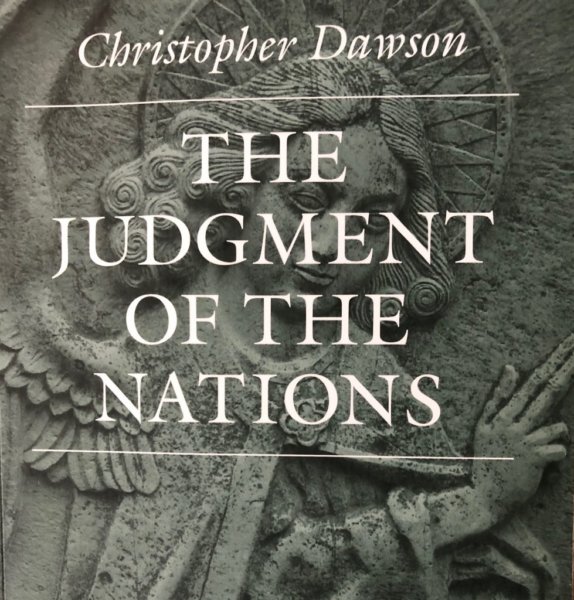



 Pope Francis speaking during the 60th anniversary Mass for Vatican II, October 11, 2022.Screenshot/YouTube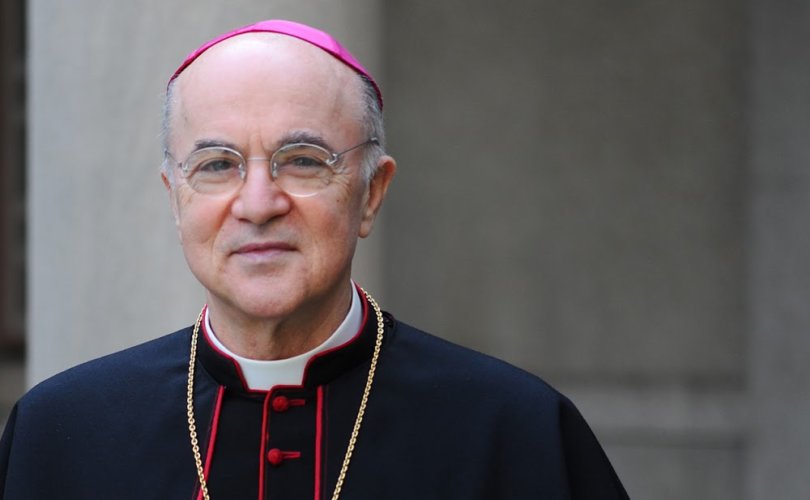




 ABYSSUS ABYSSUM INVOCAT / DEEP CALLS TO DEEP
You must be logged in to post a comment.