Probably, but not certainly, 1750 years ago, on February 27, 272, a great Roman emperor and a brilliant politician was born in Naissus, Moesia (now Niš, Serbia): Flavius Valerius Constantinus, also known as Constantine the Great.
His father is Constantius Chlorus, Caesar (deputy emperor) of the northwest, and his mother is St. Helena. Challenging the “Tetrarchy” — the government of two Augusti (co-emperors), and two Caesars (their deputy and designated successors) set up in 293 by the emperor Diocletian to manage the vast empire — in 306, on the death of his father, Constantine was acclaimed by the Roman army at Eboracum, the modern York, northern England, as a Caesar.
He marched his army south and won Gaul, defeated the Germans, conquered Turin, Milan and Verona. On October 28, 312, in the battle that began in Saxa Rubra and ended at the Milvian Bridge, north Rome, Constantine triumphed over the tyrant of Rome, Maxentius, who drowned in the Tiber. Our “most pious prince” put an end to the persecutions against Christians (with the exception of two years under the emperor Julian the Apostate, 361-363), above all by proclaiming the Edict of Milan in 313, which confered on Christians freedom of worship and returned to them what was confiscated during the persecutions. In 324 Constantine, after the defeat of the tyrant of the East, Licinius, becomes the sole emperor of Rome: he reformed the Senate, made fiscal and monetary changes, introducing the solidus aureus, a golden standard coin; he intervened heavily in the religious field, gathering the Council of Nicaea in 325, the first Ecumenical Council, against the Arian heresy; in 330 he inaugurated Constantinople, the Second Rome, as the new capital of the Roman Empire, on the ruins of the ancient Byzantium (now Istanbul, Turkey).
He built the first Christian basilicas:
When the Edict of Constantine allowed Christians to declare themselves in full freedom, art became a privileged means for the expression of faith. Majestic basilicas began to appear, and in them the architectural canons of the pagan world were reproduced and at the same time modified to meet the demands of the new form of worship. How can we fail to recall at least the old Saint Peter’s Basilica and the Basilica of Saint John Lateran, both funded by Constantine himself?[1]
It is necessary to add the Constantinian basilicas of St. Paul on the Via Ostiense and of Santa Croce in Gerusalemme (Holy Cross in Jerusalem), built in Rome going along with his mother’s wishes after having found the relics of the Cross; as well as those of the Nativity in Bethlehem and of the Óoly Sepulcher in Jerusalem. Constantine died in Nicomedia of Bithynia, now in Turkey, in 337 and was buried in Constantinople.
Is Constantine’s conversion a providential moment throughout the history of humankind, prefigured by the Pax Augusta during which the Word made flesh, or is it the beginning of the decline of a Church that is compromised with imperial power? Let us leave to others these deeper questions and take advantage of this anniversary to talk about Constantine’s dream.
Eusebius of Caesarea (ca. 260-339), Bishop in Palestine, in his Ecclesiastical History tells us a lot about the “Constantinian turn,” and in particular of the vision that Constantine had the night before the battle against Maxentius and which led to his conversion: “the appearance to Constantine of the Chi-Rho, radiant in the symbolic night of his unbelief and accompanied by the words: ‘In this sign you will conquer!’”[2] And he won by placing the Christian monogram (Chi-Ro) on the insignia or perhaps on the shields of his men, according to Lactantius (ca. 250-317), an African ecclesiastical writer and tutor to Constantine’s first-born, Crispus.
The choir of the Church of San Francesco in Arezzo, north-central Italy, gives us the cycle of frescoes depicting The Legend of the True Cross, painted by Piero della Francesca between 1452 and 1466.
Two scenes in this fresco are precisely those of Constantine’s dream and of his victory over Maxentius. After admiring those paintings, Bohuslav Martinu (1890-1959), Czech composer with an eclectic style, wrote the evocative symphonic poem Les Fresques de Piero della Francesca in Nice in 1955, as the composer himself tells us:
I have very often visited the Church of San Francisco at Arezzo , where I have admired Piero della Francesca’s work, and I have tried to express in music the kind of solemn, frozen silence and the opaque, colored atmosphere which contain a strange, peaceful, and moving poetry.[3]
The second movement (Adagio) is based on Constantine’s dream and a viola solo, similar to a military trumpet announcing the battle, almost describes the scene. In the first part of the third and last movement (Poco allegro), syncopated music is inspired by Constantine who defeats Maxentius without any effort, simply by showing the cross.
Title photo: public domain. Emperor Constantine, marble head and fragments from a colossal statue Date: ca. 313-315 [or 330?] AD. Original photograph by Allan T. Kohl.
Massimo Scapin, an Italian conductor of both opera and the symphonic repertoire, composer, and pianist, holds degrees in piano and choral conducting from the State Conservatory of Music in Perugia, in orchestral conducting and composition from the National College of Music in London, and in religious science (magna cum laude) from the Pontifical Lateran University. Massimo appeared as guest conductor and pianist in Europe, Japan, Kazakhstan, Korea, and the United States. He was also a Vatican Radio commentator and entertainer. He currently serves as Director of Liturgical Music at St. John Cantius Church in Chicago.
Posted inUncategorized|Comments Off on THE EMPEROR CONSTANTINE AND THE GREAT ART HE INSPIRED
Did LifeSiteNews admit that Benedict’s Resignation could have been Invalid & Implicitly admit that an Imperfect Council is Needed?
On February 14, 2019, LifeSiteNews admitted that it is possible according to their quoted theologian that Pope Benedict XVI’s resignation could have been invalid. The LifeSiteNews theologian said the “abdication would be invalid only if he had in his mind the thought: ‘I only want to resign the ministerium if it is in fact distinct from the munus.’”
The “theologian who spoke to LifeSiteNews on condition of anonymity,” also, appeared to implicitly say the issue of the validity of the Benedict resignation could be solved by an imperfect council of cardinals or bishops to give a “judgement of the Church” on the matter. The LifeSiteNews theologian said “So even if someone is convinced that Benedict XVI is still Pope, he or she should wait for the judgement of the Church.”
Here is the essential part of the LifeSiteNews article:
“A theologian who spoke to LifeSite on condition of anonymity argued that supporters of this opinion need to show that Pope Benedict understood the munus and the ministerium as referring to two different realities. “If you think that ministerium means only acts of teaching and governance, then it would indeed seem to be different from the munus, which normally designates an office, that is, a kind of state,” he said.
“But ‘ministerium’ doesn’t have to mean acts,” he explained. “The first meaning given to it in the Latin dictionary (Lewis and Short) is ‘office.’ I would say that its basic meaning is ‘an office by reason of which one must perform acts to help others.’”
The theologian noted further that ‘munus’ doesn’t only mean a state. “According to the Latin dictionary, it can also refer to the performance of a duty,” he said. “It was used in this sense by Cicero and there is no more authoritative writer of Latin prose than him.”
“He said the main difference between the words appears to be simply that ‘munus’ connotes more “the burden which the office puts on its bearer,” and ‘ministerium’ connotes more “the reference to other people which the office establishes.”
“But that doesn’t prevent them from referring to one and the same office or state,” he added. Why then did Pope Benedict say munus at the start of his Latin declaration and ministerium at the end, if he understood them to refer to the same reality? The theologian suggested two possibilities. “One is simply that people who want to write elegant prose often avoid frequent repetitions of the same word,” he said. “Another is that the word ‘ministerium’ has perhaps a more humble sound to it, since it refers more directly to the papacy in its relation to other people, than as a charge placed on oneself. So having begun by using the official word, ‘munus,’ Benedict moved on to the more humble sounding word.”
The theologian went on to note that while Benedict was aware of theological writings from the 1970’s onward that proposed the Petrine munus could be divided, he is “not aware of any place where Joseph Ratzinger endorses this thesis.”
He said the lack of clarity about Ratzinger’s position is aggravated by the fact that translators have mistranslated Ratzinger and presented him as endorsing heterodox ideas when in fact he was reporting someone else’s thought rather than expressing his own.
The theologian acknowledged that it is possible that Pope Benedict thought there might be a real distinction between munus and ministerium but was unsure. In that case, he said, Benedict’s abdication would be invalid only if he had in his mind the thought: “I only want to resign the ministerium if it is in fact distinct from the munus.”
But he said it would be equally possible that, being unsure whether there was a distinction, Benedict could have had in mind the thought: “I want to resign the ministerium whether or not it is distinct from the munus.” In that case, the theologian said he believes the resignation would have been valid.” “In any case,” he said, “I don’t think there is convincing evidence that Benedict thought there was a real distinction between the two things.”
“Again,” the theologian continued, “since according to Canon 15.2, error is not presumed about a law, the presumption must be that he validly renounced the papacy.”
He said that people who insist Benedict’s resignation was invalid “therefore seem to be in a position similar to that of a Catholic spouse who is personally convinced that his or her Church marriage was invalid.”
“However convinced the person is of this, he or she is not free to marry again until an ecclesiastical court has declared that there was never a marriage,” he said. “So even if someone is convinced that Benedict XVI is still Pope, he or she should wait for the judgement of the Church before acting on this belief, e.g. a priest in that position should continue to mention Francis in the canon of the Mass.” As for the argument that Pope Francis can’t be Pope because he clearly has no graces of state, the theologian said this forgets that “grace is normally offered in such a way that it can be refused.”
“You might as well say that a man who beats his wife obviously can’t be validly married to her,” he said.
Other theologians see Benedict’s use of the title “Pope emeritus” as a point in favor of the resignation.
Can. 185 of the Code of Canon Law (on the loss of ecclesiastical office) says: “The title of emeritus can be conferred upon a person who loses an office by reason of age or of resignation which has been accepted.”
As one theologian explained, every bishop when he retires becomes bishop emeritus. He is the emeritus bishop of the last diocese of which he presided. By creating the “pope emeritus” title (it is argued), Benedict is saying “what every bishop does, I’m doing too.”
LifeSite also asked noted Catholic historian Roberto de Mattei for his thoughts on arguments invoking “substantial error.” Seconding the first theologian’s line of thought, Professor de Mattei noted that: “The Church is a visible society, and canon law does not evaluate intentions, but concerns the external behavior of the baptized. Canon 124, §2 of the Code states that: ‘A juridic act placed correctly with respect to its external elements is presumed valid.’”
“Did Benedict XVI intend to resign only partially, by renouncing the ministerium, but keeping the munus for himself? It’s possible,” he said, “but no evidence, at least to date, makes it evident.” “We are in the realm of intentions,” he added. “Canon 1526, § 1 states: “Onus probandi incumbit ei qui asserit” (The burden of proof rests upon the person who makes the allegation.) To prove means to demonstrate the certainty of a fact or the truth of the statement. Moreover, the papacy is in itself indivisible.” [https://www.lifesitenews.com/news/did-benedict-really-resign-gaenswein-burke-and-brandmueller-weigh-in]
Canon law expert Br. Alexis Bugnolo apparently disagrees with the LifeSiteNews theologian that Catholics need to “wait for the judgement of the Church.” He says that “the validity of a papal renunciation is determined by the law”:
“It is true regardless of who declares it or does not declare it, because the validity of a papal renunciation is determined by the law itself, not by the acceptance or rejection of anyone. Here many Catholics get confused and are being gaslighted by the lavender mafia. Because it is one thing that a canonical act is or is not, or is or is not valid, its another thing that it is judged to be valid or not, to be or not. In the case of matrimonial vows, the Church puts their validity under its judgement. But in the Case of a papal resignation, the Church does not put this under anyone’s judgement, because a papal act is what it is, there is no one who can judge it to be other than it is. So when the Pope says I renounce the Ministery, those who say that means he renounced the Papacy ARE ARROGATING JUDGEMENT over the Pope, and not only err but sin mortally and merit eternal damnation, because the Pope can only be judged by God. However, though we must recognize that He did renounce the ministry, we do not need authority to know whether that is or is not a papal resignation. We have Canon 332 §2, which says it is not. And to say that is simply to reiterate what the law says. That is why those who say Pope Benedict XV is still the pope not only do not err, but they neither sin or arrogate judgement to themselves, while those who say he is not pope, do both, and thus must attack either the Law or those who uphold the law.’ [https://fromrome.wordpress.com/2019/11/24/will-the-mafia-of-st-gallen-triumph/]
Journalist and Vatican expert Antonio Socci in his new book presents the case that Francis may have implicitly confirmed that Benedict’s “resignation is invalid, because doubtful and partial” by saying “Benedict… has opened the door of popes emeriti”:
Socci wrote that Benedict XVI’s personal secretary Georg Ganswein said:
“He [Benedict] has not abandoned the office of Peter.”
And thus according to Benedict’s closest collaborator Ganswein Benedict became a pope emeritus which has never existed except for retired bishops who still held the munus or office of bishop.
An unexpected thing happened when Team Francis went into “damage control” and denied there could be a emeritus “to the office of Peter.”
Unexpectedly, Francis at some point in time contradicted the “ultra-Bergoglians” assertion that that there couldn’t be a emeritus “to the office of Peter.”
Socci’s book says after Ganswein made the above statement in 2016 the “ultra-Bergoglian website Vatican Insider” went into “damage control” by interviewing Team Francis canonist Monsignor Giuseppe Sciacca who said emeritus “regards only the ‘episcopal office'” and “‘cannot be applied to the office of the Pontiff.'”
The book quotes Francis contradicting the Bergoglians or Team Francis by saying:
“Benedict… has opened the door of popes emeriti.”
Socci explains the predicament that Team Francis is in:
“The dilemma which the Bergoglians find themselves in is without solution: if, in fact, they recognize the title of ‘pope emeritus,’ they must recognize that Benedict XVI is still pope; but if they deny this title and contest the declared intention of the ‘resignation’ (which was not a resignation of munus , but only of the active ministry), it means that they would have to hold that the resignation is invalid, because doubtful and partial.” (The Secret of Benedict XVI, Pages 92-94)
In 2016, One Peter Five publisher Steve Skojec actually defended Ann Barnhardt’s integrity in it appears saying the “abdication would be invalid… if he… resign[ed] the ministerium [which is]… distinct from the munus” against a statement from pro-life attorney Chris Ferrera in the comment section of that website.
In response, Ferrara appeared to agreed with the LifeSiteNews theologian who said “So even if someone is convinced that Benedict XVI is still Pope [or if someone is convinced that Francis is a manifest heretic], he or she should wait for thejudgement of the Church.” Moreover, the attorney called for a “conclave” or imperfect council to judge if Francis is a manifest heretic who has deposed himself and, also, apparently to judge the validity of the Benedict resignation:
” Chris Ferrara: To declare that Francis is not the Pope… make[s] for good click bait…”
“… Steve Skojec: “Ann writes things that certainly come across as sensationalist… This is who she is. I don’t believe she ever publishes something she doesn’t truly believe in. I don’t think it’s fair to call this clickbait… “
“…. Chris Ferrera: “My only objection is any of us making final forensic determinations based on ‘overwhelming evidence’ and then announcing our verdict of one. It’s a rather silly exercise.”
“Perhaps a better approach is to amass the evidence and send it to every cardinal, demanding they convene [an imperfect council] and issue the kind of judgement Bellermine contemplated in this situation: not that the Pope is deposed, but that he has deposed himself. Such a hypothetical conclave would offer the Pope an opportunity to explain himself.” (One Peter Fives’ comment section, “If Francis is an Antipope, We Can’t know it Yet,” June 21, 2016)
The only prelate in the world to take attorney Ferrara’s legal advice was Bishop Rene Gracida who “amass[ed] the evidence” and wrote a Open Letter to all the cardinals “demanding they convene [an imperfect council].”
Pray an Our Father now for the restoration of the Church and demand that the cardinals convene an imperfect council.
Posted inUncategorized|Comments Off on THE ONLY SOLUTION TO THE PROBLEM OF KNOWING WHO IS THE REAL POPE IS AN IMPERFECT COUNCIL
Hitler-like Reichstag Law Trudeau’s Stunning Subversion of Democracy: “El Salvador’s Nayib Bukele says that Canada’s president has ‘zero credibility on democracy’ after emergency law against freedom convoy”
The Enabling Act (German: Ermächtigungsgesetz) of 1933, officially titled Gesetz zur Behebung der Not von Volk und Reich (“Law to Remedy the Distress of People and Reich“),[1] was a law that gave the German Cabinet—most importantly, the Chancellor—the powers to make and enforce laws without the involvement of the Reichstag or Weimar President Paul von Hindenburg. Critically, the Enabling Act allowed the Chancellor to bypass the system of checks and balances in the government and the laws created under it could explicitly violate individual rights prescribed in the Weimar Constitution.[2]
In January 1933 Nazi Party leader Adolf Hitler convinced President Paul von Hindenburg to appoint him as chancellor, the head of the German government.[3] Four weeks into his chancellorship, the Reichstag building caught fire in the middle of the night.[4] Hitler blamed the incident on the communists and was convinced the arson was part of a larger effort to overthrow the German government. Using this justification, Hitler persuaded Hindenburg to enact the Reichstag Fire Decree. – Wikipedia [https://en.wikipedia.org/wiki/Enabling_Act_of_1933]
Brazil’s The Rio Times reported “El Salvador’s Nayib Bukele says that Canada’s president has ‘zero credibility on democracy’ after emergency law against freedom convoy”:
RIO DE JANEIRO, BRAZIL – The president of El Salvador Nayib Bukele tweeted that the Canadian government has “zero credibility” when it comes to “teaching other countries lessons about democracy and freedom.”
His comments followed Canadian President Justin Trudeau’s invocation of the EmergencyPowers Act against the Freedom Convoy in Canada.
During a press conference Monday in Ottawa, Canadian Finance Minister Chrystia Freeland explained some of the consequences of Justin Trudeau’s unprecedented use of the emergency law.[https://www.riotimesonline.com/brazil-news/modern-day-censorship/el-salvadors-president-says-that-canadas-president-has-zero-credibility-on-democracy-after-emergency-law-against-freedom-convoy/]
Lawyer Viva Frei stated on Twitter that “Trudeau didn’t even need to stage a Reichstag fire as a pretext to invoking the Emergencies Act”:
Justin Trudeau didn’t even need to stage a Reichstag fire as a pretext to invoking the Emergencies Act. He just needed his state-funded media to tell Canadians there had been such an incident. Whoever controls the media, controls the mind. -Jim Morrison[https://twitter.com/thevivafrei/status/1493589356707254274]
Even Bloomberg admitted “The Canadian Civil Liberties Association said the situation has not reached the “high and clear standard” needed to justify such sweeping measures.” [https://www.bloomberg.com/news/articles/2022-02-16/what-trudeau-can-and-can-t-do-with-emergency-powers-quicktake]
Canada’s Maclean news website asked “whether Trudeau has met the ‘stringent test’ laid out 34 years ago”:
So one way to understand the “stringent test” a young minister laid out 34 years ago for invoking special measures is: does the border impediment at Windsor and Coutts “seriously endanger” Canadians’ lives or “seriously threaten” Canada’s independence and survival? And again, the you-must-be-this-tall-to-ride test to apply is: was the current crisis worse than the crises of 2020, 2008 or 2001?
Parliament will get a chance to debate all of this in the next several days.[https://www.macleans.ca/politics/ottawa/the-emergencies-act-whats-seriously-endangered/]
But,“Parliament will [not] get a chance to debate all of this in the next several days.”
Is history repeating itself. The day of “Trudeau’s suspension of Parliament amid ethics controversy” is also the day in 1943, when anti-Nazi White Rose protesters Hans and Sophie Scholl and their friend and collaborator Christoph Probst were arrested by the Gestapo:
Remember that lawyer Viva Frei stated that “Trudeau didn’t even need to stage a Reichstag fire as a pretext to invoking the Emergencies Act” which appears to be a Hitler-like Reichstag Law: “Reichstag Fire Decree.” The Reichstag Fire incident was used as a pretext for the German people to lose their civil liberties. The On This Day website gives a summary of the Reichstag Fire history:
Four weeks after Adolf Hitler was sworn in as the new Chancellor of Germany, the seat of the German Parliament in Berlin, the Reichstag, was burned down. This is one of the most contested and controversial events of Hitler’s early years in power, as a mere one day later, Hitler signed the Reichstag Fire Decree which gave his government the legal authority to imprison opponents of the Nazis and suspend many civil liberties in Germany.
The Nazis arrested Marinus van der Lubbe, a Dutch Communist, with setting the fire. He was tried, and executed on January 10, 1934, for the arson act. There has been much debate on whether Lubbe acted alone or whether the Nazis set the fire as a false-flag attack in order to pass the Reichstag Decree and increase their power.
Foremost Nazi historian Ian Kershaw wrote in 1998 that the consensus was that Lubbe had acted alone and that the fire was merely a stroke of luck that the event occurred so the Nazis could use it to their advantage. However, new evidence since then has pointed to the possibility of a Nazi conspiracy. In June 2019 an affidavit in the archives of former investigator Fritz Tobias was discovered. In it Hans-Martin Lennings, an SA operative, claimed in 1955 that he and his SA group drove Lubbe to the scene of the fire – and that the Reichstag was already on fire when they arrived.
Lennings claimed that his team were made to sign a paper denying knowledge of the event, and that they had protested Lubbe’s arrest. He later claimed that many involved had been executed but that he had been warned and fled to Czechoslovakia.
Whatever the case, in 2008 a German court posthumously pardoned Lubbe under a law designed to reverse unjust convictions during Nazi persecutions. [https://www.onthisday.com/photos/reichstag-fire]
What can we do to defeat this monstrous strategy of Trudeau and the media elites to “criminalize” civil liberties?
What is needed right now, before it is to late, to save Canada and America from those who would destroy our God given civil liberties and rights is to pray at home or in church and if called to go to outdoor to prayer rallies in every town and city across Canada and the United States for God to pour out His grace on our countries to save us from those who would use a Reichstag-like law to “shattered the ideas we took for granted” which are our civil liberties.
Pray for the Canada and the Freedom Convoy.
Pray an Our Father now for reparation for the sins committed because of Francis’s Amoris Laetitia.
Pray an Our Father now for the restoration of the Church as well as the Triumph of the Kingdom of the Sacred Heart and the Immaculate Heart of Mary.
Stop for a moment of silence, ask Jesus Christ what He wants you to do now and next. In this silence remember God, Father, Son and Holy Ghost – Three Divine Persons yet One God, has an ordered universe where you can know truth and falsehood as well as never forget that He wants you to have eternal happiness with Him as his son or daughter by grace. Make this a practice. By doing this you are doing more good than reading anything here or anywhere else on the Internet.
Francis Notes:
– Doctor of the Church St. Francis de Sales totally confirmed beyond any doubt the possibility of a heretical pope and what must be done by the Church in such a situation:
“[T]he Pope… WHEN he is EXPLICITLY a heretic, he falls ipso facto from his dignity and out of the Church, and the Church MUST either deprive him, or, as some say, declare him deprived, of his Apostolic See.” (The Catholic Controversy, by St. Francis de Sales, Pages 305-306)
– If Francis betrays Benedict XVI & the”Roman Rite Communities” like he betrayed the Chinese Catholics we must respond like St. Athanasius, the Saintly English Bishop Robert Grosseteste & “Eminent Canonists and Theologians” by “Resist[ing]” him: https://www.thecatholicmonitor.com/2021/12/if-francis-betrays-benedict-xvi.html
– LifeSiteNews, “Confusion explodes as Pope Francis throws magisterial weight behind communion for adulterers,” December 4, 2017:
The AAS guidelines explicitly allows “sexually active adulterous couples facing ‘complex circumstances’ to ‘access the sacraments of Reconciliation and the Eucharist.'”
– On February 2018, in Rorate Caeli, Catholic theologian Dr. John Lamont:
“The AAS statement… establishes that Pope Francis in Amoris Laetitia has affirmed propositions that are heretical in the strict sense.”
– On December 2, 2017, Bishop Rene Gracida:
“Francis’ heterodoxy is now official. He has published his letter to the Argentina bishops in Acta Apostlica Series making those letters magisterial documents.”
Pray an Our Father now for the restoration of the Church by the bishops by the grace of God.
What is needed right now to save America from those who would destroy our God given rights is to pray at home or in church and if called to even go to outdoor prayer rallies in every town and city across the United States for God to pour out His grace on our country to save us from those who would use a Reichstag Fire-like incident to destroy our civil liberties. [Is the DC Capitol Incident Comparable to the Nazi Reichstag Fire Incident where the German People Lost their Civil Liberties?: http://catholicmonitor.blogspot.com/2021/01/is-dc-capital-incident-comparable-to.html?m=1 and Epoch Times Show Crossroads on Capitol Incident: “Anitfa ‘Agent Provocateurs‘”: http://catholicmonitor.blogspot.com/2021/01/epoch-times-show-crossroads-on-capital.html?m=1]
Pray an Our Father now for the grace to know God’s Will and to do it.
And they’re voting on Monday on this extreme bill that would overturn every pro-life law in the country — in every state in America.
Senate Democrats have pushed forward with a radical pro-abortion bill that would force states to legalize taxpayer-funded abortions up to birth.
Democrat leaders and many liberal news outlets portray the bill as an effort to simply “codify the right to an abortion” in the U.S. in response to the likelihood that the Supreme Court will overturn Roe v. Wade later this year. But the bill would go beyond even Roe by nullifying state laws that protect unborn babies from late-term and partial-birth abortions Pro-abortion Democrats are desperate to stop the pro-life momentum demonstrated by pro-life laws advancing in state legislatures nationwide.
The House has already passed the bill and if the Senate passes it too, pro-abortion Joe Biden will sign it and America will have the most radical pro-abortion law ever.
As if this isn’t bad enough,yesterday Biden nominated Ketanji Brown Jackson to be the next Supreme Court justice.
Jackson is a radical abortion activist who was literally the attorney for leading pro-abortion groups like NARAL. Planned Parenthood loves her and has already endorsed this pro-abortion extremist for the nation’s highest court.
She is so pro-abortion she once filed a legal brief demanding that courts deny pro-life Americans our right to free speech.
LifeNews is working overtime to stop this radical pro-abortion bill and to fight Jackson’s nomination. But we need your financial support to continue to expose and combat Biden, the Democrats and their pro-abortion agenda.
Posted inUncategorized|Comments Off on DEMOCRATS PUSH FOR LEGISLATION PERMITTING ABORTION UP TO THE TIME OF BIRTH OF THE BABY
…and Rumors of Warby charliej373By Charlie JohnstonMy next talk will be on Saturday, Feb. 26 from 1 – 5 p.m. It will be at the Renaissance Montessori School at 12625 Fitzwater Dr., Nokesville, Virginia – near Manassas, site of the first battle of the American Civil War. For information or to RSVP, go here. At the First Battle of Bull Run (or the Battle of First Manassas, as the Confederates called it) many northerners from nearby Washington, D.C. made a picnic on a hillside to watch, expecting the rebellion to be quickly suppressed. Before the day was over, those picnickers were fleeing in panic along with routed Union troops. Before this battle, southern soldiers were quick to brag that one southerner could rout 10 Yankees. Meantime, much of the northern establishment expected the rebellion to evaporate like morning mist as soon as force was applied. Both sides got their first glimpse of how difficult and grueling this war was truly going to be.*********If you haven’t checked out this week’s podcast with Pam Popper, founder of Make Americans Free Again, you should get over there. Popper’s group is similar to CORAC in many ways, doing very practical things to fight back against government mandates – and hold petty officials personally accountable, while also helping small businesses survive and grow again AND helping families to get their kids out of failing public schools. Their work is magnificent. I heartily endorse it. I think it is an organization many of you will want to get involved with – and Pam is one feisty, no-nonsense lady. About the only thing I disagreed with her about is the value of public protests. She is focused on getting specific things done, but I believe that public protests help hearten and give courage to the faithful and other ordinary citizens being oppressed, which I think is tremendously valuable. It was a great interview.*********Of all the commentary I have read on the Russian invasion of Ukraine, only one so far has struck me as being grounded in hard geo-political facts. Interestingly, it largely relies on the analysis of the late Aleksander Solzhenitzyn – one of the most astute historical and political observers of the last century. Most of the rest of the commentary, even by the best pundits, has seemed to me to be hair on fire reactions that don’t even skim the surface of this flash point or what its potential consequences are. So I’ll give it a go for all you Next Right Steppers. I am going to go step by step through some significant issues that have to be considered before making any sort of coherent analysis.Historical Aspects: It has been a troubled encounter between Russia and Ukraine for over three centuries. Most of the offenses have been the fault of Russia – but not all. The Russian Empire took over Ukraine in the late 1700’s and held it tightly until the dissolution of the Soviet Empire in 1991. Unfortunately, Soviet rule seriously warped the definition of what is actual Russian and what is Ukrainian territory. In 1954, Soviet Premier Nikita Khrushchev “gifted” Crimea to Ukraine. This was peculiar because Crimea had never been part of Ukraine. It was part of the Khanate when Russia took it over in the late 1700’s and drove most of the Muslims out, replacing them with ethnic Russians. And yet, it was kind of an honorary thing because both Crimea and Ukraine were firmly under the rule of Russia, so it changed nothing then about who ruled – just made it part of a particular Soviet Province. Many suspected it was a tacit apology by Khrushchev for the Holodomor, the forced starvation of millions of Ukrainians by Josef Stalin. These redefinitions of boundaries of Soviet Regions had no consequences then but are having many now. When the Soviet Union broke up and Ukraine declared its independence after three centuries of Russian rule, big chunks of Eastern Ukraine considered themselves Russian – and believed they were now governed by a “foreign” power. Data from public surveys in the 90’s showed that nearly 70 percent of people in Eastern Ukraine considered themselves Russian – and wanted to be repatriated with Russia. Had Soviet rule not deformed traditional national boundaries, many of the ongoing troubles in that region would never have been sparked. Kiev is not only an historical Russian city: it is the city where Russia was founded in 988 A.D.Cultural Aspects: About a third of modern-day Ukraine is overwhelmingly Russian Orthodox. This is all in the east. The rest is Eastern-rite Catholic. The shallow thinkers in the media and modern foreign policy establishments don’t think culture and religion mean much of anything. They are wrong. The border between Russian Orthodox and Eastern-rite Catholic in Ukraine is almost as sharply defined as the border between the north and the south was in the American Civil War. Most Russian Orthodox consider themselves Russian. Most Eastern-rite Catholics consider themselves Ukrainian. That is a problem that has been festering since the Soviet break-up over 30 years ago. Eastern Ukrainians have repeatedly reported that the Ukrainian government has treated them as second-class citizens since independence. This animosity is understandable, as Ukraine has been oppressed by Russia worse than any country except, perhaps, Poland. But I have known since the 90’s that this could not last. I had hoped that Russia and Ukraine would, through diplomatic means, work out the borders so that ethnic Ukrainians were fully in independent Ukraine and places with majority ethnic Russians could peacefully re-unite with Russia if they so chose.Feckless U.S. Diplomacy: The last U.S. President who had both a coherent understanding of the Russia issue and the political capital to carry out coherent diplomacy was Ronald Reagan. Everything since has been wishful thinking or thwarted efforts. The Soviet Union fell under the first George Bush’s watch, but that result was entirely the culmination of events initiated by Reagan, Pope St. John Paul II, and British Prime Minister Margaret Thatcher. Bush Sr. was too busy celebrating the illusory end of history and American status as the world sole superpower to deal effectively with the turbulent transition in world affairs. Bill Clinton continued the policy begun by Bush of inviting near every country in the world to join NATO, thus diluting it and ensuring that it would become a dead man walking at the next truly global crisis – when he wasn’t ignoring the growing threat of radical Jihadists and giving satellite-targeting technology to the Chinese. The second George Bush handled the specific immediate crisis of 9-11 well but had little feel for geo-political realities otherwise. Hurricane Katrina sapped Bush junior’s mojo and he staggered ineffectively to the end of his second term, both in foreign affairs and domestically. Barack Obama put the feck in feckless. One of his first acts was to unilaterally stop the missile defense radars being built in Poland. Russia had complained of them, because of course they would. Actually, Russia would have benefitted from them as an early warning against Chinese mischief, but it was a good opportunity to get something in exchange from the U.S. in trade. Russian President Vladimir Putin is not stupid. This was a routine diplomatic ploy by Russia. The first rule of international diplomacy is that the only thing you give away for nothing is…nothing. I remember watching in 2010, I think, an early meeting between Obama and Putin after the latter had cancelled the missile defense program. Putin could barely hide his disdain for the American president. A serious global leader is not much interested in shows of how much a colleague loves them: they want to know you are a competent dance partner. Putin’s visage reflected the late Casey Stengel’s lament about the pitiful 1963 New York Mets: “Doesn’t anybody here know how to play this game?” Any idiot could see the growing threat of China – and the ultimate conflict that must come between China and Russia because of simple geography. Putin was looking for a competent ally to deal with that threat – and we could have gotten a lot in return, but Obama was too busy looking for a pat on the head to be a serious ally, so Putin made a deal with China in hopes of forestalling the inevitable confrontation between those two states. Donald Trump provided the first serious opportunity since Reagan to forge mutually beneficial ties. It is not so much that Trump is a geo-political genius, but he is a brilliantly shrewd negotiator whose gut instincts are as fine as any around. Alas, the Democrats and Republican establishmentarians hated Trump so much they were glad to use Russia as a bugaboo for purely political reasons to mount a false narrative in hopes of taking Trump down. They squandered our last serious chance to forge a diplomatic alliance that could have preserved peace and provided a diplomatic means to resolve conflicts in the region. Then came Joe Biden who took fecklessness to a whole new level. Since Bush junior, Putin has had to deal with incompetent American dance partners or a competent one who was barred from forging any serious alliance with Russia. Putin realized that, for the foreseeable future, he is on his own. So he forged an alliance with the Chinese, hoping to forestall the inevitable conflict they would have if he is not willing to become a vassal client state to China. For a decade and a half, he has practically been screaming for someone of stature in the American foreign policy establishment to notice that China is a huge and growing threat to both America and Russia – and everything in between. But the America foreign policy establishment hasn’t gotten anything right in decades – and is too busy grappling with the “crises” of climate change, gay rights, critical race theory and transgenderism to pay attention to anything real. Some of these guys are smart but, sadly, in these times, smart often just means you are better able to convince yourself of your own fantasies than that you can deal effectively with the reality in front of you. When the history of these times is written 50 years from now, it will be a history of constantly squandered opportunities spanning decades.Haven for U.S. Officials Corruption: It is often noted that corruption is rife in Ukraine. That is true BUT powerful American politicians have used that poor country as an ATM and an effective money-laundering operation for the proceeds of their influence peddling and rank corruption. Shoot, when he was vice-president, Biden actually bragged about getting the prosecutor who was investigating Burisma, the company from which his son Hunter was getting tens of thousands a month, fired. When Ukraine tried to root out corruption, powerful establishment American officials stepped in to keep it corrupt so as not to disturb their honeypot. I have read various establishment media outlets supposedly “debunking” these stories – but all the debunking consists of technical issues rather than the raw substance of the allegations of corruption. They say that, for example, it is not Mitt Romney’s son who is making big money from Ukraine, but a close crony…or that Nancy Pelosi’s son does not work for a Ukrainian energy company, he just has a sweetheart deal to import Ukrainian oil. The establishment is so desperate to hide these ties that they impeached (but did not convict) Trump when he tried to get to the bottom of it. It did stop the investigation which would have led to their massive corruption, though. Ukraine was victimized by powerful American establishment politicians to keep their own honeypot flowing. Now it is victimized by Russia’s invasion. But when Biden and company so ruthlessly exploited Ukraine for profit, I have to wonder whether the dogs of war they want to unleash are to defend Ukraine or to keep the Russians from getting hard evidence of their own corruption. There is no doubt that Ukraine has been badly victimized for a long time – but I have yet to see a “good guy” in this situation…and I am not eager to commit American lives to protect the dirty secrets of establishment politicians.What Putin Wants Now: Putin is often quoted as saying the breakup of the Soviet Union was the worst catastrophe of the 20th century. The implication is that he is a closet communist, yearning for the old days. Even when he was a KGB officer, Putin had no great love for communism. He did, however, and still does have a yearning for a great and powerful Russian Empire. If people say that Putin is a modern equivalent of a Russian Czar, I have no quibble with that. He has no desire I have ever fathomed to be a Communist First Secretary. Given the realities that he wants Russian greatness, fears Chinese hegemony, and knows he is on his own to fend as best he can, what is his endgame? Here it gets tricky, for several are possible. What is certain is that Putin wants to expose NATO as the toothless paper tiger it is and utterly destroy it. Thanks to German intransigence and dependence on Russia, he will probably succeed on that. NATO was the greatest collective security coalition in the history of the world – but its sell-by date expired three decades ago. It has been a shuffling zombie ever since. You might think that is no big deal, but it is. The maintenance of a now-useless security alliance retards the creation of new security alliances that match the threats of our time. What we need is a collective security alliance along the lines of NATO in East Asia and with Eastern European and Middle Eastern states that border China. Even if Putin can’t hope to get such a collective started under this feckless administration, the destruction of NATO will force officials to think with fresh eyes about such things. I have doubts that Putin wants to absorb all of Ukraine. To take Western Ukraine would just create a constant center of resentment and rebellion. When he invaded Georgia in 2008, after those responsible for violent incursions into Russia were brought to heel, Putin withdrew his forces and returned full sovereignty to the nation of Georgia. He has not shown a history of wanting to buy vexing problems for show. If he goes into Ukraine just to the intrinsic border between the Russian Orthodox and Eastern-rite Catholics, for all the storm and fury of the moment, this will ultimately die down and both nations will have more stable borders. If that breaks NATO, I doubt he will go any further. If it does not, I would not be surprised if he does go further or even invades other countries on his border such as Estonia, Lithuania, Latvia or Belarus. He needs to break NATO and get other western nations focused on the threat of China. If he has to ultimately go it alone against China, in his mind, better to do it from Empire. If the backlash that seems certain in American politics takes solid shape this fall, he only has two more years before once again having the potential for a potent western alliance. As a bonus, he would have a host of bargaining chips in his pocket to sweeten any deal. I cannot speak to what Putin’s moral character is. Certainly, he is a determined autocrat, for which Americans denounce him regularly – without noting that the only Russian rulers who have survived very long for over a thousand years in Russian politics of whatever stripe have been strongman autocrats. Faculty lounge fantasists need not apply – and if they do, they will be toppled very quickly. If you doubt it, see Georgi Malenkov. What I do know is that, up to this point in his tenure, the moves Putin has made have made geo-political sense from the standpoint of someone who puts Russian interests first. The great tragedy is that we have been too blind to exploit opportunities where mutual interests could have made us allies and shaved off some very rough edges, while genuinely confronting China.Consequences and…China: If America and NATO do somehow mount a vigorous defense of Ukraine, I expect to see cyber-attacks like we have never seen before. I already know that Putin is shrewd. If he is very shrewd, he will target his cyber attacks against critical government infrastructure such as federal police forces, military communications, the IRS and other bureaucracies while making as few attacks on services ordinary Americans rely on as possible. He still wants an ultimate American alliance, for that would be a much stronger starting point in any conflict with China than any Empire he could realistically mount. Better even a frail gesture of good will to the American people than no such gesture to facilitate cooperation in the future. The bottom line is that whatever happens in Ukraine is most unlikely to start World War III BUT…China is watching closely. If America and NATO are as feeble and aimless as I think they are, I expect China to invade Taiwan while we are all pre-occupied with Ukraine. That does have the strong potential of setting off World War III. Even so, it advances Putin’s aims. The time has not yet come for China to abrogate its treaties with Russia and attack – and the very act of China beginning its Hitlerian drive for world dominance will force the west to get serious about collective security arrangements to stop China. That is the best chance for Russia to survive the current geopolitical currents.*********I was amused to see that Justin Trudeau ended the Emergency Act, under pressure from the Canadian Senate, and very real fears that his precipitous actions might collapse the Canadian banking system. Leftists can rarely foresee the logical consequences of their actions. If you are 20 feet from them, they will eagerly toss a grenade at you and always be shocked that it cripples them, too. They are very mouthy and arrogant, but not very bright.It may not help very much. The run on Canadian banks by normal people and by international corporations has already begun. Now all those banking customers know that Canada is willing and able to steal people’s money for simply disagreeing with the government and the media. It will be hard to get that toothpaste back into the tube. For all the fearful events in the world, when ordinary people unite, they are the most powerful force on earth.My friend, Desmond Birch, made an insightful post on his Facebook page on the end of tyrants and how we should look at them.Find me on Gab at Charliej373 or at the CORAC group.Donate to CORAC!Join the Conversation!The Corps of Renewal and Charity (CORAC)18208 Preston Rd., Ste. D9-552Dallas, Texas 75252charliej373 | February 24, 2022 at 9:58 pm | Tags: Aleksander Solzhenitzyn, American Corruption, Canada, Canadian banking system, China, Georgi Malenkov, Justin Trudeau, Make Americans Free Again, Nikita Khruschev, Pam Popper, Russian Invasion, Ukraine, Vladimir Putin | Categories: Announcement, Culture, Economy, Geo-Politics, The Storm | URL: https://wp.me/p9wpk6-175
Posted inUncategorized|Comments Off on CHARLIE’S EXCELLENT INSIGHTS!!!
For all his caginess, dissimulation, and opportunism, Vladimir Putin is more or less predictable.
Putin’s aims? The Russian president’s two-decade dilemma has been how to reclaim the prestige and power of the former Soviet Union—but with only 75 percent of his country’s former territory and 140 million fewer people.
When does he strike?
First, Putin moves on neighboring former Soviet republics when the world price of oil is high, and his coffers are full. So he went into Georgia in 2008 and into Eastern Ukraine and Crimea in 2014 when he thought he had the financial wherewithal and public support to do so.
But when the world is awash in oil, prices dip, and the United States reigns as the largest gas and oil producer, he hesitates. So he remained static between 2017 and 2020.
Second, when the United States increases the defense budget and deters its enemies, Putin also pauses. In contrast, when America “resets” or appeases, he is emboldened.
In 2008, the United States was battered by sky-high oil prices and bogged down in Iraq and Afghanistan. Then between2009 and 2016, President Obama went on an apology tour, cut defense spending, boasted of a new “Russian reset,” contextualized Iranian and North Korean aggression, and begged Putin to behave until Obama was reelected in 2012—in exchange for dismantling U.S. missile defense programs in Eastern Europe. Obama then invited Russia into the Middle East after a 40-year absence.
As a result, during all those years Putin formally invaded Georgia, Eastern Ukraine, and Crimea. But between 2017 and 2020, Putin was quieter.
In 2018, the Trump Administration killed attacking Russian mercenaries in Syria. It got out of an unfavorable missile deal with Russia in 2019. It sold offensive weapons to Ukraine. It maintained sanctions on Russian oligarchs. And it greatly increased defense spending.
No surprise that Putin then did not threaten his neighbors with military mobilizations on their borders.
Third, when NATO is in disarray, Putin also turns aggressive.
The United States and NATO began bickering over Iraq and Afghanistan between 2006 and 2008. By 2009-2010, the Obama Administration was complaining that NATO members were “free riders” for not meeting their promised 2 percent annual budget investments in military readiness.
Germany and Turkey became more belligerent and more anti-American.
In contrast, by 2020, an unpopular and tough-talking Trump had nevertheless jawboned a petulant alliance into investing an aggregate $100 billion more in defense. More countries met their promised defense spending goals.
Trump had sanctioned the Putin-Merkel Nord Stream 2 pipeline project that would bind Germany to fickle Russian energy deliveries.
Again, Putin stayed mostly still.
Fourth, when a U.S. president talks trash and yet proves anemic, Putin loses his cool at such empty bombast and turns aggressive.
Obama repeatedly ridiculed Putin with putdowns of the Russian country and people: “Their economy doesn’t produce anything that anybody wants to buy, except oil and gas and arms. They don’t innovate.”
Yet Obama was afraid even to sell defensive weapons to Ukraine to combat Russian aggression and had implored Putin to give him “space.”
Similarly, Joe Biden constantly attacks Putin in personal terms, labeling him a “bully” and “killer.” Yet when Putin brazenly allowed Russian-affiliated hackers to attack U.S. companies and agencies, Biden urged Putin to please ask the hackers at least to make 16 critical American “entities” off-limits.
When Biden slashed U.S. oil and gas production, prices skyrocketed. Biden then begged the “killer” to please pump more of his “dirty” fuel to help American commuters.
In contrast, Trump expressed guarded willingness to work with Putin, especially in realist terms of triangulating to check Chinese aggression.
But such diplomatic and measured talk was juxtaposed with tough deterrence. Putin never knew quite what Trump might do in any given crisis, other than that it would be unpredictable, in U.S. interests, and possibly deadly.
Again, the result was that Putin did not mobilize for invasion between 2017 and 2020 as he is doing now—and did prior to 2017.
What do we learn about Putin’s opportunistic foreign policy?
Pumping lots of oil and lowering the world price of it makes Putin worry about insolvency rather than invasion and ensure the West is less dependent on him.
When the United States appeases Putin and is wracked by internal dissension and social turmoil, Putin pounces.
Prod NATO to bolster their defenses and Germany to stop enriching Putin—and then Russia is circumspect rather than recklessly aggressive.
Speaking softly while carrying a club rather than loudly with a twig better persuades Putin not to try something dangerous.
To the degree America embraces all four of the strategies above, Putin will likely not attack anyone.
If we at least embrace one or two of the above protocols, he may still stay put.
But if we ignore all of these time-proven antidotes, then we can almost guarantee that Putin will either mobilize against or actually invade a former Soviet republic.
Biden has managed to violate all four principles. Is it then any surprise that a predictably opportunistic dictator has massed hundreds of thousands of troops on Ukraine’s borders?
For all his caginess, dissimulation, and opportunism, Vladimir Putin is more or less predictable.
Putin’s aims? The Russian president’s two-decade dilemma has been how to reclaim the prestige and power of the former Soviet Union—but with only 75 percent of his country’s former territory and 140 million fewer people.
When does he strike?
First, Putin moves on neighboring former Soviet republics when the world price of oil is high, and his coffers are full. So he went into Georgia in 2008 and into Eastern Ukraine and Crimea in 2014 when he thought he had the financial wherewithal and public support to do so.
But when the world is awash in oil, prices dip, and the United States reigns as the largest gas and oil producer, he hesitates. So he remained static between 2017 and 2020.
Second, when the United States increases the defense budget and deters its enemies, Putin also pauses. In contrast, when America “resets” or appeases, he is emboldened.
In 2008, the United States was battered by sky-high oil prices and bogged down in Iraq and Afghanistan. Then between2009 and 2016, President Obama went on an apology tour, cut defense spending, boasted of a new “Russian reset,” contextualized Iranian and North Korean aggression, and begged Putin to behave until Obama was reelected in 2012—in exchange for dismantling U.S. missile defense programs in Eastern Europe. Obama then invited Russia into the Middle East after a 40-year absence.
As a result, during all those years Putin formally invaded Georgia, Eastern Ukraine, and Crimea. But between 2017 and 2020, Putin was quieter.
In 2018, the Trump Administration killed attacking Russian mercenaries in Syria. It got out of an unfavorable missile deal with Russia in 2019. It sold offensive weapons to Ukraine. It maintained sanctions on Russian oligarchs. And it greatly increased defense spending.
No surprise that Putin then did not threaten his neighbors with military mobilizations on their borders.
Third, when NATO is in disarray, Putin also turns aggressive.
The United States and NATO began bickering over Iraq and Afghanistan between 2006 and 2008. By 2009-2010, the Obama Administration was complaining that NATO members were “free riders” for not meeting their promised 2 percent annual budget investments in military readiness.
Germany and Turkey became more belligerent and more anti-American.
In contrast, by 2020, an unpopular and tough-talking Trump had nevertheless jawboned a petulant alliance into investing an aggregate $100 billion more in defense. More countries met their promised defense spending goals.
Trump had sanctioned the Putin-Merkel Nord Stream 2 pipeline project that would bind Germany to fickle Russian energy deliveries.
Again, Putin stayed mostly still.
Fourth, when a U.S. president talks trash and yet proves anemic, Putin loses his cool at such empty bombast and turns aggressive.
Obama repeatedly ridiculed Putin with putdowns of the Russian country and people: “Their economy doesn’t produce anything that anybody wants to buy, except oil and gas and arms. They don’t innovate.”
Yet Obama was afraid even to sell defensive weapons to Ukraine to combat Russian aggression and had implored Putin to give him “space.”
Similarly, Joe Biden constantly attacks Putin in personal terms, labeling him a “bully” and “killer.” Yet when Putin brazenly allowed Russian-affiliated hackers to attack U.S. companies and agencies, Biden urged Putin to please ask the hackers at least to make 16 critical American “entities” off-limits.
When Biden slashed U.S. oil and gas production, prices skyrocketed. Biden then begged the “killer” to please pump more of his “dirty” fuel to help American commuters.
In contrast, Trump expressed guarded willingness to work with Putin, especially in realist terms of triangulating to check Chinese aggression.
But such diplomatic and measured talk was juxtaposed with tough deterrence. Putin never knew quite what Trump might do in any given crisis, other than that it would be unpredictable, in U.S. interests, and possibly deadly.
Again, the result was that Putin did not mobilize for invasion between 2017 and 2020 as he is doing now—and did prior to 2017.
What do we learn about Putin’s opportunistic foreign policy?
Pumping lots of oil and lowering the world price of it makes Putin worry about insolvency rather than invasion and ensure the West is less dependent on him.
When the United States appeases Putin and is wracked by internal dissension and social turmoil, Putin pounces.
Prod NATO to bolster their defenses and Germany to stop enriching Putin—and then Russia is circumspect rather than recklessly aggressive.
Speaking softly while carrying a club rather than loudly with a twig better persuades Putin not to try something dangerous.
To the degree America embraces all four of the strategies above, Putin will likely not attack anyone.
If we at least embrace one or two of the above protocols, he may still stay put.
But if we ignore all of these time-proven antidotes, then we can almost guarantee that Putin will either mobilize against or actually invade a former Soviet republic.
Biden has managed to violate all four principles. Is it then any surprise that a predictably opportunistic dictator has massed hundreds of thousands of troops on Ukraine’s borders?
Posted inUncategorized|Comments Off on BIDEN IS UNDOUBTEDLY THE WORLDS WORST POKER PLAYER
It took some time for everyone to adjust to the violent overthrow of thirteen years’ pastoral arrangements, policies, and attitudes by Pope Francis’ Apostolic Letter Traditionis Custodes (TC), not least because of the way it was promulgated, to come into immediate effect, on a Friday. The implications needed thinking through, canon law advice needed to be considered, the practical possibilities in implementation needed to be worked out. Just as things were settling down, another document came out: the Responsa ad dubia, which presented itself as an interpretation of TC, but in fact purported to add a whole lot of new obligations. The adjustment needed for this was also considerable, exacerbated by the fact that it was promulgated a fortnight before Christmas.
Bishops and papal apologists, in their different ways, have worked like Trojans to make sense of this and to put it into practice. I don’t envy either group. Just as the implications of the Responsa seemed to have been straightened out, at least to the satisfaction (if that is the right word) of various Bishops’ Conferences, official policy has been thrown once more into reverse gear. The latest decree, applicable to the Priestly Fraternity of St Peter (FSSP), puts an entirely different spin on the whole issue of the Traditional Mass and its place in the life of the Church.
Advertisement – Continue Reading Below
Traditionis Custodes told us that the celebration of the Traditional Mass put the unity of the Church at risk for a fundamental theological reason. Admittedly, the reason it gave is difficult to understand, to put it politely, but the idea that the Latin Rite has only one lex orandi, and that it is the 2008 Missale Romanum (until the next edition, presumably), is at rate not a matter of mere happenstance or policy: it is a matter of fundamentals. It contradicts the equally fundamental claim of Pope Benedict XVI that it was the suppression of the ancient Mass which put the unity of the Church at risk, again not as a matter of happenstance but because “what earlier generations held as sacred, remains sacred and great for us too, and it cannot be all of a sudden entirely forbidden or even considered harmful.” The claim that what was good then is bad now, as Pope Benedict expressed it elsewhere, “calls her very being in question.”
On the basis of Pope Benedict’s premise it makes perfect sense that the ancient Mass be given a place of honour in the Church: “it behooves all of us to preserve the riches which have developed in the Church’s faith and prayer, and to give them their proper place.” On the basis of Pope Francis’ premise it makes sense that this Mass be treated more or less as a tolerated abuse, to be phased out. The provisions of Traditionis Custodes implement this, even if the details of what is allowed in the meantime are sometimes obscure.
The Responsa ad dubia was an attempt by the Congregation for Divine Worship to clarify and accelerate this process. Most importantly, it attempts to eliminate the use of the Roman Ritualand the Pontifical, the books used for all the Sacraments apart from Mass itself, with the concession that the Ritual can be used in Personal Parishes. This clearly goes beyond the authority of the Congregation as these books are not mentioned by TC, of which the Responsa is supposed to be an “interpretation.” Allowing the Rituale for Personal Parishes is a particularly stark example of going beyond TC: the Responsa claims that TC’s vague reference to the “older books” in the plural rules out the use of anything but the Missal, which is alone explicitly permitted, but there is no way a distinction between Personal Parishes and other locations can be squeezed out of that.
The Responsa, in truth, is not an “interpretation” of TC: it is, as Catholics on both sides of the debate recognized, another click on the ratchet to choke the life out of the ancient Mass. It remains important to point out its lack of legal force because there are a good many bishops, particularly in the English-speaking world, for whom such arguments have weight. Any bishop who is looking for a legal reason not to make difficulties for a young couple who want to get married with the traditional ceremonies, for example, should be given one. Other bishops, of course, need no encouragement to play havoc with the pastoral needs of their traditionally-inclined faithful: I have heard of bishops prohibiting First Communions at the Old Mass, or its celebration on the first Sunday of the month, although these absurdities are not proposed even in the Responsa.
Advertisement – Continue Reading Below
Although one Roman document contradicting another is a sad sign of the state of things, I was not too worried by the theological rationale of Traditionis Custodes. What is lightly said, with so little theological explanation and entirely without roots in earlier documents, can be lightly unsaid. I assumed it would fall to a future Pope to unsay it, but I underestimated Pope Francis. For now he has blown a hole in his own position: or, rather, the position constructed (apparently) by Andrea Grillo which Pope Francis utilized momentarily. For what does Pope Francis care about such legalistic arguments? Something along those lines is expected in a document like TC, so he got someone to write it up, but he’s not committed to it. Now we are told that the problem with the Traditional Mass is not something about the Roman Rite having only one liturgical expression—as anyone with five minutes’ access to a theological library could see was nonsense—but because some priests were abusing it for “ideological” reasons: another claim found in TC.
That, at least, seems the only way to understand this decree. If the Holy See recognizes not one, but a whole slew of priestly Institutes and (let us not forget) a collection of religious communities, both of men and women, which have as their founding charism the “former liturgical tradition,” this rather implies that this tradition is not intrinsically problematic, and is not something which is being phased out. Pope Francis is affirming that recognition, and its logical implication. From this time forward, as from the founding of the FSSP in 1988, the priestly members of this Institute have
The faculty to celebrate the sacrifice of the Mass, and to carry out the sacraments and other sacred rites, as well as to fulfill the Divine Office, according to the typical editions of the liturgical books, namely the Missal, the Ritual, the Pontifical and the Roman Breviary, in force in the year 1962.
The implications are momentous. If the FSSP—and, by implication, the other Institutes and communities—has the right to “carry out the sacraments” using the Roman Ritual and the Pontifical, they will need the cooperation of bishops, who are by that very fact authorised to render this cooperation. This passage is about the Sacraments for the Faithful as well as for the use of the clergy members of the FSSP, so the use of the Pontifical includes the Rite of Confirmation contained in it. So, yes, bishops can Confirm in the older form: if the FSSP asks them. And yes, you can have marriages, baptisms and all rest, not only in any church regularly used by the Institutes, but anywhere else their priests go, with the bishop’s agreement. There was already a problem of enforceability with the prohibition of the old Rituale. Now trying to stop any priest using it is going to look very arbitrary.
The following passage of the Responsa which, of course, was only authorised “in general” and not “in specifics” by Pope Francis, now looks downright embarrassing:
It should be remembered that the formula for the Sacrament of Confirmation was changed for the entire Latin Church by Saint Paul VI with the Apostolic Constitution Divinæ consortium naturæ (15 August 1971).
This provision is intended to underline the need to clearly affirm the direction indicated by the Motu Proprio which sees in the liturgical books promulgated by the Saints Pope Paul VI and Pope John Paul II, in conformity with the decrees of the Second Vatican Council, the unique expression of the lex orandi of the Roman Rite (cf. Traditionis custodes, n. 1).
Advertisement – Continue Reading Below
Well, it turns out that Paul VI’s new formula is not the only one in use in the Latin Church, and that the “direction” desired by the Supreme Legislator, Pope Francis, includes the continued flourishing of the FSSP and the other Institutes and communities which use the older books, and their continued service to the Faithful.
But Why?
We may well ask: why is this happening? Why the sudden apparent change of direction? It is easier to ask these questions than to answer them.
Clearly Pope Francis is not the kind of person who is embarrassed about changing direction. TC itself was a change of direction. Less than a year before it came out he had given the Institute of Christ the King Sovereign Priest the use of a lovely little basilica for the celebration of the ancient Mass, a short walk from the Vatican: SS Celsus and Januarius near the Ponte di Angeli. After it came out he made a series of comments and gestures which downplayed its gravity: the interview with a Spanish radio station, his comments to the French bishops, giving permission to the Summorum Pontificum Pilgrimage to use St Peter’s. The Responsa came like a hammer-blow from the other direction. And now we have this. I’d say that there is indeed a pattern here, but a “pattern” doesn’t mean uniformity.
It may be objected that there is still a consistent way of reading the situation. This is to ignore the bit about the “one expression of the lex orandi of the Roman Rite,” and look at TC instead as a response to specific problems, as revealed (allegedly) by the reports made to the Congregation for the Doctrine of the Faith by bishops around the world on the implementation of Summorum Pontificum. When I was in Rome last October, this was among the interpretations offered to me by various people: that it was diocesan priests, not the Institutes, which were the problem, because, in some parts of the world (read: the United States of America), they were “ideological” in their use of the old Mass. The cartoon version of this complaint I suppose would be that TC was needed to deal with gun-toting Trump supporters among secular clergy who celebrate the old Mass. It is impossible to say to what extent a serious version of this idea is circulating in Rome, but readers may remember a very strange 2017 article by Pope Francis’ confidante Fr Spadaro, condemning the “ecumenism of hate” forged between conservative Catholics and evangelicals in the USA, although this seemed to focus on laity rather than the clergy.
Advertisement – Continue Reading Below
The problem with this interpretation is that, however exaggerated or nuanced the view may be, it is difficult to imagine anyone in Rome taking seriously the idea that (a) a tiny number of American TLM-celebrating priests who support extreme positions (whatever that means) represent a problem worthy of the attention of the Holy See, that (b) they will only be tamed by making it more difficult for them to celebrate the Old Mass, (c) their bishops must be helped in the task of taming them by new papal legislation, and (d) the vertigo-inducing ramifications of this legislation for the spiritual good of traditional Catholics all over the world and, for that matter, for liturgical theology, are a price worth paying for providing this help.
So I’m sorry, this may be the current cover-story, but as a real explanation of recent events, it will not do.
I believe, in fact, that we must stop trying to make sense of Pope Francis’ policy towards the Traditional Mass. That is to say, we should stop trying to force the logical implications of all the things he had said and done about it over the last two years into a simple theological position or a single approach to Church politics. To return to the question of pattern, the sense that is to be made of his words and actions is not in terms of the cumulative effect of a consistent theology or politics, but the cumulative effect of a series of apparent reversals of policy.
What is this effect? Well, look around you. The Church, or the corner of it most familiar to OnePeterFive readers, is in constant uproar. I have never seen so much internecine strife on social media among people apparently on the same side of the major debates. No-one knows what is going to happen next. Planning, coalition-building, working out a response to Pope Francis, doing work on the ground or intellectually to make the most of the opportunities and to guard against threats, are all well-nigh impossible.
Advertisement – Continue Reading Below
Pope Francis has got his opponents exactly where he wants them: tied up in knots, not knowing which way to turn. Many of his supporters are in a similar position, but that is collateral damage.
In time we may discover why Pope Francis is doing what he is doing at this particular juncture. Is it because of other issues, such as the corruption cases wending their way through the Vatican courts? Is it because he feels his pontificate is drawing near to its conclusion?
For us on the ground, it doesn’t matter. I would like to appeal to readers to take home this message. The Franciscan roller-coaster won’t continue forever. While it continues we must all make the most of the situation we find ourselves in. It is not for me to condemn anyone for seeking the Sacraments in a form and an atmosphere conducive to their spiritual growth, wherever that may be found. What I will say, however, is that the world of the Old Rite under the bishops, for which the Una Voce movement and the Ecclesia Dei Institutes and communities have expended such effort over the decades, is not going away. So keep calm, pray for the Pope, and make a good Lent. The most valuable contribution we can make right now is a spiritual one, and our most powerful advocate is in heaven.
Dr Joseph Shaw has a Doctorate in Philosophy from Oxford University, where he also gained a first degree in Politics and Philosophy and a graduate Diploma in Theology. He has published on Ethics and Philosophy of Religion and has edited The Case for Liturgical Restoration: Una Voce Position Papers on the Extraordinary Form (Angelico Press). He is the Chairman of the Latin Mass Society of England and Wales and President of Una Voce International. He teaches Philosophy at Oxford University and lives nearby with his wife and nine children.
Premier Jason Kenney took to Alberta’s legislature to continue his fight against Prime Minister Justin Trudeau’s invocation of the Emergencies Act, despite Trudeau’s announcement he would end its use.
Kenney introduced a motion Wednesday condemning the federal government’s move, saying governments and police already had the authority to deal with weeks-long illegal border blockades and the occupation of Ottawa by demonstrators.
Kenney said it didn’t matter that the prime minister announced he would lift the act because it set a dangerous precedent and amounted to “one of the most obvious overreaches of government power in my lifetime.” – Calgary Journal [https://calgaryherald.com/news/local-news/covid-19-update-emergencies-act-to-be-revoked-trudeau-kenney-continues-attack-on-emergencies-act-alberta-numbers-trend-downward]
Trudeau backs down on the Emergencies Act, and Francis backs down on Traditionis Custodes. What’s the connection?
If there is one principle sincerely held by the narcissistically unprincipled, it is that bad optics must be managed before all else.
To be successful, a tyrant must shield himself from being generally recognized as such.
So the EA is rescinded (for the time being) and the FSSP are “allowed” to go on doing what they exist in order to do . . .
… not because the two tyrants in question woke up one morning being reasonable for a change but because the recent severity of their abuses had inadvertently alerted too many reasonable people to the fundamental illegitimacy of the way in which their respective powers are being subverted.
Note: This piece was written by a friend of The Catholic Monitor.
Pray an Our Father now for reparation for the sins committed because of Francis’s Amoris Laetitia.
Pray an Our Father now for the restoration of the Church as well as the Triumph of the Kingdom of the Sacred Heart and the Immaculate Heart of Mary.
Stop for a moment of silence, ask Jesus Christ what He wants you to do now and next. In this silence remember God, Father, Son and Holy Ghost – Three Divine Persons yet One God, has an ordered universe where you can know truth and falsehood as well as never forget that He wants you to have eternal happiness with Him as his son or daughter by grace. Make this a practice. By doing this you are doing more good than reading anything here or anywhere else on the Internet.
Francis Notes:
– Doctor of the Church St. Francis de Sales totally confirmed beyond any doubt the possibility of a heretical pope and what must be done by the Church in such a situation:
“[T]he Pope… WHEN he is EXPLICITLY a heretic, he falls ipso facto from his dignity and out of the Church, and the Church MUST either deprive him, or, as some say, declare him deprived, of his Apostolic See.” (The Catholic Controversy, by St. Francis de Sales, Pages 305-306)
– LifeSiteNews, “Confusion explodes as Pope Francis throws magisterial weight behind communion for adulterers,” December 4, 2017:
The AAS guidelines explicitly allows “sexually active adulterous couples facing ‘complex circumstances’ to ‘access the sacraments of Reconciliation and the Eucharist.'”
– On February 2018, in Rorate Caeli, Catholic theologian Dr. John Lamont:
“The AAS statement… establishes that Pope Francis in Amoris Laetitia has affirmed propositions that are heretical in the strict sense.”
– On December 2, 2017, Bishop Rene Gracida:
“Francis’ heterodoxy is now official. He has published his letter to the Argentina bishops in Acta Apostlica Series making those letters magisterial documents.”
Pray an Our Father now for the restoration of the Church by the bishops by the grace of God.
What is needed right now to save America from those who would destroy our God given rights is to pray at home or in church and if called to even go to outdoor prayer rallies in every town and city across the United States for God to pour out His grace on our country to save us from those who would use a Reichstag Fire-like incident to destroy our civil liberties. [Is the DC Capitol Incident Comparable to the Nazi Reichstag Fire Incident where the German People Lost their Civil Liberties?: http://catholicmonitor.blogspot.com/2021/01/is-dc-capital-incident-comparable-to.html?m=1 and Epoch Times Show Crossroads on Capitol Incident: “Anitfa ‘Agent Provocateurs‘”: http://catholicmonitor.blogspot.com/2021/01/epoch-times-show-crossroads-on-capital.html?m=1]
Pray an Our Father now for the grace to know God’s Will and to do it.
Posted inUncategorized|Comments Off on TWO TYRANTS TRY TO BACK DOWN IN VIEW OF THE GROWING OPPOSITION TO THEIR ABUSE OF LAW



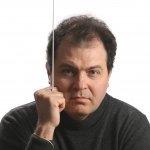
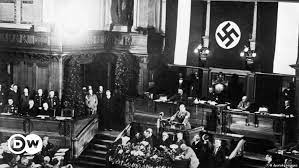
 By Charlie JohnstonMy next talk will be on Saturday, Feb. 26 from 1 – 5 p.m. It will be at the Renaissance Montessori School at 12625 Fitzwater Dr., Nokesville, Virginia – near Manassas, site of the first battle of the American Civil War. For information or to RSVP,
  Find me on
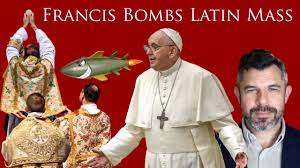
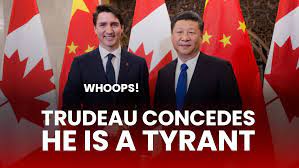
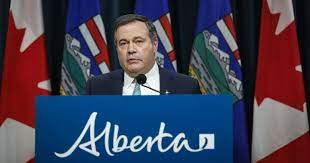
 ABYSSUS ABYSSUM INVOCAT / DEEP CALLS TO DEEP
You must be logged in to post a comment.