In this Thursday, April 1, 2021 file photo, Pope Francis celebrates a Chrism Mass inside St. Peter’s Basilica, at the Vatican. During the Mass the Pontiff blesses a token amount of oil that will be used to administer the sacraments for the year. Pope Francis cracked down on the spread of the old Latin Mass on Friday, July 16, 2021, reversing one of Pope Benedict XVI’s signature decisions in a major challenge to traditionalist Catholics. Francis reimposed the restrictions on celebrating the Latin Mass that Benedict had relaxed in 2007. Francis said he was doing so because Benedict’s reform had become a source of division in the Church and been instrumentalized by Catholics opposed to the Second Vatican Council. (AP Photo/Andrew Medichini)
    ”The liturgical books promulgated by Saint Paul VI and Saint John Paul II [that is, the “new Mass” of 1970] in conformity with the decrees of Vatican Council II, are the unique expression of the lex orandi [“the law of praying”] of the Roman Rite.” —the first article of the new apostolic letter on the liturgy issued today by Pope Francis, called “Guardians of Tradition” (“Traditionis Custodes“). There is no mention in this text of Pope Benedict XVI’s model for seeing the “two forms” of the Mass, the “ordinary” (new) and “extraordinary” (old) forms of the Roman liturgy, as complementary. That model, set forth 14 years ago by Pope Benedict XVI in his motu proprio Summorum Pontificum of July 7, 2007, was widely seen as Benedict’s attempt to grant a certain protection and prestige to the “old rite.” This text sets that model aside. And accompanying letter explains the reason: that granting more freedom for the “old Mass” led to division in the Church (see next quotation). Below, (1) the full text of the new apostolic letter, and (2) the full text of a letter of explanation    ”An opportunity offered by St. John Paul II and, with even greater magnanimity, by Benedict XVI, intended to recover the unity of an ecclesial body with diverse liturgical sensibilities, was exploited to widen the gaps, reinforce the divergences, and encourage disagreements that injure the Church, block her path, and expose her to the peril of division.” —Pope Francis, in a letter issued today explaining his decision to greatly restrict the celebration of the “old Mass,” seen as a cause of “divergences,” “disagreements” and “divisions.” The reason for issuing this document, therefore, is to support unity in the Church based on the acceptance of the liturgy promulgated following Vatican II    ***    Letter #56, 2021, Friday, July 16: Pope Francis issues “Guardians of Tradition” on the old Mass (link)    Pope Francis has today reversed the more accommodating guidelines toward the “old Mass” issued by Benedict XVI in the July 7, 2007 motu proprio Summorum Pontificum, reimposing restrictions on the Latin Mass.    The letter grants full authority to diocesan bishops, referred to as “the guardians of tradition” (the title of the document) to regulate the celebration of the “old Latin Mass” in his diocese.    But the true underlying issue is… Vatican II.    The Issue is the Second Vatican Council    The essential purpose of Pope Francis in this decision is, he tells us, todefend the Second Vatican Council from attacks against its orthodoxy, as the following lines, taken from the Pope’s accompanying letter of explanation, make clear (emphasis mine):    ”I am nonetheless saddened that the instrumental use of Missale Romanum of 1962 [that is, of the old Mass, the exploiting of the celebration of the old Mass] is often characterized by a rejection not only of the liturgical reform, but of the Vatican Council II itself, claiming, with unfounded and unsustainable assertions, that it betrayed the Tradition and the ‘true Church.’ The path of the Church must be seen within the dynamic of Tradition ‘which originates from the Apostles and progresses in the Church with the assistance of the Holy Spirit’ (DV 8). A recent stage of this dynamic was constituted by Vatican Council II where the Catholic episcopate came together to listen and to discern the path for the Church indicated by the Holy Spirit. To doubt the Council is to doubt the intentions of those very Fathers who exercised their collegial power in a solemn manner cum Petro et sub Petro in an ecumenical council,[14] and, in the final analysis, to doubt the Holy Spirit himself who guides the Church.”    Of course an Ecumenical Council must not be rejected — it is the highest doctrinal authority in the Church.    But what if the Council self-restricts itself?    Then there would be no conciliar decision to doubt….    But before reflecting further on this central question, let’s look at what this new document says, and what reactions it is already causing. (See below for a continuation of the reflection on Vatican II, which is really the central question in all of this.)    This document is startling, given that it seems to directly contradict some of the teaching of Pope Benedict XVI, while Benedict is still alive — and gives reasons for doing so, saying things have happened over the past 14 years which have compelled a change in direction.    Essentially, Francis is saying that the benefits Benedict believed would come from allowing more freedom to celebrate the old Mass have not been produced, that there has come division and narrow-mindedness rather than increased unity and generosity of spirit.    Hence, this “course correction” from Pope Francis.    Here is a good summary by Nicole Winfield of the Associated Press (link):    Pope reverses Benedict, reimposes restrictions on Latin Mass    Pope Francis has cracked down on the celebration of the old Latin Mass on Friday by reversing one of Pope Benedict XVI’s signature decisions    By Nicole Winfield    July 16, 2021, 7:39 AM    The Associated Press    ROME — Pope Francis cracked down Friday on the spread of the old Latin Mass, reversing one of Pope Benedict XVI’s signature decisions in a major challenge to traditionalist Catholics who immediately decried it as an attack on them and the ancient liturgy.    Francis reimposed restrictions on celebrating the Latin Mass that Benedict relaxed in 2007. The pontiff said he was taking action because Benedict’s reform had become a source of division in the Church and been used as a tool by Catholics opposed to the Second Vatican Council, the 1960s meetings that modernized the liturgy.    Francis issued a new law requiring individual bishops to approve celebrations of the old Mass, also called the Tridentine Mass, and requiring newly ordained priests to receive explicit permission to celebrate it from their bishops in consultation with the Vatican.    Under the new law, bishops must also determine if the current groups of faithful attached to the old Mass accept Vatican II, which allowed for Mass to be celebrated in the vernacular rather than Latin. These groups can no longer use regular parishes for their Masses; instead, bishops must find an alternate location for them.    In addition, Francis said bishops are no longer allowed to authorize the formation of any new pro-Latin Mass groups in their dioceses.    Francis said he was taking action to promote unity and heal divisions within the church that had grown since Benedict’s 2007 document, Summorum Pontificum, relaxed the restrictions on celebrating the old Mass. He said he based his decision on a 2020 Vatican survey of all the world’s bishops, whose “responses reveal a situation that preoccupies and saddens me, and persuades me of the need to intervene.”    The pope’s rollback immediately created an uproar among traditionalists already opposed to Francis’ more progressive bent and still nostalgic for Benedict’s doctrinaire papacy.    “This is an extremely disappointing document which entirely undoes the legal provisions,” of Benedict’s 2007 document, said Joseph Shaw, chairman of the Latin Mass Society of England and Wales.    While Latin celebrations can continue, “the presumption is consistently against them: bishops are being invited to close them down,” Shaw said, adding that the requirement for Latin Masses to be held outside a parish was “unworkable” in practical terms.    “This is an extraordinary rejection of the hard work for the church and the loyalty to the hierarchy which has characterized the movement for the Traditional Mass for many years, which I fear will foster a sense of alienation among those attached to the Church’s ancient liturgy,” he said in an email.    Benedict had issued his document in a bid to reach out to a breakaway, schismatic group that celebrates the Latin Mass, the Society of St. Pius X, and which had split from Rome over the modernizing reforms of Vatican II.    But Francis said Benedict’s effort to foster unity had essentially backfired.    The opportunity offered by Benedict, the pope said in a letter to bishops accompanying the new law, was instead “exploited to widen the gaps, reinforce the divergences, and encourage disagreements that injure the Church, block her path, and expose her to the peril of division.”    Francis said he was “saddened” that the use of the old Mass “is often characterized by a rejection not only of the liturgical reform, but of the Vatican Council II itself, claiming, with unfounded and unsustainable assertions, that it betrayed the Tradition and the ‘true Church.’”    Traditionalists and Catholics attached to the old liturgy were devastated. Some of these Catholics already were among Francis’ fiercest critics, with some accusing him of heresy for having, for example, opened the door to letting divorced and civilly remarried Catholics have Communion.    Rorate Caeli, a popular traditionalist blog, said Francis’ “attack” was the strongest rebuke of a pope against his predecessors in living memory.    “Shocking, and terrifying,” the group tweeted. “Francis HATES US. Francis HATES Tradition. Francis HATES all that is good and beautiful.”    Nick Donnelly, a tradition-minded deacon active on social media, termed Francis’ new law “the wither & die” law.    “Bergoglio’s attack on the Mass of the Ages is much worse than feared,” he tweeted, referring to Francis, who was born as Jorge Mario Bergoglio.    Cardinals who are critics of Francis did not immediately comment on the law. In recent days, however, Cardinal Robert Sarah, the retired head of the Vatican’s liturgy office and a fierce supporter of the old liturgy, sent a series of preemptive tweets insisting on the “irreversible” reform that Benedict had ushered in. Sarah featured a photo of the retired pope in his ermine-laced red velvet cape.    [End, Nicole Winfield AP story]        ***    But is that all there is to be said?    Has the vision of Pope Benedict ever really been tried?    Has the Church leadership ever embraced the vision Benedict set forth in 2007, a vision in which the solemnity of old Mass would complement the “freshness” of the new Mass?    One could argue that these 14 years were a missed opportunity, that the chance to win a place for the “old Mass” in the hearts of a new generation was blocked by mistakes both by the “traditionalists” and by the “progressives.”    Be that as it may, the situation has now changed again, and it really is not yet clear what the consequences will be.    But can we not say that it is unseemly to be going to war over liturgies? That was certainly never Pope Benedict’s intent. He favored a type of generosity which would mutually enrich the old and the new liturgies.    Now we are at crossroads, and looming once again is the old question of Vatican II, and of whether the Church changed at Vatican II, and became something different (modern, no longer medieval, no longer hierarchical, no longer patriarchal, no longer rigid and “external” rather than flexible, generous and “internal”).    I think some wished to make that change, that rupture.    But I also think that that would have been, and would be, wrong, because I believe the Church is one, and being one, both in time and in space, we can never have a”new” Church.    Rather, we must “renew” the Church.    Not revolution and a break with our past, but renewal and reappropriation of our past, which will assure our future.    In this regard, I think there has been a profound misunderstanding of what Vatican II was, and what it intended, and I do not feel this latest letter of the Pope clears up this misunderstanding.        How are we to understand Vatican II?    What if a Council is summoned, not to decide any doctrinal point, but to discuss how doctrine can be better understood by all people, by the use of all means, writing, exhortation, poetry, preaching? In other words, what if there were no doctrine taught that could be rejected?    If that were the case, all Catholics could say “the world’s bishops spent four years at Vatican II seeking to find ways to rejuvenate the Church and renew her methods of teaching the doctrines that we all agree are true, and simply need to be transmitted with more passion and clarity and conviction, and perhaps not using Latin but all contemporary languages… Bravo! We agree that they spent their time wisely!”    This is the point: it is generally accepted now, by scholars and historians of all types, that the Second Vatican Council was a “pastoral” Council, focused solely on making the Church’s traditional teaching more accessible, better understood, and not in altering any teaching whatsoever, precisely as Pope John XXIII announced — with all of his authority — when he convened the Council.    Further, it is generally agreed that, in this process of developing ways to make the Church’s teaching more understandable, the various Council Fathers debated fiercely over what concepts needed to be emphasized, and de-emphasized, so that the work of the Holy Spirit in the Church could be powerful and unimpeded by earthly considerations.    And it is agreed that these debates are reflected in a certain ebb and flow in the conciliar documents, a process in which the Council Fathers understood that they were attempting to produce a compromise which would foster unity between the more “progressive” and the more “traditional” views of the various bishops present during those years.    In other words, Francis is precisely correct when he says that at the Vatican Council II “the Catholic episcopate came together to listen and to discern the path for the Church indicated by the Holy Spirit.”    This is clear.    What is not clear is what the Pope means by these words: “To doubt the Council is to doubt the intentions of those very Fathers who exercised their collegial power in a solemn manner cum Petro et sub Petro in an ecumenical council” — because there is no “doubt” possible about such a Council, a Council in which the bishops’ “collegial power” was not exercised at any moment to condemn any error or define any truth whatsoever, and it is generally agreed by scholars that that was their intent. Yes, the Council Fathers intended “to listen and to discern the path for the Church,” but they did not intend to cancel, or set aside, and Church teaching, but only to understand those teachings more profoundly.    With regard to the Church’s liturgy, many questions remain, not settled by this new document. The chief among them is this: is it not prudent, even essential, if we regard the “new Mass,” promulgated by Paul VI in 1970, as a type of “fruit” of the (pastoral) magisterium of the Second Ecumenical Vatican Council, to judge with honesty its fruits for the deepening of faith, reverence of God, and holiness of life among the faithful, in keeping with that deepening and blossoming, that “new springtime,” that, yes, the Council wished to spark?    The liturgy should communicate faith, strengthen hope, enkindle charity, provide the bread of life that nourishes the soul for eternity. That is the liturgy the Council called for. Was that what the Church received, is receiving now, 56 years after the Council?    ***    (1) Here is the text of the new document:
APOSTOLIC LETTERISSUED “MOTU PROPRIO”BY THE SUPREME PONTIFFFRANCIS“TRADITIONIS CUSTODES”ON THE USE OF THE ROMAN LITURGY PRIOR TO THE REFORM OF 1970    Guardians of the tradition, the bishops in communion with the Bishop of Rome constitute the visible principle and foundation of the unity of their particular Churches.[1] Under the guidance of the Holy Spirit, through the proclamation of the Gospel and by means of the celebration of the Eucharist, they govern the particular Churches entrusted to them.[2]    In order to promote the concord and unity of the Church, with paternal solicitude towards those who in any region adhere to liturgical forms antecedent to the reform willed by the Vatican Council II, my Venerable Predecessors, Saint John Paul II and Benedict XVI, granted and regulated the faculty to use the Roman Missal edited by John XXIII in 1962.[3] In this way they intended “to facilitate the ecclesial communion of those Catholics who feel attached to some earlier liturgical forms” and not to others.[4]    In line with the initiative of my Venerable Predecessor Benedict XVI to invite the bishops to assess the application of the Motu Proprio Summorum Pontificum three years after its publication, the Congregation for the Doctrine of the Faith carried out a detailed consultation of the bishops in 2020. The results have been carefully considered in the light of experience that has matured during these years.    At this time, having considered the wishes expressed by the episcopate and having heard the opinion of the Congregation for the Doctrine of the Faith, I now desire, with this Apostolic Letter, to press on ever more in the constant search for ecclesial communion. Therefore, I have considered it appropriate to establish the following:    Art. 1. The liturgical books promulgated by Saint Paul VI and Saint John Paul II, in conformity with the decrees of Vatican Council II, are the unique expression of the lex orandi of the Roman Rite.    Art. 2. It belongs to the diocesan bishop, as moderator, promoter, and guardian of the whole liturgical life of the particular Church entrusted to him,[5] to regulate the liturgical celebrations of his diocese.[6] Therefore, it is his exclusive competence to authorize the use of the 1962 Roman Missal in his diocese, according to the guidelines of the Apostolic See.    Art. 3. The bishop of the diocese in which until now there exist one or more groups that celebrate according to the Missal antecedent to the reform of 1970:    § 1. is to determine that these groups do not deny the validity and the legitimacy of the liturgical reform, dictated by Vatican Council II and the Magisterium of the Supreme Pontiffs;    § 2. is to designate one or more locations where the faithful adherents of these groups may gather for the eucharistic celebration (not however in the parochial churches and without the erection of new personal parishes);    § 3. to establish at the designated locations the days on which eucharistic celebrations are permitted using the Roman Missal promulgated by Saint John XXIII in 1962.[7] In these celebrations the readings are proclaimed in the vernacular language, using translations of the Sacred Scripture approved for liturgical use by the respective Episcopal Conferences;    § 4. to appoint a priest who, as delegate of the bishop, is entrusted with these celebrations and with the pastoral care of these groups of the faithful. This priest should be suited for this responsibility, skilled in the use of the Missale Romanum antecedent to the reform of 1970, possess a knowledge of the Latin language sufficient for a thorough comprehension of the rubrics and liturgical texts, and be animated by a lively pastoral charity and by a sense of ecclesial communion. This priest should have at heart not only the correct celebration of the liturgy, but also the pastoral and spiritual care of the faithful;    § 5. to proceed suitably to verify that the parishes canonically erected for the benefit of these faithful are effective for their spiritual growth, and to determine whether or not to retain them;    § 6. to take care not to authorize the establishment of new groups.    Art. 4. Priests ordained after the publication of the present Motu Proprio, who wish to celebrate using the Missale Romanum of 1962, should submit a formal request to the diocesan Bishop who shall consult the Apostolic See before granting this authorization.    Art. 5. Priests who already celebrate according to the Missale Romanum of 1962 should request from the diocesan Bishop the authorization to continue to enjoy this faculty.    Art. 6. Institutes of consecrated life and Societies of apostolic life, erected by the Pontifical Commission Ecclesia Dei, fall under the competence of the Congregation for Institutes of Consecrated Life and Societies for Apostolic Life.    Art. 7. The Congregation for Divine Worship and the Discipline of the Sacraments and the Congregation for Institutes of Consecrated Life and Societies of Apostolic Life, for matters of their particular competence, exercise the authority of the Holy See with respect to the observance of these provisions.    Art. 8. Previous norms, instructions, permissions, and customs that do not conform to the provisions of the present Motu Proprio are abrogated.    Everything that I have declared in this Apostolic Letter in the form of Motu Proprio, I order to be observed in all its parts, anything else to the contrary notwithstanding, even if worthy of particular mention, and I establish that it be promulgated by way of publication in L’Osservatore Romano entering immediately in force and, subsequently, that it be published in the official Commentary of the Holy See, Acta Apostolicae Sedis.    Given at Rome, at Saint John Lateran, on 16 July 2021, the liturgical Memorial of Our Lady of Mount Carmel, in the ninth year of Our Pontificate.    FRANCIS________________________    [1] Cfr Second Vatican Ecumenical Council, Dogmatic Constitution on the Church “Lumen Gentium”, 21 november 1964, n. 23 AAS 57 (1965) 27.    [2] Cfr Second Vatican Ecumenical Council, Dogmatic Constitution on the Church “Lumen Gentium”, 21 november 1964, n. 27: AAS 57 (1965) 32; Second Vatican Ecumenical Council, Decree concerning the pastoral office of bishops in the Church “Christus Dominus”, 28 october 1965, n. 11: AAS 58 (1966) 677-678; Catechism of the Catholic Church, n. 833.    [3] Cfr John Paul II, Apostolic Letter given Motu proprio “Ecclesia Dei”, 2 july 1988: AAS 80 (1988) 1495-1498; Benedict XVI, Apostolic Letter given Motu proprio “Summorum Pontificum”, 7 july 2007: AAS 99 (2007) 777-781; Apostolic Letter given Motu proprio “Ecclesiae unitatem”, 2 july 2009: AAS 101 (2009) 710-711.    [4] John Paul II, Apostolic Letter given Motu proprio “Ecclesia Dei”, 2 july 1988, n. 5: AAS 80 (1988) 1498.    [5] Cfr Second Vatican Ecumenical Council, Costitution on the sacred liturgy “Sacrosanctum Concilium”, 4 december 1963, n. 41: AAS 56 (1964) 111; Caeremoniale Episcoporum, n. 9; Congregation for Divine Worship and the Discipline of the Sacrament, Instruction on certain matters to be observed or to be avoided regarding the Most Holy Eucharist “Redemptionis Sacramentum”, 25 march 2004, nn. 19-25: AAS 96 (2004) 555-557.    [6] Cfr CIC, can. 375, § 1; can. 392.    [7] Cfr Congregation for the Doctrine of the Faith, Decree “Quo magis” approving seven Eucharistic Prefaces for the forma extraordinaria of the Roman Rite, 22 february 2020, and Decree “Cum sanctissima” on the liturgical celebration in honour of Saints in the forma extraordinaria of the Roman Rite, 22 february 2020: L’Osservatore Romano, 26 march 2020, p. 6.    [01014-EN.01] [Original text: Italian]================    (2) Here is the accompanying explanatory letter:    Rome, 16 July 2021    Dear Brothers in the Episcopate,    Just as my Predecessor Benedict XVI did with Summorum Pontificum, I wish to accompany the Motu proprio Traditionis custodes with a letter explaining the motives that prompted my decision.     I turn to you with trust and parresia, in the name of that shared “solicitude for the whole Church, that contributes supremely to the good of the Universal Church” as Vatican Council II reminds us.[1]    Most people understand the motives that prompted St. John Paul II and Benedict XVI to allow the use of the Roman Missal, promulgated by St. Pius V and edited by St. John XXIII in 1962, for the Eucharistic Sacrifice. The faculty — granted by the indult of the Congregation for Divine Worship in 1984[2] and confirmed by St. John Paul II in the Motu Proprio Ecclesia Dei in 1988[3] — was above all motivated by the desire to foster the healing of the schism with the movement of Mons. Lefebvre.     With the ecclesial intention of restoring the unity of the Church, the Bishops were thus asked to accept with generosity the “just aspirations” of the faithful who requested the use of that Missal.    Many in the Church came to regard this faculty as an opportunity to adopt freely the Roman Missal promulgated by St. Pius V and use it in a manner parallel to the Roman Missal promulgated by St. Paul VI.     In order to regulate this situation at the distance of many years, Benedict XVI intervened to address this state of affairs in the Church. Many priests and communities had “used with gratitude the possibility offered by the Motu proprio” of St. John Paul II. Underscoring that this development was not foreseeable in 1988, the Motu proprio Summorum Pontificum of 2007 intended to introduce “a clearer juridical regulation” in this area.[4]     In order to allow access to those, including young people, who when “they discover this liturgical form, feel attracted to it and find in it a form, particularly suited to them, to encounter the mystery of the most holy Eucharist”,[5] Benedict XVI declared “the Missal promulgated by St. Pius V and newly edited by Blessed John XXIII, as a extraordinary expression of the same lex orandi”,granting a “more ample possibility for the use of the 1962 Missal”.[6]    In making their decision they were confident that such a provision would not place in doubt one of the key measures of Vatican Council II or minimize in this way its authority: the Motu proprio recognized that, in its own right, “the Missal promulgated by Paul VI is the ordinary expression of the lex orandi of the Catholic Church of the Latin rite”.[7]     The recognition of the Missal promulgated by St. Pius V “as an extraordinary expression of the same lex orandi” did not in any way underrate the liturgical reform, but was decreed with the desire to acknowledge the “insistent prayers of these faithful,” allowing them “to celebrate the Sacrifice of the Mass according to the editio typica of the Roman Missal promulgated by Blessed John XXIII in 1962 and never abrogated, as the extraordinary form of the Liturgy of the Church”.[8]     It comforted Benedict XVI in his discernment that many desired “to find the form of the sacred Liturgy dear to them,” “clearly accepted the binding character of Vatican Council II and were faithful to the Pope and to the Bishops”.[9]     What is more, he declared to be unfounded the fear of division in parish communities, because “the two forms of the use of the Roman Rite would enrich one another”.[10]     Thus, he invited the Bishops to set aside their doubts and fears, and to welcome the norms, “attentive that everything would proceed in peace and serenity,” with the promise that “it would be possible to find resolutions” in the event that “serious difficulties came to light” in the implementation of the norms “once the Motu proprio came into effect”.[11]    With the passage of thirteen years, I instructed the Congregation for the Doctrine of the Faith to circulate a questionnaire to the Bishops regarding the implementation of the Motu proprio Summorum Pontificum.     The responses reveal a situation that preoccupies and saddens me, and persuades me of the need to intervene.     Regrettably, the pastoral objective of my Predecessors, who had intended “to do everything possible to ensure that all those who truly possessed the desire for unity would find it possible to remain in this unity or to rediscover it anew”,[12] has often been seriously disregarded.     An opportunity offered by St. John Paul II and, with even greater magnanimity, by Benedict XVI, intended to recover the unity of an ecclesial body with diverse liturgical sensibilities, was exploited to widen the gaps, reinforce the divergences, and encourage disagreements that injure the Church, block her path, and expose her to the peril of division.    At the same time, I am saddened by abuses in the celebration of the liturgy on all sides.     In common with Benedict XVI, I deplore the fact that “in many places the prescriptions of the new Missal are not observed in celebration, but indeed come to be interpreted as an authorization for or even a requirement of creativity, which leads to almost unbearable distortions”.[13]     But I am nonetheless saddened that the instrumental use of Missale Romanum of 1962 is often characterized by a rejection not only of the liturgical reform, but of the Vatican Council II itself, claiming, with unfounded and unsustainable assertions, that it betrayed the Tradition and the “true Church”.     The path of the Church must be seen within the dynamic of Tradition “which originates from the Apostles and progresses in the Church with the assistance of the Holy Spirit” (DV 8).     A recent stage of this dynamic was constituted by Vatican Council II where the Catholic episcopate came together to listen and to discern the path for the Church indicated by the Holy Spirit.     To doubt the Council is to doubt the intentions of those very Fathers who exercised their collegial power in a solemn manner cum Petro et sub Petro in an ecumenical council,[14] and, in the final analysis, to doubt the Holy Spirit himself who guides the Church.    The objective of the modification of the permission granted by my Predecessors is highlighted by the Second Vatican Council itself.     From the vota submitted by the Bishops there emerged a great insistence on the full, conscious and active participation of the whole People of God in the liturgy,[15] along lines already indicated by Pius XII in the encyclical Mediator Dei on the renewal of the liturgy.[16]     The constitution Sacrosanctum Concilium confirmed this appeal, by seeking “the renewal and advancement of the liturgy”,[17] and by indicating the principles that should guide the reform.[18]     In particular, it established that these principles concerned the Roman Rite, and other legitimate rites where applicable, and asked that “the rites be revised carefully in the light of sound tradition, and that they be given new vigor to meet present-day circumstances and needs”.[19]     On the basis of these principles a reform of the liturgy was undertaken, with its highest expression in the Roman Missal, published in editio typica by St. Paul VI[20] and revised by St. John Paul II.[21]     It must therefore be maintained that the Roman Rite, adapted many times over the course of the centuries according to the needs of the day, not only be preserved but renewed “in faithful observance of the Tradition”.[22]     Whoever wishes to celebrate with devotion according to earlier forms of the liturgy can find in the reformed Roman Missal according to Vatican Council II all the elements of the Roman Rite, in particular the Roman Canon which constitutes one of its more distinctive elements.    A final reason for my decision is this: ever more plain in the words and attitudes of many is the close connection between the choice of celebrations according to the liturgical books prior to Vatican Council II and the rejection of the Church and her institutions in the name of what is called the “true Church.”     One is dealing here with comportment that contradicts communion and nurtures the divisive tendency — “I belong to Paul; I belong instead to Apollo; I belong to Cephas; I belong to Christ” — against which the Apostle Paul so vigorously reacted.[23]     In defense of the unity of the Body of Christ, I am constrained to revoke the faculty granted by my Predecessors.     The distorted use that has been made of this faculty is contrary to the intentions that led to granting the freedom to celebrate the Mass with the Missale Romanum of 1962.     Because “liturgical celebrations are not private actions, but celebrations of the Church, which is the sacrament of unity”,[24] they must be carried out in communion with the Church. Vatican Council II, while it reaffirmed the external bonds of incorporation in the Church — the profession of faith, the sacraments, of communion — affirmed with St. Augustine that to remain in the Church not only “with the body” but also “with the heart” is a condition for salvation.[25]    Dear brothers in the Episcopate, Sacrosanctum Concilium explained that the Church, the “sacrament of unity,” is such because it is “the holy People gathered and governed under the authority of the Bishops”.[26] Lumen gentium, while recalling that the Bishop of Rome is “the permanent and visible principle and foundation of the unity both of the bishops and of the multitude of the faithful,” states that you the Bishops are “the visible principle and foundation of the unity of your local Churches, in which and through which exists the one and only Catholic Church”.[27]    Responding to your requests, I take the firm decision to abrogate all the norms, instructions, permissions and customs that precede the present Motu proprio, and declare that the liturgical books promulgated by the saintly Pontiffs Paul VI and John Paul II, in conformity with the decrees of Vatican Council II, constitute the unique expression of the lex orandi of the Roman Rite.     I take comfort in this decision from the fact that, after the Council of Trent, St. Pius V also abrogated all the rites that could not claim a proven antiquity, establishing for the whole Latin Church a single Missale Romanum.     For four centuries this Missale Romanum, promulgated by St. Pius V was thus the principal expression of the lex orandi of the Roman Rite, and functioned to maintain the unity of the Church.     Without denying the dignity and grandeur of this Rite, the Bishops gathered in ecumenical council asked that it be reformed; their intention was that “the faithful would not assist as strangers and silent spectators in the mystery of faith, but, with a full understanding of the rites and prayers, would participate in the sacred action consciously, piously, and actively”.[28]     St. Paul VI, recalling that the work of adaptation of the Roman Missal had already been initiated by Pius XII, declared that the revision of the Roman Missal, carried out in the light of ancient liturgical sources, had the goal of permitting the Church to raise up, in the variety of languages, “a single and identical prayer,” that expressed her unity.[29]     This unity I intend to re-establish throughout the Church of the Roman Rite.    Vatican Council II, when it described the catholicity of the People of God, recalled that “within the ecclesial communion” there exist the particular Churches which enjoy their proper traditions, without prejudice to the primacy of the Chair of Peter who presides over the universal communion of charity, guarantees the legitimate diversity and together ensures that the particular not only does not injure the universal but above all serves it”.[30]     While, in the exercise of my ministry in service of unity, I take the decision to suspend the faculty granted by my Predecessors, I ask you to share with me this burden as a form of participation in the solicitude for the whole Church proper to the Bishops.     In the Motu proprio I have desired to affirm that it is up to the Bishop, as moderator, promoter, and guardian of the liturgical life of the Church of which he is the principle of unity, to regulate the liturgical celebrations.     It is up to you to authorize in your Churches, as local Ordinaries, the use of the Missale Romanum of 1962, applying the norms of the present Motu proprio.     It is up to you to proceed in such a way as to return to a unitary form of celebration, and to determine case by case the reality of the groups which celebrate with this Missale Romanum.    Indications about how to proceed in your dioceses are chiefly dictated by two principles: on the one hand, to provide for the good of those who are rooted in the previous form of celebration and need to return in due time to the Roman Rite promulgated by Saints Paul VI and John Paul II, and, on the other hand, to discontinue the erection of new personal parishes tied more to the desire and wishes of individual priests than to the real need of the “holy People of God.”     At the same time, I ask you to be vigilant in ensuring that every liturgy be celebrated with decorum and fidelity to the liturgical books promulgated after Vatican Council II, without the eccentricities that can easily degenerate into abuses.     Seminarians and new priests should be formed in the faithful observance of the prescriptions of the Missal and liturgical books, in which is reflected the liturgical reform willed by Vatican Council II.    Upon you I invoke the Spirit of the risen Lord, that he may make you strong and firm in your service to the People of God entrusted to you by the Lord, so that your care and vigilance express communion even in the unity of one, single Rite, in which is preserved the great richness of the Roman liturgical tradition. I pray for you. You pray for me.    FRANCIS__________________[1] Cfr. Second Vatican Ecumenical Council, Dogmatic Constitution on the Church “Lumen Gentium”, 21 november 1964, n. 23 AAS 57 (1965) 27.[2] Cfr. Congregation for Divine Worship, Letter to the Presidents of the Conferences of Bishops “Quattuor abhinc annos”, 3 october 1984: AAS 76 (1984) 1088-1089.[3] John Paul II, Apostolic Letter given Motu proprio “Ecclesia Dei”, 2 july 1988: AAS 80 (1998) 1495-1498.[4] Benedict XVI, Letter to the Bishops on the occasion of the publication of the Apostolic Letter “Motu proprio data” Summorum Pontificum on the use of the Roman Liturgy prior to the reform of 1970, 7 july 2007: AAS 99 (2007) 796.[5] Benedict XVI, Letter to the Bishops on the occasion of the publication of the Apostolic Letter “Motu proprio data” Summorum Pontificum on the use of the Roman Liturgy prior to the reform of 1970, 7 july 2007: AAS 99 (2007) 796.[6] Benedict XVI, Letter to the Bishops on the occasion of the publication of the Apostolic Letter “Motu proprio data” Summorum Pontificum on the use of the Roman Liturgy prior to the reform of 1970, 7 july 2007: AAS 99 (2007) 797.[7] Benedict XVI, Apostolic Letter given Motu proprio “Summorum Pontificum”, 7 july 2007: AAS 99 (2007) 779.[8] Benedict XVI, Apostolic Letter given Motu proprio “Summorum Pontificum”, 7 july 2007: AAS 99 (2007) 779.[9] Benedict XVI, Letter to the Bishops on the occasion of the publication of the Apostolic Letter “Motu proprio data” Summorum Pontificum on the use of the Roman Liturgy prior to the reform of 1970, 7 july 2007: AAS 99 (2007) 796.[10] Benedict XVI, Letter to the Bishops on the occasion of the publication of the Apostolic Letter “Motu proprio data” Summorum Pontificum on the use of the Roman Liturgy prior to the reform of 1970, 7 july 2007: AAS 99 (2007) 797.[11] Benedict XVI, Letter to the Bishops on the occasion of the publication of the Apostolic Letter “Motu proprio data” Summorum Pontificum on the use of the Roman Liturgy prior to the reform of 1970, 7 july 2007: AAS 99 (2007) 798.[12] Benedict XVI, Letter to the Bishops on the occasion of the publication of the Apostolic Letter “Motu proprio data” Summorum Pontificum on the use of the Roman Liturgy prior to the reform of 1970, 7 july 2007: AAS 99 (2007) 797-798.[13] Benedict XVI, Letter to the Bishops on the occasion of the publication of the Apostolic Letter “Motu proprio data” Summorum Pontificum on the use of the Roman Liturgy prior to the reform of 1970, 7 july 2007: AAS 99 (2007) 796.[14] Cfr. Second Vatican Ecumenical Council, Dogmatic Constitution on the Church “Lumen Gentium”, 21 november 1964, n. 23: AAS 57 (1965) 27.[15] Cfr. Acta et Documenta Concilio Oecumenico Vaticano II apparando, Series I, Volumen II, 1960.[16] Pius XII, Encyclical on the sacred liturgy “Mediator Dei”, 20 november 1947: AAS 39 (1949) 521-595.[17] Cfr. Second Vatican Ecumenical Council, Costitution on the sacred liturgy “Sacrosanctum Concilium”, 4 december 1963, nn. 1, 14: AAS 56 (1964) 97.104.[18] Cfr. Second Vatican Ecumenical Council, Costitution on the sacred liturgy “Sacrosanctum Concilium”, 4 december 1963, n. 3: AAS 56 (1964) 98.[19] Cfr. Second Vatican Ecumenical Council, Costitution on the sacred liturgy “Sacrosanctum Concilium”, 4 december 1963, n. 4: AAS 56 (1964) 98.[20] Missale Romanum ex decreto Sacrosancti Oecumenici Concilii Vaticani II instauratum auctoritate Pauli PP. VI promulgatum, editio typica, 1970.[21] Missale Romanum ex decreto Sacrosancti Oecumenici Concilii Vaticani II instauratum auctoritate Pauli PP. VI promulgatum Ioannis Pauli PP. II cura recognitum, editio typica altera, 1975; editio typica tertia, 2002; (reimpressio emendata 2008).[22] Cfr. Second Vatican Ecumenical Council, Costitution on the sacred liturgy “Sacrosanctum Concilium”, 4 december 1963, n. 3: AAS 56 (1964) 98.[23] 1 Cor 1,12-13.[24] Cfr. Second Vatican Ecumenical Council, Costitution on the sacred liturgy “Sacrosanctum Concilium”, 4 december 1963, n. 26: AAS 56 (1964) 107.[25] Cfr. Second Vatican Ecumenical Council, Dogmatic Constitution on the Church “Lumen Gentium”, 21 november 1964, n. 14: AAS 57 (1965) 19.[26] Cfr. Second Vatican Ecumenical Council, Costitution on the sacred liturgy “Sacrosanctum Concilium”, 4 december 1963, n. 6: AAS 56 (1964) 100.[27] Cfr. Second Vatican Ecumenical Council, Dogmatic Constitution on the Church “Lumen Gentium”, 21 november 1964, n. 23: AAS 57 (1965) 27.[28] Cfr. Second Vatican Ecumenical Council, Costitution on the sacred liturgy “Sacrosanctum Concilium”, 4 december 1963, n. 48: AAS 56 (1964) 113.[29] Paul VI, Apostolic Constitution “Missale Romanum” on new Roman Missal, 3 april 1969, AAS 61 (1969) 222.[30] Cfr. Second Vatican Ecumenical Council, Dogmatic Constitution on the Church “Lumen Gentium”, 21 november 1964, n. 13: AAS 57 (1965) 18.[01015-EN.01] [Original text: Italian]
Posted in Uncategorized | Comments Off on

THE CATHOLIC MONITOR

SEARCH

Does Francis’s “Direct Contradiction” of Pope Benedict & Pope SAINT Pius V mean he “will Incure the Wrath of Almighty God and of the Blessed Apostles Peter and Paul”?

Today, the news outlet LifeSiteNews reported that Francis “direct[ly] contradict[ed]” Pope Benedict XVI’s Summorum Pontificum: 

Pope Francis has today issued a new Motu Proprio restricting the celebration of the Traditional Latin Mass, and declaring that the liturgy of Paul VI, or the Novus Ordo, is the “unique expression of the lex orandi of the Roman Rite.”

The document, entitled “Traditiones Custodes,” issues several restrictions on the celebration of the Latin Mass, with the opening point containing a direct contradiction of Pope Emeritus Benedict XVI’s 2007 document Summorum Pontificum. Francis now declares that while Benedict had described an “ordinary” and an “extraordinary” form of the Roman Rite, now there is only one – the Novus Ordo. [https://www.lifesitenews.com/news/pope-francis-abrogates-pope-benedicts-universal-permission-for-old-mass

The new outlet also said that scholar Deacon Nick Donnelly “has described it as “The Wither and Die Motu proprio”: 
Nick Donnelly@ProtecttheFaith The Wither and Die Motu proprio (7) Here’s the article that completely abolishes Summorum Pontificum He couldn’t wait until the demise of Pope Benedict XVI[https://twitter.com/ProtecttheFaith/status/1415988507001118722]
Popular Catholic commentator Ann Barnhardt quoted “Quo primum, the great document of Pope SAINT Pius V, issued on 14 July, ARSH 1570” that apparently declared Francis “will incur the wrath of Almighty God and of the Blessed Apostles Peter and Paul” for his new document:

[The Francis Motu Proprio states in] Art. 1. The liturgical books promulgated by Saint Paul VI and Saint John Paul II, in conformity with the decrees of Vatican Council II, are the unique expression of the lex orandi of the Roman Rite.

Well, let’s see. Quo primum, the great document of Pope SAINT Pius V, issued on 14 July, ARSH 1570, said of the Tridentine Rite:

“We grant in perpetuity that this Missal is hereafter freely and lawfully to be used, without any scruple of conscience or fear of incurring any penalty or censure…

No one whosoever is permitted to alter this notice of Our permission, statute, ordinance, command, precept, grant, indult, declaration, will, decree, and prohibition. Should anyone dare to contravene it, let him know that he will incur the wrath of Almighty God and of the Blessed Apostles Peter and Paul.”

From your lips to God’s ear, Pope St. Pius V. [https://www.barnhardt.biz/2021/07/16/antipope-bergoglio-abolishes-the-venerable-rite-of-pius-v-in-article-i-of-his-document-which-is-further-proof-positive-he-isnt-the-pope-quo-primum-is-explicit-the-pian-r/]Does Francis’s “direct contradiction” of Pope Benedict XVI & Pope SAINT Pius V mean he will incur the wrath of Almighty God and of the Blessed Apostles Peter and Paul”?Stop for a moment of silence, ask Jesus Christ what He want you to do now and next. In this silence remember God, Father, Son and Holy Ghost – Three Divine Persons yet One God, has an ordered universe where you can know truth and falsehood as well as never forget that He wants you to have eternal happiness with Him as his son or daughter by grace. Make this a practice. By doing this you are doing more good than reading anything here or anywhere else on the Internet.

Francis Notes:

– Doctor of the Church St. Francis de Sales totally confirmed beyond any doubt the possibility of a heretical pope and what must be done by the Church in such a situation:

“[T]he Pope… WHEN he is EXPLICITLY a heretic, he falls ipso facto from his dignity and out of the Church, and the Church MUST either deprive him, or, as some say, declare him deprived, of his Apostolic See.”
(The Catholic Controversy, by St. Francis de Sales, Pages 305-306)

Saint Robert Bellarmine, also, said “the Pope heretic is not deposed ipso facto, but must be declared deposed by the Church.”
[https://archive.org/stream/SilveiraImplicationsOfNewMissaeAndHereticPopes/Silveira%20Implications%20of%20New%20Missae%20and%20Heretic%20Popes_djvu.txt]

– “If Francis is a Heretic, What should Canonically happen to him?”: http://www.thecatholicmonitor.com/2020/12/if-francis-is-heretic-what-should.html

– “Could Francis be a Antipope even though the Majority of Cardinals claim he is Pope?”: http://www.thecatholicmonitor.com/2019/03/could-francis-be-antipope-even-though.html

 –  LifeSiteNews, “Confusion explodes as Pope Francis throws magisterial weight behind communion for adulterers,” December 4, 2017:

The AAS guidelines explicitly allows “sexually active adulterous couples facing ‘complex circumstances’ to ‘access the sacraments of Reconciliation and the Eucharist.'”

–  On February 2018, in Rorate Caeli, Catholic theologian Dr. John Lamont:

“The AAS statement… establishes that Pope Francis in Amoris Laetitia has affirmed propositions that are heretical in the strict sense.”

– On December 2, 2017, Bishop Rene Gracida:

“Francis’ heterodoxy is now official. He has published his letter to the Argentina bishops in Acta Apostlica Series making those letters magisterial documents.”

Pray an Our Father now for the restoration of the Church by the bishops by the grace of God.

Election Notes: 

– Intel Cryptanalyst-Mathematician on Biden Steal: “212Million Registered Voters & 66.2% Voting,140.344 M Voted…Trump got 74 M, that leaves only 66.344 M for Biden” [http://catholicmonitor.blogspot.com/2020/12/intel-cryptanalyst-mathematician-on.html?m=1]

– Will US be Venezuela?: Ex-CIA Official told Epoch Times “Chávez started to Focus on [Smartmatic] Voting Machines to Ensure Victory as early as 2003”: http://catholicmonitor.blogspot.com/2020/12/will-us-be-venezuela-ex-cia-official.html– Tucker Carlson’s Conservatism Inc. Biden Steal Betrayal is explained by “One of the Greatest Columns ever Written” according to Rush: http://catholicmonitor.blogspot.com/2021/01/tucker-carlsons-conservatism-inc-biden.html?m=1 – A Hour which will Live in Infamy: 10:01pm November 3, 2020: 
http://www.thecatholicmonitor.com/2021/01/a-hour-which-will-live-in-infamy-1001pm.html?m=1 What is needed right now to save America from those who would destroy our God given rights is to pray at home or in church and if called to even go to outdoor prayer rallies in every town and city across the United States for God to pour out His grace on our country to save us from those who would use a Reichstag Fire-like incident to destroy our civil liberties. [Is the DC Capitol Incident Comparable to the Nazi Reichstag Fire Incident where the German People Lost their Civil Liberties?http://catholicmonitor.blogspot.com/2021/01/is-dc-capital-incident-comparable-to.html?m=1 and Epoch Times Show Crossroads on Capitol Incident: “Anitfa ‘Agent Provocateurs‘”: 
http://catholicmonitor.blogspot.com/2021/01/epoch-times-show-crossroads-on-capital.html?m=1
Pray an Our Father now for the grace to know God’s Will and to do it. 

Posted in Uncategorized | Comments Off on

New post on Whispers of Restoration BlogFrancis Destroys Summorum Pontificum; or, Obedience, Weapon of the Cleverestby WhispersofRestoration“Now the serpent was more callidior (clever, cunning, sly, crafty) than any of the beasts”
Gen 3:1It will be rough sailing now, but it’s at last come to this. Time to pay the piper.Remember – there are only two kingdoms.New Motu Proprio – A Sick GameThe full text of Francis’ new Motu Proprio, Traditionis Custodes, is here. Yes, it’s bad. Worse than many expected. It aims to permanently ensconce the idea that the Novus Ordo Missae (NOM) – that unholy and aberrant 1960s invention of disjointed committees staffed by modernists, heretics, and worse – was ordered by Vatican II and is henceforth “the unique expression of the lex orandi of the Roman Rite.” In short: Destroy the Traditional Latin Mass (TLM). Dissent will not be tolerated.The plan is simple:Convince Catholics that they have enjoyed an “exceptional privilege” in offering the TLM over these last several decades (which is itself a lie, inasmuch as the TLM is the lex orandi of the Roman Rite, a Mass which enjoys its own perpetual validity of immemorial custom, per Trent and Quo Primum all the way to Ratzinger and Summorum Pontificum).Remind Catholics that the mark of their Catholicity is obedience to the bishops, the “guardians of tradition” (which is true, inasmuch as the bishops are themselves faithful to the tradition – which is generally not the case today)Command every priest to obtain special permission from the bishops to celebrate the TLM (something even Benedict XVI emphasised as never having been, nor ever being required, in view of this Missal’s own perpetual validity, inherent to itself) Command every priest to publicly testify to the validity and legitimacy of the NOM, whether by signed statement or publicly offering it themselves. Tell them this is the precondition for their continued canonical status. Gatekeep the further outgrowth of any priests and communities exclusively devoted to the TLM and all that it stands for (which is to say, Catholicism)See, if you want to be considered an obedient Catholic, you will do as the bishop says. Always. And if bishop says that the Latin Mass is a divisive, boutique phenomenon that you have hitherto enjoyed on His Excellency’s good graces, but that now he can no longer tolerate it – then you’d better say yessir. You wouldn’t want to be disobedient, now, would you?Sound familiar?”The very holy virtue of obedience is today the extremely powerful weapon that our enemies, who pretend to be our friends, make use of against what we were, to put up in its stead, what they have decided to have us become.” Marie Carre, Aa-1025Yes, all this is effective immediately. It will now be “disobedient,” whether sooner or later, to celebrate the Mass of our Fathers without paying homage to the New Paradigm. They are closing the doors.In the face of an ecclesiastical hierarchy that now condones all manners of heresy and immorality in the public sphere, and yet sees fit to take special measures against faithful Catholics who cleave to the Mass of Ages, the Mass of the Saints, the Mass of our fathers, one is reminded of St. Basil’s observance in the 4th century:Only one offence is now vigorously punished–an accurate observance of our fathers’ traditions. For this cause the pious are driven from their countries and transported into deserts. … Joy and spiritual cheerfulness are no more; our feasts are turned into mourning: our houses of prayer are shut up, our altars deprived of the spiritual worship. -Ep. 243CALLING ALL CATHOLICSWhy would the hierarchy display such unmitigated prejudice against the Roman Mass, the Mass offered on every continent for so many centuries, if Francis and his apparatchiks were not destroyers? More to it–why require public testimony of obeisance to the Novus Ordo (in its most current iteration, that is)?Does one need any further evidence that the NOM is the ritual expression of a New Religion?It is time for traditionally-minded clergy, and indeed all Catholics, to act. You will have no canonical recourse in this firestorm. Our Lord, Our Lady, and all the saints and angels must be your strength.Traditional orders and their individual priests must make informed and immediate public statements. Diocesan priests devoted to the TLM must demand meetings with their bishop.Burke and the other “good guy” cardinals and bishops must do more than whine in journal articles. Occupy Rome. Demand public audiences. Ask Benedict XVI to give a public video statement about his feelings on Francis’ evisceration of his own document. File canonical and civil injunctions for damages against the man occupying the See of Peter. For all the rest of us: Inundate chanceries with letters, calls, processions and prayer protests. OF COURSE pray and fast. But at this point, who’s not doing that? Strap on. Put some skin in the game. Who now will fight for the Mass of our Fathers?WhispersofRestoration | July 16, 2021 at 3:16 pm | Categories: Uncategorized | URL: https://wp.me/p8Ne6x-4osComment   See all comments   Like
Posted in Uncategorized | Comments Off on

Andrew Greenwell

8h  · Traditionis Custodes? What irony. More like Traditionis Destructores.

19John Feminelli, George A Field III and 17 others53 CommentsLikeCommentShare

53 Comments

  • John FeminelliThe schism Francis and his gay cardinals/bishops is causing will far exceed anything that happened as a result of Martin Luther’s rebellion. 4
    • Like
    •  · Reply
    •  · 8h
    Andrew Greenwell replied · 1 Reply8h
  • Jennifer HartlineIt is very difficult at this point not to see him as an enemy of the Church. God forgive me. He is the Pope, but he seems bent on ruining everything good and holy. 4
    • Like
    •  · Reply
    •  · 7h
    Pamela Field replied · 1 Reply2h
  • Deana Sutherland AbiassiDid he write something else? He was ushered in by a group of heretics to bring those thoughts and teachings ti the Church. Unbelievable. The faithful are pushed out and the heretics are favored. 3
    • Like
    •  · Reply
    •  · 6h
    Deana Sutherland Abiassi replied · 2 Replies6h
  • Deana Sutherland AbiassiNow, I see. This makes me want to attend a Latin mass even more. https://www.facebook.com/337151309718105/posts/3705223822910820/?d=n5
    • Like
    •  · Reply
    •  · 6h
  • John Paul ShimekPraise God! Some people in the Church had weaponized the beautiful traditional liturgy, making it a thorn of division. Thank God that our Most Holy Father, Pope Francis, made this courageous decision to defend and preserve our Catholic Tradition and to… See More
    • Like
    •  · Reply
    •  · 5h
    Andrew Greenwell replied · 17 Replies1h
  • Jennifer HartlineAndrew Greenwell, what are the reasons not to become Byzantine? I don’t really understand the differences.
    • Like
    •  · Reply
    •  · 4h
    James Mitchell replied · 3 Replies2h
  • James MitchellJohn Paul ShimekAndrew GreenwellChristopher Michael Greenwell2
    • Like
    •  · Reply
    •  · 4h
    James Mitchell replied · 7 Replies1h
  • James MitchellIt’s distressing to have a shamelessly aggressively anti-Catholic pope. But it is undeniable that this is what we are faced with unless it can be shown conclusively that Bergoglio-Francis is not a valid pope.
    • Like
    •  · Reply
    •  · 2h
    •  · Edited
  • ActiveElizabeth Grace Greenwell SnellerΠρόκειται να γίνω ελληνορθόδοξος σε αυτό το σημείο.αστειεύομαι. αλλά…1
    • Like
    •  · Reply
    •  · See Translation
    •  · 2h
    James Mitchell replied · 12 Replies18m

ActiveWrite a comment…

Posted in Uncategorized | Comments Off on

Crippled Religion Strikes Again – And Summorum Pontificum Gets the Axe

 Steve SkojecJuly 16, 20210 Comments

  • 175Shares
  • 175

Today, a new motu proprio letter was issued by Pope Francis imposing new (and in some respects brutal) suppressions on the usus antiquior of the Roman Rite. The truth is, we saw this coming. Rumors have been circulating for a while, and though the fact that we’ve heard similar things throughout this pontificate dulled our expectations some, as I wrote last month, “this has the feeling of something more substantive.”

And so it was.https://36e70fc21239f9fb5363154efd23355f.safeframe.googlesyndication.com/safeframe/1-0-38/html/container.html

For those who are most concerned with reading the documents for themselves, you can find the motu proprio “Traditionis Custodes” (ironically, “Guardians of Tradition,” making specific reference to the bishops) right here, with the accompanying explanatory letter here.

Quick Takes

Let’s look for the most significant changes before we get to the color commentary. The document does the following:

  • Changes the authorization for the decision of who can offer the TLM from the individual priest and gives it back to his diocesan bishop, just like the bad old days of John Paul II’s indult, when bishops would frequently deny such requests.
  • Priests who already offer the TLM now have to have permission to continue offering it.
  • Men in formation for the priesthood but not ordained prior to the motu proprio must obtain, via their bishop, permission from Rome (specifically the CDW, which is headed by Archbishop Roche) to offer the TLM. Not even the bishop can authorize it for them (this is yet another example of Francis delegating with one hand while centralizing authority with the other.)

To give an idea of what such priests are up against, it should be noted here what Roche was reported to have said in the rumor-fueled run-up to today’s event: “Abp. Roche, new Prefect of the Congregation for Divine Worship, explained, while laughing, to those responsible for [some] seminaries in Rome and members of the Curia, all English-speaking: “Summorum Pontificum is practically dead! We will give back to the bishops power on this matter, but particularly not to conservative bishops.””

Continuing:

  • Rather than allowing the TLM in parishes where the faithful request it, bishops must now select “one or more locations where the faithful adherents of these groups may gather for the eucharistic celebration,” and these locations are not to be “parochial churches.” Bishops are also forbidden to create new personal parishes for the purpose. One is left to wonder whether broom closets and mountain caves are acceptable locales for the vetus ordo, but the motu proprio never bothers to specify where the TLM is allowed, just where it isn’t.
  • Bishops are supposed to “appoint a priest who, as delegate of the bishop, is entrusted with these celebrations and with the pastoral care of these groups of the faithful. The priest is suitable for this office, is competent in order to use the Missale Romanum prior to the 1970 reform, has a knowledge of the Latin language that allows him to fully understand the rubrics and liturgical texts, is animated by a lively pastoral charity , and a sense of ecclesial communion. It is in fact necessary that the priest in charge has at heart not only the dignified celebration of the liturgy, but the pastoral and spiritual care of the faithful.”
  • This priest delegate is also to identify, in those “personal parishes canonically erected for the benefit of these faithful,” whether there is “actual usefulness for spiritual growth, and evaluate whether to maintain them or not.”
  • It is the priest delegates job to “take care not to authorize the establishment of new groups.”
  • Readings at those TLMs that are allowed in as-yet-unspecified locales “are to be proclaimed in the vernacular, using the translations of the sacred Scripture for liturgical use, approved by the respective Episcopal Conferences.”
  • The fate of Ecclesia Dei communities is unclear. The letter says only that “The Institutes of Consecrated Life and Societies of Apostolic Life, erected at the time by the Pontifical Commission Ecclesia Dei come under the competence of the Congregation for Institutes of Consecrated Life and Societies of Apostolic Life.”

The motu proprio and accompanying letter identify clearly some of its motivating concerns, and they are exactly what one might expect:

  • “The reasons that moved Saint John Paul II and Benedict XVI to grant the possibility of using the Roman Missal promulgated by Saint Pius V … was above all motivated by the desire to favor the recomposition of the schism with the movement led by Archbishop Lefebvre.”
  • Summorum Pontificum was meant to “regulate this situation” with a “clearer legal regulation” to “facilitate access to those – including young people – ‘who discover this liturgical form, feel attracted by it and find there a particularly appropriate form for them, of encounter with the Mystery of the Most Holy Eucharist‘”  “Benedict XVI declared ‘the Missal promulgated by St. Pius V and re-edited by Blessed John XXIII as an extraordinary expression of the same lex orandi“, granting a ‘wider possibility of using the 1962 Missal.’”
  • “The liturgical books promulgated by the Holy Pontiffs Paul VI and John Paul II, in conformity with the decrees of the Second Vatican Council, are the only expression of the lex orandi of the Roman Rite.
  • Supporting Benedict’s decision to issue SP “was the conviction that this provision would not cast doubt on one of the essential decisions of the Second Vatican Council, thus undermining its authority…”
  • Bishops are to “ensure that such [TLM] groups do not exclude the validity and legitimacy of the liturgical reform, of the dictates of the Second Vatican Council and of the Magisterium of the Supreme Pontiffs.”
  • “A possibility offered by Saint John Paul II and with even greater magnanimity by Benedict XVI in order to recompose the unity of the ecclesial body in respect of the various liturgical sensitivities was used to increase distances, harden differences, build contrasts that hurt the Church. and they hinder its progress, exposing it to the risk of divisions.”
  • The pope believes that “Anyone wishing to celebrate with devotion according to the antecedent liturgical form will have no difficulty in finding in the Roman Missal reformed according to the mind of the Second Vatican Council all the elements of the Roman Rite, in particular the Roman canon, which constitutes one of the most characterizing elements.”
  • The pope says that he is “saddened by an instrumental use of the Missale Romanum of 1962, increasingly characterized by a growing rejection not only of the liturgical reform, but of the Second Vatican Council, with the unfounded and unsustainable assertion that it has betrayed Tradition and “true Church”. If it is true that the path of the Church must be understood in the dynamism of Tradition, “which originates from the Apostles and which progresses in the Church under the assistance of the Holy Spirit” (DV 8), the Second Vatican Council constitutes the most important stage of this dynamism. recently, in which the Catholic episcopate listened to discern the path that the Spirit indicated to the Church. Doubting the Council means doubting the very intentions of the Fathers, and, ultimately, doubting the same Holy Spirit who guides the Church.”
  • The pope asserts that the bishops wanted this change, and that in response to their requests, he has taken “the firm decision to abrogate all the norms, instructions, concessions and customs prior to this Motu Proprio, and to retain the liturgical books promulgated by the Holy Pontiffs Paul VI and John Paul II, in conformity with the decrees of the Second Vatican Council, as the only expression of the lex orandi of the Roman Rite.” For bonus salt-in-the wound points, he compares his own decision to do so to the action taken by Pope St. Pius V in Quo Primum, who “also abrogated all rites that could not boast a proven antiquity, establishing a single Missale Romanum for the whole Latin Church.”

That’s enough excerpts. You get the gist. It’s a canonization of Vatican II and a paean to the new Mass, while characterizing those who love the TLM as dissidents or dissident-adjacent to the program of reform.

My Comment: 

I’ve written a number of times about my own journey from growing up exclusively with the Novus Ordo to seeking out reverence and orthodoxy in the liturgy to finally coming to find a home in the Traditional Latin Mass, which I, along with my wife and children, have exclusively attended since 2004. It was a process of reading, uncovering, and understanding. Early in the process, as is the case with many who read their way into tradition, I got very angry about what was stolen from us. (It probably didn’t help that I was in my late 20s and still full of the fire that young men bring to such things.)

When Summorum Pontificum came out in 2007, it felt as though the exile I had recently wandered into might be at an end. There was a certain flourishing of traditional thought and liturgy, and the sense of a certain kind of freedom.

But I was always troubled that even Pope Benedict, who offered that freedom, never offered the traditional Mass so much as once. He never set the example so that all priests could truly be free. And many priests knew that despite the on-paper permission from Rome, offering the TLM meant sticking a finger in their bishop’s eye, and that it would not go well for them.

There is a saying that goes around in some traditionalist circles, which I believe was coined by my friend and colleague, Hilary White: “Novusordoism is not Catholicism.” It’s very much a different, and largely incompatible version of the same religion. And though people like to argue the point, Rome just proved it. (Roma locuta est; causa finita est?) If the Catholicism of our grandparents and the Catholicism of our generation were really sympatico, they’d have no trouble co-existing.

But they can’t.

It has long been my contention, incidentally, that this is the reason Rome has taken pains to negotiate unjustly with the Society of St. Pius X for all these years. To allow them to reconcile with Rome without retracting their theological positions, which are rooted explicitly in pre-conciliar teaching, would be to admit that their seemingly contradictory views are equally (or even more) valid than those set forth by the Second Vatican Council, even where they appear to be in conflict. It would be a tacit admission that Rome strayed. But Rome could also not condemn those earlier views explicitly and still make recourse to the fantastical idea of the “hermeneutic of continuity,” which is often asserted but rarely demonstrated as a real thing.

What Rome has done by this move, therefore, is shove a whole lot of Catholics attached to tradition into the arms of the SSPX. Their ranks will swell this Sunday, and even many of the most cautious traditionalist (or traditionally-sympathetic) theologians will shrug and say, “I think it’s justified.”

Others will go to the East, either to Catholic rites or even Orthodoxy.

Some will say it’s the last straw, and leave the Church entirely.

The pope, who claims in his letter to be motivated in his decision by a desire for “unity” within the Church — the word is mentioned 32 times in his accompanying letter — has struck an even deeper division into the heart of the Church.

This will foment schisms of various sorts, something Francis has admitted he’s comfortable with. After all, as he was reported to have said in 2016: “I might go down in history for having split the Catholic Church.”

People will rebel. Priests who have had enough will continue to offer the TLM, damn the rules, and I can’t say I blame them. I’ve been reflecting a lot lately on how traditionalists are, by necessity and with justification, the most rebellious segment of the Church today, but also how that kind of rebellion against authority from Rome is arguably the most anti-traditional thing going. The popes traditionalists love best would be aghast at their recalcitrance against the pope and their bishops, and we know this by statements they made about dissident thought in their own day.

I simultaneously think “recognize and resist” is both necessary and completely un-traditional. It’s a paradox.

When I wrote my piece back in May about the problem of “Crippled Religion,” I focused a good deal on clericalism — specifically the hubris that affects some as a consequence of their overinflated sense of power that comes with being clergy; it’s a phenomenon that is intensified the further up the hierarchy one goes. Whether it’s a pastor making a parishioner jump through needless hoops to get sacraments for his children or a pope who, when ordering the firing of good priests investigating sexual abuse declares, “I am the pope, I do not need to give reasons for any of my decisions,” — this kind of clericalism is a form of spiritual abuse. It’s an abuse of authority given by God over people who have no recourse. As I described the voice of the abuser in that previous essay:

“You don’t like how I treat you? Well tough s***. You have nowhere else to go. You think you can find salvation somewhere else? Ha! You’ll go to hell without me. You have no choice but to stay here and do whatever I tell you. You’ll put up with whatever I do to you, and if you complain it will only make you look like a fool. A deserter. An ingrate. You’re stuck with me whether you like it or not. You can never leave!”

What was done today by this pope was an act of abuse — not just by him, but by all the wheedling bishops around the world who have been clamoring for this for the past 14 years. Francis isn’t a liturgy guy, but he is very much concerned about things that affect the balance of his power and the spread of his ideology. Nobody has opposed him more fiercely than traditionalists who are seeking to stay within the Church and under his legitimate authority while fighting his agenda where it goes astray. He made sure to send a signal, issuing this instruction on the very month of the anniversary of Summorum Pontificum. He is grinding their faces in it.

I don’t know what things will look like going forward from here. I only know that they will be an even bigger mess. Chaos in the Church has become the norm.

But for the pope who uses “Hagan Lio!” as battle cry — “make a mess!” — this should come as no surprise. This is in perfect conformity with the entirety of his malignant pontificate. And as the faithful repeat, “Lord, to whom shall we go?” the abusive shepherd God has allowed to be placed over them — a man who sees himself as the harbinger of a more merciful Church — will continue the merciless beatings.

Posted in Uncategorized | Comments Off on

STORY AT-A-GLANCE 

  • New Orleans archdiocese has called the Johnson & Johnson COVID-19 vaccine “morally compromised,” since it uses aborted fetus cell lines for development and production of the shot
  • Six vaccine makers are using at least one abortion-derived cell line in the development or testing of COVID-19 vaccines, including AstraZeneca and Johnson & Johnson 
  • The reported side effects from the vaccines include migraines, anaphylaxis, seizures, paralysis and sudden death. Experts believe long-term effects from the gene therapy may include prion diseases such as Alzheimer’s, cancers, kidney diseases and microvascular injuries to the brain, liver and heart
  • Pfizer has been called a “bully” as it leverages the vaccine against demands that countries use sovereign assets to cover legal liabilities, while the U.S. gives vaccine makers complete indemnity against damages
Posted in Uncategorized | 1 Comment

NEWS

US GOVERNMENT PROGRAMS TO TURN ALL US INTO CYBORGS BEGINNING WITH INFANTS!

EDITOR2 COMMENTS

https://odysee.com/$/embed/webb-wellcome/5820bcc8e335a371781fa177f58580ec2626d7de?r=4jfJbCqjrA1CvYMNcpiDw5oGzHaihhwa

The Vaxx emphasis on all above 12 years old, may be to produce 100s of millions of orphans who can be implanted as perpetual slaves.

Share this post:

SHARE ON TWITTERSHARE ON FACEBOOKSHARE ON LINKEDINSHARE ON EMAILSHARE ON REDDITSHARE ON WHATSAPPSHARE ON POCKETSHARE ON TELEGRAMSHARE ON SMS

Post navigation

PREVIOUS POSTSpain: Supreme Court rules Scamdemic Lockdowns UnconstitutionalNEXT POSTThe Myth of the Pandemic

2 THOUGHTS ON “US GOVERNMENT PROGRAMS TO TURN ALL US INTO CYBORGS BEGINNING WITH INFANTS!”

  1. JoanThis is insanity. All of it.REPLY
  2. Père Walter CovensMind boggling!
    https://wellcomeleap.org/
Posted in Uncategorized | Comments Off on


Do White Christians Deserve Reparations?
July 15, 2021
Catholic League president Bill Donohue questions the legitimacy of reparations:
The idea that the ancestors of slaves are owed reparations is based on the notion that white people owe black people money today because dead white people mistreated dead black people long ago. On this score alone, this is a racist proposal, the victims of whom are white.
Why should those who did not suffer the indignity of slavery be awarded financial compensation? And why should those who had nothing to do with it be forced to pony up? But if this crazed idea is to be taken seriously, then white Christians are also deserving of reparations. Who should pay? Muslims.
Economist Thomas Sowell recalls that it was Adam Smith, author of “The Wealth of Nations,” who observed in 1776 that Western Europe was the only place in the world where slavery did not exist. Sowell further notes that nowhere in the world was slavery a controversial issue prior to the 18th century. It wasn’t controversial in Africa or Asia or the Middle East—they were accustomed to slavery. No, it was in Western Europe and the newly created United States where objections were first registered.
It seems odd, then, that the nations which ended slavery are the ones being tapped for reparations. Yet that is exactly what the U.N. High Commissioner for Human Rights, Michelle Bachelet, wants. She recently said that those nations that “engaged in or profited from enslavement, the transatlantic trade in enslaved Africans, and colonialism—as well as those who continue to profit from this legacy,” should pay reparations.
Bachelet, like so many other elites around the world, never addresses the need for reparations to white Christians. They need to do so.  
Charles Sumner was an 18th century American politician, and one of America’s most famous abolitionists. He not only condemned black slavery, he condemned white slavery. Indeed, he wrote a book about it, “White Slavery in the Barbary States,” published in 1853.
Sumner detailed how Muslim pirates from North Africa, called corsairs, “became the scourge of Christendom, while their much-dreaded system of slavery assumed a front of new terrors. Their ravages were not confined to the Mediterranean.” In fact, they extended to “the chalky cliffs of England, and even from the distant western coasts of Ireland,” forcing the inhabitants into “cruel captivity.”
The most authoritative work on this subject can be found in Robert Davis’ book, “Christian Slaves, Muslim Masters: White Slavery in the Mediterranean, the Barbary Coast, and Italy, 1500-1800.” The Ohio State University professor of history estimates that “between 1530 and 1780 there was almost certainly 1 million and quite possibly as many as 1.25 million white, European Christians enslaved by the Muslims of the Barbary Coast.”
How did the Muslim slavemasters manage to capture these white Christians? The Barbary pirates trolled the Mediterranean looking for ships to raid, taking their cargo and enslaving those on board. They also showed up at coastal towns of Italy, Spain, France, England, Ireland, and the Netherlands.
“While the Barbary corsairs looted the cargo of ships they captured,” writes Davis, “their primary goal was to capture non-Muslim people for sale as slaves or for ransom.” Meaning that the pirates were out to enslave white Christians. It should be noted that they treated their slaves just as harshly as white slavemasters in America treated their slaves. “As far as daily living conditions,” he says, “the Mediterranean slaves certainly didn’t have it any better.”
According to political scientist Abraham H. Miller, “For over two hundred years, during the mid-1600s to the 1830s, Barbary Muslims trafficked in white European Christians. The Ottoman Muslims trafficked in White Christian slavery started even earlier, in the 15th century. All in all, Muslims enslaved more than two million white European Christians.”
Similarly, Sowell contends that the number of whites who were enslaved in North Africa by the Barbary pirates “exceeded the number of Africans enslaved in the United States and in the American colonies put together.” In fact, he adds, “white slaves were being brought and sold in the Ottoman Empire decades after blacks were freed in the United States.”
This raises an interesting question: Are white Christians today owed reparations?
Sowell knows the answer. “Nobody is going to North Africa for reparations, because nobody is going to be fool enough to give it to them.” “So,” Miller asks, “should white European Christians condemn all Muslims for their role in the enslavement of white European Christians? Should the Europeans of the Southern Mediterranean demand reparations from Muslims for the enslavement of their ancestors?”
I would go further: Should present-day Muslims living in America be forced to pay reparations to white Christians living here today? According to the logic of those who work in the reparations industry—you don’t have to be personally guilty or personally victimized to qualify—the answer is clearly yes (though we would not support it).
Perhaps the U.N.’s chief Human Rights official can offer some advice. But to do so she would first have to admit that her selective interest in this subject makes her unsuitable to continue. She should resign.
Contact her at: mbachelet@ohchr.org 
Posted in Uncategorized | Comments Off on

    Above, a priest incenses the altar at a celebration of the old Mass. It is reported that Pope Francis may publish a decree on Friday, July 16 — in two days — limiting the celebration of the old Mass, even though Pope Benedict 14 years ago said all Catholic priests had the right to celebrate the old Mass
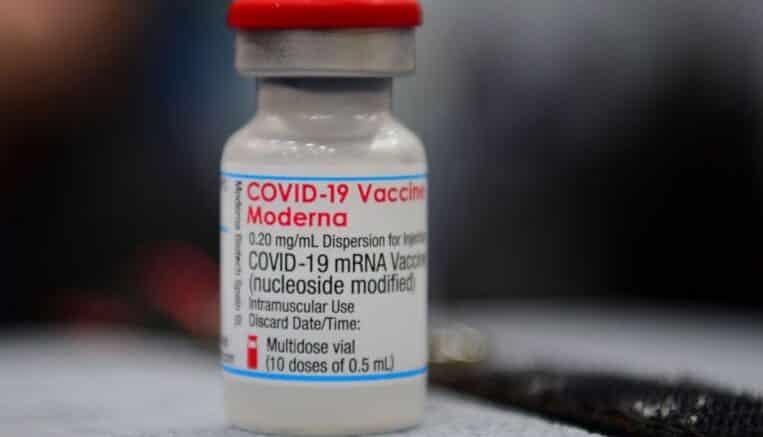
    But to apprehend     The point of intersection of the timeless    With time, is an occupation for the saint—    No occupation either, but something given    And taken, in a lifetime’s death in love,    Ardour and selflessness and self-surrender.    —Lines from a poem by T.S. Eliot, The Dry Salvages (part of The Four Quartets)    ”It is known, in fact, that the Latin liturgy of the Church in its various forms, in each century of the Christian era, has been a spur to the spiritual life of many saints…” —Pope Benedict XVI, Summorum Pontificum, July 7, 2007. There are many rumors in Rome that Pope Francis on Friday, July 16 — in two days — will publish a decree revising or suppressing that document    ”It is, therefore, permissible to celebrate the Sacrifice of the Mass following the typical edition of the Roman Missal promulgated by Bl. John XXIII in 1962 and never abrogated, as an extraordinary form of the Liturgy of the Church.” —Benedict XVI, in the same document        ”Even the highest authority of the Church may not change at will the ancient and venerable liturgy of the Church. This signifies an abuse of power (abusus potestatis)… The fact that the Missale Romanum of 1570 was intended to be the most perfect liturgical expression of the Catholic teaching on the Eucharist… is a significant argument that the Missal itself, as well as the dogmatic definition of Trent, should remain substantially unchanged for all time.” — Dr. Michael Fiedrowicz, in his magnificent book The Traditional Mass: History, Form, and Theology of the Classical Roman Rite, arguing that the old Mass, because it was intended as the “most perfect liturgical expression” of “the Church’s teaching on the Eucharist, should “remain substantially unchanged for all time” — and that not even the Pope can make such a change at will    If you came this way,    Taking any route, starting from anywhere,    At any time or at any season,    It would always be the same: you would have to put off    Sense and notion. You are not here to verify,    Instruct yourself, or inform curiosity    Or carry report. You are here to kneel    Where prayer has been valid. And prayer is more    Than an order of words, the conscious occupation    Of the praying mind, or the sound of the voice praying.    And what the dead had no speech for, when living,    They can tell you, being dead: the communication    Of the dead is tongued with fire beyond the language of the living.    Here, the intersection of the timeless moment    Is England and nowhere. Never and always.    —from the same poem by T.S. Eliot    =================    Letter #55, 2021, Wednesday, July 14: The Intersection of Time with the Timeless    The search is always for the face of Christ.    The presence of Christ.    He, the suffering servant, the king, who trampled death by death.    He, who is worthy.    He, whose presence means there is no absence.    He, who has already answered the questions the scientists and seekers after infinite intelligence via super computers joined in an endless chain of digital power, he is present in the adoration chapels of the world.    And being present, he is real, and calls us back from the abyss, the abyss of our selves, the abyss which would be despair, for without Him there is no hope.    And so the liturgical question is a question of ultimate importance.    It is not about old vestments and old genuflections, it is about the breaking through into time of the timeless.    And in a secular age, in an age where the sacred is a myth and the saeculum (this age, this world, this space and time continuum) is regarded as the only real, we are in grave danger of being impeded from even beginning the journey that leads to the timeless, and to His face.    If the setting out on that journey were to harden hearts, create stony hearts, rigid hearts, then it would be wide and shepherd-like to not encourage souls to undertake that way.    But if that way leads, step by step, up the seven-story mountain towards humility, towards selflessness, toward the sacrifice of all that the body and its passions cries out for, then it the highest act of the Supreme Shepherd to guide and encourage the faithful to set out upon that path.    For to apprehend the point of intersection of the timeless with time, is an occupation for the saint—no occupation either, but something given and taken, in a lifetime’s death in love, ardour and selflessness and self-surrender.    ***    This article below is very long. I myself found it a bit too long. And yet, I read the whole thing.     And if you have the stamina, and time, perhaps you will find that reading it offers some useful insight into this question of the liturgy.    But if you do not have enough stamina, and time, then here is the abbreviated version: it is about the desire for God, the longing for God, the Holy One, innate to every human heart, and the setting out on a journey toward Him, and about preserving in the world of men, our world, even this world on 2021, a hope… a hope… that His face, His presence, will accompany us on our journey, already now, really, and always, hereafter, until the consummation of all things.    ===============    Please consider subscribing to Inside the Vatican, the print magazine, to follow these events. To subscribe, click on the banner below:           Here is the complete text of a lecture on the question of the liturgy by Dr. Peter Kwasniewski.    Note: Here also is an interview by German-born writer Maike Hickson (who now lives in the Shenandoah Valley in Virginia) with Bishop Athanasius Schneider, an auxiliary bishop of Astana, Kazakhstan who is from a family of German background, on this same liturgical question (link).    ***    Beyond Summorum Pontificum: The Work of Retrieving the Tridentine Heritage: Full Text of Dr. Kwasniewski’s July 3 Roman Forum Lecture (link)    By Peter Kwasniewski at 7/14/2021 03:35:00 PM    The following is the transcript of the lecture I gave at the Roman Forum on July 3. A video of the lecture has been posted at Remnant-TV (link). A synopsis (less than one-third the length) was published at Crisis Magazine on July 7, under the title “Summorum Pontificum at Fourteen: Its Tragic Flaws.” As we near the imminent restriction or suppression of this motu proprio, it is important to step back and look at the bigger picture: What is—or is not—the role of the papacy vis-à-vis the liturgy handed down in tradition? What should our attitude be to abuses of papal authority, particularly in regard to its attempts to “allow” or “forbid” immemorial rites of divine worship? I would draw the reader’s attention to the notes, which contain important supporting material.—PAK    Beyond Summorum Pontificum: The Work of Retrieving the Tridentine Heritage    By Peter A. Kwasniewski     As we find out more and more about the sheer corruption of the papal court today, which rivals the record of the Renaissance, it seems (if anything) still more remarkable, bordering on the miraculous, that Summorum Pontificum was ever issued at all. It was a watershed moment, a gesture of fortitude and favor, and a clear factor in multiplying old Masses around the world and weakening the modernist hegemony. We were grateful to have a pope who, instead of throwing a bone to the nostalgics—the so-called “indults” of Paul VI and John Paul II—had the courage to say the truth: that the great liturgy of our tradition had never been abrogated and could never be abrogated. In just a few sentences, central claims of Archbishop Lefebvre, Michael Davies, Count Neri Capponi, and others were vindicated.    I think it is fair to say right from the start that Summorum Pontificum was useful to our movement in the way that an enormous booster rocket is useful for launching a spaceship into orbit: it has a lot of raw power, but it can only do so much, and when it’s empty, it falls away.     Summorum Pontificum is destined to be one of the great papal interventions in all of history, but it is no more than damage control; it is not a pillar, much less a foundation, of a permanent structure.     And those who lean on it too much will find themselves crushed by its incoherences.     My goal in this presentation will be to walk through Summorum Pontificum and identify its principal flaws, the elements in it that act as weights pulling us down, so that we can resolutely go beyond it to retrieve the fullness of the Tridentine heritage that constitutes the authentic Roman rite.    I can imagine what some of you may be thinking: “Rumors are swirling everywhere that Summorum Pontificum is about to be severely curtailed or shelved—and you are complaining about its imperfections? Right now, we’d all be grateful and relieved if we could just hold on to this motu proprio, warts and all.”    My response is that unless we understand precisely the weak points of Summorum Pontificum, we will not be able to understand why we are still so vulnerable to the machinations of Francis and his circle, and, more to the point, we will not be able to summon the necessary strength to ignore or to oppose what the Vatican might do to reduce or prevent the celebration of the classical Roman rite.    For the motu proprio establishes or reaffirms false principles that are coming back to haunt us, or perhaps have never stopped haunting us. As much as the traditional movement has benefited pragmati­cally from Summorum (and of that, there is no doubt), we must learn to put our weight fully on our own two feet, so that when the legal crutch or brace is suddenly removed, we do not topple over helplessly.    Hyperpapal Framework    As we look at Summorum Pontificum, the first thing we will notice is that its lengthy prologue [the citation below in italics] is a veritable paean to the central role of the Roman Pontiffs in the guidance of the sacred liturgy over the centuries.    Up to our own times, it has been the constant concern of supreme pontiffs to ensure that the Church of Christ offers a worthy ritual to the Divine Majesty, “to the praise and glory of His name,” and “to the benefit of all His Holy Church.”… Among the pontiffs who showed that requisite concern, particularly outstanding is the name of St. Gregory the Great, who made every effort to ensure that the new peoples of Europe received both the Catholic faith and the treasures of worship and culture that had been accumulated by the Romans in preceding centuries…. In this way the sacred liturgy, celebrated according to the Roman use, enriched not only the faith and piety but also the culture of many peoples. It is known, in fact, that the Latin liturgy of the Church in its various forms, in each century of the Christian era, has been a spur to the spiritual life of many saints, has reinforced many peoples in the virtue of religion and fecundated their piety.     Many other Roman pontiffs, in the course of the centuries, showed particular solicitude in ensuring that the sacred liturgy accomplished this task more effectively. Outstanding among them is St. Pius V who, sustained by great pastoral zeal and following the exhortations of the Council of Trent, renewed the entire liturgy of the Church, oversaw the publication of liturgical books amended and “renewed in accordance with the norms of the Fathers,” and provided them for the use of the Latin Church.    Benedict XVI is right to acknowledge the historic role played by St. Gregory the Great, St. Pius V, and many other pontiffs (he goes on to list Clement VIII, Urban VIII, St. Pius X, Benedict XV, Pius XII, and John XXIII). However, he fails to note an all-important fact.     The popes, though they occasionally added or subtracted bits of the liturgy, never saw themselves as masters and possessors of the liturgical rites, as if they could exercise complete control over it, as if they could jettison the rites and redesign them from scratch if they wished.     To use another metaphor dear to Ratzinger, theirs was the work of gardeners, not of manufacturers. If we consider popes one by one, the contribution of any of them pales in comparison to the sum-total of the heritage they received and handed on.     We may note, as well, that Summorum’s list of named popes includes one pope from the sixth century, one from the sixteenth, one from the seventeenth—and five from the twentieth.    We cannot fail to notice that “something is up” once we get into the twentieth century: a sort of itch or craze for liturgical reform, after many centuries of stability—reforms that take on escalating magnitude, as we move from a breviary and calendar reform early in the century, to a massive overhaul of Holy Week in the mid-century, to a shocking deconstruction and reconstruction of all rites and ceremonies in the decade from 1963 to 1974.     What we see is a growing hyperpapalism, fueled by ultramontanism, which makes the pope the one who determines the content and message of Catholic worship.     In reality, the Roman rite codified by Pius V after the Council of Trent preexisted any papal codification; it is what it is not because the pope made it so, but because the pope verified and validated what he had received, in a printed edition that seemed to him to be most faithful to the tradition.    Thus, when the motu proprio shifts from the long line of popes of the old missal to Paul VI, we find ourselves face to face with an outrageous description of the catastrophe that occurred:    In more recent times, the Second Vatican Council expressed a desire that the respectful reverence due to divine worship should be renewed [instauraretur] and adapted to the needs of our time. Moved by this desire our predecessor, the Supreme Pontiff Paul VI, approved, in 1970, reformed and partly renewed liturgical books for the Latin Church. These, translated into the various languages of the world, were willingly accepted by bishops, priests, and faithful. John Paul II amended the third typical edition of the Roman Missal. Thus Roman pontiffs have operated to ensure that “this kind of liturgical edifice … should again appear resplendent for its dignity and harmony.”    It is hard to know where to begin with such an embarrassing paragraph.     Neither the “respectful reverence due to divine worship” nor “the splendor of dignity and harmony” appear to have been uppermost in anyone’s mind from ca. 1963 to 1974, as the power-saws and jackhammers, folk guitars and felt banners came out on all sides; nor does Benedict blush for shame at the notion of “adapting” divine worship “to the needs of our times”—which needs? how do we discover them? who interprets them? does the papal charism include perfect insight into the signs of the times?     All this is a vain quest, doomed to frustration, which Ratzinger sharply critiques in other writings.     The liturgical books that resulted from this mad enterprise are here gently called “reformed and partly renewed”—in Latin, instauratos et partim innovatos—but since the first word actually means “restored” and since the reform deviated from all known historic sources, it would be more truthful to have characterized it as “deformed and arbitrarily invented.” (Not that such a phrase will ever appear in a papal motu proprio![1])    Lastly, he speaks of the “willing acceptance” of “bishops, priests, and laity.”     I find this expression ironic, to say the least.     The bishops, schooled in blind obedience, believed they had no choice but to swallow whatever was dished out by the Supreme Pontiff; the few who adhered to the traditional liturgy were hounded, ostracized, even excommunicated.     Most of the clergy felt they had even less freedom to express criticism or to withhold compliance, except for the very elderly, towards whom pathetic indults were given; instead, the clergy—those, at any rate, who did not seek laicization, like thousands of their confreres at the time—had to endure a Soviet-style reeducation that turned upside-down everything they had been taught before the Council.     They had to learn to hate what had once been declared most precious and sacred, and to embrace novelty, creativity, and mediocrity.    This rash of psychological abuse explains why the generation of clergy who grew up in the era of liturgical reform or those immediately formed by them are, generally speaking, the most hostile to the reappearance of the traditional rites of the Church.     Lastly, to speak of willing acceptance on the part of the laity is a half-truth, at best; the exodus of laity from the Catholic Church exactly in these years—to be sure, not exclusively attributable to liturgical change, but unquestionably connected with it—exceeded the number of Catholics lost to the Church in the Protestant revolt.     The laity who “accepted” the changes, or rather, who endured them more or less patiently, were simply the ones who decided to keep going to church on Sundays.     Others who were sick of change or had become convinced that the Catholic religion must be fraudulent if its leaders can change so much, so fast, voted with their feet.    In the next paragraph of Summorum Pontificum, Benedict XVI introduces the theme of the lovers of the old rite:    But in some regions, no small numbers of faithful adhered and continue to adhere with great love and affection to the earlier liturgical forms. These had so deeply marked their culture and their spirit that in 1984 the Supreme Pontiff John Paul II, moved by a concern for the pastoral care of these faithful, with the special indult Quattuor abhinc annos, issued by the Congregation for Divine Worship, granted permission to use the Roman Missal published by Blessed John XXIII in the year 1962. Later, in the year 1988, John Paul II with the Apostolic Letter given as Motu Proprio, Ecclesia Dei, exhorted bishops to make generous use of this power in favor of all the faithful who so desired.    What is puzzling about this description is that a sizeable minority of the faithful are here characterized as “adhering…with great love and affection to earlier liturgical forms.”     Yet is it not incumbent on Catholics, as such, to love the liturgy that has come down to them from the ages of faith?     This was nothing less than the primary goal of the healthy phase of the Liturgical Movement as we see it in a figure like Dom Guéranger: to know the inherited liturgy better, so as to love it more, and to live it more fully.     The “culture and spirit” of these faithful were “deeply marked” by their liturgy—of course, and rightly so!     The faithful who were striving to be practicing Catholics did not need a different liturgy, since the one with which they already worshiped had won over their hearts and minds, and had permeated their lives and even their social milieux (one need only think of the riches of the old liturgical calendar).     It is as if Summorum Pontificum identifies as a minority concern that which was the only Catholic mentality and the only desired outcome recognized in the entire history of liturgy.    By implication, the so-called reform must then be viewed as an act of violence by which the faithful were alienated from the “forms” that defined Catholic faith and life.     Curiously, after proffering a list of popes who never dared to forbid (and, by the same token, never dared to “allow”) worshiping in ancient rites, Benedict XVI here mentions the “indult” of John Paul II—a concept that makes sense only on the hypothesis that the Church has the authority to outlaw or suppress a traditional rite, which Benedict, just a few paragraphs later, denies (and, moreover, denies in many other writings of his).     Only that which has been definitively discontinued requires an indult; if the usus antiquior [“the more ancient usage”] was never abrogated and cannot be abrogated, then a priest never needed permission to say it, and will never need permission to say it.     This point is obviously of the greatest importance to bear in mind if and when there are future attempts by the pope or the Roman curia to subvert the use of the traditional Roman rite.    Before I move on, I would like to recall an observation made by Fr. Zuhlsdorf: when John Paul II issued his indult, the bishops did little or nothing; when Benedict XVI issued his “emancipation proclamation,” the bishops decided it was time to implement Wojtyła’s indult.     Regrettably, the overall approach of Summorum Pontificum and Con Grande Fiducia does not help us in this regard, because it assumes throughout that the pope and bishops have the authority to dictate whether or not priests ordained for the Roman rite are allowed to use the classic form of the Roman rite—the only form that existed, from apostolic derivation and a continuous ecclesial development of over 1,500 years.     It is clearly a contradiction in terms to say that a priest of the Roman rite normatively uses a partly deformed and partly invented rite promulgated by a single pope, whereas the same priest might or might not be able to use a venerable rite received and transmitted by hundreds of popes, bolstered by their cumulative authority?    The motu proprio can give the appearance of being a new set of permissions to replace a former set of permissions, a sort of “super-indult” that does away with the red tape but sets the question still in the context of a papal authority that could, in principle, reverse or negate what is established therein. Even in our common ways of talking about the event of 7/7/07, we betray that we function under an ultramon­tanist conception: we talk of the “liberalization” of the old rite, as if it belonged to the pope to give it to us or to take it away. We can be sure that the enemies of “liberalization” are keenly aware of the logical entailment that he who can liberalize may also restrict; he who looses may also bind; he who establishes can also disestablish.    Ordinary and Extraordinary     I come now to what is perhaps the most notorious feature of Summorum Pontificum, namely, its claim, in Article 1, that there are two “forms” of the Roman rite:    The Roman Missal promulgated by Paul VI is the ordinary expression of the lex orandi (law of prayer) of the Catholic Church of the Latin rite. Nonetheless, the Roman Missal promulgated by St. Pius V and reissued by Bl. John XXIII is to be considered as an extraordinary expression of that same lex orandi, and must be given due honour for its venerable and ancient usage. These two expressions of the Church’s lex orandi will in no way lead to a division in the Church’s lex credendi (law of belief). They are, in fact two usages of the one Roman rite. It is, therefore, permissible to celebrate the Sacrifice of the Mass following the typical edition of the Roman Missal promulgated by Bl. John XXIII in 1962 and never abrogated, as an extraordinary form of the Liturgy of the Church.[2]    The claim that Paul VI’s Missale Romanum of 1969 (the “Novus Ordo”) is, or belongs to, the same rite as the Missale Romanum last codified in 1962—or, more plainly, that the Novus Ordo may be called “the Roman rite” of the Mass—cannot withstand critical scrutiny, nor can this claim be sustained for any two liturgical books, Vetus and Novus.     Never before in the history of the Roman Church have there been two “forms” or “uses” of the same local liturgical rite, simultaneously and with equal canonical status.     That Pope Benedict could say that the older use had never been abrogated proves that Paul VI’s liturgy is something novel, rather than a mere revision of its precursor, since every earlier editio typica of the missal had simply replaced its predecessor.     Joseph Shaw [in the italic text below] gives a knock-down argument based on the language of the motu proprio:    The traditional Mass is called the “former [earlier, older] liturgical tradition”: traditio liturgica antecedens (from Article 5). This tradition is not “expressed” by the Novus Ordo; if it were, people attached to it would be attached to the Novus Ordo, which is not the sense of the passage. On the contrary, it seems this is a different liturgical tradition: there are two, in fact, an older and a newer one. The fact that there is some important difference between the older tradition and the Novus Ordo is implied in an even more important way by the claim in Summorum Pontificum that the 1962 Missal has never been abrogated (numquam abrogatam, Article 1). Normally, each edition of the Roman Missal is replaced by the next; that this had happened to the 1962 Missal was a very common argument made by canonists before 2007, and this was the reason it was supposed that celebrations of it required an indult or special permission. Summorum Pontificum says that this did not happen. The explanation is not made explicit in the document, but it is clear enough: the 1970 Missal is not simply a new edition of the Missale Romanum like all the earlier (and, indeed, later) ones. Something different happened: it was a new Missal in the sense of being a new start, a new tradition, and therefore it did not replace and exclude (‘obrogate’) the earlier Missal.[3]    (One winces at the palpable oxymoron of “new tradition,” a philosophically incoherent notion.)     Thus, while Benedict asserts in the letter Con Grande Fiducia that “there is no contradiction and no rupture” between old and new,[4] at the same time he allows for the coexistence of two canonically equal forms of one and the same liturgical rite—an unheard-of and, in many ways, unintelligible situation.     There have always been many different “uses” in the Latin Church, but that the use of Rome should be thus doubled has never been seen before.     It may be likened to a case of dissociative identity disorder, or schizophrenia.     In reality, as Msgr. Klaus Gam­ber argued so many years ago in a book praised by Cardinal Ratzinger,[5] the modern rite cannot be regarded as the Roman rite or a use thereof, regardless of what Paul VI, Benedict XVI, or anyone else wishes to call it.     A rite is precisely an historically-articulated tradition of texts, chants, gestures, ceremonies, and customs, expressive of the theology and spirituality of a Christian people.     As Ratzinger says elsewhere:    The “rite,” that form of celebration and prayer which has ripened in the faith and the life of the Church, is a condensed form of living Tradition in which the sphere using that rite expresses the whole of its faith and its prayer, and thus at the same time the fellowship of generations one with another becomes something we can experience, fellowship with the people who pray before us and after us. Thus the rite is something of benefit that is given to the Church, a living form of paradosis, the handing-on of Tradition.[6]    A certain kind of neoscholastic reductionism reduced liturgy to an indifferent shell containing the quasi-magical form and matter of the sacraments.     As long as the sacrament happens, why should we care about the rest?     Such a crass rationalism falsifies the reality of a liturgical rite as a concrete embodiment of apostolic tradition existing over the course of history—a history fraught with meaning and value, establishing a cumulative lex credendi (law of believing) for successive generations.     Each rite has its own deep characteristics that make it irreducibly itself, that contextualize the Word of God and the sacraments, and catechize the faithful.     No one would dream, for example, of defining the Byzantine Divine Liturgy of St. John Chrysostom as “essentially” a valid consecration, to which a multitude of florid prayers and hymns have been attached in order to give the people and the deacons something to do.     In like manner, no one with a modicum of sense could define the Roman rite of Mass apart from the Roman Canon, which is its defining feature, or could insist on the insertion of an explicit epiclesis when, properly speaking, it never had one and does not need to have one.    When we search for the “personality,” the identity or inner core, of the Roman rite as given in the Church’s pilgrimage through history, we will find at least nine crucial elements: the Roman Canon; the use of Latin; Gregorian chant; the lectionary; the calendar; the Offertory; the ad orientem [“toward the East”] stance; parallelism of liturgical action; and the separate communion of the priest.     The first six are, in content, specific to the Roman rite, although all traditional rites, Eastern and Western, have their own analogous versions; while the last three, which describe not so much content as manner of worship—eastward orientation, parallelism of action, and the separate communion of the priest—are found in all traditional liturgical rites.     The modern rite of Paul VI departs from all of these.     It is possible for it to be celebrated in a way that follows some of the rite’s precedents, but it is equally possible for it to be celebrated in a way that is at variance with all of them; and the very fact that the actual configuration of a given liturgy is left to the choice of the celebrant and/or other personnel is outrageously untraditional, imbuing the enterprise with a voluntarism contrary to the inner nature of liturgy as the expression of Christ’s ontological receptivity vis-à-vis the Father.    Many more arguments establishing the drastic rupture between old and new can be furnished.     The point here is simply that by no stretch of the imagination is it possible, let alone desirable, to talk about the Tridentine rite and the Novus Ordo as “two usages” or “forms” of the same Roman rite; and it is positively ludicrous to say that the deviant form is “ordinary” and the traditional “extraordinary,” unless the evaluation is merely a sociological or statistical one.[7]     Indeed, the Tridentine rite has more in common with the Byzantine rite than it does with the modern rite of Paul VI!     With the ever-growing pile of scholarly studies showing the radical differences in theological and spiritual content between the Roman rite and the modern papal rite of Paul VI, it is not intellectually honest or credible to claim that the old and new rites express the same lex orandi or, consequently, the same lex credendi.[8] It may be that the new rite is free from heresy, but its lex orandi only partly overlaps with the old rite’s, and so too for the credenda [“things to be believed”] that they convey—as seen not only in texts but also in ceremonies and in every other dimension of public worship.    If there is one single claim common to all traditionalists of all stripes in every phase of the traditionalist movement, it would be the following: what Paul VI did to the liturgy of the Catholic Church was truly unprecedented, both quantitatively and qualitatively—and therefore truly wrong, unworthy of the papacy, incompatible with the duties of the papal office, wicked in the way in which patricide or treason is wicked.[9]     We know that earlier popes added or modified the rites, but never in such a way that one could look at the “before” and “after” and say: These are different things.     Paul VI did what no pope had ever dared to do: to change every rite of the Catholic Church, from top to bottom.     He even changed the forms of all of the sacraments.     In comparing the old and new Masses, one is looking at largely incompatible calendars, nearly totally different lectionaries, and a radical deconstruction of the euchology (that is, the prayer texts), the music, and the rubrics.     Similar unfavorable comparisons can be made between any two actions of the Church at prayer: old and new baptism, old and new confirmation, old and new diaconal, priestly, and episcopal ordinations, old and new blessings of any and every object, and so forth.     Unquestionably, the traditionalists are right to say that this was by no means a “reform” but rather a revolution.    ***    The only moment in Church history to which one could point at a seismic shift would be the transition from Greek to Latin liturgy in the fourth century in Rome.     However, here we can be assured of three facts: first, we know almost nothing about it; second, we can assume with confidence that the ecclesiastics involved had not formed a committee of academics acting by false theories and with dubious motives; third, the results of this transition, as we can see it, for example, in the Roman Canon, show a profoundly traditional mentality, so much so that a Hebrew and ancient Roman cultic language was adopted in a high poetic register of Latin—in other words, quite the opposite of what the reform of the 1960s gave us.    Here, I must quote Martin Mosebach, who understands better than most the chasm that stretches between the classical Roman rite and the rite of Paul VI:    No one who has eyes and ears will be persuaded to ignore what his own senses tell him: these two forms are so different that their theoretical unity appears entirely unreal. It is my experience that the pros and cons of “Mass reform” in the Church actually cannot be debated dispassionately. The opposing sides on this question have long faced each other with equally irreconcilable and fixed resolve: there can be no question of debate. Those who refused to accept that what had been everything was now nothing formed a tiny circle: in the words of the theologian Karl Rahner they were “tragicomic, peripheral human failures.” They were mocked, and at the same time regarded as highly dangerous.[10]    Mosebach’s last remark is one that I wish to develop.     Nearly every bishop since 1969 has regarded the old Mass as dangerous.     But it can be dangerous only because it is either erroneous, heterodox, immoral, or disordering.     If it were any of these things, its use would be a sinful act.     Whoever holds this, however, contradicts the unanimous practice and faith of the Church for 1500 years (at least), and therefore refutes himself, since, if this contradiction were true, then the Catholic Church would have to be false.     One thinks of the standard Protestant line that the Church went off the rails early on, until she was rescued by the Reformers who rediscovered the pure Gospel; or the line, common to modernists and neoconservatives, that the Church began to depart from evangelical simplicity with the reign of Constantine in the fourth century, so that we had to be rescued by Vatican II from the worldliness of the Constantinian period.     Needless to say, worldliness has always been a temptation and a plague to fight against—but never so much as in a postconciliar Church that opened itself to the world with a prostitute’s embrace and conceived the bastard offspring of neo-Catholicism, dispossessed of a rightful inheritance.    Accordingly, the traditionalist movement must, I believe, take much more seriously the question of whether or not the Novus Ordo or any of the new rites is canonically licit.     Does a pope have the authority to do what Paul VI did?[11]     We are not asking if he can pretend to have the authority, expending a thousand years of political capital to demand the hierarchy and the faithful to be obedient and receptive to that which undermines their obedience and vitiates their receptivity to tradition; nor are we asking what Paul VI subjectively thought he was doing or capable of doing, nor of what bishops and the rest of the faithful subjectively thought they were doing or ought to do in response to the imposition of new rites that have more in common with Cranmer and Pistoia than with Cluny and Trent.     Rather, we should be asking whether objectively a pope actually has the right to substitute new rites for the rites organically developed within the Catholic Church over her entire history.    Subjective intentions can be messy and confused; but objectively the liturgical revolution separated Catholics from their own tradition, from orthodoxy as “right worship,” and therefore sundered the lex orandi from the lex credendi, or rather reconfigured their relationship such that “the magisterium of the moment” became the norm of prayer.[12]     In my opinion, if such a rupture can be seen as legitimate and licit, then there are no longer any norms or objective principles of liturgy left: everything has been reduced to the mere exercise of the papacy in any way it pleases.     Rather, this rupture created an internal schism and that is why it may be necessary to see it as illicit, that is, having no force of law behind it, but being in fact an abuse of power with no objective legal standing.     I cannot here lay out the full argument, but I recommend for further consideration, at least as a point of departure, the provocative thesis of Fr. Gregory Hesse, who argues that Trent’s condemnation of “any pastor whatsoever” [per quemcumque ecclesiarum pastorem] changing the Church’s rites into new rites applies to the pope as well; that the constant inclusion of Quo Primum in every edition of the missal, in addition to any new bulls, indicates that it was seen as a dogmatically-freighted “canonization” of the content and form of the Roman rite of Mass; that we should take seriously the teaching of Cardinal Juan de Torquemada (1388–1468), who wrote that if a pope fails to observe “the universal rite of ecclesiastical worship” and “divides himself with pertinacity from the observance of the universal church,” he is “able to fall into schism” and is neither to be obeyed nor “put up with” (non est sustinendus).[13]    In our own day, Dr. Michael Fiedrowicz writes, in his magnificent book The Traditional Mass: History, Form, and Theology of the Classical Roman Rite:    Even the highest authority of the Church may not change at will the ancient and venerable liturgy of the Church. This signifies an abuse of power (abusus potestatis). The authority of the bull of promulgation Quo Primum is especially grounded in the fact that here a pope regulated the liturgy in the exercise of the fullness of his papal power and in complete consensus with the vote of an ecumenical council, and in addition, he found himself in accordance with the unbroken tradition of the Roman Church . . . Above all, the fact that the Missale Romanum of 1570 was intended to be the most perfect liturgical expression of the Catholic teaching on the Eucharist, as the Council of Trent had defined it for all times over against Protestant errors, is a significant argument that the Missal itself, as well as the dogmatic definition of Trent, should remain substantially unchanged for all time.[14]    This, then, is the fundamental problem with the motu proprioSummorum Pontificum: it is internally incoherent, founded on a monumental contradiction caused by the worst abuse of papal power in the history of the Church.     As a result, its provisions cannot help echoing, almost every step of the way, an insoluble dialectic between the unabrogatable privileges of collective ecclesiastical tradition and an assumed or presumed authority over liturgical aetiology, ontology, and teleology.    Ratzinger’s Dialectic    Thus, we can see that Summorum Pontificum contains profound tensions within itself, inasmuch as it reflects and reinforces certain false principles of ecclesiology and liturgy that led to the very crisis to which it was a partial response.     In fact, it would not be too much to say that there are fictions, even lies, in the document.     I do not attribute mendacity to Benedict XVI personally; with his German inclination to the Hegelian dialectic method, he seems capable of believing contradictions or at least of wishing the two sides, the thesis and the antithesis, could be simultaneously true.    As we saw earlier, in the letter Con Grande Fiducia, Benedict writes: “There is no contradiction between the two editions of the Roman Missal. In the history of the liturgy there is growth and progress, but no rupture.”     However, in his partial autobiography Milestones, published in 1997—only ten years before the motu proprio—a more daring Cardinal Ratzinger acknowledged the problem with breathtaking frankness (and it’s worth quoting at length, just to remind ourselves of how blunt he was capable of being):    [T]he publication of the Missal of Paul VI…was accompanied by the almost total prohibition, after a transitional phase of only half a year, of using the missal we had had until then… I was dismayed by the prohibition of the old missal, since nothing of the sort had ever happened in the entire history of the liturgy. The impression was even given that what was happening was quite normal. The previous missal had been created by Pius V in 1570 in connection with the Council of Trent; and so it was quite normal that, after four hundred years and a new council, a new pope would present us with a new missal. But the historical truth of the matter is different. Pius V had simply ordered a reworking of the Missale Romanum then being used, which is the normal thing as history develops over the course of centuries. Many of his successors had likewise reworked this missal again, but without ever setting one missal against another. It was a continual process of growth and purification in which continuity was never destroyed. There is no such thing as a “Missal of Pius V,” created by Pius V himself. There is only the reworking done by Pius V as one phase in a long history of growth…     In this confusing situation [of the Protestant Reformation], which had become possible by the failure to produce unified liturgical legislation and by the existing liturgical pluralism inherited from the Middle Ages, the pope decided that now the Missale Romanum—the missal of the city of Rome—was to be introduced as reliably Catholic in every place that could not demonstrate its liturgy to be at least two hundred years old. Wherever the existing liturgy was that old, it could be preserved because its Catholic character would then be assured. In this case we cannot speak of the prohibition of a previous missal that had formerly been approved as valid. The prohibition of the missal that was now decreed [in 1969], a missal that had known continuous growth over the centuries, starting with the sacramentaries of the ancient Church, introduced a breach into the history of the liturgy whose consequences could only be tragic      [T]he old building was demolished, and another was built, to be sure largely using materials from the previous one and even using the old building plans. There is no doubt that this new missal in many respects brought with it a real improvement and enrichment; but setting it as a new construction over against what had grown historically, forbidding the results of this historical growth, thereby makes the liturgy appear to be no longer a living development but the product of erudite work and juridical authority; this has caused us enormous harm. For then the impression had to emerge that liturgy is something “made,” not something given in advance but something lying within our own power of decision. From this [false view] it also follows that we are not to recognize the scholars and the central authority alone as decision makers, but that in the end each and every “community” must provide itself with its own liturgy. When liturgy is self-made, however, then it can no longer give us what its proper gift should be: the encounter with the mystery that is not our own product but rather our origin and the source of our life….     I am convinced that the crisis in the Church that we are experiencing today is to a large extent due to the disintegration of the liturgy, which at times has even come to be conceived of etsi Deus non daretur [“even if God is not given,” that is, “even if God does not exist”]: in that it is a matter of indifference whether or not God exists and whether or not he speaks to us and hears us. But when the community of faith, the worldwide unity of the Church and her history, and the mystery of the living Christ are no longer visible in the liturgy, where else, then, is the Church to become visible in her spiritual essence? Then the community is celebrating only itself, an activity that is utterly fruitless. And because the ecclesial community cannot have its origin from itself but emerges as a unity only from the Lord, through faith, such circumstances will inexorably result in a disintegration into sectarian parties of all kinds—partisan opposition within a Church tearing herself apart.[15]    Having said all this, he predictably also sprinkles in sentences approving of the liturgical reform initiated by the Second Vatican Council, says that its “real heritage” must be “called to life,” approves of the vernacularization of the Mass, and affirms, in general, that there is (and indeed, a priori, must be) unity between the traditional rite and the modern rite.     It is not clear how all of this is supposed to cohere together, especially now that so much concrete evidence has emerged of the truly revolutionary nature of the intentions and activities of Archbishop Bugnini, Paul VI, and many others involved in the so-called “reform.”[16] It’s not a secret anymore, the stuff of whispered conspiracies.    Specific Conditions    I turn, then, to the articles of the motu proprio.     In Articles 2 through 12, Summorum establishes various policies and conditions. We must note the subtle manner in which the traditional liturgy is held hostage, or given, as it were, second-class citizenship.     Article 2 notes that priests, in private Masses, may use the older missal—or rather, the interim missal of John XXIII, which is mostly Tridentine but bears the scars of Pacelli’s and Roncalli’s ham-handed preliminary reforms—on any day except for the Easter Triduum. But the Easter Triduum is the center and climax of the liturgical year. Although later it was clarified that the Triduum may be celebrated in the usus antiquior (or doubled even), one senses here an unwillingness to admit that the two “forms” (if we use his terminology) are truly equal. To exclude the Triduum is like saying that a body is intact except for its heart or its brain. There are certainly plenty of horror stories about bishops who refuse to let an Easter Triduum ever be offered in the old rite.     Article 3 nicely says that religious institutes and societies may celebrate the old rite as their conventual Mass, and that a particular community, or even an entire institute or society may adopt the conventual celebration of the old rite “often, habitually, or permanently.” That’s one of the best and most fruitful provisions in the document.    Article 4 notes that the faithful may attend the private Masses mentioned in Article 2. Article 5 is perhaps the most often quoted from the motu proprio:    In parishes, where a group of faithful who adhere to the earlier liturgical tradition is stably present, the pastor should willingly accept their requests to celebrate the Mass according to the rite of the Roman Missal published in 1962, and ensure that the welfare of these faithful harmonizes with the ordinary pastoral care of the parish, under the guidance of the bishop in accordance with canon 392, avoiding discord and favoring the unity of the whole Church.    We can all understand the reasons why it may have been deemed necessary to include language about “ordinary pastoral care,” “under the guidance of the bishop,” and “avoiding discord and favoring unity.”     Nevertheless, the practical upshot of such language has been to multiply excuses for pastors and bishops, who can always claim that pastoral care is being or would be impeded by the existence of an old rite Mass, that episcopal guidance implies unlimited veto power over a priest’s “willing acceptance of requests,” and that the Catholics requesting the Latin Mass are fomenting discord and damaging the Church’s unity.     In other words, Summorum Pontificum needlessly complexifies the situation and multiplies the possibilities of bureaucratic stonewalling. I know that it is never easy to persuade bishops to do anything, but a document that simply said: “The old Mass is to be made available in every diocese in multiple locations by such-and-such a date, and all seminarians are required to be trained in it” might have overcome some of the inertia, obstructionism, and perpetual procrastination that we have seen in the fourteen years since the motu proprioappeared.[17]    Article 5 Section 2 goes on to say the old Mass may be celebrated on working days and may take place once on Sundays and feast days.     This also seems oddly arbitrary, especially since there might well be a parish where the old Mass takes off and wins a dominant percentage of attendees.     Section 3 says that the pastor “should allow celebrations in this extraordinary form for special circumstances such as marriages, funerals or occasional celebrations, e.g., pilgrimages.”     I will not repeat my earlier remarks about the theological and canonical problem with the language of “allowing”; in any case, it would have been more helpful had the pope said “must facilitate” instead of “should allow.”     (A similar observation could be made about Section 5, which notes that rectors, in churches that are not parishes or conventual churches, are the ones to “grant permission.”)     Section 4 brings in the notion of a celebrant who is idoneus or qualified, which was to generate many early attempts at elaborate obstruction, cleared up only in 2011 with the Instruction Universae Ecclesiae.    Article 6 introduces the idea that readings may be given in the vernacular, which tears the unity of the liturgical fabric and undermines the multifaceted purpose of readings, which goes well beyond mere instruction.     I will not comment on this further except to say that it has been the inspiration for a number of liturgical aberrations—such as Cardinal Sarah’s Mass at Chartres in 2018—that remind one of unfortunate experiments conducted by the preconciliar Liturgical Movement.    Article 7 says “the bishop is strongly requested to satisfy their [i.e., the laity’s] wishes” if they have had an unfavorable response from their pastor. We know how this has played out in practice in too many instances.    Article 9 states: “The pastor, having attentively examined all aspects, may also grant permission to use the earlier ritual for the administration of the Sacraments of Baptism, Marriage, Penance, and the Anointing of the Sick, if the good of souls would seem to require it. Ordinaries are given the right to celebrate the Sacrament of Confirmation using the earlier Roman Pontifical, if the good of souls would seem to require it.”     Although the intention is admirable—to free up these riches for the benefit of souls—the language is once again too cautious, hesitant, and rubbery.     When do we know that a pastor has “attentively examined all aspects”?     When does he know?     Why does he have to grant permission for the other sacramental rites, if they were no more abrogated than the Mass?     And the primary condition, “if the good of souls would seem to require it,” can be easily refuted by a thunderous: “Nobody’s salvation depends on a particular liturgical rite!”     I know of bishops who simply flatly deny that it is good for souls to have access to the Church’s traditional rites; they say it is better for them to be “obedient,” to be “humble and content with what the Church provides,” and “not to look for externals or be fixated one one’s own ideas of what’s reverent,” etc.     Let’s put it this way: if pastors and bishops had a clue what was “for the good of souls,” we would not be in the disastrous situation in which we find ourselves.    There are a few other articles but they need not detain us at the moment.    I am not trying to be nit-picky with Benedict XVI and Summorum Pontificum.     What I am pointing out is that, as great as are the benefits we have been able to reap through this document, we are also in dire need of a more comprehensive theological understanding of the inherent rightfulness of traditional liturgy and the inalienability (so to speak) of the rights of clergy and laity to such liturgy, provided they have done nothing worthy of disqualification or suspension.     We need to see that, as much as popes have added to the liturgy over the centuries, we are not beholden to popes for the liturgy; it preexists them, it is superior to them in its reality and its authority, and it is the common possession of the entire People of God.     If Summorum Pontificum is abrogated, the traditional Roman liturgy will not be abrogated thereby; if Summorum Pontificum is curtailed, that is no reason to curtail the ever-increasing use of this liturgy.     It may be that Divine Providence sees a need to wean us still more from the milk of ultramontanism so that we may exercise our mandibles on the meat of tradition—with or without the approval of prelates.    Once again, I turn to Martin Mosebach for a perfect expression of my own point of view. In the tribute he wrote for Pope Benedict’s ninetieth birthday, the German novelist writes:    Now it is incumbent on every individual to take up the possibilities made available by Pope Benedict. Against overwhelming opposition he opened a floodgate. Now the water has to flow, and no one who holds the liturgy to be an essential component of the Faith can dispense himself from this task. The liturgy IS the Church—every Mass celebrated in the traditional spirit is immeasurably more important than every word of every pope. It is the red thread that must be drawn through the glory and misery of Church history; where it continues, phases of arbitrary papal rule will become footnotes of history. Don’t the progressives secretly suspect that their efforts will remain in vain so long as the Church’s memory of her source of life survives?[18]    Organic Development: Moving Away from the 1962 Missal    The last point I wish to address today is the need to “break out of the 1962 box.”    It’s obvious that Summorum Pontificum takes for granted the missal of John XXIII as the last edition of the Missale Romanum prior to the liturgical revolution, whose poster-child is called by the same name, “Missale Romanum,” but only equivocally.     We all know that Benedict XVI’s choice of the 1962 missal was basically a diplomatic and pragmatic one: Archbishop Lefebvre had settled on it as a touchstone for the Society of St. Pius X, and this, for several reasons.     First, he judged it to be the last missal free of theological problems; second, it was the last missal printed with Quo Primum and thus in legal continuity with Trent; and, thirdly, according to legend, a publisher in France was only too happy to find in the Archbishop a customer for a giant stash of 62 missals at a time when the liturgical express train had long since moved on to a different station.     Yet no one who has paid attention to the history of liturgical reform can fail to see that the raft of changes made to the Roman liturgy during the pontificate of Pius XII are certainly no less objectionable in themselves than those promulgated by Paul VI, even if they are more refined in their nature and more confined in their scope.     As this is an enormous subject unto itself, I will simply list some examples of treasures in the pre-55 Tridentine rite that are making a return across the globe and deserve to be reclaimed, without the need for any permission: the old Holy Week, with Palm Sunday, the unexpurgated Passions, the Liturgy of the Presanctified, the trikyrion leading into the Exultet, the twelve Easter prophecies, and the uninterrupted Litany of Saints with procession to the font; the old Pentecost Vigil, with its prophecies and blessing of baptismal water; the Corpus Christi Octave and, in general, many octaves that were suppressed; the folded chasubles and broad stoles; multiple orations at Mass; the quiet doubling of readings by the priest; the more frequent recitation of the Credo; the use of the Benedicamus Domino for Masses without Gloria.    We also know that very few places, however Lefebvrist or Ratzingerian, are following the 1960 code of rubrics with exactitude. Priests bow towards the crucifix when saying “Oremus” [“Let us pray”] the priest at Solemn Mass is incensed after the deacon’s chanting of the Gospel, and the Confiteor [“I confess”] before Communion is said at a Low Mass or Missa cantata [“Sung Mass”] even though all three of these things were abolished in 1960.    The principal argument used by defenders of strict adherence to the 1962 liturgical books is that “we should all do what the Church asks us to do.”     (We will hear similar words if Pope Francis comes out with new “provisions” in the form of yet another motu proprio.)     In this period of chaos, however, it is no longer self-evident that “the Church” refers to an authority that is handing down laws for the common good of the people of God.     From at least 1948 on, “the Church” in the sphere of liturgy has meant radicals struggling to loosen the bonds of tradition, pushing their own agenda of simplification, abbreviation, modernization, and pastoral utilitarianism on the Church, and sealing it with papal approval—that is, by an abuse of papal power.     These things are not rightful commands to be obeyed but aberrations that de­serve to be resisted.     Of course, they should be resisted patiently, intelligently, and in a principled manner, but nevertheless with a firm intention over time to restore the integrity and fullness of the Roman rite.    Sometimes one will hear people complain that the classical Roman rite is “frozen in time,” or that traditionalists are fighting about some mythical “perfect year,” a golden age when all was perfect.     Both statements are untrue.     In the “wild West,” organic development is happening—only it is not moving towards the unreachable utopia of modernization dreamt of by Paul VI, but rather, towards recovering, piece by piece, noble, idiomatic, and highly expressive elements of the Roman liturgy that were pared away or transmogrified during the twentieth century.     While the greatest example remains the ever-increasing return of the pre-55 Holy Week, one sees here and there the recovery of vigils, octaves, multiple collects, doubled readings, and many features that were suppressed by positive law.     When old customs are tried anew, clergy and faithful find that they make sense: they work beautifully.     It was a strange bout of madness that led to their suppression in the first place.     Perhaps for the first time since Vatican I’s Pastor Aeternus, and certainly for the first time since Vatican II’s Sacrosanctum Concilium, we are privileged to be living at a moment when it is possible for the laity and lower clergy to be taking the steps needed to recover our glorious inheritance.     We are the ones who must do it, or it will not happen.     The febrile atmosphere of the current pontificate is helping in a big way to facilitate the reexamination of liturgical questions.     The Lord wants us to see, very clearly, that we must find sounder principles than the autocratic will of whoever happens to be seated on the papal throne.     If the pope will not honor tradition and pass it down without meddling and messing with it, we, for our part, are compelled by love of our genealogy, our family inheritance, our dignity as sons of God and heirs to His kingdom, to defend Catholic tradition, uphold it, live it, and hand it on, intact.     For those of us who believe that the Tridentine rite represents, as a whole and in its parts, the pinnacle of the Roman rite as it gradually unfolded by the synergy of the Church and the Holy Spirit, an altar Missal from circa 1948, or even the editio typica of Benedict XV from 1920, gives us the stable ground we need.    I would like to conclude with a quotation from, again, Martin Mosebach—this time from his book Subversive Catholicism (which deserves to be better known and which I recommend to you all):    Perhaps it is even good that, despite Summorum Pontificum, the Tridentine Mass is still not promoted by the great majority of bishops. If it is a true treasure without which the Church would not be itself, then it will not be won until it has been fought for. Its loss was a spiritual catastrophe for the Church and had disastrous consequences far beyond the liturgy, and that loss can only be overcome by a widespread spiritual renewal. It is not necessarily a bad thing that members of the hierarchy, in open disobedience to Summorum Pontificum, continue to put obstacles in the way of champions of the Roman Rite. As we learn in the lives of the saints and the orders they founded, the established authorities typically persecute with extreme mistrust new movements and attempt to suppress them. This is one of the constants of Church history, and it characterizes every unusual spiritual effort, indeed, every true reform, for true reform consists of putting on the bridle, of returning to a stricter order. This is the trial by fire that all reformers worthy of their name had to endure. The Roman Rite will be won back in hundreds of small chapels, in improvised circumstances throughout the whole world, celebrated by young priests with congregations that have many children, or it will not be won back at all.[19]    Thank you for your kind attention.    NOTES[1] Although Pope Benedict makes two subtle statements in Con Grande Fiducia that suggest he recognizes the extent to which the liturgical reform was a disaster overall. First, he notes that there is no ground for fear that the usus antiquior will suddenly take over in parishes, because “the use of the old Missal presupposes a certain degree of liturgical formation and some knowledge of the Latin language; neither of these is found very often.” In other words, barely any liturgical formation is left, and as for Latin, it’s practically unknown: a withering commentary on the current level of illiteracy and incompetence. Second, he says that the “mutual enrichment” of the old and new forms will bring about this result, among others: “The celebration of the Mass according to the Missal of Paul VI will be able to demonstrate, more powerfully than has been the case hitherto, the sacrality which attracts many people to the former usage.” In other words, it is so bereft of sacrality in itself and in its permitted and permissible ars celebrandi that it needs to go on Tridentine life-support to recover it.[2] The parallel passage in Con Grande Fiducia: “As for the use of the 1962 Missal as a forma extraordinaria of the liturgy of the Mass, I would like to draw attention to the fact that this Missal was never juridically abrogated and, consequently, in principle, was always permitted. At the time of the introduction of the new Missal, it did not seem necessary to issue specific norms for the possible use of the earlier Missal.”[3] “Is the Novus Ordo an authentic expression of the Tradition?,” LMS Chairman, December 14, 2013.[4] The exact language: “There is no contradiction between the two editions of the Roman Missal. In the history of the liturgy there is growth and progress, but no rupture. What earlier generations held as sacred, remains sacred and great for us too, and it cannot be all of a sudden entirely forbidden or even considered harmful. It behooves all of us to preserve the riches which have developed in the Church’s faith and prayer, and to give them their proper place.” But—as he immediately goes on to say—this “proper place” must be alongside the new rite. This is rather like saying “There is no contradiction between the ancien régime and the Revolution: there is growth and progress in understanding human dignity and rights, but no rupture. What the ancien régime held as true, remains true and good for us too, and must be given its proper place within the world created by the Revolution.”[5] Klaus Gamber, The Reform of the Roman Liturgy: Its Problems and Background, trans. Klaus D. Grimm (San Juan Capistrano, CA: Una Voce Press and Harrison, NY: The Foundation for Catholic Reform, 1993).[6] Alcuin Reid, The Organic Development of the Liturgy, second ed. (San Francisco: Ignatius Press, 2005), Preface, 11.[7] Here is how Benedict XVI explains it in Con Grande Fiducia: “The Missal published by Paul VI and then republished in two subsequent editions by John Paul II, obviously is and continues to be the normal Form—the forma ordinaria—of the Eucharistic Liturgy. The last version of the Missale Romanum prior to the Council, which was published with the authority of Pope John XXIII in 1962 and used during the Council, will now be able to be used as a forma extraordinaria of the liturgical celebration. It is not appropriate to speak of these two versions of the Roman Missal as if they were ‘two Rites.’ Rather, it is a matter of a twofold use of one and the same rite.” As Gregory DiPippo pointed out, the pope’s move here was a clever canonical solution to an otherwise intractable problem. Had Benedict said they were two rites, he would have been instantly issuing biritual faculties to hundreds of thousands of priests. Had he said they were two “options” or something of the sort, he would have been denying the substantive difference between the two missals. Therefore he invented a new liturgical category, “form,” which is a word strong enough to convey a notable difference but vague enough to skirt the discontinuity of rite. It is, however, an inherently unstable solution. Later in Con Grande Fiducia the pope seems to propose both a canonical and sociological meaning of “ordinary” when he writes: “it is clearly seen that the new Missal will certainly remain the ordinary Form of the Roman Rite, not only on account of the juridical norms, but also because of the actual situation of the communities of the faithful.” The latter, of course, can change over time: see my book Noble Beauty, Transcendent Holiness: Why the Modern Age Needs the Mass of Ages (Kettering, OH: Angelico Press, 2017), chapter 6, “Formed in the Spirit and Power of the Liturgy: Reflections on Summorum Pontificum,” pp. 135–66.[8] Put simply: the traditional rite, which expresses the lex orandi of every age of the Church’s pilgrimage of faith, is an ecclesiastical monument to the lex credendi of unbroken tradition; whereas the modern rite enshrines in its lex orandi the lex credendi of 1960s liturgists, and therefore is nothing more than a bureaucratic monument to their ideas, forced on others by papal mandate.[9] Ratzinger himself seems to admit as much in his scathing evaluation of what happened after the Council: “The liturgical reform, in its concrete realization, has distanced itself even more from its origin. The result has not been a reanimation, but devastation. In place of the liturgy, fruit of a continual development, they have placed a fabricated liturgy. They have deserted a vital process of growth and becoming in order to substitute a fabrication. They did not want to continue the development, the organic maturing of something living through the centuries, and they replaced it, in the manner of technical production, by a fabrication, a banal product of the moment.” Imagine being able to say this about the primary liturgical rite of the Catholic Church! One should be devastated that it is even possible to arrive at such a judgment, let alone to admit its unerring accuracy. The level of pontifical corruption necessary for this situation to have come about and to have remained fundamentally unaddressed for over fifty years is past conceiving. It alone shatters the tidy neoscholastic papalism on which Ratzinger and his generation were reared. A papacy that acts thus, and continues to defend its action, is a papacy that has eviscerated its claim to obedience in regard to the maintenance of Catholic liturgy.[10] The Heresy of Formlessness: The Roman Liturgy and Its Enemy, revised and expanded edition, trans. Graham Harrison (Brooklyn, NY: Angelico Press, 2018), 163.[11] Contrary to the traditional understanding of the papacy as we find it, e.g., in the Papal Oath of the Middle Ages, and in the writings of canonists.[12] As proof of this, one could quote endlessly from Bugnini’s giant book The Reform of the Liturgy and from any of the books published by members of the Consilium. A world of evidence awaits us from examining the (Latin) memoranda of the Consilium, which are, alas, barely known even to those with a keen interest in liturgical history. The virtual abolition of Latin was, of course, part of the plan all along, so that it would be increasingly difficult for later Catholics to understand what these masterminds had done in their Latin-speaking conventicles. Here is an example from a memorandum of the Consilium dated September 9, 1968, translated by Matthew Hazell: “It is often impossible to preserve either orations that are found in the [Tridentine] Roman Missal or to borrow suitable orations from the treasury of ancient euchology. Indeed, prayer ought to express the mind of our current age, especially with regard to temporal necessities like the unity of Christians, peace, and famine… In addition, it seems to us that it is not always possible for the Church on every occasion to make use of ancient orations, which do not correspond with the doctrinal progress visible in recent encyclicals such as Pacem in terris and Populorum progressio, and in conciliar documents such as Gaudium et spes.” See “The Eastertide Collects in the Post-Vatican II Missal: A Problematic Reform,” https://rorate-caeli.blogspot.com/2021/05/the-eastertide-collects-in-post-vatican.html.[13] Summa de ecclesia, lib. IV, pars Ia, cap. xi, § Secundo sic (fol. 196v of the 1489 Roman edition, p. 552 of the 1560 Salamanca edition, and p. 369v of the 1561 Venice edition): “Secundo sic. Si papa potest separare se sine aliqua rationabili causa, sed pura voluntate sua a corpore ecclesiæ & collegio sacerdotum per non observantiam eorum quæ universalis ecclesia ex traditione apostolorum observat: iuxta c. ecclesiarum. dist. 11, aut propter non observantiam eorum quæ per universalia concilia, aut apostolicæ sedis authoritatem sunt universaliter ordinata, maxime ad cultum divinum, ut puta nolendo observare in se ea quæ universalem statum ecclesiæ, aut universalem ritum cultus ecclesiastici concernunt, ut quod nollet celebrare in vestibus sacris, aut locis sacratis, aut cum luminaribus, aut signare se signo crucis sicut residuum sacerdotum collegium facit, & similia, quæ ad perpetuam generaliter ordinata videntur utilitatem, contra cap. quæ ad perpetuam. & cap. violatores. & cap. sunt quidam. & c. contra statuta. 25. quæst. 1. ergo videtur, quod papa in talibus dividendo se ab observantia universalis ecclesiæ cum pertinacia possit in schisma incidere. Consequentia est bona. Et antecedens non est dubium: quia sicut posset incidere in hæresim, ita in inobedientiam, et pertinacem non observantiam eorum, quæ ordinata sunt ad communem statum ecclesiæ. Unde Inno. in. c. de consue. dicit, quod in omnibus obediendum est papæ, dum non veniat contra universalem statum ecclesiæ: in eo enim casu dicit, quod non est sustinendus sine causa rationabili.” [If the pope is able to separate himself without some reasonable cause, but purely by his own will, from the body of the church and the college of priests through the non-observance of those things which the universal church observes from the tradition of the apostles (according to the c. Ecclesi[astic]arum, dist. 11), or because of non-observance of those things which are universally ordained by the ecumenical councils or the authority of the apostolic see, most of all which are ordained for divine worship, such as, by refusing to observe in himself those things which concern the universal state of the Church, or the universal rite of ecclesiastical worship, as if he were to refuse to celebrate in sacred vestments, or in consecrated places, or with candles, or to sign himself with the sign of the cross as does the rest of the college of priests, and similar things, which seem generally ordered to perpetual advantage (against the cap. Quæ ad perpetuam, and the cap. Violatores, and the cap. Sunt quidam, and the cap. Contra statuta. 25 quæst. 1), therefore it seems that the pope, by dividing himself in such things with pertinacity from the observance of the universal church, is able to fall into schism. The consequence is good. And the antecedent is not in doubt: because just as he could fall into heresy, so also into disobedience, and a pertinacious non-observance of those things which are ordained to the common state of the church. Whence Innocent says (in c. de consue.) that the pope is to be obeyed in all things, so long as it does not go against the universal state of the church: for in that case {Innocent} says, that he {the pope} is not to be put up with, without reasonable cause.][14] Michael Fiedrowicz, The Traditional Mass: History, Form, and Theology of the Classical Roman Rite, trans. Rose Pfeifer (Brooklyn, NY: Angelico Press, 2020), 36.[15] Milestones: Memoirs 1927–1977, trans. Erasmo Leiva-Merikakis (San Francisco: Ignatius Press, 1998), 147–49, emphasis added.[16] See my article “Sacrosanctum Concilium: The Ultimate Trojan Horse,” as well as Wolfram Schrems, “The Council’s Constitution on the Liturgy: Reform or revolution?[17] Some commentators have pointed out that its status as a mere letter, given motu proprio, has made its path to acceptance more difficult: popes issue letters motu proprio all the time, and they can be easily overturned. Perhaps it is too much to have expected Benedict XVI to issue an Apostolic Constitution on the restoration of the old rite![18] See Mosebach’s Foreword “For Pope Benedict XVI, On His Ninetieth Birthday” in Kwasniewski, Noble Beauty, Transcendent Holiness, xxv, emphasis added.[19] Subversive Catholicism: Papacy, Liturgy, Church, trans. Sebastian Condon and Graham Harrison (Brooklyn, NY: Angelico Press, 2019), 98–99.    Nonprofits like our own Urbi et Orbi Communications need help weathering the current storms. We do this work in partnership with you: we want you to be informed, to have a sense of the current climate of the Church, and to know both where there is hope for the future and where there is danger of losing sight of Truth. (continued below)    We ask you to support Urbi et Orbi Communications with a small or large contribution, at this difficult time, in order…    (1) to keep Inside the Vatican Magazine (which we have published since its founding in 1993, 27 years ago) independent and comprehensive… a unique lens into the Church and the World. Now available to you digitally as well as in print!    (2) to ensure that Inside the Vatican Pilgrimages can keep creating encounters for you with the Heart of the Churches, the homes of the Saints, and the Living Stones — the people — of whom the Church is built. Now offering you virtual pilgrimages from your home computer! (see below for more information)    (3) to help bring the Churches closer together by “Building Bridges” to heal the schisms of the Church — East and West — through our Urbi et Orbi Foundation.    (4) to sustain our occasional news and editorial emails, The Moynihan Letters, bringing the latest valuable information and insight like no other source to thousands of readers around the worldYour Donation is Appreciated

Manage Your SubscriptionThis message was sent to rhg1923@gmail.com from MoynihanReport@gmail.com

Dr. Robert Moynihan
Urbi et Orbi Communications
PO Box 57
New Hope, KY 40052-0057

– – – – – – – – – – – – – – – – – – – – – – – – – – – – – – – 

Posted in Uncategorized | Comments Off on

Mercola: Moderna Had Specific COVID-19 mRNA Shot Ready in 2019 BEFORE Pandemic Was Announced

Photo: AFP

POSTED BY: DR. JOSEPH MERCOLA JULY 14, 2021Please Share This Story!

It is now apparent that Moderna had already completed development of its mRNA gene therapy shot in 2019 BEFORE COVID-19 was announced to be spreading from China to the world. This has serious ramifications to the entire pandemic narrative.There are only two possibilities. First, Moderna had advance knowledge of the COVID-19 virus and created a shot to prepare for it. Second, Moderna didn’t have advance knowledge but was developing a generic gene therapy treatment that could be directed toward any type of coronavirus. Either possibility is disturbing. ⁃ TN EditorSo much has happened over the past year that it may be hard to remember what life was like pre-COVID. But let’s flash back to December 2019, when the idea of social distancing, compulsory masking and lockdowns would have been met with disbelief and outrage by most Americans.At that time, most were blissfully unaware of the pandemic that would change the world in the next few months. It wasn’t until December 31, 2019, that the COVID-19 outbreak was first reported from Wuhan, China,1 and at this point it was only referred to as cases of viral pneumonia, not a novel coronavirus.2 I say “most” because it seems some people may have been aware of something lurking much earlier than it appeared.In confidential documents3 revealed by the U.K.’s Daily Expose, Moderna, together with the National Institute of Allergy and Infectious Diseases (NIAID), sent mRNA coronavirus vaccine candidates to the University of North Carolina at Chapel Hill December 12, 2019 — raising significant red flags. As The Daily Expose reported:4“What did Moderna [and NIAID] know that we didn’t? In 2019 there was not any singular coronavirus posing a threat to humanity which would warrant a vaccine, and evidence suggests there hasn’t been a singular coronavirus posing a threat to humanity throughout 2020 and 2021 either.”COVID-19 Vaccine Candidate Was Released Prior to PandemicThe confidential disclosure agreement relays a material transfer agreement between the providers — Moderna, NIAID and the National Institutes of Health (NIH) — and the University of North Carolina at Chapel Hill. The providers agreed to transfer “mRNA coronavirus vaccine candidates developed and jointly-owned by NIAID and Moderna” to the university’s investigator.5“The material transfer agreement was signed the December 12th 2019 by Ralph Baric, PhD, at the University of North Carolina at Chapel Hill, and then signed by Jacqueline Quay, Director of Licensing and Innovation Support at the University of North Carolina on December 16th 2019,” Daily Expose noted.

At this point, some backstory information is more than relevant. We know with great certainty that researchers at China’s Wuhan Institute of Virology (WIV) had access to and were doing gain-of-function research on coronaviruses, and manipulating them to become more infectious and to more easily infect humans. We also know that they collaborated with scientists in the U.S. and received funding from the National Institutes of Health for such research.

Baric, who signed the material transfer agreement to investigate the mRNA coronavirus vaccine candidate before there was a known COVID-19 pandemic, pioneered techniques for genetically manipulating coronaviruses, according to Peter Gøtzsche with the Institute for Scientific Freedom,6 and these became a major focus for WIV.

Baric worked closely with Shi Zhengli, Ph.D., the director of WIV’s Center for Emerging Infectious Diseases, also known as “bat woman,” on research using genetic engineering to create a “new bat SARS-like virus … that can jump directly from its bat hosts to humans.” According to Gøtzsche:7

“Their work focused on enhancing the ability of bat viruses to attack humans so as to ‘examine the emergence potential.’ In 2015, they created a novel virus by taking the backbone of the SARS virus replacing its spike protein with one from another bat virus known as SHC014-CoV. This manufactured virus was able to infect a lab culture of cells from the human airways.

They wrote that scientific review panels might deem their research too risky to pursue but argued that it had the potential to prepare for and mitigate future outbreaks. However, the value of gain-of-function studies in preventing the COVID-19 pandemic was negative, as this research highly likely created the pandemic.”

Moderna Gets Emergency Use Approval for COVID Vaccines

The rest of the story, as the saying goes, is history. December 12, 2019, Amy Petrick, Ph.D., NIAID’s technology transfer specialist, signed the agreement, along with Dr. Barney Graham, an investigator for NIAID, whose signature is undated.8 May 12, 2020, just months later, Moderna was granted a fast-track designation for its mRNA-1273 vaccine by the U.S. Food and Drug Administration. According to Moderna’s news release:9

“mRNA-1273 is an mRNA vaccine against SARS-CoV-2 encoding for a prefusion stabilized form of the Spike (S) protein, which was selected by Moderna in collaboration with investigators from Vaccine Research Center (VRC) at the National Institute of Allergy and Infectious Diseases (NIAID), a part of the NIH.”

December 18, 2020 — about one year after the material transfer agreement was signed — the FDA issued emergency use authorization for Moderna’s COVID-19 vaccine for use in individuals 18 years of age and older.10 June 10, 2021, Moderna also filed for emergency use authorization for its COVID-19 shot to be used in U.S. adolescents aged 12 to 17 years.11 Yet, we still have no answers to some glaring questions:12

“It was not until January 9th 2020 that the WHO reported13 Chinese authorities had determined the outbreak was due to a novel coronavirus which later became known as SARS-CoV-2 with the alleged resultant disease dubbed COVID-19. So why was an mRNA coronavirus vaccine candidate developed by Moderna being transferred to the University of North Carolina on December 12th 2019?

… Perhaps Moderna and the National Institute of Allergy and Infectious Diseases would like to explain themselves in a court of law?”

SARS-CoV-2 Appears To Be Uniquely Able to Infect Humans

Nikolai Petrovsky, professor of endocrinology at Flinders University College of Medicine in Adelaide, Australia, is among those who has stated SARS-CoV-2 appears to be optimally designed to infect humans.14

His team sought to identify a way by which animals might have comingled to give rise to SARS-CoV-2, but concluded that it could not be a naturally occurring virus. Petrovsky has previously stated it appears far more likely that the virus was created in a laboratory without the use of genetic engineering, by growing it in different kinds of animal cells.15

To adapt the virus to humans, it would have been grown in cells that have the human ACE2 receptor. Over time, the virus would then adapt and eventually gain the ability to bind to the human receptor. U.S. Right to Know (USRTK) pointed out that the issue of binding sites is an important one, as the distinctive binding sites of the SARS-CoV-2 spike protein “confer ‘near-optimal’ binding and entry of the virus into human cells.”16

Scientists have argued that SARS-CoV-2’s unique binding sites may be the result of either natural spillover in the wild or deliberate recombination of an unidentified viral ancestor. Baric and others, including Peter Daszak, EcoHealth Alliance president, to which he is closely tied, were quick to dismiss the lab-leak hypothesis, which suggests that SARS-CoV-2 accidently leaked from a laboratory in Wuhan, China. Yet, according to Gøtzsche:17

“On 9 December 2019, just before the outbreak of the pandemic, Daszak gave an interview in which he talked in glowing terms of how his researchers at the Wuhan Institute had created over 100 new SARS- related coronaviruses, some of which could get into human cells and could cause untreatable SARS disease in humanized mice … ”

Daszak’s EcoHealth Alliance funded controversial GOF research at WIV; NIAID gave funding to the EcoHealth Alliance, which then funneled it to WIV.18 Daszak, despite working closely with WIV, was part of the World Health Organization’s investigative team charged with identifying the origin of SARS-CoV-2. Not surprisingly, the team dismissed the lab-accident theory.

Baric’s SARS-Like Virus Wasn’t Made Public Until May 2020

Regarding the novel SARS-like virus that Shi and Baric created in 2015, this research was conducted using a grant from EcoHealth Alliance.

While the information relating to the virus’ DNA and RNA sequences was supposed to have been submitted to a national biotechnology information database when the research was published, this wasn’t done until years later, in the midst of the COVID-19 pandemic. As reported by Alexis Baden-Mayer, political director for the Organic Consumers Association:19

“The work, ‘A SARS-like cluster of circulating bat coronaviruses shows potential for human emergence,’20 published in Nature in 2015 during the NIH’s moratorium21 on gain-of-function research, was grandfathered in because it was initiated before the moratorium … and because the request by Shi and Baric to continue their research during the moratorium was approved by the NIH.

As a condition of publication, Nature, like most scientific journals, requires22 authors to submit new DNA and RNA sequences to GenBank, the U.S. National Center for Biotechnology Information Database. Yet the new SARS-like virus Shi and Baric created wasn’t deposited23 in GenBank until May 2020.”

Meanwhile, both Baric24 and Daszak were involved in organizing the publication of a scientific statement, published in The Lancet and signed by 26 additional scientists, condemning inquiries into the lab-leak hypothesis as “conspiracy theory.”25

Daszak was also made a commissioner of the Lancet Commission on COVID-19, but now that his extreme conflict of interest has been made public, he was recused from the commission.26

Baric, Daszak Downplay Lab-Leak Theory

At the time The Lancet statement was released in February 2020, Daszak had advised Baric against adding his signature because he wanted to “put it out in a way that doesn’t link it back to our collaboration so we maximize an independent voice.”27 The authors also declared no competing interests.

In an update published June 21, 2021, The Lancet stated, “Some readers have questioned the validity of this disclosure, particularly as it relates to one of the authors, Peter Daszak.”28 The journal invited the authors to “re-evaluate their competing interests,” and Daszak suddenly had much more to say. His updated disclosure statement reads, in part:29

“EcoHealth Alliance’s work in China includes collaboration with a range of universities and governmental health and environmental science organizations, all of which are listed in prior publications, three of which received funding from US federal agencies as part of EcoHealth Alliance grants or cooperative agreements, as publicly reported by NIH.

… EcoHealth Alliance’s work in China involves assessing the risk of viral spillover across the wildlife–livestock–human interface, and includes behavioral and serological surveys of people, and ecological and virological analyses of animals.

This work includes the identification of viral sequences in bat samples, and has resulted in the isolation of three bat SARS-related coronaviruses that are now used as reagents to test therapeutics and vaccines.

It also includes the production of a small number of recombinant bat coronaviruses to analyze cell entry and other characteristics of bat coronaviruses for which only the genetic sequences are available.”

Also of note, a special review board, the Potential Pandemic Pathogens Control and Oversight (P3CO) committee, was created within the Department of Health and Human Services to evaluate whether grants involving dangerous pathogens are worth the risks.

Baden-Mayer explained, “This committee was set up as a condition for lifting the 2014-2017 moratorium on gain-of-function research. The P3CO committee operates in secret. Not even a membership list has been released.”30

Daszak stated in his updated disclosure, “NIH reviewed the planned recombinant virus work and deemed it does not meet the criteria that would warrant further specific review by its Potential Pandemic Pathogen Care and Oversight (P3CO) committee.”31

However, according to Rutgers University professor Richard Ebright, an NIH grant for research involving the modification of bat coronaviruses at the WIV was sneaked through because the NIAID didn’t flag it for review.32 In other words, the WIV received federal funding from the NIAID without the research first receiving a green-light from the HHS review board.

The NIAID apparently used a convenient loophole in the review framework. As it turns out, it’s the funding agency’s responsibility to flag potential GOF research for review. If it doesn’t, the review board has no knowledge of it. According to Ebright, the NIAID and NIH have “systemically thwarted — indeed systematically nullified — the HHS P3CO Framework by declining to flag and forward proposals for review.”33

Who Knew What, and When?

We now have proof that Moderna and NIAID sent their mRNA coronavirus vaccine candidates to Baric at the University of North Carolina at Chapel Hill in mid-December 2019. Were they aware that COVID-19 was circulating at that time, or did they have knowledge far before that such a vaccine would soon be in demand? The red flags, and cover-ups, continue to mount, but ultimately the truth will prevail.

Posted in Uncategorized | Comments Off on