In December 2013, Zaire Ebola hemorrhagic fever broke out in Guinea and over the next three years spread across West Africa, ultimately killing 11,323 people. It was the largest and deadliest Ebola outbreak in history
According to a paper published at the end of December 2014, the Ebola epidemic was traced back to a 2-year-old boy in Meliandou, Guinea. Supposedly, the boy had come in contact with an infected fruit bat in a hollowed-out tree. However, no Ebolavirus was ever detected in any of the bat samples collected from the area
The senior author on that 2014 paper was Fabian Leendertz, a renowned virus hunter with the Robert Koch Institute in Germany. Leendertz was also a member of the World Health Organization team that investigated the origin of COVID-19, concluding without evidence that SARS-CoV-2 was of zoonotic origin
In late October 2022, Sam Husseini and Jonathan Latham, Ph.D., published a new analysis, in which they highlighted the holes in the zoonotic origin narrative and laid out the evidence pointing to a lab leak
Curiously, many of the same individuals, companies and organizations involved in the Ebola epidemic have also been linked to the alleged creation of SARS-CoV-2
In December 2013, Zaire Ebola hemorrhagic fever broke out in Guinea and over the next three years spread across West Africa, ultimately killing 11,323 people.1 While Ebola epidemics occur on a near-annual basis, this was the largest and deadliest in history.2
Of the five Ebola viruses known to cause disease in humans, Zaire Ebolavirus, first identified in Zaire in 1976, is the most dangerous, with a fatality rate ranging between 53% and 88%,3 depending on the variant.
The virus leads to severe immunosuppression, but most deaths are attributed to dehydration caused by gastric problems. Early signs of infection include nonspecific flu-like symptoms and sudden onset of fever, diarrhea, headache, muscle pain, vomiting and abdominal pains. Other less common symptoms include sore throat, rashes and internal/external bleeding.
As the infection sets in, shock, cerebral edema (fluid on the brain), coagulation disorders and secondary bacterial infections may occur. Hemorrhaging tends to begin four to five days after onset of the initial symptoms, which includes bleeding in the throat, gums, lips and vagina. Vomiting blood, excreting tar-like feces indicative of gastrointestinal bleeding, and liver- and/or multi-organ failure can also occur.
The Virus Hunter That Assigned Zoonotic Origin
According to a paper4 published at the end of December 2014, the Ebola epidemic was traced back to a 2-year-old boy in Meliandou, Guinea, named Emile Ouamouno. Supposedly, the boy had come in contact with an infected fruit bat in a hollowed-out tree.
This, even though no Ebolavirus RNA was ever detected in any of the bat samples collected from the area. Interestingly enough, the senior author on that paper was Fabian Leendertz, a renowned virus hunter with the Robert Koch Institute in Germany.
Leendertz was also a member of the World Health Organization team that investigated the origin of COVID-19.5 As you may recall, they also concluded, without evidence, that SARS-CoV-2 was most likely of zoonotic origin and dismissed the lab leak theory as not worthy of further consideration.
Lab Leak Suspected From the Start
However, just as with SARS-CoV-2, suspicions and rumors that the Ebola outbreak was the result of a lab leak were present from the start. Some scientists even suspected the virus might be a weaponized form of Ebola. As noted in a 2014 paper in the Journal of Molecular Biochemistry:6
“Another subject that may cause a plethora of arguments is that this virus may be a laboratory generated virus … There is a conjecture that the virus is transmitted to people from wild animals. However, by reason of the high mortality among them, it is impossible that these animals are the reservoir host of EVD.”
In late October 2022, Sam Husseini and Jonathan Latham, Ph.D., published a new analysis7,8,9 in Independent Science News, in which they laid out the evidence pointing to a lab leak. They also dissect Leendertz December 2014 report, highlighting the holes in the zoonotic origin narrative. In fact, there’s evidence to suggest the outbreak in in Meliandou wasn’t Ebola at all. Husseini and Latham write:10
“Chernoh Bah, an independent journalist from Sierra Leone, wrote a book on the 2014 Ebola outbreak and visited Meliandou. Bah found that: ‘Local health workers still think malaria may have been the actual cause of his [Emile’s] death.’
While in Meliandou, Chernoh Bah also interviewed Emile’s father. According to Bah, the Leendertz team (who never claimed to have interviewed the father) made a crucial error: ‘The child was actually 18 months old when he died’ … The age question, it should be noted, is crucial to the entire outbreak narrative. As Emile’s father told Reuters:
‘Emile was too young to eat bats, and he was too small to be playing in the bush all on his own. He was always with his mother.’ Bah also identified another apparent error: that Emile had four siblings who never became sick. These siblings are not mentioned anywhere in the scientific literature …
Further, although some bats appear to carry antibodies against Ebola viruses, only intact Bombali Ebola (a different virus species in the Ebola genus) has ever been isolated from a bat, despite intensive searches … Bombali is a species of Ebola that does not infect humans.
Taken together, this suggests that bats rarely carry Ebola viruses and when they do it is in small quantities. This context makes it somewhat surprising that Saéz et al. ascribed the 2014 outbreak (without supporting evidence) to contact with bats.
Indeed, Fabian Leendertz now doubts that bats are true reservoirs of Ebola viruses.11 Given the general want of evidence, one wonders by what exact process such poorly supported claims were transmuted into international headlines.”
As detailed by Husseini and Latham,12 “persistent rumors in the region linked the outbreak to a US-run research laboratory in Kenema, Sierra Leone.13 This facility studies viral hemorrhagic diseases, of which Ebola is one.”
The Kenema lab, which has been run by the U.S.-based Viral Hemorrhagic Fever Consortium (VHFC) since 2010, is located about 50 miles from the village in Guinea where the Ebola outbreak first emerged.14
The founder and president of the VHFC is Robert (Bob) Garry, who was also part of the group of virologists who in the earliest days of the COVID-19 pandemic concocted “The Proximal Origin of SARS-CoV-2” paper15 in which they dismissed the lab leak theory and insisted zoonotic origin was the most plausible, despite the lack of evidence.16
As recently as November 2022, Garry still insisted SARS-CoV-2 “emerged via the wildlife trade.”17 In that same article, Garry drew parallels to the 2014 Ebola outbreak, claiming that conspiracy pundits were wrong about Ebola being leaked from the Kenema lab, because “we did not have EBOV [ebolavirus] in our laboratory and therefore could not have released or engineered it.”
According to Garry, the Ebola and SARS-CoV-2 outbreaks are both victims of “guilt-by-proximity.” However, in a March 11, 2023, interview on the Decoding the Gurus podcast, Kristian Andersen, vice president of the VHFC’s Kenema lab18 and another “Proximal Origin” author, clearly refuted Garry’s claim:19
“The problem is that people see these coincidences. One of the new ones is the Ebola lab leak, which also is being blamed on us, because we had been studying Ebola in Kenema in Sierra Leone, and lo and behold Ebola emerged just a few miles from there in 2014,”Andersen said.
So, what do we make of this? Garry claims the Kenema lab didn’t have any Ebola virus and Andersen says they did. Both are top executives at the lab and ought to know what was studied and what wasn’t. So, who’s telling the truth?
Was Kenema Lab Involved in Biowarfare Work?
According to Husseini and Latham,20 there’s good reason to believe the Kenema lab was working with Ebola before the outbreak in Guinea, some 50 miles from the lab. For starters, the Guinea outbreak was the first time Zaire Ebola emerged in West Africa. All previous outbreaks of this most-lethal strain of Ebola occurred in the Congo basin, in the central African equatorial zone, some 3,000 kilometers (approximately 1,864 miles) from Guinea.
“Hence Zaire Ebola’s appearance in West Africa was a striking and very unexpected development,” they write. How did it get there? Ebola is not highly contagious as transmission typically requires direct contact.
There were no outbreaks between the Congo basin and Guinea, which you’d expect if it was spreading naturally from person to person. Equally mysterious is the fact that genome sequencing and phylogenetic analysis showed only a single jump from animal to human. Husseini and Latham explain:21
“Zoonotic outbreaks, including most past Ebola outbreaks, typically feature multiple jumps to humans from an animal source. Single jumps, however, are consistent with lab origins and are often considered a red flag for that possibility.
The reason is that researchers often work with a single isolate, perhaps one that they have found is particularly easy to replicate in the laboratory, whereas natural populations are typically diverse. This difference provides a genetic signal for distinguishing natural origins from laboratory ones.”
Zaire Ebola is also the preferred species used by research labs studying Ebola-type viruses, as it’s the most lethal and therefore has the greatest biowarfare potential. Husseini and Latham continue:
“Noting the gap between the weakness of the Leendertz account of the outbreak origin … and the forcefulness with which the Emile narrative was asserted by western scientists and western media, [journalist Chernoh Bah] wrote:
‘it is difficult not to interpret the ‘zoonotic origin of the West African Ebola epidemic’ narrative advanced by Fabian Leendertz and his team as part of a cover-up or obfuscation of the actual chain of events that laid the foundation for the West African Ebola outbreak’ …
In 2011, three years before the West African Ebola outbreak, Reuters profiled the research in Kenema at length.22 Readers were told that a ‘laboratory in southeastern Sierra Leone is an outpost of the U.S. government’s ‘war on terror,’ funded by a surge in bio-defense spending … [By] the fiscal year 2007 the NIH was requesting more than $1.9 billion.’ Reuters concluded that the Kenema labs’ share of that allocation was $40 million.
On August 25, 2013, just months before the Ebola outbreak, the VHFC posted on its website an article titled: ‘Researchers at the Scripps Research Institute make major advances in the fight against Ebola virus.’ This article was later removed but its existence is verifiable using the WayBackMachine.
Nevertheless, the title alone raises some key questions: Why did the VHFC post about Ebola if it wasn’t working on it at the time? In particular, what Ebola variant was being studied? What was the nature of the experiments? Why remove the post? …
We do know that Ebola was important to the VHFC and its partners and a primary interest for at least some of its members.
Indeed, all the leading US-based researchers of the VHFC, Robert Garry, Kristian Andersen, Erica Ollmann Saphire and Pardis Sabeti have published multiple original research papers on Ebola virus.23,24,25,26,27,28 An Ebola focus also accords with US biosecurity research priorities under whose auspices the Kenema lab is largely funded …
In 2013 Robert Garry co-authored a paper29 on a novel treatment for Zaire Ebola. All eleven other authors were from USAMRIID, aka Fort Detrick. This site is the largest ‘biodefense’ facility in the world and Garry’s company, Zalgen, is located close-by.”
More Biowarfare Connections and Ebola Trials
Husseini and Latham point out that in 2014, when the Ebola outbreak occurred, Metabiota was a VHFC partner. As detailed in “Evidence of Pandemic and Bioweapon Cover-Ups,” Metabiota was hired by the WHO and the local government of Sierra Leone to monitor the spread of the Ebola epidemic, but clearly were not up to the task. A 2016 CBS News report detailed Metabiota’s bungled response.30
2014 was also the year when Metabiota was entrusted with the operations of U.S. biological research labs in Ukraine, with funding from the Defense Threat Reduction Agency (DTRA) and:31,32
Pilot Growth Management, cofounded by Neil Callahan. Callahan is also a cofounder of Rosemont Seneca Technology Partners, and he sits on Metabiota’s board of advisers
In-Q-Tel, a CIA venture capital firm that specializes in high-tech investments that support or benefit the intelligence capacity of U.S. intelligence agencies
Rosemont Seneca,33 an investment fund co-managed by Hunter Biden34
Metabiota’s founder, Nathan Wolfe, is also tied to EcoHealth president Peter Daszak, Ph.D., a prime suspect in the COVID pandemic who worked closely with the Wuhan Institute of Virology (WIV) in China, where SARS-CoV-2 is suspected of having originated. Wolfe has also received more than $20 million in research grants from Google, the NIH and the Bill & Melinda Gates Foundation, just to name a few.
Of all the scientists, companies and organizations involved in this kind of research across the world, how is it that the same short list of names pop up both in the Guinea Ebola case and COVID-19?
Aside from the Kenema lab’s obvious biowarfare connections, and the possibility of Ebola being experimented on there, several Ebola treatment trials were also taking place in Port Loko, Sierra Leone, about 190 km (118 miles) from Kenema, right around the same time that Ebola broke out in Guinea.
“From the limited descriptions available, one of these trials fits the timing required for it to have triggered the 2014 Ebola outbreak but none of them fits the location,” Latham and Husseini write.35
“However, the data is incomplete; for his book, Constantine Nana corresponded with the lead investigator in the Port Loko Phase II trial, Dr. Peter Horby of the University of Oxford. Horby told Nana ‘he had no information as regards the results of the Phase I trial.’ To lead a Phase II trial and know nothing about that product’s Phase I trial is indeed mysterious and rather strange.”
Biosafety Is Lax at Kenema Lab
Latham and Husseini also review the lackadaisical approach to biosafety at the Kenema lab, despite working with extremely dangerous pathogens:36
“In the U.S., using live filoviruses requires biosafety level four (BSL-4) facilities, where researchers wear positive pressure ‘space suits.’ But in Kenema … according to Reuters, biosafety ‘measures include goggles, gloves and masks.’ The article quoted VHFC member Matt Boisen, a U.S. scientist from Tulane, now with Zalgen: ‘Certainly we have less safety, less containment, but we do have the ability to do a lot more in the same amount of time’ …
Others have corroborated this laxity. In the 2014 outbreak, the earliest emergency responder was the medical non-profit Doctors Without Borders (MSF) who were called in for their extensive Ebola experience. MSF’s emergency response coordinator was Anja Wolz. She was highly critical of the biosafety measures used by Metabiota at Kenema.
Having seen how they visited suspected Ebola cases, she told AP: ‘I didn’t go inside the Metabiota lab … I refused because I had already seen enough.’ A CDC official, Austin Demby, later sent to investigate, reached similar conclusions.
In an email about the Kenema lab he wrote: ‘The cross contamination potential is huge and quite frankly unacceptable.’ Thus, there seems to have been a pattern at Kenema of lax biosafety procedures both before and during the outbreak.”
Another oddity that doesn’t fit the nature of a natural outbreak was the fact that hotspots were broadly spread out. There was no epicenter. Moreover, according to WHO Ebola coordinator Philippe Barboza, Metabiota staffers were “systematically obstructing any attempt to improve the existing surveillance system.” MSF also complained they got no cooperation from Kenema.
“Given the intentionality imputed by many of these witnesses to the failings in Sierra Leone, were they deliberate? If so, were they intended to divert attention away from the Kenema lab?” Latham and Husseini ask.
Genomic Testing
Latham and Husseini then delve into the genomic testing results, which suggest there was a “hidden” or unreported outbreak in Sierra Leone, which only later spread into Guinea. That doesn’t prove it came out of a lab in Sierra Leone, however. But unique features in the Makona strain of Ebola that caused the Guinea outbreak suggest the virus may have undergone some form of manipulation. Latham and Husseini explain:
“The Makona strain of Ebola is not a standard or known strain, nor is it similar to any published strain. It is novel, having approximately 400 mutations that are not found in any previously known Ebola strain. Hence, for the 2014 Ebola outbreak to have begun in a lab, the Makona strain must either represent the escape of an unpublished strain, perhaps one collected during fieldwork in central Africa.
Alternatively, Makona could be a radically manipulated derivative of a known strain–either through genetic engineering or passaging. A combination of these two possibilities should also be considered.
Of these two alternatives, we know that Ebola and other viruses were being sought from wild animals in the Congo basin at the time as part of USAID’s PREDICT project. The chief actors in this were the Wildlife Conservation Society (WCS) and Metabiota, which, at the time, was at the time a partner of the VHFC …
[One] possibility is that Metabiota, or other collectors, used the VHFC lab at Kenema as part of a cold chain for the preservation of samples brought from the Congo basin …
The Kenema lab may also have been used for initial screening or testing of such samples. A third possibility is the formal or informal sharing of samples or strains with VHFC contacts or colleagues at Kenema, perhaps to help in the development of commercial treatments or diagnostic tools …
Given these potentialities it is remarkable to discover that, in July 2014, during the epidemic, the VHFC wrote a brief report in which they accused Metabiota of an activity that would be riskier still.
The VHFC accused Metabiota staff at Kenema of culturing cells from Ebola patients, which they insisted was dangerous and should ‘be stopped immediately.’
Metabiota issued a qualified denial, but the allegation is highly credible since the two organisations shared the same site; moreover its implications are very great. It suggests, first, that Metabiota had an interest in culturing novel strains of Ebola, second, that they had the technical capability and the personnel competent to do so at Kenema, and third, that they were willing to take exceptional risks …
The allegation therefore raises, in a very concrete way, the question of what Metabiota might have been doing in Kenema prior to the outbreak … given the research interests and the capacities of the VHFC lab in Kenema and its collaborators, it is a relatively simple matter to theorise how a novel strain of Ebola, like Makona, might have reached Kenema and then spilled over there during routine research activities.
Interesting too is the dual role of Metabiota. Besides collecting samples from the wild, Metabiota was also the company that, at least according to MSF and the WHO, obstructed or mishandled testing and diagnosis at Kenema and that Sylvia Blyden alleged ‘messed up the whole region.’
If a research error on the part of Metabiota was the source of the strain (and Metabiota’s incompetence has been widely alleged37), or even suspected to be, they would have had a strong incentive to also ‘bungle’ the identification of early cases and so obfuscate the origin.”
Pathogenic Research Must Be Reined In
While the case for the worst Ebola outbreak in history being the result of a lab leak is still based on circumstantial evidence, that evidence is compelling, and made even more so by the absence of evidence for a zoonotic origin. The same can be said for SARS-CoV-2.
Additionally, of all the scientists, companies and organizations involved in this kind of research across the world, how is it that the same short list of names pop up both in the Guinea Ebola case and COVID-19?
The take-home message here is that there is no possible way to guarantee containment of viruses in any of these laboratories, not even biosafety level 4 labs. And a pathogen doesn’t have to be developed as a bioweapon in order to act like one.
If gain-of-function research on lethal viruses is allowed to continue, the whole world will remain at risk, and I don’t think its hyperbolic to say gain of function research poses an existential threat to mankind. So far, we’ve been lucky in that escaped pathogens (suspected or confirmed) have not decimated the global population, but our luck may someday run out.
Disclaimer: The entire contents of this website are based upon the opinions of Dr. Mercola, unless otherwise noted. Individual articles are based upon the opinions of the respective author, who retains copyright as marked. The information on this website is not intended to replace a one-on-one relationship with a qualified health care professional and is not intended as medical advice. It is intended as a sharing of knowledge and information from the research and experience of Dr. Mercola and his community. Dr. Mercola encourages you to make your own health care decisions based upon your research and in partnership with a qualified health care professional. If you are pregnant, nursing, taking medication, or have a medical condition, consult your health care professional before using products based on this content.
If you want to use an article on your site please click here. This content may be copied in full, with copyright, contact, creation and information intact, without specific permission, when used only in a not-for-profit format. If any other use is desired, permission in writing from Dr. Mercola is required.
Flashback: Teilhard, Francis & the very distinction between good and evil being destroyed as appears to be what is happening as the teachings of Amoris Laetitia continue to unfold in a evolutionary way
As always it is the Catholic Monitor’s honor to post a article of Catholic independent scholar James Larson.
Larson’s piece “Teilhardian Evolution and the Amazon Synod: The Nest of the Antichrist” gives a deep analysis of the history of Pantheistic Gnosticism and heretical Neo-Platonism in the Catholic Church.
He shows how this heretical ideas are rehashed by Pierre Teilhard de Chardin’s evolutionary teachings which were supported with qualifications by Pope Benedict XVI and it appears without qualifications by Francis.
Sadly, this ideas led to the very distinction between good and evil being destroyed as appears to be what is happening as the teachings of Amoris Laetitia continue to unfold in a evolutionary way.
Before we get to James’ article it seems important to show that what Francis is promoting is what I think is a sub-set of Pantheism called Panentheism although many say it is a different philosophical idea altogether. The Washington Post explains that his radical environmental encyclical Laudato Si teaches Panentheism:
”[Laudato Si:]The universe unfolds in God, who fills it completely. Hence, there is a mystical meaning to be found in a leaf, in a mountain trail, in a dewdrop, in a poor person’s face. The ideal is not only to pass from the exterior to the interior to discover the action of God in the soul, but also to discover God in all things.’
“Mystical nature panentheism in a papal encyclical! And with a nod to liberation theology! And with a footnote to the Sufi mystic Ali al-Khawas, no less.”
What is Panentheism and why does it contradict Christianity?
Christian philosopher James N. Anderson spells out what it is and why it contradicts Christianity:
“There are many reasons why I reject panentheism, but in this post I want to mention just one. Panentheism comes from the Greek words for ‘all’, ‘in’, and ‘God’ — literally, “all-in-God-ism”. On this view, God is neither fully distinct from the universe (as in classical theism) nor identical with the universe (as in pantheism). Instead, the universe exists ‘in’ or ‘within’ God. The prepositions ‘in’ and ‘within’ are obviously not meant in a spatial sense (as in “Bob is in the kitchen”). Rather, they’re meant to capture the idea of ontological containment. God pervades and encompasses the universe in such an intimate fashion that there is an overlap or intersection between the being of God and the being of the universe. While God is more than the universe, there is no clear ontological distinction between God and the universe (which includes us, of course).”
“It’s not difficult to see the attractions of a panentheistic view of God. Who wouldn’t like to imagine that they’re within God — that their soul participates in the divine? Who wouldn’t like to think that — to put it somewhat crudely — they’re part of God? Such a view can do wonders for your self-esteem! (On the other hand, if you already have high self-esteem, panentheism nicely validates it.) Likewise, panentheism is convenient for legitimizing your lifestyle choices, whatever they happen to be. If it’s good enough for God, it’s good enough for me — and since it’s good enough for me, it must be good enough for God!’
“Despite these practical benefits, however, it seems to me that panentheism has a fundamental metaphysical flaw. According to biblical theism, God created the universe out of nothing and is ontologically distinct from it. There is a clean Creator-creation distinction. Moreover, God is not merely good (as though God were being judged by some external standard of goodness) but is goodness itself. God is the Absolute Good, the ultimate standard by which any other good is judged to be good. God is the norm and the universe is the normed (i.e., that which is subject to and judged by the norm). To use the classical categories, God is the Good, the True, and the Beautiful — originally, perfectly, and normatively. The universe is merely good (in part), true (in part), and beautiful (in part).”
“For the panentheist, however, matters must be very different indeed. Since the universe is in God, insofar as there is good in the universe there must be good in God. So far, so good — so to speak. But by the very same token, insofar as there is evil in the universe there must be evil in God. If the universe is a mixture of good and evil (which I take to be an obvious truth) then God must also be a mixture of good and evil, on the supposition that God contains the universe. Whatever pollutes the universe unavoidably pollutes God, on account of the ontological overlap between God and the universe.”
“It follows that God cannot be the Absolute Good. If the panentheist takes seriously the reality of evil, he ought to conclude that God is not pure goodness. But then God can’t be the ultimate standard of goodness. So who or what is? The answer must be: nothing. For that standard would have to be independent of God, yet the panentheist maintains that everything is in God (“all-in-God”). In short, the root problem with panentheism is that it conflates the norm and the normed. Consequently, the very distinction between good and evil is obliterated. When there is no Absolute Good, there is no good at all — and therefore no evil.” [https://www.proginosko.com/2012/01/why-i-am-not-a-panentheist/]
The Christian Apologetics Alliance shows how Jesuit Karl Rahner and apparently Francis Panentheism is found in Neo-Platonism:
“In discussing Panentheistic aspects of theologian Karl Rahner’s philosophy,authors Stanley Genz and Roger Olsen state that Rahner’s view implies that”the source of the difference between God and the world lies in God himself, and therefore the difference is not absolute” (20th Century Theology, InterVarsity Press, 1992, p. 249). Any stance which renders God’s interaction with the world a part of his nature or an interaction of necessity falls into the Panetheism category.”
It seemed useful because of the length of the article to post with James’ permission a email exchange we had that gives a overview a his important, but long piece:
Great article Jim. I agree with most of it.
Good tracing back beyond even Ockham of Kant and Hegel to heretical Neo-Platonism. I agree that Ratzinger was a Hegelian and Teihardian, but he was
moving away from Kantianism from which comes Hegel both of which come from
Ockham and as you traced all the way back to heretical Neo-Platonism.
I think Ratzinger was a confused thinker attempting to get out of the Kant
trap who never was able to get out of the H and T trap.
Ratzinger it appears too me was attempting to be a orthodox
Catholic despite deeply flawed philosophy whereas Francis
is not making a attempt to be orthodox.
In link below read where Ratzinger says one can’t put praxis ahead of doctrine as
I agree. Ratzinger was trying to get out of the Kant trap, while
rejecting Thomism, and this because of his surrender to reductive
science. I read the piece you sent. It is so much like thousands of
other pages he wrote – bouncing from one confused modern philosopher
to another, juxtaposing them, and ending up with nothing. It draws
forth the image of a man slushing through a swamp futilely searching
for clean and refreshing water, while 200 feet away there is a hill
offering an artesian spring of pure, living water. Most disturbing,
however, is the fact that he always comes across as believing that all
this is a necessary and worthwhile endeavor. There is not even any
honest sign of desperation. That, to me, is what is really scary about
him. He should be weeping and loudly crying out for help.
Jim
Here is a brief overview of Jim’s treatise.
Gnosticism is pantheistic which rejects that God created everything out of nothing. It, also, believes we and creation are sparks of God and can return to be God with Gnosticism’s secret knowledge.
This Gnosticism is in Neo-Platonism which is implicit in the Eastern Church Fathers and Eastern Orthodoxy which appears to reject part of the Catholic doctrine of the Incarnation by rejecting that the Holy Spirit proceeds from the Son and this in part led to the Eastern Orthodox accepting of intrinsic evils such as contraception, divorce and other errors.
Neo-Platonism was rejected and purified of its heretical elements by St. Thomas Aquinas which was and is in many non-Thomist scholars and even saints throughout Catholic history.
Gnosticism returned to Catholicism in our time as a strong force through Modernism specifically Hegelianism and Teilhard de Chardin’s evolutionary teachings which were supported with some qualifications by Pope Benedict and without apparently any qualifications by Pope Francis.
Francis’s Gnostic Teihardism means “Time is proposed… as being greater than God’s Supreme Being… and Revealed Truth” so Francis’s “mercy trumps” the Ten Commandments and all moral infallible teachings starting with allowing Communion for adulterers in it’s evolutionary unfolding.
The piece is long so I advice unless you have time to skim or scan the piece first and then go back to it when you have time. It is well worth the effort.
Please pray an Our Father now for the restoration of the Church.
“Teilhardian Evolution and the Amazon Synod: The Nest of the Antichrist”:
“You shall be as Gods, knowing good and evil” (Gen 3:5)
Introduction
Teilhardian evolutionary theory, which is the dominant theology of Pope Emeritus Benedict XVI and Pope Francis (see our article The Third Sorrowful Mystery: The Crowning with Thorns for irrefutable documentation in this regard), is rightly seen as the culmination of almost 2,000 years of Gnosticism eating away at the vital spirit of the Catholic Church. It is now poised for a quantum leap in its power of penetration into the heart of Catholic belief and worship through the scheduled October, 2019 Synod of Bishops, titled: Amazonia: New Paths for the Church and for an Integral Ecology. The reality that Teilhardian evolutionary theology constitutes the underlying agenda for the “New Paths for the Church” being promoted by those responsible for organizing the Amazonian Synod has been confirmed by the man whom Pope Francis appointed as the relator general for this coming Synod: Cardinal Emeritus Claudio Hummes of Sao Paulo, Brazil. Cardinal Hummes’ interview with Fr. Antonio Spadaro in La Civilita Catholicà (May 13, 2019) concerning the Synod and its focus on Integral Ecology, contains the following exchange: Fr. Spadaro: “Does integral ecology have a theological foundation? Has it developed a theological vision?” Cardinal Hummes: “Pope Francis has spoken about this. The most important aspect of integral ecology, he has said, is that God became definitively related to this earth in Jesus Christ. As God is in relation, everything is interconnected. God chose to become tied through the incarnation of Jesus Christ, and Jesus is the culminating point we are all journeying toward. There are some splendid texts that describe this as the goal toward which all creatures are advancing, because they were not made for us. Their final end is not us. Their final purpose is transcendent; it is God. Certainly, in our turn, we need creatures to sustain us, but their vocation is transcendent and we, in their name, have to praise the Lord and lead them to God. In fact, one day all of them, in a mysterious way, in the logic of the resurrection, will take part in the definitive Kingdom. God will not destroy his creation, but will transform it in an Easter sense. “So, the risen Jesus Christ is the summit toward which we are all moving, and he is the model that gives a first revelation about how the path we are journeying will be. Humanity does not move in circles, without orientation and without sense. We have to walk. There is a real future. The risen Jesus Christ is the great transcendent point toward which we walk. So integral ecology is the union of all this. “This is why I often say that there is a need to rewrite Christology: St. Paul had referred to this culminating point in a path that continues. Teilhard de Chardin in turn spoke about it in his studies on evolution. All theology and Christology, as well as the theology of the sacraments, are to be reread starting from this great light for which “all is interconnected,” interrelated.” We will be dealing more extensively with Teilhardian theology towards the end of the following historical examination of Gnosticism and its penetration into the Church. However, we have begun with the above exchange between Cardinal Hummes and Fr. Spadaro because the words and concepts employed therein deserve serious consideration, and possibly even a re-reading, during all of the reader’s efforts to understand what follows. In order to facilitate this understanding, we have rendered key concepts in the above quote in bold emphasis. The statements that, “there is a need to rewrite Christology”, that “All theology and Christology, as well as the theology of the sacraments, are to be reread starting from this great light for which “all is interconnected,” interrelated”, and that all this is intimately tied to Teilhard de Chardin and his” studies on evolution” (all of these statements are in the last paragraph of the quote) are the key to understanding the agenda that is now being planned for the Amazonian Synod. Cardinal Hummes further reveals that the general name given to this entire effort is “integral ecology”. At this point, the Teilhardian agenda in the Church merges with the secular agenda which is also called “integral ecology”, along with a host of other names: “sustainability”,” intercultuarity”, transversality, etc. There in fact seems to be no end to the multiplication of such terms and concepts. The overall effect upon the individual Catholic seems to be that he is persuaded that he is just too ignorant and unlearned to understand all of this, and to cow him into resignation and silence. To the contrary, upon hearing such terms, the faithful Catholic needs to strap on “all the armor of God” in preparation for combat. This Teilhardian evolutionary agenda entails that we cease viewing the “final end” of creation and this world as exclusively “us”, and our attainment to union with God (only possible in Catholic doctrine for individual souls created in the image of God), but rather as an evolutionary goal in which all other created things are also destined to “take part in the definitive Kingdom” and thus attain union with God: “Their final purpose is transcendent; it is God”. This necessarily entails embrace of what is called Cosmic Evolution and the belief that, not only all living things, but all matter, is in evolutionary progression towards “Spirit” and what Teilhard de Chardin conceptualizes as the “Omega Point” and the “Christic” fulfillment of all creation. Such a view of creation also therefore demands an integral ecology in the spiritual realm –an inclusiveness in the realms of faith and morals. It will therefore be the death of all fixed and absolute dogma and, if successful, will entail the extinction of all traditional Catholicism. All the efforts towards such things as allowing Holy Communion for the civilly divorced and re-married and those practicing contraception, inclusiveness towards those in homosexual relationships, institutionalizing the female deaconate and a married priesthood etc. should be seen in the light of this Teilhardian agenda of inclusiveness straining towards an integral ecology. As we have said, Teilhardian theology is a culmination of the heresy of Gnosticism, which has plagued the Church for two millennia. A deeper understanding of what Gnosticism represents as the most profound enemy of the Truth of Christian Revelation requires therefore that we explore its history.
What is Gnosticism?
The 1913 Catholic Encyclopedia article on Gnosticism, written by Fr. John Peter Arendzen, contains the following assessment of this heresy’s virulent assault upon early Christianity: “When Gnosticism came in touch with Christianity, which must have happened almost immediately on its appearance, Gnosticism threw itself with strange rapidity into Christian forms of thought, borrowed its nomenclature, acknowledged Jesus as Saviour of the world, simulated its sacraments, pretended to be an esoteric revelation of Christ and His Apostles, flooded the world with apocryphal Gospels, and Acts, and Apocalypses, to substantiate its claim. As Christianity grew within and without the Roman Empire, Gnosticism spread as a fungus at its root, and claimed to be the only true form of Christianity, unfit, indeed, for the vulgar crowd, but set apart for the gifted and the elect. So rank was its poisonous growth that there seemed danger of its stifling Christianity altogether, and the earliest Fathers devoted their energies to uprooting it.” The above passage speaks of a heresy which, in the depths of its intellectual perversions, possessed incredible power over the human mind, and which exerted an enormously destructive and poisonous influence upon Christian faith itself (the reader may better understand this if he considers that Arianism may be considered to have its roots in Gnosticism). And yet, this same article from the Catholic Encyclopedia concludes that Gnosticism only exerted a strong influence for a couple hundred years, was dead by the Fifth Century, and that “Gnosticism died not by chance, but because it lacked vital power within itself” (the Catholic Encyclopedia is not alone in this assessment – this is the common view held by very many Catholic historians). There seems to be a great contradiction here. How could anything so powerful, and seductive to the human spirit, die so quickly and easily? It will be our purpose in this article to prove that the opposite is the case – that Gnosticism has always been very much with us; that its fundamental perversion of Catholic truth has always been very present and active among many writers and thinkers within the Church; and that, contrary to being a heresy which is non-existent or waning at the present time, it now represents a rapidly expanding culture of perversion of Catholic truth which is in preparation for the embrace of Antichrist. The Gnosticism of the first few centuries of Christendom has always posed a dilemma to the Catholic historian. On the one hand, there has existed a significant consensus among Catholic scholars over the centuries that there is something which a good number of powerful early heresies possessed in common which justifies their common designation as “Gnostic”. On the other hand, because of the great diversities and varying degrees of complexity characteristic of these systems of thought, this “something” which they all possessed in common has seemed extremely difficult to formulate with any precision or simplicity. For instance, after stating that Gnosticism is most characteristically “the doctrine of salvation by knowledge”, Fr. Arendzen offers the following attempt at a more complete definition: “A collective name for a large number of greatly-varying pantheistic-idealistic sects, which flourished from some time before the Christian Era down to the fifth century, and which, while borrowing the phraseology and some of the tenets of the chief religions of the day, and especially of Christianity, held matter to be a deterioration of spirit, and the whole universe a depravation of the Deity, and taught the ultimate end of all being to be the overcoming of the grossness of matter [through the attainment of right ‘gnosis’] and the return to the Parent-Spirit, which return they held to be inaugurated and facilitated by the appearance of some God-sent Saviour.” I would contend that the above definition, while containing much that penetrates into the Gnostic mindset, is likely to confuse more than enlighten simply because it fails to penetrate to that root heresy which is the source of all the rest of the errors generated by Gnosticism over the centuries. This root heresy I would formulate as follows: “Gnosticism is any system of thought and spirituality which, while asserting the reality of One, Infinite God or Supreme Being, explicitly or implicitly denies the Catholic truth of creation ex nihilo.” All of the intellectual perversions which we have come to associate with the many forms of Gnosticism are the fruits of this ignorance or rejection of creation ex nihilo. As we shall see, the apparent disappearance of Gnosticism around the Fifth Century is an illusion, and this illusion is due to its shedding of the grosser forms of ancient pagan cosmologies, and its syncretization with Platonic and other forms of Eastern Idealism.
The Gnostic Dilemma
Any religion or philosophy which posits the reality of an Infinite God (which term we shall use here to include any Infinite Being, even if that Being is considered Impersonal) is immediately faced with a profound dilemma – how to explain the existence of a finite universe, and especially the reality of lesser spiritual beings such as man. It is after all integral to the definition of an Infinite God that there can be no being outside of Him, since any such “other” would set limits to God’s Infinitude. This is just as true of monotheistic religions such as Christianity and Judaism, as it is of non-theistic forms of Monism such as Advaita Vedanta. The only solution to this dilemma which does not involve either blatant self-contradiction (which as we shall see comes in many forms), or the absurd position of denial of the finite universe (in such philosophies as Advaita Vedanta or Parmenides), is the Catholic doctrine creation ex nihilo (creation from nothing). It is a truth which historically has never been part of any system of natural philosophy or religion, and only became known to man through God’s Revelation – both through the Old Testament Revelation to the Jews (2 Machabees 7:28), and through the Catholic Magisterium (especially the Fourth Lateran Council). The reason that creation ex nihilo is able to solve the dilemma mentioned above – namely, how it is possible to believe in the reality of the finite world without compromising the Infinity of God – is two-fold: First, it is absolutely true, under the doctrine of creation ex nihilo, that nothing exists outside God. This is extremely difficult for modern man, including Christians, to accept, but it is entirely scriptural. Colossians 1:16 matter-of-factly asserts, “For in him [Christ] were all things created in heaven and on earth, visible and invisible…all things were created by him and in him.” And Paul declares to the Athenians, “For in him we live, and move, and are….(“ Acts 17:28). St. Thomas writes: “I answer that, God is in all things; not, indeed, as part of their essence, nor as an accident; but as an agent is present to that upon which it works…Now since God causes this effect in things not only when they first begin to be, but as long as they are preserved in being; as light is caused in the air by the sun as long as the air remains illuminated…. Therefore as long as a thing has being, God must be present to it, according to its mode of being. Hence it must be that God is in all things, and innermostly.” (ST I, Q. 8, A.1). The created being and existence of all things is both initially and continuously the fruit of God’s creative power and “work”, and therefore there is nothing which possesses being outside of God. All of creation, while it is “distinct” from God, yet in no way is separate from God, and therefore does nothing to compromise His Infinitude. Second, since we were created out of nothing, our created being is in no way to be ontologically identified with God, or as being “part” of God, or as an “emanation” of God, or of containing anything in its nature which is divine. Our existence is wholly “by God and in God”, but this “in” God has nothing in it which speaks of us as possessing even one iota of the divine nature. We are truly created out of nothing, and this “out of nothing” precludes us possessing anything divine in our nature. It also makes absolutely inappropriate any use of the concept of “emanation” when speaking of creation in its relationship to God. We need be deeply suspicious of the thought and writing of any person who claims to be an orthodox Catholic while at the same time employing any language which speaks of “emanations” from God. And this is true no matter how vociferous may be his or her claim to believing in creation ex nihilo. To summarize (and emphasize): it is only the Catholic doctrine of creation ex nihilo, when properly understood, which enables us to understand that while being absolutely ontologically distinct from God, we are in no way separate from God. Without this clear understanding of the doctrine of creation ex nihilo, the fundamental relationship between man and God necessarily becomes distorted and perverted, and the long trek of Gnosticism down through history, in all its varied forms, begins. The “classical” forms of Christian Gnosticism of the earliest centuries comprise a vast array of syncretizations between Christianity and various forms of pagan and pre-Christian Gnostic cosmologies and mythologies. A number of theories have been propounded concerning the ultimate source of Gnosticism – India, Egypt, Syria, Persia. The solution to this question of origins matters nothing to our present inquiry. In fact, it would seem that the basic intellectual perversions integral to Gnosticism reach to such a depth of man’s fallen nature as to indicate its presence, in one form or another, in every culture which has managed to conceive of an Infinite God or Absolute. All forms of Gnosticism are pantheistic. As Fr. Arendzen points out in his Catholic Encyclopedia article, all the early forms of Christian Gnosticism postulated what really amounts to some sort of “decay” in the Godhead (thus the contradiction inherent in these systems) in order to account for a finite world existing alongside an allegedly infinite Being. In effect, early Christian Gnosticism filled the “space” between God and man with a bewildering company of emanations or births of lesser beings which account for this “decay” away from the Absolute, and thus the existence of a finite world. And since the finite world’s existence is due to births or emanations from the Godhead, all of creation itself, and especially man, must be considered to possess at least a “spark” of the divine within its created nature (thus the pantheism). The entire concept of salvation then becomes a matter of “return” of the entire cosmos to the Godhead – this return being achieved through what is usually a secret or esoteric gnosis or knowledge of this divine origin. It is immensely important at this point of our analysis to realize the radical opposition of the Gnostic concept of “knowledge” as a means of “deification” from the truly Catholic concept of knowledge as the “Way” of salvation. The Gnostic path is one of interior realization of the divinity within. The Catholic Way is one of knowing Christ, confessing Faith in Christ, and receiving the grace from above which, with our cooperation, effects interior transformation and sanctification. Gnostic salvation, in other words, comes from below, while Christian salvation is received entirely as “gift” from above. It should also be noted here that it has always been the devious tactic of Gnostics to quote Luke 17; 21 – “For lo the kingdom of God is within you” – in defense of their concept of “gnosis” which views deification as a knowledge which removes the “veils” uncovering divinity within man. St. Thomas and the early Fathers provide explicit refutation of this view. In the Catena Aurea, Thomas offers several commentaries on the meaning of this concept of the kingdom of God or Heaven being within us. Concerning Luke 17: 21, He quotes Venerable Bede: “Or the kingdom of God means that He Himself is placed in the midst of them, that is, reigning in their hearts by faith.” And in the commentary on the parable concerning the kingdom of heaven being like a mustard seed (Luke 13: 18-21), he quotes St. Ambrose: “And in another place, a grain of mustard seed is introduced where it is compared to faith. If then the mustard seed is the kingdom of God, and faith is as the grain of mustard seed; faith is truly the kingdom of heaven, which is within us.” In other words, the “kingdom of heaven within us” lies precisely in that act of faith with its corresponding virtues which in its spiritual dynamics moves in a direction diametrically opposed to the deification proposed by Gnosticism. Salvation is a matter of surrendering to the grace and knowledge descending from above, rather than the Gnostic asceticism and knowledge seeking to uncover a “light” within – even if this light be deceptively equated with Christ or the Holy Spirit. As Paul writes, “For Satan himself transformeth himself into an angel of light” (2 Cor 11:14).
Gnosticism Transformed and Accepted
Classical Gnosticism, with its many “lesser” divinities ( Demiurges, Sophia-goddesses, Aeons, etc.) attempting to fill the void between the Infinite God and man in order to obfuscate the inherent contradictions present in Gnostic theology and cosmology, was obviously too crude and pagan to survive long in the light of Christian intelligence. But the core principles of Gnosticism – those perversions of intelligence which profoundly distorted the basic orientations of the human soul to God – possessed the power and subtlety to infect Christianity at its deepest levels, and to do so over all the ensuing centuries with increasing power and pervasiveness. As I have pointed out, all forms of Gnosticism are rooted in an explicit or implicit denial of creation ex nihilo. It is most characteristic of Christian Gnosticism that this denial is implicit. Very few Catholics between the time of Christ and our modern era would have proposed outright denial of the truth that God created everything out of nothing. But the implicit denial of creation ex nihilo, despite explicit and professed acceptance of this defined dogma by virtually all Christians, can be fully operative in vast numbers of Catholic minds and hearts through the denial or distortion of principles integral to this doctrine’s integrity. The most basic belief of Gnosticism – and this it shares with orthodox Catholicism – is the Infinitude of God. It would seem almost a necessary conclusion of any sort of matured human thought that a God who has any limitations whatsoever is not worthy of human belief. But it is after this initial point of agreement with Catholic doctrine that Gnosticism begins its plunge into manifold and immensely destructive errors in regard to both God and man. The first of these errors to gain widespread acceptance by otherwise orthodox Catholic thinkers is that the Essence of God is totally unknowable by any created being. We must remember that in Gnostic thought the created world always represents something un-Godly – a decay away from the Absolute. This is why Gnosticism is always associated, either explicitly or implicitly, with some degree of Manichaeism. But there is a corollary of this theological coin. In order to protect the Infinitude and, so to speak, the “Purity” of God, His Supreme Essence must be made totally unapproachable by man. We find ourselves here at the true crisis point in any religion or philosophical system which is seeking the ultimate fulfillment of the human heart and mind in union with an Infinite God – how to accomplish this union without compromising God. We shall explore the Catholic position further on. Right now, we shall focus on the road necessarily (inherently) taken by Gnosticism. Since, according to Gnostic logic, the Supreme Essence of God must remain absolutely remote, untouchable, unapproachable, and unknowable; and since Gnosticism, in spite of this, is absolutely committed to the claim that it offers an esoteric road to the “divinization” of man (and therefore an alleged real union with God): then, accordingly, all of this necessitates that a Divine Division must be made between the Essence of God (Unknowable and Unapproachable), on the one hand, and His Attributes, Energies, or Operations, on the other – the latter indeed being subject to human gnosis, and to which Gnosticism claims to offer the Way. In other words, a kind of Divine Duplicity must be made within God Himself between His Essence and His Attributes or Energies. And, having been forced to abandon all of its cruder cosmologies, Gnosticism, which many an historian had concluded had been extinguished, finds itself, ironically, in a profoundly enhanced position to enter “by arts entirely new” into the heart of Catholic thought. This process begins historically with that branch of theology known as Eschatology (which is concerned with man’s final end), and moves from there into Mystical Theology. The process begins with the Eastern Fathers, including men such as St. Basil, St. Gregory Nazianzen, St. Gregory of Nyssa, St. John Damascene, and St. Maximus the Confessor, all of whom taught the absolutely unapproachable and unknowable nature of God’s Essence. Man’s final union with the Divine consequently consisted, in their view, in union with the Divine Attributes or “Energies,” and never in that vision of the Divine Essence which Catholic Dogma terms the “Beatific Vision”. The truth of this assessment of the thought of the Eastern Fathers is verifiable for any who wish to do the research, and can easily be verified by consulting various websites (especially the Eastern Orthodox – they are proud of this fact). The following quote is taken from an article titled Notes on the Palamite Controversy and Related Topics, written by Fr. John S. Romanides, and published in the Greek Orthodox Theological Review (Winter, 1960-61). Fr. Romanides was Professor of Dogmatic Theology at several universities, and for a long time the representative of the Greek Orthodox Church to the World Council of Churches: “The Fathers are emphatic in denying the possibility of any vision of the divine essence not only in this life but also in the next. The East Roman Fathers deny vision of the divine essence even to angels. This denial of course means that the Latin notion of beatific vision is rejected outright.” It needs be added that this error, while having very serious future consequences (as we shall see), does not entail denial of the holiness of these men or prevent their Sainthood (we must especially consider that this doctrine had not yet been defined – it was defined by Benedict XII in the Constitution Benedictus Deus in 1336). It simply means that even the best of men and Saints can make some very serious mistakes in both thinking and action, and that these errors can prove ruinous as their implicit consequences unravel down through time. The eventual fruit of this error (which postulates the absolutely unapproachable and unknowable Essence of God) was the Eastern Schism. It is necessary for us at this point to spend some effort in trying to understand why this is so. It has been the false conclusion of many historians that the reasons for the separation of the Eastern Churches were primarily political – the fruit of geographical, civil, and religious division and competition. These factors certainly augmented, and did much to solidify, the division between East and West, but they do not reach to the primary cause of this tragedy. The Eastern Schism has its roots in what can only be considered a profoundly different mindset from that of the West. Its efficient cause therefore lies in theological error. By the time of the final break in 1054 (but also fully evident in the Photian Schism in 867), this theological division was most deeply entrenched in the denial of the Filioque (the Catholic doctrine that the Holy Spirit proceeds from the Father and the Son). It is revealing that modern Catholic theologians tend to treat this denial as inconsequential, while their counterparts in Eastern Orthodoxy treat it as the theological divide from which all other differences take their sustenance. As we shall see, it is the denial of the Filioque which provides the theological “door” through which Gnosticism is able to enter deeply into Eastern Christian thought. In order to understand this connection, however, it is first necessary to offer some considerations concerning the identity of the Trinity with the Supreme Essence of God, and the relationships which exist between the Three Divine Persons within the Godhead. The most immediate effect of making the Essence of God unknowable and unapproachable is the undermining of belief in God as Person. It is ingrained within us, easily recognizable in our language, that the concept of “person” is intimately associated with knowability. When we speak of someone as being personable, as possessing a strong personality, a difficult or obnoxious personality, or even a hidden personality, we are intimately associating the concept of person with some-such knowability. The Essence of God, in other words, cannot be totally unknowable, without implicitly and intrinsically denying Personhood to God. This, in turn, necessarily creates an absolute divide between God’s Essence, and any notion of a Trinity of Divine Persons. The self-contradictory position of the Church Fathers mentioned above becomes especially evident when we consider the Divine Person of Jesus Christ. If God’s Supreme Essence be totally unknowable, then there is no logical way in which we can assert the identity of Christ with this Supreme Essence. We do well at this point to contrast this view of the Eastern Fathers with that of St. Thomas: “Since everything is knowable according as it is actual, God, Who is pure act without any admixture of potentiality, is in Himself supremely knowable.” (ST I, 12, A.1). Since, in accord with the fully Catholic understanding of the Godhead, the Trinity is to be identified with the Essence of God, then the knowledge which we have received through Divine Revelation concerning the Trinity is a very real, even though finite and not comprehensive, knowledge of God’s Essence. This knowledge is certainly not the same as seeing God’s Essence – something which is reserved to the Beatific Vision – but it is true knowledge nevertheless. And since we are created in the image of God, the relationships which exist between the Three Persons of the Trinity is reflected in the constitution of every human being. Any error in Christian belief which distorts the proper relationships between Father, Son, and Holy Ghost is therefore bound to breed disastrous fruits in both the natural and supernatural realms of man’s existence. By revealing the relationships which exist between Father, Son, and Holy Spirit, the doctrine of the Trinity also establishes the absolutely necessary relationships that must exist between Being, Truth, and Love – on the Divine, as well as the human levels. God the Father, as the principle source of all Being, generates the Word as the Truth Who is the fullness of Knowledge of His own Being. The Holy Spirit proceeds from both the Father and the Son (Filioque) as the Love which unites Them. The Holy Spirit must proceed from the Son because Love must proceed from Truth. Love that does not proceed from truth always opens the Gates of Hell, a fact to which human experience gives ample testimony. The world is now saturated in “loves” bifurcated from truth. We need mention here that the liberation of the Holy Spirit from the Incarnation, through the rejection of the Catholic doctrine concerning the Filioque, has had immense effects upon Eastern Orthodox positions in reference to all sorts of Catholic doctrines: rejection of God’s Absolute Divine Simplicity or Oneness (as we shall see, absolutely impossible in light of Palamite theology concerning the ontological distinction between God’s Essence and His “Energies”), rejection of purgatory; rejection of the doctrines of the Immaculate Conception and the Assumption; rejection of Transubstantiation; rejection of grace as something “superadded” to man’s substantial human nature, rejection of the Catholic doctrine on Original Sin; rejection of the doctrine concerning sanctifying grace, and of the concepts of merit, and the distinction between mortal and venial sin; rejection of the Papacy, rejection of the Church’s teaching on contraception and divorce (and, of course, there is no unanimity even in these rejections – there can be no unanimity where there is no Papacy or Magisterium). In other words, denial of the Holy Spirit’s procession from Christ has resulted in the denigration of the concept of Dogma, and the rejection of innumerable Catholic doctrines. But Jesus Christ is not only the Truth generated from God the Father. He is also Truth become Incarnate. The procession of the Holy Spirit from the Son is also therefore now intimately tied to His Humanity. And since the Holy Spirit is the Divine Person appropriated to our interior life and sanctification, the Divine Love which proceeds into our souls from the Son Who is Truth Incarnate can only be fruitful within us if we follow this spiration which returns to Jesus, and follows Jesus, through His humanity. This is the Way to the Sacred Heart of Jesus Christ, and of incorporation into His Mystical Body. It is what in Catholic spirituality is titled The Imitation of Christ. The consequences of denying this procession of the Holy Spirit from Christ therefore tends to undermine every aspect of the Faith which is in any way tied intimately to the Incarnation. This comes severely to fruition in the Eastern Schism – the rejection of the penultimate continuation of the Incarnation in the Roman Catholic Church and the institution of the Papacy. But it is present in the Eastern Churches much earlier. It has been rightly noted that all of the early Christological heresies – Arianism, Nestorianism. Monophysitism, etc. came “out of the East”. All of them, at their root, involve Gnostic principles. This is especially evident in Arianism, the most destructive of all. Arius, like all Gnostics, could not conceive of Jesus Christ as being One in Essence with the Father, and therefore made him into something akin to the Gnostic Aeons, etc. who are removed from being One with the Father. Eutyches, the author of the Monophysite heresy, simply brought Gnosticism to bear from the opposite direction. God could not possibly unite to a human nature because such a nature, being finite, would compromise His Infinitude. It was necessary therefore to claim that in Christ the Divine Nature fully absorbed all that was human, leaving only the Divine. Nestorius, on the other hand, offered his solution to the Gnostic dilemma by claiming essentially that there were two Persons in Christ. The Divine Person could thus remain untouched by the human, and Mary was not the Mother of God, but only of the human. All of these Christological heresies have one thing in common – they “dissolve” Jesus Christ of the fullness of union of human and Divine Natures. St. John writes” “By this is the spirit of God known. Every spirit which confesseth that Jesus Christ is come in the flesh, is of God: And every spirit that dissolveth Jesus, is not of God: and this is Antichrist, of whom you have heard, that he cometh, and he is now already in the world.” (1 John 4:2-3). The spirit of Antichrist is, in other words, the spirit of Gnosticism. And even though Gnosticism largely lost the battle in the realm of dogma, and these doctrinal victories were won in Church Councils with the aid of many Eastern Fathers, the evil spirit of Gnosticism remained virulent, and finally came to fruition in the denial of theFilioque. As we shall see, it is this heresy which enabled the translation of Gnosticism from grosser, and what might be considered “exterior” cosmological and Christological heresies, into the interior of man – in the form of a spirituality and mystical theology which undermines the Incarnation, inverts the spiritual life, and prepares the way for the ascension of the Antichrist.
The Transformation of Gnosticism into Mystical Theology
Even before the controversy concerning the Filioque, the interiorization of Gnostic principles in the spiritual life of Christianity becomes powerfully evident in the rise of Iconoclasm. A short examination of this heresy will help us penetrate into the depth of that religiosity which finally erupted in the denial of the Holy Spirit’s procession from Christ. The Iconoclastic heresy, while certainly long-festering in the Eastern mindset, first erupted into confrontation with Rome in the year 730 with a vehement exchange of letters between the Eastern Emperor, Leo III, and Pope Gregory II, and culminating with a threat from the Emperor to depose the Pope. The persecution reached full proportion in the following year with a declaration issued by the emperor stating that whoever refused to destroy images, or paid honour to them, was a rebel against the State. The complicated history of this heresy, and its formal condemnation by the Second General Council of Nicaea in 787 is indeed tortuous and involved fifty-three years of formal schism of the See of Constantinople, and the hundreds of sees dependent upon it, from Rome (for further examination of this history see Phillip Hughes The Church in Crisis: A History of the General Councils 1325-1870). Nor did Nicaea II manage to extirpate the heresy – it would rage on after the Council, with attendant persecutions on and off, for at least another 55 years until the death of Emperor Theophilus in 842 and the subsequent deposition of the Iconoclast Patriarch John the Grammarian. There then ensued 25 years of peace between the Eastern Churches and Rome until the intrusion of Photius into the See of Constantinople and his excommunication of the Pope in 867 for, among other things, teaching the alleged heresy of the Filioque. As we have seen, the Filioque – the procession of the Holy Spirit from the Son – is a doctrine absolutely necessary, not only for maintaining the primacy of Truth over love (and all things pertaining to the will), but also the integrity of all that comprises the incarnational nature of our Faith. The denial of this Dogma, and its virtual universal acceptance in the Eastern Churches, required a spirituality deeply compromised in respect to the Incarnation of Jesus Christ, This preparation for the Filioque heresy was largely accomplished, not only through the earlier Christological heresies, but also through Iconoclasm. It is Catholic doctrine that all things created by God are good, and in fact show forth the manifold goodness and perfection of God. They in no way constitute any sort of decay away from the Divine, nor do they in themselves detract from God. Detraction and evil are present only through the free wills of angels and men falsifying the goodness of God’s creation. The Incarnation of Jesus Christ, of course, raised the goodness of all of creation, and especially man, to an exalted new level. This means that it also raised all of man’s faculties, and their legitimate operations and arts, in service to love and worship of God. Christ, Our Blessed Mother, and the Saints all possessed visible form and flesh. And even those spiritual realities such as God the Father, God the Holy Spirit, Angels, and also such things as the virtues, require a certain amount of representation, imagination, and visualization in order to “make them flesh” for the sake of man’s growth in the spiritual life and in imitation of Christ. God, in other words, did not make man’s imagination, and his legitimate pursuit of artistic creativity, for the pursuit of fantasy. The primary effect of Iconoclasm upon the human soul, therefore, is the destruction of that spirituality centered in the Incarnation and humanity of Christ, and the turning to a spirituality which is Manichaean, de-personalized, subjectified, and interiorized. It terminates, in other words, in the classic spirituality of Gnosticism which seeks the God within. It should be noted also that the spirit of Iconoclasm did not end in the East with the alleged triumph over the Iconoclastic Heresy. It became enthroned in a much more subtle form in the Iconography which, in its two-dimensional, stylized, non-realistic, representations of Christ, His Mother Mary, and the Saints, and in its deeply-set aversion to three-dimensional realism, also constitutes a retreat from the fullness of the Incarnation. Just as in the Eastern Liturgy, where Jesus is made present behind the Iconostasis screen, and this act is hidden from the faithful, so in Eastern iconography all that is truly “flesh” in the Incarnation must be obscured in order to move away from a spirituality centered upon following the Incarnate Jesus Christ, to one centered upon the Spirit within man. The key to accomplishing this radical inversion of Christian spirituality was the “liberating” of the Holy Spirit from Christ and the primacy of the Incarnation. Thus the denial of the Filioque. All the implicit consequences of this “liberation” come to fruition in the Mystical Theology of the 13th century monk, priest, and eventual Archbishop of Thessaloniki Gregory Palamas.
Palamism:
The Culmination of Eastern Christian Gnosticism
The Gnostic-inspired division between the Essence of God and His Attributes, Energies, or Operations, and the subsequent denial of the Filioque, come to fruition in a theology which, in denying the procession of the Holy Spirit from Christ, places the Holy Spirit within creation, and especially within man, from the beginning. This denial of the Filioque thus becomes the primary means by which Pantheism enters into the spirituality and thought of the East. Its final culmination comes down to us in the thought of Gregory Palamas (1296- 1359). Palamism is unquestionably the dominant theology in contemporary Eastern theology, both Byzantine and Russian – it was embraced by a series of Eastern Councils in the 14th century. It is the culmination of a progressive development through many thinkers – including the Eastern Fathers already mentioned, Pseudo-Dionysius (to be examined below in our analysis of Western Gnostic spirituality), Isaac the Syrian (7th century), Photius, Symeon the New Theologian (d. 1022), and Michael Cerularius (Patriarch of Constantinople during the Schism of 1054). It is unnecessary for us to examine this process, but only to be aware of the continuous and growing presence of these Gnostic tendencies. It is first necessary to examine, in the thought of Gregory Palamas, the culmination of the Eastern distinction between the Essence of God and His “Energies”: “All these [the Divine Energies] exist not in Him, but around Him.” (The Triads, p. 97 – all quotes from Palamas are taken from The Triads, translated by John Meyendorff, published by Paulist Press). “But He Who is beyond every name is not identical with what He is named; for the essence and energy of God are not identical.” (Ibid.). “The superessential essence of God is thus not to be identified with the energies, even with those without beginning; from which it follows that it is not only transcendent to any energy whatsoever, but that it transcends them ‘to an infinite degree and an infinite number of times’, as the divine Maximus says.” (Ibid., p. 96). Since the Essence of God is unapproachable and unknowable, then man’s knowledge of God becomes possible only through “communion” with the Divine Energies. This is where a “liberated” Holy Spirit (Who logically must not be identified with the Essence of God) fulfills His function: “The essence of God is everywhere, for, as it is said, ‘the Spirit fills all things’, according to essence. Deification is likewise everywhere, ineffably present in the essence and inseparable from it, as its natural power. But just as one cannot see fire, if there is no matter to receive it, nor any sense organ capable of perceiving its luminous energy, in the same way one cannot contemplate deification if there is no matter to receive the divine manifestation. But if with every veil removed it lays hold of appropriate matter, that is of any purified rational nature, freed from the veil of manifold evil, then it becomes itself visible as a spiritual light, or rather it transforms these creatures into spiritual light.” (Ibid., p. 89). As John Meyendorff (translator of Gregory Palamas’ The Triads, and possibly the most influential Palamite of the 20th century) writes: “The true purpose of creation is, therefore, not contemplation of divine essence (which is inaccessible), but communion in divine energy, transfiguration, and transparency to divine action in the world.” (Meyendorff, Byzantine Theology p.133) This is so because the Divine is part of man’s nature from the beginning of his existence: “This concept of salvation [Palamite] is itself based upon an understanding of the human being which views the natural [this is Meyendorff’s own emphasis] state of man as composed of three elements: body, soul, and Holy Spirit….The Spirit is not seen here as a ‘supernatural’ grace – added to an otherwise ‘natural,’ created humanity – but as a function of humanity itself in its dynamic relationship to God, to itself, and to the world.” (Meyendorff, Catholicity and the Church, p.21). The perversion of Christian thought which began with the denial of the Filioque is now complete. The Holy Spirit, in the words of the much acclaimed Russian philosopher Vladimir Soloviev, has become the pantheistic “Soul of the World”. The believer’s vision is now turned inward through an asceticism and practice of prayer which seeks to release the Divine Light and “Energies” within. This is epitomized in Hesychasm – the centuries-old practice of prayer, approved by the Orthodox Church, and constituting the entire waking life of the monks of Mount Athos (and others). It consists in ascetical and psychosomatic practices (including breathing exercise and certain postures), the withdrawal from all sensory experience, the stilling of all interior sensation, imagination, and thoughts, and the constant repetition of the “Jesus Prayer.” The ultimate purpose is experiential – the achieving of the experience of Divine Light – the “Uncreated” Light which Eastern Orthodox theology claims to be the same light surrounding Jesus at the Transfiguration. The Transfiguration is, in fact, the most important Feast for Eastern Orthodox spirituality. The Eastern Orthodox of course attribute this experience of “Divine Light” to Divine grace. But, as in so many things with Gnostic spirituality, the word “grace” does not mean the same thing as it does in Catholicism. Vladimir Lossky, who rivals Meyendorff for the title of the most important Eastern Orthodox author of the 20th century, writes the following about the Eastern understanding of grace: “The Eastern tradition knows nothing of ‘pure nature’ to which grace is added as a supernatural gift. For it, there is no natural or ‘normal’ state, since grace is implied in the act of creation itself.” (Vladimir Lossky, Mystical Theology of the Eastern Church, p. 101) “The notion of a state of grace of which the members of the Church can be deprived, as well as the distinction between venial and mortal sins, are foreign to Eastern tradition.” (Ibid., p.180). In other words, grace, the Holy Spirit, and Deification are present in creation from the beginning, and access to salvation lies through that gnosis which is able to uncover it within. Just as the original temptation offered to Eve was that she could possess a knowledge independent of God, so the “Gnosis” of Eastern Orthodoxy is proposed as a birthright rather than a supernatural gift added to man’s nature from above. It remains for us to understand the role of Christ in Eastern Orthodox theology. The premier image of Christ in Eastern Iconography is the Pantocrator – Christ in Majesty. Christ is truly the God-Man Who accomplished our redemption and is triumphant. The Iconography of the Pantocrator is not intended to be just a representation, but a spiritual doorway through which we perceive not only the majesty of Christ, but also our own deification. It is a means to the contemplation of the divinity within ourselves and all of creation. It is a vehicle of Light which is intended to replicate the deifying experience of the Apostles Peter, James, and John at the Transfiguration on a “high mountain” (an image of the “mountain” of Gnosis). Christ thus earned redemption for man, but this redemption is not to be attained through an imitation of Christ, but rather through the interior action of the Holy Spirit Who does not proceed from Christ. As Lossky writes: “The cult of the humanity of Christ, is foreign to Eastern tradition….The way of the imitation of Christ is never practiced in the spiritual life of the Eastern Church.” (Vladimir Lossky, Mystical Theology of the Eastern Church, 243). This statement should absolutely astound anyone of true Catholic sentiment. There is likely no single statement which could better illustrate the profound and impassable divide between Catholicism and Eastern Orthodoxy. One last thing deserves mentioning. Eastern Orthodoxy is not a religion of children or simple souls. It is one of wizened old men with grey beards. Children cannot practice Hesychasm. And yet our Lord says to His disciples: “Unless you be converted, and become as little children, you shall not enter into the kingdom of heaven.” In Eastern Orthodoxy, there is no Bernadette of Lourdes or Lucia of Fatima in intimate colloquy with Our Lady, no Jacinta or Francisco, no Juan Diego being addressed by the Mother of God as “my littlest child”. There is no Catherine of Sienna in dialogue with God the Father, no Apparitions of Jesus to St. Margaret Mary Alacoque, no Catherine Laboure and the Miraculous Medal, no Francis and the Stigmata. There is little or no evidence of human or Divine personality, no lifting of mind and heart in love to God in order to receive grace from above. Union with the Eastern Orthodox has been a premier goal of Catholic Ecumenism. If such is accomplished it may indeed be a marriage which will form the nest for the birth of Antichrist. The West, in its present betrayal of its own Magisterial tradition, is now providing its own, quite unique, forms of Gnostic perversions to the building of this nest. It is to an analysis of the progression of Gnostic spirituality in the West that we now turn.
Platonism: The Foundation Stone of Western Gnosticism
Western Christianity (Catholicism), possessing as it does an Infallible Magisterium and the Papacy, provided a much greater resistance to Gnostic principles. It will be our purpose here, however, to prove that we are now in a stranglehold of Gnostic spirituality which far outstrips any which existed in the early centuries of the Church. We could in fact run a sort of imaginary line down through the history of the Catholic Church (we will not here be dealing with Protestantism) separating Gnostic-tainted philosophy, theology, and spirituality from that which is truly Catholic. What this largely entails since the 13th century is a choice between Platonism and Thomism. But even before Thomas, this distinction between a spirituality which reaches upwards in imitation of Christ, as contrasted with that which seeks an illumination from within or below, is often starkly evident. The History of Western Gnosticism is more complex than that of the East. It entails the unraveling down through the centuries of three fundamental intellectual aberrations, all of which are to be found in Plato. The first of these consists in what is commonly called Platonic Idealism. The word Idealism” is singularly appropriate since it denotes the fact that Plato taught that the Ideas of things are more real than the existing things themselves. These Ideas exist ultimately in pure Forms which are completely separate from phenomena, but from which (somehow) the illusory shadow-land of our phenomenological world is derived. The penultimate Form is the Good, which is also the One from which all the other Forms are derived. In Plato’s Idealism we are therefore again confronted with the first principle of Gnosticism: the existence of an Absolute, completely separate and untouched by the world. There is no real explanation given by Plato for the decay away from the Ideal world (all men were once there – Plato definitely believed in the pre-existence of the human soul in complete union with this Ideal world) into the shadow-world of phenomena. Although there is some reference in Timaeus to the demiurge and to created gods, this is usually not considered something that can be taken seriously in Plato’s philosophy. We are left in other words with the same basic dilemma as exists in all forms of Gnosticism: how to account for a “decayed” world of finitude and phenomena somehow coming forth from an Absolute which is infinitely perfect. The second Gnostic principle integral to Plato’s philosophy is that Gnosis or “salvation” is not accomplished through receiving truth and grace from above, but is rather a Dialectical Process –an evolutionary process of uncovering that which is within. At this point we move from Plato’s metaphysics to his epistemology. The entire thrust of the Dialogues is upon revealing the dialectical process by which man is enabled to ascend from the delusional world of phenomena to the real world of Ideas. This obviously entails an ascent of gnosis. As already mentioned, Plato believed that all men pre-existed in the real world of pure Forms or Ideas. Plato’s concept of gnosis is therefore established in the principle that all real knowledge is recollection (a process of “return”). The “ascent” to Gnosis is, consequently, a descent into remembering what man knew before he suffered a fall away into entrapment in a body and into the world of phenomena. This “recollection” is realized through a dialectical growth in knowledge ascending through four different levels: 1) the illusory world of phenomena; 2) knowledge of the physical sciences; 3) knowledge of mathematics; 4) all of this “dialectic” culminating in the final stage which is constituted as an intuitive, contemplative knowledge of the Pure Forms or Ideas. In TheRepublic, Plato details the social engineering necessary in order that this evolutionary and hierarchical structure of gnosis might be reflected in an orderly society. All children are to be taken away from their parents in infancy and raised by the State. Depending upon abilities revealed in childhood, they are to be permanently assigned to one of the three classes, corresponding to the threefold structure of the human soul – rational, “spirited”, and appetitive. Even the elite – those who are born with the highest rational qualities to achieve such gnosis in this life – must be taken away from their homes in infancy and rigorously trained and elevated in knowledge through the four stages, this process hopefully culminating in true contemplation of the Ideas at about the age of 60, at which time they become worthy of the position of “philosopher-kings”. The vast majority of men never ascend above the first stage in this life, and of course those in stages 2 and 3 also do not reach true gnosis. Plato therefore believed in the transmigration of souls (reincarnation). In the dialogue of Phaedo, Socrates even speculates that a villain in this life might come back as a wolf, or that a good citizen who never learned philosophy, but yet lived a disciplined life, might return as a bee, an ant, or a human being. The entire process to human fulfillment is thus to be seen as deeply embedded in evolutionary thinking concerning the ultimate destiny of the human soul. The third principle, intimately tied to the second and providing the dynamic which leads to this dialectical, evolutionary growth in gnosis, is that of dialogue. All of Plato’s philosophical works come to us in the form of Dialogues. The Socratic Dialogue is maieutical. This term describes a teaching method based on the principal that truth and salvation is not something which is received from above, but rather must be born from something that is within man. The term is derived from the Greek word for obstetric. Truth is a birth accompanied by labor. The essence of the Socratic Method is therefore a dialectical dialogue in which opposing views are discussed on a specific issue in order to engage in a process of critical thinking which gives birth to a synthesis, which is constituted by an intuitive, contemplative gnosis of the Truth already existing within man. Presumably, all of this culminates in Gnosis of the One (the Good), this effecting the final Gnosis and liberation of the human soul. It is characteristic of most Thomists that they see only Platonic Idealism, and not also the other two Platonic principles which I have mentioned above, as constituting the source of Gnostic thinking present in Catholic thought down through the centuries. This eviscerates our understanding of the depths of destruction inherent in Platonic thought, obscures our ability to perceive the three distinct expressions of Platonic Gnosticism as they present themselves in individual thinkers and movements, and undermines our ability to penetrate to the historical depths of our present crisis. As we shall see, it is in fact the merging of these three foundational aberrations in Catholic thought which culminates in Modernism, and the coming to fruition of Gnosticism in the West. This, in turn, is preparing the way for a merging of Catholic Gnosticism with that of the Eastern Orthodox, a union which would do much to facilitate the coming of Antichrist.
Neo-Platonism: The Culmination of Non-Christian Platonism
It is Neo-Platonism which carries the first principle of Plato’s thinking to its inevitable, logical conclusion. Neo-Platonism is worth examining here because it provides the transitional concepts by which Platonism is transformed into a false Christian Mysticism which has infected large portions of the Church since its earliest centuries. The founder of Neo-Platonism is considered to be Ammonius Saccas, a porter on the docks of Alexandria, who left no writings. He is known to have been the teacher of Plotinus (205-270 AD), who was Neo-Platonism’s first systematic teacher, and the author of the Enneads. Plotinus’ system emphatically begins with Platonic idealism. The world of the spirit – of mind – is definitely more real than that of matter. This inevitably leads to the postulating of an Absolute which is Infinite, and which is God. God, since He is Infinite, must exceed all the categories of human thought. He is beyond both Being and Non-being, beyond Existence, and beyond Mind – He cannot even be said to be self-aware, since this involves distinction and duality. We may, however, apply to Him the attributes of Oneness and Goodness (as in Plato). Plotinus’ God is not a Creator. Rather, it is in the very nature of Goodness to necessarily diffuse Itself – this resulting in emanations from the One in a descending order of beings possessing less and less of the One. The cycle of emanations begins with Divine Intellect (Nous), which is the image of the One, but at the same time is constituted as being more than One since it contains within itself the multiple ideas and archetypes of things. Thus, multiplicity, distinction, and limitation enter into reality. From this initial diffusion and differentiation is produced the World-Soul, which then contains the principles and forces for successive differentiations, from the human soul all the way down to matter Man, as a spiritual being trapped in flesh (which is to be equated with darkness and unreality), must seek liberation and salvation through denial of all things physical and a return through Gnosis, which is at the same time an ascent through the intellect leading to contemplation of, and union with, the One. It should also be mentioned that there is much in all of this which smacks of Advaita Vedanta, the highest, monistic form of Hindu philosophy. It is known that Plotinus journeyed to Persia with the army of Gordian III in search of the philosophy of Persia and India. It would seem fair to conclude that Neo-Platonism therefore represents the first great infusion of philosophical Hinduism into Western thought. Several prominent and influential Neo-Platonists succeeded Plotinus: Porphyry, Iamblichus, and Proclus. Proclus (412-485 AD) is of special importance for us here because it is with his philosophy that we see clearly the uniting of the concept of a cyclic dialectic with the extreme Idealism of Neo-Platonism. Proclus taught that all emanation from the One is serial, and therefore involves a cyclic movement emanating from the One and finally descending down to matter which is the antithesis of the One. The third term of the dialectic – synthesis – is then accomplished through a Gnostic ascent and return to final union of all existence with the One. And, as we shall see, it is through the agency of Proculus’ writings that Neo-Platonic Gnosticism streams into Christian theology in the thought of Pseudo-Dionysius the Areopagite.
Pseudo-Dionysius and Christian Neo-Platonism
The primary source for the development of modern Western Gnosticism is Pseudo-Dionysius the Areopagite (who, for the sake of brevity, I shall simply refer to as Dionysius). It is necessary here to spend significant space in examination of his influence and thought. We must begin by realizing that Pseudo-Dionysius was an imposter. He certainly deserves to be in-the-running for the greatest con-man in Western intellectual history. Dionysius claimed to have witnessed the eclipse of the sun at the time of the Crucifixion, to have been a contemporary of the Apostles, a disciple of St. Paul (the Dionysius mentioned in Acts 17:34), to be writing to the Apostle Timothy, and to have stood by at the dead body of Our Blessed Mother along with the other Apostles. It is now known with certainty that Pseudo-Dionysius lived and wrote no earlier than the 6th century, and possibly into the beginning of the 7th. The questioning of his “apostolicity” began around the time of Erasmus (16th century), and the fraudulent nature of his claims was finally determined with certainty only at the end of the 19th century by two independent researchers who discovered that virtually whole sections of his writings had been lifted from the Neo-Platonist Proclus (Fifth Century). No mention of Dionysius or his writings is to be found before the end of the 6th century. It is interesting that in his Wednesday General Audience of May 14, 2008, Pope Benedict claimed that Dionysius’ posing as a contemporary of the Apostles was an “act of humility.” Here is an example of such “humility” in action in regard to his claim to have been present at the death of Our Lady (from chapter III of The Divine Names): “For even among our inspired Hierarchs (when, as thou knowest, we with him [Dionysius is here speaking of his alleged teacher Hierotheus] and many of our holy brethren met together to behold that mortal body, Source of Life, which received the Incarnate God, and James, the brother of John was there, and Peter, the chief and highest of the Sacred writers, and then, having beheld it, all the Hierarchs there present celebrated, according to the power of each, the omnipotent goodness of the Divine weakness): on that occasion, I say, he [Hierotheus] surpassed all the Initiates next to the Divine Writers, yea, he was wholly transported, was wholly outside of himself, and was so moved by a communion with those Mysteries he was celebrating, that all who heard him and saw him and knew him (or rather knew him not) deemed him to be rapt of God and endued with utterance Divine”. Pope Benedict’s assertion that Dionysius’ weaving a fabric of such specific lies (not only about himself, but also about his alleged teacher Hierotheus) concerning one of the most sacred events of our Faith did so “out of humility,” is preposterous to the extreme. Dionysius must be judged to have been an immoral (and seemingly blasphemous) fraud. The entire Middle Ages was deceived into believing that Dionysius was a contemporary of the Apostles. It therefore becomes obvious why his writings became almost obligatory material for serious treatment among all theologians and sacred writers of that time. St. Thomas references him over 1700 times. The amazing thing is that he does so in such a way as to free his concepts from the Neo-Platonic and Gnostic errors which are so prevalent in his writings. This should not seem surprising. Thomas does the same for the Platonic errors and deficiencies in St. Augustine’s writings, and many of the errors of other Eastern Fathers. In regard to Dionysius, it would seem apropos to analyze one example which glaringly demonstrates such treatment of Dionysius on the part of Thomas. Possibly the most glaring example of this attempt to offer an orthodox treatment of Dionysian thought is to be found in Thomas’ treatment of the Divine Names in Question 13, article 2, of Part I of the Summa Theologica. The subject of the Divine Names is central not only to the question of what sort of knowledge we may possess of God, but also to the nature of God Himself. Arguing against the position that names cannot be applied substantially to God, Thomas writes: “Therefore we must hold a different doctrine – viz., that these names [such “positive” names as one, good, wise, living, being, etc.] signify the divine substance, and are predicated substantially of God, although they fall short of a full representation of Him….Therefore the aforesaid names signify the divine substance, but in an imperfect manner, even as creatures represent it imperfectly. So when we say, God is good, the meaning is not, God is the cause of goodness, or, God is not evil [in other words, these names are not just apophatic (negative), but rather constitute positive knowledge of Who God is]: but the meaning is, Whatsoever good we attribute to creatures, pre-exists in God, and in a more excellent and higher way.” (ST I, Q.13, a. 2). “There are some names which signify these perfections flowing from God to creatures in such a way that the imperfect way in which creatures receive the divine perfection is part of the very signification of the name itself as stone signifies a material being, and names of this kind can be applied to God only in a metaphorical sense. Other names, however, express these perfections absolutely, without any such mode of participation being part of their signification, as the words being, good, living, and the like, and such names can be literally applied to God.” (ST I, Q.13, a. 3). Now, in the same article quoted immediately above, St. Thomas replies to an Objection in which his imaginary opponent employs Dionysius’ statement from TheCelestial Hierarchy that these names “are more truly withheld from God than given to him.” In other words, they are not applied substantially to God. Thomas, on the contrary, denies the Objector’s interpretation of Dionysius, and writes that what Dionysius “shows” is that these names “are denied of God for the reason that what the name signifies does not belong to Him in the ordinary sense of its signification, but in a more eminent way.” Thomas is here simply wrong about Dionysius’ views. Dionysius is repeatedly emphatic in his work The Divine Names that all names applied to God’s “Super-Essential Essence” are either apophatic (totally negative – “God is not this, not this….”) or apply only to his manifestations or energies, and never to his “Super-essential” Essence. In other words, they are not applied either literally or substantially to God. The following two examples (there are a great many more) are from Chapter I of Dionysius’ The Divine Names: “It [Super-Essential Essence] is the Universal Cause of existence while Itself existing not, for It is beyond all Being….” “Thus, as for the Super-Essence of the Supreme Godhead (if we would define the Transcendence of its Transcendent Goodness) it is not lawful to any lover of that Truth which is above all truth to celebrate It as Reason or Power or Mind or Life or Being, but rather as most utterly surpassing all condition, movement, life, imagination, conjecture, name, discourse, thought, conception, being, rest, dwelling, union, limit, infinity, everything that exists.” Postulating a totally unapproachable, unknowable, unnamable Divine Essence (or “Super-Essential Essence) is only the first step of Dionysius’ Gnosticism. As with all forms of Gnosticism, the imperative is next to give an explanation for the existence of a finite universe which exists outside of God’s undifferentiated “Super-Essential Essence”. Here is Dionysius’ offering to this genre, from Chapter II of The Divine Names: “And that the subject of our investigation may be clearly defined beforehand, we give the name of Divine Differentiation (as was said) to the beneficent Emanations of the Supreme Godhead. For bestowing upon all things and supernally infusing Its Communications unto the goodly Universe, It becomes differentiated without loss of Undifference. For example, since God is super-essentially Existent and bestows existence upon all things that are, and brings the world into being, that single Existence of His is said to become manifold through bringing forth the many existences from itself[this is in direct contradiction to creation ex nihilo, and obviously redolent with Pantheism], while yet He remains One in the act of Self-Multiplication.” This “manifestation” of the “Supreme Godhead…from itself” into innumerable forms of finite “differentiation” creates a very unsatisfactory state of finitude which expresses itself in the Gnostic “yearning” (present not only in all of creation, but also in God) and searching for return. The Gnostic system is thus circular – it necessitates a “return” through “gnosis”, or “Knowledge. The following is from Chapter IV of The Divine Names: “Let us once more collect these powers into one and declare that there is but One Simple Power Which of Itself moveth all things to be mingled in an unity, starting from the Good and going unto the lowest of the creatures and thence again returning through all stages in due order unto the Good, and thus revolving from Itself, and through Itself and upon Itself and towards Itself, in an unceasing orbit.” (Dionysius claims to have taken this from the Hymns of Yearning, a work which he attributes to Hierotheus – his alleged teacher, who was transported into ecstasy as he stood beside the body of the Blessed Virgin Mary). Thus is completed the Gnostic circle of emanation and return. It remains to emphasize one extremely important addition which Dionysius makes to Gnosticism. It is only logical to postulate that if all of creation is involved in a dialectical process of emanation and return, then the emanations which are a necessary “diffusion” of God’s Goodness necessitate a “Dialectic” within the Essence of God Himself. The One “Super-Essential Essence” of God (Thesis) necessarily diffuses goodness in the form of creation of finite being from Itself which ultimately results in the material world (Antithesis), and which in turn follows a cyclic path of return to the One (Synthesis). To this “Divine Dialectic”, Dionysius, following in the footsteps of his alleged teacher Hierotheus, gives the name Yearning. Thus, from Chapter IV of The Divine Names: “For the Yearning which createth all the goodness of the world [we must firmly keep in mind that for Dionysius creation ex nihilo is synonymous with emanation from God Himself], being pre-existent abundantly in the Good Creator, allowed Him not to remain unfruitful in Himself [thus Creation was a necessity for God, and out the window goes any notion of the total gratuitousness of God’s creation], but moved Him to exert the abundance of His powers in the production of the universe.” (10). To subject God to such necessary causation in the production of the universe from Himself, and to then place within God a Divine Yearning for the return of all things to Himself, is to posit Dialectic at the very center of His Being, to identify Being with Becoming, to destroy the total gratuitousness of God’s creative act, and to place at least a “spark” (or as de Lubac would have it, an “Ikon”) of the Divine at the center of each created thing. This, of course, results in a kind of Pantheistic soup of Divine Yearning and Dialectical evolution in which both God and all of creation are immersed – in the words of Dionysius, “…a Motion of Yearning simple, self-moved, self-acting, pre-existent in the Good [God], and to the Good, with unerring revolution, never varying its centre or direction, perpetually advancing and remaining and returning to Itself.” (14). This evolutionary Dialectic, coming from within God and returning to Him with “unerring revolution”, is totally destructive to the Catholic concept of Divine Revelation which sees it as having been fully received through Jesus Christ, being closed upon the death of the Apostle John, and contained in Dogmatic formulas the meanings of which are not subject to change – all of this imaging the unchangeable nature of God, and the non-evolutionary status of human nature from Adam and Eve right down to the last persons living in this world. Any philosophy-theology which posits Dialectical evolution and becoming at the center of both God and creation cannot but demand that Revelation and Truth also be made subject to the same evolutionary process. This is the price that must be paid if we chose to disparage St. Thomas, and instead opt for a Platonic – Neoplatonic – Dionysian form of spirituality. We will be posting an article titled The Restoration of the Supernatural: In Accord with the Teachings of St. Thomas Aquinas in order to help the reader obtain maximum clarity in regard to the choice that must here be made. We would also recommend our article The Quintessential Evolutionist, which clearly reveals the maximization of such errors in regard to evolving Revelation in the thought of Joseph Ratzinger Also worthy of note is the fact that, like Dionysius, Pope Benedict also placed Yearning or Eros in the depths of God’s Being, as demonstrated in two passages from his encyclical Deus caritas est: “God loves, and his love may certainly be called eros, yet it is also totally agape.” (#9). “God is the absolute and ultimate source of all being; but this universal principle of creation – the Logos, primordial reason – is at the same time a lover with all the passion of a true love.” (#10). Pope Benedict thus denied the premier distinction laid down by St. Thomas to the effect that God “loves without passion.” We must keep in mind that the attribution of passion to any being is to subject that being to yearning, desire, and need, and therefore to incompleteness and dependence. To say that God has passion has the effect of profoundly confusing the ontological distinction, absolutely central to Christianity, between the Creator and His creation. It is also extremely telling that the footnote to the Pope’s statement that God’s love “may certainly be called eros” refers us to Dionysius the Areopagite’s work on The Divine Names. As I have pointed out, the entire Gnostic enterprise, by denying or failing to understand creation ex nihilo, necessarily concludes with positing the source of man’s sanctification and deification within himself – in the evolutionary and dialectical growth of a divine spark within man. As such it is simply the reaffirmation of original sin – “You shall be as gods, knowing good and evil.” And it is the perfect negation of the magnificent summation of true sanctification and deification to be found in the following words of St. James: “Every best gift, and every perfect gift, is from above, with whom there is no change, nor shadow of alteration.” This passage sums up everything. God is not subject to change, alteration, passion, yearning, evolution, dialectic. Every supernatural Gift is vertical – coming down from God through gifts superadded to man’s nature. The Way to God therefore lies not through communing with spiritual forces, energies, graces (yes, they get away with also calling it “grace’) which is naturally within us, but through that being “lifted up” by Christ, in Christ, through Christ, and to Christ through the work of the Holy Spirit given to us in Baptism. All this is most profoundly defended by the theology and metaphysics of St. Thomas which, in offering us a clear understanding of creation ex nihilo, frees our understanding of the Divine Essence from in any way being subjected to the dialectical “Decays”, “Emanations”. “Manifestations”, or “Yearnings” of all the various theologies poisoned by Gnostic thinking. It is always the case with those who wish to detract from Thomas that they come to the point of protesting that Christianity did not have Thomas for over 12 centuries, and therefore certainly does not need him now. Such facile reasoning fails to take into account that it is Dionysius (and others) who could not bear the simplicity of Christ’s teaching as exemplified in the teaching of St. James given above, that it was they who have formulated the theological and philosophical gyrations which seek to bypass this simplicity (and the vertical dimensions of our Faith), and that St. Thomas was therefore a great gift of God to counter their intellectual perversities at every crossroads of human thought.
The Penetration of Dionysian Theology and Spirituality
Into Catholicism
It was not until the 9th century that the thought of Dionysius the Areopagite began its massive penetration into Western Christianity. The following summary from the 1913 Catholic Encyclopedia will serve to give an adequate estimation of this influence upon medieval thought: “About the year 858 Scotus Eriugena, who was versed in Greek, made a new Latin translation of the Areopagite, which became the main source from which the Middle Ages obtained a knowledge of Dionysius and his doctrines….The works of Dionysius, thus introduced into Western literature, were readily accepted by the medieval scholastics [I have already explored the most probable reason why this was so – Dionysius’ fraudulent claims of being “Apostolic”]. The great masters of Saint-Victor at Paris, foremost among them the much-admired Hugh, based their teaching on the doctrine of Dionysius. Peter Lombard and the greatest Dominican and Franciscan scholars, Alexander of Hales, Albertus Magnus, Thomas Aquinas [I again must interject with what I have said earlier – Thomas re-interpreted Dionysius], Bonaventure, adopted his theses and arguments. Master poets, e.g. Dante, and historians, e.g. Otto of Freising, built on this foundation. Scholars as renowned as Robert Grosseteste of Lincoln and Vincent of Beauvais drew upon him freely….The great mystics, Eckhardt, Tauler, Suso, and others, entered the mysterious obscurity of the writings of Dionysius with a holy reverence.” The degree of influence on these (and many others) of course varied immensely. There are vast differences in the use made of Dionysius by such divergent, and opposed, figures as Eriugena Thomas Aquinas. Bonaventure, and Eckhardt. John Scotus Eriugena, in the words of philosopher John Glenn, taught that: “The First Nature (Uncreated Nature that Creates) is God, the all perfect, who transcends all knowledge. God is so perfect that He does not even know Himself: for if He knew Himself, His knowledge would be determinate, and in so far limited, and the idea of limit connotes imperfection. All things are from eternity substantially contained in God. God does not produce things by pure creative act: if He did, the things produced would be new even to God, and to know them would mean an increase in the perfection of God’s knowledge – an obvious impossibility…. All things are necessarily contained in God, and proceed from Him by substantial emanation or outpouring [pantheism].” St. Thomas, as we have demonstrated, re-interprets Dionysius in an orthodox manner. St. Bonaventure, while not to be considered in the extreme camp of an Eriugena or Eckhardt, yet rejected Aristotelian-Thomistic metaphysics (and therefore the only real foundation of the doctrine creation ex nihilo), and quite emphatically conceived of creation as emanation from God, Thus, from his writings, “This is our entire metaphysics: emanation, exemplarity, and consummation, that is, to be illumined by rays of spiritual light and to return to the Most High.” (Collationes in Hexaemeron) . The overt pantheism of an Eriugena or Eckhardt is readily condemned by the Church. But the vast extent of Gnostic-type thinking is not usually expressed in such extremes, but rather comes in more “diffused” forms, penetrating deeply into the heart of the Church through men who have reputations of sanctity, and even sainthood, but whose theology is permeated with Gnostic sentiments. As examined in my article St. Francis: They Pretended to Love You So That They Might Leave You, St. Bonaventure, in his rejection of Thomistic-Aristotelian metaphysics, and his embrace of Platonic-inspired theology, is a premier example. This is such an important point for understanding the depths of penetration of Gnostic theology and spirituality into Western theology that we offer the following explication of Bonaventure’s view of creation as given by Zachary Hayes (The History of Franciscan Theology, Franciscan Institute, 2007), and confirmed by many other Franciscan scholars: Following is explanation of Bonaventure’s view of creation as given by Zachary Hayes: “In the first book of his Sentence Commentary Bonaventure expressed a vision of creation that remained with him until the end of his life. Drawing on and expanding the scriptural image (Eccles 1:7) of a river which flows from a spring, spreads throughout the land to purify and fructify it, and eventually flows back to its point of origin, Bonaventure presents the outline of his entire theological vision. In sum, the contours of the Christian faith are cast within the neo-Platonic circle of emanation, exemplarity, and return as this philosophical metaphor is reshaped by the Christian vision of faith.” (P. 61-62). There are at least two things very disturbing about all this, both of which are centered in the Gnostic, Neo-Platonic concepts of the circle of emanation and return. The word emanation, when used in any way to describe the essential relationship between created realities and God, necessarily carries overtones of Gnosticism and Pantheism, no matter what gyrations one passes through in order to “Christianize” it. The word itself connotes “to come forth from, or issue from something else as a source”. It is impossible to find a good definition of this word without encountering both these elements: “coming forth from” and “source.” Emanation is the classic word used to describe the pantheistic coming out of all finite realities from the Monad or Godhead. It may disingenuously be used in such a way as to try to identify it with creation ex nihilo, using the rationale that this is justifiable because the created thing did not exist before this time and was therefore “nothing.” But this simply doesn’t work. The act of creation is not a movement out from the ontological Being of God, but rather an act extrinsic to God’s Supreme Being by which He exercises His infinite power and intelligence to create truly from nothing. It is this which is denied in the concept of emanation. The second element in St. Bonaventure’s disturbing theology and cosmology is the circular concept of emanation and return – also a concept profoundly integral to Gnosticism. It necessitates the concept of evolution – a word the etymology of which is very close to that of emanation. It literally means to “roll out.” What it entails in Bonaventure’s metaphysics and cosmology is an ascending growth in the status of human nature itself through an evolving process of emanation and return. In Bonaventure’s metaphysics, this demands a view of the soul which negates the unchangeable substantial form of the soul. He certainly taught that the soul was created in the image of God, but this image is set upon a path of historical development by the dynamics of historical, evolutionary ascent through multiple forms. St. Thomas embraced the hylomorphic constitution of any and all created substances, such that any individual substance is the result of the Divine act of creating from nothing – this act involving the union of prime matter with one substantial form. From this substantial view of the human soul ensues, as I have already pointed out, his doctrine concerning the unity of the soul, and the non-evolutionary status of human nature at all points of human history. Bonaventure, on the other hand, rejected this unicity of substantial form, and posited what is called “universal hylomorphism.” Again, from Zachary Hayes: “Instead of accepting the doctrine of the unity of form, Bonaventure drew from R. Grosseteste and the Oxford Franciscans a form of light-metaphysics. According to this view, creatures are, indeed, composed of matter and form, but not necessarily of a single form. According to Bonaventure, the first form of all corporal beings is the form of light. Light in this instance is designated by the Latin word lux and is distinguished from lumen (radiation) and color (the empirical form in which light is perceived).” In other words, we are here dealing with a spiritual “light” which emanates from God (and specifically, in Bonaventure’s metaphysics, from Christ) which is the moving force in the cycle of emanation and return. Even physical matter, according to Bonaventure, possesses to some degree this lux. Hayes continues his analysis: “This theory of light implies a rejection of the Aristotelian theory of the unity of form which would be favored by Aquinas [not just “favored,” but absolutely integral to Thomistic metaphysics]. In fact, Bonaventure argued in favor of a plurality of forms in a position similar to that of Avicenna, Avicebron, and Albert the Great. If light is understood to be the first and most general form, then, besides light, each individual being has a special form. It follows that each being has at least these two forms [and human beings have at least three forms, since Bonaventure denies that the soul can be the substantial form of the body, a position which he labeled as “insane”]. The theory of the plurality of forms in Bonaventure involves a distinct understanding of the function of form. The function of form is not merely to give rise to one specific being [in other words, it does not serve to determine an essence which remains substantially unchanged through all “accidental” change]. But precisely in forming a specific being, it prepares or disposes matter for new possibilities. There is, indeed, such a thing as a final form. But this is arrived at only at the end of a process involving a multiplicity of forms along the way.” Put simply, Bonaventure’s theology and metaphysics entails that the human soul itself is involved in an historical, evolutionary process. Bonaventure adopted Joachim of Fiore’s view of the seven stages of human development and history. This is why he compromised and betrayed St. Francis way of Poverty. It simply could not be lived by the Franciscan Order as a whole until the Seventh (Seraphic) Age. St. Francis, on the other hand, possessed the simplicity and trueness of heart to understand that the full living of his way of Lady Poverty did not require an historical evolutionary process to come to fruition, but could and should be lived by all his friars right then and now. It simply required a return to his Rule. His implicit theology and metaphysics were therefore not that of Bonaventure, but rather that of St. Thomas. Human nature does not evolve. The nature, the choice, and the possibilities are the same for any man or woman at any point on the historical timeline. Any application of the Dialectic to understanding either the Nature of God or the nature of man is totally false, and destructive to both the unchangeable Nature of God and the integrity and continuity of human nature. We are left with the fourth example of Dionysian-Gnosticism I have mentioned: Meister Eckhardt. It is very revealing that in studying Advaita Vedanta (the extreme Monistic form of Hinduism), the name Meister Eckhardt surfaces frequently. He is often cited as the Christian counterpart of Vedantic philosophy. The common view here is that Christianity, as practiced by the uninformed masses is a kind of dualistic theism (involving a real distinction between God and man), but that even in Christian tradition there is to be found a ray of the fullness of truth: that truth being best personified by the thought of Meister Eckhardt. In the year 1329, with the edict In agro dominico, Pope John XXII condemned 28 articles containing Meister Eckhardt’s teachings – 17 were condemned as “heretical, and 11 as “evil-sounding, rash, and suspected of heresy”. Among those condemned as heretical are the following: Condemned article #1: “And when asked why God did not create the world first, he answered that God was not able to create the world first, because He cannot make things before He is; therefore, as soon as God was, He immediately created the world [thus, the implied concept of “necessity” in God’s creation of the world].” #2: Likewise it can be granted that the world existed from eternity.” #6: Likewise anyone by blaspheming God Himself, praises God.” #10: “We are transformed entirely in God, and we are changed into Him; in a similar manner as in the sacrament the bread is changed into the body of Christ; so I am changed into Him because He Himself makes me to be one with Him, not like (to Him); through the living God it is true that there is no distinction there.” #13: “Whatever is proper to divine nature, all this is proper to the just and divine man; because of this that man operates whatever God operates, and together with God he created heaven and earth, and he is the generator of the eternal Word, and God without such a man does not know how to do anything.” #14: “A good man ought so to conform his will to the divine will that he himself wishes whatever God wishes; because God wishes me to have sinned in some way, I would not wish that I had not committed sins, and this is true repentance.” #15: “If man had committed a thousand mortal sins, if such a man were rightly disposed, he ought not to wish that he had not committed them.” All this from a man who held high positions in the Dominican Order (Prior of the Dominican convent in Erfurt, Provincial of the Province of Saxony, Vicar-General of Bohemia, and Prior in Strasburg)), and held professorships in Paris, Strasburg, and Cologne. He was hailed as a great mystic, and has had an immense influence on many souls. In preparation for our examination of Gnosticism’s culmination in Modernism, we wish to point out here the great attraction which the denial of the principle of non-contradiction holds for many souls seeking a bogus mysticism. There is a deep longing, natural to fallen human nature, to “go beyond” the hard distinctions between good and evil, light and darkness, truth and error, love and hate, purity and impurity into a realm and a state of being which is beyond such prescriptions and dualities. The reason why Eckhardt could say such things as “If man had committed a thousand mortal sins, if such a man were rightly disposed, he ought not to wish that he had not committed them”, is that such Gnostic thinking is rooted in the principle that God is beyond all naming, all being, all virtue, all distinctions whatsoever (including any ultimate distinction between God and man). Since all things come from God and return to God, all merges into One. Further, since man’s ultimate salvation and destiny is beyond all such distinctions, and lies rather in absorption into, and unity with, the One, then the Way to this Oneness lies through negation of all such considerations. The ultimate victim, therefore, is the most fundamental principle of all being – the principle of non-contradiction. This, of course, is true not only of Eckhardt, but also of all such Gnostic mysticism, and especially that of Dionysius, who penned these words about the “Divine Unity”: “Its Subsistence beyond Being, Its Godhead beyond Deity, Its Goodness beyond Excellence; the Identity, surpassing all things, of Its transcendently Individual Nature; Its Oneness above Unity; Its Namelessness and Multiplicity of Names; Its Unknowableness and perfect Intelligibility; Its universal Affirmation and universal Negation in a state above all Affirmation and Negation….” (The Divine Names, Ch. II, 4). This is the sort of Mystical Mush in which post-Christian civilization, in its self-contradictory, simultaneous rush towards both Godhead and self-annihilation, delights. The great tragedy of all this is that it amounts to a denial that man is created in the image of God. We have no need to make God into something that is beyond One, Being, Truth, Purity, and all the rest. We only need to understand that Infinitude does not entail being Infinitely Beyond, but simply Infinitely More.
The Marriage of Gnosticism and Modern Science
The reader may remember that Plato posited 4 stages in his ascent to Gnosis. The first stage is knowledge of the world around us as we experience it with our normal senses and intellect. This world, according to Plato is almost totally unreal – a mere shadow-land. The second stage – that of the natural and analytical sciences – is more real, being constituted as a movement away from the illusory world of phenomena and into the world of intellectual abstraction, and analysis. The third stage, constituting a further advance towards the true reality of pure forms and ideas, denuded of all matter and flesh, is that of mathematics. The Fourth, of course, is the contemplative- intuitive Gnosis of pure Form. It is very tempting to believe that such a philosophical world of advancing movement away from gross material reality upwards into the analytical intellectual realms of science and mathematics, and culminating in intellectual contemplation of the Absolute, constitutes a system of thought quite compatible with Christian theology, philosophy, and spirituality. After all, is not the world of the intellect and ideas much closer to the spiritual realm than is flesh? It is precisely this consideration which attracted many of the Early Fathers to Platonism. It was a “clean” world in comparison to the lascivious grossness of the Pagan philosophies and cosmologies, and the apparent massive contradictions of this world But Platonism, on the contrary, is the complete inversion of true Christian philosophy, and the antithesis to Thomism. Under Thomistic metaphysics and natural philosophy, the created world is fully real. Every substance is a real union of substantial form and primary matter that is only reducible to God’s creative and sustaining power. All other categories of being, involving such things as its quantifications, qualities, relations, etc., are also real, but are to be considered accidens (accidents) inhering in this irreducible substance. It is these accidents which are the sole objects of scientific and mathematical analysis. Scientific analysis has no access to the category of substance. What any particular thing truly “is” as constituting substance is “above” (meta) the quantifications of mathematics and physics. Therefore, in claiming that science and mathematics attain to a deeper perception of reality, Platonism inverts physical reality by positing that accidental being is more real than substantial being, with the consequent result that man’s mind enters upon an epistemological (the science of how we know things) path which is delusive and inverted. Virtually all “civilized” men are now immersed in this fundamental epistemological error, and scientific and technological “progress” have become the universal milieu that binds them to this delusion. Science, in other words, has become the dominant and all-pervasive tool of Gnosticism. As long as such science (we will henceforth include mathematics within the domain of science) remained in infancy, so-called Christian Gnosticism largely ran a parallel course to its reductive effects upon human thought. But with the advent of the Renaissance, Christian Realism was severely challenged by such reductive science, and through succeeding centuries was beat back into increasingly defensive positions, largely made possible by either the total abandonment, or perversion, of Thomism. And it was in the midst of this carnage that the marriage between Gnostic Idealism and Scientific Reductionism was consummated.
Descartes
In order to understand the full significance of Descartes and his place in the rise of Modern Philosophy (Descartes is called the “Father of Modern Philosophy”), it is necessary that we first understand something concerning the basic Catholic state of mind which had prevailed over Western Civilization from the time of the Apostles until the Renaissance. This is easily summarized. In regard to the natural world, man’s knowledge of it was regarded as corresponding to objective reality. There might exist deficiencies in the senses and other parts of man’s makeup which could distort, or fail to perceive, this reality (we think of such things as blindness, deafness, or even something like a high fever). But generally speaking, what God created was real being, and God created man with the intellectual light to perceive reality as it truly existed. Man, because his knowledge was finite and partial could certainly make mistakes, but this did not undermine either the substantiality of creation or the basic reliability of his perception of it. As an example of such “mistakes”, we might consider the widespread belief (including that of St. Thomas) during the Middle Ages in spontaneous generation of living things (worms or maggots) out of non-living “putrefied” matter (organic garbage). This has often been used by the enemies of philosophical realism to undermine the God-given reliability of human perception. The problem, however, lay not in the reliability of human perception (those worms really did crawl out of that matter), but in the judgment which was made upon partial and limited knowledge. St. Thomas and all his contemporaries did not see flies laying their eggs upon such matter, and therefore were not capable of coming to the correct conclusion. Even more important, as concerns the spiritual world and higher truths regarding God and man, knowledge was anchored in the Faith. It was therefore rooted in the belief that certainty regarding these spiritual realities was a gift of God’s grace. This certainty was not necessarily dependent upon the understanding of the mind, but upon a grace-inspired act of the will which surrendered both intellect and will to God as He revealed Himself. Thus, St. Thomas defines the act of faith as: “an act of the intellect assenting to the Divine truth at the command of the will moved by the grace of God….” (ST, II-II, Q.2, A.9). And, unraveling what this entails in regard to the question of certainty in regard to our knowledge, he further writes: “In faith there is some perfection and some imperfection. The firmness [due to the command of the will, inspired by God] which pertains to the assent is a perfection, but the lack of sight, because of which the movement of discursive thought still remains in the mind of one who believes, is an imperfection. The perfection, namely, the assent, is caused by the simple light which is faith. But, since the participation in this light is not perfect, the imperfection of the understanding is not completely removed. For this reason the movement of discursive thought in it stays restless.” In other words, certainty, in regard to all the higher truths regarding God and man, is not something which has its foundation or origins within man, and therefore cannot be erected upon any act of knowing originating within man. Now, let us turn to Descartes and his philosophy of, and method for attaining, certitude. There is an enormously seductive appeal which mathematics holds over the human mind. It is the one area of natural human intelligence and knowledge where absolute surety would appear to reign. It is clear, concise, “pure”, and free from self-contradiction and self-delusion. The effect of mathematics upon Pythagorean philosophers was such that they could declare – quite literally – that “all things are number”. For Plato, it was the last stage in the ascent of the intellect before it stepped over the edge of this shadow world and into the Divine world of Pure Form. Such is the delusion of human hubris. The fact is that the domain proper to both mathematics and physics lies entirely in the realm of accidental being. Neither can approach to knowledge of the substance of any created being, and certainly not that of God. By trade and training, René Descartes (1596-1650) was a mathematician and physicist (the science most aptly characterized as the mathematical analysis of physical realities). His entire philosophical endeavor was founded upon attempting to discover a “method” which would offer him a subjective certainty in regard to truth which images the same sort of certainty offered by self-evident elementary mathematical concepts. He rejected Scholasticism (especially the Thomistic-Aristotelian concept of “substantial form”), he rejected the appeal to authority as a reliable source of true knowledge, and he rejected the surety of experiential knowledge. He even theoretically rejected the surety of self-evident mathematical concepts in order to be able to claim “universal doubt” as the launch-pad of his inquiry into truth. Before examining Descartes’ method, however, it is necessary to examine another side of his life and thought which is little known. Descartes claimed to be a devout Catholic until his dying day. The truth of this claim is debated among scholars – whether this is to be considered a true ascent to Catholic teaching, or merely a pious fraud. Considering what follows, it would appear that the latter is much more likely. Descartes claimed to have had a mystical experience, and believed he had received divine revelation and sanction of his system. During the night of Nov 10, 1619 (when he was 23 years old and still searching for his vocation) he had three dreams which he claimed had been predicted to him before retiring, and which “the human mind had no share in them”. Descartes was absolutely convinced that these dreams were a visitation from the “Spirit of Truth,” and that their content confirmed his “method” for attaining to all the treasures of knowledge. (the content of these dreams can be found in Alexander M. Schlutz, Mind’s World: Imagination and Subjectivity from Descartes to Romanticism, p. 59 ff.). The “method” embraced by Descartes began with the absolute refusal to accept anything as true of which his mind, under its own power, was not absolutely certain. He thus claimed to begin with a “universal doubt.” Since “authority” was to him the weakest argument for accepting truth (“authorities” obviously differed and contradicted one another), his method necessarily rejected Divine Revelation and the authority of the Church as the source for certainty in truth. And, of course, he rejected that such certainty was the fruit of a faith which, in turn, was a gift of God’s grace. As such, he completely inverted the Catholic understanding of supernatural truth, and man’s ascent to it. As a necessary consequence, certitude must now come from within man. After allegedly eliminating all other sources of knowledge, the one thing Descartes discovered in which he possessed absolute certainty was the reality of his own thinking. And since he could not separate this thinking from his own being he further possessed absolute certitude of his own existence as thinker. Thus, the famous Cartesian starting point of all his metaphysics and epistemology – “Cogito ergo sum” (“I think, therefore I am”). Upon this he erected all other knowledge, including surety in relation to the existence of God and the reality of His creation. Briefly summarized, once Descartes had established the absolute certitude of his own thinking existence, he proceeded to discover the existence in his mind of an idea of a perfect, infinite, Good Being whom we call God. And since, according to his reasoning, a finite cause (such as his own mind) could not conceivably be adequate to explain the presence of this idea, then God must actually exist as the cause. From this he derived the validity of our real knowledge of this world. A good God would not deceive us by creating us with a basically unreliable perception of the world. There is of course a great deal of complexity (including circular reasoning) in all this, with which we need not be overly concerned, or even respectful. Descartes’ “proof” of the existence of God, for instance, is simply a variant of the ontological argument of St. Anselm (Neo-Platonist), and has been largely rejected and rightly ridiculed by both Catholic and secular scholars alike. In addition, his claim that it is impossible to deny one’s own distinct existence on the basis of the principle “I think, therefore I am”, has been contradicted by millions of Monists who deny the ultimate reality of any duality or multiplicity. As we have seen, a man like Plotinus could even consider it an illusion to posit self-awareness in God, since this assumes a duality in the Absolute which is self-contradictory. Descartes claim to fame as the “Father of Modern Philosophy” is therefore not based on any of these particular aberrations of his method or system, but rather on the subjective turn which he gave to all philosophical (and theological) certitude. This the world has taken very seriously, as have the great majority of Catholic thinkers. Certitude is seen as something which comes from within man. We thus have the modern equivalent of original sin by which Adam and Eve sought to replace God as the source of certitude in knowledge – “You shall be as Gods, knowing good and evil.” With the philosophy of Descartes, in other words, we have landed “heads-down” in the world of Modern Gnosticism. We have also been immersed in an ocean of philosophical relativity and chaos – this constituting the history of philosophy since the time of Descartes (and in many respects, since the rejection of Thomism as early as the 13th century). There is an additional aspect of Descartes’ philosophy – usually referred to as “Mind-Body Dualism” or the “Mind-Body Split – which is integral to the march of Gnosticism and Modernism down through the ensuing centuries. Descartes taught that there were only three substances in the Universe – physical realities, thought, and God The substantial nature of all physical things consisted in quantification and motion. The entire substance of the physical world was thus reducible to what could be measured – this obviously directly contradicting the Thomistic view that all quantification involves “accidents” which do not in themselves reach down to understanding the substantial nature of anything. All that was not “physical” in human experience, on the other hand, was reducible to “thought”, which constituted Descartes’ second type of substance. Thought (including everything in the mind which is not measurable – such realities as the idea of God, truths about God, morality, and even consciousness itself) was seen to constitute an entirely distinct realm of substance existing within man. It is to this subjective realm of thought that much of Christian philosophy, in retreat from the assaults of reductive science upon any article of the Faith which in any way involved physical realities (think of the Bible, especially the creation account in Genesis; consider the doctrines of Transubstantiation, the Immaculate Conception, Mary’s Perpetual Virginity and Bodily Assumption, and even the Resurrection) would retreat during the next 400 years. Obviously this was bound to create a kind of schizophrenic dualism in every Catholic who succumbed to the virtual universal ambience of such scientific reductionism. Moreover, since the act of faith was reduced to the subjectivity of individual thought, and since human thought is itself always subject to change, growth and alteration, then truth itself must become an evolutionary phenomenon. And severely compromised, and even destroyed, is the entire vertical and unchanging nature of truth and faith, so aptly encapsulated in the words of St. James: “Every best gift, and every perfect gift, is from above, with whom there is no change, nor shadow of alteration.”
Between Descartes and Pius X’s Condemnation of Modernism
A period of approximately 300 years separates Descartes from Pope Pius X and his condemnation of Modernism. This space of time is replete with the aberrations of many philosophers. They deserve scant attention for our purpose, since they are simply variations upon the same basic errors of human thought. It might seem a defect in scholarship to make such a leap. “After all”, it might be objected, “is not Modernism directly linked to such thinkers as Kant and Hegel? Is not the Modernist view of truth “Hegelian”? Is it not Dialectical, and therefore a substitution of becoming for being? Is not the Modernist faith also appropriately considered a product of “Kantian Phenomenalism” because it is reduced to trying to find the validity of faith within human consciousness itself, at the expense of objective truth? The answer, of course, is yes. What few people realize, however, is that both Kant and Hegel are basically “old hash”. As we have seen, the dialectical view of truth, the concept of reality as being rooted in dialectical becoming rather than substantial being, is absolutely integral to Platonism and Gnosticism in all their forms. The following summary of Hegel’s dialectic should be startling for anyone who believes that Hegel brought anything substantially new to the history of human intellectual folly: “His starting-point is the concept of pure, absolute, indeterminate being; this he conceives as a process, as dynamic [think of Plotinus’ necessary diffusion of the Absolute, or Dionysius Yearning within the Absolute Super-essential Godhead]. His method is to trace the evolution of this dynamic principle through three stages: 1) the stage in which it affirms, or posits, itself as thesis; 2) the stage of negation, limitation, antithesis, which is a necessary corollary of the previous stage; 3) the stage of synthesis, return to itself, union of opposites….” (1913 Catholic Encyclopedia article on Dialectic). The above might have been written by Proclus. And from the same article – this time concerning Kantian Dialectic: “While Scholastic philosophers understand by reality that which is the object directly revealed to, and apprehended by, the knowing mind…idealist or phenomenalist philosophers assume that the direct object of our knowledge is the mental state or modification itself, the mental appearance, or phenomenon [thus, all those modern philosophies which are aptly grouped under the common appellation Phenomenology], as they call it; and because we cannot clearly understand how the knowing mind can transcend its own revealed, or phenomenal, self or states in the act of cognition, so as to apprehend something other than the immediate, empirical, subjective content of that act, these philosophers are inclined to doubt the validity of the ‘inferential leap’ to reality [objective truth]….” Thus, the worlds “out there” – both God and creation – become shadow-lands, and what remains is Gnosis within. We have seen it all before.
Modernism
What Pope St. Pius X so brilliantly analyzed in Pascendi Dominici Gregis as the heresy of Modernism should be seen as the synthesis and culmination of 1,900 years of Gnosticism eating away at the heart of the Catholic Church. All the elements of Gnosticism are present, and can be summed up in a short space. We must begin by realizing that the Modernist is not an atheist, nor does he deny the reality of faith. It is the nature of his faith which is heretical. This faith is rooted in what Pius X designates as agnosticism, and which he explains as follows: “According to this teaching, human reason is confined entirely within the field of phenomena, that is to say, to things that appear, and in the manner in which they appear: it has neither the right nor the power to overstep these limits. Hence it is incapable of lifting itself up to God, and of recognizing His existence, even by means of visible things.” Hence, both God and the substantial nature of the created world are inaccessible to objective human knowledge. Thus the term agnosticism, which literally means “not knowable.” We live, in other words, in a shadow world as far as objective knowledge is concerned. Such modern agnosticism is largely attributable to the subjection of the faith to modern science. The Pope goes on to say: “However, this Agnosticism is only the negative part of the system of the Modernists; the positive part consists in what they call’ vital immanence’.” With the road to external, objective Revelation closed, the Modernist is then forced to find the source for his faith within himself. This is discovered in what is called the “religious sense.” In turn, the religious sense must emanate from some source, and the Modernist proceeds to discover this to lie in a “need of the divine” hidden deeply within human nature. Again, from Pascendi Dominici Gregis: .”…this religious sense possesses, implied within itself both as its own object and as its intrinsic cause, the divine ‘reality’ itself, and in a way unites man with God.” We are here fully in the world of Gnostic emanation. Man cannot possess the divine reality itself within his nature unless that nature itself is a decay or emanation away from God. As Pius X recognizes, Modernism is thus deeply imbued with pantheism. At the same time this pantheistic presence of divinity within man necessarily denies creation ex nihilo, which as we have pointed out is the prerequisite doctrine in order to prevent ontological confusion between the Supreme Being of God and the finite being of his creation (this is a point not made by Pius X, but it is a necessary consequence). It is not necessary to detail here all the aberrations in faith which the Pope unravels as consequences of Modernism: such things as the necessity of spiritual evolution, evolution of dogma, the complete undermining of the sacramental system, the destruction of belief in Biblical inerrancy and the concept of Tradition, denial of the One True Church, etc. Once the “knowledge” which comes from above is denied objective validity, then interior Gnosis triumphs, and all else fails. The Catholic intellectual world is now largely a sea of Modernists, Phenomenologists, and those who believe that Truth is a matter of dialectical-evolutionary development. It is a dreary world, filled with new words and concepts which flee any attempt to make them possess substantial meaning. Such does not satisfy the human heart. It is not surprising therefore that many of these philosophers and theologians are often found to be in a flirtatious relationship with such things as Palamism, the bogus “mysticism of people like Meister Eckhardt, the New Age Movement, Centering Prayer, Yoga, Vedantic Hinduism, and Buddhism. Having denied Christ and His Truth, and the vertical dimension of the act of faith, and having retreated into the dullness and banality of their own interior phenomena, it is perfectly understandable that they should long to plunge deeper into the hidden world of unknown “spirits”.
Dialogue:
The Final Refuge of Western Gnosticism
As demonstrated in my analysis of Plato, the ascent to gnosis requires a dialectical method which is maieutical – a process of dialogue which uncovers or gives birth to Truth that comes from within. There is no evidence in any of Plato’s Dialogues that any of the participants ever achieved that contemplative union with the Divine One which is the goal of Plato’s dialectical ascent. There are, however, the following “truths” (as expressed in Plato’s own writings) born of such dialogue: the unreality of the world; the supremacy of the State over all things both spiritual and temporal; the destruction of parenthood and the family, infanticide and euthanasia for those who are born deformed, or who become “useless” to the State, and the total embrace of eugenics in order to breed a superior race. Such are some of the fruits of Socrates’ descent into “recollection” of our divine origin. The Platonic Dialogues are pathetic not only in regard to any claim of such a method being able to attain to divinity or human perfection, but also even to the understanding of natural truth with any consistency. The Catholic Church is now in a similar state of pathos, having turned its gaze away from the “truth that comes from above”, to that which comes from dialogue with that which is below. It wanders the byways of the world seeking encounter and dialogue, and hoping that the “Spirit” will magically arise out of such “ecumenism” – the “Spirit” of Unity, of Peace, of Justice, of a New and Vital Truth. Concerning the basic posture which the Catholic Church must take towards the world, possibly Joseph Ratzinger put it best (and most pathetically): “As things are, faith cannot count on a bundle of philosophical certainties [thus Thomism is sent entirely packing) which lead up to faith and support it. It will be compelled, rather, to prove its own legitimacy in advance by reflecting on its own inner reasonableness and by presenting itself as a reasonable whole, which can be offered to men as a possible and responsible choice. To say this is to imply that faith must clearly adjust itself to an intellectual pluralism that cannot ever be reversed, and within this intellectual climate must present itself as a comprehensible offer of meaning, even if it can find no prolegomena in a commonly accepted philosophical system. That means, in the end, that the meaning which man needs becomes accessible in any case only through a decision for a meaningful structure. It may not be proved, but can be seen as meaningful.” (Faith and the Future, p. 74-75). This Gnostic legacy of dialogue and descent then comes to fruition in Pope Francis, who in a video message to message to his fellow Argentineans on the Feast of St. Cajetan, said: “Am I going to go out to convince someone to become a Catholic? No, no, no. You are going to meet with him, he is your brother! That’s enough! And you are going to help him, the rest Jesus does, the Holy Spirit does it.” This elevation of “dialogue” and ecumenism (and of course the current agenda of integral ecology and inclusiveness) to supremacy over Revealed Truth demands effective silence in relation to the truths of Christ – especially such “hard” moral teachings as abortion, contraception, homosexuality, and the receiving of communion by divorced and remarried persons. To those drowning in moral corruption and intellectual and spiritual chaos, such missionary discipleship (Pope Francis’ key phrase for the “New Evangelization”) offers a love and mercy that confirms them in sin and error because it embraces them in a silence which conceals that which is necessary to heal the soul. This is the ultimate sin against the poor – offering them food for the body while refusing them the Bread of Christ. Most of all, however, such “dialogue with the world” requires the effective abandonment of any claim to absolute Truth, and especially any claim by the Catholic Church to be in sole possession of the fullness of that Truth. It demands, in other words, the renunciation of Divine Authority.
The Possible Union of Gnosticism East and West
It is clear from Scripture that the Antichrist will exercise virtual total temporal and spiritual power over the world. The spiritual power obviously takes precedence, since it provides the moral authority and force necessary for all the rest. Possibly the most mysterious passage of the New Testament is to be found in St. Paul’s second letter to the Thessalonians, in which he discusses the coming of the Antichrist. It reads as follows: “And now you know what withholdeth [the coming of the Antichrist], that he may be revealed in his time. For the mystery of iniquity already worketh; only that he who now holdeth, do hold, until he be taken out of the way.”(2 Thess 2:6-7). Irenaeus of Lyons, Tertullian, Hippolytus, St. Cyril of Jerusalem, St. John of Chrysostom, St. Jerome, St. Augustine of Hippo were unanimous in seeing “he who now holdeth” to be the Roman Empire and the Caesars who ruled this empire. The Roman Empire represented the moral force of law which prevented the “man of lawlessness” from ascending to power. The pagan Roman Empire fell in 476 AD. The moral force of the Roman Empire, however, did not cease. This principle of continuity in the history of the Roman Empire was delineated with profound perspicuity by Pope Pius IX in his encyclical Cum Catholica Ecclesia: “It is therefore, by a particular decree of Divine Providence that, at the fall of the Roman Empire and its partition into separate kingdoms, the Roman Pontiff, whom Christ made the head and center of his entire Church, acquired civil power. Certainly, it was by a most wise design of God Himself that in the midst of so great a multitude and variety of temporal princes, the Sovereign Pontiff enjoyed political liberty, which is so necessary for him to exercise his spiritual power, his authority, and his jurisdiction over the whole world.” If the Church Fathers and Pope Pius IX are right, then there is only one solution to this mystery concerning the identity of the one who holds back the Antichrist. It is now the Papacy. The Pope must, in some sense, be “taken out of the way” in order for the Antichrist to rise to power. We might be tempted to conclude that such a “taking out of the way” of the Pope should be interpreted physically, but I believe this to be an inadequate explanation. Quite a number of Popes have been taken away from Rome and/or held prisoner by precursors of the Antichrist, and yet the moral force necessary to restrain the ascension of Antichrist remained intact. Nor can this “taking away” be meant to signify that for a period of time the Chair of Peter is unoccupied. First, we have the assurance of Our Lord that both the Church and the Papacy upon which the Church is founded will endure to the end of the world. Second, the world has already experienced extended Papal interregnums, and during these periods the moral force of the Church and the Papacy has always proved sufficient to prevent the rise of the Antichrist. All of this should tell us that what we are dealing with here is the possibility of the moral force of the Papacy being eliminated or diminished in such a way as to create a sufficiently pervasive spiritual vacuum into which the Antichrist will be able to gain entrance and ascend to power. It is this spiritual vacuum which we have detailed in the thought and writings of the philosophy and theology of Joseph Ratzinger. It is this vacuum which has become even more evident in the Papacy of Pope Francis. As we have seen, the spiritual power, authority, and jurisdiction of the Papacy have already been severely diminished, largely through the teaching (or failure to teach) and policies of recent Popes. There remains, however, one final, severe blow which Papal authority may yet suffer – the price that will be paid for union with the Eastern Orthodox. There are many things the Eastern Orthodox will never renounce, this side of some miraculous intervention by God. They will not renounce their Gnostic mystical theology; they will not renounce pluralism in regard to so many doctrines which are binding on Catholic consciences; they will not accept a Primacy of Peter which recognizes Papal Infallibility in the defining of Doctrine, nor will they recognize Papal Universal Primacy of Jurisdiction. Most of the theological and doctrinal differences can somewhat easily be ignored, or glossed over. Pope John Paul II employed the concept of a Church which will once again “breathe with two lungs” when unity is achieved with the Orthodox. The image conveyed by this metaphor is that the Catholic Church for centuries has been puffing along on half the oxygen it really needs, and that fullness of vitality and life will only be achieved through this union. With this possibility in sight, who wishes to quibble over small things? After all, of what real importance is the Filioque to Catholic theologians or hierarchy – it is never given serious attention. And as for the other doctrinal problems they are seldom, if ever, mentioned. The only issue which seems to be given serious consideration by the Catholic hierarchy as a barrier to Catholic-Orthodox unity is the role of the Papacy. In his 1995 encyclical Ut Unum Sint, Pope John Paul II acknowledged his responsibility of finding “a way of exercising the primacy which, while in no way renouncing what is essential to its mission, is nonetheless open to a new situation.” This amounted to an invitation to employ Jesuitical casuistry in exploring concepts and terminology which, while not directly contradicting defined Catholic doctrine regarding the Papacy, would yet make union with the Eastern Orthodox possible. Pope Francis has greatly impressed the Orthodox world. Patriarch Bartholomew I of Constantinople attended his installation – this has never happened since the Great Schism in 1054. Pope Francis has conspicuously and insistently referred to himself as the “Bishop of Rome”, rather than some such title as “Bishop of the Universal Church”, which would serve to indicate his Universal Jurisdiction. During an ecumenical prayer service to mark the Week of Prayer for Christian Unity, the Pope said, “We can say that the journey of ecumenism has allowed us to come to a deeper understanding of the ministry of the successor of Peter, and we must be confident that it will continue to do so in the future.” Union with the Eastern Orthodox would have profound effects in every area of Catholic life and belief. There would be a large infusion of Palamite-Gnostic theology and spirituality into the Church. Increased de-emphasis of the role of doctrine (if that be possible) would be a necessity. The Orthodox Church has possessed no central authority for doctrinal unity since the close of the 7th Ecumenical Council in the year 787. And even the doctrines of these first seven councils are open to pluralistic interpretation, since there is no central authority to decide these issues. As pointed out in the first part of this article, a great many Catholic doctrines are denied – the reality of original sin, the concept of grace added to nature, the necessity of the possession of sanctifying grace for salvation, the doctrine of Transubstantiation, and right down to the indissolubility of marriage. Union will require a great deal of Silence – a Dark Veil will be placed over the Magisterium It is the Papacy, however, which is the greatest of all stumbling-blocks to union. Orthodoxy will not accept the Papal Primacy as taught and defined by Vatican I. Unity can be achieved only if the Papacy is effectively reduced to a “Primacy of Honor” or a “Primacy of Love”. Eastern Orthodox patriarchs and bishops would not accept submission to his supreme authority. And because they would not submit, the bishops of the Catholic Church would feel totally justified in following the same course. The moral force of the Papacy, in other words, would be effectively destroyed. He who “holdeth” would have been taken out of the way. Meanwhile, however, the Catholic Church is now poised to descend even more deeply into its own, even more destructive, variation of Gnosticism: Teilhardian evolutionary theology. We repeat the words of Cardinal Hummes: “This is why I often say that there is a need to rewrite Christology: St. Paul had referred to this culminating point in a path that continues. Teilhard de Chardin in turn spoke about it in his studies on evolution. All theology and Christology, as well as the theology of the sacraments, are to be reread starting from this great light for which “all is interconnected,” interrelated.” In other words, the entire concept and content of all that is considered Absolute Catholic Truth is to be diluted and perverted, and this is to be accomplished with no direct denial of any of the Infallible Magisterium. Everything simply needs to be gradually rewritten (according to the principles of “hermeneutics of continuity” or “essentialization”), and subjected to a dialectical process of rereading which images the proverbial frog submitting to its own death in the warmth of the ever-increasing waters of evil. In order for the reader to understand more fully the nature of Teilhardian theology, we therefore offer below our article on the Third Sorrowful Mystery: The Crowning with Thorns. It constitutes an in-depth analysis not only of the Teilhard’s own theology, but also its victory over the thinking of Popes Benedict XVI and Francis.
Addendum
The Third Sorrowful Mystery: The Crowning with Thorns
“Pilate therefore went into the hall again, and called Jesus, and said to him: Art thou the king of the Jews?
“Jesus answered: My kingdom is not of this world.
“Pilate therefore said to him: Art thou a king then? Jesus answered: Thou sayest I am a king. For this was I born, and for this came I into the world; that I should give testimony to the truth. Every one that is of the truth, heareth my voice.
“Pilate saith to him: What is truth?” (John 18: 33-37-37 – excerpts)
All that we offer concerning this Mystery will be in consideration of the Catholic doctrine concerning the Kingship of Christ, and will therefore refer, directly or indirectly, to the crucial exchange between Pilate and Our Lord as quoted above. Blessed Anne Catherine Emmerich, in her visions concerning The Dolorous Passion of Our Lord Jesus Christ, offers the following account of the Crowning with Thorns: “A gallery encircled the inner court of the guard-house where our Lord was crowned with thorns, and the doors were open. The cowardly ruffians, who were eagerly waiting to gratify their cruelty by torturing and insulting our Lord, were about fifty in number, and the greatest part slaves or servants of the jailers and soldiers. The mob gathered round the building, but were soon displaced by a thousand Roman soldiers, who were drawn up in good order and stationed there. Although forbidden to leave their ranks, these soldiers nevertheless did their utmost by laughter and applause to incite the cruel executioners to redouble their insults; and as public applause gives fresh energy to a comedian, so did their words of encouragement increase tenfold the cruelty of these men. “In the middle of the court there stood the fragment of a pillar, and on it was placed a very low stool which these men maliciously covered with sharp flints and bits of broken potsherds. Then they tore off the garments of Jesus, thereby reopening all his wounds; threw over his shoulders an old scarlet mantle which barely reached his knees; dragged him to the seat prepared, and pushed him roughly down upon it, having first placed the crown of thorns upon his head. Having first placed these twisted branches on his forehead, they tied them tightly together at the back of his head, and no sooner was this accomplished to their satisfaction than they put a large reed into his hand, doing all with derisive gravity as if they were really crowning him king. Then they seized the reed, and struck his head so violently that his eyes filled with blood; they knelt before him, derided him, spat in his face, and buffeted him, saying at the same time, “Hail, King of the Jews!” Then they threw down his stool, pulled him up again from the ground on which he had fallen, and reseated him with the greatest brutality. “It is quite impossible to describe the cruel outrages which were thought of and perpetrated by these monsters under human form. The sufferings of Jesus from thirst, caused by the fever which his wounds and sufferings had brought on, were intense. He trembled all over, his flesh was torn piecemeal, his tongue contracted, and the only refreshment he received was the blood which trickled from his head on to his parched lips. This shameful scene was protracted a full half-hour, and the Roman soldiers continued during the whole time to applaud and encourage the perpetration of still greater outrages.” The Crowning of Christ with Thorns, in grotesque cruelty and mockery of His Kingship, was not just one more aspect of, or incident in, Our Lord’s Passion. Nor was it merely a matter of cruel comedy that the sign which Pilate had nailed upon the Cross proclaimed Jesus of Nazareth, The King of the Jews (John 19: 19). The kingdom of this world, of which Satan is the Prince, hates above all things that God should in any way reign in this world over the souls of individuals or nations. Just before suffering His Passion, Our Lord proclaimed, “Now is the judgment of the world: now shall the prince of this world be cast out.” (John 12: 31). The demonic mockery of Christ’s Kingship was therefore a crowning achievement of Satan’s deepest aspirations. Jesus, in his dialogue with Pilate, is very concise as to wherein His Kingship lay. It is not a “kingship of this world”. The Jews, of course, looked for a secular Messiah who would triumph over their worldly enemies. In the passage of scripture quoted at the beginning of this article, Jesus therefore flatly denies this sort of worldly kingship. But this does not at all mean that His is not a Kingship over this world. Jesus answers in the positive to Pilate’s question as to whether He is a King:: “Jesus answered: Thou sayest I am a king. For this was I born, and for this came I into the world; that I should give testimony to the truth. Every one that is of the truth, heareth my voice.” As the Word generated eternally from the Father, Jesus Christ is the Truth which must reign over the hearts and minds of all men if they are to be saved. The Kingship of Jesus Christ is a Kingship of Truth. It has been our contention that the crisis now facing the Church is the greatest which it has faced in its 2,000 year journey through history. The Church has of course faced other great crises in regard to the Truth of Christ. It might be contested, for instance, that the Arian Heresy (which denied that Jesus was consubstantial – One in Being – with the Father) was greater. After all, St. Jerome made the statement (slightly exaggerated) that during this historical period “the whole world groaned and marveled to find itself Arian”. And there have been many other great heresies that shook the Church. But in all of these heresies of Christian history, and in all of these crises, the fundamental character of the concept of “Truth” was accepted – that it was something that was immutable and free of self-contradiction. This, in fact, is a fundamental attribute of God’s Immutable Being: “God is not a man that he should lie, nor as the son of man, that he should be changed.” (Num. 23: 19). “For I am the Lord, and I change not.” (Malach. 3: 6). “Jesus Christ, yesterday, and today: and the same for ever.” (Heb. 13: 8). “Every best gift, and every perfect gift, is from above, coming down from the Father of lights, with whom there is no change, nor shadow of alteration.” (James 1: 17) It is this immutable nature of Catholic Truth (as revealed in Holy Scripture, and also as defined by the Church in its infallible teaching office), which is the foundation of all Catholic belief. Without this immutability of God and His Truth, all else becomes an ever-shifting sand, and the Kingship of Christ becomes meaningless. Thus, without a firm adherence (at least implicitly) to all the truths of Christ to be found in God’s Revelation, any purported belief in, and devotion to, Jesus itself becomes a participation in Satan’s mockery of Our Lord. And since man is created in the image of God, and since “the life of Christ is the light of men” (John 1: 4), then it is also true that all men, despite the fact that their lives on this earth are subject to many changes, possess a human nature which both participates in, and is subject to, the eternal, immutable Truth of Who God is. If at any point we cease to believe and affirm that all men at all times have possessed this same common nature, and the same absolute obligation to worship God “in spirit and in truth”, then it is not only the entirety of Catholic faith that becomes subject to total disintegration, but also the very nature and dignity of man. It is this enormously destructive process of disintegration of the concept of Catholic Truth which has now invaded the hearts and minds of countless numbers of Catholics – from the most humble laymen all the way up through much of the hierarchy, and even to the Papacy. The primary impetus for such dissolution in the realm of philosophy has been the rejection of the concept of substantial being (both the substantial Being of God, and the substantial being of man), and the surrender of faith to an evolutionary view in which evolutionary becoming has replaced being as the fundamental concept in all human thought. In other words, evolutionary theory has now jumped what was once thought to be the impenetrable barrier between the physical and spiritual world; and both God and man, and all the truths concerning both God and man, are now being seen as subject to evolutionary growth and change. What we are witnessing is something virtually unheard of in the history of the Church, and it is this which makes the present crisis to surpass all others. The primary, satanically-inspired “genius” in regard to this new philosophy-theology was the French Jesuit priest Teilhard de Chardin. The single greatest architect of its penetration into the Catholic intellectual world has been Joseph Ratzinger/Pope Benedict XVI. And the great implementer of these errors in the pastoral realm is now Pope Francis. We will justify each one of these claims in the following analysis. We fully realize that there is an almost instinctive aversion in many faithful Catholics towards criticism of Popes. But if it has indeed happened that Popes, who are only infallible in their exercise of the Infallible Magisterium (and this is defined by Vatican Council I within very prescribed limits), have become infected with very serious philosophical and theological error, then there can be no purification of the Church unless these errors are directly confronted. Just as we cannot love what we do not somehow know, so we cannot pray effectively for purification of the Church unless we have some understanding of what is in need of purification. And at the depths of this need for purification is the mockery that is now being made of the entire concept of Catholic Truth. Nor can we claim charity in ignoring wounds that threaten, not only the salvation of these individual Popes themselves, but also countless souls under their care. We therefore hope the reader will persevere through the rather long analysis which follows.
Teilhard de Chardin
“It is Christ, in very truth, who saves, – but should we not immediately add that at the same time it is Christ who is saved by Evolution?” (Teilhard de Chardin).
In the following analysis, we will be dealing with three short works of Teilhard de Chardin. They are all to be found in Pierre Teilhard De Chardin: The Heart of Matter (Harcourt, 1978). All page references to quotations, unless otherwise noted, are taken from this edition. The first is titled The Heart of Matter. It was written in 1950, and is considered the last of his major works. It is autobiographical, and contains a summation of his thought and the personal history of his spiritual development. Therefore, it is a singularly important work for understanding the man and his completed system. The second, titled The Christic, was written one month before his death in 1955. It contains his culminating thoughts on Christ as the Omega Point of Evolution. The third work, The Mass on the World (originally titled The Priest), was begun in 1918, and it became a project which he worked on for the rest of his life. It is here that we find his most darksome prayer to a Christ for Whom the Consecrated Bread and Wine are only symbols of what Teilhard considered to be the real consecration of the whole world through evolutionary transformation and ascent to the Omega point. During the following analysis, we ask the reader to continually keep in mind the extraordinarily perverse statement, as quoted at the beginning of this section, that “it is Christ who is saved by Evolution” (p., 92)
Teilhard’s Spiritual Journey to the New Age
Great intellectual perversities in adulthood usually demand distortions of normal childhood perceptions and desires. Teilhard de Chardin himself wants us to understand the childhood roots of his spiritual journey, and so we quote the following description of his first memory: A memory? My very first! I was five or six. My mother had snipped a few of my curls. I picked one up and held it close to the fire. The hair was burnt up in a fraction of a second. A terrible grief assailed me; I had learnt that I was perishable… What used to grieve me when I was a child? This insecurity of things. And what used I to love? My genie of iron! With a plow hitch I believed myself, at seven years, rich with a treasure incorruptible, everlasting. And then it turned out that what I possessed was just a bit of iron that rusted. At this discovery I threw myself on the lawn and shed the bitterest tears of my existence!” (From a 1938 edition of The Heart of Matter, translated by Claude Cuenot). In his autobiography, The Heart of Matter, Teilhard begins by stating that the “axis” which gives continuity to his whole life is the innate “Pleromic Sense” which has been with him since earliest childhood – the appetite for some “Unique all-sufficing and necessary reality.” (p. 16-17). He describes a mental state as a child in which, although he was devoted to the child Jesus, “In reality, however, my real ‘me’ was elsewhere….I withdrew into the contemplation, the possession, into the so relished existence of my ‘Iron God’….nothing in the world was harder, heavier, tougher, more durable than this marvelous substance apprehended in its fullest possible form…Consistence: that has undoubtedly been for me the fundamental attribute of Being.” In other words, at an age when healthy children “relish” in the love of mother, father, and siblings, Teilhard withdrew into a contemplative relationship with the iron “lock-pin of a plow.” (p. 18-19). Having been betrayed by the rusting lock-pin, Teilhard moved on to rocks (they don’t rust), and especially quartz. This passion stayed with him the rest of his life. He writes, “The truth is that even at the peak of my spiritual trajectory I was never to feel at home unless immersed in an Ocean of Matter…” (p. 20). The problem in all of this, of course, is what to do with living things. Teilhard writes that, “Because of its apparent fragility…the living World greatly worried and disconcerted me as a child.” On the one hand he was drawn to it by his “Pleromic Sense,” (there is, after all, a certain obvious plenitude of being in living things that is not in rocks); on the other he was repulsed and terrified by their inconsistency and fragility. He admits that, because of this conflict, “I had at that time [28 years old] come to a standstill in my awakening to Cosmic Life, and I could not start again without the intervention of a new force or a new illumination” (p. 23-24). In other words, at the age of 28, he was still looking for a justification for relishing the living over the dead. It is interesting that at this stage of development (if we care to grace it with such a term), Teilhard was tempted by Eastern Mysticism. Having found no real object in this world to answer his quest for “Plenitude,” he was tempted to go entirely beyond this world into the formless Monism of Eastern Philosophy and Mysticism. He states that such would have been the case “had it not been that just at the appropriate moment the idea of Evolution germinated in me, like a seed: whence it came I cannot say.” (p. 24). Evolution became for our philosopher a “magic word…which haunted my thoughts like a tune: which was to me like an unsatisfied hunger, like a promise held out to me, like a summons to be answered….” (p.24). It was in fact Evolution which enabled Teilhard to transfer his Sense of Plenitude from the “ultra-material” (iron and rocks) to the “ultra living.” He writes: “You can well imagine, accordingly, how strong was my inner feeling of release and expansion when I took my first still hesitant steps into an ‘evolutive’ Universe, and saw that the dualism in which I had hitherto been enclosed was disappearing like the mist before the rising sun. Matter and Spirit these were no longer two things, but two states or two aspects of one and the same cosmic Stuff….” (p. 26). It was Paleontology which provided the key for Teilhard: “By its gravitational nature, the Universe, I saw, was falling – falling forwards – in the direction of Spirit as upon its stable form. In other words, Matter was not ultra-materialized as I would at first have believed, but was instead metamorphosed into Psyche. Looked at not metaphysically, but genetically, Spirit was by no means the enemy or the opposite of the Tangibility which I was seeking to attain: rather was it its very heart [Spirit, in other words, is the Heart of Matter].” (p.28) “Matter is the matrix of Spirit. Spirit is the higher state of Matter.” (p. 35). According to Teilhard, matter itself is under pressure everywhere by a directional spirit and energy which is “an extraordinary capacity for consolidation by complexification.” It is this “complexification” which eventually produces living organisms in the “Biosphere,” and it is further “complexification” which eventually produces the critical point at which living organisms become conscious and reflective: “Reflection, the ‘cosmic’ critical point which at a given moment is inevitably met and traversed by all Matter, as soon as it exceeds a certain degree of psychic temperature and organization.” (p. 35). But this is by no means the end of the evolutionary process.
The Evolution of the Noosphere
Individual consciousness and self-reflection are not the terminus of the evolutionary process of complexification. It is only the beginning of what Teilhard calls the evolution of the Noosphere. The word “Noosphere” should not scare us. It is derived from the Greek word for mind: Nous. Teilhard teaches that this Noosphere is not just an abstract concept, but a living reality surrounding the planet – what he calls ”a gigantic planetary contraction.” Its very nature is that it is unitive and involutive, in that it moves towards a final total unity of all minds in a “Super-Mind.” Thus: “The irresistible ‘setting’ or cementing together of a thinking mass (Mankind) which is continually more compressed upon itself by the simultaneous multiplication and expansion of its individual elements: there is not one of us, surely, who is not almost agonizingly aware of this, in the very fibre of his being. This is one of the things that no one today would even try to deny: we can all see the fantastic anatomical structure of a vast phylum [social, psychic, informational, etc.] whose branches, instead of diverging as they normally do, are ceaselessly folding in upon one another ever more closely, like some monstrous inflorescence – like, indeed, an enormous flower folding-in upon itself; the literally global physiology of an organism in which production, nutrition, the machine, research, and the legacy of heredity are, beyond any doubt, building to planetary dimensions [one can only imagine the ‘fuel’ which the Internet would have provided for Teilhard’s ‘Great Vision’]….Writing in the year 1950, I can say that the evolution of my inner vision culminates in the acceptance of this evident fact, that there is a ‘creative’ tide which (as a strict statistic consequence of their increasing powers of self-determination) is carrying the human ‘mega-molecules’ towards an almost unbelievable quasi ‘mono-molecular’ state; and in that state, as the biological laws of Union demand, each ego is destined to be forced convulsively beyond itself into some mysterious super-ego.” (p. 37-38). [We might well imagine the delight of any sort of Antichrist figure at the prospect that he has both divine and evolutionary sanction to “convulsively force” all men into “some mysterious super-ego.”] Thus, we have reached what Teilhard considers the Omega point of Natural Evolution. This, however, is not the end of the story. Parallel to Natural Evolution, there must also be seen in the Teilhardian system an “axis” of Evolution of the Divine.
The Christic
In the “Great Vision” of Teilhard de Chardin, the historical Incarnation, Death, and Resurrection of Christ is not an ontological event which accomplishes our redemption, but rather the beginning of a larger evolutionary process. For Teilhard, the multiplicity of things in this world is “irreducible,” and there is therefore no “organic relationship of dependence” between them and God. (p. 93-94). There is therefore something “incomplete” in God and in Christ which can only be remedied by His evolutionary incorporation in all matter: “It is Christ, in very truth, who saves, – but should we not immediately add that at the same time it is Christ who is saved by Evolution? (p. 92) Teilhard teaches a double evolutionary movement in the universe, and a final convergence between what he calls the “God of the Ahead” and the “God of Above.” The God of the Ahead is the result of natural evolution from the geosphere (inanimate matter), to the biosphere (living things), to the noosphere (consciousness), and finally to the collective “Super-Mind” in the Omega Point. But the “God of the Above” also entails an evolutionary process by which God, through natural evolution, incarnates Himself in order to draw all things into final union with the Christic, which is something more than the historical Christ. Teilhard writes: “On one side – in my ‘pagan’ ego – a Universe which was becoming personalized through convergence [Natural Evolutionary Complexification leading to consciousness, next to the building up of the Noosphere, and finally to unity in the ‘Super-Mind or Omega Point].” On the other side – in my Christian ego – a Person – the Person of Christ – who was becoming universal through Radiation.” By each of these two roads, that is to say, the Divine was joining itself, through all Matter, to all the Human, in the direction of the infinity of the ages lying ahead… (p. 44). “Classical metaphysics had accustomed us to seeing in the World – which it regarded as an object of ‘Creation’ – a sort of extrinsic product which had issued from God’s supreme efficient power as the fruit of his overflowing benevolence. I find myself now irresistibly led – and this precisely because it enables me both to act and to love in the fullest degree – to a view that harmonizes with the spirit of St. Paul: I see in the World a mysterious product of completion and fulfillment for the Absolute Being himself.” (p.54). “…the Christ of Revelation is none other than the Omega of Evolution.” (p.92). All of this obviously demands an entirely new view of Christianity, of the Church, of Revelation, of Christ, and of our sanctification in Him. It also demands a “New Mass.”
A Cosmic Liturgy and Transubstantiation
Having detailed the nature of cosmic evolution, both Natural and Christic, Teilhard then breaks forth in a description of the “true” Cosmic Liturgy:” “And then there appears to the dazzled eyes of the believer the Eucharistic mystery itself, extended infinitely into a veritable universal transubstantiation, in which the words of the Consecration apply not only to the sacrificial bread and wine but, mark you, to the whole mass of joys and sufferings produced by the Convergence of the World as it progresses.” (p. 94) The first sentence of The Mass on the World reads as follows: “Since once again, Lord – though this time not in the forests of the Aisne but in the steppes of Asia – I have neither bread, nor wine, nor altar, I will raise myself beyond these symbols, up to the pure majesty of the real itself [Note: there is no way that Teilhard could use these words, and make this juxtaposition if he believed in the substantial, Real Presence of Christ after the Consecration]; I, your priest, will make the whole earth my altar and on it will offer you all the labours and sufferings of the world.” (p. 119). And, a little further on, he elaborates: “This restless multitude, confused or orderly, the immensity of which terrifies us; this ocean of humanity whose slow, monotonous wave-flows trouble the hearts even of those whose faith is most firm: it is to this deep that I thus desire all the fibres of my being should respond. All the things in the world to which this day will bring increase; all those that will diminish; all those too that will die: all of them, Lord, I try to gather into my arms, so as to hold them out to you in offering. This is the material of my sacrifice; the only material you desire. “Once upon a time men took into your temple the first fruits of their harvests, the flower of their flocks. But the offering you really want, the offering you mysteriously need every day to appease your hunger, to slake your thirst is nothing less than the growth of the world borne ever onwards in the stream of universal becoming. “Receive, O Lord, this all-embracing host which your whole creation, moved by your magnetism, offers you at this dawn of a new day.” (p. 121) Such is the “Living Liturgy,” the “Great Vision,” of Teilhard de Chardin. It is now largely dominant within the Church, including the minds of both Popes Benedict XVI and Francis. It necessitates the dissolution of all things truly Catholic.
The Teilhardism of Joseph Ratzinger
“The role of the priesthood is to consecrate the world so that it may become a living host, a liturgy: so that the liturgy may not be something alongside the reality of the world, but that the world itself shall become a living host, a liturgy. This is also the great vision of Teilhard de Chardin: in the end we shall achieve a true cosmic liturgy, where the cosmos becomes a living host.” (Benedict XVI, Homily, Celebration of Vespers with the Faithful of Aosta, July 24, 2009) Having analyzed the philosophy and theology of Teilhard de Chardin, the above-quoted words of a reigning Pope should take on immense, and immanently frightening, significance for any orthodox Catholic. It is, of course, almost a knee-jerk response for any good Catholic to instinctively diffuse the import of such an outrageous statement made by a reigning Pope. Somehow, we think, he does not really mean it – he does not understand Teilhard, and has not read him in depth. The fact is, however, that the opposite is true. In his book Introduction to Christianity (Ignatius Press, 2004), Joseph Ratzinger quotes from five of Teilhard’s works, including The Heart of Matter which we made the principle subject of analysis of his thinking. He has read Teilhard, he understands Teilhard, and he has accepted, with minor qualifications, the “Great Vision” of Teilhard. In order to be able to understand the Benedict XVI’s “Teilhardism.” We need to do some preparatory examination of his particular evolutionary views. Again, we tend to have a “diffused” view concerning the evil involved in the acceptance of evolutionary theory, and especially the consequences attendant upon having a Pope who is a convinced evolutionist. This is fostered by a number of factors. We tend, for instance, to think of all so-called Christian evolutionists as coming from that camp of “Theistic Evolutionists” who believe that at a certain stage of physical evolution, God infused a soul into a being who was hithertofore an animal. Joseph Ratzinger absolutely rejects such a view. His evolutionary view is very different, and as we shall see, much more destructive to the Catholic Faith. We also tend to minimize the evil of evolutionary belief because of all the prominent Catholics who have believed in evolution: “After all, Bishop Sheen was an evolutionist.” Yes, Bishop Sheen was an evolutionist. He also had read Teilhard de Chardin, embraced his central concepts and terminology, and even went so far as to say that in 50 years it would be very likely that Teilhard “will appear like John of the Cross and St. Teresa of Avila, as the spiritual genius of the twentieth century.” (Footprints in a Darkened Forest, Meredith Press, 1967, p. 73). Leaving judgment of Bishop Sheen to others, or to other times, we must yet note that it is now 52 years since Bishop Sheen made this prediction, and with recent Papacies, we do now indeed appear to be on the cusp of its fulfillment. Let us, first of all, establish absolute certainty as to Joseph Ratzinger’s embrace of evolution. The year 2009 saw the publication by Ignatius Press of a book of essays written by Joseph Ratzinger titled Credo for Today: What Christians Believe (translated from the original 2006 German version). The essays are taken from various works published between the years 1971-2006. Credo for Today contains a chapter titled Creation: Belief in Creation and the Theory of Evolution [taken from Joseph Ratzinger’s 1972 work Dogma and Verkündung (Preaching or Proclamation)]. It is devoted to an attempt to reconcile the Christian view of creation with the scientific theory of evolution. Here we read the following: “…the pre-Darwinian idea of the invariability of the species had been justified in terms of the idea of creation [and, of course, by taking the Bible seriously] ; it regarded every individual species as a datum of creation that had existed since the beginning of the world through God’s creative work as something unique and different alongside the other species. It is clear that this form of belief in creation contradicts the idea of evolution and that this expression of the faith has become untenable today.”(p. 34) And, further: “We have established that the first aspect, that is, the concrete form which the idea of creation had taken in practice, has been abolished by the idea of evolution; here the believer must allow himself to be taught by science that the way in which he had imagined creation was part of a pre-scientific world view that has become untenable.”(p.36) The first thing we must realize, therefore, is that Joseph Ratzinger is not merely “influenced” by evolutionary thinking. He has embraced it in its depths. And this embrace has necessitated what, in the very first sentence of his article, he calls “a revolution in our world view that was no less thoroughgoing than the one that we associate with the name Copernicus.” Secondly, the fundamental component in this “revolution in our world view” consists in the fact that, in the light of what Joseph Ratzinger considers the indisputable truth of evolution, the concept of “being” does not indicate any sort of fixed substantial nature, but rather that “being is time; it does not merely have time. Only in becoming does it exist and unfold into itself.” (p. 42). This evolutionary “becoming” is meaningful because, contrary to the view of materialistic evolutionists, it is directed by “Mind” or “Creative Reason,” and has a “forward” momentum. All this is in deep agreement with the thinking of Teilhard de Chardin. The latter in fact specifically defends himself against the charge of being a pantheist because he believes in the ultimate goal of evolution as being union with “some pre-existent being.” This “becoming” is fully explored by Joseph Ratzinger in his book Introduction to Christianity. It is in the passages of this work that one sees both his endorsement of Teilhard’s system as a whole and his adoption of its specific terminology. As we have seen, the key “scientific” term which facilitates Teilhard’s system of evolutionary growth towards the Omega Point is “complexification.” Joseph Ratzinger seems enamoured of this term – there are eleven uses of the terms “complexity” or “complexification” in 10 pages of his treatment of the thought of Teilhard de Cardin. Following are several examples: “In the background is the idea that in the cosmos, alongside the two orders or classes of the infinitely small and the infinitely big, there is a third order, which determines the real drift of evolution, namely, the order of the infinitely complex. It is the real goal of the ascending process of growth and becoming….” (p. 237) “But let us return to man, He is so far the maximum in complexity. But even he as mere man-monad cannot represent an end; his growth itself demands a further advance in complexity.” (Ibid.) “From here it is possible to understand the final aim of the whole movement as Teilhard sees it: the cosmic drift moves ‘in the direction of an incredible ‘mono-molecular’ state, so to speak, in which…each ego is destined to attain climax in a sort of mysterious superego’.” (p. 238). “From here onward faith in Christ will see the beginning of a movement in which dismembered humanity is gathered together more and more into the being of one single Adam, one single ‘body’ the man to come.”(p. 239). “From this perspective the belief in the second coming of Jesus Christ and in the consummation of the world in that event could be explained as the conviction that our history is advancing to an ‘omega’ point, at which it will become finally and unmistakably clear that the element of stability that seems to us to be the supporting ground of reality, so to speak, is not mere unconscious matter; that, on the contrary, the real, firm ground is mind. Mind holds being together, gives it reality, indeed is reality: it is not from below but from above that being receives its capacity to subsist. That there is such a thing as this process of ‘complexification’ of material being through spirit, and from the latter its concentration into a new kind of unity can already be seen in the remodeling of the world through technology.” (P. 32). And, in order to demonstrate that this sort of Teilhardian cosmology is not just a momentary aberration in a single work, we also have the following from Joseph Ratzinger’s book titled Eschatology: Death and Eternal Life: “We left the question of the materiality of the resurrection at the point to which Thomas Aquinas had brought it. The fundamental insight to which Thomas broke through [the real unity of soul and body) was given a new twist by Rahner when he noted that in death the soul becomes not acosmic [having nothing to do with the physical world] but all-cosmic. This means that its essential ordination to the material world remains, not in the mode of giving form to an organism as its entelechy [thus, out the window goes the teaching of the Council of Vienne that the soul is the substantial form – the entelechy – of the body], but in that of an ordering to this world as such and as a whole. It is not difficult to connect this thought to ideas formulated by Teilhard de Chardin. For it might be said in this regard that relation to the cosmos is necessarily also relation to the temporality of the universe, which knows being only in the form of becoming[this is gibberish in light of Thomistic metaphysics], has a certain direction, disclosed in the gradual construction of ‘biosphere’ and ‘noosphere’ from out of physical building blocks which it then proceeds to transcend. Above all it is a progress to ever more complexunities. This is why it calls for a totalcomplexity: a unity which will embrace all previously existing unities….The search reaches the point of integration of all in all, where each thing becomes completely itself precisely by being completely in the other. In such integration, matter belongs to spirit in a wholly new and different way, and spirit is utterly one with matter. The pancosmic existence, which death opens up would lead, then, to universal exchange and openness, and so to the overcoming of all alienation. Only where creation realizes such unity can it be true that ‘God is all in all.”( p. 191-192). The quotes given above should be sufficient in order to establish with absolute certainty the extraordinary degree to which Joseph Ratzinger has embraced both the specific terminology and general cosmology of Pierre Teilhard de Chardin. It is interesting that at the beginning of his discussion of Teilhard, he mentions a “not entirely unobjectionable tendency toward the biological approach” in Teilhard’s approach to these subjects, but then immediately states that he “nevertheless on the whole grasped them correctly….” It is almost as though Joseph Ratzinger recognized that he was treading on condemned and heretical ground, felt the need to make some unsubstantial and unexplained “qualification,” and yet could not resist bounding forward into virtual total embrace of the Teilhardian system and all the essential concepts involved. The problem in all this, as Joseph Ratzinger fully admits, is the question as to how we explain the rise of man, and the fact that we believe that he possesses a spiritual “soul.” As noted earlier, he categorically rejects the position of some “Theistic Evolutionists” who basically conceive of a God Who “waits in the wings,” and at the opportune moment in evolutionary history, infuses a spiritual soul into an animal body. He dismisses such a solution as being “intolerable” to both the evolutionist and the theologian (p. 38). It is here that he again has recourse to Teilhard. After quoting a rather dense passage from his writings, Joseph Ratzinger offers us the following exposition: “Certainly one can debate the details in this formulation; yet the decisive point seems to me to be grasped quite accurately: the alternative: materialism [the view that “spirit” and consciousness are ultimately only an accidental phenomenon of matter] or a spiritually defined world view, chance or meaning, is presented to us today in the form of the question of whether one regards spirit and life in its ascending forms as an incidental mold on the surface of the material world…or whether one regards spirit as the goal of the process and, conversely matter as the prehistory of the spirit. If one chooses the second alternative, it is clear that spirit is not a random product of material developments, but rather that matter signifies a moment in the history of spirit.” (p. 45). It is clear here that Joseph Ratzinger’s thinking is in striking accord with “the decisive point” of Teilhard de Chardin in regard to the evolution of spirit and mind. Many traditionalists are in confusion in regard to Benedict’s evolutionary views because he rejects “meaningless evolution.” (as he did in his 2011 Easter Vigil Homily). But to reject meaningless evolution is not at all the same as rejecting evolution. Teilhard de Chardin also totally rejects meaningless evolution.” In both men’s thinking there is in fact so much significance and meaning to evolution that it is the primary vehicle by which God deals with man, and by which man’s spirit arises. Lest we are tempted to think that Teilhard is a theologian with whom Benedict XVI is not really in essential agreement, we have the following matter-of-fact conclusion from Joseph Ratzinger’s pen in regard to the appearance of spirit in a human being: “This would then lead to the insight that spirit does not enter the picture as something foreign, as a second substance, in addition to matter: the appearance of spirit, according to the previous discussion, means rather that an advancing movement arrives at the goal that has been set for it….The clay became man at that moment in which a being for the first time was capable of forming, however dimly, the thought ‘God.’ The first ‘thou’ that – however stammeringly – was said by human lips to God marks the moment in which spirit arose in the world. Here the Rubicon of anthropogenesis was crossed.” (p. 46-47). One can only surmise that Adam’s next act after his initial dim and stammering thought of God was a puzzled grunt. There is here no Adam and Eve created in the fullness of sanctifying grace, possessing the infused gifts, both natural and supernatural, necessary for what has traditionally been known as the state of “Original Justice.” There can be no loss of this state through Original Sin. There can be no real moral responsibility for a human mind and will living in such dimness and stammering. There is only evolution and becoming. Joseph Ratzinger in fact rejected the Church’s dogmatic teaching (Council of Trent) on the nature of original sin. The following is taken from his book In the Beginning…A Catholic Understanding of the Story of Creation and the Fall (William B. Erdmans Publishing Co., 1995): “In the story that we are considering [Ch. 3 of Genesis], still a further characteristic of sin is described. Sin is not spoken of in general as an abstract possibility but as a deed, as the sin of a particular person, Adam, who stands at the origin of humankind and with whom the history of sin begins. The account tells us that sin begets sin, and that therefore all the sins of history are interlinked. Theology refers to this state of affairs by the certainly misleading and imprecise term ‘original sin’. What does this mean? Nothing seems to us today to be stranger or, indeed, more absurd than to insist upon original sin, since, according to our way of thinking, guilt can only be something very personal, and since God does not run a concentration camp, in which one’s relatives are imprisoned because he is a liberating God of love, who calls each one by name. What does original sin mean, then, when we interpret it correctly?
In the above passage, Joseph Ratzinger is simply denying that original sin was something which resulted in the passing on, through generation, of a fallen nature to all men. He in fact mocks this absolutely essential Catholic truth by comparing it to the idea that God runs a concentration camp which punishes all subsequent men born into this world for the sins committed by Adam. His answer (which is to be found in the long paragraph which followed the above quote) consists in asserting that “original sin” is not inherited at conception through generation, but is picked up by us through damaged relationships after conception and birth. He in fact uses some form of the word “relation” or “relationship” thirteen times in this paragraph in order to try to hammer home this new version of original sin. Again, success in such an enterprise destroys the Catholic Faith. And such is an absolute necessity of the evolutionary view of man and God.
An Evolutionary Christ
This destruction must also affect belief in Christ and the Incarnation. As we have seen, Teilhard teaches that “it is Christ who is saved by evolution,” that “[Christ] is becoming universal through radiation,” and that “I see in the World a mysterious product of completion and fulfillment for the Absolute Being himself.” It is, of course, traditional Catholic teaching that Christ’s Incarnation, Death, and Resurrection brought a radical change into the world. Christ’s Advent, and the resultant conversion of millions from a state of original sin to one of sanctifying grace, resulted in an ontological change in millions of souls, which in turn radically changed social realities, and created a Christian civilization. The teachings of many previous Popes contain stirring testimonies to this radical “ontological” change which ensued from Christ’s Advent. As Pope Leo XIII wrote: “Then man, as though awakening from a long-continued and deadly lethargy, beheld at length the light of the truth, for long ages desired, yet sought in vain. First of all, he realized that he was born to much higher and more glorious things than the frail and inconstant objects of sense which had hitherto formed the end of his thoughts and cares. He learnt that the meaning of human life, the supreme law, the end of all things was this: that we come from God and must return to Him. From this first principle the consciousness of human dignity was revived: men’s hearts realized the universal brotherhood: as a consequence, human rights and duties were either perfected or even newly created, whilst on all sides were evoked virtues undreamt of in pagan philosophy. Thus men’s aims, life, habits and customs received a new direction. As the knowledge of the Redeemer spread far and wide and His power, which destroyeth ignorance and former vices, penetrated into the very life-blood of the nations, such a change came about that the face of the world was entirely altered by the creation of a Christian civilization.” (Encyclical Tametsi – on Christ Our Redeemer). Such radical, ontological change and restoration is, of course, impossible in the world of Teilhardian evolution. The Incarnation, according to Teilhard de Chardin, is not to be seen as a one-time event which restored salvation to mankind, but only the beginning of an ages-long process of evolutionary incorporation of the human into the divine, and of the incarnation of the divine into the human, reaching final convergence at the Omega Point of the Christic. This Teilhardian rejection of the traditional understanding of Christ’s Advent is perfectly expressed by Joseph Ratzinger in the following passage from his book Being Christian: “This week we celebrate with the Church the beginning of Advent. If we think back to what we learned as children about Advent and its significance, we will remember being told that the Advent wreath, with its candles, is a reminder of the thousands of years (perhaps thousands of centuries) of the history of mankind before Christ. It reminds all of us of the time when an unredeemed mankind awaited salvation. It brings to our minds the darkness of an as yet unredeemed history in which the light of hope was only slowly kindled until, in the end, Christ, the light of the world, came and freed mankind from the darkness of condemnation. We learned also that those thousands of years before Christ were a time of condemnation because of original sin, while the centuries after the birth of our Lord are ‘anni salutis reparatae,’ years of restored salvation. And finally, we will remember being told that, in Advent, besides thinking back on the past to the period of condemnation and expectation of mankind, the Church also fixes her attention on the multitude of people who have not yet been baptized, and for whom it is still Advent, since they wait and live in the darkness of the absence of salvation. If we look at the ideas we learned as children through the eyes of contemporary man and with the experiences of our age, we will see that we can hardly accept them. The idea that the years after Christ, compared with those before, are years of salvation will seem to be a cruel irony if we remember such dates as 1914, 1918, 1933, 1939, 1945; dates which mark periods of world war in which millions of men lost their lives, often in terrifying circumstances; dates which bring back the memory of atrocities such as humanity has never before experienced. One date (1933) reminds us of the beginning of a regime which achieved the most cruel perfection in the practice of mass murder; and finally, we remember that year in which the first atomic bomb exploded on an inhabited city, hiding in its dazzling brilliance a new possibility of darkness for the world. “If we think about these things, we will have difficulty in distinguishing between a period of salvation and one of condemnation. And, extending our vision even further, if we contemplate the works of destruction and barbarity perpetrated in this and the preceding centuries by Christians (that is to say by us who call ourselves ‘redeemed’), we will be unable to divide the nations of the world into the redeemed and the condemned. If we are sincere, we will no longer build up a theory which divides history and geography into zones of redeemed and zones of condemned. Rather, we will see the whole of history as a gray mass in which it is always possible to perceive the shining of a goodness which has not completely disappeared, in which there can always be found in men the desire to do good, but also in which breakdowns occur which lead to the atrocities of evil.” It is immensely ironic and tragic that Joseph Ratzinger does not realize that the 20th Century atrocities which he lists in no way provide evidence against the traditional view of Christ’s Advent, or against such doctrines as original sin, sanctifying grace, or the necessity for implementing the Social Kingship of Christ. Rather, they provide profound confirmation of the inevitable consequences of a decay of traditional Christian orthodoxy and civilization, and the resultant ascension to power of forces, ideas, individuals, and movements (Communism, Nazism, and secular-messianic democracy) at total war with Christianity. Nor does he realize what atrocities the dark horizons of the future hold in store as a consequence of his own betrayals of this Tradition, and his embrace of Teilhardian evolution. In his most comprehensive work on theology, Principles of Catholic Theology, Joseph Ratzinger offers the following assessment of Teilhard de Chardin’s influence upon Vatican Council II: “The impetus given by Teilhard de Chardin exerted a wide influence. With daring vision it incorporated the historical movement of Christianity into the great cosmic process of evolution from Alpha to Omega: since the noogenesis, since the formation of consciousness in the event by which man became man, this process of evolution has continued to unfold as the building of the noosphere above the biosphere.” (p.334). There has existed a tremendous blindness among traditional Catholics in regard to the philosophy and theology of Joseph Ratzinger/Pope Benedict XVI. Largely this has been due to his Motu Proprio Summorum Pontificum, and the widespread permission it gave for offering the Traditional Latin Mass. But as we have seen in the case of Teilhard de Chardin and his ”Mass on the World” (which of course was the form of Mass offered exclusively during his time), the TLM in itself does not guarantee that it cannot be offered free of intentions which invert the entire Catholic Faith. This inversion is completely evident in a passage from Chapter 2 of Cardinal Ratzinger’s book The Spirit of the Liturgy (2000): “And so we can now say that the goal of worship and the goal of creation as a whole are one and the same—divinization, a world of freedom and love. But this means that the historical makes its appearance in the cosmic. The cosmos is not a kind of closed building, a stationary container in which history may by chance take place. It is itself movement, from its one beginning to its one end. In a sense, creation is history. Against the background of the modern evolutionary world view, Teilhard de Chardin depicted the cosmos as a process of ascent, a series of unions. From very simple beginnings the path leads to ever greater and more complex unities, in which multiplicity is not abolished but merged into a growing synthesis, leading to the ‘Noosphere’, in which spirit and its understanding embrace the whole and are blended into a kind of living organism. Invoking the epistles to the Ephesians and Colossians, Teilhard looks on Christ as the energy that strives toward the Noosphere and finally incorporates everything in its ‘fullness’. From here Teilhard went on to give a new meaning to Christian worship: the transubstantiated Host is the anticipation of the transformation and divinization of matter in the christological ‘fullness’. In his view, the Eucharist provides the movement of the cosmos with its direction; it anticipates its goal and at the same time urges it on.” It needs to be added that it is frequently claimed that during the social “revolutions” of 1968, then Fr. Joseph Ratzinger underwent some sort of conversion from being a “liberal” to a “conservative”. But “conservativism” is not the same as Catholic orthodoxy. One can prefer Gregorian Chant and Mozart to Pop music, and still not be Catholic. One can love the beauty of the traditional liturgy, and find repulsive the banality of the way in which the Novus Ordo is usually offered, and still not really understand. One can be abhorred at the promotion of drastic, violent forms of evolution and revolution, while at the same time being an evolutionist and an agent of revolution. One can be a “cultural conservative”, while still expounding philosophy and theology which completely inverts the Catholic Faith. By now the reader should not be too befuddled by Teilhard-Ratzinger newspeak. What is being said here is that the “daring” event that was Vatican II amounted to an “opening” (aggiornamento) and incorporation of the Church into the larger evolutionary movement of the entire world and all of its individual realities and forces. What this means, of course, is that all dogmas – both of Faith and Morals – which have kept the Church separate from the world and all of its aspirations, must now somehow be “essentialized”, subjected to a “hermeneutics of continuity” (the last two expressions were favorites of Pope Benedict XVI), diluted, de-emphasized, transformed into an ideal only attainable in some future Omega Point, or simply cloaked behind a wall of silence, in order to facilitate this evolutionary process. And this is where Pope Francis comes upon the stage.
Pope Francis
In prophetic anticipation of the crisis which we now have with us, Teilhard de Chardin wrote just one month before he died in 1955: “On the other hand, I cannot fail to feel around me – if only from the way in which ‘my ideas’ are becoming more widely accepted – the pulsation of countless people who are all – ranging from the border-line of belief to the depths of the cloister – thinking and feeling, or at least beginning vaguely to feel, just as I do. It is indeed heartening to know that I am not a lone discoverer, but that I am, quite simply, responding to the vibration that (given a particular condition of Christianity of the world) is necessarily active in all the souls around me…..Everywhere on Earth, at this moment, in the new spiritual atmosphere created by the appearance of the idea of evolution, there float, in a state of extreme mutual sensitivity, love of God and faith in the world: the two essential components of the Ultra-human. These two components are everywhere ‘in the air’; generally, however, they are not strong enough, both at the same time, to combine with one another in one and the same subject. In me, it happens by pure chance (temperament, upbringing, background) that the proportion of the one to the other is correct, and the fusion of the two has been effected spontaneously – not as yet with sufficient force to spread explosively — but strong enough nevertheless to make it clear that the process is possible — and that sooner or later there will be a chain-reaction.” (The Christic, p. 101-102). The chain-reaction” of which Teilhard de Chardin spoke in the above passage has taken sixty years to materialize (and we might also keep in mind Bishop Fulton Sheen’s prophetic statement quoted earlier). His work was censured by various Church officials for decades, culminating in the 1962 Monitum of the Holy Office exhorting “all Ordinaries as well as the superiors of Religious institutes, rectors of seminaries and presidents of universities, effectively to protect the minds, particularly of the youth, against the dangers presented by the works of Fr. Teilhard de Chardin and of his followers”. As late as 1981, the Holy See issued a communiqué reaffirming this warning. Teilhard’s Evolutionary Gnosticism has now been blessed with both the voice and the vehicles empowering it to be mainstreamed. The voice is that of Pope Francis, and the vehicles which he has employed are his encyclical Laudato Si, and his Apostolic Exhortation Amoris Laetitia. Just as uniting the concept of evolution to Christology provided the theological key to Teilhard de Chardin’s concept of all matter evolving towards the Omega Point of the “Christic” (this constituting his concept of a “Cosmic Liturgy”), so the ecological movement is now providing the necessary chemistry for the “explosion” of this poisoned theology and spirituality within the minds and hearts of millions of Catholics. Laudato Si is rightly seen as the manifesto of this revolution. Following are passages from this encyclical which speak of the universal transfiguration of all created things upon the evolutionary “altar of the world”. 83. The ultimate destiny of the universe is in the fullness of God, which has already been attained by the risen Christ, the measure of the maturity of all things. Here we can add yet another argument for rejecting every tyrannical and irresponsible domination of human beings over other creatures. The ultimate purpose of other creatures is not to be found in us. Rather, all creatures are moving forward with us and through us towards a common point of arrival, which is God, in that transcendent fullness where the risen Christ embraces and illumines all things. Human beings, endowed with intelligence and love, and drawn by the fullness of Christ, are called to lead all creatures back to their Creator.” 236. It is in the Eucharist that all that has been created finds its greatest exaltation…. The Lord, in the culmination of the mystery of the Incarnation, chose to reach our intimate depths through a fragment of matter. He comes not from above, but from within, he comes that we might find him in this world of ours….Indeed the Eucharist is in itself an act of cosmic love: ‘Yes, cosmic! Because even when it is celebrated on the humble altar of a country church, the Eucharist is always in some way celebrated on the altar of the world’.[166] (the quote at the end of this passage is from Pope John Paul II’s encyclical Ecclesia de Eucharistia). If we are tempted to deny the Teilhardian theology and cosmology in these passages, we need only to look at footnote #53 in the above quote. It contains the following comment: “Against this horizon we can set the contribution of Fr. Teilhard de Chardin”. Three more examples: 237. On Sunday, our participation in the Eucharist has special importance. Sunday, like the Jewish Sabbath, is meant to be a day which heals our relationships with God, with ourselves, with others and with the world. Sunday is the day of the Resurrection, the “first day” of the new creation, whose first fruits are the Lord’s risen humanity, the pledge of the final transfiguration of all created reality. 234. Jesus says: “I make all things new” (Rev 21:5). Eternal life will be a shared experience of awe, in which each creature, resplendently transfigured, will take its rightful place and have something to give those poor men and women who will have been liberated once and for all. 234. In the meantime, we come together to take charge of this home which has been entrusted to us, knowing that all the good which exists here will be taken up into the heavenly feast. In order to see the grievous error represented in these passages from Laudato Si, we need only consult Holy Scripture, and the many passages from both Old and New Testaments which clearly reveal that the earth will totally perish and cease to be, that the world is not our lasting home, and that Christ’s assurance that He will “make all things new” in no way signifies a final transfiguration of any created thing, living or dead, which does not have a spiritual soul: “With desolation shall the earth be laid waste, and it shall be utterly spoiled: for the Lord hath spoken this word.” (Isaiah 24:3) “For behold, I create new heaven, and a new earth: and the former things shall not be in remembrance, and they shall not come upon the heart.” (Isaiah 65:1.) “Heaven and earth shall pass, but my words shall not pass.” (Matthew 24:35). “But the heavens and the earth which are now, by the same word are kept in store, reserved unto fire, against the day of judgment and perdition of the ungodly men.” (2 Peter 3:7) “But the day of the Lord shall come as a thief, in which the heavens shall pass away with great violence, and the elements shall be melted with heat, and the earth and the works which are in it, shall be burnt up. Seeing then that all these things are to be dissolved, what manner of people ought you to be in holy conversation and godliness? Looking for and hasting unto the coming of the day of the Lord, by which the heavens, being on fire, shall be dissolved, and the elements shall melt with the burning heat? But we look for new heavens and a new earth according to his promises, in which justice dwelleth.” (2 Peter 3:10-13). “And I saw a new heaven and a new earth. For the first heaven and the first earth was gone, and the sea is now no more.” (Apoc. 21: 1). The Teilhardian spiritualism implicit in Pope Francis’ concept of the altar of the world, and his concept of the final transfiguration of all created things, demands that the above scriptures be considered false. If “matter is the prehistory of spirit” (Joseph Ratzinger’s phrase), and if, as Pope Francis teaches, all creatures are to be “resplendently transfigured” and be present at the “heavenly feast”, then all creatures possess a dignity and sacredness that demands an imperishability which parallels that of human beings. The “ecological spiritualism” proposed throughout Pope Francis’ Laudato Si therefore represents not just a lengthy and inappropriate descent of the Church into the science of this world, but is preeminently constituted as a manifesto for a totally radical change in Catholic theology and spirituality. In the City of God, St. Augustine spoke of two Cities in combat for the souls of men: “These two Cities are made by two loves: the earthly City by love of oneself even to the contempt of God; the heavenly City by love of God even to the contempt of self.” (City of God, 14:2). Seventeen hundred years later, these two loves are now represented by two altars: the traditional Catholic altar which receives the Gift of Christ from above, and the Teilhardian altar of the world upon which man worships his own becoming, and the evolutionary ascent of all of creation. There is, of course, a legitimate use of the expression “altar of the world”. Fatima has long been called the ‘Altar of the World” because pilgrims come from all over the world to worship at this place of Our Lady’s visitation. It is also true that the Mass itself might be considered the Altar of the World – wherever it is offered on this earth, God becomes present. But this is a far cry from the Teilhardian-inspired use of such terms as “altar of the world”, “Mass on the World”, or “altar of the earth” to connote a process of universal becoming by which the earth itself is to be seen as a “living host” being transfigured by an evolutionary processes which will culminate with all its creatures “resplendently transfigured” and “taken up into the heavenly feast”. Rightly we may view such a liturgy as being offered on the pantheistic altar of Satan. The encyclical Laudato Si was promulgated on May 24, 2015. One year later, on March 19, 2016, the Pope’s Apostolic Exhortation Amoris Laetitia was published. What might be called the “theological agenda” of Amoris Laetitia is succinctly formulated very early in this document. In paragraph 3, we encounter the following: “Since ‘time is greater than space,’ [bold emphasis mine, quotation marks are Francis’], I would make it clear that not all discussions of doctrinal, moral, or pastoral issues need to be settled by interventions of the magisterium. Unity of teaching and practice is certainly necessary in the Church, but this does not preclude various ways of interpreting some aspects of that teaching or drawing certain consequences from it. This will always be the case as the Spirit guides us towards the entire truth (cf. Jn 16:13), until he leads us fully into the mystery of Christ and enables us to see all things as he does. Each country or region, moreover, can seek solutions better suited to its culture and sensitive to its traditions and local needs. For “cultures are in fact quite diverse and every general principle…needs to be inculterated, if it is to be respected and applied.” Now, any honest assessment of this paragraph should produce profound bewilderment. The subjects we are dealing with in Amoris Laetitia– marriage, family, the impossibility of divorce and remarriage, the intrinsic evil of homosexuality, and the prescription against those living in adultery receiving the Eucharist – all these subjects are doctrinal “places” which are not subject to evolution, change, growth, or inculteration. The notion that doctrinal truths can be “inculturated” with different “solutions” in various cultures is simply a prescription for relativism. Further, there can be no unity of teaching and practice where these doctrines are violated. And finally, if questions regarding such doctrines need not now to be “settled by intervention of the magisterium”, it is only because they have been settled by the magisterium and by the Gospel from its inception. In other words, every sentence in paragraph 3 is redolent with error and deception. We do indeed have not only the right, but also the obligation, to reject this concept that “time is greater than space” in regard to anything to do with Catholic truth. And we should be left with a very disturbing question as to exactly what Francis is trying to do with this strange notion that “time is greater than space”. Amoris Laetitia is not the first time that Francis has used this phrase or concept. Those who read Pope Francis’ Apostolic Exhortation Evangelii Gaudium may have been puzzled that in fact an entire subsection of this document was titled “Time is Greater than Space”. There we read: “A constant tension exists between fullness and limitation. Fullness evokes the desire for complete possession, while limitation is a wall set before us. Broadly speaking, “time” has to do with fullness as an expression of the horizon which constantly opens before us, while each individual moment has to do with limitation as an expression of enclosure. People live poised between each individual moment and the greater, brighter horizon of the utopian future as the final cause which draws us to itself. Here we see a first principle for progress in building a people: time is greater than space.” On the contrary, the Catholic Faith is not established upon a “horizon which constantly opens before us”, but upon what is within us now: “Neither shall they say: Behold here, or behold there. For lo, the kingdom of God is within you.” (Luke 17:21) It has nothing to do with a utopian future, but with the “now” of our response to God’s grace and truth: “And we helping do exhort you, that you receive not the grace of God in vain….Behold, now is the acceptable time; behold, now is the day of salvation.” (2 Cor. 6:1-2). It is this now which has been the crucial and saving moment for each individual soul from the creation of Adam down to the last man. It is this now which has been the source of all that is good in human history; for it is here that God’s Rule is either accepted or rejected, this in turn determining whether true love, peace, justice, compassion, and mercy are either accepted or rejected in societies and nations. Pope Francis indeed seems to make “time” the very source of revelation and salvation. In his interview with Anthony Spadaro, he said the following: “God manifests himself in historical revelation, in history. Time initiates processes, and space crystallizes them. God is in history, in the processes. We must initiate processes, rather than occupy spaces.” This, of course, is all very reminiscent of Joseph Ratzinger’s statement concerning the temporality of the universe, “which knows being only in the form of becoming”. This is absolutely contrary to Catholic doctrine and Thomistic metaphysics which rightly sees each created thing as possessing a substantial form determining a specific substantial being in itself. Such “beings” or “kinds” of being do certainly experience accidental change, but they cannot cease to be “what they are” without total corruption (in the case of living things this entails their death) of their substantial form. This of course eliminates all possibility of one thing evolving into another. The notion, therefore, that created things “know being only in the form of becoming” is the great philosophical lie of our age. It is the lie which gives credence to all forms of evolutionary theory. Nor is it a lie which affects only temporal realities. The human soul can only find God in the” now” of God’s immutable Life and Truth, which is the source of his own being, and which is constant in the midst of all the changing vicissitudes of his or her life. Space, therefore, for Pope Francis, is simply a euphemism for what we are in possession of now – in other words, what we traditional Catholics believe to be the fullness of God’s Immutable Revelation, Rules, Dogma, the Infallible Magisterium, and the reality that we each possess a substantial human nature and soul, requiring the same fundamental choice now as was true of the first man. Time is proposed by Pope Francis as being greater than Space because “becoming” is more real than God’s Supreme Being, and takes precedence over the Revealed Truths which are the fullness of that Being. It is therefore quite easy to see why, in the mind of Pope Francis, an apparent universal mercy trumps immutable dogma – why the divorced and remarried may receive Holy Communion, why we must be “inclusive” towards practicing homosexuals (who must certainly also be admitted to Sacramental Communion if such a “mercy” holds true), and why, in fact, we must be inclusive towards everyone (except, apparently, rich capitalists, the Mafia, and possibly Traditionalists). It is the Journey into the future which is everything. There can be no Now which demands conversion to any Absolutes, and such conversion cannot be a requisite for being included within the sacramental and supernatural life of Christ’s Mystical Body. If Time triumphs over the “space” of God’s Immutable Truth, then we float, untethered, until the life of God’s Revelation is left behind. The world, of which Satan is the Prince, has for some time rejected all Absolutes, and prostrated itself before the goddesses of evolutionary progress. This world now has a friend within the Church in the person of Pope Francis. And all of this is being done in the name of a universal mercy which is the ultimate mockery of Christ and the Truth for which He suffered and died.
Conclusion: To Seminarians and Priests
In recent years it has become evident that, at least in some respects and in some areas of this country, there has been a turning towards orthodox Catholicism, and therefore a refreshing devotion to such orthodoxy among many seminarians and new priests. At the same time, however, it has also been noticeable that many of these seminarians and recently ordained priests have a strong inclination to try to accommodate Catholicism with evolutionary theory. We hope that the above article will convince such young men that every effort in this direction will inevitably poison their priesthood and lead to mockery of all that Christ meant when He declared to Pilate that He was the King who came to give testimony to the Truth. This of course is precisely what such “accommodation” did to the priesthood of Joseph Ratzinger and Jorge Bergoglio and many other bishops and priests who, either through active acceptance of evolutionary thinking, or by their silence, are now largely responsible for the spread of this virulent poison among the faithful. Inevitably, embrace of any sort of evolution theory (Teilhardian or not), engenders the spread of a virulent poison in the heart of man in his belief not only in the goodness of creation, but also in the Goodness of God Himself. This poison is profoundly evidenced in a horrific line from Edwin Arnold’s long poem on the Buddha, titled The Light of Asia. The Buddha was of course a Gnostic, for whom all of creation represented a vicious illusion of endless reincarnation seeking escape:
So grow the strifes and lusts which make earth’s war,
So grieve poor cheated hearts and flow salt tears;
So wag the passions, envies, angers, hates;
So years chase blood-stained years with wild red feet.
There is, of course, a way in which a Christian can partially agree with such an assessment of life on this earth. But he sees the viciousness which is now upon us in the form of blood-stained years as being entirely generated by man’s (and angels’) sin. There was no such strife or war in the world that God created. God does not create viciousness. For the Buddhist, Hindu, Gnostic, Modernist, Teilhardian evolutionist, etc., on the other hand, such strife, competition, and blood-letting are the very stuff of creation – the very fuel which drives the engine of their spirituality from the very beginning to final completion. Therefore all of their spirituality falls under the umbrella of escape, accomplished through evolutionary growth (and often reincarnation) towards perfection and “return”. It is this vicious view of God and His creation which is imbibed, even if only implicitly and unconsciously , into every human soul who embraces any sort of evolutionary theory in regard to God’s creative work. Why should any seminarian or priest be satisfied with possessing a heart thus poisoned? Why should any father or mother be similarly satisfied? * Please read our Original Proposal and our article The Rosary: The Way of Perfection, which we believe reach to the heart of what is required for victory over the Darkness which now descends upon the Church, and upon each one of us and our families.
Your email address will not be published. Required fields are marked *CommentName *Email *WebsiteNotify me of follow-up comments by email.Notify me of new posts by email.
Ask your pastor to Implement this Event! For those who would like to join in this missionary effort, please refer to our sample letter which you can send to any priests whom you feel might be interested in promoting this initiative. Since this is a group effort, you may simply assume and sign the letter as your own. Alternatively, simply find an open Catholic Church in which to pray the Rosary for this intention, either with a group or alone. We invite the whole world to join us!
Gnosis is a divine spark that is in every being (it is the G highlighted in Freemasonry). Then hell is empty. In this way, this heresy says that there is no need for repentance and everyone can live as they wish, but in a common good. Because God is in everyone. I think liberalism drinks from this source, because it is revolutionary in its nature, that is, it goes against the Ten Commandments.
Does Cardinal Burke think Francis is an antipope? On at least five occasions, Cardinal Burke has rejected the magisterial nature of official papal teaching (in one case, pre-emptively dismissing a hypothetical official teaching of the Magisterium): Cardinal Burke has rejected the official teaching of Pope Francis in the new Apostolic Constitution Episcopalis Communio concerning the possibility that a pope can raise the final synodal document to the level of ordinary magisterium, if the pope chooses. (We covered the Episcopalis Communio here .) The whole apostolic constitution on the Synod is problematic. … This idea that either the Pope on his own or the Synod together with the Pope can create some new Magisterium [i.e. a new teaching of the ordinary Magisterium], is simply false. The Synod is a consultative body, to help the Pope to see how best to present the Church’s teaching in time. It’s not able to create ordinary Magisterium. As a canon lawyer, Cardinal Burk
Attorney and World Net Daily (WND) contributor Scott Lively believes “that Obama did in fact orchestrate the Vatican [Pope Benedict XVI] coup, and… the Obama/Francis partnership behind the United Nation”: Jesuit Cardinal Jorge Mario Bergoglio of Argentina became Pope Francis in March of 2013. I published my first article about Pope Francis and the LGBT agenda on August 1, 2013 when he was in the news for appearing to legitimize the concept of a “gay” identity as innate and unchangeable. That concept is the false, anti-biblical premise of so-called “Queer Theory” (their term, not mine), a pseudo-scientific invention of “gay” political strategists, which underlies the entire LGBT political agenda. Francis infamously said in a media interview “If a person is gay and seeks the Lord and has good will, who am I to judge that person?”. I actually defended him against the charge that this statement represented an endorsement of homosexual conduct, and gave him the benefit of t
[https://twitter.com/ruhzistns/status/1535723071205777410/photo/1] VERIFY: Is there a connection between the Pfizer vaccine and Bell’s palsy? | 12news.com 12news.com The Eponymous Flower (Tancred) Canadian Pop Star [ Justin Bieber] Who Had Death Vaxx Canceling Tour — Has Facial Paralysis Does pop star Justin Bieber have t he Pfizer vaccine smile? Pray an Our Father now for reparation for the sins committed because of Francis’s Amoris Laetitia. Pray an Our Father now for the restoration of the Church as well as the Triumph of the Kingdom of the Sacred Heart and the Immaculate Heart of Mary. Stop for a moment of silence, ask Jesus Christ what He wants you to do now and next. In this silence remember God, Father, Son and Holy Ghost – Three Divine Persons yet One God, has an ordered universe where you can know truth and falsehood as well as never forget that He wants you to have eternal happiness with Him as his son or daughter by grace. Make this a practice.
Fred Martinez is a widely published Catholic writer and former TV broadcaster who has been a pro-life activist, speaker and Board member/adviser with various organisations for many years. In 1985 he founded the Juan Diego Society through which hundreds of babies under threat of abortion were saved. Praise for Fred Martinez’s The Hidden Axis : “[T]horough piece of journalism.”- Dale Ahlquist, EWTN host and American Chesterton Society President, “[N]ecessary reading.” – Ginny Hitchcock, National pro-life leader and longtime colleague of Fr. Paul Marx, “[A] moral tour de force that is must reading .”- Chuck Morse, radio talk show host, WROL-Boston, “[O]ne incredible, thought-provoking book.” – Tony DiGirolamo, Executive Producer of the Culture Shock television show, “[P]rofoundly important.” – Dr. Pravin Thevathasan, Catholic Psychologist, “[T]renchant expose.” Click here for “Hidden Axis”: http://www.amazon.com/exec/obidos/ASIN/1410746186/qid=1099936755/sr=11-1/ref
What is “schism?” The Catechism of the Catholic Church defines “schism” as:
The refusal of submission to the Roman Pontiff or of communion with the members of the Church subject to him (2089).
Advertisement – Continue Reading Below
We tend to think of schisms as involving disputes over points of dogma. One of the Greek schisms, for example, stemmed from disagreement over the word filioque in the Creed. But note that the definition of schism says nothing about disputes or dogma. The essence of schism is the refusal to submit to the Roman Pontiff. (A deeper examination of the aforementioned Greek schism shows that, indeed, the dispute was as much about the authority of the Roman Pontiff as it was about the filioque.) The showdown that has been building since the earliest days of the papacy of Francis may soon play out.
The pope’s motu proprio, Traditionis Custodes, issued July 16, 2021, proclaims that the new Mass is the “unique expression of the lex orandi of the Roman Rite.” With the stroke of a pen, we no longer have two forms of the Roman Rite, both equally valid. With a papal executive order, one valid form of the Roman Rite has been unRomanitized or unRitified.
The two forms of the Roman lex orandi are, of course, proxies for their underlying lex credendi. Suppress the lex orandiof one form and you suppress its corresponding lex credendi. In other words, Traditionis Custodes is dressed up in the cloak of “unity,” but its intended effect is the suppression of a specific type of worship and a specific set of doctrines and beliefs. Those who adhere to those doctrines and beliefs, as well as their liturgical proxy, must be excluded from the Church. Their 18-month grace period is ending.
Traditionis Custodes permits the limited and temporary continuation of the Traditional Latin Mass in dioceses where it is still offered. Nothing in the pope’s document forbids the offering of the Traditional Latin Mass on Easter. But on October 7, 2021, the Pope’s Vicar General for the Diocese of Rome, in implementing Traditionis Custodes, announced that the limited permission for the Traditional Latin Mass to continue to be offered in the Diocese of Rome, applied “every day, except the Easter Triduum.” (To be clear, the Easter Triduum includes Easter Sunday itself. The website of the United States Conference of Catholic Bishops states that the Easter Triduum runs “from the evening of Holy Thursday to the evening of Easter Sunday.”) Thus, the Traditional Latin Mass may not be offered on Easter in Rome.
Advertisement – Continue Reading Below
Similarly, the Responsa ad Dubia, issued by the Congregation for Divine Worship on behalf of the Pope on December 4, 2021, elaborates that the Local Ordinary, in allowing for the continuation of the Traditional Latin Mass in his diocese, has the authority to lengthen or shorten such permission. Nothing in the Responsa, however, forbids the offering of the Traditional Latin Mass on Easter. The closest it comes is to require priests to concelebrate the Chrism Mass, which is offered the morning of Holy Thursday, just before the beginning of the Sacred Triduum. The Responsa makes no mention of the Vicar General’s implementation of Traditionis Custodes, which by then had been on the street for two months.
(Thankfully, the Catholics in the diocese of Rome went ahead and did the TLM for the Easter Triduum, which may have been due to the Pope’s curious decree giving the FSSP full rights to the TLM).
Later that summer meanwhile, on July 29, 2022, the Diocese of Arlington, Virginia, issued its instructions for implementation of Traditionis Custodes. Following the lead of the Diocese of Rome, it permits the continuation of the Traditional Latin Mass at limited locations in the diocese, but generally not in parish churches and not during Holy Week and the Sacred Triduum. This is a temporary concession to the faithful who are “rooted in the previous form of celebration.”
Easter Sunday will fall on April 9 in 2023, in less than two weeks. On that day, it appears that the Traditional Latin Mass will be forbidden in the Diocese of Arlington and several other dioceses where it is otherwise permitted to be celebrated.
Advertisement – Continue Reading Below
Meanwhile, the faithful of Arlington and Washington DC last week on the Annunciation marched in pious pilgrimage to offer up, in the words of organizer Noah Peters, “penance, prayer and devotion” for the Latin Mass, beseeching Our Lady to preserve the rite of their forefathers in these dioceses.
Considering Arlington’s restrictions, let us make a few considerations. Why is the suppressed Mass allowed on most Sundays, but not on Easter or other significant holy days in places where Traditionis Custodes has been implemented? What does it mean when the faithful are told that they cannot fulfill their Easter Sunday obligation under pain of mortal sin, except by attending a Novus Ordo Mass?
Consider that, in 2007, Pope Benedict XVI’s motu proprio, Summorum Pontificum, had the effect of attracting Catholics who never accepted the so-called reforms set in motion by the Second Vatican Council, as well as Catholics who had come to question those “reforms.” They assembled and coalesced around the usus antiquior that became more widely available and, in so doing, they herded themselves into their own corrals.
Advertisement – Continue Reading Below
Now their corrals have been pushed outside the boundaries of Catholic parish life. With limited and temporary exceptions, their Mass cannot be offered in their parish church. Their Mass and other activities cannot be mentioned in their parish bulletin. Their liturgical activities cannot be financially supported by the parish. And then along comes the Pope’s Vicar General for the Diocese of Rome who declares that the Traditional Latin Mass cannot be celebrated on Easter. And several bishops join the conga line behind this guy and add a few moves of their own.
What it means is that traditional Catholics have been set up for their final and absolute elimination from the Church. On Easter, perhaps no priest will come to their corral. For them, it will be the Novus Ordo Mass or nothing. Or perhaps on Easter the Mass of the Ages will be celebrated in secret or openly in defiance of the will of Rome. Those Catholics and their priests will be branded as no longer in communion with the Roman Pontiff, thus fulfilling the very definition of “schism.”
Either way, Pope Francis will have accomplished the mission that he announced in Der Spiegel in 2016, “to enter history as the one who split the Catholic Church.” The hard part is done. Formal replacement of the lex credendi will be easy.
Raymond Kowalski is from Rochester, New York. He is a product of parochial elementary schools and The Aquinas Institute. He holds a bachelor’s degree from St. Bonaventure University and a law degree from The George Washington University. After a forty-year career in communications law, he is retired and living with his wife in Gainesville, Virginia. They are the parents of three and grandparents of five.
Posted inUncategorized|Comments Off on AN ABOMINATION OF DESOLATION WILL OCCUR THIS EASTER
In October 1942, after losing over 7 million Soviet soldiers in some of the largest encirclements in history at Kyiv and Bryansk, Joseph Stalin finally suspended the active role of his once pet commissars, zealots, and snitches.
Previously the Kremlin had applied ideological litmus tests to all military promotions, rewards, punishments, and even matters even of tactics and strategy. Before the war, they had murdered thousands of gifted officers deemed ideologically impure and incorrect. The result was that Soviet ideology promoted mediocre yes-men and punished the talented. Stalin did not want to end the commissar system, but he understood by 1942 it was losing him the war against the Third Reich.
The subsequent effort to restore some meritocracy to the Red Army came just in time before the Eastern Front collapsed. By 1943–44 the new Red Army took the offensive.
Fortuitously for the then Allies, at the very time the Red Army Stalinists allowed merit to determine promotions and strategies, the embattled Nazis increasingly sacked their old Prussian Junker class of generals.
Instead, they now appointed “Hitler’s generals” to implement Hitlerian fantasies. These were mostly yes-men whose chief attribute was Nazi fanaticism. Almost all of Hitler’s most boneheaded decisions, the Falaise Gap disaster, Stalingrad, the Battle of the Bulge counter-offensive, and the misuse of jet fighters were in some way predicated on Nazi mythologies that Nazi generals followed Hitler’s stupid directives and superior Aryan Germans never retreated and always paid back twice what they suffered, regardless of the particular circumstances in which an army found itself. By 1945, again fortuitously for the Allies, all those gifted generals who had once given Hitler victories between 1939-42 — Guderian, Heinrici, von Kleist, von Kluge, von Leeb, von Manstein, Rommel, von Rundstedt, and von Witzleben had been either sacked, murdered, or only occasionally recalled.
The chief reason why contemporary China is an existential threat to the U.S. in a way Mao Zedong’s China was not, is because the Chinese Communist Party in the 1980s and 1990s began to prune away its revered Maoist commissars, the Red Guards, and other ideological police that hampered research, education, and development—by predicating everything from science to medicine on correct Maoist revolutionary expression. In cannibalistic fashion, the entire society crumbled as ideologues hunted down scientists, professors, engineers, and doctors as bourgeois enemies of the people.
To the degree Xi Jinping retains any of the Maoist commissariat, and to the degree the U.S. rejects its current woke madness, will determine whether America still enjoys global leadership.
So how odd that even hard-core communists in the past, to survive the Nazi war machine, or mass starvation, cast off their woke commissars as the problem rather than the solution. And how odder that a free democratic society, guided by republican government, has willingly emulated the failed policies junked as suicidal by our worst enemies.
The essence of woke, despite what its boosters say, is not diversity. If it was, the woke revolution would welcome all sorts of dissenting views to enrich its conversations. It is not about “equity,” but instead mandating equality of result, as determined by a few elite commissars using ideology to cover their own relentless drive for power, control, and self-aggrandizement. And it is not about inclusion but rather fixates on racial, ethnic, and gender exclusionary quotas to hire, retain, and promote Americans on their appearance and politics, rather than either the content of their character or their demonstrable expertise. The result is that campuses have never been angrier and more tense, and racially segregated.
Everything woke touches is destroyed by both acts of commission and omission. The current Left is spending its entire energy on targeting expertise and talent and has no time or desire to train the inner-city poor or the rural impoverished or the immigrant needy in the basics of language, science, history, and math to ensure they can become self-sustaining and independent citizens—the Left’s apparent worst nightmare.
The distracted U.S. military is spending billions of dollars to indoctrinate recruits in woke ideology. Officers who comply are promoted; those who object are often either stalled or released. For every woke indoctrination seminar, thousands of artillery shells, or tank maneuvers are shorted. For every woke promotion, there is a Patton or Nimitz passed over because of criteria that have nothing to do with leadership.
Part Two – March 22, 2023
When Chairman of the Joint Chiefs of Staff Mark Milley bragged that he was focusing on “white rage,” Americans assumed that he had time for such distractions because the army would secure Afghanistan, the air force would keep our skies free of Chinese spy balloons, and the military, in general, had plenty of recruits—all mistaken optimism.
So woke serves as a cover for the mediocre: fail at what you were assigned to do, and then cover that failure with ideologically correct, head-nodding, virtue-signaling verbiage.
We know what followed Gen. Milley’s testimonies: Afghanistan fell in the greatest American humiliation in a half-century. China sent spy balloons across the United States with impunity. Thousands of targeted white males simply ceased signing up for military service. Either they were tired of dying at twice their demographic numbers in losing efforts in distant Afghanistan and Iraq, or they did not want to enter the military under suspicion of being racist, sexist, or homophobic and thus subject to special military retraining. Or both.
Now the army alone finds itself 15,000 recruits short in 2022—in other words an entire division lost. 2023 may be even worse.
Experts are fighting over what caused the collapse of SVB in Silicon Valley. Was it the hyperinflation caused by the Biden administration, the laxity of the Federal Reserve to stop de facto zero interest and quantitative easing, and then in panic spiking interest rates at a historically rapid pace? Was it buying low-interest bonds that did not pay enough interest to service the banks’ growing expenditures? Was it a “It’s a Wonderful Life” bank run, fueled by the panic of losing deposits? Was it the recession in Silicon Valley that meant reduced demand for profitable loans and start-ups’ difficulties in meeting payback dates?
No one quite knows the exact lethal calculus. But if one reads the now defunct bank website and the social media performance art of its executives, the main theme is not brilliant banking or iron-clad guarantees of depositors’ money, but the diversity profiles of its management and board, the bank’s commitment to equity and green causes, and the general sense of inclusion. The commissariat wished us to know it was woke, but not that its team had made disastrous choices that would destroy its very existence.
Again, the bank overinvested in hundreds of Silicon Valley tech, socially aware, and green start-ups. The latter had obtained easy contracts from budget-busting massive “infrastructure” bills during the Obama and Biden administrations. Their bosses also bragged about their diversity profiles, their green investments, and their contributions to leftwing groups.
All this was a veneer over the truth that SVB was issuing what amounted to subprime business loans to risky startups. They had ignored the reality that their long-term government bonds paid little interest just when annual inflation began spiking, just when depositors demanded higher returns, and just when clients were increasingly buffeted by stagflationary layoffs. When a March run on the bank by depositors drained the bank of cash, and a massive sell-off of now low-yield government bonds incurred huge losses and fueled the panic, the bank simply imploded. So we now have a perfectly woke and perfectly broke epitaph for SVB—and a tragic model for others to follow.
Most of our marquee universities are dropping the SAT requirement for admissions. They are coy about the reasons. But most know why.
All SAT scores are dropping, given high schools are spending an inordinate amount of time to ensure that all students are equally mediocre rather than ensuring that their best are accordingly rewarded, and its struggling students still graduate with basic knowledge. More importantly, however, particular woke college quotas cannot be filled if prior SAT standards are maintained. Our best universities in Orwellian fashion brag that they reject 60-70 percent of those who score perfect scores on now optional SAT tests. But they will not disclose the scores of those who were admitted and had chosen to take the test.
Remember, woke admissions are the beginning and not the end. What follows requires watered-down courses, inflated grading, and assured graduation—at least if a faculty member or administrator wishes to avoid the lidless eye of the woke commissar, who scans the landscape looking for “disparate impact” and “disproportionate representation” in grading.
Never have ignorance and arrogance been so intertwined. At the recent infamous Stanford Law School trashing of invited speaker Judge Kyle Duncan, what was striking was not the usual obscene placards, the infantile rude questions, the teenage summer camp-like chanting of boilerplate slogans, but an occasional shout to the judge “You wouldn’t have gotten into Stanford”! (But Stanford’s own 2022 fail rate of the first California Bar examination has now reached 14 percent of its graduating class, lower than four other California law schools. So was the ignoramus’s brag of Stanford Law School’s excellence warranted?
Posted inUncategorized|Comments Off on WILL OUR COMMISSARIAT DESTROY US BEFORE WE DESTROY IT?
Author of “The Dead Sea Conspiracy: Teilhard de Chardin and the New American Church”: Liberal Catholic’s “‘Scientific Paganism’… calls for an ‘Inversion of Worship & the Judeo-Christian Worldview'”
Flashback:
Denial of Sin
By James K. Fitzpatrick
(This article originally appeared in the Catholic weekly The Wanderer. To subscribe call 651-224-5733.)
In a column on the clerical sex abuse scandals rocking the Church, I speculated about how the priests involved in these acts could justify their behavior to themselves in their private moments. One possibility I raised was that they may have bought so totally into premises of the homosexual revolution that they actually felt no shame for what they had done.
Fred Martinez, staff religion editor of the Conservative Monitor and a regular contributor to the San Francisco Faith, a northern California newspaper, forwarded a column of his that appeared on Newsmax.com on April 18th. In it, he speculates that the problem may be even more deep seated.
Martinez holds that we are witnessing the impact of the successful infiltration of Catholic “publishers, seminaries, even convents and monasteries” by a “scientific paganism” that calls for an “inversion of worship and the Judeo-Christian worldview.” He says that we are looking at an outright “denial of original sin and personal sin” by clerics who reject the “basic Christian assumption that there is a need for forgiveness from God. Instead, they believe there is no sin, only selves needing to reach the fullness of themselves”; that this is what lies “behind the headlines of the Boston catastrophe and other dioceses.”
Martinez holds that these views were introduced into our seminaries and workshops for priests, brothers and nuns through the “human potential movement” and humanistic psychology of Abraham Maslow and Carl Rogers. The goal of Maslow and Rogers was to promote an approach to education that would be “values-free,” one that would stress that there is no right and wrong, no objective truth when discussing religious or moral issues.
Thus, says Martinez, the Christian understanding of a “fallen and sinful world with persons needing God the Father to forgive them so they can return to be His sons and daughters” was replaced with a “therapeutic starting point,” where what “is needed are not God and His forgiveness, but a therapist assisting a self to reach the fullness of self.” The ideas of Nietzsche, Freud and Jung supplanted in our schools and seminaries the teachings of St. Augustine, St. Thomas Aquinas and Cardinal Newman.
Martinez makes sense to me. Anyone who has sat through a “values clarification” exercise in one of our public schools knows that the purpose of these exercises is promote a “non-judgmental” view of life, an “I’m okay, you’re okay” relativism, a “different strokes for different folks” attitude that purportedly will encourage a spirit of tolerance in our multicultural world. If these views have become part of the training of our priests and religious, it would not be hard to picture how active homosexuals could reconcile their behavior with their priesthood. They are being true to themselves.
We must remember that even though these priests accused of sex abuse are often older men, they are likely to have gone through the seminary at the height of the counterculture influences of the late 1960s and 1970s. The rise of the counterculture was over 30 years ago.
I remember those years. I was teaching at a Catholic high school in the Bronx in the late 1960s. One of the things that struck me was how the nature of retreats changed during those years. During the time when I was a student at a Catholic high school, in the late 1950s, the purpose of a retreat was to encourage a personal rejection of sin and a willingness to submit to the word of God as expressed in the Gospels and the teachings of the Church.
By the late 1960s, things had changed dramatically. The goal seemed to be to remove a sense of guilt and anxiety about sin and promote a sense of psychological well being instead – to make the students “feel good about themselves,” no matter where they “were coming from”. Stress was placed upon the “good news” of the Gospels and God’s love for us and upon our duty to love our neighbor as ourselves for the love God.
In some ways, this change was for the good. Love and redemption are at the heart of Christ’s message. But Christ’s message is more. The men about to stone the women taken in sin are warned that only those without sin should cast the first stone. And the woman was forgiven for her sins. But Jesus also told the woman to “Go and sin no more.” Forgiveness requires repentance and conversion.
If that part of the equation is forgotten, we end up with people who are convinced that their behavior is acceptable if it is in accordance with their personal and unique search for meaning in life. We get relativists, existentialists, multiculturalists – and maybe even priests who can engage in sex with youthful parishioners without feeling guilty about it in the morning.
James Fitzpatrick’s new novel, The Dead Sea Conspiracy: Teilhard de Chardin and the New American Church, can be ordered directly from Winepress Publishers — 1-877-421-READ (7323); $12.95, plus S&H. You can email Mr. Fitzpatrick at Jkfitz42@cs.com.
Pray an Our Father now for reparation for the sins committed because of Francis’s Amoris Laetitia.
Pray an Our Father now for the restoration of the Church as well as the Triumph of the Kingdom of the Sacred Heart and the Immaculate Heart of Mary.
Stop for a moment of silence, ask Jesus Christ what He wants you to do now and next. In this silence remember God, Father, Son and Holy Ghost – Three Divine Persons yet One God, has an ordered universe where you can know truth and falsehood as well as never forget that He wants you to have eternal happiness with Him as his son or daughter by grace. Make this a practice. By doing this you are doing more good than reading anything here or anywhere else on the Internet.
Francis Notes:
– Doctor of the Church St. Francis de Sales totally confirmed beyond any doubt the possibility of a heretical pope and what must be done by the Church in such a situation:
“[T]he Pope… WHEN he is EXPLICITLY a heretic, he falls ipso facto from his dignity and out of the Church, and the Church MUST either deprive him, or, as some say, declare him deprived, of his Apostolic See.” (The Catholic Controversy, by St. Francis de Sales, Pages 305-306)
– If Francis betrays Benedict XVI & the”Roman Rite Communities” like he betrayed the Chinese Catholics we must respond like St. Athanasius, the Saintly English Bishop Robert Grosseteste & “Eminent Canonists and Theologians” by “Resist[ing]” him: https://www.thecatholicmonitor.com/2021/12/if-francis-betrays-benedict-xvi.html
– LifeSiteNews, “Confusion explodes as Pope Francis throws magisterial weight behind communion for adulterers,” December 4, 2017:
The AAS guidelines explicitly allows “sexually active adulterous couples facing ‘complex circumstances’ to ‘access the sacraments of Reconciliation and the Eucharist.'”
– On February 2018, in Rorate Caeli, Catholic theologian Dr. John Lamont:
“The AAS statement… establishes that Pope Francis in Amoris Laetitia has affirmed propositions that are heretical in the strict sense.”
– On December 2, 2017, Bishop Rene Gracida:
“Francis’ heterodoxy is now official. He has published his letter to the Argentina bishops in Acta Apostlica Series making those letters magisterial documents.”
Pray an Our Father now for the restoration of the Church by the bishops by the grace of God.
What is needed right now to save America from those who would destroy our God given rights is to pray at home or in church and if called to even go to outdoor prayer rallies in every town and city across the United States for God to pour out His grace on our country to save us from those who would use a Reichstag Fire-like incident to destroy our civil liberties. [Is the DC Capitol Incident Comparable to the Nazi Reichstag Fire Incident where the German People Lost their Civil Liberties?: http://catholicmonitor.blogspot.com/2021/01/is-dc-capital-incident-comparable-to.html?m=1 and Epoch Times Show Crossroads on Capitol Incident: “Anitfa ‘Agent Provocateurs‘”: http://catholicmonitor.blogspot.com/2021/01/epoch-times-show-crossroads-on-capital.html?m=1]
Pray an Our Father now for the grace to know God’s Will and to do it.
Pray an Our Father now for America.
Pray an Our Father now for the restoration of the Church as well as the Triumph of the Kingdom of the Sacred Heart and the Immaculate Heart of Mary.SHARE
Posted inUncategorized|Comments Off on THE GHOSTOF TEILHARD de CHARDIN HAS RETURNED TO HAUNT US
Hello RENE HENRY GRACIDA, Want a little lift? Check out the fantastic clip in my new Remnant Underground of Catholics in France, belting out the Christus Vincit as they use a battering ram on the locked doors of their own church. Their bishop had locked them out because they were refusing to comply with the liturgical lockdown orders. He even sealed up the entrances to the church with concrete and bricks from the inside. But it all came tumbling down like the walls of Jericho when the Traditional Catholics were pushed just a bit too far. This event should be seen as a metaphor for what has to happen worldwide as Francis continues to lock faithful Catholics out of their Traditional Latin Mass churches. Why fight back? Because the attack on us is just the point of the spear in a global attack on Christianity. Right now, for example, President Zelenskyy is shutting traditional Christianity down in Kiev. Did you see anything about that on CNN? I didn’t think so. But I’ve got clips of Ukrainian Orthodox Christians taking to the streets in protest of the Zelenskyy Regime’s crackdown on religion. The Ukrainians are fighting back. But the good news doesn’t stop there. There’s also great news out of Spain, where the Catholics are coming back and they’re bringing God with them. I’ve got the clips to prove it. See also how a bishop in France suddenly changed his mind and gave in to the demands of Traditional Catholics who’d spent the last three years demonstrating outside the locked doors of their own church. Good news is happening in the world right now, friends, and in this week’s Remnant Underground we bring you the very latest. I’ve said it before and I’ll say it again: this war is NOT over, resistance is NOT futile, and more and more Christians in the world today are NOT backing down. Francis has awakened a sleeping giant! Please watch and share this important video, all about the rising Christian Counterrevolution. In Christo Rege, Michael J. Matt CANCELING RELIGIOUS FREEDOM: From Francis to Zelenskyy & Kiev to ChicagoNew from Remnant TV… Watch Video on the Remnant Website…
03/27/23Dear Rev. Fr. Rene Henry Gracida Gracida,When my good friend and Director of America Needs Fatima, Mr. Robert Ritchie, who is also a an ardent supporter of Return to Order, told me about his protest of Amazon Prime’s streaming of the movie THE U N H O L Y, which graphically and textually turns Holy Mary into a DEMON and promotes it with the tag line — Be Careful Who You Pray To — well … I knew I must recommend his petition to all RTO subscribers and ask you to sign his petition. So the links will direct you to America Needs Fatima’s web site. Thank you. — John Horvat II … I’m sure this will break your heart; this international streaming company, Amazon Prime, is using their platform to promote the idea that praying to Holy Mary and devotion to Her is actually praying to a demon and risking demonic possession.This is NOT to be taken lightly! Amazon Prime is a big deal with a mega-phone projecting its message across the globe.Tell Amazon Prime: “NEVER AGAIN blaspheme Holy Mary and devotion to her!” Yes. According to press reports, Sony Pictures, with an ‘all-star’ cast, intentionally premiered this movie on Good Friday last year, and we vigorously protested it. It cost about $10 million, plus marketing, to make and only grossed $15 million domestically. PROTESTS DO WORK!Now Amazon Prime has picked up the devil’s black flag from out of the cesspool and is streaming more blasphemy. Michael Haynes, writing for LifeSiteNews, sums up the film:”In what seems to be a deliberate move, Sony Pictures is releasing a new film on Good Friday [sic] that severely blasphemes Mary, the Mother of God, by portraying her as akin to a devil. … “the trailer depicts what is purported to be Mary as a demonic figure with blood, black tears, and empty eyes in her statues. The girl who supposedly sees Mary is also depicted with black eyes, another characteristic of demonic portrayal.”Since a picture is worth a thousand words, I will link to the promotional posters,but I WARN YOU, though they are not offensive to purity, these promotional posters blaspheme Our Lady and are hurtful, insulting and mocking. They are an example of the depths of evil. We must denounce them at the risk of otherwise becoming tepid, mediocre and complacent in the face of sin.I will write a description below for those who do not wish to view this filth. • promo poster #1• promo poster #2 The main promotional slogan for this film is:BE CAREFUL WHO YOU PRAY TO T H E U N H O L Y Tell Amazon Prime to: “STOP Blaspheming Holy Mary and devotion to her!”And the promotional movie trailer is just as bad if not worse. A scene in the trailer sums up the blasphemy as the main protagonist asks the young woman ‘possessed’ by ‘Mary’: “And why do you think Mary chose you?” She replies, “I opened myself up and welcomed her in.”And the movie reviewer at “Pluggedin” notes that the movie depicts Mary as using the young woman ‘seer’ as a false prophet: “The movie … ends with a Bible verse (Matthew 7:15), ‘Beware of false prophets, who come to you in sheep’s clothing but inwardly are ravenous wolves’.” Here is a description:In promo poster #1: • A mood of foreboding is affected with a dark, charcoal-and-white theme and a sun-setting twilight sky with the entire lower half of the poster foreground dominated by a dank and weedy, highly reflective pond at the edge of a harvested corn field. In the left background is a large, dead, scarecrow-like tree and in the right background is a pristine but simple wooden old country-style church. Quickly focusing attention to the center, in the weeds at the edge of the pond, be-haloed by an unseen setting sun, and reaching to a life-size height, is a beautiful, unpainted statue, in shadow, of Our Lady of Divine Grace. Immediately below the statue is a macabre ‘reflection’ of Our Lady in a wildly Halloween-ish tattered gown, very long and pointed witch-fingers and a demon-face with hell-fire burning eyes.Just below that image are these words: BE CAREFUL WHO YOU PRAY TO T H E U N H O L Y Tell Amazon Prime to: “NEVER AGAIN blaspheme Holy Mary and devotion to her!”In promo poster #2: • Again, a dark and sinister mood is affected by using a charcoal-and-white theme, with another beautiful full-length statue, unpainted and illuminated in-shadow, of Our Lady standing reverently with bowed head and hands prayerfully folded and encircled by a rosary.• The ‘hands’ of Our Lady are dreadfully elongated more like claws, the rosary is blood red with the cross displayed, Satanically, upside down, and in large, blood-red font, centered vertically down Our Lady, is the word…U N H O L Y. And so now we have seen how blasphemous and offensive this Sony Pictures movie is. All of Heaven calls for our response. Are you listening? How will you reply?Tell Amazon Prime to: “NEVER AGAIN blaspheme Holy Mary and devotion to her!” Please share this petition with as many as you can.God love you! And Mary be with you!Sincerely,
John Horvat Vice-President, Tradition, Family, and Property (TFP) www.returntoorder.orgP.S.: Long live The Wise and Immaculate Heart of Mary Most Holy — please PROTEST NOW!
Posted inUncategorized|Comments Off on JOIN ME IN PROTESTING AMAZON PRIME STREAMING THE MOVIE: THE UNHOLY
”On Monday, March 6, Poland’s TVN24 channel broadcast a program in which, among other things, John Paul II was accused of handling inadequately three cases of priests who committed the crime of pederasty when Wojtyla was Archbishop of Krakow (1964-1978)… On Wednesday, March 8, the Prime Minister of Poland, Mateusz Morawiecki, defended publicly John Paul II’s good name, stating as “very doubtful” the accusations against the Pontiff… Striking is the fact that it’s precisely the Leftist realm, heir of Communism that did so much evil to Poland and to the whole world, from which… come.. the synchronized attacks.” —Excerpts from an article published by the Catholic news agency Zenit on March 9 ((link, full text below). The article argues that the recent attacks on the reputation of Pope John Paul II are political in nature. (Here is a link to a biography of John Paul II, from the John Paul II National Shrine in Washington, D.C.) Letter #77, 2023 Monday, March 27: Pope John Paul II Did Polish bishop Karol Wojtyla, elected as Pope John Paul II in 1978, cover up cases of priests committing the crime of pedophilia when he was bishop in Krakow from 1964 to 1978? That is what a global media campaign launched three weeks ago has charged (link and link). Indeed, in Poland “leftists have asked that John Paul II’s name be removed from public areas such as schools and Squares,” it is reported, and “a councillor of the Left, Agata Diduszko-Zyglewska, of the city of Warsaw even said: ‘We need to remove John Paul II from the public space (in Poland).’” Meanwhile, many government officials and Catholic leaders in Poland have defended Pope John Paul. And Jan Grabner, Archbishop of Prague in the Czech Republic, when asked about the case by journalists, had this to say in the late Pope’s defense: “According to Graubner, the attempts to discredit John Paul II’s legacy come from people who uncritically accept the veracity of secret police documents. According to Graubner, the communist-era secret police in both Czechoslovakia and Poland sought to discredit church officials with false information. Other reports and studies depict the late pope’s words and actions differently, he said.” (link) The matter has been debated in the media now for three weeks, and there is as yet no full clarity with regard to the truth of the allegations. Therefore, in the interests of fairness, we publish below three different reports on the allegations, one strongly defending Pope John Paul, one reporting the story of the allegations, and one denouncing John Paul. What is clear, however, is that those who would like to diminish in Poland the influence of the figure of St. John Paul II, his mind, faith and beliefs, seem determined to use this case to accomplish their purpose. In this context, one thing does seem clear: the chief concern of those speaking about this case seems to be not for the children abused 50 or more years ago, but to change Polish society today in a “progressive” or “leftists” direction, now and in years to come. Here we have, then, a case which is a pretext for something else: a charge of immoral conduct made decades after the fact, to diminish the present moral influence of St. John Paul II in Poland. We will continue to follow this story. —RM *** Note: If you would like to spend a few days studying the writing and life of Pope Benedict XVI, consider joining our pilgrimage “In the Footsteps of Pope Benedict XVI,” June 28 to July 6 this summer (link). P.S. Inside the Vatican magazine subscriptions are available at a price of $20 per year in honor of the 30th year since our founding. After March 31, the offer will no longer be available…. Click here to subscribe at this very reduced rate. P.P.S. Here is a link to our Special Edition on Mary. Many are saying is “the best issue of your magazine you ever made.” This beautiful issue on Mary is suitable for display on a coffee table, and may come to be regarded as a collector’s item (link). P.P.P.S. If you would like to support us, here is a link to our donation page. Thank you in advance!
Analysis A Very Coordinated Campaign Against John Paul II Using Abuses as Pretext (link) A TV program, a book with accusations against Saint John Paul II. Two reactions of Polish Bishops. And an initial analysis by ZENIT’s Editorial Director with some background reflections. March 9, 2023 Jorge Enrique Mújica (ZENIT News / Rome, 09.03.2023).- On Monday, March 6, Poland’s TVN24 channel broadcast a program in which, among other things, John Paul II was accused of handling inadequately three cases of priests who committed the crime of pederasty when Wojtyla was Archbishop of Krakow (1964-1978). Two of the three individuals were imprisoned and the third (Boleslaw Sadus) was sent to Austria in the decade of the ‘70s. Journalist Marcin Gutowski’s program mentions several alleged victims, which elicits in the public an emotional empathy, and he uses a letter with which Cardinal Wojtyla placed Sadus under the care of the Archbishop of Vienna. The criminals were moved from parishes when the accusations were made known. Documents of the Secret Services of Poland’s Communist period are used as the main sources for the program and the conclusion — according to the journalist and the TV channel – is that Archbishop Wojtyla sought to conceal the abuses and the abusers. Two days after, in the same week, a Dutch journalist called Ekke Overbeek made public the book “Maxima Culpa: John Paul II Knew.” The book came with a letter of presentation to public opinion: the cover of Newsweek magazine has a photo of John Paul II and the title “The Hidden Truth about Paedophilia.” The book goes deeper into the accusations of a coverup by John Paul II when he was Archbishop of Krakow. That same week other media, such as the progressive Leftist Gazeta Wyborcza, launched accusations of abuses against Archbishop Wojtyla’s predecessor, Cardinal Adam Sapieha, even suggesting a relationship between both of them. The accusations against Cardinal Sapieha are based on the affirmations of a collaborationist priest of the Communist regime, Anatol Boczek, who in fact gave statements to the Polish Secret Services of the Communist period (sources that were used by the journalist of the TV program and also for the book), after Sapieha suspended him precisely for that collaborationism. The accusations have sparked a public debate that has ended in the Parliament. On Wednesday, March 8, the Prime Minister of Poland, Mateusz Morawiecki, defended publicly John Paul II’s good name, stating as “very doubtful” the accusations against the Pontiff. “I am defending our Pope because I know that we owe a lot to John Paul II as a nation. Perhaps we owe him everything,” he said. He also stressed that those who have launched the accusations come from ambits that promote a cultural war in the country. One day later, on Thursday, March 9, the Polish Parliament approved a Resolution in defense of John Paul II’s name: the Parliament “condemns energetically the shameful media campaign, based to a great extent on the materials of the Communist apparatus of violence, whose object is the Great Pope — Saint John Paul II, the greatest Pole in history,” states the Resolution. And, in another section it adds: “We will not allow the destruction of the image of a man whom the whole free world recognizes as a pillar of the victory over the Empire of Evil.” For its part, the Polish Church issued two press releases: stated on March 7 (as a reaction to the TV program) was that “Two of the cases presented — that of Father Surgent and that of Father Loranc — were already known by the public for some months thanks to the journalistic work of writers Tomasz Krzyzak and Piotr Litka, based primarily on the analysis of two files of the State criminal processes available in the IPN’s files. The results have already been widely commented.” And they specify: “The third one — the case of Father Sadus — was not presented on the basis of a fiscal or judicial investigation, but from the files of the Security Services of the People’s Republic of Poland. On the basis of the sources presented in the film, it’s impossible to establish the qualification of the acts attributed to Fr. Sadus. It’s good to recall that, according to Canon Law at that time, absolute protection was given to 16-year-olds and not as now — since 2001 — to 18-year-olds.” Acknowledged finally is that “the determination of the role and a just evaluation of the decisions and actions of the Ordinary of the Archdiocese of Krakow, Karol Wojtyla, as well as a just explanation of the accusations against Cardinal Adam Sapieha, require greater archive investigation.” In a second press release on March 9, a day after the publication of the book, the President of the Polish Episcopal Conference requested “All people of good will not to destroy John Paul II’s legacy.” The President of the Polish Episcopate pointed out that “the authors of these criticisms have attempted to assess Karol Wojtyla in a tendentious way, often unhistorical, without knowing the context, considering, uncritically, documents elaborated by the Communist Secret Services as reliable sources,” adding that, “by doing so, they have not taken into account the existing reports and studies that portray in a reliable way his words and actions.” Archbishop Gadecki underscored that from John Paul II’s decision, “the Church has made a considerable effort to establish structures and develop clear procedures that guarantee the safety of children and young people, to duly punish the guilty of sexual crimes and, especially, to help those that have been harmed.” He added that to defend the holiness and greatness of John Paul II does not mean to affirms that he couldn’t commit errors. “To be Pastor of the Church at a moment of Europe’s division between the West and the Soviet Bloc meant having to address challenges that weren’t easy. It must also be taken into account that, at that time, and not only in Poland, the laws were different from those of the present, there was a different social awareness and usual ways of resolving problems,” he reminded. Opposition politicians, progressives and leftists have asked that John Paul II’s name be removed from public areas such as schools and Squares. A councillor of the Left, Agata Diduszko-Zyglewska, of the city of Warsaw even said: “We need to remove John Paul II from the public space.” Striking is the fact that it’s precisely the Leftist realm, heir of Communism that did so much evil to Poland and to the whole world, from which the political petitions come but also from which the synchronized attacks proceed against a particular figure of the world’s history. It goes without saying that the Publishing House (Agora) behind Dutch Ekke Overbeek’s book is the same as that behind Gazeta Wyborcza; or to point out that Newsweek has behind it the Swiss-German medium (yes, Germans) Ringier Axel Springer, the same one that is behind the Onet site, friend, promoter and digital amplifier of the documentary, of the book and of the lucubrations of Gazeta and Newsweek, for younger publics, publics not given to reading, that only occasionally watch conventional TV and, especially, young people who didn’t know John Paul II directly and all that he did not only for his own country. It’s also true that the Polish Church’s reputation is not going through a good moment. Since 2019 the topic of the handling of abuses by the Church is a stone in the shoe. To this have been added some documentaries, which share information that is more critical of public opinion. (think of “Sag es none” of 2019. In all this context, Pope Francis has removed some Bishops for the poor handling of abuses against minors in keeping with current legislation (see, for example, “Vatican, Abuses and Zero Tolerance: The Case of Two Polish Bishops, One Exonerated and the Other Convicted”). Several considerations to reflect upon: 1st The Main Source and the Trust That Must Be Given It. The main source of the program and the book cannot go unnoticed, they are the secret archives during the Communist period in Poland. Many Poles who lived that period of terror in their country, or lived the process of change of that regime to a democratic one of freedom, doubt the accusations against John Paul II precisely because the Communist regime did not enjoy and does not enjoy a reputation: it invented proofs not only against ecclesiastics but against all opponents. And today, those are the main sources. In an article of KAI agency, published in Spanish by ZENIT, it is affirmed that: “Obverbeek’s book follows a predetermined agenda; its author lacks historical formation and is almost totally uncritical when it comes to the archives of the Communist Secret Police. This is the assessment of Ekke Overbeek’s book — “Maxima Culpa. Jan Pawel II wiedzial” [Maxima Culpa. John Paul II Knew,” published in Poland –, of Marcin Przeciszewski, President of Poland’s Catholic Information Agency (KAI). The publication has also been harshly criticized by other Polish historians that are concerned with the most recent history of the Church.” And, referring to Wojtyla’s conduct described in the book as Archbishop of Krakow, KAI’s President calls attention to the imprudent and naïve way in which the documents of the Communist Security Services were consulted. For his part, “Dr Marek Lasota, respected historian and for many years Director of the Krakow section of the Institute of National Remembrance, adopts a similar point of view. Focusing on four cases, Overbeek holds that, despite his knowledge, Wojtyla tried to cover up the crimes of the paedophile priests and, instead of punishing them explicitly, moved them from one parish to another. Commenting on these sensationalist affirmations, Dr Lasota emphasizes that it must be taken into account that Cardinal Wojtyla delegated his functions; he was not concerned personally with all the cases and that, although certain documents arrived at the Curia, he had no reason to be abreast of all of them. “In other words, the general conclusion that he should have been abreast of everything lacks justification in the light of these sources,” points out the historian. 2nd The Prime Minister’s Statement, Who Considers that a Cultural War Is Being Waged. In fact, Poland is one of the few European countries that has not given in to the West’s progressive agenda, both on the subject of protection of the family as well as the defense of the conceived baby. Along with Malta and Hungary, Poland is in a very different place from the rest of Europe. Can it be forgotten that in 2021, the German Head of the European Commission, Ursula Von der Leyen, applied economic sanctions to Poland for not abiding by the agenda of the gender ideology, after the Poles shielded their constitution? In a real sense, the figure of John Paul II has been and is a sort of shield. To lay down the shield is a good way to win or advanced in this cultural battle. 3rd The President of the Polish Episcopate (who celebrated Mass at John Paul II’s altar on Thursday morning, March 9) opened an interesting consideration: the Holiness and greatness of John Paul II does not mean to affirm that he couldn’t commit errors, and the fact that the laws were different from those now, which implies a different social awareness and different ways of solving problems. In other words, he seems to suggest that past history cannot be judged with the present criteria. The first press release is also in this line: “It is good to recall that, according to Canon Law at the time, absolute protection was given to those under 16 years of age and not, as now — since 2001 — to those under 18 years of age.” 4th The Intentions and the Defense of the Dead. For those who think of it with serenity and good will, the fact makes one reflect that the intentions are judged of people who at this moment can no longer defend themselves and answer because they are dead. To say that “the intention” of the Archbishop of Krakow was to conceal abuses is to enter the sphere to attribute what one thinks to another. And because of intellectual honesty, any person is capable of understanding that reality doesn’t function that way, for the simple reason that no one can read the thoughts of third parties. To this is added the fact that a person is being attacked who can no longer defend himself against accusations of this sort. 5th The Call of Warsaw’s Councillor to Banish John Paul II: is of Leftist politics, in fact in all this realm of which are also the “coalition” Gazeta Wyborcza, Agora, Newsweek, TVN and Onet. Moreover, that everything was so chronologically thought out, induces to wonder if the intention was to sell a book or to defend the victims of abuses. Because the book is not given away. And of course to a leftist agenda (heiress of Communism), erasing John Paul II smooths the way. 6th The Qualifiers. It is striking that mediums such as AFP and AP allude to those that defend John Paul II with qualifiers such as “conservatives,” “traditional Catholics,” ”religious Poles” just because they are not in the line of the writer of the day or of the Leftist press. It is striking that there are no allusions, at least analogous ones, to refer in this way to the heirs of that Communism which killed millions of people in and outside of Poland. 7th Can the Memory of Others Be Stained on the Basis of Lucubrations? We are not now referring to John Paul II only but also to Cardinal Sapieha himself. Insinuated this week has been his homosexuality and homosexual practices. And to do so, recourse is taken to the same source of the Secret Services of the Communist period. Used, for example, is the “testimony” of Father Andrsej Mistat, Cardinal Sapieha’s chaplain. But it’s not said that that “testimony” was written on a table of the Communist Secret Services after the Cardinal was arrested, threatened, not knowing what could happen to him if he didn’t obey. It is certainly especially repugnant that “Catholic” media, such as Tygodnik Powszechny insinuate things about Wojtyla and Sapieha. 8th Finally, all this controversy obliges the Archbishopric of Krakow to open and, why not, justify better its own archives. It’s not about simply doing so or not, but about what to open and to whom to open a source that not only in the ecclesial realm is usually associated with respect for people’s privacy. Privacy that calls for years. That happens thus in all sectors. [End, March 9, 2023, Zenit article]
Abuses, Poland shocked by the revelations of an investigation: “Even Wojtyla covered up pedophile priests” (link) by Franca Giansoldati, Il Messsaggero of Rome, Italy Monday, 6 March 2023 Vatican City — The shadow of the abuses extends over John Paul II: in Poland some old documents from the archives of the communist police are causing discussion which allegedly demonstrate that as a bishop he was aware of abuses of minors by priests for whom he covered up by moving them in other parishes far from Krakow. The investigation was carried out by TVN and is signed by Marcin Gutowski, a well-known investigative journalist who has also just published a book entitled Maxima Culpa. According to what the author managed to reconstruct, Karol Wojtyla transferred the priests to other dioceses, one of which was even in Austria, precisely to ensure that a scandal did not break out involving the Church directly. In practice, he wrote a letter of recommendation for a priest accused of abuse to the then-Cardinal of Vienna, Franz Koenig. Alongside the documents, Gutowski says he also spoke to the victims or their families, obtaining confirmation of the attitude of silence and lack of transparency that reigned in the Church. The journalist also cites documents of the former secret police during the communist period to which he had access. However, the diocese of Krakow did not confirm and refused him access to its diocesan archives. Even in past years the Polish Church has refused to provide documents to the Polish judiciary or to the public inquiry commission which is investigating cases of abuse. Gutowski claims to have gathered the testimony of a person who spoke personally to the accuser. ”Wojtyla first wanted to make sure it wasn’t a bluff and asked that it not be reported anywhere — he said he would take care of it.” The then-cardinal had explicitly requested that the alleged relationship be kept strictly hidden. Poland is in shock at this umpteenth investigation into St. John Paul II. Not long ago Wojtyla’s memory had also been struck by further research, this time done by a Dutch journalist, Ekke Overbeek. [End, Il Messaggero March 6 article]
As a cardinal, Pope John Paul covered up child molestation, according to a report; SNAP Responds (link) March 6, 2023 For Immediate Release March 6, 2023 Canonized Pope John Paul II reportedly knew of child abuse before heading to Rome. His papacy started in 1978. The issue of child sexual abuse by Roman Catholic priests was first publicized in 1985 when a Louisiana priest pleaded guilty to 11 counts of molestation of boys. It was again brought to national attention in 2002 following a series of publications by The Boston Globe. We now know that the most senior clerics in the Catholic Church shielded molesting priests, as many survivors of clergy abuse feared 24 years before the “Spotlight” scandal made their suspicions public. Since then, tens of thousands of victims have come forward, and thousands of perpetrators have been identified. Pope John Paul II was ordained as a priest in 1946. The fact that abuse by Catholic clergy is now being examined from 1950 to the present, basically throughout his entire priesthood and beyond, is not a coincidence. It should not be shocking that the Pope moved abusers around while he was a cardinal. It was done by Pope Benedict, and we worry that Pope Francis may have done this as well. We already know that Pope Francis unquestionably supports his clergy. You only need to consider his criticism of Chilean victims who approached him. The facts and the secular press obliged him to retract his accusations of slander against them. Pope Francis’ egregious clericalism revealed a fundamental predisposition that solely promotes the Vatican’s objectives. Pope John Paul II died before his crimes were revealed. Pope Benedict was accused of cover-up during his life. Whether or not Pope Francis will be shown to have also shuffled perpetrators remains to be seen. What Pope John Paul II helped to enable is a multigenerational deception, where the mother church established policies of secrecy that evolved into the “Bishops’ Playbook.” Part of that playbook was for hierarchs to strategically dive on grenades to protect the Vatican, its priests, and its wealth. Cardinal Bernard Law did that by fleeing the United States and hiding in a gilded cage until his death. Cardinal William Levada did it by refusing to publish lists of abusers. Cardinal Sean O’Malley continues the tradition by shorting the Boston list and ignoring the reality that his own province is riddled with abusers and does not publish a list of the accused. Cardinal Robert McElroy is doing it by preparing San Diego for bankruptcy instead of revealing his files. From the very top on down the line to auxiliary bishops, advocates worldwide can cite complicity, all of which ends up wounding children for life while permitting the institution to continue collecting money and political power. We already know of about 8,000 accused clerics in this country and we have barely begun counting. The recent Child Victims Act in California revealed annual abuser presence rates of 14% and higher. By our calculations, 1 in 7 priests ordained during Pope John Paul II’s ministry sexually abused minors in the US. There have been 120,000 clerics who have cycled through this country since 1950. It is past time for the federal government of the United States to exercise its power and investigate the Catholic Church. For too long we have ignored institutional abuse by allowing bishops to effectively circumvent the system, functioning in this country as a multibillion-dollar nonprofit. It should be handled like any other company that abuses its power; it should be dismantled or regulated so that it cannot keep causing harm while receiving government assistance. We now know that both Pope Benedict and Pope John Paul II looked the other way. Our government and society should NOT. CONTACT: Mike McDonnell, SNAP Communications (mmcdonnell@snapnetwork.org, 267-261-0578) Zach Hiner, Executive Director (zhiner@snapnetwork.org, 517-974-9009) Shaun Dougherty, SNAP Board President (sdougherty@snapnetwork.org, 814-341-8386) (SNAP, the Survivors Network, has been providing support for victims of sexual abuse in institutional settings for 30 years. We have more than 25,000 survivors and supporters in our network. Our website is SNAPnetwork.org) [End, SNAP March 6 article]
Posted inUncategorized|Comments Off on ATTACKS ON THE GOOD NAME OF SAINT JOHN PAUL II SEEM TO BE SYNCHRONIZED ATTACKS COMING FROM THE LEFTISH REALM, HEIR OF COMMUNISM THAT DID SO MUCH EVIL TO POLAND AND TO THE WHOLE WORLD
Toward a New World Order: The Future of NATOOpen Society Foundations, November 1, 1993The Coming World DisorderIt is clear that the world order that prevailed since the end of the Second World War has come to an end. It had been based on two superpowers vying for world domination. They stood for diametrically opposed principles of social organization and they considered each other mortal enemies. The global conflict between them governed all the local conflicts. Occasionally it came to actual fighting, but both sides avoided an all-out confrontation because each side had the capacity to annihilate the other. It was possible to score local victories but they had to fall short of threatening the survival of the other side, because it might have endangered one’s own survival. The prevailing order was called the Cold War. The name was apt because both sides were mobilized for war, battle lines were drawn throughout the world, and internal conflicts within each camp were kept frozen by the external threat.The collapse of the Soviet empire was an internal development. Undoubtedly external pressure played a role but was not directly responsible for the collapse; otherwise, it would have been resisted. But that internally-generated revolutionary event has also changed the prevailing world order.All this is clear now, but it was far from clear at the time it occurred. It caught most of the participants unaware. This is true of the leadership within the Soviet Union, but even more true of the leadership in the West. Gorbachev and his team were conscious that their internal reforms would change the world order; indeed, they were looking to a fundamental changein the relationship between the superpowers as the key to making the internal transformation successful. It should be remembered that the Foreign Ministry was the only part of the Soviet bureaucracy that was squarely behind perestroika, and foreign policy was the only part of the so-called “new thinking” that was properly elaborated.Gorbachev’s concept was to forge an alliance between the two superpowers which would dominate the United Nations and make it a workable institution. It will be recalled that one of the first acts of the new regime was to pay up its arrears to the United Nations. Behind this concept lurked the hope that Western aid, and Western investment, would help to reform the Soviet economy. But there was no plan, indeed no conception, how to accomplish it.I know this from personal experience because I set up an international task force for creating an open sector in the Soviet economy under the authority of Prime Minister Ryzhkhov in 1988, and I was appalled by the lack of clarity and the inability to implement anything that characterized the proceedings.Even so, events could have taken a different course if the Western leadership had any comprehension of what was going on in the Soviet Union. It would not have been so difficult to assist Gorbachev to produce some positive results so as to show that perestroika could work. But the idea that Gorbachev was genuinely seeking both assistance and alliance simply did not penetrate into the minds of a leadership that was bent on waging the Cold War; by the time it did, it was too late—or at least it could be argued that it was too late.Even today, the collapse of the Soviet empire is not properly understood. This is not just the normal delay in registering change. There is a fundamental lack of understanding which comes from working with false premises. The State Department is concerned with the relationship between states. That was appropriate during the Cold War, when the world map was well defined and kept in place by the rivalry between the two superpowers. But it is not appropriate today, when existing states and empires are breaking down and new states are brought into existence, many of which do not really qualify as states. We need a totally different conceptual framework for dealing with this situation, because it involves not only relationships between states but also relationships within states, or what used to be states.It is the characteristic of revolutions that people do not fully understand what is going on; that is why events spin out of control and the prevailing order breaks down. There is no doubt that the collapse of the Soviet system amounts to a revolution, and this fact is now generally recognized. But the collapse of the Soviet empire has also brought about a revolutionary change in the prevailing world order and this fact is not properly recognized. Indeed, it is widely ignored. People in the former Soviet empire cannot help being aware of the revolution, but people in the Western world have not been so directly affected. The Foreign Ministry of the former Soviet Union did produce some new thinking, even if it was rendered irrelevant by subsequent events; but our State Department has done practically no new thinking at all. Unless we develop a new frame of reference, the world order that prevailed since the Second World War is likely to be followed by world disorder.A Conceptual FrameworkI should like to put before you a conceptual framework in terms of which the present situation can be understood. It has two major components: one is a theory of history, with particular reference to revolutionary change, and the other is a distinction between open and closed societies. The two elements are interconnected—they share the same philosophical foundations—but the connection is not very strong. It is possible to distinguish between open and closed societies, as Karl Popper did, without any insight into the process of revolutionary change; and it is possible to use my theory of history without introducing the concepts of open and closed societies as I myself have done in my dealings in financial markets. But, at the present moment in history, I find the combination of the two elements particularly revealing.I put forward my conceptual framework with some trepidation. For one thing, it is not fully developed. For another, it would take more than a few minutes to propound it properly. But I must make the attempt because I have used it and it works—and I have been repeatedly surprised at how different it is from the way most people think.A Theory of Revolutionary ChangeMy theory of history is based on the recognition that our understanding of the world in which we live is inherently imperfect. We have to act without full knowledge of the facts because the facts are created by our decisions. There can be no correspondence between our view of the world and the actual state of affairs, because the actual state of affairs is not independently given and our view of the world has nothing definite to correspond to. Therefore, there must always be a discrepancy between the participants’ thinking and the actual state of affairs and that discrepancy provides the key to understanding the course of history.There are times when the discrepancy is relatively minor, and there is a tendency towards convergence between people’s views and the actual state of affairs. That is the case when prevailing institutions are flexible enough, so that they can be adjusted to meet people’s desires, and there are critical processes at work which bring people’s thinking in line with practical possibilities. In these near-equilibrium conditions, the discrepancy does not influence the course of events to any great extent and it can be safely neglected. It is in these conditions that the timelessly valid generalizations of economic theory, perfect competition, efficient markets, the discounting of future expectations, are relevant.But there are times when the discrepancy between perception and reality is very wide and shows no tendency towards convergence. On these occasions, the course of events follows a totally different pattern and the normal rules do not apply. These far-from-equilibrium conditions arise at the two extremes of changelessness or rigidity on the one hand, and changeability or instability on the other.The Soviet system under Stalin was a good example of the first kind of extreme, where the Bolshevik dogma was extremely rigid and incapable of modification. Society itself was highly regulated and frozen into inactivity. Yet there was an enormous gap between the prevailing dogma and reality, with absolutely no tendency for the two of them to come closer together. If anything, they drifted further apart as the outside world continued to evolve.The progressive collapse of the Soviet system after 1987 is a very good example of the second kind of extreme, where the participants’ thinking failed to keep up with the changes that were occurring in the real world and, because of the large divergence at a time of rapid change, events spun out of control. There was a catastrophic acceleration in the pace of events and a breakdown and disintegration which has perhaps not yet reached its climax. It is impossible to foretell how far it may go. I have been speaking of a “black hole” and there can be little doubt that we came close to it on Sunday night, October 3rd. Indeed, it was only the prospect of that “black hole” that finally convinced the army to intervene at 2:00a.m. Monday morning. It is possible that, in retrospect, this may have proved to be the turning point in the process of disintegration; but it is also possible that it was only a temporary resistance point in a trend that has not yet run its course.I have made a special study of these conditions of dynamic disequilibrium, both in the financial markets and in other settings. I find the boom/bust pattern that is common in financial markets also very helpful in understanding the rise and fall of the Soviet system. But, of course, one must not apply the pattern uncritically.I shall not go into the details of my theory. The most important point I want to make about the boom/bust pattern is that it is a time-bound, one-directional process but it is open-ended and also characterized by discontinuities. That is to say, a prevailing trend can be reversed at any time; indeed, an eventual trend reversal is an integral part of the boom/bust pattern and the point at which the trend is reversed is not determined in advance. Indeed, in the financial markets, for every boom/bust pattern that becomes fully developed, a great many are aborted in the early stages.Another important feature of the boom/bust pattern is that it is asymmetrical. The boom is drawn out, the bust is condensed. It is the lack of time that makes the bust so violent. Events happen so fast that it is very difficult to adjust one’s thinking and behavior to changing circumstances. Policies which would have been appropriate in the early stages are ineffective or counterproductive at another. This can be very disorienting, especially when people do not recognize a distinction between near-equilibrium and far-from-equilibrium conditions .Open and Closed SocietiesThis brings me to the second part of my conceptual framework. To understand the current situation, I contend that it is very useful to draw a distinction between open and closed societies. The distinction is based on the same philosophical foundations as my theory of history, namely, that participants act on the basis of imperfect understanding. Open society is based on the recognition of this principle and closed society on its denial. In a closed society, there is an authority which is the dispenser of the ultimate truth; open society does not recognize such authority even if it recognizes the rule of law and the sovereignty of the state. The state is not based on a dogma and society is not dominated by the state. The government is elected by the people and it can be changed. Above all, there is respect for minorities and minority opinions.I think the distinction between open and closed societies is more revealing in the present situation than the Cold War distinction between communism and the free world, because it allows us to see the Soviet system as just one particular form of closed society. The important thing to recognize is that an open society is a more advanced, more sophisticated form of social organization than a closed society. In a closed society, one particular point of view prevails; but in an open society, every citizen is both allowed and required to have his own point of view. This means that an open society is both more desirable and more vulnerable. While a closed society may expend practically all its energies on maintaining the existing order, an open society takes a state of law for granted and builds a complex structure of institutions on top of it capable of producing wealth, prosperity and progress. The structure cannot evolve if the proper foundations are missing, and it can collapse if the foundations are disturbed.A Diagnosis of the Present SituationThe Soviet system was a universal closed society because communism was a universal dogma. But the system has broken down and communism as a dogma is well and truly dead. There was a chance, at the early stages of the breakdown, to make the transition to a universal open society; but that would have required a major effort on the part of the free world and the effort was not forthcoming. Therefore, that option is no longer open. The universal closed society held together by communist dogma has broken down into its territorial components. Some parts, like Poland and Hungary, are making progress towards a more open society; but even these countries tend to fall back on what prevailed before the communist regime. Other parts are reconstituting themselves as more or less closed societies, or they just continue to disintegrate.To constitute a closed society, you need to mobilize society behind the state. Since communism is dead and universal ideologies are generally discredited, a closed society needs to be based on a national or ethnic principle. To establish such a principle, you need an enemy; if you don’t have one, you need to invent it. In the post-communist world, you don’t need to go very far to find an enemy because communism generally neglected or oppressed national aspirations.Milosevic has provided the new paradigm: as head of the Communist Party in Serbia, he decided to change horses, and he discovered that nationalism is a much more vigorous animal than communism. He became popular when he asserted Serbian supremacy over Kosovo in a speech he delivered April 24, 1987 at Kosovo Polje. Events might have taken a different course if the economic reforms introduced by the Federal Prime Minister, Ante Markovic, on January 1, 1990 (the same date as the “big bang” in Poland), had born fruit. At first, the stabilization program was even more successful than in Poland, but in the course of the Serbian elections, Milosevic raided the Federal treasury and destroyed the stability of the currency. From then on, he set the agenda. The Western powers and the international community committed a number of egregious errors in dealing with the Yugoslav situation but, in retrospect, it is clear that the disintegration of Yugoslavia would have been difficult to prevent even if the Western powers had done everything right. The ease with which Milosevic destroyed the economic reforms instituted by Markovic proves the point: open society is a delicate construct which it is easier to destroy than to develop.This conceptual framework seems to provide a fairly accurate diagnosis of the situation. The trend is set in the direction of nationalist dictatorships and/ or economic collapse, with the rise of nationalism hastening the economic breakdown and the breakdown eventually leading to the rise of a military strongman espousing nationalist principles. This sequence of events is not inevitable but it would require resolute action to avoid it.Milosevic, on his own, does not constitute a security threat to Europe or to the rest of the world; but nationalist dictatorships do. That is the point that European statesmen who are set on appeasing Milosevic fail to understand. Already Serbia has a worthy counterpart in Croatia. Croatian forces recently committed a massacre in a Bosnian village, provoking retaliation by Bosnian Muslim forces; the effect is to force Bosnian Croats to flee from areas where they are in a minority to areas held by Croat forces, thereby constituting a majority there.It is very tempting to appeal to nationalist emotions in order to divert attention from economic failure. Meciar is doing it right now in Slovakia. Iliescu in Romania relies on extreme nationalists for his parliamentary majority, and Antall in Hungary flirted with doing so. But, paradoxically, when economic disintegration is too advanced, it may be too late to mobilize society behind a national cause. That was certainly the case in Ukraine, where Kravchuk tried to play the nationalist card in connection with the Black Sea Fleet but failed, and it may also be true of Russia. If that is so, the danger of a nationalist dictatorship emerging in Russia—which is, after all, the most important country from a security point of view—will be the greatest after the economy has stabilized.It is still possible to avert the danger, but who is going to make the effort? That is where my conceptual framework fails to provide an answer. The so-called free world failed to rise to the challenge when it would have been possible to set in motion a trend towards an open society. Why should it do anything now, when events are clearly going in the wrong direction and the free world has increasing problems of its own?The Need for Collective SecurityWe did not oppose the Soviet Union because it was a closed society, but because it posed a threat to our existence. That threat has now disappeared and it is difficult to justify any kind of intervention—whether it is political, economic or military—on the grounds of national self- interest. It is true that the danger of some kind of nuclear disaster remains, but it concerns the rest of the world at least as much as it concerns us. Therefore, the only basis for action is collective security. And that is where the problem lies. The collapse of the Soviet empire has created a collective security problem of the utmost gravity. Without a new world order, there will be disorder; that much is clear. But who will act as the world’s policeman? That is the question that needs to be answered.The United States, as the remaining superpower, is weighed down by domestic difficulties which derive, at least partially, from the burdens of being a superpower. We are not like England in the nineteenth century which, as the main beneficiary of the world trading system, could afford to maintain a fleet in being that could be sent to distant trouble spots. There is a discrepancy between the needs of the world for a new world order and the national self-interest of the United States. The United States cannot be expected to act on its own. Can it act in concert with others?Let us take a look at Europe. Europe has responded to the Soviet collapse and the reunification of Germany by accelerating the integration of the European Community. But the reunification of Germany created a dynamic disequilibrium in the European Monetary System and the attempt to establish a common European foreign policy came a cropper in Yugoslavia. As I have explained on a different occasion,2 the Maastricht Treaty turned into a boom/bust sequence which is now self-reinforcing in the negative direction. How far the process of disintegration will go is impossible to say, but it may go much further than currently anticipated unless resolute action is taken to reverse it.
George Soros, Prospects for European Disintegration, The Soros Foundations, New York, 29 September
The United Nations might have become an effective organization if it were under the leadership of two superpowers cooperating with each other. As it is, the United Nations has already failed as an institution which could be put in charge of U.S. troops. This leaves NATO as the only institution of collective security that has not failed, because it has not been tried. NATO has the potential of serving as the basis of a new world order in that part of the world which is most in need of order and stability. But it can do so only if its mission is redefined. There is an urgent need for some profound new thinking with regard to NATO.The Future of NATOThe original mission was to defend the free world against the Soviet empire. That mission is obsolete; but the collapse of the Soviet empire has left a security vacuum which has the potential of turning into a “black hole.” This presents a different kind of threat than the Soviet empire did. There is no direct threat from the region to the NATO countries; the danger is within the region, and it concerns conditions within states as much as relationships between states. Therefore, if NATO has any mission at all, it is to project its power and influence into the region, and the mission is best defined in terms of open and closed societies.Closed societies based on nationalist principles constitute a threat to security because they need an enemy, either outside or within. But the threat is very different in character from the one NATO was constructed to confront, and a very different approach is required to combat this threat. It involves the building of democratic states and open societies and embedding them in a structure which precludes certain kinds of behavior. Only in case of failure does the prospect of military intervention arise. The constructive, open society building part of the mission is all the more important because the prospect of NATO members intervening militarily in this troubled part of the world is very remote. Bosnia is ample proof.Partnership For Peace-As ProposedUnfortunately, the American proposal for the forthcoming NATO summit, the so-called Partnership For Peace, does not deal with this issue at all. It is a very narrow, technical proposal for holding common exercises and otherwise preparing for possible future cooperation with member countries of the former Warsaw Pact. The scope of possible future cooperation is described as peace-keeping, crisis management, search-and-rescue missions, and disaster relief. While useful as far as it goes, it fails to address the conflicting security needs of the countries concerned.The countries of Central Europe are clamoring for full membership of NATO as soon as possible, preferably before Russia recovers. Russia objects, not because it harbors any designs on its former empire but because it sees no advantage in consenting. Its national pride has been hurt and it is sick and tired of making concessions without corresponding benefits.The Partnership For Peace, far from being the product of profound new thinking, is a rather superficial attempt to paper over the differences by making an overture to all the former members of the Warsaw Pact indiscriminately, while leaving the prospect of some countries joining NATO deliberately vague. It may end up engendering more conflicts than it resolves.This is a great pity because the conflicts could be easily avoided if the real needs of the region were addressed. The primary need is for constructive engagement in the transition to democratic, market-oriented, open societies. This requires an association or alliance which goes far beyond military matters and contains a significant element of economic assistance. Both the military and the economic aspects of the alliance have to relate to internal political developments within states as much as to relationships between states, because peace and security in the region depend first and foremost on a successful transition to open society.A Real Partnership for PeaceThe mission of this new kind of alliance is so radically different from the original mission of NATO that it cannot be entrusted to NATO itself. If it were, it would change NATO out of all recognition. A different kind of organization is needed, and the proposed Partnership For Peace could be that organization.The Partnership for Peace would not contain any of the automatic guarantees which have given NATO its clout. In the current unstable conditions, that would be unthinkable. Its main task would be to help with the process of transformation into open societies. For that purpose it must lay the emphasis on the political and economic aspects of the transformation.In order to have any clout at all, the Partnership for Peace must have a structure and a budget. That is what NATO could bring to the table.NATO has a unified command structure which brings together the United States and Western Europe. There are great advantages in having such a strong Western pillar: it leads to a lopsided structure firmly rooted in the West. This is as it should be since the goal is to reinforce and gratify the desire of the region for joining the open society of the West.It would be an express condition of membership in the Partnership for Peace that NATO is free to invite any member country to join NATO. This would avoid any conflict that could arise either from the enlargement of NATO against the wishes of Russia or from giving Russia veto over NATO membership. The specter of the past looms large: one must avoid the suspicion of either a new “cordon sanitaire” or a new Yalta. A Partnership for Peace along the lines outlined here would avoid both suspicions. It must be attractive enough to induce Russia to subscribe. It if does, there is nothing to prevent countries like Poland, the Czech Republic and Hungary from being admitted to some form of membership in NATO, the character of which would depend on their internal development.The budget of the Partnership for Peace must come out of the NATO budget. There may be some elements in the military-industrial complex that may object to such a reallocation of resources, and they have a strong argument in their favor: if nothing is done on the economic and political front, defense budgets will soon have to be increased rather than reduced; but if the Partnership for Peace is successful, a more than proportional reduction in defense budgets could be sustained. It is on this issue that political leadership must be brought to bear.There is a clear and present danger to our collective security. The Yugoslav experience has shown that military intervention is not a viable option. Therefore the only way to deal with it is by constructive engagement, including economic aid. But economic aid does cost money and the money can only be found in the defense budgets. It should still produce a net reduction in defense expenditures.The countries of Europe must bear a larger share of the cost and have a correspondingly larger say in NATO. Economic aid to Eastern Europe would provide a much needed stimulus to the depressed European economies. The fact that the present command structure of NATO is too lopsided in favor of the United States is well recognized by all parties; making NATO the pillar of the Partnership for Peace would hasten the process of adjustment. Specifically, it should induce France to reenter as a full member. That would serve as the test of the success of its internal reorganization.There is only one deficiency in this design: it leaves Japan out of account. Japan should be asked to join NATO. Then we would have the beginnings of an architecture for a new world order. It is based on the United States as the remaining superpower and on open society as the organizing principle. It consists of a series of alliances, the most important of which is NATO and, through NATO, the Partnership for Peace which girds the Northern Hemisphere. The United States would not be called upon to act as the policeman of the world. When it acts, it would act in conjunction with others. Incidentally, the combination of manpower from Eastern Europe with the technical capabilities of NATO would greatly enhance the military potential of the Partnership because it would reduce the risk of body bags for NATO countries, which is the main constraint on their willingness to act. This is a viable alternative to the looming world disorder.Problems of Economic AssistanceIt should be recognized that providing economic assistance to the former Soviet Union has been an unmitigated failure. I like to divide the history of Western assistance into three phases: first, when Western assistance should have been promised but was not; second, when it was promised but it was not delivered; and third, when it is delivered but it does not work. We are now entering the third phase.One of the reasons for the failure is that each donor country is acting on its own and is guided by its own interests and not that of the recipients. In my foundation, we describe Western assistance to the formerly communist countries as the “last bastion of the command economy.” That may be unavoidable, but at least there ought to be a unified command. In this respect, NATO offers a better culture than the European Commission which has been put in charge of coordinating economic assistance. The G-7 ought to have developed a command structure for dealing with economic aid to the former Soviet Union, but did not. There is much to be gained from giving the task to the Partnership for Peace. For one thing, it would put the emphasis on conflict prevention rather than intervention; for another, it would put the economic cost in the context of the gain in security. Incidentally, it would focus attention on the constituency in the former Soviet Union which is the most important from a security point of view, namely the military. In current economic conditions, even very small expenditures benefiting the military would have a major effect in their attitude and behavior.A strong case can be made that economic assistance to Russia and the other newly independent states is justified only in the context of a Partnership for Peace. If my earlier analysis is correct, the danger of nationalist dictatorships arising is the greatest after the economy has stabilized. It is imperative to create a structure that obviates the danger.Economic CooperationThe multilateral structure of the Partnership would be particularly useful in reestablishing economic ties among the member countries of the former Soviet Union. There is an urgent need for some kind of economic union because the Soviet economy was totally centralized with very little redundancy built into the system and if the lifelines are cut, individual countries bleed to death, as the example of Ukraine demonstrates. But the newly independent states justly fear the prospect of renewed domination by Moscow and Western participation could allay their fears.Perhaps the greatest accomplishment of the Marshall Plan was that it fostered European cooperation. The need for cooperation among the formerly communist countries is even greater than it was in post-war Europe and it is in this field that the Partnership for Peace could make its greatest contribution to security. But the reform and reconstruction of economic ties among the formerly communist countries should not be pursued at the expense of their integration into the European economy. Countries like Hungary have almost completely broken their dependence on the Soviet market; they need better access to European markets more than any other form of economic assistance. By allowing differentiated treatment, including membership in the European Union and NATO, the Partnership for Peace should help fulfill their aspirations.ConclusionI realize that the mood in the NATO member countries is not favorable for the kind of radical new departure I advocate. But at least the need for it is recognized; otherwise, the paltry measures offered by the U.S. administration would not have been named “Partnership For Peace.”I am convinced that the kind of Partnership for Peace I outlined here is feasible. It would be welcomed by both Russia and the other newly independent states, as well as the countries of Central Europe. It would be far cheaper than allowing the incipient world disorder to develop unhindered. It would change the course of history for the better.There is little time left before the January NATO summit and President Clinton’s visit to Moscow. Nevertheless, I hope that my proposal will receive serious consideration.
Posted inUncategorized|Comments Off on A GLIMPSE INTO THE MIND OF GEORGE SOROS




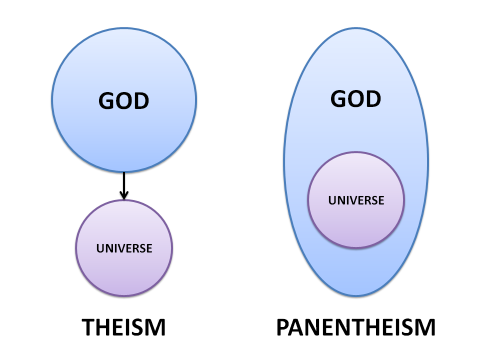



 Sincerely,
 ABYSSUS ABYSSUM INVOCAT / DEEP CALLS TO DEEP
You must be logged in to post a comment.