COVID: Behind the global nursing home disaster, and the case-number scam
Who cares about all the old people dying?
by Jon Rappoport
Scandal. Tragedy. Ongoing crime.
In nursing homes, elderly people are already on the edge of the cliff, suffering from long-term illnesses and years of toxic medical treatments…but now you terrify them with COVID propaganda…then you actually label them “COVID”, WITH NO JUSTIFICATION…then you isolate them completely…they’re all alone…no contact with family and friends…what do you expect will happen to these fragile, heavily drugged people?
As of May 22, Forbes reports that, “…in the 43 states that currently report such figures, an astounding 42% of all COVID-19 deaths have taken place in nursing homes and assisted living facilities.”
Washington Post, May 18: “The World Health Organization said half of Europe’s covid-19 deaths occurred in such facilities.”
Headline of same Post article: “Canada’s nursing home crisis: 81 percent of coronavirus deaths [in the country] are in long-term care facilities.”
The Guardian, May 16: “About 90% of the 3,700 people who have died from coronavirus in Sweden were over 70, and half were living in care homes, according to a study from Sweden’s National Board of Health and Welfare at the end of April.”
“Spain—The country was shocked at the end of March when the defence minister revealed that soldiers drafted in to disinfect residential homes had found some elderly people abandoned and dead in their beds.”
“…the regional governments of Madrid and Catalonia have been publishing their own figures on people who have died in care homes from the virus, or while exhibiting symptoms consistent with it.” [AKA, absurd eyeball diagnosis]
“In Madrid, the total for Covid, or suspected Covid, deaths since 8 March stood at 5,886 on Thursday. In Catalonia, it was 3,375. Between them, care home deaths in the two regions account for more than a third of all the coronavirus deaths in the country.”
And there was a great deal of early warning on the subject, if anyone from public health agencies wanted to pay attention—The Guardian, 13 April: “About half of all Covid-19 deaths appear to be happening in care homes in some European countries…Snapshot data from varying official sources shows that in Italy, Spain, France, Ireland and Belgium between 42% and 57% of deaths from the virus have been happening in homes, according to the report by academics based at the London School of Economics (LSE).”
There are two con jobs going on here, as huge numbers of these elderly patients have died and are dying.
The first is the COVID-19 diagnosis, which is either made on the absurd basis of simply eyeballing the patient and seeing general signs of illness, such as shortness of breath and flu-like symptoms; or by test, which I’ve explained is completely unreliable, because it registers positive on all sorts of germs in the body that are irrelevant.
But once the COVID diagnosis is made, then medical authorities claim the deaths of so many patients in nursing homes are occurring because the COVID virus naturally has more impact on the elderly and infirm.
Nonsense. There is no need to invoke the coronavirus to explain why these people in nursing homes are dying.
People all around the world, old people, who have traditional illnesses like flu and pneumonia, are being repackaged as COVID cases. Especially people in nursing homes, who are terrified by COVID propaganda and are intentionally isolated from friends and family…
And in fact are dying of their long-term multiple medical conditions, plus years of treatment with toxic drugs…
Plus the terror of COVID, plus complete isolation, plus filthy conditions in some facilities, plus inattention and outright brutality on the part of nursing home staffs, plus breathing ventilators and sedation in some cases.
Not a virus.
No need to invoke a virus as an explanation.
No need at all.
Obviously, if you subtracted all these deaths from official COVID statistics, you would have a completely different picture of the so-called pandemic.
YOU WOULD HAVE A WORLDWIDE NURSING HOME DISASTER.
And the first order of business would be to go into these places and clean them up and straighten them out and in many cases make arrests of the personnel.
As a number of nursing home patient-advocacy groups have pointed out, the main monitor on what goes on in these homes, and the main source of protection for patients is: visiting families and friends, who keep a careful eye on things.
But because the fake COVID diagnosis immediately leads to locking down the facilities, friends and families can’t come in. They’re shut out.
For the planners of this false pandemic, it all works out. COVID death numbers rise, case numbers rise. Phony numbers to the core.
But real and tragic deaths.
People pushed into death by the concocted IDEA of a virus, by a STORY about a virus.
Jon RappoportThe author of three explosive collections, THE MATRIX REVEALED, EXIT FROM THE MATRIX, and POWER OUTSIDE THE MATRIX, Jon was a candidate for a US Congressional seat in the 29th District of California. He maintains a consulting practice for private clients, the purpose of which is the expansion of personal creative power. Nominated for a Pulitzer Prize, he has worked as an investigative reporter for 30 years, writing articles on politics, medicine, and health for CBS Healthwatch, LA Weekly, Spin Magazine, Stern, and other newspapers and magazines in the US and Europe. Jon has delivered lectures and seminars on global politics, health, logic, and creative power to audiences around the world.
Posted inUncategorized|Comments Off on WHAT GOVERNOR Andrew Cuomo DID IN New York WAS MURDER 5000 ELDERLY PATIENTS IN New York NURSING HOMES BY ORDERING PERSON INFECTED WITH THE CORONA VIRUS TO BE ADMITTED TO THE New York NURSING HOMES – SOMEONE SHOULD FILE A CLASS ACTION LAWSUIT AGAINST HIM
“Satan has entered the halls of the Church, and instead of casting him out, many of those who sit in princely chairs and on the chairs of the Apostles have welcomed him with open arms. Of this you were warned, but you heeded not my messages. Satan entered Rome, and he found the doors wide open, and he entered my Son’s Church without opposition. Of these things you were warned, but you prepared not to prevent his entry, and now he has entered with his armies.
My warnings are evident as knots on the cord of mercy that hold the cord together. But again and again, these warnings have been disregarded, and now my Son’s arm moves to pull back the cord of mercy and to bring forth the rope of justice. For He is a merciful God, but He is also a just God, and the time of justice draws nigh. I call to the people from my mother’s heart. You understand not the precious gift of His divine love, and you have wandered far from Him. Come back to Him and prostrate yourselves at His feet. For the sins of His people cry out to Him, and He is wounded again and again.
He has looked upon His holy Church and has found filth in the halls, and demons occupy seats reserved for shepherds. He has called for an accounting, and the silence of the shepherds will not be pardoned. And the people cry out for they are lost and without a shepherd, but the Lord has found wolves guarding His sheep. As my son entered the Temple and drove out the thieves, He will drive the wolves from the halls of His Church. And great will be the lamentations of those who have inhabited the halls in the disguise of shepherds. Heed my message. The shepherds will be called to an accounting, and those that are silent will not be found blameless before God. They must speak truth, and all deception must be uncovered.
And I cry to His people to offer prayers and to make reparation for their cold hearts and their departure from holiness. For they have watched as His Church has proclaimed not His presence, and they have swallowed the platitudes and objected not as holiness was swept from the halls. Today I call to His people to pray the Rosary, to offer sacrifice and reparation and to renew devotion to the Sacred Heart of my Son and my Immaculate Heart. I call to the Bishops and Cardinals to break their silence and to speak the truth. And I call to the priests to proclaim the reality of His presence and to bring holiness back into the Church by conforming themselves to my Son.
The time for justice draws nigh. The Lord will cleanse His Church, and great will be the sorrow of those caught in the purging. Today is the time of repentance. The hand of justice begins to move. Previous warnings and instructions that were not heeded now convict mankind, and great will be the catastrophes that befall them.
Disregard not this message. My Mother’s heart cries out to the world. Heed my words. The hand of justice will soon be seen in the sky. Repent.”
5 reasons why Catholics should only receive Holy Communion on the tongue
Catholics who receive Communion on the tongue don’t do so out of some false piety or holier-than-thou attitude. Receiving Christ on the tongue while kneeling reinforces reverence for Our Eucharistic Lord.Wed Jun 24, 2020 – 7:18 pm EST
June 24, 2020 (LifeSiteNews) – With orders to refuse the faithful Holy Communion on the tongue coming from governmental health authorities and even some bishops, I wanted to give you the reasons why I could never receive Holy Communion in the hand. And, if the matter was forced, I would make the sacrifice of just making a spiritual Holy Communion. Below are five reasons why Catholics should not receive Holy Communion on the hand.https://www.youtube.com/embed/72XIbsiQ72Q
#1 The first point I’d like to make is about the reverence due to Almighty God.
I want to dismiss the false notion that people receive Communion on the tongue out of some false piety or holier-than-thou attitude. While I can’t discount that there is some of that going on, from those I’ve witnessed and read about, receiving on the tongue comes from a deep reverential love of the King of Kings whom we receive in this Great Sacrament. And I believe receiving Our Lord on the tongue while kneeling reinforces that reverence for Our Eucharistic Lord.
Some of the most powerful arguments for the need for this type of reverence are in the Bible.
Remember when Moses first met the Lord God in the burning bush, as we read about in Exodus 3? Moses was told not to come too near to the burning bush and to remove his sandals because he was on holy ground. In Psalm 95 we read, “Come let us adore and fall down: and weep before the Lord that made us.” We see it in the New Testament too, when Peter, James, and John on Mt. Tabor at the Transfiguration, saw the glorified body of Jesus, which we receive in Holy Communion – and they prostrated themselves with their foreheads to the ground.
But the Biblical account that speaks to this subject most directly for me is what happened with the Ark of the Covenant. You can read the account in both 2 Samuel 6:1-7 and 1 Chronicles 13:9-12. The Ark of the Covenant was designed by God and built to the Lord’s specifications. It contained manna, the staff of Moses, and the tablets of the 10 commandments. It was so sacred that it was never allowed to be touched except by certain Levites – the priests of the time. That reservation of touching the Ark to priests only was potently reinforced when a layman named Uzzah who was transporting the Ark at the request of King David was struck dead by God for touching it.SUBSCRIBEto LifeSite’s daily headlinesSUBSCRIBEU.S. Canada World Catholic
Now, get this, Uzzah was trying to do the right thing. He was doing what he thought was right to save the Ark. He and his brother were transporting the Ark in a cart pulled by oxen. And, along the journey, it was tilted and so Uzzah used his hand to steady the Ark and was struck dead by the Lord. Scripture explains that the Lord struck him down because he was not to touch the Ark.
It is very much the same in our time when many are trying to do what they think is the right thing for the coronavirus by receiving Communion on the hand.
And yet with the Ark, it was not the right thing to do even though it is what seemed expedient – it was done for good intent to save the Ark from harm, just as many are receiving on the hand today with good intent to save their brothers and sisters in Christ from possible Coronavirus infection or to save the Church so she has the freedom to distribute Holy Communion at all.
Nevertheless, touching the Ark was the wrong thing to do. The Lord’s decision here perplexed David, who thereafter was afraid to bring the Ark of the Lord to himself.
And yet what was the Ark of the Covenant compared to Our Lord Himself in the Eucharist? The Ark was revered in the temple. It was carried in ceremony and was considered holy. And yet it was only the footstool of God. It was His presence, veiled, and a prefiguring of His Real Presence in the Person of Our Lord Jesus Christ, whom we receive in Holy Communion.
My wife, a convert to Catholicism, asked me the other day how communion in the hand makes sense given the practices in the Church of consecrating the altar and sacred vessels used in the Mass. We see priests, bishops, even the Pope, covering his hands with the vestment called a Humeral veil during Benediction of the Blessed Sacrament. This is all about the sacredness of Christ in the Eucharist. If we allow everyone to touch the Sacred Host with their hands the practice of the Humeral veil becomes truly strange.
I’ll conclude this point on reverence towards Our Eucharistic Lord quoting from Dietrich von Hildebrand, a German Catholic philosopher and religious writer known and loved by the last number of Popes. He was reportedly called “the twentieth-century Doctor of the Church” by Pope Pius XII. Pope John Paul II greatly admired the philosophical work of von Hildebrand as well, remarking once to his widow, Alice von Hildebrand, “Your husband is one of the great ethicists of the twentieth century.” Benedict XVI also has a particular admiration and regard for von Hildebrand. He knew him when he was a young priest in Munich. The degree of Pope Benedict’s esteem is expressed in one of his statements about von Hildebrand: “When the intellectual history of the Catholic Church in the twentieth century is written, the name of Dietrich von Hildebrand will be most prominent among the figures of our time.”
Here was what Dietrich von Hildebrand wrote about the subject of Communion in the hand in his book The Devastated Vineyard:
“Unfortunately, in many places Communion is distributed in the hand. To what extent is this supposed to be a renewal and a deepening of the reception of Holy Communion? Is the trembling reverence with which we receive this incomprehensible gift perhaps increased by re-receiving it in our unconsecrated hands, rather than from the consecrated hand of the priest? It is not difficult to see that the danger of parts of the consecrated Host falling to the ground is incomparably increased, and the danger of desecrating it or indeed of horrible blasphemy is very great. And what in the world is to be gained by all this? The claim that contact with the hand makes the host more real is certainly pure nonsense. For the theme here is not the reality of the matter of the Host, but rather the consciousness, which is only attainable by faith, that the Host in reality has become the Body of Christ. The reverent reception of the Body of Christ on our tongues, from the consecrated hand of the priest, is much more conducive to the strengthening of this consciousness than reception with our own unconsecrated hands.” (The Devastated Vineyard, pp. 67/8.)
#2 The Authority of the Church
It’s important to say that I’m saying this knowing full well we are in the midst of a Coronavirus pandemic. In fact, the very first point I’d like to bring to your consideration is that the Church has already considered the matter of the allowance of Holy Communion on the tongue while facing the spread of this type of virus even in modern times. In 2009, in the midst of the H1N1 influenza pandemic, a lay Catholic in England in a diocese where Holy Communion on the tongue was restricted due to the pandemic wrote the Vatican about the matter.
The response from the Congregation for Divine Worship and Discipline of the Sacraments, dated July 24, 2009, was posted online by Rorate Caeli. The Congregation, which is tasked with authoritatively responding to such questions, wrote back quoting Church law on the subject, saying, “each of the faithful always has the right to receive Holy Communion on the tongue” (n. 92, nor is it licit to deny Holy Communion to any of Christ’s faithful who are not impeded by law (Church law) from receiving the Holy Eucharist.)
The Vatican response added, “The Congregation thanks you for bringing this important matter to its attention. Be assured that the appropriate contacts will be made.”
Canonist Cathy Caridi over at the Canon Law Made Easy blog pointed out the significance of that line about appropriate contacts will be made. Caridi says it, “makes clear that after sending this letter, the CDW intended to contact the clergy who were illegally barring Catholics from receiving Communion on the tongue, to inform them in a formal, official way that by doing so that they were violating the law.”
Caridi concludes: “It would be only logical to assume that if the faithful contact the CDW now, with information about current illegal practices in their own parishes/dioceses where they are forbidden to receive Communion on the tongue; the CDW will respond in precisely the same way.”
“The CDW will have to respond in the same way, not because Coronavirus isn’t dangerous, but because the right of the faithful around the world to receive the Eucharist in the way that is the Church’s established norm—on the tongue—cannot be curtailed by anyone other than the Supreme Authority of the Church. This is an issue not of germs, but of the Church’s hierarchical structure. No bishop on earth (still less a parish priest acting on his own!) has the authority to countermand a law or specific directive of the Vatican that is intended to apply to the universal Church. Period.”
#3 The witness of Saints and Popes and Angels
St Thomas Aquinas, regarded universally as the greatest Doctor of the Church, wrote in the 1200s in his Summa Theologica: “out of reverence towards this Sacrament, nothing touches it but what is consecrated, hence the corporal and the chalice are consecrated, and likewise the priest’s hands, for touching this sacrament. Hence it is not lawful for anyone else to touch it, except from necessity, for instance, if it were to fall upon the ground, or else in some other case of urgency.” (16 ST, III, Q. 82, Art. 13)
In 2008, Pope Benedict decided to stop giving Holy Communion on the hand to the faithful and would only give Holy Communion to the faithful on the tongue and kneeling. A Vatican webpage commemorating this decision was published in 2009 (updated to include a photo of Pope Francis) and can still be found on the Vatican website.
The Vatican webpage says: “From the time of the Fathers of the Church, a tendency was born and consolidated whereby distribution of Holy Communion in the hand became more and more restricted in favor of distributing Holy Communion on the tongue. The motivation for this practice is two-fold: a) first, to avoid, as much as possible, the dropping of Eucharistic particles; b) second, to increase among the faithful devotion to the Real Presence of Christ in the Sacrament of the Eucharist.”
A celebrated saying of Saint Augustine, cited by Pope Benedict XVI in n. 66 of his Encyclical Sacramentum Caritatis, (“Sacrament of Love”), teaches: “No one eats that flesh without first adoring it; we should sin were we not to adore it” (Enarrationes in Psalmos 98, 9). Kneeling indicates and promotes the adoration necessary before receiving the Eucharistic Christ.
From this perspective, the then-Cardinal Ratzinger assured that: “Communion only reaches its true depth when it is supported and surrounded by adoration” [The Spirit of the Liturgy (Ignatius Press, 2000), p. 90]. For this reason, Cardinal Ratzinger maintained that “the practice of kneeling for Holy Communion has in its favor a centuries-old tradition, and it is a particularly expressive sign of adoration, completely appropriate in light of the true, real and substantial presence of Our Lord Jesus Christ under the consecrated species” [cited in the Letter “This Congregation” of the Congregation for Divine Worship and the Discipline of the Sacraments, 1 July 1, 2002].
John Paul II, in his last Encyclical, Ecclesia de Eucharistia (“The Church comes from the Eucharist”), wrote in n. 61:
“By giving the Eucharist the prominence it deserves, and by being careful not to diminish any of its dimensions or demands, we show that we are truly conscious of the greatness of this gift. We are urged to do so by an uninterrupted tradition, which from the first centuries on has found the Christian community ever vigilant in guarding this ‘treasure.’ Inspired by love, the Church is anxious to hand on to future generations of Christians, without loss, her faith and teaching with regard to the mystery of the Eucharist. There can be no danger of excess in our care for this mystery, for ‘in this sacrament is recapitulated the whole mystery of our salvation.’”
The webpage concludes: “In continuity with the teaching of his Predecessor, starting with the Solemnity of Corpus Christi in the year 2008, the Holy Father, Benedict XVI, began to distribute to the faithful the Body of the Lord, by placing it directly on the tongue of the faithful as they remain kneeling.”
The current head of the Vatican department that deals with the issue of Communion is Cardinal Robert Sarah. Without a doubt, he is one of the saintliest Cardinals alive today.
Pope Emeritus Benedict XVI strongly endorsed Cardinal Sarah saying publicly in an afterward to a reprint of Cardinal Sarah’s book The Power of Silence that, “With Cardinal Sarah, a master of silence and of interior prayer, the liturgy is in good hands.”
Benedict adds: “Cardinal Sarah is a spiritual teacher, who speaks out of the depths of silence with the Lord, out of his interior union with Him, and thus really has something to say to each one of us.”
It is this Cardinal, this saintly African Cardinal who is in charge of the Church’s dicastery dealing with the sacraments, that has pleaded with priests to only give Holy Communion to the faithful kneeling and on the tongue.
In the preface to a 2018 book critically analyzing Communion on the hand, Cardinal Robert Sarah, Prefect of the Congregation for Divine Worship, wrote:
Why do we insist on receiving Communion standing and on the hand? Why this attitude of lack of submission to the signs of God? May no priest dare to impose his authority in this matter by refusing or mistreating those who wish to receive Communion kneeling and on the tongue. Let us come as children and humbly receive the Body of Christ on our knees and on our tongue. The saints give us the example. They are the models to be imitated that God offers us!
Cardinal Sarah also warned strenuously “The most insidious diabolical attack consists in trying to extinguish faith in the Eucharist, by sowing errors and fostering an unsuitable way of receiving it. Truly the war between Michael and his Angels on one side, and Lucifer on the other, continues in the hearts of the faithful.”
“Satan’s target is the Sacrifice of the Mass and the Real Presence of Jesus in the consecrated Host,” he said.
Let us now look at how faith in the real presence can influence the way we receive Communion, and vice versa. Receiving Communion on the hand undoubtedly involves a great scattering of fragments. On the contrary, attention to the smallest crumbs, care in purifying the sacred vessels, not touching the Host with sweaty hands, all become professions of faith in the real presence of Jesus, even in the smallest parts of the consecrated species: if Jesus is the substance of the Eucharistic Bread, and if the dimensions of the fragments are accidents only of the bread, it is of little importance how big or small a piece of the Host is! The substance is the same! It is Him! On the contrary, inattention to the fragments makes us lose sight of the dogma. Little by little the thought may gradually prevail: “If even the parish priest does not pay attention to the fragments, if he administers Communion in such a way that the fragments can be scattered, then it means that Jesus is not in them, or that He is ‘up to a certain point’.”
The second track on which the attack against the Eucharist runs is the attempt to remove the sense of the sacred from the hearts of the faithful. (…) While the term ‘transubstantiation’ points us to the reality of presence, the sense of the sacred enables us to glimpse its absolute uniqueness and holiness. What a misfortune it would be to lose the sense of the sacred precisely in what is most sacred! And how is it possible? By receiving special food in the same way as ordinary food. (…)
The liturgy is made up of many small rituals and gestures — each of them is capable of expressing these attitudes filled with love, filial respect and adoration toward God. That is precisely why it is appropriate to promote the beauty, fittingness and pastoral value of a practice which developed during the long life and tradition of the Church, that is, the act of receiving Holy Communion on the tongue and kneeling. The greatness and nobility of man, as well as the highest expression of his love for his Creator, consists in kneeling before God. Jesus himself prayed on his knees in the presence of the Father. (…)
May this book encourage those priests and faithful who, moved also by the example of Benedict XVI — who in the last years of his pontificate wanted to distribute the Eucharist in the mouth and kneeling — wish to administer or receive the Eucharist in this latter manner, which is far more suited to the Sacrament itself. I hope there can be a rediscovery and promotion of the beauty and pastoral value of this method. In my opinion and judgment, this is an important question on which the Church today must reflect. This is a further act of adoration and love that each of us can offer to Jesus Christ. I am very pleased to see so many young people who choose to receive our Lord so reverently on their knees and on their tongues.
One of the other aspects of his preface was Cardinal Sarah’s recollection of the Fatima apparitions and the Angel that appeared to the three Fatima children prior to their seeing Our Lady Herself.
At one of the appearances of the Angel of Peace appeared to the children, the Angel brought Holy Communion to them. The Angel prostrated himself before the Eucharistic Lord, teaching the children to do the same.
#4 Profanation or Desecration of the Holy Eucharist
As we have seen in the comments of Popes and Cardinals of the Church, one of the main concerns with Communion in the hand is the loss of fragments of the Eucharistic Christ.
This has been one of the main themes of the heroic Bishop Athanasius Schneider who penned a book on the subject of the reception of Holy Communion in 2012 called Dominus Est – It is the Lord!
He wrote:
The Fathers of the Church demonstrate a lively concern that no one lose the smallest particle of Eucharistic Bread, as exhorted St. Cyril of Jerusalem in this very impressive manner:
Be careful that you do not lose anything of the Body of the Lord. If you let fall anything, you must think of it as though you cut off one of the members of your own body. Tell me, I beg you, if someone gave you kernels of gold, would you not guard them with the greatest care and diligence, intent on not losing anything? Should you not exercise even greater care and vigilance, so that not even a crumb of the Lord’s Body could fall to the ground, for It is far more precious than gold or jewels? (Mystagogical Catecheses, 5, 2)
Already Tertullian (who died in 240) gave witness to the Church’s anxiety and sorrow, should even a fragment be lost: “We suffer anxiety lest anything from the Chalice or the Bread fall to the ground” (De Corona, 3). St. Ephrem, in the fourth century, taught thus: “Jesus filled up the Bread with Himself and the Spirit and called It His living Body. That which I have now given you, says Jesus, do not consider bread, do not trample underfoot even the fragments. The smallest fragment of this Bread can sanctify millions of men and is enough to give life to all who eat It” (Sermones in Hebdomada Sancta, 4, 4).
By 1980 the practice of Communion on the hand had become widespread, as did the desecrations of the Holy Eucharist that would surely accompany it.
Pope John Paul II published the letter Dominicae Cenae on February 24, 1980. In it he wrote:
In some countries the practice of receiving Communion in the hand has been introduced. This practice has been requested by individual episcopal conferences and has received approval from the Apostolic See. However, cases of a deplorable lack of respect towards the eucharistic species have been reported, cases which are imputable not only to the individuals guilty of such behavior but also to the pastors of the church who have not been vigilant enough regarding the attitude of the faithful towards the Eucharist. It also happens, on occasion, that the free choice of those who prefer to continue the practice of receiving the Eucharist on the tongue is not taken into account in those places where the distribution of Communion in the hand has been authorized.
In a 2014 interview with the magazine of the Latin Mass Society of England and Wales Bishop Schneider said:
“To my knowledge and experience, the deepest wound in the actual crisis of the Church is the Eucharistic wound; the abuses of the Blessed Sacrament…
“There is…the question of the objectively irreverent reception of Holy Communion. The so-called new, modern manner of receiving Holy Communion directly into the hand is very serious because it exposes Christ to an enormous banality.
“There is the grievous fact of the loss of the Eucharistic fragments. No one can deny this. And the fragments of the consecrated host are crushed by feet. This is horrible! Our God, in our churches, is trampled by feet! No one can deny it.
“And this is happening on a large scale. This has to be, for a person with faith and love for God, a very serious phenomenon.”
“We cannot continue as if Jesus as God does not exist, as though only the bread exists. This modern practice of Communion in the hand has nothing to do with the practice in the ancient Church. The modern practice of receiving Communion in hand contributes gradually to the loss of the Catholic faith in the real presence and in the transubstantiation.
“A priest and a bishop cannot say this practice is ok. Here is at stake the most holy, the most divine and concrete on Earth.”
#5 History
The earliest accounts of Holy Communion are of course in the Scriptures where Our Lord gave Himself as Communion to the Apostles at the Last Supper. Some suggest that even there He might have given them Holy Communion on the tongue especially since we read in the last-supper narrative in the Gospel of John that Our Lord dipped a morsel of bread before giving it to the Apostle Judas.
However, even if Jesus gave the Apostles Holy Communion in the hand, they were all bishops, not laymen.
However, it does seem as though in the early Church there was at least in some places the practice of Communion in the hand. St. Cyril of Jerusalem who lived in the 4thcentury wrote:
Approaching therefore, do not come forward with the palms of the hands outstretched nor with the fingers apart, but making the left [hand] a throne for the right since this hand is about to receive the King. Making the palm hollow, receive the Body of Christ, adding “Amen”. Then, carefully sanctifying the eyes by touching them with the holy Body, partake of it, ensuring that you do not mislay any of it.
St. Cyril of course added the admonitions about not allowing the particles to drop as mentioned in the previous point.
Quoting again from Bishop Schneider’s book Dominus Est about the history of communion on the tongue:
Aware of the greatness of the moment of Holy Communion, the Church in her two-millennium-long tradition has searched to find a ritual expression that can bear witness in the most perfect manner to her faith, love and respect. This is verified when, in the wake of an organic development, stemming from at least the sixth century, the Church began to adopt the method of distributing the Sacred Species of the Eucharist directly into the mouth. This is attested to in several places: in the biography of Pope Gregory the Great and an indication by the same Pope relative to Pope Agapitus (Dialogues, III); the Synod of Cordoba in 839 condemned the sect of so-called “Casiani” because of their refusal to receive Holy Communion directly into their mouths; then the Synod of Rouen in 878 confirmed the norm in force regarding the administration of the Lord’s Body on the tongue, threatening sacred ministers with suspension from their office if they distributed Holy Communion to the laity on the hand.
In the Early Church, before receiving the consecrated Bread, people had to wash the palms of their hands. Moreover, the faithful bowed profoundly in receiving the Body of the Lord with the mouth directly from the right hand and not from the left. The palm of the hand served as a kind of paten or corporal, especially for women. Thus, one reads in a sermon of St. Caesarius of Arles (470-542): “All the men who desire to communicate, must wash their hands. And all the women must carry a linen cloth, on which they receive the Body of Christ” (Sermo, 227, 5). Customarily, the palm of the hand was purified or washed after the reception of the Eucharistic Bread as is up to now the norm in the Communion of clerics in the Byzantine Rite. In the ancient canons of the Chaldean Church, even the celebrating priest was forbidden to place the Eucharistic Bread into his own mouth with his fingers. Instead, he had to take the Body of the Lord in the palm of his hand; the reason for this was to signify that he was dealing here not with ordinary food but with heavenly food: “To the priest,” we read in the Canon of John Bar-Abgari, “it is directed that he receive the particle of consecrated Bread directly from the palm of his hand. He may not place It with the hand into the mouth, but must take It with his mouth, for this concerns heavenly food.”
In the 1500s, Communion in the hand was first introduced by Protestant reformer Martin Bucer specifically aiming to end belief in transubstantiation. Bucer convinced Thomas Cranmer, the heretic Archbishop of Canterbury, not to give communion on the tongue. Bucer taught: “I have no doubt that this usage of not putting these sacraments in the hands of the faithful has been introduced out of a double superstition; firstly, the false honor they wished to show to this sacrament, and secondly the wicked arrogance of priests claiming greater holiness than that of the people of Christ, by virtue of the oil of consecration.”
But the practice had no place at all in the Catholic Church since it had been condemned universally prior to the year 1000. The Q&A style 1908 Catechism of St. Pius X gives only one option for reception of Holy Communion. It reads: 47 Q. How should we act while receiving Holy Communion? A. In the act of receiving Holy Communion we should be kneeling, hold our head slightly raised, our eyes modest and fixed on the sacred Host, our mouth sufficiently open, and the tongue slightly out over the lips.
From an in-depth and heavily referenced study of the question by Michael Davies we learn:
Communion in the hand was re-introduced into the Catholic Church as an act of rebellion soon after Vatican II. It began in Holland as an arbitrary act of defiance of legitimate authority the practice spread to Germany, Belgium, and France.
The consequences of this rebellion became so serious that the Pope consulted the Bishops of the world, and, after obtaining their opinions, promulgated the Instruction Memoriale Domini, in 1969. This Instruction is included and will be referred to from time to time. The principal points contained in it are:
1. The Bishops of the world were overwhelmingly against the innovation. 2. The traditional manner of distributing Holy Communion must be retained. 3. It is a sign of reverence which does not detract from the dignity of the communicant. 4. The innovation could lead to irreverence, profanation, and the adulteration of correct doctrine.Therefore: The Apostolic See strongly urges bishops, priests, people to observe this law, valid and again confirmed, according to the judgment of the majority of the Catholic episcopate, in the form which the present rite of the sacred liturgy employs, and out of concern for the common good of the Church.
In Memoriale Domini, Pope Paul admonished Catholics, bishops especially, that: “In view of the state of the Church as a whole today, this manner of distributing Holy Communion [on the tongue] must be observed, not only because it rests on a tradition of many centuries but especially because it is a sign of reverence of the faithful towards the Eucharist. The practice in no way detracts from the personal dignity of those who approach this great Sacrament, and it is part of the preparation needed for the most fruitful reception of the Lord’s Body.”
Davies says, however, a calamitous error of judgment then followed. It was agreed that wherever the practice “has already developed in any place” a two-thirds majority of the episcopal conference could petition the Holy See for permission to legalize the abuse. Quite clearly, the phrase “has already developed” meant by that date, May 28, 1969. Countries where the practice had not developed by that date were obviously excluded from the concession—and all the English-speaking countries come into this category.
When the National Conference of Catholic Bishops debated the question in 1977, Bishop Blanchette pointed out that the procedure approved by the Vatican was that permission could be requested from the Holy See if the contrary usage prevailed. He pointed out that the Bishops could hardly take the second step without taking the first.
Bishop Blanchette is reported in the National Catholic Register of June 12, 1977, recollecting, “I said, we are now going to discuss and probably vote on whether we want to petition the Holy See, and we have not established that a contrary usage prevails. I said a simple way to do that would be to ask the Ordinaries to indicate whether in their dioceses the contrary usage prevails. The Ordinary should know, he is the shepherd of the diocese. He has been asked to obey and his priests have been asked to obey, so if anybody knows whether the contrary usage prevails, he should. And so I asked that the agenda be amended so that the first step—finding out whether the contrary usage prevails—could be verified, and if it were verified then we could get on with the rest of the agenda. But if the first step is not verified, how can we logically go on to the second step? That was my motion.26 25”
Bishop Blanchette’s motion was supported in writing by five other bishops and sustained by the president of the conference. According to the rules, there should have been a written vote, but supporters of the innovation objected and voted, on a show of hands, to rule the president out of order.
It therefore seems quite reasonable to ask: just how legal was this vote? Then, of course, other extraordinary measures were taken to get the innovation adopted. Retired bishops were prevented from voting, and, when the necessary majority had still not been achieved, bishops who had not been present were polled until the necessary total was arrived at.
So as you can see, Communion in the hand in modern times came by way of abuse, deceit, and betrayal by wolves in the hierarchy.
It is for these reasons that I believe Catholics should not receive Holy Communion in the hand. Should you be in a situation where you are refused Holy Communion unless you take it in the hand, I would make a spiritual Communion only and then contact the proper authority to remedy the situation. Take that letter that was written by the Vatican on the question during the swine flu pandemic in 2009 to your priest or bishop. Ask them to give you Holy Communion at least after Mass if they feel they can’t do it during Mass since this is a compromise being practiced in many dioceses today. And if they still don’t permit you your right to receive Our Lord on the tongue apply to the Vatican’s Congregation for Divine Worship with the proof of the denial of Holy Communion on the tongue and pray God the remedy comes soon.
In the meantime, offer up the sacrifice of being deprived of the Holy Eucharist and still attend Mass offering your own pain along with Christ’s own Sacrifice.
Welcome, once again, to the League of Saint Peter Damian’s monthly newsletter.
This month’s Study Guide #14 features the short but powerful Letter 61, that was written approximately eight years after St. Peter Damian wrote his most famous treatise The Book of Gomorrah.
St. Peter Damian advises Pope Nicholas II on the necessity of reining in and deposing morally corrupt bishops, especially those who are known to keep a wife or concubines or solicit sex from prostitutes. Peter Damian also directs his attention to the offending bishops themselves by recalling their dignity and the sacred functions that they perform, which are contradictory to the debauched lives they are leading.
Substitute sodomy for the offending bishops’ sins of concubinage and illicit sexual affairs noted in Letter 61, and the reader will quickly understand what the Holy See needs to do to counterattack the plague of sodomy amongst the ranks of the Catholic clergy and religious. Peter Damian argues that the moral housecleaning must begin at the top with the offending bishops, and that “prudent silence,” “improper compassion,” and a wink and discreet smile by Catholic leaders, including the pope, will not cut it. No argument there!
Randy Engel, League Director
STUDY GUIDE #14 June 2020
“It is truly great to die for Christ, but not less noble to live for Him”
Saint Peter Damian’s Letter 61
Church Leaders Told to Stop Hushing Up Clerical Sexual Crimes And
Begin the Cleanup By Deposing Offending Bishops- The Year is 1059
Introduction
Saint Peter Damian’s Letter 61 was written sometime between January and July 1059. It begins with the usual honorary salutation:
To the Supreme pontiff, the Lord Nicholas, the monk Peter the sinner sends the obedience of dutiful subservience.
(2) Recently, as I conversed with several bishops by authority of your majesty, I sought to bar the door of their loins and tried, as it were, to apply safeguards of chastity to their priestly genitals. But since this is a sect for which no one has a good thing to say, I confidently took an altogether different approach, with the hope of carrying out the command of your decree.
(3) Only with difficulty was I able to extort from their trembling lips the bare promise to observe this provision: in the first place, because they despaired of ever being able to reach the heights of chastity; and then because they had no fear of being punished by a synodal decree for practicing the vice of impurity. Indeed, in our day the genuine custom of the Roman Church seems to be observed in this way, that regarding other practices of ecclesiastical discipline, a proper investigation is held, but a prudent silence is maintained concerning clerical sexuality for fear of insults from laymen. But this is something that badly needs correction, so that precisely what all the people are complaining about should not be hushed up in council by the leaders of the Church (emphasis added).
For, indeed, if this evil were secret, silence could perhaps somehow be condoned. But what a criminal situation! Shamelessly, this epidemic has been so audaciously revealed that everyone knows the houses of prostitution, the names of the mistresses, the fathers-in-law and mothers-in-law, brothers, and other close relatives; and lest anything be lacking in these assertions, they give evidence of messengers running to and fro, of the sending of presents, of the jokes they laugh at, and of their private conversation. And lastly, to remove all doubt, you have the obvious pregnancies and the squalling babies. Therefore, because of the ignominy involved, I do not see how something that is everywhere publicly discussed can be suppressed at the synod, so that not only the offenders be properly branded with infamy, but also that those whose duty it is to punish them be found guilty (emphasis added).
(4) This kind of shame was not evident in the face of the priest Phinehas who, in the presence of all the people, took up a spear against the Israelite and the Midianite woman with whom he was having intercourse, and transfixed them both through the genitals.
Contrary to God’s command, however, we are not impartial. For we indeed punish acts of impurity performed by priests in the lower ranks, but with bishops, we pay our reverence with silent toleration, which is totally absurd (emphasis added).
Saint Peter Damian notes that when it comes time for heads to roll, striking the offending chiefs makes the point quicker and more lasting than punishing offending commoners:
But notice that Phinehas, roused by the zeal of the Holy Spirit, after almost all the Israelites had had intercourse with Moabite women and had joined in the worship of Baal of Peor, as the defender of God’s Law did not attack those who were unknown or of lower estate, but chose to kill outstanding and famous people to cause terror among the rest, as Scripture asserts when it says, “The name of the Israelite struck down with the Midianite woman was Zimri, son of Salu, a chief of the Simeonite family.” … And if one should also inquire about the noble status of the woman, one will find this in the following statement: “And the Midianite woman, who was also killed, was named Cozbi, daughter of Zur, a noble prince of Midian.”
Now after relating the history of this fornication and how it was properly punished, why was it necessary for Moses to construct genealogies for both sinners, stating that one was a chief, and the other the daughter of a noble prince, except to teach us that the carnal sins of highly placed persons should be prosecuted with greater vigor? This is why the Lord himself, while the whole Israelite people was no less guilty of this crime, was silent regarding commoners, but vented his fury in condign punishment only on their leaders. “And the Lord was angry and said to Moses. ‘Take all the leaders of the people and hang them on gallows in the full light of day, that the fury of my anger may turn away from Israel.’” And then Moses said to none other than the judges of Israel, “Put to death, each one of you, those of his tribe who have joined in the worship of the Baal of Peor.”
(5) … What are we to understand in all this, if not that the crime of adultery committed by eminent people must be more harshly punished? And he who is aroused to punish such men doubtless wins peace from the heavenly judge, and grace, not only for himself, but also for the people. Hence the voice of God spoke: “Phinehas has turned my wrath away from the Israelites, for he displayed among them the same jealous anger that moved me, and therefore in my anger I did not exterminate them.”
A short while later in the text, Peter Damian drives his message home to Pope Nicholas II with the question: “Is there anything worse that one can do than to exonerate lustful bishops when we are in a position to reform them?”
(10) … Therefore, if every crime is washed away by sacrifices and offerings, and only mistaken compassion for bishops is undeserving of forgiveness, let him who neglects to pass judgment on their evil deeds be aware that he is making himself liable to harsh punishment at the hands of a severe judge. But since I do not dare revile the highest bishop in the Universal Church, I will briefly address myself to the one who has sinned.
Most of the remainder of Peter Damian’s Letter 61 is directed at the offending hierarchy:
(11) O Bishop, you whose name means to make sacred, that is, that you should offer sacrifice to God, why are you not terrified to offer yourself in sacrifice to the evil spirit? By committing fornication you cut yourself off from the members of Christ, and make yourself physically one with a harlot, as the Apostle attests when he says, “Anyone who links himself with a harlot becomes physically one with her.” And again, “Shall I then take from Christ his bodily parts and make them over to a harlot? Never!” What business have you to handle the body of Christ, when by wallowing in the allurements of the flesh you have become a member of antichrist (emphasis added) ?“Can light consort with darkness, or can Christ associate with Belial?”
Are you unaware that the Son of God was so dedicated to purity of the flesh that he was not born of conjugal chastity, but rather from the womb of a virgin? And if that were not enough, that not only a virgin should be his mother, it is the belief of the Church that his foster father also was a virgin. Therefore, if our redeemer so loved the integrity of flowering chastity that not only was he born of the womb of a virgin, but that he was cared for by a guardian who was also a virgin, and that, when he was still a baby crying in his crib, by whom, I ask, does he now wish his body to be handled as he reigns supremely in heaven? If he wished to be fondled by hands that were unsullied as he lay in the crib, with what purity does he now wish to surround his body as he reigns on high in the glory of the Father’s majesty?
(12) … Since the Lord says, “Do not give dogs what is holy,” how will you be judged since you give over your body, sanctified when you were consecrated, not to dogs but to houses of ill repute? And since all ecclesiastical orders are accumulated in one awesome structure in you alone, you surely defile all of them as you pollute yourself by associating with prostitutes. And thus you contaminate by your actions the doorkeeper, the lector, the exorcist, and in turn all the sacred orders, for all of which you must give an account before the severe judgment seat of God. As you lay your hand on someone, the Holy Spirit descends upon him; and you use your hand to touch the private parts of harlots? God accommodates himself to your word, and do you not fear to obey the devil? Moreover, you who appear to be outstanding because of your ecclesiastical authority, are you not ashamed to visit the brothels of panderers? And you, who are appointed to be the preacher of chastity, have you no shame at being the slave of impurity?
(13) The day will come, and that certainty, or rather the night, when this impurity of yours will be turned into pitch on which the everlasting fire will feed, never to be extinguished in your very being; and with never-ending flames this fire will devour you, flesh and bones. Since you burn with this passionate desire, how can you be so bold, how can you dare approach the sacred altar?
What is more, O unhappy bishop, have you no fear that as you wallow in the mire of impurity, you have become guilty of the heresy of the Nicolaitans? It was Nicolas, one of those whom the Apostle Peter had ordained deacons, who boldly taught that clerics of every rank should be married. And so, what he taught in words, you, as you take you sea among the scornful, much more wickedly invite others to do by your example. The voice of God spoke of this crime through the angel of the Church of Ephesus: “You hate the practices of the Nicolaitans, as I do.” And since the Apostle says, ”No one given to fornication has any share in the Kingdom of Christ and of God,” you who have no share in the kingdom of God,” that is, in heaven, how can you maintain yourself within the honor of the episcopate in the Church, which is surely the kingdom of God?
Saint Peter Damian ends his letter to Pope Nicholas II with a not so subtle warning that the pope, in this case, Nicholas II, who was known to be personally morally upright, cannot by “conniving” or “dissimulation” or “improper compassion,” fail to enforce God’s law. In other words, then, as now, in the hierarchical Roman Catholic Church, the buck stops with the ruling pontiff.
(14) But you, my lord and venerable pope, you who take the place of Christ, and are the successor to the supreme shepherd in apostolic dignity, do not through sloth allow this pestilence to grow, do not by conniving and dissimulation loosen the reins on this raging impurity! This disease is spreading like a cancer, and its poisonous breed will reach out endlessly unless its evil growth is cut off by the scythe of the gospel. … Let those who have no fear of soiling the purity of ecclesiastical chastity be deposed, and may those so expelled deter others whom, by their evil example, they incited to this insulting and shameful sensuality. Therefore, let the force of the canons reach out to punish and suppress the evils of impudent clerics, so that (God forbid) the blemish of infamy may not take your holiness by surprise, and so that the accustomed splendor of ecclesiastical discipline may be in evidence (emphasis added).
(15) What else does Scripture mean to say by all this, but that improper compassion is undoubtedly deserving of wrath, since the guilty were not punished according to the strict letter of the Law? He who failed to discipline his subjects must rightly suffer punishment from the supreme judge, and will deservedly be exposed to the lion, “that prowls around looking for someone to devour,” since by his sloth and inertia he failed to impose salutary penance. May your noble spirit, therefore eagerly prepare to remove this reproach to chastity; may it vigorously and manfully be aroused to punish the heresy of the Nicolaitans, that, according to the promise made to Phinehas, almighty God may grant you his covenant of peace. In addition, like Elijah after he figuratively slaughtered the 450 priests [the prophets of Baal], may the Lord take you to heaven, not with fiery horses, but in the company of the angels.
Are Bp. Gracida & Bp. Lenga Schismatics Like Doctors of the Church: St. Athanasius & St. Bernard?
The Passion of the Christ movie director Mel Gibson visits with Bishop Rene Gracida
Archbishop Jan Lenga was formerly the “Apostlic Administrator” of not only Kazakhstan, but of the country of Turkmenistan. (Fatima, Russia and Pope John Paul II: How Mary Intervened to Deliver Russia,” Page 202)
Interestingly, the Catholic Monitor which has given some coverage to Archbishop Lenga’s position that Francis is an antipope has begun noticing that the people of Turkmenistan are starting to read the online Monitor.
Might Lenga’s former territory of Turkmenistan be the first country to declare Francis an antipope in an imperfect council as St. Bernard of Clairvaux’s imperfect council in France was the first to declared the supposed pope in Rome Anacletus an antipope?
Is Lenga in schism as some may be stating for claiming Pope Benedict XVI’s resignation was invalid thus Francis is an antipope?
It must be remembered in history that St. Bernard claimed the supposed pope in Rome was an antipope as Lenga is doing and was declared correct by an imperfect council which he headed.
Author Msgr. Leon Cristiani wrote:
“King Louis convoked a Council at Etampes, to consider the question of the double pontifical election… Bernard was received at Etampes as God’s envoy.” (St. Bernard of Clairvaux, Pages 70-71)
Was St. Bernard in schism?
The Arian heretics were saying the same thing about St. Athanasius. That he was in schism.
The saint was resisting the Arian heretic bishops even apparently outside the valid pope’s approval.
It appears that Archbishop Lenga may force the cardinals and bishops to do an investigation and call an imperfect council into the validity of the Francis’s papacy because a bishop cannot suspend a bishop. Only a pope can suspend a bishop.
But, Lenga states Benedict is still pope because of a invalid resignation and therefore Francis isn’t pope according to the archbishop.
Cardinal John Henry Newman it appears showed that a validly appointed bishop can’t suspend another validly appointed bishop.
Newman said Athanasius ordained priests against the authority of the Arian heretical bishops who were validly appointed bishops.
In fact, scholar Joseph Bingham on page 98 in “The Antiquities of the Christian Church” said:
“Athanasius… made no scruples to ordain… [Bishop] Euesebius of Samosata… ordained bishops also in Syria and Cilicia.”
Moreover, Newman in his “The Development of Christian Doctrine” denied that Bishop Athanasius’s “interference” in the dioceses of the heretical Arian bishops was schism:
“If interference is a sin, division which is the cause of it is a greater; but where division is a duty, there can be no sin interference.” (Gutenberg.org, “An Essay on the Development of Christian Doctrine,” Sixth Edition)
Was Doctor of the Church St. Athanasius a schismatic?
Moreover, serious scholars are claiming Francis is a material heretic. The 19 Scholar’s Open Letter say that Francis is a material heretic which also brings into play the Bellarmine and Francis de Sales option of declaring an explicit heretical pope self-deposed.
Bishop Rene Gracida’s Open Letter to the Cardinals analysing and quoting Pope John Paul II’s Universi Dominici gregis questions the validity of the Francis conclave calling for an cardinal investigation into the validity of the Francis conclave.
Latin language expert Br. Alexis Bugnolo’s in-depth thesis “Munus and Ministerium: A Textual Study of their Usage in the Code of Canon Law of 1983” using exhaustive quotations from canon law showing why canon law explicitly states that ministerium and munus cannot be synonyms that mean the exact same thing or nearly the same thing thus denying the validity of Pope Benedict XVI’s resignation.
Pray an Our Father now for the restoration of the Mass and the Church as well as the Triumph of the Kingdom of the Sacred Heart and the Immaculate Heart of Mary.SHARE
Posted inUncategorized|Comments Off on THE PLOT THICKENS
Are Bp. Gracida & Bp. Lenga Schismatics Like Doctors of the Church St. Athanasius & St. Bernard
Archbishop Jan Lenga was formerly the “Apostlic Administrator” of not only Kazakhstan, but of the tiny country of Turkmenistan. (Fatima, Russia and Pope John Paul II: How Mary Intervened to Deliver Russia,” Page 202)
Interestingly, the Catholic Monitor which has given some coverage to Archbishop Lenga’s position that Francis is an antipope has begun noticing that the people of Turkmenistan are starting to read the online Monitor.
Might Lenga’s former territory of Turkmenistan be the first country to declare Francis an antipope in an imperfect council as St. Bernard of Clairvaux’s imperfect council in France was the first to declared the supposed pope in Rome Anacletus an antipope?
Is Lenga in schism as some may be stating for claiming Pope Benedict XVI’s resignation was invalid thus Francis is an antipope?
It must be remembered in history that St. Bernard claimed the supposed pope in Rome was an antipope as Lenga is doing and was declared correct by an imperfect council which he headed.
Author Msgr. Leon Cristiani wrote:
“King Louis convoked a Council at Etampes, to consider the question of the double pontifical election… Bernard was received at Etampes as God’s envoy.” (St. Bernard of Clairvaux, Pages 70-71)
Was St. Bernard in schism?
The Arian heretics were saying the same thing about St. Athanasius. That he was in schism.
The saint was resisting the Arian heretic bishops even apparently outside the valid pope’s approval.
It appears that Archbishop Lenga may force the cardinals and bishops to do an investigation and call an imperfect council into the validity of the Francis’s papacy because a bishop cannot suspend a bishop. Only a pope can suspend a bishop.
But, Lenga states Benedict is still pope because of a invalid resignation and therefore Francis isn’t pope according to the archbishop.
Cardinal John Henry Newman it appears showed that a validly appointed bishop can’t suspend another validly appointed bishop.
Newman said Athanasius ordained priests against the authority of the Arian heretical bishops who were validly appointed bishops.
In fact, scholar Joseph Bingham on page 98 in “The Antiquities of the Christian Church” said:
“Athanasius… made no scruples to ordain… [Bishop] Euesebius of Samosata… ordained bishops also in Syria and Cilicia.”
Moreover, Newman in his “The Development of Christian Doctrine” denied that Bishop Athanasius’s “interference” in the dioceses of the heretical Arian bishops was schism:
“If interference is a sin, division which is the cause of it is a greater; but where division is a duty, there can be no sin interference.” (Gutenberg.org, “An Essay on the Development of Christian Doctrine,” Sixth Edition)
Was Doctor of the Church St. Athanasius a schismatic?
Moreover, serious scholars are claiming Francis is a material heretic. The 19 Scholar’s Open Letter say that Francis is a material heretic which also brings into play the Bellarmine and Francis de Sales option of declaring an explicit heretical pope self-deposed.
Bishop Gracida’s Open Letter to the Cardinals analysing and quoting Pope John Paul II’s Universi Dominici gregis questions the validity of the Francis conclave calling for an cardinal investigation into the validity of the Francis conclave.
Latin language expert Br. Alexis Bugnolo’s in-depth thesis “Munus and Ministerium: A Textual Study of their Usage in the Code of Canon Law of 1983” using exhaustive quotations from canon law showing why canon law explicitly states that ministerium and munus cannot be synonyms that mean the exact same thing or nearly the same thing thus denying the validity of Pope Benedict XVI’s resignation.
Pray an Our Father now for the restoration of the Mass and the Church as well as the Triumph of the Kingdom of the Sacred Heart and the Immaculate Heart of Mary.SHARE
Francis, Monsanto, Big Pharma, and “Maybe the Most Important Information you will receive in your Lifetime”
“Why a Argentinian Pope? The reason is because Monsanto and the pharmaceutical companies were allowed to work, operate and experiment without problems in Argentina.”
“There is a bond or link between the Church and Monsanto. The municipality and ‘Caritas’ a Church parochial organization called “La Merced” signed an agreement to manufacture transgenic [GMO] food… according to the documentary “Hambre de Soja [Hunger of the Soybean].” – “El Jesuita Bergoglio apoya a Monsanto,”
The highly monitored Taringa is among the top five Facebook-like social networks in Latin America.
I came across the following post in Taringa when I was doing research on Genetically Modified Organisms or GMOs, but the website wouldn’t allow me to enter. After a number of attempts I finally got in.
The headline of the article is:
“El Jesuita Bergoglio apoya a Monsanto” which means “The Jesuit Bergoglio [now Francis then Cardinal Mario Bergoglio] supports Monsanto.”
Various polls list Monsanto as one of the most evil corporations on the planet. In 2013, IBtimes.com said a poll listed it as “2013’s ‘Most Evil Corporation.'”
Taringa apparently doesn’t allow Google translations into English, so here is my translation of most of the post:
“Why a Argentinian Pope? The reason is because Monsanto and the pharmaceutical companies were allowed to work, operate and experiment without problems in Argentina.”
“There is a bond or link between the Church and Monsanto. The municipality and ‘Caritas’ a Church parochial organization called “La Merced” signed an agreement to manufacture transgenic [GMO] food… according to the documentary “Hambre de Soja [Hunger of the Soybean].”
“The food was to be given to the most needy families… But to continue in this criminal experiment… Bergoglio and Monsanto commissioned or mandated that those who eat at Caritas would only receive transgenic [GMO] soybeans.”
“… What were some of the consequences. Ten thousand children got aliments from eating transgenic soybeans within a year. And 3,300,000 rations of transgenic food were distributed throughout the country [Argentina] through Caritas.” “
Besides the health dangers caused by GMOs, one of the world’s foremost experts on seed science Fr. Sean McDonagh says GMOs are going to create famine and hunger according to my deceased friend and researcher Richard Salbato.
Moreover, the Argentinian website senalesdefin.com writer Leonor de Cisnero in a February 15, 2016 article titled “El Papa Francisco opero para Monsanto y Rothschild” (“Pope Francis operated [was a Operative] for Monsanto and Rothschild”) said:
“What few know about… Pope Francis is that he collaborated extensively with Monsanto while presiding over the Catholic Church in Argentina…[and] also studied chemistry.”
“This makes him doubly guilty and immoral, being aware of the science aspects of pesticide contamination… Francis never demanded Monsanto to stop violating the Law of Argentina.”
“… Francis knows perfectly the toxic implications of releasing poisons such as glyphosate in the crops and communities… Bergoglio is a chemist!”
“… After authorizing the organization of the Catholic Church “Caritas” to distribute GMOs right and left in Argentina… Francis only eats organics.”
I bring this articles forward so others might do more research. This websites seem legitimate.
I know for sure from some other research that the paedophile Legion of Christ was involved with GMOs and that long time Argentinian Francis friend Bishop Sanchez Sorondo apparently has been running cover for GMOs for a long time.
Francis’s long time friendship with Sorondo lends support to Cisnero’s claim that Francis was a Monsanto operative.
The National Catholic Reporter writer John Allen did an interview on May 19, 2009 with Columban Missionary Fr. Sean McDonagh where the missionary says what the article title proclaims:
“GMOs are going to create famine and hunger”
Finally, this information is from my friend Richard Salbato who passed away a few years ago. It comes from his old website Unity Publishing:
GMOs – Genetically Modified Organisms
Maybe the most important information you will receive in your lifetime
By Richard Salbato
Feast of the Immaculate Heart of Mary 2009
Over the past few months I have been monitoring the Legion of Christ to see if they are obeying Rome’s mandate to remove their founder’s influence, and their vows of silence so opposed to Catholic Doctrine. I was happy to see that the leaders finally admitted to Maciel’s sexual problems, but not sure they are abandoning his methods of mind control, which in short can be called, “The ends justify the means.”
I was interested in complaints by parents of members who wanted to sue the Legion because LC leaders were encouraging their new members to abandon their school loan bills after entering the order. Not only is this immoral but because these loans were co-signed by the parents, it meant the parents had to pay the bills. Some of these bills are between $100,000 and $200,000. The children said that LC leaders saw no problem with this because (and this is my words) the ends justify the means.
What was sent to me during this investigation was even more like the former leader than this. I am referring to “The ends justify the means.” In this case it is the connection of the Legion and its founder, Maciel, with GMOs – Genetically Modified Organisms.
Like most people I always thought of GMOs as being crop selection that creates larger yields per acre of land. Crop selection is simple. You take the largest corn and use them for seeds, then you keep doing this over and over until you have very large plants and corn yields. Selection has greatly helped the world’s food supply. But GMOs are nothing like this at all.
What are GMOs?
GMOs are a result of the discovery of DNA. Using this discovery, scientists believed they could cross DNA in plants and create a new food supply or a better food supply. Maybe they had the best of intentions in the beginning but this soon turned into maybe the most dangerous science in the history of the world, including the Atomic Bomb.
Wanting to create seeds that could fight off insects or other problems that affect farmers and food suppliers, they even crossed the DNA of corn and wheat with the DNA of animals. Like the mule, however, they created seeds that cannot reproduce more seeds.
Let us understand this, if a farmer buys these seeds from the GMO producers and plant a field, they cannot use part of the field for new seeds. Some say the companies did this deliberately so that farmers had to depend on the companies that supplied the seeds. Deliberate or not, that created the world’s most dangerous monopoly. Without telling farmers that the seeds do not reproduce, farmers tried them and then ended up with no way to grow the next crop.
More dangerous than this is that a field of GMO seeds may in fact contaminate another field near by and produce a terminator gene, a plant whose seeds are genetically blocked from reproducing. Since 40% of USA farms are now GMOs this may have something to do with the mass extermination of bees.
Monopoly
Agrichemical sales have become increasingly concentrated in a handful of large MNCs. Syngenta, Bayer, Monsanto, BASF, Dow and DuPont together control 85 percent of the annual pesticide market valued at 30 billion US dollars.
Three companies — Cargill, Archer Daniels and Bunge — control nearly 90 per cent of global grain trade while DuPont and Monsanto dominate the global seed market. Eleven firms account for about half the world sales of seeds, of which about a quarter are sales of genetically engineered seeds.
This turns the market into a sellers’ market, and consumers and farmers have little or no choice. Farmers are forced to accept whatever they are asked to use such as seeds and pesticides. A democratic market is a consumers’ market, but this is a supplier’s market.
Legion of Christ and GMOs
Back when the Legion of Christ was founded in Mexico, several billionaires supported Maciel with millions of dollars. One of these billionaires is Alfonso Romo Garza. Garza is the father of Legion of Christ’s Vicar General. Garza owns rights to 25% of the world supply of these terminator seeds.
Is it any wonder that the Pontifical Academy of Science, run by a Legion of Christ so-called scientist, has not allowed any speakers against GMOs. By having what would appear is a Vatican support of GMOs the Garza family, and therefore the LC, would add billions of dollars to their wealth, not just now, but for many years to come.
Do not underestimate this, it may be the most dangerous news you will hear in your lifetime.
Notes and Quotes:
1. Father McDonagh, an Irish missionary who spent more than 20 years in the Philippines and maybe the world’s expert on seed science is the primary source of this information, and was blocked from speaking at the Pontifical Academy of Sciences.
2. All genetically modified seeds are now patented; you’re giving enormous control to a handful of corporations over the seeds of the staple crops of the world. It started with rice, then corn, now they’re looking to wheat and potatoes. This should be totally unacceptable to anyone. Forget about the science of whether they’re safe or not. To give six Western corporations, in the United States and Europe, control over the seeds of the world is outrageous. (Father McDonagh)
3. U. S. Supreme Court in 1980, with Diamond v. Chakrabarty.
4. The point of the recent “Failure to Yield” report from the Union of Concerned Scientists is that the increase in yield in crops over the last 25 to 30 years has come from conventional breeding. It has nothing to do with GMOs. (Father McDonagh)
5. My main concern, however, is giving this control to corporations. For example, 60 percent of lettuce in the United States is now controlled by Monsanto. This is frightening. In the 19th century, all kinds of securities and exchanges agencies were created to move in on monopolies. Of course, those were monopolies on things like telephones. Now they want to build a monopoly on food. That, mind you, is precisely what they’re after.
The problem with regulatory agencies at the moment is that they’re much too tied to political and economic interests. The United States is a very good example. It’s amazing just how hard wired Monsanto is to the Environmental Protection Agency and to the Food and Drug Administration. There’s a real problem there, as a researcher showed with the Bt potato. When he went to the FDA, they said, we deal with potatoes but not the GM kind, that’s over at the EPA. When he went to the EPA, they said, we don’t deal with foodstuff, we deal with chemicals. Between them, they couldn’t figure out which one was responsible for allowing this to be brought onto the market. (Father McDonagh)
6. Pontifical Academy for Sciences
It is. This is the Pontifical Academy for Sciences, so let’s start with the ‘pontifical’ part. It’s a Catholic organization. Who are the church’s real experts in this area? I would say people like myself. I would say particularly the aid and development agencies, such as Misereor, Cafod, and Caritas. … They thought so little of this expertise in the Catholic church that they didn’t invite a single person from any one of those agencies.
Further, anyone who ever claims to be a scientist should hear the other side. That goes back to Plato. What are they afraid of? Why didn’t they set up a decent colloquium over there? Also, why don’t they take into account numerous independent studies in the last three years which have concluded that the way to food security is not through GM crops? Why just discard all that? There’s a very recent study from Africa on the yields from organic farming, saying this is the kind of thing we should be promoting. I would consider this gathering grossly incompetent.
Why do you believe they’re doing it this way?
They want to get rid of the very minimal regulations that we have at the moment. They said it in the introduction to the study week, and every one of them says it in his abstract. That’s their goal. Bishop Sanchez Sorondo (chancellor of the Pontifical Academy) has said that the purpose is to examine whether GM crops are safe, but I’m sorry, that’s not it. The purpose is to use the prestige of the Pontifical Academy of Sciences and its good name to beat on governments so that you can reduce regulation.
Are you worried that the Vatican is going to come out with an official pro-GMO statement?
Not at all. We were more concerned back in 2003, when Cardinal Renato Martino began to talk about how maybe GMOs could feed the world. We were very worried then, but not so much now. The Pontifical Council for Justice and Peace, for example, may not yet have assessed the science, but they have begun to see the impact on developing countries. On January 1, there was an article in L’Osservatore Romano, in which Martino was quoted on that side of it. (Father McDonagh)
7. Fr. Sean McDonagh: GMOs are going to create famine and hunger
Gathered here over the weekend, for the Pesticide Action Network (PAN)’s 25th anniversary, many expressed concern over the predatory nature of corporate agriculture and its attempts to corner the entire chain of food production from seeds to sales of food products.
PAN is a network of over 600 participating non-governmental organizations, institutions and individuals in over 90 countries working to replace the use of hazardous pesticides with ecologically sound and socially just alternatives. Global Research Articles by Anil Netto [http://www.unitypublishing.com/Government/GMO.htm]
Pray an Our Father now for the restoration of the Mass and the Church as well as for the Triumph of the Kingdom of the Sacred Heart of the Jesus and the Immaculate Heart of the Mary.SHARE
THE CATHOLIC MONITOR
Posted inUncategorized|Comments Off on “Why a Argentinian Pope? The reason is because Monsanto and the pharmaceutical companies were allowed to work, operate and experiment without problems in Argentina.”
Revisiting Alasdair MacIntyre on Liberal Toleration
JUNE 21, 2020BY NATHAN PINKOSKIIn some respects, Alasdair MacIntyre offers strong arguments in favor of political liberalism. At the same time, he offers critiques for both liberalism’s proponents and opponents.
Alasdair MacIntyre is renowned and reviled as a trenchant critic of liberalism. However, MacIntyre’s detractors and admirers have not always paid close attention to the subtleties of his criticism. These subtleties clarify MacIntyre’s distinctive voice and provide important provocations to contemporary critics and defenders of liberalism.
Drawing from my article in the Political Science Reviewer, in this essay I highlight MacIntyre’s positive treatment of liberal political institutions in his essay “Toleration and the Goods of Conflict,” and show how this bears on contemporary debates in American political thought and the tradition to which MacIntyre subscribes, Thomist Aristotelianism. While MacIntyre’s defense of liberal political institutions is—surprisingly—in some respects more liberal than John Locke, he offers criticisms against both contemporary American liberalism’s proponents and opponents. Moreover, MacIntyre’s treatment of liberal political institutions discloses a problem for post-Leonine Thomist Aristotelianism: its underdeveloped account of political form.
Tolerance as Integral to Rational Inquiry
In After Virtue, MacIntyre diagnosed modernity’s ethical and political conflicts as a problem brought about by the Enlightenment project’s rejection of Aristotelian practical reasoning. In Whose Justice? Which Rationality? MacIntyre argued that rational inquiry about the human good is not the exercise of an autonomous rational agent, but is constituted by a tradition. MacIntyre finally defended Thomist Aristotelianism as the tradition with the best account of the human good, making the case for the intelligibility of the summum bonum. MacIntyre’s liberal critics attacked him for these views, and the charge of anti-pluralistic Catholic intolerance lay behind many attacks. Liberals judged that MacIntyre regarded conflict about ethics and politics—and therefore pluralism about ethics and politics—as an inherent problem.
However, MacIntyre does not think that conflict between different accounts of the human good is in itself a problem; it is irresolvable conflicts that pose the problem. He argues that conflicts—and therefore pluralism—are integral to furthering rational inquiry about the human good. Conflicting accounts of the human good provide a tradition with an opportunity for further revision, deepening its understanding of reality. It is because rational inquiry must proceed with a view to gaining a better understanding of the human good, and because conflicts provide that opportunity to gain a better understanding of the human good, that MacIntyre defends the toleration of opposing views. As Ashleen Menchaca-Bagnulo insightfully argues, MacIntyre’s account departs from other contemporary critics of liberalism in striving to “accommodate viewpoint diversity in the ethical life.”
What separates MacIntyre from liberalism is that liberals give up on shared rational inquiry about the human good, celebrating irresolvable conflict as the fact of pluralism. This situates MacIntyre’s social and political critique of liberalism. When rational agents cease to inquire about the good, those with power exploit the absence of deliberation to further their own interests. They seize control of modern social and political institutions, including the state, so that these institutions become obstacles for rational agents trying to achieve their good and the common good.
MacIntyre’s Backhanded Compliment to American Liberalism
The basic issue for MacIntyre is what sustains rational inquiry about the human good. Since this requires openness, discussion, and tolerance of opposing views, MacIntyre defends three controversial liberal institutions.
First, agreeing “with conclusions drawn from lines of thought initiated by Locke,” MacIntyre defends state neutrality. It is a fiction, he writes, but “an important fiction,” because we cannot trust the modern state to promote values. For MacIntyre, state promulgation of the good can be instrumentalized to ends that further the power of some over others; moreover, state promulgation of the good stultifies a rational agent’s own inquiry into the good. Defending state neutrality wards off these possibilities.
Second, MacIntyre defends the liberal separation of church and state. His principled position is that the state should not adopt a religion’s point of view on the human good. Their points of view must not align. “The corrupting integration of church and state,” he writes in his 2016 book Ethics in the Conflicts of Modernity, damages “the liberty to dissent.” MacIntyre has been a lifelong defender of the rational agent’s capacity to pursue and identify his own good. In his 1978 book Against the Self-Images of the Age, he denounced both Stalinism and the liberal managerial state’s attempts at social control, writing, “no body can know what an agent wants better than the man himself.” Not only does MacIntyre defend separation of Church and State on these secular grounds, but he also does so considering spiritual ends as well: “The principal harm that was done by the hegemony accorded to the Roman Catholic Church by regimes as different as those of Franco’s Spain and de Valera’s Ireland was after all to the Roman Catholic religion.”
Third, MacIntyre defends the permissive reading of American First Amendment jurisprudence. He rejects European restrictions on freedom of speech, such as Germany outlawing public denial of the Holocaust. The state simply must not intervene between protagonists of rival conceptions of the human good.
MacIntyre’s focus is on ethical inquiry, so we should be wary of reading too much political and legal philosophy into his thought. Nevertheless, his position is that our approach to ethical inquiry bears on political and legal philosophy. Out of a desire to preserve rational inquiry about the human good, MacIntyre raises the concern that the coercive apparatus of the institutions of the modern state interferes with rational inquiry about the human good. MacIntyre concludes that it is important to defend particular liberal political institutional arrangements that limit coercion, the paramount examples of which are American. We can then consider how his conclusions bear on American debates.
MacIntyrean Provocations in Debates over Liberalism
American political thought has seen an ongoing debate into the relationship between liberal institutions and the common good. One side wants a shared, public inquiry into the common good and an accompanying reorganization of liberal political institutions (even at the price of abandoning some of these institutions). The other wants to reinforce liberal political institutions effective at defending freedom—even at the price of dismissing shared, public inquiry into the common good.
MacIntyre’s simultaneous assault on liberalism and defense of liberal institutions provides an original intervention in this debate. In one respect, MacIntyre proposes strengthening the theses of each side. Although he defends shared public inquiry into “the common good and ultimately the Highest Good,” MacIntyre pretends that [political power] “could ever be neutral.” Defending the fiction of state neutrality, he rejects using “public power to advance the common good, including in the realm of public morality.”
This leads him to an expansive defense of the political institutions of late American liberalism. Since Locke eschewed state neutrality—to argue that the state should support institutions that promote the virtues that secure a natural rights society—MacIntyre is more Lockean than Locke. Like John Courtney Murray in We Hold These Truths, MacIntyre’s position seems to be that rejecting a state religion is best for Catholicism. But he goes beyond simply rejecting an established church: by rejecting any alignment between the views promulgated by the state and that of the church, MacIntyre’s position is compatible with the strict “wall of separation” interpretation of church-state relations developed in later American liberal jurisprudence. Finally, by not considering whether speech-acts can ever be objectively offensive, MacIntyre shows his commitment to expansive free speech inquiry into the human good is such that he would risk state jurisprudence “backing into relativism.”
In another respect, however, MacIntyre criticizes the arguments of each side. Against the friends of liberalism, MacIntyre shows that one can sustain a fervent criticism of liberal philosophy, criticize the political and social consequences of liberalism writ large, defend shared public inquiry into the common good and the Highest Good—and still preserve liberal institutions. MacIntyre challenges friends of liberalism to show why public inquiry into the common good must threaten liberal political institutions. Against liberalism’s critics, MacIntyre shows that a robust public commitment to discovering the common good and the Highest Good can still yield a defense of liberal institutions. MacIntyre thereby challenges those critics to moderate some of their provocations that attack liberal institutions: the conclusions do not necessarily follow from the premises. MacIntyre’s position is not far from those who seek non-liberal justifications—that is to say, justifications that are not arranged in terms of modern liberal individualism—for liberal institutions. His work sometimes points in that direction.
An Overlooked Path in Post-Leonine Thomism: MacIntyre and Weber, Kolnai or Maritain
When it comes to reading MacIntyre, however, we should strive to direct our inquiries not toward his work as such, but toward genuine philosophical problems and questions. MacIntyre’s work contributes to the tradition of Thomist Aristotelianism, and it aims to help that tradition solve genuine problems. Yet MacIntyre claims that the promise of Thomist Aristotelianism has not been realized, in part because of post-Leonine missteps. MacIntyre’s surprising defenses of liberal institutions expose that the genuine problem for post-Leonine Thomist Aristotelians has been a failure to discuss political form adequately, because Thomist Aristotelians end up relying on Max Weber’s account of modern political form..
We see the shape of this problem if we start with Thomas Pink’s recent integralist foray into political philosophy. Pink argues that we can derive an integralist state from revealed theology and metaphysics. This would provide “a more realistic view of how states actually function—including states that are secular,” making integralist politics relevant to Catholics as well as non-Catholics.
Pink sets up a confrontation between the Hobbesian theory of the state and the Scholastic theory of the state. However, his arguments recall Aurel Kolnai’s post-Leonine criticism of Thomists who profess a “purely and simply Aristotelian conception of the state.” Kolnai’s concern was that this conception of the state had a weak account of pluralism. For Kolnai, pluralism meant the spheres of social relations and activities within the body politic, including the Church. These given realities should be granted their autonomous forms of expression and organization neither through statist nor individualist projects, but through federalism.
The need for pluralism in post-Leonine political thought provoked two great challenges. The first was the challenge of Charles Maurras. Maurras argued that to give pluralism its due required giving up on republican statism and opting for the federalist political form—which, Maurras, argued, could only be achieved through a monarchy. But Maurras’s Thomist fellow-travelers were troubled by Maurras’s refusal to think theologically about politics, as well as his hostility to democratic political form.
This prepared the ground for the second great challenge: that of Jacques Maritain. Breaking from Maurras after 1926, Maritain provided a highly influential theological case for egalitarian democracy, challenging both integralist scholasticism and Maurrassisme. Kolnai, however, emphatically denied that Maritain had successfully recognized pluralism. For Kolnai, Maritain made a political theology of democracy that pushed egalitarian conformism at the expense of pluralism. By misunderstanding what power is, Maritain had put the mask of Christian democracy upon the old republican statism. This continued swallowing up the spiritual substance of Christ. Maritain had either been too optimistic about the democratic political form (Kolnai’s harsh assessment) or had been misinterpreted as exclusively focusing on democratic political form (Augusto del Noce’s charitable assessment).
Of course, optimists for a resurgence of Maritain’s Christian democracy can insist that someday, openness and discussion between moral agents will overcome power and force—Kolnai was wrong and Maritain was right. But by conceding that political institutions today remain loci of power and force, that they do not embody these principles, Christian democrats and liberals concede Max Weber’s iron cage: that the powerful, coercive bureaucracy of the liberal administrative state is the destiny of modern political institutions.
Importantly, MacIntyre also concedes Weber’s iron cage. He sees meaning as achievable for rational moral agents in practices and traditions of rational inquiry. But he concedes the inevitability of meaningless liberal power politics. MacIntyre leaves us with practices as a communicative ideal of rational inquiry. This does not suffice for optimism. For MacIntyre is one of the great post-Leonine pessimists: he concludes that to transform the liberal administrative state is, in the present, neither possible nor desirable.
In short, then, MacIntyre’s work exposes this genuine problem: Thomist Aristotelianism ends up in the same political posture as liberalism, a Weberian political posture. Acquiescing to the inevitability of the liberal administrative state and to politics as the realm of coercion, the best Thomists and liberals can do is to attempt to limit coercive political power. But this is, as MacIntyre’s work reminds us, a pessimistic conclusion: we are still acquiescing to a liberal administrative state, which continues to destroy pluralism and religious life.
Pink, and Adrian Vermeule, pose their challenge here. They refuse to acquiesce. Instead of simply trying to limit coercive political power, they discuss how to redirect power to better, non-liberal ends. However, by drawing attention to MacIntyre’s and post-Leonine Thomism’s concession to Weber, we show that Pink and Vermeule also operate under Weber’s shadow. Vermeule in particular holds that a non-liberaladministrative state is possible and desirable, but a non-administrative state is neither possible nor desirable. Like MacIntyre, then, Vermeule concedes Weber’s iron cage.
For those who wish to reject the pessimistic acquiescence either to the liberal administrative state or to the administrative state, MacIntyre’s Thomist Aristotelianism points toward a question. That question is whether a non-Weberian stream for post-Leonine Thomism is possible and desirable. This stream would have to respond to Kolnai’s concern, providing a theory of the state and of power that could transform both the liberal and administrative components of the state toward a political form that defends pluralism. It would have to face down the Weberian-inflected charge of another great post-Leonine pessimist, George Bernanos, who rebuked this stream as “the heir of the ancient centralizing legists.” Nevertheless, this pessimism does not entail that the stream must remain dry. As Bernanos says: “Optimism is the false hope of cowards and imbeciles. True hope is despair overcome.”
Nathan Pinkoski is a Postdoctoral Research Fellow at St Michael’s College, University of Toronto. He received his MPhil and DPhil in Politics from the University of Oxford.
RELATED POSTS
Posted inUncategorized|Comments Off on In Whose Justice? Which Rationality? MacIntyre argued that rational inquiry about the human good is not the exercise of an autonomous rational agent, but is constituted by a tradition. MacIntyre finally defended Thomist Aristotelianism as the tradition with the best account of the human good, making the case for the intelligibility of the summum bonum.

_810_500_75_s_c1.jpg)

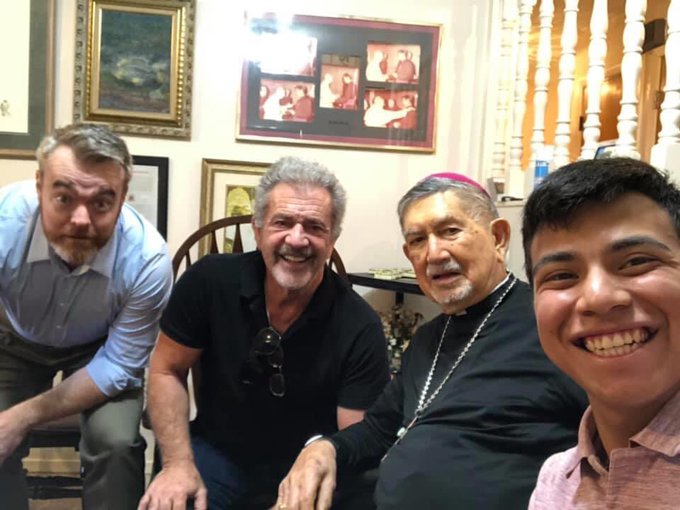
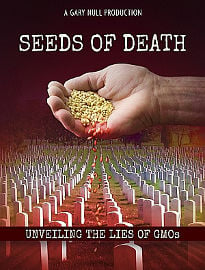


You must be logged in to post a comment.