The matter of Covid and the question of the Lab in China. The US house has just voted unanimously to investigate Covid origin in China. They will discover the guilt of their own scientists.Both the US and France have financed the building and equipment of the lab in China. Fauci est totally guilty. Why China? The matter is very serious I believe and this is my conclusion. There is an international treaty forbidding the development of biological weapons. The US and France (others maybe as well, especially the Italians) did not want to build such a lab on their territory because of this treaty. They thought that China could be reliable for keeping things under wraps. Those scientists and whomever were supposed to supervise them are part of the swamp. They care only for their own aggrandizement.Now wh
Publius
Posted inUncategorized|Comments Off on ONE MAN’S OPINION:
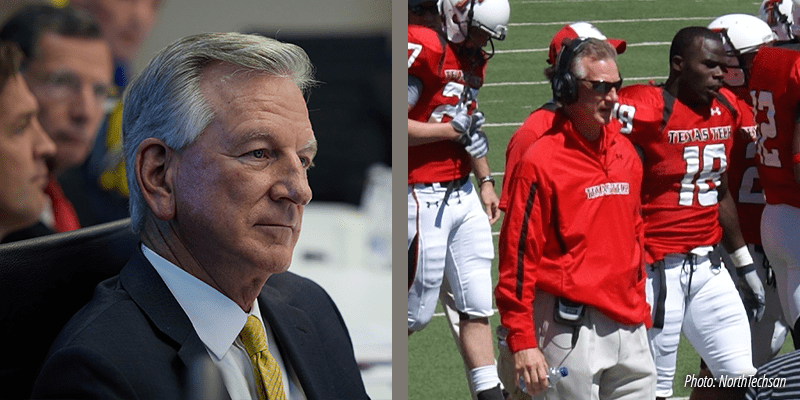
Republican Senator Tommy Tuberville announced he will block all of Biden’s military and civilian nominations to the Department of Defense until the Pentagon reverses its new policy to pay for travel costs for service members seeking an abortion. Tuberville called the Biden administration’s decision “shameful” and an attempt to use national security resources to promote a far-left agenda.
“We believe our military and VA should be focused on national defense and veterans, not politics,” Tuberville said on the Senate floor. “Using our military and fake emergencies to make sure there are no limits on abortion is absolutely, positively shameful. It’s embarrassing to our country.”
Tuberville said in a statement, “The Secretary of Defense is following through with his radical plan to facilitate thousands of abortions a year with taxpayer dollars. So, I will follow through with my plan to hold all DoD civilian, flag, and general officer nominations that come before the U.S. Senate.”
Before his election to the U.S. Senate in 2020, Tuberville coached football at Auburn University, University of Mississippi, Texas Tech University, and the University of Cincinnati.
In February, the Pentagon released its formal plan to pay for the travel of service members who seek an abortion or want to accompany a spouse who is seeking an abortion. The memorandum states that “the DOD health care provider will place the service member considering pregnancy termination in a medical temporary nondeployable status without reference to the Service member’s pregnancy status, until appropriate medical care and the necessary recovery period are complete.” The memo also directs the military branches to grant administrative absence – which includes no loss of pay – for those seeking abortion or fertility treatments not covered by military health care providers.
The new policy will take effect March 17.
Tuberville explained that only Congress has the authority to change the law in this regard, not the Secretary of Defense. The Pentagon’s decision is an illegal expansion of the DoD authority and a gross misuse of taxpayer dollars.
Tuberville’s hold means that the Senate will not be able to quickly approve Joe Biden’s nominees by unanimous consent, as the Senate often does. Instead, Defense Department nominees will require a formal Senate vote, which could make these nominations more difficult to approve.
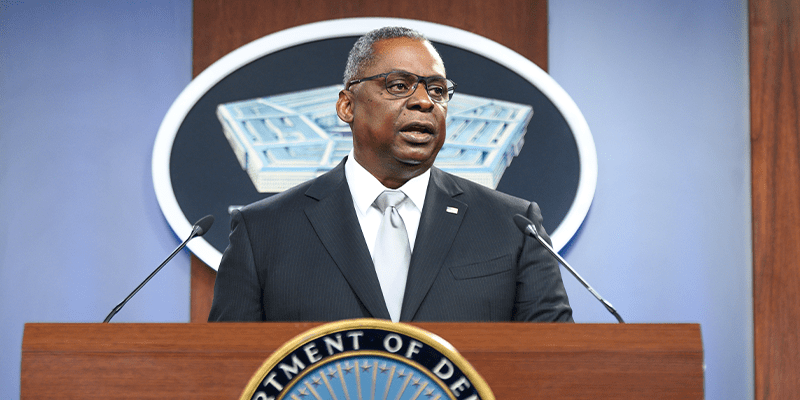
Lloyd Austin, the U.S. Secretary of Defense, has sparked criticism for allowing the department to use taxpayer dollars for abortion-related travel expenses.
The Alabama senator called the VA decision to start performing abortions an “unconstitutional abuse of the government” that should “not be tolerated.” He stated that the push to use the Pentagon and VA to support the Democrats’ abortion policy shows the extent to which they support an “extreme, heartless and inhumane abortion agenda.” And he said Democrats are “misusing” the federal government in this way because they are beholden to extreme progressives.
“His administration is set on taking this country apart from the inside out,” he said of President Biden.
A VA employee has likewise sued the VA for committing abortions, and Senate Republicans are seeking to pass a resolution that would reject the VA’s rule permitting this policy shift.
Thank you for reading this article! If you support our mission, give a life-saving donation today!
Posted inUncategorized|Comments Off on PR0-ABORTION JOSEPH (FORMER CATHOLIC) BIDEN ANNOUNCED PLANS TO PAY FOR TRAVEL COSTS FOR ARMED SERVICE MEMBERS SEEKING AN ABORTION
The House of Commons has approved the UK’s first “thought crime” law after MPs rejected a move to protect silent prayer in public places.
In a free vote, MPs rejected an amendment to the Public Order Bill by 299 votes to 116, a large majority of 183, to protect private prayer and consensual conversations within any “censorship” zone.
Among those to support the amendment were Home Secretary Suella Braverman and Attorney General Victoria Prentis.
Jeremiah Igunnubole, legal counsel for ADF UK, which has represented people who have been arrested for praying near abortion clinics, said the vote marked a “watershed moment for fundamental rights and freedoms in our country”.
He said: “Parliament had an opportunity to reject the criminalisation of free thought, which is an absolute right, and embrace individual liberty for all.
“Instead, Parliament chose to endorse censorship and criminalise peaceful activities such as silent prayer and consensual conversation.
“Today it’s abortion. Tomorrow it could be another contested matter of political debate,” he continued.
“The principle remains that the government should never be able to punish anyone for prayer, let alone silent prayer, and peaceful and consensual conversation.
“Thankfully, where the clause initially called for a prison sentence for those convicted of engaging in these peaceful activities near abortion facilities, the penalty now has been reduced to a fine.
“Nevertheless, it is extremely regrettable that Parliament, which exists to protect and champion the rights of the electorate, has taken a clear stance against fundamental freedoms, opening the door for nationwide thought-crime prosecution.”
Clause 10 (formerly Clause 9) of the Public Order Bill criminalises any form of “influence” outside of all abortion facilities, including silent prayer.
It makes prayer within a censorship zone punishable by an initial fixed penalty fine of £100, possibly rising to £1,000 if the accused is taken to court.
The legislation was drafted to remedy the mischief of guerrilla-style protest tactics deployed by such groups as Just Stop Oil, Insulate Britain and Extinction Rebellion, but it was hijacked by abortion activists in the House of Commons.
Instead of striking out the hijacking amendments, the Conservative Government granted MPs and peers a free vote.
A counter amendment to permit silent prayer and consensual conversations within the censorship zones was proposed by Andrew Lewer, Conservative MP for Northampton South, who told MPs that such activities were a “world away” from harassment.
“Police shouldn’t be asking ‘What are you thinking about?’” said Mr Lewer during the debate in the Commons.
“Censorship of this sort is a notoriously slippery slope. It might not be your thoughts that are criminalised today, but I think we should all be careful not to open the door to that tomorrow about some other opinions that people may hold about something else.”
Sir John Hayes, Conservative MP for South Holland and The Deepings, said the Lewer amendment sought essentially to protect free speech.
He said: “This is about freedom – it’s not about the purpose of freedom or the location of it. It’s about the ability to think, and speak, and pray freely.”
He added: “We now have people arrested for praying, interrogated by the police, asked what they’re praying about, what they’re thinking. This is dystopian. It’s like a mix of Huxley, Philip Dick and all that.”
Danny Kruger, Conservative MP for Devizes in Wiltshire, told MPs they were “making a momentous step”
“We are crossing an enormous river,” he said. “What are we doing by saying that people should not be allowed to pray, quietly, on their own?”
But Rupa Huq, Labour MP for Ealing Central and Acton who has campaigned for censorship zones, attacked the amendment.
She said: “Any person using medical services should be able to do so without navigating an obstacle course of people trying to impose their view of what is right into the process to dissuade and deter.
“Even in the reviled regime of Iran they got rid of their morality police. Why do we allow them here?”
Fellow abortion activist Stella Creasy, the Labour MP Walthamstow, wrote afterwards on Twitter that the censorship zones had been “protected from the sabotage amendment” and abortion clinic clients could “access an abortion in peace” as a result.
The most recent government review, undertaken by the Home Office in 2018, found that censorship zones would be an unnecessary and “disproportionate” restriction on rights given that harassment is already criminalised under existing legislation, and instances of harassment outside abortion facilities were found to be “rare”.
The vote came just a day after Isabel Vaughan-Spruce, a Catholic pregnancy counsellor, was arrested for the second time for praying silently near an abortion facility in Birmingham where the city council has implemented a 150-metre buffer zone via a Public Spaces Protection Order.
The arrest, attended by six police officers, comes three weeks after Ms Vaughan-Spruce was found acquitted by Birmingham Magistrates’ Court for an praying silently in her mind near the clinic in December.
The Crown Prosecution Service offered no evidence in court that any crime was committed and she was exonerated along with Fr Sean Gough, a Wolverhampton curate who had held up a sign reading “Praying for the Freedom of Speech”.
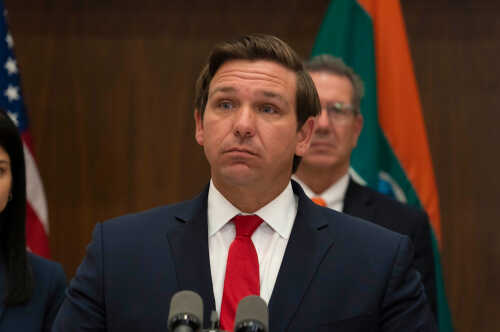
(PatrioticPost.com)- Gov. Ron DeSantis, a Republican in Florida, launched a new digital commercial on Sunday night, calling for conservatives to fight for freedom in light of a possible presidential bid in 2024.
The ad paraphrases Mark Twain and says, in effect, that when everyone went mad and common sense wasn’t so common any longer, Florida was an oasis of sanity, a home for freedom for Americans and everyone on the planet.
Several prominent Fox News personalities appear in the commercial to praise DeSantis’ record as governor of Florida.
In the video, DeSantis said the flailing federal establishment had hampered Florida’s success in Washington, DC. They have been on an inflationary spending spree that has made our country weaker and poorer folks.
Lockdowns, regulations, and mandates have been implemented. It has irresponsibly opened our border. Due to this, many people have a negative outlook on the nation’s future.
The message continues by saying many would go so far as to suggest that failure is inevitable. But he says the state of Florida exemplifies that “we the people” are not doomed to failure.
DeSantis follows by elaborating on his administration’s successes in the state, such as the state’s rapid economic expansion and its top rankings in educational freedom, economic liberty, and the quality of its public higher education.
“Success can be yours,” DeSantis says. It’s important to remember that freedom has a price. He also says that “decline is a choice.”
Jesse Watters appears in the video and says that DeSantis takes a lot of heat for his convictions, but he doesn’t back down.
Dana Perino says in the video that DeSantis makes promises, and he is good at his promises. He wins.
Fox News Channel personality says this is why liberals oppose Gov. DeSantis. It’s because he is a winner.
It certainly seems presidential. An announcement appears imminent.
Posted inUncategorized|Comments Off on THIS CERTAINLY SEEMS TO BE PRESIDENTIAL
God gives human beings Free Will. This is the core of the nexus of assumptions and their consequences that separates the commonsense part of the population on one hand and the crazy social-communists and wokesters on the other hand.
This gift of God means many things:
Man is a very capable decision maker.
God expects man to make his most important decision: to follow His Holy Son or not.
Free Will as it is given to Man, especially with the decision to follow Christ, is the highest level of man’s dignity.
This Dignity is imparted on all members of the human race, whatever their ethnicity, sex or whatever some people think could set them apart.
Man’s decision making is a power that helps him being self-sustaining with the help of Divine Providence.
Man can discover God’s Natural Law of creation to understand how to manage his relationships with neighbors and the earth.
Consequences on Atheists mindsets as they do not accept God, His power and His free gift of Free Will to man.:
Man is week, incapable of making the simplest decisions.
Man has no intrinsic dignity.
Man’s dignity when he belongs to what would seem as apparently inferior classes, such as ethnicity, sex or whatever must be fought for to be accepted by the general population. Enlightened people working within a benevolent government need to do the fighting for all potential victims.
As he is weak, man’s subsistence cannot be expected to be a given. Man does not have the problem solving ability to ensure his survival. Enlightened people working within a benevolent government need to legislate and execute laws and programs that will ensure that subsistence.
There is no Natural Law: all the domains of what Christian culture included within the Natural Law established by God (e.g., family and genders) are up for grab.
The very existence of Christians and their faith in God and its consequences are essentially subversive to the understandings of the world by leftists.
JEAN-FRANCOIS ORSINI
Posted inUncategorized|Comments Off on ATHEISM IS THE SOURCE OF LEFTIST TERRORISM
Parents are livid after one Democrat let the cat out of the bag on why the Left really supports abortion on-demand
Photo by Victoria Akvarel from Pexels
Democrats are always claiming to be the Party of compassion.
But when it comes to abortion the truth about Democrats’ motives are absolutely terrifying.
And now parents are livid after one Democrat let the cat out of the bag on why the Left really supports abortion on-demand.
Every political position has an ulterior motive behind it
Every single policy and political viewpoint has an underlying motive behind it – whether anyone wants to admit it or not.
For those who support the Second Amendment, their motive for supporting the right to keep and bear arms is rooted in the belief that every human has the God-given, natural right – enshrined in the Constitution – to protect your life, family, and property, as well as to resist oppression.
And for Americans who want a secured border, their motive is to secure the nation from vulnerabilities, infiltration, and to limit the flow of criminal elements seeking to traffic humans, drugs, weapons, and more.
The reason why many pro-lifers are also Christian is because their Christian faith dictates that “thou shalt not kill,” and they view a baby in the womb as being alive.
So ending the life of a baby in the womb is considered murder.
And even for those pro-lifers that don’t hold their belief in protecting life because of Christian tenets, they still see that life begins at some point before a baby passes through the birthing canal.
But for the Left, they claim they support abortion on-demand because the mother should have control over what she does with her own body.
To them, it’s all about bodily autonomy, as they believe the fact that women are the only humans who can carry children is a form of oppression and inequality, and giving the woman the ability to simply abort any pregnancy she chooses somehow levels the playing field.
Most conservatives know this is just a big lie that the Left pushes, because if they were really for bodily autonomy they wouldn’t have demanded every American be forced to receive the COVID vaccine in order for them to be able to continue being a part of society.
Well, a Democrat official finally admitted in a public meeting the true motive behind Democrats’ embrace of abortion on-demand, and it will horrify you.
Modern Day Eugenicist Margaret Sanger
Michael Hugo, the chair of the Framingham Massachusetts Democratic Committee, told his local city council that they should support abortion centers so that their local school budget wouldn’t be strained by children with special needs.
“Our fear is that if an unqualified sonographer misdiagnoses a heart defect, an organ defect, spina bifida or an encephalopathic defect that becomes a very local issue because our school budget will have to absorb the cost of a child in special education, supplying lots and lots of special services to children, who were born with the defect,” Hugo actually said.
“OUR FEAR IS THAT IF AN UNQUALIFIED SONOGRAPHER MISDIAGNOSES… THAT BECOMES A VERY LOCAL ISSUE BECAUSE OUR SCHOOL BUDGET WILL HAVE TO ABSORB THE COST OF A CHILD IN SPECIAL EDUCATION.”PIC.TWITTER.COM/ZE8IOOQAWE
Of course, Democrats’ modern day pro-abortion movement is rooted in bigotry and eugenics.
Planned Parenthood founder Margaret Sanger was a well-known racist, and an avid eugenist who advocated for killing babies in the womb if they were a minority or showed any developmental issues.
Sanger claimed in 1921 that “the most urgent problem today is how to limit and discourage the over-fertility of the mentally and physically defective.”
If only more Leftists would be more honest about the motive underlying their desperate need for nationwide abortion on-demand for disadvantaged women.
Their cultic levels of admiration for abortion isn’t about compassion – it’s about sheer hate.
Posted inUncategorized|Comments Off on “THE CAT IS OUT OF THE BAG”
Pro-Life Leader Arrested Again for Silently Praying Outside Abortion Biz
International | Steven Ertelt | Mar 6, 2023 | 3:52PM | London, England
For the second time in recent months, a British pro-life leader has been arrested for silently praying outside an abortion business.
British police arrested Isabel Vaughan-Spruce late last year for praying silently outside an abortion facility in Birmingham after a censorship zone had been approved prohibiting pro-life people from protesting, counseling, praying or even being located in the zone. Vaughan-Spruce was carrying no sign and remained completely silent until approached by officers and said she “might” have been praying at the time of her arrest.
She was eventually charged with with four counts of failing to comply with a Public Space Protection Order (PSPO) by breaching an exclusion zone outside a Birmingham abortion clinic.
The Crown Prosecution Service eventually droped the charges due to “insufficient evidence” and a court eventually dismissed the charges.
Now Isabel has ben arrested for praying again on the eve of a vote in the British Parliament on banning silent prayer near abortion facilities.
“You’ve said you’re engaging in prayer, which is the offense,” police said as they arrested Vaughan-Spruce.
“Silent prayer,” she confirmed.
“You were still engaging in prayer, which is the offense,” a policeman states.
Alliance Defending Freedom, a pro-life legal group representing Vaughan-Spruce condemned the arrest.
Please follow LifeNews.com on Gab for the latest pro-life news and info, free from social media censorship.
“Police wrongly claimed that the PSPO “buffer zone” banned Isabel from simply standing near a clinic. This is simply not true. A court ruled only weeks ago that Isabel broke no laws by thinking a prayer in her mind. How can MPs roll out this law with so little clarity?” it asked.
BREAKING: Isabel has been arrested, AGAIN, for THINKING.
MPs vote TOMORROW on banning silent prayer near all abortion facilities in&
“You’ve said you’re engaging in prayer, which is the offense.” “Silent prayer.” “You were still engaging in prayer, which is the offense.” pic.twitter.com/AId3OguiXz
After she won in court last month and the charges were dismissed, Vaughn-Spruce complained about efforts to deny pro-life Christians rights to prayer and speech.
“I’m glad I’ve been vindicated of any wrongdoing. But I should never have been arrested for my thoughts and treated like a criminal simply for silently praying on a public street,” she said outside the court.
“When it comes to censorship zones, peaceful prayer and attempts to offer help to women in crisis pregnancies are now being described as either ‘criminal’ or ‘anti-social’ ‘But what is profoundly anti-social are the steps now being taken to censor freedom of speech, freedom to offer help, freedom to pray and even freedom to think. We must stand firm against this and ensure that these most fundamental freedoms are protected, and that all our laws reflect this,” the pro-life leader added.
ADF UK legal counsel Jeremiah Igunnubolealso responded to the court’s decision. The pro-life legal group has been representing Vaughan-Spruce.
“Isabel and Father Sean’s cases show that the current plans to introduce censorship zones across England and Wales constitute a dangerous step towards an illiberal society. We ask parliamentarians to think long and hard about whether we are still a free and democratic society and a free and democratic country and if so national censorship zones must be rejected,” he said.
The censorship zone measure introduced by Birmingham authorities criminalises individuals percieved to be “engaging in any act of approval or disapproval or attempted act of approval or disapproval” in relation to abortion, including through “verbal or written means, prayer or counselling…”.
Vaughan-Spruce had stood near the abortion facility whilst it was closed on three occasions, in which she says she “might” have been praying.
When shown pictures of herself outside the abortion facility by police, Vaughan-Spruce was questioned as to whether she was praying in the photos. She said she could not answer – some of the time she had spent praying, other times she had been distracted and thought about other things, such as her lunch. She maintains that both of these thoughts were equally peaceful and imperceptible and that neither should be criminalised.
“Isabel’s experience should be deeply concerning to all those who believe that our hard-fought fundamental rights are worth protecting. It is truly astonishing that the law has granted local authorities such wide and unaccountable discretion, that now even thoughts deemed “wrong” can lead to a humiliating arrest and a criminal charge,” said Jeremiah Igunnubole, Legal Counsel for ADF UK, the legal organisation supporting Vaughan-Spruce.
“A mature democracy should be able to differentiate between criminal conduct and the peaceful exercise of constitutionally protected rights. Isabel, a woman of good character, and who has tirelessly served her community by providing charitable assistance to vulnerable women and children, has been treated no better than a violent criminal. The recent increase in buffer zone legislation and orders is a watershed moment in our country. We must ask ourselves whether we are a genuinely democratic country committed to protecting the peaceful exercise of the right to freedom of speech. We are at serious risk of mindlessly sleepwalking into a society that accepts, normalises, and even promotes the “tyranny of the majority,” he continued.
As part of her conditions for bail, Vaughan-Spruce was told that she should not contact a local Catholic priest who was also involved in pro-life work – a condition that was later dropped.
Police also imposed restrictions, as part of her bail, on Vaughan-Spruce engaging in public prayer beyond the PSPO area, stating that this was necessary to prevent further offences.
Vaughan-Spruce is the Director of the UK March for Life and has volunteered for many years in support of women in crisis pregnancies.
“I have devoted much of my life to supporting women in crisis pregnancies with everything that they need to make an empowered choice for motherhood. I am also involved in supporting women who have had abortions and are struggling with the consequences of it. I’ve grown close to many of the women I’ve been able to support over the years, and it breaks my heart to know that so many more go through this every day,” explains Vaughan-Spruce.
“My faith is a central part of who I am, so sometimes I’ll stand or walk near an abortion facility and pray about this issue. This is something I’ve done pretty much every week for around the last 20 years of my life. I pray for my friends who have experienced abortion, and for the women who are thinking about going through it themselves,” she continued.
Her arrest follows another recent incident in Bournemouth where a woman was told to leave by local authorities for praying, even outside of the local censorship zone. Find out more.
Last year, a grandmother from Liverpool successfully overturned her charge on human rights grounds after she was arrested and fined for praying silently near an abortion facility on a walk during lockdown. Find out more.
In Westminster, parliamentarians are considering legislation to introduce censorship zones in England and Wales. Clause 9 of the Public Order Bill, currently under parliamentary debate, would prohibit pro-life volunteers from “influencing”, “advising”, “persuading”, “informing”, “occupying space” or even “expressing opinion” within the vicinity of an abortion facility.
Those who breach the rules could face up to two years in prison.
A 2018 government review into the work of pro-life volunteers outside of abortion facilities found that instances of harassment are rare, and police already have powers to prosecute individuals engaging in such activities. The most common activities of pro-life groups were found to be quiet or silent prayer, or offering leaflets about charitable support available to women who would like to consider alternative options to abortion.
At 150m, the national censorship zones would be larger than a football pitch (115m). In the equivalent space, if one goalkeeper were to pray for the other goalkeeper – regardless of impact or noticeability – that would be an offence.
The censorial provisions of the parliamentary bill drew substantive criticism from members of the House of Lords, including Liberal Democrat Peer Lord Beith, who deemed the clause “the most profound restriction on free speech I have ever seen in any UK legislation.” Lord Farmer called the clause “fundamentally flawed”, and asked, “When one walks past, one sees that vigils are often small groups of harmless, mainly female, pensioners. Why should they be banned and silenced?”
The Clause has caused great controversy following a statement released from the Parliamentary Under-Secretary of State shortly after MPs voted to include it, admitting that the clause “could not be said to be compliant” with Convention rights as protected in the European Court of Human Rights.
Baroness Claire Fox, who advocates for abortion, pointed out that “creating prohibitions on protest on an issue-by-issue basis is not an appropriate way to make law. It sets a precedent that will inevitably lead to attempts to prevent speech, expression, information sharing, assembly or the holding of protected beliefs around other sites or in relation to other controversial or unpopular causes.”
@MattH_4America “Is Ray Epps a fed?” – Ted Cruz “We can’t answer that question” – The FBI AND BREAKING: Tucker Carlson Releases Evidence Showing Ray Epps Perjured Himself in Sworn Testimony to Jan 6 Committee (VIDEO)
“Is Ray Epps a fed?” – Ted Cruz “We can’t answer that question” – The FBI
·
37.8K Views
Pray an Our Father now for reparation for the sins committed because of Francis’s Amoris Laetitia.
Pray an Our Father now for the restoration of the Church as well as the Triumph of the Kingdom of the Sacred Heart and the Immaculate Heart of Mary.
Stop for a moment of silence, ask Jesus Christ what He wants you to do now and next. In this silence remember God, Father, Son and Holy Ghost – Three Divine Persons yet One God, has an ordered universe where you can know truth and falsehood as well as never forget that He wants you to have eternal happiness with Him as his son or daughter by grace. Make this a practice. By doing this you are doing more good than reading anything here or anywhere else on the Internet.
Francis Notes:
– Doctor of the Church St. Francis de Sales totally confirmed beyond any doubt the possibility of a heretical pope and what must be done by the Church in such a situation:
“[T]he Pope… WHEN he is EXPLICITLY a heretic, he falls ipso facto from his dignity and out of the Church, and the Church MUST either deprive him, or, as some say, declare him deprived, of his Apostolic See.” (The Catholic Controversy, by St. Francis de Sales, Pages 305-306)
– If Francis betrays Benedict XVI & the”Roman Rite Communities” like he betrayed the Chinese Catholics we must respond like St. Athanasius, the Saintly English Bishop Robert Grosseteste & “Eminent Canonists and Theologians” by “Resist[ing]” him: https://www.thecatholicmonitor.com/2021/12/if-francis-betrays-benedict-xvi.html
– LifeSiteNews, “Confusion explodes as Pope Francis throws magisterial weight behind communion for adulterers,” December 4, 2017:
The AAS guidelines explicitly allows “sexually active adulterous couples facing ‘complex circumstances’ to ‘access the sacraments of Reconciliation and the Eucharist.'”
– On February 2018, in Rorate Caeli, Catholic theologian Dr. John Lamont:
“The AAS statement… establishes that Pope Francis in Amoris Laetitia has affirmed propositions that are heretical in the strict sense.”
– On December 2, 2017, Bishop Rene Gracida:
“Francis’ heterodoxy is now official. He has published his letter to the Argentina bishops in Acta Apostlica Series making those letters magisterial documents.”
Pray an Our Father now for the restoration of the Church by the bishops by the grace of God.
What is needed right now to save America from those who would destroy our God given rights is to pray at home or in church and if called to even go to outdoor prayer rallies in every town and city across the United States for God to pour out His grace on our country to save us from those who would use a Reichstag Fire-like incident to destroy our civil liberties. [Is the DC Capitol Incident Comparable to the Nazi Reichstag Fire Incident where the German People Lost their Civil Liberties?: http://catholicmonitor.blogspot.com/2021/01/is-dc-capital-incident-comparable-to.html?m=1 and Epoch Times Show Crossroads on Capitol Incident: “Anitfa ‘Agent Provocateurs‘”: http://catholicmonitor.blogspot.com/2021/01/epoch-times-show-crossroads-on-capital.html?m=1]
Pray an Our Father now for the grace to know God’s Will and to do it.
Pray an Our Father now for America.
Pray an Our Father now for the restoration of the Church as well as the Triumph of the Kingdom of the Sacred Heart and the Immaculate Heart of Mary.SHARE
Posted inUncategorized|Comments Off on THE JANUARY 6 COMMITTEE WAS SET UP IN CONGRESS FOR THE SOLE PURPOSE OF CONVICTING PRESIDENT TRUMP OF CONSPIRING TO OVERTHROW THE U.S. GOVERNMENT
Essay four looked at how Cavadini, Healy, and Weinandy (CHW) treat inconsistently the traditional Latin Mass (TLM), other rites in communion with the Roman Church, and such idiosyncratic offerings of the Novus Ordo (NO) as that characteristic of charismatics. This fifth and final essay shows that CHW falsely portray the response of the laity to the TLM prior to Vatican II and seem to have little awareness why the TLM is experiencing such growth now. It challenges CHW to take a close look at the reasons why some devotees of the TLM have misgivings about the Vatican II Council which doesn’t at all seem to have impacted their fidelity to Church teaching—which is far greater than the commitment of those who attend the NO. Finally, it observes there is little reason to believe that the Reform of the Reform will be guided by Sacrosanctum Concilium or the time-honored principles the Church has developed for worthy liturgy.
It must be acknowledged that even those who love the TLM recognized deficiencies in how the Mass was said in the middle of the twentieth century. Fr. Bryan Houghton, a diocesan priest who retired early from parish ministry so that he could continue to say the TLM, puzzled over the ready acceptance of the NO by priests. He mused:
But there was a problem to which I found an answer difficult. All priests had said the old Mass daily and with due decorum and even with apparent devotion. How came it that ninety-eight percent were perfectly willing to change it—and this not at the behest of the Council or of the Pope. A pure permission was given, and they all jumped to it like the Gadarene swine. Besides, I had been dean for a number of years and knew the priests of my deanery very well. Only two of them were sufficiently stupid to think themselves brilliant—and consequently welcomed the opportunity to express their personality. The rest, in private, were against the changes. However, only one, a Dominican, stuck to the old Mass. What made the others change? Obedience, apathy, fear of reprisals, anything for a quiet life—all those sort of motives undoubtedly played their part, but the fact remains that they cannot have loved the old Mass. It was just a ritual which could be changed like a pair of pants. But if they did not love the Mass it must be that they were incapable of adoration. They must consider Mass as something they do, not as something God does.
“Lex credendi, lex orandi”—faith rules prayer and prayer faith. I had no doubt about the faith of my fellow priests—except one, perhaps—so the trouble must lie with prayer. Here, indeed, I found us priests singularly lacking. We were much too busy saying Mass, saying our breviary or doing something, to spend a moment in prayer in front of the Blessed Sacrament. We encouraged the laity to do so, but rarely did it ourselves. Now I come to think of it, during my seminary course at the Beda I received plenty of instruction on ascetics, on how to perfect myself; but none on prayer, how to adore God. What little I know about the adoration of God I had picked up by reading the mystics—such as Gertrude of Helfta and Teresa of Avila—or spiritual writers such as Augustine Baker, Surin and Grou.
Orthodox. Faithful. Free.
Sign up to get Crisis articles delivered to your inbox dailyEmail subscribe inline (#4)SUBSCRIBEBryan Houghton, Unwanted Priest: An Autobiography of a Latin Mass Exile, ed. Gerard Deighan (Brooklyn: Angelico Press, 2022), 68–69.
It would seem the solution to the problem of priests not saying the Mass with a full consciousness of its meaning would be that recommended by Houghton—and by several popes: teach them how to pray and the importance of Eucharistic adoration. These are virtues that must be learned and practiced in spiritual reading, meditation, and personal prayer. Imposing a new rite of Mass and a new breviary is not at all the obvious solution to the problem.
Although many priests may not have been so attached to the TLM (I suspect, as Houghton intimates, that it was because they did not have good preparation for it), there is an abundance of evidence that the TLM captured the attention and devotion of its attendees and powerfully nurtured their faith. Indeed, the same Fr. Houghton who describes what he regarded as the sad state of priests’ spiritual life and the effect of that on the TLM says this about how his parishioners, by contrast, responded to it in 1969:
ADVERTISEMENT – CONTINUE READING BELOW
I wonder how many Catholics attend Mass on any given Sunday in England and Wales? Not far short of three million, as far as I can make out. Even in Norfolk and Suffolk, where we are notoriously thin on the ground, the figures soon mount up: over three thousand at Norwich and Ipswich, over a thousand at Bury and Yarmouth, and in numerous parishes around the five hundred. Obviously—the figures themselves prove it—we love our Mass: that incomprehensible ceremony in which the only thing we understand is the utter mystery of the True Presence of Jesus Christ under the appearance of bread and wine.
We love our Mass as it is, with its Latin mumbling, strange silences, sudden bells. Well, it is all going to be changed for us before this month is out—on November 29th….
Humans are not prone to change, and least of all in the ritual of their religion. In fact, in many religions the ritual long outlives the belief; men continue to perform the traditional acts of worship when they have long since lost any positive faith in why or what they are worshipping. So, of course, the overwhelming majority of practising Catholics in this country will be desperately sorry to see their Latin Mass go. The traditions of a thousand years and habits of a lifetime cannot be chucked overboard without the passing tear. For my own part, I rather think that the last time I cried was in 1936; I shall probably do it again on November 29th.
Of the priests I have talked to, slightly over half are in favour of the change, especially among the younger clergy who are not yet sick of the sound of their own voices. Of the many, many hundreds of laity, I have only found four individuals in favour, and they highly educated and thoroughly unrepresentative.
This is, I think, a point of some importance. The English Mass has not come about in response to any popular demand; it has been imposed by the hierarchy. It is an act of pure clericalism if ever there was one. Houghton, Unwanted Priest, 93–94.
Houghton expresses great sympathy for the laity, who were not consulted about making the changes and who were not consulted about how the changes affected them:
This issue was that the new reforms in general and of the liturgy in particular were based on the assumption that the Catholic laity were a set of ignorant fools. They practised out of tribal custom; their veneration of the Cross and the Mass was totem-worship; they were motivated by nothing more than the fear of hell; their piety was superstition and their loyalty, habit. But the most gratuitous insult of all was that most Catholics had a Sunday religion which in no way affected their weekly behaviour. This monstrous falsehood was—and still is—maintained by bishops and priests who, for the most part, have never been adult laymen. Every day the Catholic workman had to put up with the jeers of his colleagues, as the more educated with their sneers. Every night they took their religion to bed with them.
I am not in a position to judge other priests’ parishioners. I am, however, in a position to judge what were my own. No words are adequate for me to express my admiration for the conscious faith and piety of my flock, both in Slough and in Bury. This is where the trouble lay. The reforms were based on criticism; I was unwilling to take any action which might make me appear to criticise the wonderful people whom I was ordained to serve. I was perfectly conscious that I learned more about God from them than they were likely to learn from me. Houghton, Unwanted Priest, 811
Peggy Noonan writes of her experience of the TLM in the fifties with her aunt, an immigrant from Ireland:
If we were together on a Sunday, she took me to Mass. I loved it. They had bells and candles and smoke and shadows and they sang. The church changed that a bit over the years, but we lost a lot when we lost the showbiz. Because, of course, it wasn’t only showbiz. To a child’s eyes, my eyes, it looked as if either you go to church because you’re nice or you go and it makes you nice but either way it’s good.
Jane Jane [as they called her] carried Mass cards and rosary beads—the Sacred Heart of Jesus, the Blessed Mother, the saints. She’d put the cards on a mirror, hang the rosary beads on a bedstead. I look back and think, wherever she went she was creating an altar. To this day when I am in the home of newcomers to America, when I see cards, statues and Jesus candles, I think: I’m home.
She didn’t think life was plain and flat and material, she thought it had dimensions we don’t see, that there were souls and spirits and mysteries. Peggy Noonan, “Home Again, and Home Again, America for Me,” Wall Street Journal, November 23, 2022.
Children loved the TLM then and children love it now. My parish regularly has fifteen or more altar boys each Sunday for the TLM; at least two-thirds are under twelve years of age. They come from large families who arrive half an hour before Mass and stay half an hour afterwards (some of that spent in prayers of thanksgiving and others in playful fellowship with their peers), with the Mass being at least an hour and a half long.
The TLM of Today
I am sorry to say that the criticisms of CHW do not seem to stem from any prolonged personal experience of the TLM as offered today. I truly wonder how many traditional Masses the authors have attended or how many devotees of the TLM they have spoken with—who are mostly young people who have spent their whole lives worshiping at NO liturgies and who have found something in the TLM that they did not find in the NO.
ADVERTISEMENT – CONTINUE READING BELOW
We have been told endlessly that many of the elements of the NO are there because they “appeal to the young,” but the exodus of young people from the Church indicates the NO has been a failure in that regard. Most Catholics over 60 have never attended a TLM; one wonders how many would switch over were they to experience it. In a way, the TLM is exotic and requires an openness to the unfamiliar and even the arcane; nearly everyone who attends, even those who do not adopt the TLM as their mode of worship, speak of it being dramatically more reverent and transcendent than even the best of the NO liturgies they have attended. Those won over by it find themselves doing a deep dive into why the TLM “does what it does” and into why it was replaced by the NO. They find their faith deepening in that process.
CHW choose to focus on what was (purportedly) once the case rather than on what we have now in the TLM. What seems of greater importance to reading the “signs of the times” is not what the TLM once was or might have been, but what it is today in our midst, as a living force that speaks to people in a powerful way, including not only lifelong Catholics but converts and religious seekers. Its attendees are not “desperate” for an alternative. Again, much of the “restoration” that SC called for has happened in the TLM.
I have attended a wide variety of NO Masses over the last 55+ years, here and abroad, and believe I have more than a decent data base on which to compare the two experientially. I grew up with the TLM until I was 16. Many times, the liturgy was not at all inspiring; sometimes it took only 19 minutes for a Mass to be said. But I have to say, when the NO was introduced, it did not strike me as an improvement. It, too, was largely uninspiring. In spite of the desiccated form of the TLM I attended (and my experience was perhaps not typical), I had a sense that the TLM had hidden treasures; to be sure, I found even the desiccated form more transcendent than the NO. At any rate, CHW seem to have read only about the kind of TLM I experienced and not the grand version available to many throughout the centuries and which is certainly the norm today.
If the TLM once was what CHW say it was, it is no longer that in our times—now it is beautiful and riveting, hardly boring, and the attendees are fully engaged. Some follow in the missalettes or their own missals, others seem to be in a serene contemplative state. Most come early and stay late and yearn for the day when they can find a TLM wherever they find themselves. After all, the TLM is basically the same wherever we go (a wonderful unifying feature!), whereas one never knows what one will find in churches that offer the NO—travelers often vet possibilities before they get on the road since they don’t want to subject themselves to some quirky liturgy or even one with an invalid Eucharist.
ADVERTISEMENT – CONTINUE READING BELOW
Why should the faithful be denied access to a mode of worship that is, with some regularity, indescribably beautiful, simply because some people think it was once boring? And why must they be compelled to embrace a liturgy that nearly everyone agrees has not had a good track record for reverence? Indeed, the authors recommend a large number of changes to the NO in order to improve it. Why are they so surprised that so many seek a better liturgy when the one they have been offered needs so much improvement?
CHW’s portrayal of how the TLM was used or experienced prior to Vatican II is tendentious. They acknowledge that many were fed spiritually by it but in general characterize the laity who attended it as the proverbial lumps on a log who were mere spectators, who “had little sense of asking forgiveness of their sins during the opening penitential rite, nor did they consciously offer themselves to the Father in union with Jesus during the offertory.”
How can they possibly know that? They make claims about what those who attended the TLM knew or didn’t know about the Mass: for instance, they claim that, “hardly anyone, even priests, were cognizant of… [the] theological significance [of the ad orientem posture of the priest].” This kind of remark seems a gratuitous and condescending characterization of the attendees, and hardly worthy of mention in a serious critique of the TLM; surely people’s engagement in the Mass varies from time to time and from place to place. At various times, concern about the level of understanding of the Mass has been remarked upon by popes who have urged greater instruction of both priests and laity, but they have not called for a new rite in order to make it happen.
Moreover, do CHW think attendees at the NO have any idea of what might be the theological significance of the versus populum posture? And let me note, nearly every attendee at today’s TLM could tell you why the altar is “ad orientem.” But not knowing the reason for the postures does not negate the impact they have; at the TLM it is very clear that the Mass is being offered to God; at the NO it can appear that the congregation is the audience and the priest the performer, without much notion of a holy offering to God at all. At the TLM the personality of the priest is very muted by the fact that his back is to the congregation, while in the NO, as Ratzinger noted, the priest himself can sometimes become the focus of the attention of the congregation.2
Rejection of Vatican II?
CHW claim that along with a devotion to the TLM often comes a rejection of Vatican II, and that that is a reason for ending the availability of the TLM. Do we have any studies that indicate such an alliance? Even so, is that a good reason for abolishing the TLM? On the other hand, we do have evidence that the majority of the attendees of the NO do not believe in the Real Presence3 and that they contracept and think homosexual acts are not immoral. Should we thereby abolish the NO because of what its attendees do or do not believe?
CHW make claims that seem completely impressionistic. They bemoan the fact that many of the faithful have little knowledge of Vatican II (VII) and state: “This ignorance is especially found among those of the younger generation who are tempted to join the Tridentine movement.” Is that group really more ignorant of VII than other young people? My guess is that in fact the young people who attend the TLM have much greater knowledge of the content of VII than the young people who attend the NO, for they read books by such astute churchmen as Bishop Athanasius Schneider, whose critique of VII is founded on a deep and penetrating knowledge of theology and of VII.4
Schneider is not being irresponsible in raising questions about some of the positions taken in Vatican II. It is concerns like his and those of Fr. Thomas Guarino5 that need to be addressed, not dismissed. Why do CHW want to send the message to a very select group of those who dare question the Council that what is most valuable to them will be taken away from them, especially at a time when pro-abortion atheists are welcome to serve on the Pontifical Academy for Life?6
CHW suggest that there are those who “promote the Tridentine liturgy as a way of disparaging the Council.” I think the more frequent occurrence is that those who discover the TLM wonder why it seems to be a hidden treasure and strive to learn about it. They have been told that the NO is what the council wanted, and when they discover that is false, they begin to question other things they have been told. From their own experience of the NO they begin to question whether VII was such a good thing if it or its “interpreters” produced the NO.
They also discern a connection between innovations of the NO with theological dissent and, again, begin to wonder about VII. For many, it is their discovery of the TLM that has strengthened their belief in a large number of teachings of Vatican II that many Catholics doubt, such as the definitive revelation of God in Jesus Christ, the unicity of the Church and its necessity for salvation, the reality of Hell, the privileges of the Virgin Mary, and so forth.
Reverence for the Eucharist and Acceptance of Doctrine
CHW somewhat ironically but most revealingly comment not only on the abuses of the NO that many have experienced over the years, but also on the call of the U.S. bishops to restore understanding of the Eucharist. Neither at that point nor later in the series do they consider the possibility that (at the very least) irregular offerings of the NO, if not the NO itself, might have contributed to the diminution of the understanding of the Eucharist and respect for it.
Few comparing the two liturgies would not readily observe the much greater reverence displayed in prayers, movements, and gestures toward the Eucharist in the TLM, where the Eucharist is received by people kneeling and on the tongue and where the priest, accompanied by an altar boy with a paten, distributes the Eucharist; these are all visible signs of something phenomenally supernatural happening. In the NO, on the other hand, the use of lay readers (sometimes children), the presence of lay ministers of the Eucharist often in quite casual garb, and the reception of the Eucharist on the hand and through an assembly line process, all diminish the grandeur of what is happening.
I haven’t seen studies on the matter, but I am confident that a survey of the beliefs of those who worship at the TLM would discover a nearly universal belief in the Real Presence, compared to the 30 percent belief among attendees at the NO. The failure to note a likely causal effect of the NO on Eucharistic belief suggests at the outset a regrettable unawareness of the relation between liturgy and belief—a relation that has long been recognized, all the way back to the adage, adapted from Prosper of Aquitaine, that the lex orandi is the lex credendi.
There are, however, studies that compare the beliefs and practices of those who attend the TLM with those who attend the NO:
Those numbers should give pause to anyone who argues that the TLM should not be available to all.7
Moreover, there is data that show that the TLM is a marvelous tool for evangelization—for drawing in converts and reverts and retaining the faith of young people: The TLM is made up of around 20% converts. The Novus Ordo has a much more modest number of 2% converts. The reverts in the TLM were also an elevated number of 25%. I’ve not been able to locate a percentage number of reverts who attend the Novus Ordo. Only 16% of the respondents attributed their preferred TLM attendance to their parents.8
A Reform of the Reform?
One has to admire the honesty of the authors in their acknowledgment that not infrequently the NO has been a disaster; it has featured priests dressed in “rainbow” robes and women in diaphanous costumes dancing around the altar—charges that never could be made against the TLM. These and other not uncommon “abuses” of the NO don’t deter the authors from intimating that the NO should now be the only available liturgy for most in the West.
They recommend changes, but essentially, we are being asked to surrender a mountain of gold for a handful of dust that they promise us can be shaped into a worthy liturgy. Indeed, it would take a vastly more concerted global effort, with total buy-in from the clergy at all levels and also from the laity, to bring about the kind of consistently high-level NO that CHW are looking for. In short, the probability of the NO being “done well” is distressingly low.
CHW believe that the NO can be so reformed as to avoid the problems they have noticed. A full paragraph is given to the need for the congregation to dress more modestly and fittingly and to be attentive to small “rubrical” actions which help orient all that is being done to the “heavenly” realm. Those who want to see fitting, modest dress and attention to small rubrical actions need not look to some future church but need only come to any TLM where such behavior is routine. Indeed, much of what CHW call for to improve the NO is already present in the TLM, which leads some to conclude that the NO becomes better to the extent that it becomes more like the TLM, or, in other words, the more like the liturgy envisioned in Sacrosanctum Concilium.
If we have any hopes that the proposals made by CHW will result in an improved NO, our hopes are dashed when we read that: “One way to foster this understanding would be by providing an opportunity for the faithful to bear public witness to their love for the Eucharist, perhaps in one or two brief testimonies after communion. While such testimonies may need to be monitored and even rehearsed, they would not only benefit the congregation but would also confirm more strongly in the speakers their own love for the Eucharist.”
SC tells us that all changes to the liturgy must be organic: to what element of any liturgy that has ever existed would such a practice correspond? Every Catholic loves a good evangelization, conversion, or miracle story, but there are abundant opportunities that exist and more could be created for sharing those in the parish hall or at a conference. Behind this proposal is a concept of the liturgy as man-made and malleable to any discerned momentary need.
What CHW don’t consider is the possibility that the NO should be reformed not in accord with the perceived needs of the moment but in accord with the vision of SC for the liturgy. It is surprising that strong advocates for Vatican II are not insisting on such a reform. As noted earlier, CHW acknowledge that the Fathers at Vatican II did not at all have in mind the NO that was composed under the guidance of Bugnini. Indeed, the crafters of the NO were clearly motivated more by the “spirit” of Vatican II than the letter.
Reformers of the NO should be more motivated by the letter of Vatican II than the spirit. The NO reformed in accord with the vision of Vatican II would have the priest praying ad orientem; there would be a communion rail where the congregation would kneel for communion; there would be no Eucharistic ministers; there would be only one Eucharistic prayer; Latin would still have a primacy of place and the music of the Mass would be the Latin chant or something similar. Most of the changes made in the NO do not correspond with the principle articulated in SC that all changes must be “organic,” a principle that disallows novelty. There would be much more unity between the Roman liturgies had the principles of SC been honored.
My intent in this series of essays has not been to demonstrate that the TLM is superior to the NO or to point out all the excellent features of the TLM or to critique the NO: it has been to show that the critique of the TLM by CHW fails miserably. My hope is that those who read the CHW series do not take the claims made there at face value and deny themselves and their families the extraordinarily spiritually satisfying experience of attending a TLM.
Most people are hesitant to attend because they don’t know Latin and “won’t be able to follow.” The fact is that most of those who attend the TLM don’t know Latin and even if they did, it helps them follow only some parts of the Mass. Much of the Mass is said silently and often the music continues while the priest is saying his prayers. They will need to learn a very different way of attending Mass; one that resembles time spent in Adoration more than time spent at a NO. The experience is much more contemplative: the atmosphere, the silence, and the beautiful music invite the congregation to enter into a state of receptivity to God’s voice.
Individuals do not need to slavishly try to “keep up” with the prayers of the Mass; they may linger on the beauty and content of a prayer and be led by the prayers to become truly contrite and truly full of gratitude for God’s mercy on us, our loved ones, and all human beings. I pray that Catholics everywhere have easy access to the TLM so that they can experience the beauty of our tradition, one that has the power to reinvigorate our Faith.
Vatican II was a council that wanted the Church to return to its sources; making the TLM widely available fits much more with that vision of ressourcement than the abolition of it. Vatican II was not meant to be a “great reset,” an opportunity to remake the Church in accord with whatever are the trends and tastes of the time. Those who ratified the documents of Vatican II, looking to find ways to advance the Gospel, to promote the love of Jesus in the modern world, did not mean to force Catholics to abandon their heritage—especially when it turns out that this heritage speaks powerfully to modern man.
Editor's Note: Crisis Magazine invites Dr. John Cavadini, Dr. Mary Healy, and Fr Thomas Weinandy to respond to Dr. Smith's series. Dr. Smith wants her charges refuted if they are false. There are few greater questions to be resolved than how we are to worship Our Lord.
Janet E. SmithJanet E. Smith, Ph.D., is a retired professor of moral theology.
The two other books in the series also give a good picture of how the TLM was received in some places: Mitre and Crook(Brooklyn: Angelico Press, 2019) and Judith’s Marriage(Brooklyn: Angelico Press, 2019).
CHW claim that Mass versus populum resembles more closely the Last Supper. The Church, however, has never regarded the Mass as a reenactment of the Last Supper but as the living commemoration of the Sacrifice of Calvary, which was anticipated the night before in the institution of the Holy Eucharist and of a priesthood distinct from the laity. Thus, the Mass looks back primarily to Good Friday, not to Holy Thursday; it was Martin Luther who first called the worship service a “supper.” It seems CHW are not aware of scholarship that discusses how the Last Supper was not conducted as a tête-à-tête between Christ and the Apostles and cannot serve as a template for the modern versus populum arrangement. See Peter Kwasniewski, “The Possibly Dubious Liturgical Legacy of Leonardo’s Last Supper,” New Liturgical Movement, December 16, 2019, summarizing the research of Msgr. Nicola Bux.
Posted inUncategorized|Comments Off on IT IS EASIER TO BEAT A “DEAD HORSE” IF YOU PRETEND THAT IT IS REALLY A DEAD HORSE AND NOT A LIVING CHAMPION RACE HORSE







 BREAKING: Isabel has been arrested, AGAIN, for THINKING.
 &
&





 ABYSSUS ABYSSUM INVOCAT / DEEP CALLS TO DEEP
You must be logged in to post a comment.