
THE STATUS OF THE SOCIETY OF ST. PIUS X (SSPX) (GUEST: JAMES VOGEL)

Crisis Point
The Status of the Society of St. Pius X (SSPX) (Guest: James Vogel)PLAY EPISODEMUTE/UNMUTE EPISODEREWIND 10 SECONDS1XFAST FORWARD 30 SECONDS
00:00 / 01:23:15
DURATION: 01:23:15 | RECORDED ON FEBRUARY 17, 2023
Guest
James Vogel is the Director of Communication for the U.S. District of the Society of St. Pius X and the Editor-in-Chief of Angelus Press.
Transcript
(Note: We provide this transcript as a service to our readers, but we do not guarantee 100% accuracy in the transcription. Feel free to contact us if you notice any errors.)
Eric Sammons:
The Society of St. Pius X is probably the most controversial Catholic organization today. They’ve been accused of being schismatic, they’re being accused of hating the Pope of rejecting Vatican II. It seems like a lot of people want to talk about the Society of St. Pius X. So I thought, “Hey, why don’t we actually talk to somebody from the Society of St. Pius X?” So that’s what we’re going to do today on Crisis Point.
Hello, I’m Eric Sammons, your host, editor-in-Chief of Crisis Magazine. Before we get started, I just want to encourage people to smash that like button, however you’re supposed to say that, to subscribe to the channel. Don’t hit the notify Bell because you do have a life outside of the internet.
ADVERTISEMENT – CONTINUE READING BELOW
I just realized the little thing I had actually as you clicking the notify Bell. Okay. Anyway, also follow Crisis Magazine at @CrisisMag at all the major social media channels. Okay, so our guest today is James Vogel. He is the Director of Communications for the US District of the Society of St. Pius X. He’s also editor-in-chief of Angels Press. Welcome to the program, James.
James Vogel:
Thank you, Eric. Pleasure to be here.
Eric Sammons:
Why don’t you tell us a little bit real quick about yourself. Did you grow up attending the Society of St. Pius X, and how did you end up doing what you’re doing now?
James Vogel:
Sure. I did not grow up even attending the traditional math. I grew up in Pennsylvania and what I could only describe as an absolutely typical Novus Ordo parish, nothing particularly terrible, but also nothing even, let’s say, trad adjacent. So it was as a teenager that my father who had grown up before Vatican two, discovered that the traditional Latin mass still existed.
ADVERTISEMENT – CONTINUE READING BELOW
And so I was in high school when, we started going occasionally. It was admittedly, it was something of a shock for me, never having seen it. So to make a long story short, my family then decided to go to a traditional Latin mass. It meant a drive of about an hour from where we live, which was another shock. And then that gradually led to finding for me and my family at the time, the Society of St. Pius X. And then many years later, after I graduated or finished my undergraduate degrees, I was offered a job at Angela’s Press through some providential circumstances. And I didn’t necessarily plan on making that my career, so to speak. And I am sitting here 18 years later talking to you. So providence is a beautiful thing.
Eric Sammons:
Absolutely. Absolutely. Okay, so what we want to talk about here today is we’re going to talk about the society, obviously, and I think a lot of people talk about it. It’s kind of amazing considering the size. It’s actually not very big, but you hear it all the time online, particularly, you see videos about it, you see articles about it. And I just thought this would be a good time to, let’s talk to somebody who represents… I understand you’re laid person and whatnot-
James Vogel:
Sure.
Eric Sammons:
That represents the society and really talk about some of these more controversial issues and things of that nature. But let’s get started first by just saying, I just want to ask, what is the Society of St. Pius X?
James Vogel:
Sure. It’s a good question. It is a priestly society without vows. So I’ll stop there. I’m not a member of the society, the lady are not members. It’s a Catholic religious congregation. Some others has brothers, it has sisters, which are a separate congregation. It has a oblates, and it is at this point an international Catholic organization, a religious order that Archbishop Lefebvre modeled it on some of the mission societies. He had spent a lot of his life as a Holy Ghost father in Africa. So loosely modeled on those kinds of congregations. So that’s, I think, the technical side. On a practical level, it means that we exist and primarily offer, well, there are society chapels, society schools, organized in districts, what some religious orders call Provinces. Analogously to any other international Catholic order in that stance. So probably you get a sense of that online just seeing commentary and seeing new stories and seminaries around the world.
ADVERTISEMENT – CONTINUE READING BELOW
Eric Sammons:
So essentially then only priests can be a member? I guess, but you said sisters as well.
James Vogel:
Yeah. Well, the sisters are their own congregation, but yeah, I think it’s the priests, seminary’s brothers and oblates.
Eric Sammons:
Okay.
James Vogel:
Yeah.
Eric Sammons:
Okay. And you basically worldwide, the society’s worldwide has chapels.
James Vogel:
Yes.
Eric Sammons:
I might be jumping ahead a bit, but I noticed you call them chapels and not parishes. Could you explain?
James Vogel:
Sure.
Eric Sammons:
Because I know that’s something that comes up immediately as like, “Okay, so I go to my Catholic parish.” Most Catholics would say. But you call them chapels. And I do think there is a difference. Correct?
James Vogel:
There is a difference. And it’s a deliberate distinction. And I think, it does sound a little goofy if you’re not, let’s say, regularly in a society milieu, because we deliberately don’t refer to them as parishes except for colloquial conversations because parish does imply or designate some kind of jurisdiction, and the society is clear about the fact that we operate in irregular situation. So some of those, it’s deliberately reflected in some of the terminology that’s used. So yeah, you will hear people refer to houses of worship as SSPX chapels, and that’s why.
Eric Sammons:
Okay. And just so our audience knows, normally the way it works is that a parish is up in a geographic area and it has a geographic bishop, an ordinary is what it’s called. And so that parish answers to the ordinary in the geographic bounds of the diocese, just so people understand that’s normally how it works, whereas the society is operating outside of those bounds in some way, which we’re going to talk about a little bit more in a little bit. But that’s just so people understand.
Now, the other thing I want to ask is, so Society of St. Pius X, obviously the founder of it is Archbishop Marcel Lefebvre. And so now I have actually have this book about him, which you can see how thick it is. Oh, there you go. Ready to go. So I want you in 30 seconds or less, give us his bio. Why don’t you tell us…
James Vogel:
I’ll do what can.
Eric Sammons:
… Who Archbishop Lefebvre is in a nutshell?
James Vogel:
Okay, maybe not 30 seconds, but-
Eric Sammons:
Yeah, that’s okay.
James Vogel:
Arch Bishop Lefebvre, he is a French missionary who ends up becoming a bishop in Africa. Really you could do a whole book on his missionary work in Africa. It’s really incredible. In French-speaking Africa, he becomes an archbishop and then even apostolic delegate to French-speaking Africa under Pius XII. So really, phenomenal work converting pagans and building even Catholic diocese and seminaries over the course of decades. And then he ends up being elected the Superior General of the Holy Ghost fathers, the Spirit, some people call them, the congregation he belonged to. And he stays in that role for some time up through the 1960s, and obviously participates at Vatican two as a council father. There he is part of this group, the Chetus, the conservative group of bishops trying to push back against the most progressive things going on at Vatican II.
And then by the end of the 1960s, he’s had this relatively illustrious life, which I’m obviously skimming over in the interest of time. His term is up as Superior general of the Holy Ghost fathers. He’s no longer in Africa, he’s in Rome, and this is right at the same time, right as his, let’s say, erstwhile career is winding down. Vatican II is starting to be implemented, especially from his perspective, what he’s looking at is houses of formation, seminaries in Europe, even in Rome. And he has seminarians on the one hand, and friends of fellow bishops and contacts in Rome encouraging him in the late sixties, like let’s say this is 68 to 70. The SSPX doesn’t exist yet, but he’s retired as the Superior General of the Holy Ghost father. He’s determined or he thinks, well, maybe this is what Providence has in mind, some kind of an international seminary where we could maintain traditional studies for the priests.
This would be at the service of bishops throughout the world. And at the same time, he’s not a young man at this point. So he is willing to leave this in the hands of providence. And Providence does… Again, interesting story. Bishop Tissier will give you the blow-by-blow. We can talk about it. But ultimately in 1970, he does find a bishop in Switzerland willing to let him start this seminary and the Society of St. Pius X, which is the group that it becomes. This is all the canonical approval was to him, the sign that it was Providence.
He was going back and forth, and there was a period of time there where he was sending seminarians to the, what, few good seminaries were still available and houses of formation. There were other people trying to start little groups at the time. But for him, that’s really the mark of providence. “Okay. The church gives me approval, so we’ll go forward.” And then that’s 1970. That’s the birth of the Society of St. Paisa X, which really is started as a Catholic society dedicated to the traditional formation of Catholic priests. He’s convinced that’s what the church needs more than anything right then.
Eric Sammons:
So let’s just put ourselves in that time, 1970. That’s actually the year the new mass started really being… The Novus Ordo started being celebrated. So was his idea then, as its founding, at least the society is canonically regular. It’s approved by the appropriate people it needs to be approved by. But his purpose of it was from the start as a… Probably the word resistance might sound too strong, but as something going against the way things were going in the church, or no?
James Vogel:
Yes. But I would say that you can read his, let’s say, letters or conferences to a seminarians in the early seventies, and maybe again, jumping ahead. So you see the timeframe really until ’75 and ’76, which is when the attempts at suppression and suspension will come for the society and the archbishop. Let’s say everything is canonically regular. So there’s kind of a movement or a growth in the way that arch Archbishop Lefebvre identifies problems in the church. So in other words, he doesn’t come out in the statutes of the society from the beginning saying, “We’re here to condemn Vatican II and the new mass and disobey the Pope.” It’s more, “Yes. Well, look, we see that priestly formation is going in a different direction. We think the best thing we can do for the church is offer this formation for the benefit of everyone.
And there are decisions made.” For instance, they don’t use the new mass at Econe, the seminary where this all starts. And they are broadly concerned, obviously, about the way the church is going. Archbishop Lefebvre, as an example, and I might have caused to bring this up later. He is involved in what we know popularly as the Ottaviani Intervention. So the brief critical study of the new mass, which is even before the SSPX is founded, he is involved with these attempts to, let’s say, raise doctrinal concerns to the authorities in the church. He’s very involved with the International Catholic press in those years, even before and at the beginning of the society, basically trying to rally those bishops and congregations and priests all still trying to get the lay of the land in the early days of the crisis.
In that sense, I feel like these days in 2023, some of those lines are a little clearer, maybe even sometimes clearer than we want them to be. But in the late sixties and early seventies, it’s a little messier. It’s a little messier, especially as, the new masses being promulgated. And Vatican II really is just starting to be implemented. So it’s an interesting shift. Not that he ever changes his principles, but the degree and, let’s say, the specific ways in which Archbishop Lefebvre starts to criticize what’s coming out of Rome.
Eric Sammons:
So the seminarians there at the seminary where he founded 1970ish, the new masses being said, they’re not saying the new mass, even though Paul VI, big debate about whether or not he abrogated. Obviously Paul Pope Benedict XVI, later say he did not. But in practice, it was definitely discouraged, is probably much too light of a word. So did he educate these seminarians and then send them off to other diocese? I don’t quite understand. If they’re being educated and saying the old mass, are they just going to some diocese somewhere? And then what are they doing? How did that work at the beginning when they’re still canonically regular?
James Vogel:
Right. Well, it plays out in different ways because it’s true that he has seminarians coming to him from all over the world those first few years. So they are coming from different dioceses and they are coming from different countries. And maybe without getting into the whole debate about incarnation, so whether or not they’re being made members of the society or being formed to go back to different orders or places, I don’t think it was very long before, I don’t know how much that actually played out. So it played out in theory those first few years that there would be this attempt to bring in seminarians and maybe friendly bishops around the world would then want those priests to come back.
But I don’t know that we ever get to the point where that’s really happening. It happened, I think, for a few years in theory, there were seminarians, I think at Econe. I don’t know that it ever got to the point where they made it to ordination and then went back to the home diocese. It’s not clear to me that it ever actually worked in that stance, because really it is, again, I’d say by the mid-seventies, there are restrictions that are starting to be placed on the work of the society.
Eric Sammons:
So before we skip to the Episcopal consecration in 1988, what does happen in the mid to late seventies? What are the restrictions or, and different regulations put on the society at that point?
James Vogel:
Yeah. Well, let me preface this by saying for the sake of research, I do think this period of the 1970s is maybe neglected by those who are relatively new to the traditional Catholic movement, however you want to say it because we’ll get to the consecrations, I’m sure, and that is to some extent easier because the stakes are higher, I think. And yet it’s also true that there was this period of time, roughly between 1976 and 1988, where it’s not like everything was, again, canonically regular. And I think, again, I’m not speculating on anything that’s going on or might be happening in the news. It’s a good period of time to study to see what was actually done, not just by the society, but how Catholics were wrestling with some pretty uncertain things coming from the highest authorities in the church. So against that backdrop, to make a long story short, what really happens is the French bishops in particular don’t really love what’s going on at Econe.
It’s in Switzerland, but most of the seminarians are French, and most of the French bishops are not, let’s say, trads. Okay? So they’re not thrilled that this Econe thing is going on, and every year it grows a little more, and every year it becomes a little more even kind of a… It’s a sign of contradiction to what they’re doing in their seminaries. And so at some point, again, making a longer story short, Rome decides to make an apostolic visitation. So they send two clerics. I think they’re both from the Pontifical Biblical Commission, Belgians. They go to Econe and they spend some time there talking to the seminarians, talking to Archbishop Lefebvre, seeing what the course of studies looks like. And whatever their impression was of Econe, they did scandalize some of the seminary and some of the professors, because these are official representatives from Rome, and they are, for instance, casting doubt on the physical nature of our Lord’s resurrection, saying things like, “Well, yes, clerical celibacy maybe doesn’t have long to go in the Latin church.”
Things like that, which really I would say, well, demand is some clarification after they leave from Archbishop Lefebvre. And this is where you get the famous, what is called now the declaration of 1974, which archbishop Lefebvre, it’s something he really says or gives to his seminarians and then becomes public. We hold fast with all our heart to eternal Rome and we reject the Rome of neo modernist tendencies. Again, skipping over a lot of details, well, that does get published and the authorities in Rome see it and say, “Well, what’s going on here, then?” Maybe to your question earlier. “This is a little stronger than just forming priest according to traditional praxis.” And then he ends up having to go to Rome. Archbishop Lefebvre goes to Rome to discuss the findings of those apostolic visitors, and now to discuss the declaration and what that all means.
And he’s told that the approval for the society is going to be withdrawn, that this not the route they wanted to go down. That’s not what they thought was happening. Again, French bishops, we can go through the bad guys in this scenario, but Archbishop Lefebvre appeals, he appeals to the signatory, and I believe the CDF. I don’t think both of those appeals are ever heard. So there’s this canonical limbo now in 1975. And then Archbishop Lefebvre goes ahead and does that year’s ordinations. And Paul VI, basically writes to him saying, “You really should accept the suppression of the society.” This is the famous letter where Paul VI says something like Vatican II’s actually in some ways more important than Nicaea, which, again, gives you a sense of the times.
And then 1976 is really the year where things don’t get better between Paul VI and the Archbishop. The society is… Well, let’s say some are claiming the society is suppressed arch and who has the right to suppress that is a big deal. Whether Rome is just accepting the local bishop’s attempts or whether Archbishop Lefebvre would argue maybe he’s appealing to higher courts and authorities. But what ends up happening is he does go through with the ordinations of 1976. Paul VI then announces that Archbishop Lefebvre and the clerics of the society are suspended, meaning, they can’t celebrate the sacraments publicly.
So this is, in a way, what establishes the conditions, at least ostensibly from the outside until 1988, the priests of the society are suspended in the eyes of Rome. And that is maybe the only distinction I would make there is that if you are suspended, at the very least, you’re not a schismatic. Not that that’s the bar we’re shooting for here, but they are two different categories. So I don’t know, it’s probably a long way of answering that. But it is interesting to go back and see what it was like in the mid-seventies. It was not fun.
Eric Sammons:
I was going to bring it up in the context of the Episcopal consecrations, but I just want to bring it up now because this is the first time it happens. I think probably the number one concern, or just objection to this society by most Orthodox Catholics, even a lot of traditional Catholics, is this issue of disobedience to Rome on some level. And how does the society justify the fact that if they’re suspended, the classic case everybody uses is Padre Pio. And I do think that, on this podcast, people can look back and we’ve talked about obedience in the church, talked to Dr. Peter Kwasniewski about it, that it’s not quite as blind as people want to think it is in Catholic theology. But at the same time, all the way up to the Pope is basically saying you’re suspended, and yet they continue on. And of course then later at the Consecrations, it comes to excommunication, all that. So what is the justification from Lefebvre’s point of view of just continue to go on even though Rome is saying, “No, you shouldn’t continue on.”
James Vogel:
Sure. So it’s a good question. It is a little bit of a complicated one, both in the individual circumstances in which you just mentioned. And then I think we all have to admit that any Catholic, let’s say, starting from the highest level knows that obedience is an important virtue. It’s not an option. It’s not something you can just take or leave. To your point, it’s also not something that’s unqualified, and it doesn’t always mean in a kind of positivist way that, well, whatever… An abuse of law is always possible, even from the Holy Father. And then keep that rabbit hold of the side for a second. The specific arguments of the Archbishop starting here in the seventies is, well, first, wait a second. I have followed Canon law. I’ve made an appeal. I have a right to appeal. It hasn’t been heard.
And he knows that there are games going on in Rome, which he fears are affecting the judgment of the Pope. And this does come to be, let’s say, at least to some extent proven because there is a famous… By the way, Archbishop Lefebvre is trying through all this to get directly to Paul VI, leading up to the suspension, leading up to those events, because he has this hope, however naive, that if he can just speak to the Holy Father and he can just explain directly that all of this misunderstanding will go away. Not that they agree on everything, but the rumors of the Archbishop, let’s say, forming priest to swear an oath against the Pope, things like that, that had currency at the time, were not true. So it takes, in a certain way, the suspension in ’76 for Archbishop Lefebvre to finally get a meeting with Paul VI at Castle Gandolfo.
And what’s really interesting is that we had for, well, decades, we had Archbishop Lefebvre basically take, if this is what happened. A couple of years ago, someone in Rome did get the minutes insofar as we have minutes, and they’re pretty much the same. So if you want to have fun, I’m going to read you just actually a few lines from this, because when you ask why would Archbishop Lefebvre do what he’s doing, I think you have to have some examples of things like this in the back of your mind. What does the Pope really know? Does he have sufficient information to make the decisions he’s making? So this is September of ’76, after the suspension. And Paul VI says to the Archbishop, “You’re being responsible, irresponsible.” And the Archbishop says, “I know, I’m continuing the church. I train good priests.”
And Paul VI stops him. He says, “That’s not true. You make priests against the Pope. You make them sign an oath against the Pope.” So this is what he’s being told. And Archbishop with responds, mystified, “I do what? Most Holy Father, how could you say such a thing to me if you have a copy of the oath pleading with the Holy Father not to say that?” And he says, “Look,” to the Holy Father, “you have the solution in your hands. Let me carry out this experiment of tradition. I truly want to have normal relations with the Holy Sea.” So Paul VI, “Okay, I’ll think about it. I’ll pray, I’ll consult with the curia and with the congregations.” And so this does lead to a theological dialogue. But I mentioned that story to show you that Archbishop Lefebvre is now painfully aware that, well, there are intermediaries who must be poisoning the well to some extent.
So now I have to deal with a situation where the highest authority on Earth might be making decisions that are ill-informed. That being said, that’s only part of the puzzle. When you jump, you mentioned the Consecrations. You also start to get into the bigger question of, well, when are the normal channels of obedience or canon law allowed to be circumvented? Because I think on the one hand, again, we have to have a certain respect for the way things are supposed to work, and also realize that the crisis of the church is more or less unprecedented. So following the normal channels, it’s not always possible. And at the same time, the society is not set of a contest. So we recognize that is actually the Holy Father. That is the hierarchy of the church. You can’t just ignore it. And so you have all of these things being wrestled with.
And I would say even for the consecrations, again, we can talk about this more in the context, but one of the things that gives Archbishop Lefebvre maybe a certain… I don’t know how to say it. I could find a quote. But the fact of the matter is that they had reached a protocol of agreement with Rome, and there was an agreement in principle to give a bishop that got scuttled by lack of trust surrounding things like dates and specifically who the bishop might be. But for the archbishop’s, like, “Well, in principle, you have given me the right to consecrate a bishop.” And he made it very clear, “Look, I’m not creating a parallel church. These bishops do not have ordinary jurisdiction.” He’s fully aware of the extreme nature of what he’s doing. I don’t think there’s any sense in which he’s shrugging and saying, “Yeah, I don’t care what the Pope says and I’m just going to do whatever.”
So for a lot of reasons, it makes the Consecrations a unique case study. But in very fact, what he’s doing is he’s appealing to a higher form of obedience, which is, “Look, I have a certain kind of obedience as a bishop that, let’s say, you and I as layman don’t have. And if I have an obligation, at least, again, putting yourselves in 1988 and trying to put yourselves in his shoes, an admittedly difficult thing to do. He’s looking at this from the perspective of, “Well, I have this whole responsibility now to, again, trying to trust in providence on the one hand, and then realizing that I have prudentially a decision to make. Rome has given me the ability to consecrate a bishop. I’m old. They know I’m dying. We’ve been trying to go back and forth. Let’s move forward.”
Again, going into the details, you remember that period of a few months before the consecration is where he’s saying to Rome, “Look, I’m going to go ahead. I’d like to work this out. Anything we can do to expedite the process, here it is.” I probably went down too many directions there, but I don’t know if that answers your question. It’s not seen as an act of disobedience to the Holy Father as such, it’s part of a bigger moral decision.
Eric Sammons:
So just to make sure people understand the history that’s going there, 1976, ’75 suspension, and then basically the society exists for the next 12, 13 years under that cloud, that status…
James Vogel:
More or less.
Eric Sammons:
Let’s say, yeah.
James Vogel:
Yeah.
Eric Sammons:
But then Archbishop Lefebvre, he’s now young man at this point, and I believe he believed that his time here on Earth would be relatively short, and he felt that to continue on, they needed a bishop, which that makes sense because how do you ordain new priest if you don’t have a bishop? And so he was trying to work with Rome to get approval because just so everybody else knows this, in current canon law, in current church law, a pope has to approve the consecration of any bishops. This hasn’t always been the case in church history, but as of right now, the Pope has to approve it. So he’s trying to get that approval. And just for people who might not know the story, he is working most directly with Cardinal Joseph Ratzinger, and that’s his main point of contact, if I remember correctly. And so then by 1988, then basically, the Vatican does not give approval for it to happen on the timeline that Lefebvre wants. So Lefebvre goes ahead, was it June or July of ’88?
James Vogel:
June 30th, 1988.
Eric Sammons:
Okay. June 30th, 1988. He goes ahead and consecrates four men, four priests as bishops. And by that act, John Paul II, of course, the Pope at that time, essentially says that Lefebvre and the four men who are consecrated bishops are excommunicated. And so, I always want to make sure these things are clear for people is, nobody ever disputes that these were invalid consecrations. By that, we mean these men who were consecrated bishops are actually bishops. The question is whether or not they have any jurisdiction, whether or not they have any jurisdiction because they’re not approved, they’re illicit and issues like that. So just again, that’s a really extreme measure. I’ve said this publicly before that I have sympathies with the SSPX. Never actually attended a chapel, never even met an SSPX priest. You’re one of the few people I’ve actually talked to who attend SSPX.
But at the same time, all that being said, I still cannot see that action as anything but wrong in the sense of… And on my reading of it seems like he should have been more patient. Now, I know 2020 hindsight is 2020, but I feel like if he waited a little bit longer, even a few more months or even a year, it would’ve revealed whether or not the Vatican really was going to allow it or not. Because I think his position, and I’ve heard this from a lot from reading and stuff, is that basically he realized they’re just playing games, they’re never going to approve it. So how would you respond to my concerns that it just seems like it was an active disobedience, the actual consecrations.
James Vogel:
So I think you’re right to say it’s a momentous thing, and I think it can only be seen in the context of Archbishop Lefebvre looking at the situation in the church and the situation with the society of St. Pius X as sufficiently grave as to justify the possibility of doing that. As far as the timing goes, it already had been a question. It was already something… Archbishop Lefebvre had been talking about resolving the situation of the society and the consecration of bishops being part of that discussion for years already. There’s an apostolic visit again at the end of 1987. This is Cardinal Gagnon, and he gives what is apparently a very favorable report. We’d like to point out, he assisted at Archbishop Lefebvre Mass at Econe.
So yeah, Archbishop Lefebvre suspended, but the apostolic visitor from Rome is assisting there wrote.
Eric Sammons:
It sounds bizarre.
James Vogel:
It’s a little bizarre. But this gives Archbishop Lefebvre some hope at the end of the year like, “Okay, well, maybe there is actually going to be some solution.” And that’s what leads really directly into the discussions. There’s other steps, but that’s what leads to the discussions with Cardinal Ratzinger at the time. So yes. I guess there’s no way of ever knowing, could he have waited another month? Would it have resolved if he waited till August? He certainly got to the point where he thought, look, it’s not… Again, I’m not trying to put words in his mouth. I think you can read from his letters and talks at the time that for him, it’s just sufficiently dangerous for me not to wait anymore.
Especially when, again, you don’t really have to agree with him. So far as, even Cannon Law, for instance, admits that there’s no personal culpability. If you feel like you’re acting out of necessity, for the Archbishop, he’s like, “Look, they’re willing to give me a bishop and principle. We’re haggling over the date. We’re haggling over, well, who that might, Bishop may be. But not that he ever made this, I don’t think explicit, but I think it’s only in the 1950s that Pius XII makes it an automatic…” So again, when you communicated, if a bishop consecrates a bishop without papal mandate under Cannon law, it’s a lot case intensity, excommunications automatically, a self-imposed, like, “You did this thing, you don’t even need a formal decree announcing it.” So I think that starts in the 1950s under Pius XII with the Chinese patriotic church because, well, that was a parallel church, and that’s clearly not what Archbishop Lefebvre is doing here.
So he really does go to great lengths to point out, “I’m not conferring jurisdiction. These are not bishops with territorial jurisdiction. They are auxiliaries.” And I do think it’s easier for us, well, now we do have the benefit of hindsight and saying, it is not a parallel church. So yes, it was a great decision, and I think you can only say that… In hindsight, you can go back and analyze why. Why he thought he felt the need to do that, how bad and universal the crisis in the church was. But really, the practical disagreements with Rome were not… Waiting for a date, was not sufficient reason for him to delay the whole thing. And I think that’s all you could say.
Eric Sammons:
Right. So the excommunications themselves, obviously the society just continued on, continued doing its work. The bishops who were consecrated, began their ministries, as you said, not with really jurisdiction, but doing the confirmations and ordinations and things like that. So clearly they just didn’t recognize that they were ex-communicated, correct?
James Vogel:
Right.
Eric Sammons:
They basically just were saying, the excommunication itself was invalid. Is that basically what they were arguing?
James Vogel:
Yes. And again, for the historical record, you can go back and look at some studies that they had done even before the consecrations. Again, I think this all speaks to the fact that even if you don’t agree with the archbishop or what they did at the time, there’s no doubt they took it seriously. So all these studies about, well, can you do this canonically? And if so, how? What are some examples of history where maybe you had to consecrate bishops outside of papal, without papal mandate. So in a way, they kind of anticipated that, well, if we do incur this excommunication for these reasons, we’re already basically trying to invoke these principles and these canons saying we’re acting out of a state of necessity. And so we’re not going to consider ourselves excommunicator. We don’t think it applies to us, I think. I think that’s safe to say.
Eric Sammons:
And to be clear, that the Excommunications only applied to those five men, correct?
James Vogel:
Well, I think it was six, wasn’t it? There was a co-consecrated Bishop Castro Mayer. Right.
Eric Sammons:
Right. The two did the consecration and the four men who were consecrated. And so none of the priests of the society or any members who attend a society chapel, they were not covered on an excommunication, correct?
James Vogel:
No, I believe the priests were still considered suspended. And I believe that now you’re getting into the area of, well, really the early nineties when the first famous case was in Hawaii of all places where there was an attempt on the lay side, a bishop there excommunicated six layman for going to a society chapel, and Rome overturned that. Cardinal Ratzinger actually overturned that. So that became, I think, the policy from Rome at that point was this vague, “You can go to the society if you’re a layman, as long as you, as they would say, adhere to the schism.” Whatever that means. But yeah, practically, there were no canonical penalties ever, let’s say, for you or me walking into a society chapel on Sunday.
Eric Sammons:
Okay. So that’s why I want to segue into the whole status of the society. Frankly, it’s confusing and it’s all over the map at times, I feel like. But just to reiterate, then, Lefebvre died in 1992, is that right?
James Vogel:
’91.
Eric Sammons:
’91. And he died in the eyes of outside the society, that ex-communication was still applicable. And then the four men who were consecrated, they’re still alive today, correct?
James Vogel:
That’s right.
Eric Sammons:
And then Pope Benedict in 2007-ish, something like that, he lifted those.
James Vogel:
He did.
Eric Sammons:
No matter what side you were on, whether or not they were excommunicated, they’re not now, because Pope Benedict said, “No, that’s no longer…” And of course, he’s Cardinal Ratzinger, and I think everybody knows that. So he was very intimately involved, obviously, with that. So at this point, there’s no excommunications on the table for anybody associated with the society.
So here’s the big thing that comes up over and over, and I tell you, I get this question a lot from people who ask me, can I attend an SSPX chapel? What’s its status?
And it’s funny because over the years, my answers have varied, frankly. I feel like I felt bad about that. But now I feel like actually I’m just consistent with everybody else, because it seems like, I know in the nineties, that’s when I became Catholic, was in the nineties, and I’d hear about this and I’d be like, “No, you definitely can’t go in schism.” And then I started hearing, oh, maybe it’s irregular communion or something like irregular status, canonical status. And then Francis ends up giving faculty.
So let’s just get into what is the status? What would you say is the status of the SSPX in relationship to the Universal church?
James Vogel:
Sure. That is a great question because there’s not an entirely satisfying way to answer that without saying, they’re clearly part of the Catholic Church in the sense that even the authorities in the church recognize them as being part of the Catholic Church. While there’s clearly, at the same time, some kind of irregular status, there’s a canonical irregularity, but that’s also not a category that you can go into a Canon law book and say, “Okay, now we’re dealing with canonically, irregular people. Let’s see what we do here.” And it does. So you have the historical side, which we’ve kind of touched on.
But then Yes, now you have… Well, even since Benedict or Cardinal Ratzinger, now you have a situation where, as we’re sitting here right now, the Society of St. Pius X, the priests of the Society of St. Pius X, have permission from Rome, from Pope Francis to validly hear confessions and absolved, something that was disputed again externally for a number of years because of the lack of ordinary jurisdiction. And more recently in 2017, the ability to get delegation to witness marriages in the name of the church from Dias and Bishops. So I think that’s fair to say it’s confusing-
Eric Sammons:
I just want interrupt that real quick, and-
James Vogel:
Yeah.
Eric Sammons:
I’m going to let you continue. I just want people to understand that different sacraments act differently as far as their validity, what they need for validity. For example, baptism, if it’s done with correct form matter, and it basically is valid, always. Same thing with a mass. If it’s done by a priest, a validly ordained priest, even one who is suspended or whatever, it’s still a valid mass. But confessions in marriages. A confession, a priest has to have faculties to hear confessions. And so if a priest without faculties hears a confession, it’s actually invalid. It’s no great. It’s not a valid sacrament. Likewise, if Catholics have to be married, Catholics, the husband and wife are the man and woman are the ministers. But in the church, the rule is it has to be witnessed in a church, by a priest or a deacon.
And so if a priest does not have faculties to do that, then the marriage is not valid. It’s not an actual marriage. So that’s why this is a big deal, because before Pope Francis, obviously society priests were hearing confessions, witnessing marriages, and on the outside, many people were saying, “Well, those aren’t valid because they don’t have faculties.” But then Pope Francis gave them, as you just said, the faculties. I just wanted to make sure people understood why that matters. But go ahead and continue on how the society sees its status in the church in this irregular situation.
James Vogel:
Well, I would say that the society sees it in a certain way, in the same way that Rome does, which is, yeah, that’s canonically irregular. We are functionally Catholic. It’s a unique situation. It’s an anomalous situation that doesn’t have a neat category. And that’s what I think people always want, maybe even you, maybe even me. But it’s really the case that how do you define a group that yes, has faculties for certain sacraments, but doesn’t have the, again, normal jurisdiction to shop in another diocese or still makes use of supply jurisdiction for other things that it does, and at the same time makes use of even on the juridical lab. Is it juridical? Yeah.
For instance, if the society has a situation where there is a reduction to the lay state from a deacon or a priest, or a reserved sin still has recourse to the legitimate authorities and the legitimate authorities treat the priests of the society as Catholic priests, which I want to point out, or even I could give examples as Bishop Fellay being appointed by a Roman court in a case of an internal canonical trial for someone in the society.
I would just point out that those are always interesting cases to me because Schismatics don’t do that. But also-
Eric Sammons:
Can you explain that, that Archbishop Fellay? First of all, who he is.
James Vogel:
Sorry. Yeah, I’m sorry.
Eric Sammons:
What exactly was he pointing to, and what does that mean? Because I think that seems to be a big deal to you.
James Vogel:
Yeah. Well, so to your first question, Bishop Fellay is one of the four. Bishop Bernard Fellay is one of the four men that Archbishop’s death consecrated in 1988. But maybe the way he’s known more frequently is that he was the superior general of the Society of St. Pius X. So, let’s say, the CEO for two terms, which are 12 years in the SSPX. So for 24 years. So from 1990… Let me get this right here. From ’94 to 2006, and then from 2006 to 2018, so 24 years as the Superior General of the SSPX. And so he is part of a lot of this history that we’re going over, the discussions with Pope Benedict in 2011 and ’12. A large part of what we’re talking about now, he’s the head of the society during this time period where Francis is giving delegation for marriages permission for faculties, for confessions.
And so again, without knowing the details, because I don’t know that the details are or ever should be public, but there was one of these cases, as far as I know, where something had gone to Rome for a judgment. And again, the canonical process requires different judges, different circumstances. And because it was a little bit a member of the society, they appointed Bishop Fellay as one of the judges in the case. So again, it’s goofy in the sense of it doesn’t really fit into a neat category, but it does show that there is even a practical connection between the society and the Catholic Church. It’s not something that’s outside. How does that answer your question?
Eric Sammons:
Yeah. And I think isn’t it true that I hear stories of bishops like diocese bishops who give certain permissions or they work with the society. In fact, just this week, there was a talk of Bishop Barron allowing the society to say mass. I’m not clear about this, by the way, this is a rumor. Giving permission to society to use a chapel or I think a college chapel or something like that for their masses. But you hear this every once in a while. So when a chapel is set up somewhere, do they communicate with the local diocese and bishop? Is there a relationship or is it depend on the situation?
James Vogel:
It really depends on the circumstances and the history. And I would say that the letter of 2017 for the marriage has probably forced a lot of those situations that you’re referring to, whether they’re in the news or not, because now there is, let’s say, a working relationship with some diocese where they give delegation to priests of the society. And there are times, from what I know, this story about Winona, Minnesota and Bishop Barron, like you, it’s not a hundred percent clear to me. What it seems like happened is this, the SSPX in Winona has an old Dominican monastery. It’s where the society’s American seminary was for a number of years, now the Brothers novitiate. And the only reason I bring that up is because even though there are people who go to mass there, it’s not really a parish church.
So apparently there was a situation where someone was getting married and the society had gone to the diocese to get the delegation. And somehow, this is where it’s not clear to me, either we asked or it was offered or whatever, one of the churches in the diocese to use for the witnessing of the vows and the math. And that happened. And that has happened in a number of dioceses. I’m more familiar with America than other countries. Those are usually just one-off situations, though. It’s usually, “Okay, we give you permission for this thing.” Same thing as pilgrimages. So when the society makes a pilgrimage. Even a place like Lords, we often get permission to use the basilica or to use popular places of Catholic piety. Those are usually one-off situations.
Eric Sammons:
Yeah. So since the faculties were given for the marriages, is it the case then that every time somebody wants to get married with the society priest as the witness, do you always then contact diocese to get that the paperwork, so to speak, taken care of? Is that the way it works?
James Vogel:
I believe so. Mm-hmm.
Eric Sammons:
Okay. But before that, you just did them, not necessarily with the diocese giving a stamp of approval?
James Vogel:
No. And just to be clear, even there, the society had a kind of form, which you might think is goofy, but if you were going to be married in a society chapel, I know this because I went through this myself. They are clear with you in the marriage prep. “Look, you don’t have ordinary jurisdiction. This is not the way it normally works.” And there was a form that you basically had to sign acknowledging that something like, I approached these priests because I have a moral impossibility of approaching the local pastor, enter a name here, or I don’t trust the marriage prep that’s being done. So basically you’re almost explicitly saying, I am… Not that you can do this, but I’m invoking it. I’m invoking a state of necessity. That’s why I’m approaching the priests of the society to witness my marriage in the church, giving jurisdiction in a supplied way, in an extraordinary way.
I don’t know if that helps. But again, I think it speaks to the fact that if I leave you with any impression, it’s that even when people might disagree practically with the society, the society isn’t just doing things right. It’s not just, “Well, no rules apply. We’ll just do whatever we want and we don’t care,” because that’s not true.
Eric Sammons:
Okay. Now, the main word that’s thrown around when it comes to society, he says, is schism. And even somebody as respected and as brilliant as Cardinal Raymond Burke, he has said that… Now, I don’t know what his current position is, but I know that publicly at some point, he did basically say the society was in schism. Now, in today’s world, I feel like there’s two terms. There’s schism and there’s schismatic. And schismatic is what’s thrown around as an attitude. Because I’ve been called schismatic for my attitude. But then there’s schism, which is a specific thing in the church. And so how would you respond to the accusations that the society is in schism specifically, not schismatic, but just in schism with the Catholic Church?
James Vogel:
Granted, a lot of these times these terms are used equivocally. And without getting into any individual uses of the term, I do think people mean different things by them. Maybe that’s a little bit what you’re speaking to with schism, schismatic. I do think it’s clear that the standard, traditional definition of schism is the refusal of subjection to the Roman Pontiff or of those in communion with him. So I think would have to say if the society were in schism was that it had gone beyond and goes beyond simple disobedience and is now a principled rejection of the Pope as Pope having the authority to do anything to tell me what to do.
And then as a result, again, either as a result or at the same time, I don’t consider the local bishop or my local Catholics as fellow Catholics. And you can pretty easily see, I think, the historical examples probably make it easier to see whether it’s the Orthodox at some point or the old Catholics, yes, there’s usually some Harris or doctrinal issue involved. But schism in itself is really, it’s a rendering. It’s a tearing of the unity of the church. And I think it is different than simple disobedience.
Eric Sammons:
I want to make sure I heard something. You’re saying you do consider the local bishop and Catholics with parish as fellow Catholics?
James Vogel:
Yes. In fact-
Eric Sammons:
For some reason I heard it is like you don’t.
James Vogel:
No, no, no, no. I’m saying, in schism you don’t. If there is schism, you don’t do that. But maybe as a corollary to that, if you’re a priest of the Society of St. Pius X, or if you attend mass at any chapel of the Society of St. Pius X, you will hear in the name of the Roman can at every math, the name of the Holy Father and the name of the local bishop. It’s a very practical but necessary thing that shows that we recognize their authority, we’re in their diocese, and we pray for them in the Cane of the mass.
Eric Sammons:
Yeah. Actually, I’ve argued for a long time that giving the name of the Pope and the bishop and the cannon is a huge deal historically.
James Vogel:
Historically.
Eric Sammons:
If you look at the first millennium, that’s how you knew somebody was in schism, is whether or not they included them in the prayer for the mass.
James Vogel:
In the diptychs and everything. Right?
Eric Sammons:
Exactly.
James Vogel:
Yeah.
Eric Sammons:
In fact, that’s what they would do is, what would happen is that when a new Pope was elected, you would send off the name to these other, the patriarchal sees and of these places. So they would then update. And they had to actually make a profession of faith with that just so that the everybody knew, okay, I’ll go every which way, new Patriarch of Constantinople. They had to make a confession faith. In fact, there’s some consideration possibly that it was when the Catholic bishops in the… I’m sorry, the Pope in Bishop of Rome, the early 11th century, include the Filioque in his profession of faith, because he hadn’t before that, that’s when the Orthodox started, they took him out of the diptychs. Which the point of that is, that’s just historical geekery there…
James Vogel:
Maybe relevant.
Eric Sammons:
Yeah. The point is that the fact is that the Society of St. Pius V, at least to their own self-understanding, because by including the Pope, Pope Francis, we’re not just talking about some generic Pope, but Pope Francis by name, and the local bishop at the very least that says, as Society of St. Pius V does not consider themselves in any type of schism from the Bishop of Rome. So I always feel like that’s an important issue there, regardless of the irregular canonical situation.
James Vogel:
I think you said Society of St. Pius V, just to be clear.
Eric Sammons:
Oh wow, I meant the Society of St. Pius X.
No, no, because the Society of St. Pius V is a real thing.
James Vogel:
That’s a different thing.
Eric Sammons:
Yeah, there’s one here in town.
James Vogel:
I can’t speak for them.
Eric Sammons:
Actually, I think that is a good point here, because Society of St. Pius V, for those who aren’t sure, they are another priestly society that basically broke away. And when the members of the Society of St. Pius X in the early eighties, they broke away and they formed this. And I actually am friends with a guy who attends one of those, and there’s a chapel nearby here, and so I knew a little bit about it. But for people who understand this does tell us something because in their canon, they do not name Francis. Oh, how was it explained to me? It’s like an agnostic thing. They’re not saying they’re officially sedevacantanist. But they do not include the name of Francis in their canon. And they say they have some insertion of words of, if there’s a pope or something, I don’t know exactly.
But I think that’s interesting because to me, I’ve always thought because of the whole history of the diptychs and the Canon that they’re actually in schism because of that. Because if you don’t actually acknowledge Francis as the Pope or Benedict or JP II, whatever, then that actually… Okay, so I think we beat this horse a little bit dead on schism issue. So I would say that those are issues. And as far as schismatic, just to real quick wrap that up, I think that’s a stupid word in the way it’s been used.
James Vogel:
Maybe the way it’s being used.
Eric Sammons:
Obviously, it means something in real life. But the way it’s been thrown around, it just means you don’t agree with what I think. And so you’re schismatic or something like that, I think, so.
James Vogel:
Yeah.
Eric Sammons:
Okay. So now the other big thing, I know we’re going to go along on this one because I know a lot of these questions are important for people. One of the big things that you hear about the society is their view of, well, I’m going to talk about both Vatican II and the new Mass. So let me separate those and first talk about Vatican II.
James Vogel:
Sure.
Eric Sammons:
Obviously, accusations of just regular trads who attend, let’s say, the fraternity of St. Peter, the institute, or just a diocesan, indult mass… Not adult mass anymore, but you know what? A traditional mass. That they reject Vatican II. And so how does the society look at Vatican II in the sense of, is it a valid council? Did it make errors? What is the Catholics’ obligation to follow Vatican II, so to speak?
James Vogel:
Yeah. A good and important question. And the simple answer to start with is, yes, it is accepted as a valid ecumenical council. You’ll see, especially as an example, when there was the protocol in 1988, the terms of agreement, I’ll read it to you regarding certain points taught by Vatican II or concerning later reforms of the liturgy and law, which do not appear to us easily reconcilable with tradition. We pledge that we will have a positive attitude of study and communication with the Apostolic Sea. And so very broadly, there are certain points of Vatican II that the Society of St. Pius X considers objectionable and even erroneous. And I think that those are fairly well-known. Probably the biggest of which would be the question of religious liberty. The question that comes up from the document, Dignitatis Humanae, to the point where that was the topic of a formal Dubia that Archbishop Lefebvre and the society sent to the CDF in the 1980s.
We publish it under the term religious liberty question, but kind of setting forth where we find, where the society finds, that document irreconcilable with previous magisterial teaching. Things like collegiality and ecumenism. There are also points of departure. And for the society, it’s simply a question of, well, we’re not basing this on, we don’t like this or we don’t understand it. But take an Archbishop Lefebvre, “Hey, I was teaching seminary and teaching papal encyclicals and I taught certain things like Mortalium Animos on ecumenism, and this does not seem to be the same thing. It doesn’t seem to be the same doctrine. And you get into now, well, different phrases over the period of the last few decades, interpreting the council in the light of tradition or maybe newer, the hermeneutics of continuity. There are, I would say, so at a minimum for the society, there are points to be clarified that only the magisterium can clarify.
Obviously, let’s say, I would broadly say that most of it is not a question or a debate with the society really. I think the society’s really tried to point out that there are very specific parts that we have objections to. Parts that need to be clarified or taken out and replaced. Again, not up to us to do that work. And there is a kind of model in the sense that there are things from previous ecumenical councils that did need to be corrected, removed, clarified. I don’t want to take too much of your time, but this gets into the very notion of the levels of magisterial authority and levels of as then corresponding ascent on the part of Catholics.
Eric Sammons:
Yeah. Actually, I do want to go a little bit into this because I think this is important because obviously crisis audience is mostly conservative Catholics, Orthodox or even traditional. So all of us listeners probably at least have some issues with, at the very least, the implementation of Vatican II. And a lot of us have some issues with the ambiguity of certain passages of Vatican II. And I’ve talked about that on this podcast. My last book, Deadly Indifference talked about this. The church that “subsists in” the Catholic Church, things like that.
But it seems to me like the society’s going one step further because it’s basically saying that the council is doctrinally an heir in certain cases. And doesn’t that undermine the whole structure of ecumenical councils? Because we do believe as Catholics that ecumenical councils are infallible when they’re teaching essentially the same rules apply as applied to the Pope, faith and morals, binding and all the faithful. So wouldn’t this undercut the whole system if we say that Vatican II actually has doctrinal heirs on religious liberty on a humanism or something like that?
James Vogel:
I think it does only if you assume or argue that all of Vatican II has the level of authority that, let’s say, some older ecumenical councils have, where there are clear canons and clear principles, enunciated and condemned. We can certainly talk about the fact that on its own terms, Vatican II was meant to be, in their words, a pastoral counsel. And I think it is worth looking at, yeah, what kind of ascent one is supposed to give to, for instance, take something like Lumen Gentium or maybe one of the documents that’s more clearly a spirit of its age, whereas something like Dignitatis Humanae is, is maybe more on the level of principle. I think that it’s possible, and I think the society does do a good job of saying, “Valley council, but in these specific parts, there’s a lack of clarity. It doesn’t seem to be at least continuous.”
And so now the magisterium has to jump in and say, “Well, this is the way to read that.” Until that, otherwise, you’re putting the Lake Catholic then in a much worse position where you’re saying, “Well, look, there’s this, let’s say all magisterial teaching has the same authority and value. Well then what are you supposed to do when you’re confronted with a parent contradiction?” And that’s a much harder place to be in. So I think at least the society offers a way out. Not that it’s infallible, but as again, I think everyone hoped in the 1980s when Archbishop Lefebvre sent a dubia that there would be a satisfactory formal clarification to the question.
Eric Sammons:
Did the Vatican answer the dubia?
James Vogel:
They did. They did. And I think you can get that. In a sense, and it was not a satisfactory answer. I remember in the preface they do say, “Yes, this is incontestably a novelty.”
Again, but that’s an interesting distinction because broadly speaking, the argument would be, this is more disciplinary than doctrinal, discipline can change. And so we’re just applying, we’re acknowledging the situation of the modern world, which is different than when the confessional states were everywhere in Christendom. And so now these are the principles we’re going to use. But that itself betrays that there then are different levels of magisterial authority. And now in the words of the IPC, the International Theological Commission, it’s up to the magisterium to tell us what levels of ascent we owe. So in a certain way, it’s up to them to say, “Well, these are the de fide parts. These are the parts that are ordinary magisterium. These parts you owe a scent of intellect and will.” Otherwise, then you are stuck just absolutely confused as to what is the teaching of the church.
Eric Sammons:
And also, I want to note, and I don’t want to speak for him in any way, but Bishop Athanasius Schneider, has raised very similar questions, particularly on religious liberty and some of these other questions about this. And he’s obviously a bishop that at least as of right now, is in good standing and not suspended. He’s just a regular auxiliary bishop of a diocese. And he is publicly raised, I think some of almost the exact same concerns that Archbishop Lefebvre raised. And so it might not be as clear cut as we might want to think as far as when it comes to questioning some of the teachings of Vatican II. I’ve publicly criticized aspects of Vatican II, but I do feel like it’s something that needs to be entered into with fear and trembling because it’s a valid ecumenical counsel and at least, you and I are just lay schmoes. Obviously a bishop has a higher duty to address it and everything. But I do think it’s something that there should not be a cavalier attitude of. Well, Vatican II is wrong and you’re right.
James Vogel:
I agree. Yeah, I agree. Look, Archbishop Lefebvre was a council father at Vatican II. Yeah, it is interesting also, I think, to go back and look at the ways that other ecumenical councils were clarified by future popes, clarified by future, even councils. So again, some distinction, yes, to your point, has to be very careful and soberly done. But I think it’s all in the distinctions of not everything is being created equal.
Eric Sammons:
And I think Bishop Schneider actually brings up an example in one of his books of a council in the Middle Ages that declared something that then a later pope or council actually said, “No, that’s actually not true.” So clearly it’s happened before on some level. And like you said, it’s trying to figure out what the level it matters. Okay, so the last thing I want to talk about in general though, is the mass, the new mass. Novus Ordo, obviously, I think we all know that’s the raging debate. Now, it’s been said, I hear it said often that the SSPX basically tells their members, you may not attend the new mass. And so the first question, is that true? And if it is or if it isn’t, what is kind of the SSPX position, so to speak, on the new mass? Is it valid and good and whatever?
James Vogel:
Yeah. No. Again, a fair question. I would clarify just maybe for the sake of being pedantic, that when you say SSPX members, I’m thinking of this question more for even the average guy in the pew hearing something from a society priest or-
Eric Sammons:
Good point.
James Vogel:
Something like that.
Eric Sammons:
When I say members, is like an attendee at a Society chapel.
James Vogel:
No, no. Got it. So broadly speaking, yes, the society does not say the new mass. They do consider it valid. And of course, if that’s done by the books with the right intention, all the normal caveats, we obviously have a critique of the whole liturgical reform and a pretty, I would say, stringent one about the new mask. I think I’ll answer your question, but yes, broadly speaking, the society does not encourage people to go to the new mass. It has to make sense in context because I know that can sound shocking, especially if you just hear that on its face. But I would say the approach is more like this. The liturgical reform has been a disaster and it’s been a disaster almost in every way at this point. And I would say that the problems, or let’s say the reasons the society and others go to the traditional Latin mass or don’t go to the new mass, are largely not one of preference.
I think even you have had, or maybe you, yourself have said there is something more to stake than just what mass I like either way.
Eric Sammons:
Absolutely.
James Vogel:
And for the society, it’s twofold. There’s the sense that… You’ll see, again, in the Ottaviani intervention, part of the problem is that the new mass is set up in such a way that as they would say, the abuses and different ways it celebrated are a feature, not a bug, right? You get really on the ground when you ask a question like this, can you go to the new mass? Realistically, the question is, well, which new mass? It’s almost different everywhere you go. So there’s that aspect to it. But really the problem at its root is that even though yes, it is open to abuses and we reject things like commuting in the hand and other sac religions, the real debate comes down to whether the right, the new right of mass explicitly and appropriately expresses notions that are supposed to be intrinsic to what a Catholic mass is supposed to express notions like sacrifice and propitiation.
So if it’s true that some of the prayers of the missal are, let’s say, defective, they’re not as clear and Catholic as they should be. And if it’s also true that lex orandi, lex credendi, then yeah, that’s why if you look at it through that context, if it’s not a question of preference and there is something actually in the mass that is the missal, to be clear, in the missal that is deficient, then why would we advise you to go to that? I think that’s the approach, if it makes sense in the context.
Eric Sammons:
Even if there’s nothing else available. Let’s say we’re talking about somebody. The only mass within, let’s say, three hours is the new mass. And let’s say it’s even one that we would say at least on its surface is celebrated properly. Not clown mass, not something craziness. The priest is trying his best to follow the missal. And even in that case, would the recommendation just be to stay home rather than attend the new mass in that situation?
James Vogel:
I think so, because all individual circumstances aside, and to be clear, I’m not talking about questions of culpability or anything like that, but really what you’re asking is… Well, I’ll say this, everyone who’s a conservative or a traditional Catholic ends up drawing these kinds of lines somewhere when it comes to mass attendants. I remember something of this myself when my family was coming to the old mass. So at first maybe it’s like, “Well, we’re not going to go to that parish church because that priest says crazy things from the pulpit. We’re going to drive over here. The masses better over here.” And then for some people it’s communion in the hand. And so you do draw these kinds of lines and yes, it’s kind of goofy. My argument is more that I say, the society just draws the line a little bit further and says, “Well, again, the problems in the mass itself. So if it’s true that there are problems in the missal itself, then even in these theoretical best case scenarios, I think the society advice would be not to go.
Eric Sammons:
You would say obligation to attend Sunday mass, which is obviously binding and moral sin if you don’t attend mass when you can, you would say essentially that it’s not obviously a situation of geographic or physical inability to attend?
James Vogel:
Moral impossibility. Well, yeah, because broadly speaking, because it’s true. Obviously the first and primary duty is to keep the Lord’s day holy. And the normative way we do that as Catholics is attending mass. But I think everyone’s broadly familiar with the exceptions that do exist. If you’re sick, if you do have to travel, if there is moral impossibility for different reasons to attend, then you’re not obliged to. You’re still obliged should to keep the Lord’s day holy. You’re not obliged to attend mass. And I think that is, if you want to talk about, I don’t know, principles of jurisprudence, when you look at the canonical side of this, I don’t think… I forget, I wish I could remember the Latin saying, but there’s no obligation in cases of doubt. That’s not exactly how it’s phrased.
We can get the right phrase in Latin. But it can’t be the subject of an obligation if it’s, “Well, look, it’s my only option, and I know I’m going to see really bad things. I know that I’m going to hear Catholic things and yet I have to go because it’s the only way I can fulfill my obligation.” I don’t think it takes away at all the very real suffering that people go through trying to find irreverent liturgy because at the end, I think it should be clear that all of the particular things we’re talking about, as important as they are, they need to be seen in the bigger context, which is the liturgy. The mass is not primarily something for us. It is the public worship of God. And so maybe, we, in that sense, take it seriously enough to warn against it.
Eric Sammons:
Now, let’s just reverse it for a second. Let’s say there is a Catholic who is going to their local Novus Ordo parish and Reverend, would the society… I actually don’t know. I’m going to act like I don’t know the answer. I don’t think I do. Would the society say that person is able to grow in holiness, grow closer to Christ and basically achieve the beatific vision or is it kind of hopeless for that person?
James Vogel:
No, no, no, no. I don’t think they’re actually connected because I think we’re talking about two different things now. So in the case we’ve been talking about up to now, it’s presumably someone who has an awareness that, “Boy, there’s something wrong here in the new mass. And I’m not sure if I can do something in good conscience.” If it’s someone who, let’s say, new mass is all you ever know. Let’s say in that sense, invincible, ignorant that there’s even problems. You might not even realize that certain things are even abuses, right? You’re doing as far as what you know. You’re doing what the church is telling you to do. Again, the society does not deny the validity of the new math as itself. So yeah, again, I should be clear, the society has never cast aspersion or implied that there was personal culpability on the part of those who are attending the new mass without any idea of what we’ve been talking about so far.
Eric Sammons:
And so like what you were saying is it’s like where the line is drawn is somewhat a question of conscience because some people might draw a line and say, “I’m not going to the parish right down the street.” And say, “I’m going to the one half hour away because that one right down the street does crazy stuff at mass. Sometimes heresy in the homily, whereas the one down 30 minutes away, it has a Reverend.” Or and some people might say, “Well, I’m not going to go to the Novus Ordos around here, but because there’s a good, let’s say, Fraternity at St. Peter or something like that…
James Vogel:
Or an Eastern liturgy or? You know? Yeah.
Eric Sammons:
Right. An Eastern, right. Yeah. And they just go. And so really, what you’re saying is that it ends up being a question of conscience for each person based on their own knowledge. And so for the society, at least, their general view of where they draw the line is just simply pretty far over to attend a traditional line. Actually, let me take that real quick. That reminds me. What about traditional Latin masses said by non-society? So for example, the fraternity of St. Peter or the institute Christ King or a dioceses in one? What’s kind of the society view of the legitimacy of those masses and going to them?
James Vogel:
Right. So we did a whole podcast on this question because it comes up a lot, and I’ll give you the too long, didn’t read or too long, didn’t watch version, which is the society will give principles because even there, there can be, let’s say, dangers in a case where, sadly, there are places where if you go there, you’ll be told that you are not a Catholic in good standing if you go to the society of St. Pius X then. And maybe can’t be the witness to a baptism or your marriage is perceived as invalid and they won’t even commune you in some cases. Those cases do exist.
So it does depend a little bit on individual circumstances. So I would say the society prefers not to, unlike maybe the new mass. We don’t have a standard blanket statement. We give the principles. Again, I just tried to do, this is why we go to math. This is safe places to go to mass and individual circumstances can go either way. That’s more of a just commentary on the reality in which we live then than anything that is, let’s say, being imposed.
Eric Sammons:
Okay.
James Vogel:
Yeah.
Eric Sammons:
Okay. Last thing I want to ask is step away from the controversy specifically about the society. And the one thing we all agree on, whether you’re conservative Catholic, traditional SSPX, however you label yourself, how you consider yourself on the spectrum. We all agree there’s a crisis in the church. And obviously, as the editor in Chief of Crisis Magazine, clearly I think that too. What do you think is the role of the society in responding to that crisis and trying to help us, the church get out of it? What’s the role of the society? How does it see itself?
James Vogel:
Yeah, I’m going to give you a quote that Father Schmidt Berger, father Schmidt Berg was the superior general of the SSPX from ’82 to ’94. And he gave this quote at the end of an interview at the time in 2012. 2012 again, is that period where there was almost a regularization under Pope Benedict. And so he was asked something similar, I didn’t know you were going to ask me this question, but I’m going to steal his quote because it’s better than what I could say, and I might say something else. But he says, “Look, the society has never worked for itself. It’s never regarded itself as an end in itself. It’s always driven to serve the church and the Popes. Archbishop Lefebvre always said, we want to be at the disposal of the bishops, the popes. We want to serve them.
We want to help them lead the church out of the crisis to restore the church in all her beauty and all her holiness. But this can, of course, only happen outside of any compromise or any false compromise.” So I would say broadly speaking, what the role… I mean, I could say different things, but I think you can look at the society of St. Pius X around the world and see what should be perceived as a kind of model, certainly not the only one. But here’s a Catholic organization that despite the very real crisis in the church and the world for 50 years has not just continued to grow, but really has not gone off to the right things like sedevacantism or off to the left to any kind of weird liberalism and has more or less given you what the church was giving you before the crisis.
In that sense, I like to say the society’s kind of boring because they’re not really coming up with any new theological principles. I often get asked, for instance, what is the position of the society? It’s always phrase like that. And I think the truth is for the most part, the society’s principles are those of the Catholic Church. So on the ground, what is often lost in all these debates as important as they are, is that you’ve got around the world, these areas where Catholic life is allowed to flourish, meaning, you have math and the sacraments and even religious life and the ability to take advantage of all the churches’ treasures. And far from the society wanting to keep it to themselves and say, “Told you so,” it’s more of this is the common patrimony of all Catholics. And I think you can see little individual aspects of that in occasions like Summorum Pontificum.
But I would say that if there’s a sense in which the society can offer something, I would say stability and hope in a dark age. Again, not trying to pretend that the society is all that there is, as I quoted Father, Schmidt Berger. The society’s here as a witness. I’ll close on this. If Archbishop Lefebvre in the light of all the experimentation of the seventies and even eighties said, “Look, I just want to do the experiment of tradition,” meaning, I just want the chance to have the same freedom, the same attempt that all of you guys are doing. I just want to do what I was doing as a bishop beforehand.
And so, I think now you can say that the fruits are what they are. And I know you mentioned at the beginning that, yes, the numbers aren’t very big. I think I know what you mean. But I think relatively, absolutely. Yeah, the numbers aren’t that big. But I think relative to the opposition and to the circumstances, I think it is something. Important to say that you have this growing family in the church. And I don’t think that’s something that you can write off easily.
Eric Sammons:
Okay, very good. Okay, I think we’re going to wrap it up there. I really appreciate this. I really want this to be an opportunity for people to understand the society, where it’s coming from, and also address some of these controversies surrounding it. So hopefully this has been informed to everybody. So thanks so much for being on the program, James.
James Vogel:
Thank you, Eric.
Eric Sammons:
Okay. Until next time, everybody. God, love you.

 Dear Rene, Did you know that today is NOT President’s Day? While the popular term appears on most calendars, this federal holiday is still officially called “Washington’s Birthday”—even after the celebration was moved from his birthday on the 22nd to the third Monday of February. One reason America is an exceptional nation is because our founding father and first president, George Washington, was an exceptional man. I took the opportunity to read his farewell address, which he wrote to the American public near the end of his second term as president. I was struck by the relevancy of his warnings for us today. Three particular dangers stood out to me . . . because we face all of them right now. I invite you to see how Washington’s advice can help us overcome them. Danger #1: Loss of religion and morality. “Of all the dispositions and habits, which lead to political prosperity, Religion and Morality are indispensable supports. In vain would that man claim the tribute of Patriotism, who should labor to subvert these great pillars of human happiness …” Virtue makes better citizens of any country. But in a country like the United States, with a government of, by, and for the people, virtue is essential for preserving our liberty. As an example, Washington pointed out that our justice system can’t properly function if someone feels no moral duty to uphold the oaths they swear in court to tell the truth. How can we uphold virtue in our country? Education, Washington said, is key. And he was correct. A study conducted in 2020 showed that the growing departure of Americans from religion can largely be traced to the content taught in our public schools, paid for by our tax dollars! Just one reason why iVoterGuide is expanding our coverage of school board races this year. Danger #2: Disregard for the Constitution and its check on power “the Constitution … till changed by an explicit and authentic act of the whole people, is sacredly obligatory upon all.” The Constitution safeguards our liberty by dividing the legislative, executive, and judicial powers into separate branches which check and balance each other, “constituting each [branch] the Guardian of the Public Weal against invasions by the others,” Washington said. When that structure begins to break down, government makes more decisions without regard for the will of the people. We face this danger today in the form of judicial activism—judges redefining the law to mean something different from its original intent, effectively turning judges into policymakers. For this reason, iVoterGuide carefully evaluates and rates judges according to how closely they will follow the law’s original intent. We also face this danger from executive overreach, where the president makes decisions that fall outside the authority granted by laws, essentially creating a law without going through the constitutional process of the legislative branch. Through voting wisely and holding our elected officials accountable, we heed Washington’s warning: “To preserve [the checks and balances] must be as necessary as to institute them … let there be no change by usurpation … it is the customary weapon by which free governments are destroyed.” Danger #3: Factions driven by slander and a “spirit of revenge” “The alternate domination of one faction over another, sharpened by the spirit of revenge … is itself a frightful despotism … The disorders and miseries, which result, gradually incline the minds of men to seek security and repose in the absolute power of an individual [grant power to a tyrant]” Disagreement on political principles—and resulting political parties—are inevitable and have always been part of our nation. But Washington wisely saw how our sin nature can take the “spirit of party” too far. He compared it to a fire that can either consume or give warmth—it can provide a useful check on government power, or it can destroy our nation. I’ve encountered people who are so tired of the political process being marked by slander and a vengeful spirit that they are ready to support anyone who seems strong enough to provide order and peace. As Washington warned, it tempts us to accept an overbearing government and forgo our civic responsibilities. What helps us keep our passions in check and ensure our political actions are motivated by principle first? Religion and morality, as Washington said, are “indispensable supports.” I’m reminded of 2 Timothy 2:24-25a: “And the Lord’s servant must not be quarrelsome but kind to everyone, able to teach, patiently enduring evil, correcting his opponents with gentleness.” This is why iVoterGuide strives to be truthful in our reporting and give an accurate ideological rating to each candidate. We want to show each candidate’s positions accurately so you, the voter, can digest the facts and make your decision wisely. Following Washington’s Example No wonder Patrick Henry said, “if you speak of solid information and sound judgment, Colonel Washington is, unquestioningly, the greatest man on the floor”! I hope you are inspired with me to heed his call to uphold godly values in our nation, preserve and defend the Constitution, and act with integrity. Washington’s address may have been written 227 years ago, but his wisdom for us today is timeless! For our future, Debbie Debbie WuthnowPresident, iVoterGuide

 Frank BergmanFebruary 1, 2023 – 12:42 pm29 Comments



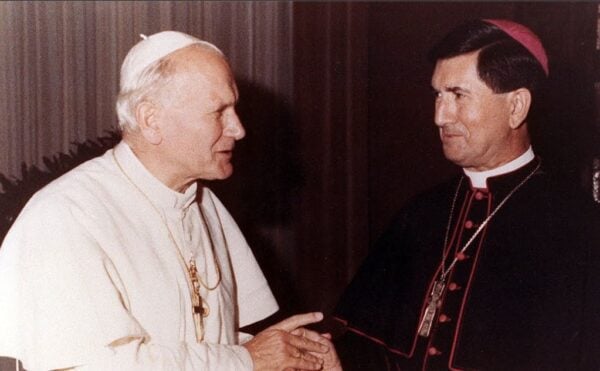


 ABYSSUS ABYSSUM INVOCAT / DEEP CALLS TO DEEP
You must be logged in to post a comment.