Some say that people are leaving the Catholic Church over the current scandals. This confuses me. In whom did you have faith? The priest? The bishop? Or God? If your faith was in a priest, a bishop, or even the pope, then what you professed was idolatry, not Christian faith.
Am I downplaying the seriousness of the scandal or the damage it has done? No, but let’s put things into perspective. If you ask, “How can I continue to have faith in the Catholic Church considering all these horrible acts?” you might put yourself in the place of the Jewish community after the Holocaust. They had to ask themselves: “How can I continue to have faith in God considering all these horrible acts?”
How can we continue to dedicate ourselves to a community so unfaithful to God? Moses asked the same question when he saw the infidelity of his fellow Jews in the desert. The prophets asked the same question when they saw the injustices of the people in the Promised Land. The early apostles must have asked themselves the same question when they saw that it was one of their own company who handed Jesus over to His enemies. And Peter himself, the “rock” on which the Church was to be built, denied he even knew the Lord in His most desperate hour of need. What could anyone do to compete with that?
How hard would it have been to stay in the Church when one’s friends, neighbors, and family members were being martyred, torn to shred by animals or burned alive, for refusing to deny their faith? How hard would it have been to stay in the Church when so many of one’s other friends, neighbors, and family members had given in and denied Christ in the face of the threats of the Roman authorities. Life in the Church has rarely been simple.
*
What would you have done when the Arian crisis split the Church in two, with the supposedly “Christian” emperor Constantine and most of the empire siding with the Arians? How about when three men all claimed to be pope in the fourteenth century? Or when the Protestant Revolt split Christendom and much of the Church hierarchy was corrupt and moribund? The Council of Trent was a great gift of the Spirit, but it didn’t commence until 1545 (Martin Luther authored the 95 theses in 1517), and it didn’t wrap up until 1563, nearly twenty years later.
Imagine being a Catholic in the midst of these scandals. What would you have done? Would you have been one of those who stayed and fought the good fight in faith? Or would you have been one of the many who said, “That’s it. I’m out”?
But then where would you have gone? That’s the question Peter asks Christ. “Lord, where else shall we go?” Who else has the words of everlasting life?
I’m sorry, but did I miss something? Did Christ found some other Church – the Church with the good people? The Church with the perfect liturgies? The Church in which all the clergy and laity are doctrinally correct and without sin? Because I’ve never seen it. I’ve never read about it in the Scriptures, nor did the Fathers and Doctors of the Church mention it. Quite the contrary; they repeatedly talk about the human element of the Church being sinful and in need of Christ’s redemption.
Are these scandals keeping people away from the Church? Please. People are staying away from the Church because the Church makes uncomfortable moral claims and because Catholics aren’t a living witness in society to the truth of that teaching. Surveys have repeatedly shown Catholics to be little different from the general public in their opinions on fundamental moral issues. Catholics in San Francisco threatened to sue their own bishop when he tried to enforce basic moral principles on the Catholic schools. Archbishop Chaput is held at arms’ length by many Catholic universities, while Cardinal Mahoney, supposedly under penance the way ex-Cardinal McCarrick was, travels freely.
Ask priests and editors of “conservative” Catholic websites what kind of blowback they get when they try to tell the laity they should pay a living wage, be fair and honest in their business practices, or exercise a preferential option for the poor. What kind of priests and bishops would you expect to get when large portions of the laity revolt if they hear anything from the pulpit about abortion, contraception, fornication, and same-sex sexual activity?
Large proportions of American Catholics wanted bishops who would look the other way as they openly violated fundamental Catholic teaching. Why are they surprised now to discover that some of these men “bent the rules” in their personal lives as well? Was fidelity what people were looking for? Or a winning personality and the ability to raise money? Wasn’t the latter the reason why so many institutions now so self-righteously condemning McCarrick earlier lavished him with honors and praise?
C.S. Lewis once complained about a culture that produces “men without chests” and then expects of them virtue.“We laugh at honor,” wrote Lewis, “and are shocked to find traitors in our midst. We castrate and bid the geldings be fruitful.” An American Catholic Church that laughed at Catholic social teaching and Catholic sexual morality should not be shocked to find doctrinal and moral traitors in its midst.
What do we do now? Demand the truth? Certainly. But as the Czech dissident Vaclav Havel insisted, you demand truth by living in the truth. We should say of authentic Church teaching what St. Augustine said about the Gospel: “If you believe what you like in the gospels, and reject what you don’t like, it is not the gospel you believe, but yourself.”
Are you a Catholic? Then stop worrying – and act like one.
*Image:The Apostle Peter by Anton Raphael Mengs, c. 1775 [Kunsthistorisches Museum, Vienna]
Randall Smith
Randall B. Smith is the Scanlan Professor of Theology at the University of St. Thomas in Houston. His most recent book, Reading the Sermons of Thomas Aquinas: A Beginner’s Guide, is now available at Amazon and from Emmaus Academic Press.
You have legitimate reasons to be concerned about being sent to St. Luke’s Institute (SLI). My experience of Saint Luke’s Institute indicates that SLI was set up for treatment of those suffering from addictions using principles of 12-step programs. While that kind of therapy may be valuable for some, it seems unlikely that it is the appropriate facility and treatment for you, Father. Not only that, I experienced a number of deficiencies with the intake and evaluation process that might cause you further harm. Allow me to explain.
I myself was sent to SLI in the spring of 2008. At the time I was suffering from improperly treated obsessive-compulsive disorder (OCD). It will be difficult for anyone who does not suffer from an anxiety disorder to understand how debilitating and dangerous OCD can be when not treated with the appropriate medicine and therapy — medicine and therapy specifically tailored for OCD as it manifests in a particular person.
In the spring of 2008, my emotional condition had deteriorated to the point that I experienced prolonged states of extreme anxiety called hypervigilance. I was in a perpetual state of exhaustion, so much so that I did not feel safe driving my car; and most seriously, I was regularly having suicidal thoughts. As a consequence, I was unable to perform my priestly ministry. Clearly, I needed help — something different than the less-than-helpful counseling and medication I was receiving in Minnesota.
One Saturday afternoon in late March or early April of 2008, a senior priest who was an archdiocesan official appeared at the back door of my rectory. Over the next few hours, it was explained to me that I would be going to SLI in Maryland for an evaluation.
The next day, Sunday morning, I was dropped off at the airport by a staff member of the parish at which I served. I had a one-way ticket to Washington, D.C. and no one to accompany me. I spent the entire flight of more than two hours in something like a state of panic. The anxiety caused me to feel as if I were choking. If my memory serves me correctly, I spilled a drink in my lap and spent much if not the majority of the flight standing in the flight attendant cabin trying to manage the unnerving feeling that I was choking.
Once I landed in Washington, D.C., I was not met and welcomed by a familiar face, nor by a brother priest, nor by a medical professional from SLI. Instead, I was met by the equivalent of a taxi driver.Early on, it became clear to me that the majority of the resident patients were homosexual.Tweet
Once I arrived at SLI, I was given a basic medical evaluation. The nurse on duty indicated that my first night in this strange and unfamiliar place would be spent in the equivalent of a small dormitory room with a complete stranger. This declaration put me in the worst emotional state I have ever experienced. Despite my state of terror, I found a way to resist the nurse’s order that I share the room with the stranger — a man I would later learn was at SLI because he had acted on his homosexual attraction.
If my memory serves me, it was only after an hour or more of suffering with the uncertainty about where I was to spend the night that the nurse assigned me to a room in the wing of SLI used to accommodate SLI’s version of a halfway house for graduates of their inpatient treatment program.
The Sunday I just described was without a doubt the worst day of my life; the following week of evaluation at SLI was certainly the worst week of my life, and my first month at SLI under what is called “restriction” was almost certainly the worst month of my life.
Early on, it became clear to me that the majority of the resident patients were homosexual. It was the first time I had experienced being in a sexual orientation minority, and in group therapy, I expressed this in the supposedly confidential setting. One of the homosexual resident patients twisted what I had said in the small group and shared it with other residents, portraying me as someone who hated homosexuals.
This was and certainly is not the case. I was simply using the therapeutic process as it was intended to process my uncomfortable feelings because nothing I had experienced as a seminarian or priest in my own archdiocese had prepared me for living with such an openly homosexual population. The betrayal by the member of my small group caused me to become persona non grata with many of the resident patients of SLI, which led to increased anxiety and isolation.
This letter is intended to help you, Fr. Paul, and those who care about you to be aware of at least some of the difficulties you might experience at SLI. It is not in any way a condemnation of SLI. I met some extraordinarily good and holy people there; at least one of the nurses and the staff psychiatrist may have been living saints. I learned many helpful things during my six months of inpatient treatment at SLI and returned several times for continuing care. That said, because SLI did not have an expert in OCD at that time, I know with certainty that it was not the right place for me to be sent for treatment of my OCD, and I suspect it is not the right place for you, Fr. Paul.
All the best in Christ,
Fr. Brian LynchFather Brian Lynch is a priest of the archdiocese of St. Paul and Minneapolis. He serves as pastor of Our Lady of the Prairie in Belle Plaine, Minnesota.
I am a college-educated, suburban, first-generation Latino immigrant. I voted for President Obama in 2008 and 2012. I find President Trump to lack the basic moral character that we should expect in our political leaders and did not consider, even for a moment, voting for him in 2016. After watching how Senate Democrats and the media handled the nomination of Brett Kavanaugh, however, I will be voting Republican in 2018 and for Trump in 2020.
When I came to the United States, I left a country that had recently undergone a military coup. My family experienced first-hand what happens when those in power abandon the rule of law. We saw the devastation that comes to a society when men of power believe their political objectives so justified that they are willing to pursue them by any means necessary. In the eyes of those men of power, we could see the deadening of souls that occurs when a man’s perceived benevolence blinds him to his own tyranny.
During the Kavanaugh hearings I saw that same look in the eyes of Senate Democrats. The hearings made clear that the Democrats on the committee were not interested in pursuing the truth or respecting Christine Blasey Ford’s desire for anonymity. Instead, they simply sought to delay the vote in the hopes of winning the next election.
If Kavanaugh’s reputation and Ford’s privacy had to be sacrificed on the altar of political expediency, the committee Democrats were not going to let basic decency prevent them from using the courts as an alternative path to the political ends they cannot reach through legislation.
I found Ford believable. Although her memory had significant gaps, she has clearly experienced some trauma. She does not come across as politically or financially motivated as some of the other accusers do. I also found Kavanaugh to be believable. He has an impeccable record and strongly denied the accusations. We may never answer the questions of what truly occurred.
But there is a greater question at hand, a question beyond the truthfulness of Ford or Kavanaugh’s testimony. This question will have lasting effects long beyond the tenure of Supreme Court Justice Anthony Kennedy’s replacement. That question is whether the politics of power, the politics by any means demonstrated by Sen. Dianne Feinstein and Senate Judiciary Committee Democrats, will be rewarded.
A mentor once told me, when discussing how to respond to inappropriate sexual conduct in the workplace, “You promote what you permit.” If Democrats are allowed to delay this nomination and the elections in 2018 and 2020 benefit them, both Republicans and Democrats for a generation will have learned that the American people prefer to be ruled by tyrants that punish their enemies instead of representatives in a republic who adhere to the rule of law.
The present crisis in the Church can only be resolved by Cardinals of the Church.
by +Rene Henry Gracida, Bishop Emeritus of Corpus Christi
(Emphasis by Abyssum in red type)
The Feast of Corpus Christi, June 3, 2018
“Statistics do not lie” they say, and the statistics recently released showing that Sunday Mass attendance is at the lowest point in the United States that it has ever been is sobering news. Apostasy is in the air. No one can deny that the Church is in a moment of crisis. A crisis that can only be resolved by a group of Cardinals, who were validly appointed by Popes Saint John Paul II and Benedict XVI, who did not incur the penalty of Excommunication Latae Sententiae by violating the restrictions of the Apostolic Constitution Universi Dominici Gregis which governed the Conclave held in 2013.
It can only be resolved by a group (however small in number) of validly appointed Cardinals who find that the election of Francis the Merciful at the Conclave of 2013 was invalid because the ballot which ‘elected’ him included ballots cast by Cardinals who had incurred the penalty of ExcommunicationLate Sententiae before voting, under the provisions of the Apostolic Constitution Universe Dominici Gregis, and among such Cardinals was Jorge Maria Bergolio himself.
It can only be resolved by a group (however small in number) of validly appointed Cardinals who, meeting in a special ad hoc conclave declare the See of Peter vacant and set the date for the next conclave which would be conducted under the provisions of Universi Dominici Gregis and which would proceed to elect the next Pope.
There is ample historical precedent for such a meeting of Cardinals, however small in number. Read in the historical record below the many instances in which a crisis of the institutional Church was only resolved by the action of a small group of Cardinals who had been validly appointed cardinal by a validly elected Pope.
Here are some historical facts to help you put what I am proposing in proper perspective. What I am proposing may seem radical to you, but believe me, what I am proposing is not nearly as radical as some of the solutions to similar crises that have occurred in the past.
Popes and Antipopes (999 .. 1503) from Wikipedia
Antipopes
Anti-popes were elected by an ecclesiastical faction and later declared uncanonical and invalid. Precise numbers are unknown due to scant documentation in earlier periods. The first anti-pope was probably St Hyppolitus (3rd Century) and the last Felix V, former Duke of Savoy. The number of antipopes range from 25 to 40.
High Middle Ages when the Europe was struggling with the rise of nationalism and new forms of political structure of society with consequent tensions between the Church and State.
On the last day of the council Pope Urban II preached about the oppression being inflicted on the Christians in the Middle East by the Muslim Seljuks. Christian churches were being destroyed and Christians attacked. The Pope called for the Christians in the West to help.
Pope Clement V, a Frenchman, moved the Papacy to Avignon in France after his election (1309-1377). Urban V tried to return, and Gregory XI succeeded shortly before his death. Unfortunately the authorities in Avignon did not immediately accept this, and the Great Schism resulted, from 1378-1415, and they continued to elect a Pope. An attempt to solve this in 1409 resulted in three popes, two being “elected” at Pisa.
In 1409 the Council of Pisa tried to solve the problem of having two popes, Gregory and Benedict. In the end the council declared the two void and elected their own; Alexander V.
Map of the city of Rome, showing an allegorical figure of Rome as a widow in black mourning the Avignon Papacy
The Avignon Papacy was the period from 1309 to 1376 during which seven successive popes resided in Avignon (which was then in the Kingdom of Arles, part of the Holy Roman Empire, now in France) rather than in Rome.[1]The situation arose from the conflict between the papacy and the French crown,culminating in the death of Pope Boniface VIII after his arrest and maltreatment by Philip IV of France. Following the further death of Pope Benedict XI, Philip forced a deadlocked conclave to elect the French Clement Vas Pope in 1305. Clement refused to move to Rome, and in 1309, he moved his court to the papal enclave at Avignon, where it remained for the next 67 years. This absence from Rome is sometimes referred to as the “Babylonian Captivityof the Papacy”.[2][3]
{It should be noted that since Peter was the first Pope and lived and died in Rome he was also the first Bishop of Rome. Consequently every Pope after Peter held the title of Pope because he was the Bishop of Rome. If he did not live in Rome it created a huge problem for the Church since the law of the Church has always been that a bishop MUST RESIDE IN THE DIOCESE of which he is he Bishop. So the fact that many of the Popes who resided in Avignon did so by choice they were considered by Catholics to have abandoned their See and hence were no longer Pope.}
A total of seven popes reigned at Avignon, all French,[4][5] and all under the influence of the French Crown. In 1376, Gregory XI abandoned Avignon and moved his court to Rome (arriving on January 17, 1377). But after Gregory’s death in 1378, deteriorating relations between his successor Urban VI and a faction of cardinals gave rise to the Western Schism. This started a second line of Avignon popes, subsequently regarded as illegitimate. The last Avignon antipope, Benedict XIII, lost most of his support in 1398, including that of France; after five years besieged by the French, he fled to Perpignan in 1403. The schism ended in 1417 at the Council of Constance, after two popes had reigned in opposition to the papacy in Rome.[6]
{In many ways the Papal palace in Avignon was more luxurious than the Vatican and so some of the Avignon popes can be accused of letting luxury influence their decision to remain in Avignon rather than live in Rome.}
Among the popes who resided in Avignon, subsequent Catholic historiography grants legitimacy to these:
Pope Clement V: 1305–1314 (curia moved to Avignon March 9, 1309)
The period from 1378 to 1417, when there were rival claimants to the title of pope, is referred to as the “Western Schism” or “the great controversy of the antipopes” by some Roman Catholic scholars and “the second great schism” by many secular and Protestant historians. Parties within the Roman Church were divided in their allegiance among the various claimants to the office of pope. The Council of Constance finally resolved the controversy in 1417 when {the claims of the popes in Avignon and elsewhere were rejected and the Council of Constance chose a completely different man} the election of Pope Martin V was accepted by all.
The papacy in the Late Middle Ages played a major temporal role in addition to its spiritual role. The conflict between the pope and the Holy Roman Emperor was fundamentally a dispute over which of them was the leader of Christendom in secular matters. In the early 14th century, the papacy was well past the prime of its secular rule – its importance had peaked in the 12th and 13th centuries. The success of the early Crusades added greatly to the prestige of the Popes as secular leaders of Christendom, with monarchs like those of England, France, and even the Holy Roman Emperor merely acting as marshals for the popes and leading “their” armies. One exception was Frederick II, Holy Roman Emperor, who was twice excommunicated by the Pope during a Crusade. Frederick II ignored this and was moderately successful in the Holy Land.
This state of affairs culminated in the unbridled declaration of papal supremacy, Unam sanctam, in November 1302. In that papal bull, Pope Boniface VIIIdecreed that “it is necessary to salvation that every human creature be subject to the Roman pontiff.” This was directed primarily to King Phillip IV of France who responded by saying, “Your venerable conceitedness may know that we are nobody’s vassal in temporal matters.” In 1303 AD, Pope Boniface VIII followed up with a bull that would excommunicate the king of France and put the interdict over France, and depose the entire clergy of France. Before this was finalized, Italian allies of the King of France broke into the papal residence and beat Pope Boniface VIII. He died shortly thereafter. Nicholas Boccasini was elected as his successor and took the name Pope Benedict XI. He absolved King Phillip IV and his subjects of their actions against Pope Boniface VIII; though the culprits who assaulted Boniface were excommunicated and ordered to appear before a pontifical tribunal. However, Benedict XI died within eight months of being elected to the papacy. After eleven months, Bertrand de Got, a French man and a personal friend of King Phillip IV, was elected as pope and took the name Pope Clement V.
Beginning with Clement V, elected 1305, all popes during the Avignon papacy were French. However, this makes French influence seem greater than it was. Southern France at that time had a culture quite independent from Northern France, where most of the advisers to the King of France were based. The Kingdom of Arles was still independent at that time, formally a part of the Holy Roman Empire. The literature produced by the troubadours in the Languedoc is unique and strongly distinct from that of Royal circles in the north. Even in terms of religion, the South produced its own variety of Christianity, Catharism, which was ultimately declared heretical. The movement was fueled in no small part by the strong sense of independence in the South even though the region had been severely weakened during the Albigensian Crusade a hundred years before. By the time of the Avignon Papacy, the power of the French King in this region was uncontested, although still not legally binding.
A stronger impact was made by the move of the Roman Curia from Rome to Poitiers in France in 1305, and then to Avignon in 1309. Following the impasse during the previous conclave, and to escape from the infighting of the powerful Roman families that had produced earlier Popes, such as the Colonna and Orsini families, the Roman Church looked for a safer place and found it in Avignon, which was surrounded by the lands of the papal fief of Comtat Venaissin. Formally it was part of Arles, but in reality it was under the influence of the French king. During its time in Avignon, the papacy adopted many features of the Royal court: the life-style of its cardinals was more reminiscent of princes than clerics; more and more French cardinals, often relatives of the ruling pope, took key positions; and the proximity of French troops was a constant reminder of where secular power lay, with the memory of Pope Boniface VIII still fresh.
The coat of arms of Benedict XIII displayed the papal tiara and cross. During this period, papal heraldry varied greatly and the crossed keys had not yet fully developed as a symbol of the papacy.
The temporal role of the Catholic Church increased the pressure upon the papal court to emulate the governmental practices and procedures of secular courts. The Catholic Church successfully reorganised and centralized its administration under Clement V and John XXII. The papacy now directly controlled the appointments of benefices, abandoning the customary election process that traditionally allotted this considerable income. Many other forms of payment brought riches to the Holy See and its cardinals: tithes, a ten-percent tax on church property; annates, the income of the first year after filling a position such as a bishopric; special taxes for crusades that never took place; and many forms of dispensation, from the entering of benefices without basic qualifications like literacy for newly appointed priests to the request of a converted Jew to visit his unconverted parents. Popes such as John XXII, Benedict XII, and Clement VIreportedly spent fortunes on expensive wardrobes, and silver and gold plates were used at banquets.
Overall the public life of leading church members began to resemble the lives of princes rather than members of the clergy. This splendor and corruption at the head of the Church found its way to the lower ranks: when a bishop had to pay up to a year’s income for gaining a benefice, he sought ways of raising this money from his new office. This was taken to extremes by the pardoners who sold absolutions for all kinds of sins to the poor. While pardoners were hated but needed to redeem one’s soul, the friars who failed to follow the Church’s moral commandments by failing their vows of chastity and poverty were despised. This sentiment strengthened movements calling for a return to absolute poverty, relinquishment of all personal and ecclesiastical belongings, and preaching as the Lord and his disciples had.
For the Catholic Church, an institution embedded in the secular structure and its focus on property, this was a dangerous development, and beginning in the early 14th century most of these movements were declared heretical. These included the Fraticelli and Waldensian movements in Italy and the Hussites in Bohemia (inspired by John Wycliffe in England). Furthermore, the display of wealth by the upper ranks of the church, which contrasted with the common expectation of poverty and strict adherence to principles, was used by enemies of the papacy to raise charges against the popes; King Philippe of France employed this strategy, as did Louis IV, Holy Roman Emperor. In his conflict with the latter, Pope John XXII excommunicated two leading philosophers, Marsilius of Padua and William of Ockham, who were outspoken critics of the papacy, and who had found refuge with Louis IV in Munich. In response, William charged the pope with seventy errors and seven heresies.
The proceedings against the Knights Templar in the Council of Vienne are representative of this time, reflecting the various powers and their relationships. In 1314 the collegium at Vienne convened to make a ruling concerning the Templars. The council, overall unconvinced about the guilt of the order as a whole, was unlikely to condemn the entire order based on the scarce evidence brought forward. Exerting massive pressure in order to gain part of the substantial funds of the Order, the King managed to get the ruling he wanted, and Pope Clement V ordered by decree the suppression of the order. In the cathedral of Saint Maurice in Vienne, the King of France and his son, the King of Navarre, were sitting next to him when he issued the decree. Under pain of excommunication, no one was allowed to speak at that occasion except when asked by the Pope. The Templars who appeared in Vienne to defend their order were not allowed to present their case — the cardinals of the collegium originally ruled that they should be allowed to raise a defense, but the arrival of the King of France in Vienne put pressure on the collegium, and that decision was revoked.
After the arrest of the Bishop of Pamiers by Philip IV of France in 1301, Pope Boniface VIII issued the bull Salvator Mundi, retracting all privileges granted to the French king by previous popes, and a few weeks later Ausculta fili with charges against the king, summoning him before a council to Rome. In a bold assertion of papal sovereignty, Boniface declared that “God has placed us over the Kings and Kingdoms.”
In response, Philippe wrote “Your venerable conceitedness may know, that we are nobody’s vassal in temporal matters,” and called for a meeting of the Estates General, a council of the lords of France, who had supported his position. The King of France issued charges of sodomy, simony, sorcery, and heresy against the pope and summoned him before the council. The pope’s response was the strongest affirmation to date of papal sovereignty. In Unam Sanctam(November 18, 1302), he decreed that “it is necessary to salvation that every human creature be subject to the Roman pontiff.” He was preparing a bull that would excommunicate the King of France and put the interdict over France, and to depose the entire clergy of France, when in September 1303, William Nogaret, the strongest critic of the papacy in the French inner circle, led a delegation to Rome, with intentionally loose orders by the king to bring the pope, if necessary by force, before a council to rule on the charges brought against him. Nogaret coordinated with the cardinals of the Colonna family, long-standing rivals against whom the pope had even preached a crusade earlier in his papacy. In 1303 French and Italian troops attacked the pope in Anagni, his home town, and arrested him. He was freed three days later by the population of Anagni. However, Boniface VIII, then 68 years of age, was deeply shattered by this attack on his own person and died a few weeks later.
Clement V in a later engraving
The death of Pope Boniface VIII deprived the papacy of its most able politician who could stand against the secular power of the king of France. After the conciliatory papacy of Benedict XI (1303–04), Pope Clement V(1305–1314) became the next pontiff. He was born in Gascony, in southern France, but was not directly connected to the French court. He owed his election to the French clerics. He decided against moving to Rome and established his court in Avignon. In this situation of dependency on powerful neighbors in France, three principles characterized the politics of Clement V: the suppression of heretic movements (such as the Cathars in southern France); the reorganization of the internal administration of the church; and the preservation of an untainted image of the church as the sole instrument of God’s will on earth. The latter was directly challenged by Philippe IV when he demanded a posthumous trial of his former adversary, the late Boniface VIII, for alleged heresy. Phillipe exerted strong influence on the cardinals of the collegium, and compliance with his demand could mean a severe blow to the church’s authority. Much of Clement’s politics was designed to avoid such a blow, which he finally did (persuading Phillipe to leave the trial to the Council of Vienne, where it lapsed). However, the price was concessions on various fronts; despite strong personal doubts, Clement supported Phillipe’s proceedings against the Templars, and he personally ruled to suppress the order.
John XXII
One important issue during the papacy of Pope John XXII (born Jacques Duèze in Cahors, and previously archbishop in Avignon) was his conflict with Louis IV, Holy Roman Emperor, who denied the sole authority of the Pope to crown the Emperor. Louis followed the example of Philippe IV, and summoned the nobles of Germany to back his position. Marsilius of Padua justified secular supremacy in the territory of the Holy Roman Empire. This conflict with the Emperor, often fought out in expensive wars, drove the papacy even more into the arms of the French king.
Benedict XII
Pope Benedict XII (1334–1342), born Jaques Fournier in Pamiers, was previously active in the inquisition against the Cathar movement. In contrast to the rather bloody picture of the Inquisition in general, he was reported to be very careful about the souls of the examined, taking a lot of time in the proceedings. His interest in pacifying southern France was also motivation for mediating between the King of France and the King of England, before the outbreak of the Hundred Years’ War.
Under Pope Clement VI (1342–1352) the French interests started dominating the papacy. Clement VI had been Archbishop of Rouen and adviser to Philippe IV before, so his links to the French court were much stronger than those of his predecessors. At some point he even financed French war efforts out of his own pockets. He reportedly loved luxurious wardrobe and under his rule the extravagant life style in Avignon reached new heights.
Clement VI was also pope during the Black Death, the epidemic that swept through Europe between 1347–1350 and is believed to have killed about one-third of Europe’s population. Also during his reign, in 1348, the Avignon papacy bought the city of Avignon from the Angevins.[8]
Clement VI
Pope Innocent VI (1352–1362), born Etienne Aubert, was less partisan than Clement VI. He was keen on establishing peace between France and England, having worked to this end in papal delegations in 1345 and 1348. His gaunt appearance and austere manners commanded higher respect in the eyes of nobles at both sides of the conflict. However, he was also indecisive and impressionable, already an old man when being elected Pope. In this situation, the King of France managed to influence the papacy, although papal legates played key roles in various attempts to stop the conflict. Most notably in 1353 the Bishop of Porto, Guy de Boulogne, tried to set up a conference. After initial successful talks the effort failed, largely due to the mistrust from English side over Guy’s strong ties with the French court. In a letter Innocent VI himself wrote to the Duke of Lancaster: “Although we were born in France and although for that and other reasons we hold the realm of France in special affection, yet in working for peace we have put aside our private prejudices and tried to serve the interests of everyone”.
With Pope Urban V (1362–1370), the control by Charles V of France of the papacy became more direct. Urban V himself is described as the most austere of the Avignon popes after Benedict XII and probably the most spiritual of all. However, he was not a strategist and made substantial concessions to the French crown especially in finances, a crucial issue during the war with England. In 1369 Pope Urban V supported the marriage of Philip the Boldof the Duchy of Burgundy and Margaret III, Countess of Flanders, rather than giving dispensation to one of Edward III of England‘s sons to marry Margaret. This clearly showed the partisanship of the papacy; correspondingly, the respect for the church dropped.Main article: War of the Eight Saints
Pope Gregory XI returned to Rome in 1376 and ended the Avignon Papacy.
The most influential decision in the reign of Pope Gregory XI (1370–1378) was the return to Rome, beginning on 13 September 1376 and ending with his arrival on 17 January 1377.[9][10] Although the Pope was French born and still under strong influence by the French King, the increasing conflict between factions friendly and hostile to the Pope posed a threat to the papal lands and to the allegiance of Rome itself. When the papacy established an embargo against grain exports during a food scarcity 1374 and 1375, Florence organized several cities into a league against the papacy: Milan, Bologna, Perugia, Pisa, Lucca and Genoa. The papal legate, Robert of Geneva, a relative of the House of Savoy, pursued a particularly ruthless policy against the league to re-establish control over these cities. He convinced Pope Gregory to hire Breton mercenaries. To quell an uprising of the inhabitants of Cesena he hired John Hawkwood and had the majority of the people massacred (between 2,500 and 3,500 people were reported dead). Following such events opposition against the papacy strengthened. Florence came in open conflict with the Pope, a conflict called “the war of the eight saints” in reference to the eight Florentine councilors who were chosen to orchestrate the conflict. The entire city of Florence was excommunicated and as reply the export of clerical taxes was stopped. The trade was seriously hampered and both sides had to find a solution. In his decision about returning to Rome, the Pope was also under the influence of Catherine of Siena, later canonized, who preached for a return to Rome.
This resolution was short-lived, however, when, having returned the papal court to Rome, Pope Gregory XI died. A conclave met and elected an Italian pope, Urban VI. Pope Urban alienated the French cardinals, who held a second conclave electing one of their own, Robert of Geneva, who took the name Clement VII, to succeed Gregory XI, thus founding a second line of Avignon popes. Clement VII and his successors are not regarded as legitimate, and are referred to as antipopes by the Catholic Church. This situation, known as the Western Schism, persisted from 1378 until the ecumenicalCouncil of Constance(1414–1418) resolved the question of papal succession and declared the French conclave of 1378 to be invalid. A new Pope, Pope Martin V, was elected in 1417; other claimants to succeed to the line of the Avignon Popes (though not resident at Avignon) continued until c. 1437.
The period has been called the “Babylonian captivity” of the popes. When and where this term originated is uncertain although it may have sprung from Petrarch, who in a letter to a friend (1340–1353) written during his stay at Avignon, described Avignon of that time as the “Babylon of the west,” referring to the worldly practices of the church hierarchy.[11] The nickname is polemical, in referring to the claim by critics that the prosperity of the church at that time was accompanied by a profound compromise of the papacy’s spiritual integrity, especially in the alleged subordination of the powers of the Church to the ambitions of the French kings. As noted, the “captivity” of the popes at Avignon lasted about the same amount of time as the exile of the Jews in Babylon, making the analogy convenient and rhetorically potent. The Avignon papacy has been and is often today depicted as being totally dependent on the French kings, and sometimes as even being treacherous to its spiritual role and its heritage in Rome.
Almost a century and a half later, Protestant reformer Martin Luther wrote his treatise On the Babylonian Captivity of the Church (1520), but he claimed it had nothing to do with the Western Schism or papacy in Avignon.
The relationship between the papacy and France changed drastically over the course of the 14th century. Starting with open conflict between Pope Boniface VIII and King Philip IV of France, it turned to cooperation from 1305 to 1342, and finally to a papacy under strong influence by the French throne up to 1378. Such partisanship of the papacy was one of the reasons for the dropping esteem for the institution, which in turn was one of the reasons for the schism from 1378–1417. In the period of the Schism, the power struggle in the papacy became a battlefield of the major powers, with France supporting the Pope in Avignon and England supporting the Pope in Rome. At the end of the century, still in the state of schism, the papacy had lost most of its direct political power, and the nation states of France and England were established as two of the main powers in Europe.
Jump up ^The Avignon Papacy, P.N.R. Zutshi, The New Cambridge Medieval History: c. 1300-c. 1415, Vol. VI, Ed. Michael Jones, (Cambridge University Press, 2000), 653.
Jump up ^ Adrian Hastings, Alistair Mason and Hugh S. Pyper, The Oxford Companion to Christian Thought, (Oxford University Press, 2000), 227.
Ladurie, E. le Roi. “Montaillou, Catholics and Cathars in a French Village, 1294–1324“, trans. B. Bray, 1978. Also published as “Montaillou: The Promised Land of Error“.
Read, P. P., “The Templars“, Phoenix Press. Chapter 17, “The Temple Destroyed“
Renouard, Yves. “Avignon Papacy“
Rollo-Koster, Joelle. 2015. Avignon and its papacy, 1309-1417. Lanham, MD: Rowman & Littlefield.
Sumption, J., “Trial by Fire“, Faber and Faber, 1999.
Vale, M., “The Civilization of Courts and Cities in the North, 1200–1500“. In: Holmes, G. (ed.) “The Oxford History of Medieval Europe“, Oxford University Press, 1988.
Voltaire, F-M, “Essai sur les mœurs et l’esprit des nations et sur les principaux faits de l’histoire depuis Charlemagne jusqu’à Louis XIII.” (English: Essay on the manners and spirit of nations and on the principal facts of history from Charlemagne to Louis XIII) Vol I, T XI, Chap LXV; edited by René Pomeau (1990) in 2 Volumes (Garnier frères, Paris) OCLC70306666
Zutschi, P.N.R., The Avignon Papacy. In: Jones, M. (ed.), The New Cambridge Medieval History. Volume VI c.1300-c.1415, pp. 653–673, 2000, Cambridge: Cambridge University Press.
In 1964, a young New Yorker, Kitty Genovese, was attacked in the street. Her assailant wielded a knife, and because she struggled, it took him almost ten minutes to kill her. Though some dispute the numbers, there were dozens of people in apartments nearby who could see or hear the attack. Not one came to her aid. No one even called the cops. These people weren’t being neighbors. They were guilty bystanders.
That’s what I feel is happening with clerical sex abuse, cover-ups, and homosexual harassment in Catholic seminaries. It’s happening right in front of us. But how many of us are doing anything about it?
Each day, it seems, we learn something new and appalling. It seems that the faction of cardinals who promoted, then elected Pope Francis, and the cardinals he named himself, are particularly awful:
Cardinal Danneels, Bergoglio booster. We have him on tape bullying a young man molested by his own uncle, a bishop, into not reporting the abuse. Danneels even blames the victim, alleging that he seduced the old deviant.
Cardinal Maradiaga, “vice-pope” under Francis. His local seminary is a homosexual hothouse, students report. Seminarians who complained of gay harassment got thrown out for causing trouble.
Cardinal McCarrick, who molested a boy he’d baptized himself and preyed on seminarians for decades. Former Vatican ambassador to the U.S., Archbishop Carlo-Maria Vigano says that Francis lifted Benedict XVI’s (too lenient) penalties on McCarrick. We do know that Francis restored him to favor, and sent him as a roving ambassador around the world. McCarrick helped negotiate the recent sellout of faithful Catholics to the Chinese Communist party.
Cardinal Wuerl of Washington, D.C. Pope Francis has kept him in place, despite revelations by the Pennsylvania district attorney. Among them? That Wuerl recycled abusive priests at unwitting parishes. And paid a decade of hush money to a priest who’d made violent child pornography on church property. When that priest was murdered at the gay B&B he ran in Cuba, Wuerl flew his corpse home for a hero’s funeral.
This list could be much longer. But you get the idea.
A Catholic sex abuse victim is even now being persecuted by his own Church.
I completely support the efforts of victims’ groups, faithful Catholics, and state attorneys general to dig up the truth, and get justice for victims. Pope Francis’ claim that his silence in the face of all these charges is like Jesus’ silence before Herod? That’s blasphemy, as my friend John Zmirak has written.
Who’s Being Victimized Today?
But right now I want to speak not of past crimes but present ones. Of a Catholic sex abuse victim even now being persecuted by his own Church. Which he serves as a priest. He’s not alone. Every Catholic at the parish he pastored till recently is also a victim. Of whom? Of Chicago archbishop Cardinal Blase Cupich — another member of the progressive “mafia” appointed by Pope Francis. As Church Militant reports:
Parishioners of Resurrection Parish in Chicago, Illinois, held a rainbow flag-burning event last week, cutting up and setting on fire an LGBT flag that once hung in the sanctuary at the parish’s first Mass. The event was originally scheduled for Sept. 29, the Feast of St. Michael and the Archangels, but the Chicago archdiocese — heeding complaints by gay activists — called the pastor, Fr. Paul John Kalchik, and ordered him not to hold the event. A handful of parishioners took things into their own hands and decided they would burn the flag themselves.
Kalchik is a victim of homosexual rape and abuse, once at the age of 11 and again at age 19. He has been pastor of Resurrection Parish for 11 years. He issued a heartfelt plea to Pope Francis in an open letter calling for an end to clerical cover-up. His strongly worded articles and homilies calling for reform in the Church, in particular denouncing the homosexual predation of clerics, has drawn down the ire of Cdl. Blase Cupich and the Chicago archdiocese, who have threatened to remove his priestly faculties and derail his priestly career.
Sending in the Enforcers
After parishioners burned the offensive banner, what did Cardinal Cupich do? Again, Church Militant:
[H]e ordered Kalchik to St. Luke (a treatment center with a notorious past, whose former CEO was convicted in 2014 of embezzling $200,000 dollars, which he spent on gay lovers).
“I made it clear to them that I was not just going to cave and walk away from being pastor here at Resurrection Parish, and I stated clearly: I was once worked over by an ordained minister of the Church; it’s not going to happen again,” Kalchik wrote. “I will not leave Resurrection Parish on my own accord.”
Father Kalchik was as good as his word. But Cupich struck fast, and hard:
The vicars for priests, acting on behalf of Cdl. Cupich, confronted Kalchik just as he was leaving to say 6 p.m. Mass, asking to meet with him privately. Kalchik refused to meet alone, instead gathering parishioners to be witnesses to the exchange.
Lyle and Thomas made clear they were there on order of Cdl. Cupich, who insisted that Kalchik be sent to St. Luke Institute for his “psychiatric issues.” Both vicars for priests had also only days before threatened that Kalchik could have his faculties removed if he failed to comply with Cupich’s orders.
…
According to parishioners Miriam and Wayne Smith, who spoke with Kalchik immediately after the confrontation, the vicars for priests “attempted to order him to pack his bags and leave, but he refused.”
“Fr. Kalchik told them that he had done nothing wrong and that he was going nowhere,” the Smiths told Church Militant. “They continued to use crude and threatening language that upset the staff members present very much.”
In a disturbing twist, the two vicars for priests alluded to Kalchik’s death when he continued to refuse to leave with them.
“Fr. Kalchik told those two enforcers that he had Mass to celebrate in the morning and that he was needed in the parish,” the Smiths continued. “The response from the two was to ask him, ‘What would happen if you were dead?’”
They could have asked, “What would happen if you were sick or injured?” but they asked him what would happen if he was dead. Based on that it is clear that if any harm came to Fr. Kalchik it would be on the orders of Cdl. Cupich. They continued to bully and verbally insult and attack Fr. Kalchik until it was clear that he was not going to do as they demanded because he had done nothing wrong. They left the rectory and everybody was very shaken up because they never expected that kind of behavior from the representative of Cdl. Cupich.
The Smiths said they left the rectory at 7:30 p.m. and saw both Lyle and Thomas “skulking around across the street in the shadows.” When the priests saw that they had been noticed, they entered their vehicles and drove off.
Father Kalchik is now in hiding. Good for his faithful parishioners for standing by him as witnesses and speaking up. They wouldn’t abandon him, as Kitty Genovese was abandoned. (Want to know how bad is the St. Luke Institute, where Cupich tried to ship Father Kalchik? Read this testimony by a priest who survived the place.)
The Chicago Way
I grew up in Chicago. For many years I found the Catholic Church repulsive, because of the kind of Catholics I’d met. Those formed by Cardinal Joseph Bernardin’s corrupt, libertine, leftist activist tenure as Archbishop of Chicago. As I wrote in an open letter to Cardinal Cupich in 2015, my daughter
Jessica was aborted against my wishes. And against her mother’s. Though we were both in high school, we were committed to caring for our baby. I had dropped out of school and joined the U.S. Infantry so that I could support my child. But while I was off at basic training, my girlfriend’s father uncovered our plan, and coerced her into a third trimester abortion. Our child died just a few short weeks before she would have been born an American citizen with the protection of all our laws.
She was killed at the Masonic hospital in your city of Chicago, during the tenure of one of your predecessors Cardinal Joseph Bernardin. Her father was a friend of the Cardinal’s, and a prominent Chicago Catholic. For years after that, I harbored a potent grudge against Catholics and the Church, whose prelates, politicos and parents I associated with abortion.
It might sound irrational to you, but I blamed Cardinal Bernardin. Not him alone, of course. Jessica’s death had many fathers. However, as Chicago’s spiritual father, wearing for that city the mantle of the apostles, Cardinal Bernardin bore unique responsibility for witnessing in public to the sanctity of life. As you do now.
A Seamless Bullet-Proof Vest for Pro-Abortion Pols
What provoked me to write? Cupich’s scandalous answer to the news that Planned Parenthood sells baby parts for profit. Cupich wrote in the Chicago Tribune that Catholics should not get especially worked up over this horror. In Cupich’s words:
While commerce in the remains of defenseless children is particularly repulsive, we should be no less appalled by the indifference toward the thousands of people who die daily for lack of decent medical care; who are denied rights by a broken immigration system and by racism; who suffer in hunger, joblessness and want; who pay the price of violence in gun-saturated neighborhoods; or who are executed by the state in the name of justice.
A man who could answer the cold-blooded, cannibalistic traffic in baby body parts with that boilerplate Seamless garment agitprop, what should we think of him? That he has no real passion for justice. No concern for victims or the vulnerable.
So, no wonder Cupich is trying to lock up a sex abuse victim and faithful priest for defending the Gospel’s teachings on sexuality.
No wonder tens of thousands have called for Cupich’s resignation. I’m adding my name to the list. Please read the petition and add your name as well.
We must not stand by silent as innocents are abused, their lives destroyed, and Faith is corrupted.
The Foundations of the Human Person: Fr. James Martin, Robert P. George, and Daniel Mattson on the Terms of Gay Identityby David Henderson within Sexuality Sep 26, 2018 08:02 pm http://www.thepublicdiscourse.com/2018/09/22543/ The language of “orientation” is not neutral with respect to the nature of human beings. It makes a fundamental claim about human nature—one that rejects the given order of reality.Share this article: Fr. James Martin’s impassioned plea in Building a Bridge for a new spirit of dialogue between the Church and the LGBT+ community continues to fuel divisive debate. Since its publication, critics and supporters have sparred over the book’s glaring omission of the Church’s magisterial teaching on homosexual relations.Those supportive of the book’s overall appeal are generally satisfied by Fr. Martin’s response that the mention of such a divisive topic would only have been counterproductive and that the aim of the book was not to weigh in on matters of doctrine. But this answer has only furthered calls for Fr. Martin to clarify his position and to state his support of magisterial teaching. Dan Hitchens, writing at First Things, is one among many who have expressed concern that while Fr. Martin nowhere preaches directly against Church teaching, he also nowhere affirms it as true.But in an article published here at Public Discourse, Robert George argues that Fr. Martin’s public confirmation of Church teaching, coupled with his repeated denials of seeking to alter a revealed truth of the faith, “removes doubt” and “no longer leaves room for detractors.” Citing Fr. Martin’s recent article in America Magazine, George writes that Fr. Martin has, “with no hint of ambiguity or evasion,” affirmed magisterial teaching as “valid, true, [and] binding to conscience.” To its credit, Fr. Martin’s article does acknowledge at some length the traditional scriptural and philosophical basis of the Church’s teaching on homosexuality, and at least tacitly approves of the Church’s statement that homosexual acts and the homosexual orientation are “objectively disordered.” Although the article says nothing about the merits of such teaching, or the benefit it may be to the human person, at the very least it does demonstrate a deference for magisterial authority and a willingness to respond to critics. It is also only fair to mention that the newly revised and expanded edition of Building a Bridgeincludes a complete citation of the catechism’s teaching on homosexuality (nos. 2357-2359), as well as an unqualified statement on the Church’s official position that sexual relations between people of the same sex are always impermissible.So is the controversy now over?Fr. Martin on Sexual OrientationGeorge’s defense of Fr. Martin lands predominantly on Fr. Martin’s willingness to verbally assent to Church teaching and not on the substance of Fr. Martin’s argument, which remains unaddressed. Several substantive points—including Fr. Martin’s promotion of “Pride” events, his ongoing support of New Ways Ministry and Out at St. Paul’s, and his insistence that the Church adopt LGBT+ nomenclature—do make an appearance at the end of George’s article, but are treated only as minor points of ongoing disagreement. But these issues are not so inconsequential. Taken together, they represent a single critical issue that has yet to be resolved: Fr. Martin’s continued affirmation of sexual orientation as a valid basis of personal identity.Building a Bridge, while timid in its defense of Christian teaching, is also brazenly emphatic that same-sex attraction serves as a genuine ground of personal, social, and cultural expression. The book advocates the Christian recognition of “gay” identity, calling on the Church to abandon its “antiquated” language of “homosexual persons” in favor of those terms chosen by the LGBT+ community. It is this premise that lies behind Fr. Martin’s willingness to support “Pride” events and to associate with organizations that unambiguously seek to change Church teaching. These challenges are further supported by the suggestion that failing to recognize and affirm the validity of “gay” and “lesbian” identity is in itself a failure of justice that devalues and “makes invisible” the dignity of LGBT+ persons.The question George does not raise is whether Fr. Martin’s assent to Church teaching is not in fact undermined by the more substantive points of his position, given all that it affirms in terms of “gay” culture, language, and identity. George writes that Fr. Martin cannot consistently affirm Church teaching while simultaneously endorsing institutions that contradict it, yet he does not point out that Fr. Martin also cannot assent to magisterial teaching if his position demands the evacuation of its language and content. How can one assent to a doctrine while rejecting its material terms, such as the choice to say “homosexual” rather than “gay” or “inclination” rather than “orientation”?Building a Bridge is strikingly silent on the theological implications of its position. In addition to giving no explanation for the theological foundations of Church teaching outside of appeals to naked authority, the book presents the Christian recognition of gay identity as a matter of little or no consequence. This not only deprives the Church of any justification for its moral teaching before the secular world, but is also patently untrue, as explained well by another voice in this ongoing discussion.A Fundamentally Different Vision of the Human PersonDaniel C. Mattson, in his book Why I Don’t Call Myself Gay, explains clearly what an acceptance of gay identity implies, showing how a validation of LGBT+ terms carries within it a fundamentally new understanding of sexuality and the human person. Mattson courageously relates his own story of conversion to the rejection of his identity as a “gay” man. He speaks of his realization that words such as “heterosexual,” “homosexual,” “gay,” or “straight” are “just too limiting to be of any real value to reflect the dignity of man’s sexuality.” They sow confusion, particularly among young people, about the true source of human personhood. Such terms, Mattson writes, “lack objectivity.” They see the human person exclusively through the culturally fabricated “grid” of a so-called “orientation,” which is little more than a collectively decided-upon means of categorizing a set of personal experiences, inclinations, and behaviors.To be clear, Mattson is not saying that subjective experiences are unimportant or immaterial to the formation of personal identity. They are, of course, vitally important, particularly with respect to the development of human sexuality. Mattson, rather, is pointing out that human emotional and sexual experiences can never be understood in isolation from a given order of creation that transcends them. The significance of a human experience, in other words, can only be rightly affirmed and interpreted against the backdrop of a more fundamental created goodness.Mattson points to this order and its subsequent drama in human history when he highlights the “twofold expression of human nature, as male and female,” on the one hand, and the reality “that man as a fallen creature can experience a variety of attractions and desires,” on the other. While not inconsequential, the conclusion derived from this latter dimension is not in itself a sufficient basis for determining what is essential to human identity. In addition to the potential that such experiences could be false or misleading, they are also always framed by a more primary experience of created givenness—that is, the experience of being created as a man or a woman.This is the heart of the matter. Mattson argues that, insofar as the language of being a “gay” man unavoidably circumscribes human identity between the categories of “straight” and some variation of “not straight,” it is not a benign descriptive term of the reality in question. The language of “gay” and “straight” orientations carries an entirely new judgment about the nature of sexuality as such, and with it a new understanding of the human person. In the first place, it construes human sexuality as originally without content, as something formless and androgynous, as though set before an infinite number of possible paths. In the second place, it conceives of the human person as abstracted from a sexual body, as someone who must first gather together an assortment of inclinations, attractions, and behaviors before receiving some manner of sexual “identity.” Put differently, the language of “gay” and “straight” orientations assumes that the primary order of created givenness is entirely insignificant, and thus approaches the distinction between “man” and “woman” as something over which a person exercises absolute authorial power.To repeat: the language of “orientation” is not neutral with respect to the nature of human beings. It makes a fundamental claim about human nature and thus subjects all persons to what is essentially a “gay” anthropology.Is Homosexual Identity a Social Construct?In light of this claim, Mattson asks the pertinent question: “Do homosexual persons, as such, really exist as homosexuals, or is homosexuality, and the entire spectrum of sexual identities, a product of man’s imagination, and the result of social constructs?”The term “social construct” may seem surprising here. Nowadays, we are trained to think that “male” and “female” are the constructs that artificially consolidate and restrain what is an otherwise “fluid” and unrestrained capacity to define oneself. Mattson’s point, however, is that the choice to frame human sexual identity in terms of an infinite number of possible behaviors is already a culturally influenced decision about the nature of the human person and of the natural world. This choice pivots on the words we use. With these words, we decide whether human sexuality is inconstant and indefinite before its consolidation into some form of “identity” or “orientation,” or whether it belongs more fundamentally to an objectively given substratum that human beings receive more than make. This is why the Church uses the language of a person having certain sexual tendencies (i.e., “same-sex attraction”) rather than a person being his or her sexual attractions, much less a chosen gender.When Fr. Martin rejects the language of “same-sex attraction” as being superficial and dismissive of human sexual identity, he seems unaware that beyond this language lies a more fundamental affirmation. Is he aware that this language is based on the only theologically appropriate option for the Church, which can proclaim the full dignity and richness of the human person only if she can affirm the goodness of the given, created world in which human beings live?Mattson’s book is a powerful witness to the grace of the Church’s teaching. It speaks to the emptiness and false promises of “coming out,” which he describes essentially as an experience of being habituated to a view of human personhood in which the person as he or she is as simply received is rendered insignificant. The “victory” of the gay rights movement in the twentieth century, in Mattson’s mind, is nothing but a further initiation into an already bleak and nihilistic outlook in which people are increasingly losing sight of the goodness of their existence.Thus, the greatest fault of Fr. Martin’s book lies not so much with what it omits with respect to the Church’s moral teaching, but rather with its truncated view of the human person. His declaration that “people have a right to name themselves,” and that the Church—and the whole of reality, for that matter—are beholden to the “names” people choose for themselves, perpetuates a view of the human person as the sole source of meaning and order in the universe.Upholding the Dignity and Truth of the Human PersonFr. Martin’s seemingly benign plea for justice and equity for “gay” and “lesbian” individuals based on their equal capacity to achieve an integral and morally sound personhood is therefore deceptive in at least two respects. First, it is something of a sleight of hand. Whether persons with same-sex attraction are called to moral holiness or are capable of profound acts of moral heroism is not in question—of course they are. No one with any conscience would deny this. But, more importantly, by basing this plea on an affirmation of “gay” identity, Fr. Martin has conceded the more fundamental ground, essentially removing any dimension of man’s created givenness from the notion of justice. The key question is this: Can an identity that denies the given order of creation ever be just with respect to the full dignity of the human person? In the Church’s estimation, the answer is unequivocally no. Affirming this effectively eliminates the body from any order of created goodness and silences any significance to our being created man and woman.Thus, the Church’s decision not to use the terms of the LGBT+ movement is a matter of profound prudence. Upon this rests her mission of mercy: to uphold the dignity and truth of the human person as a beloved creature tenderly made by God.Fr. Martin insists that the terms “homosexual persons” and “objectively disordered” are “needlessly harmful” and “unnecessarily cruel.” But surely this impression of cruelty is most prevalent when such terms are used in contexts where the truth of the human person they are meant to defend and affirm is not expressed or articulated fully. The fact that such a distinguished author and pastor so immersed in this issue seems unaware of what the Church affirms in her teaching is perhaps itself indicative of a genuine crisis. Too often, the Church’s moral teaching is understood solely as a prohibition or as the censuring of certain behaviors, while what she simultaneously affirms of human goodness goes unacknowledged and unrecognized. This is the difference between seeing moral truths as prohibitory laws and treating them instead as protections that invite individuals in new depths of personal awareness and intimacy with God. As Christians, we must work to articulate our faith mercifully and in accordance with God’s gratuitous abundance.David Henderson is a contributor to Humanum and Ph.D. candidate at the John Paul II Institute for Studies in Marriage and Family in Washington, D.C.
Posted inUncategorized|Comments Off on FATHER JAMES MARTIN AND FRIENDS SUCCEED BY TELLING HALF-TRUTHS, THESE AUTHORS CHALLENGE THEM TO TELL THE WHOLE TRUTH ABOUT HOMOSEXUALITY
Abraham Lincoln won the election of 1860 with only 39.8 percent of the popular vote and was so loathed that he had to take a night train secretly into Washington for his inauguration. The Salem Advocate in his own state of Illinois editorialized: “…he is no more capable of becoming a statesman, nay, even a moderate one, than the braying ass can become a noble lion. People now marvel how it came to pass that Mr. Lincoln should have been selected as the representative man of any party. His weak, wishy-washy, namby-pamby efforts, imbecile in matter, disgusting in manner, have made us the laughing stock of the whole world.” Two years later, the author Richard Henry Dana reported: “As to the politics of Washington, the most striking thing is the absence of personal loyalty to the President. It does not exist. He has no admirers, no enthusiastic supporters, none to bet on his head.” Against the rising tide of hate, Lincoln maintained his balance with quiet humor. And humor as the perception of imbalance is a strong defense against irrational people whose defining characteristic is a humorless lack of proportion. There is much hatred in our culture today, which has abandoned self-deprecation and has replaced humor with caustic vulgarity. It is not melodramatic to say that when people abandon Christ, they embrace the Anti-Christ who laughs not with us, but at us. The viciousness of current politics, perhaps even worse than Lincoln knew in his time, is a dance of despair that logically results from rejecting the logic of Christ who is “the Way, the Truth, and the Life.” When people lose hope in eternal verities, they resort to slander instead of discourse, desperately shouting mockeries from Senate balconies and university platforms. The enemy becomes not the unjust, but the just: “The godless say to themselves: ‘Let us lie in wait for the virtuous man, since he annoys us and opposed our way of life…’” (Wisdom 2:12). As human nature does not change, it is not surprising that Saint James accurately took the moral temperature of our generation back in his own: “Where do these wars and battles between yourselves first start? Isn’t it precisely in the desires fighting inside your own selves? You want something, and you haven’t got it; so you are prepared to kill. You have an ambition that you cannot satisfy; so you fight to get your way by force” (James 4:1-2). When people shout in hate and demonize their opponents, it is because hateful demons are at work. Milton’s Satan in Paradise Lost realized that he could not match God’s creation of beautiful man and woman in his image, so he must deface that image by the seductive charm of evil in disguise: “So farewell hope, and with hope, farewell fear, / Farewell remorse! All good to me is lost; / Evil, be thou my good.”
Kavanaugh Accuser Family CIA Black Budget Ops/Fusion GPS / Deep State Security Ties
Tuesday, September 18, 2018 16:25
Original Story by Paul Revere (17 Sep 2018)
We all knew their were “Deep State” ties but this is mind-blowing all the CIA “Deep State” Connections within her own family! I will provide EVERYTHING – ALL in one story! This is a True Real Deep State Life Spy Novel. (NOTE – Photos, Profiles & Past News of the Blasey family have been CIA “Scrubbed” from internet to keep the public from knowing about their criminally tied CIA “Deep State”.).
I do this for our Nations Survival, and maybe play a small part to move our nation forward at our time of need. Hopefully this will help keep our nations freedoms, so all our future generations can enjoy living free as I have.
Please link back to this original news story and give create to myself for my hours of invested work. (On BIN, a fellow poster NESARA straight out copy/pasted a previous story of mine and took full credit for it as their own work and got 40k+ reads.)
Dr Christine Blasey-Ford (Maiden Name = Blasey)
The Accuser = Dr Christine Basley-Ford, who is just a innocent woman wanting to do the right thing – yet has accused Brett Kavanaugh of a Sexual Assault 36 years ago, and wants the Public to believe her. KEY = Her FAMILY MAIDEN NAME IS BLASEY. Here are the KEY FACTS she provided about her Allegation
13,220
1 – Unable to name the exact year it happened,
2 – Not remembering where the location incident took place,
3 – How they gathered together that night.
4 – How she got home
5 – Did not tell anyone of incident at the time
Emigrate While You Still Can! Learn More…
So this is her Real Factual based victimization. I do not know any other actual “Victim” that can not remember specific traumatic emotional distress of any attempted rape, including one where she also Feared for her life. Each of us remembers Traumatic moments of each of our lives, even 50+ years ago. Whats going on inside her head/mind?
You read that right! She Seeks/Mentors and Oversee’s a CIA College Training Program – who is looking for Future and Pre-Screens potential young CIA Agents. Dr Blasey-Ford main College position is a Psychiatric Professor – Yet she needed a “Therapist” to Remember a lost memory for 30 years? “Psychiatry” is one who learns to control one’s Minds, Thoughts and Mental Illnesses!Stanford just removed all photos/job titles since she went public to hide her “Deep State” involvement. A Previous Professor of this Psychatric position is linked to a MKULTRA mind control assassination in 1985, allegedly ordered by her very own CIA father, using this CIA Internship program.
Dr Blasey-Ford has a Husband, Russell Ford, met at Stanford Univ, and were married in 2002. They have 3 young children. Russell Ford is the “Senior Director” at Zosano Pharma, and Exclusively Specializes in “Mind Altering” Drugs. Russell deleted his Facebook account, and removed his name from his Companies Website. Imagine that, he deals with Mind Altering drugs, and Christine is a CIA Internship recruiter for Stanford for CIA MKULTRA mind readjustments?
Keep in mind her 4 (or 2) boys statement was in 2012 – but in 2018, it changed to 2 guys!? If she remembers Brett, surely she remembers the 2nd boy. What was she and her husband in “Therapy” for and what caused this – as an average 98% of families do not ever need such treatment. So we see their was documented “Mental Stress” upon her. Now – what affects did her Stanford CIA MKULTRA college position have on her Mental Illness? Was she CIA MKULTRA Mind Controlled then or now? But wait, their are still 1 or 2 more “Mind Altering” MKULTRA connections to this specific CIA Stanford position that will be exposed.
She claimed to have passed a FBI Polygraph, but she already WORKS FOR IN A CIA FUNDED PROGRAM, HER FATHER (Ralph G. Blasey Jr) is a Life-Long CIA Operataive since the 1960s, and currently PROVIDES PUBLIC SECURITY TO ALL “DEEP STATE” OFFICIALS under Criminal Investigation today – AND HER BROTHER WORKS FOR A FUSION GPS LINKED FIRM!? How can one trust a FBI Polygraph when their is so much conflict with all these same Organizations under criminal investigation? This was clearly a CIA/FBI “Deep State” setup.
But this is just the start of her CIA and Deep State family connections.
Martha G. Kavanaugh, the mother of Brett Kavanaugh was a Maryland district judge in 1996. In an amazing coincidence, Martha Kavanaugh was the judge in a foreclosure case in which Christine Blasey-Ford’s parents were the defendants. Blasey-Ford is going after Brett Kavanaugh, not because of what he did in high school. Instead, Christine Blasey-Ford is going after Brett Kavanaugh out of spite and revenge for a case ruled on by Brett Kavanaugh mother. During the 1996 foreclosure case, Martha Kavanaugh ruled against the parents of Christine Blasey-Ford in the foreclosure case. Brett’s mother was Montgomery County Circuit Court judge from 1993 until she retired in 2001.
How did Baker Hostetler become a supporting character in the geopolitical drama over Russian meddling in the U.S. election, with possible implications for the fate of the Trump administration? The simple version? It was partly a matter of luck. The firm was tapped beginning in at least 2013 to defend a Cypriot company, Prevezon Holdings Ltd., against U.S. money laundering accusations. Natalia Veselnitskaya, the Russian lawyer who met Donald Trump Jr. in June 2016—reportedly with the intent to provide information damaging to Hillary Clinton’s presidential campaign—was also working for Prevezon.
And Fusion GPS, the company that produced the infamous Steele dossier on President Donald Trump and Russia, was also retained by Baker Hostetler amid the Prevezon litigation.
Ralph G Blasey Jr has been a life-long CIA Operative and Involved in CIA Black Ops Budgets and “Deep State” Security. His entire CIA & Deep State past spans 40+ years, would fill chapters, but he has been personally involved with the very top DC elites – including John Brennan, Robert Mueller, James Comey, Susan Rice, etc, as he does at this moment.
No major issue with Mr Ralph Blasey Jr just “HAPPENS” to be VP over all Personal private Security for Comey, Brennan, McCabe, Rice, Lynch, Podesta, etc? Yeap – she just has a normal everyday daddy and family we all have – and the public wasn’t suppose to know about…
The importance of noting this CIA banking connections of Ralph G. Blasey Jr., is due to the outbreak of what is now known as the “CIA Bank War”—and whose start of, in 1982, a CIAseized from publication news report (Declassified in Part-Sanitized Copy Approved for Release 2012/09/05: CIA-RDP90-00965R00150010-7) describes as: “This is Wall Street, the center of the international banking system, a system on the edge of a crisis so severe that the CIA is preparing drastic measures. Something must be done to avert the breakdown of the Free World’s monetary system.”
The main CIA operative involved in this war, and whom Ralph G. Blasey Jr. reported to, was Nicholas Deak (LINK)—a longtime OSS and CIA operative, both during and after World War II, who ran the CIA’s main BLACK BUDGET OPERATIONS under the direct command of the feared CIA Counterintelligence Chief James Jesus Angleton.
Interesting “Connection” hey? So Dr Blasey-Ford was placed in Dr Melges position, so she could control and recruit “targets” the CIA/FBI needed – just like what her father, Ralph G Blasey Jr did to assassinate Nick Deak? See how this “Connects the Dots” right back to being a CIA Deep State Treason attempt of our nation?
Rod Rosenstein’s Secret Lawyer Wife (Lisa Barsoomian) Represented CIA, FBI, Clinton, Mueller, Obama in 250+ Gov AND Personal Court Cases! She IS “THE” Court “FIXER”! Notice how she uses A DIFFERENT LAST NAME then Rod? 100% NORMAL in Gov – so Public does not “Tie” criminal Spouses with each other! Peter Strzok’s wife did same – Director of SEC – who just happened to NOT find “Any” criminal evidence to Procecute “The Clinton Foundation”! See how the Criminal “Circle” works? UNDERSTAND GUYS HOW IT WORKS?
So it just happens Dr Blasey-Ford works in the same CIA-funded position that her father allegedly used a previous Professor, who brainwashed Lois Lang to murder her father’s leaker of his 100s of millions of stolen CIA Black Budget monies? So now she is in that position to continue practicing “Mind Control” in today’s MKULTRA for the CIA and FBI. Not only that, but remember what/where her husband is a Sr Director and works? Yeah – in a “Mind Altering” drug producing company. Nothing to learn here hey? If you want to talk about her having A MENTAL ILLNESS – need you look any further? What was she in “therapy” for with her Husband?
So of course, Mrs Blasey-Ford has no interests other then being a honest angel country girl – that has no interest(s) in affecting the Trump agenda. How more “Deep State” can one be? I tried to expose this to other websites yesterday, but none printed it to inform the public.
And I didn’t even talk about her Lawyers involvement in the MoveOn and ANTIFA links, supporter and activistium, or Dr Blasey-Ford involvement in Aniti-Trump donations and her physical on the street activisium against President Trump.
1962 St Paul Hockey Team – #12 = ROBERT MUELLER & #18 = JOHN KERRY (Again Connections)
As CIA & FBI Directors come and go after 4+ decades, Mr Blasey stayed at the very top of CIA/FBI officials, and was transitioned into each new CIA/FBI Administration. If their is any Unelected, Stable, Reliable “Deep State” criminal agenda going on today, Mr Blasey Jr is a Major link Lifelong connection between each New Administration to carry out and plan any longterm “Criminal Coup” of our nation. Understand how someone 40+ years in the CIA from controlling Black Ops Secret Bank Budgets, to now Providing Personal Public Security to each of the “Deep State” criminals (Brennan, Comey, McCabe, Mueller, Rice, Lynch, etc) who have been fired, removed, and now facing criminal charges. The one link to them all are one Ralph G Blasey Jr – and the REAL TOP TIER DEEP STATE CONTROLLER. If Jeff Sessions or anyone in the White House want to find out any “Criminal Behavior” or want to know where each of his Security Team travels, need to ask him under oath what his involvement is, and who/when they all met with each other, and have a record by his agents.
Next Pres Reagan gathered enough money to pay off the National Debt in full and used it to crash the USSR economy about 1990. Once that happened, Reagan was leaving office and wrote a “Presidential Order” to pay off the debt when the money came back to the US – but GHW Bush REFUSED, AND STOLEN ALL THIS MONEY! HENCH – the Secret “Deep State” was once again FUNDED ($21+ Trillion today)! GHW BUSH THEN BOUGHT ALL THE US Top Gov POSITIONS AND COMPANIES TO CONTROL/RULE THE USA BEHIND THE SCENES! TRUE! Since then, all Presidents kept their power by continuing this cover-up and each President pocketing Trillions of Dollars – OUR TAXPAYERS MONEY and expanding the criminal element inside America (Drugs, Weapons, Child Sex Trafficking, etc)! Only now Honorable President Trump is ending their theft and crimes, and why the “Deep State” will stop at nothing to remove President Trump from office. See how this all just happens to “fit in”? Search “LEO WANTA” a true honest American Patriot to the Death; who was Reagan’s Lawyer to ensure the Federal Reserve was finally paid in full.. (LEARN ABOUT THIS HERE)
Did you know that OUR Supreme Court Justice Ruth Ginsburg is on Video Tape SAYING THAT SHE WISHES TO DESTROY OUR 1776 Constitution, and “Replace it” with one, like they placed in Africa!? Yeah Guys! She is on the Supereme Court and a Clinton Deep State Supporter – AND WANTS TO DO ALL SHE CAN TO CHANGE OUR “OLD” CONSTITUTION! (If Clinton would have won, she planned to replace Ginsburg with LORETTA LYNCH). THIS IS PURE TREASON AND SHE NEEDS TO BE REMOVED IMMEDIATELY TODAY as a Domentic Enemy!
0:00 Q info – 1:39 Video Starts! If you read video beginning, you will see Clinton was waiting to be elected and make LORETTA LYNCH TAKE HER PLACE!
Check out my other Original Stories.
Hope you enjoyed this and if you share it, please, link back to this original creation. I don’t mind sharing but link back so I am given credit for this. If you can, send me a personal positive blessing for enlighting you. Even a small like is appreciated and would love to have a beer from each of you who enjoyed it….
Bless all you and your loved ones and Believe in President Trump, Q, and all the True Patriots fighting to restore our Nation back to what our Founding Fathers wanted. Say silent prayers and blessings in our time of need.
The Spreadsheet from HellPosted: 27 Sep 2018 11:42 AM PDTThe World Cup of Bad Hymns has started, and here are the groupings for the first round. Apologies if your favourite bad hymn isn’t there: one or two couldn’t be found on the Internet, and one or two came in too late. HymnAuthorGroupGod’s Spirit is in my heart Alan Dale 2 This little guiding light of mine anon 1 Kumbayah anon 10 Christ be our light Bernadette Farrell 12 Bind us together, Lord Bob Gillman 15 If I were a butterfly Brian Howard 5 I Just Wanna Be A Sheep Brian M. Howard 14 The love I have for You, my Lord Carey Landry 16 Forever Chris Tomlin 4 Walk in the Light Damian Lundy 3 I, the Lord of sea and sky Daniel Schutte 1 City of God Daniel Schutte 7 Come to the Table of Plenty Daniel Schutte 16 Jesus take me as I am Dave Bryant 11 Now we remain David Haas 2 You are Mine David Haas 6 Sing a New Church Delores Dufner 6 I saw the grass, I saw the trees Estelle White 8 Autumn days when the grass is jewelled Estelle White 15 Moses, I know you’re the man Estelle White 14 Cheep! said the sparrow on the chimney top Estelle White 16 Deep within my heart, I feel voices whispering to me Frank Andersen 7 God of concrete Frederick R.C. Clarke 9 O mother, I could weep for mirth Frederick W. Faber 5 Shine, Jesus, Shine Graham Kendrick 10 Lay Down Your Head, Lord Jesus Christ Graham Maule 2 Journeys ended, journeys begun Gregory Norbet 14 This little light of mine Harry Dixon Loes 4 The Baker Woman Hubert J. Richards 8 I am the Living Bread Ifeanyichukwu Eze 7 Eat this bread Jacques Berthier 11 I love you with the love of the Lord Jim Gilbert 16 This is My Body, Broken for you Jimmy Owens 4 One bread, one body John Foley 12 I watch the sunrise John Glynn 13 There are hundreds of sparrow John Gowans 12 Jesus Christ is waiting John L. Bell 3 Enemy of apathy John L. Bell and Graham Maule 14 Gift of finest wheat John Michael Talbot 1 Come back to me with all your heart John Michael Talbot 12 Amazing Grace John Newton 10 I love to tell the story Katherine Hankey 11 Precious Body, Precious Blood Laurence Rosania 9 Our God reigns Leonard E. Smith 3 Gloria (clap clap) Martin Anderson 12 As the deer pants Martin Nystrom 11 Let us build a house where love can dwell Marty Haugen 5 Gather us in Marty Haugen 6 Springs of water, bless the Lord Marty Haugen 15 All are welcome Marty Haugen 12 Who is the alien Mary Louise Bringle 9 Follow me Michael Cocket 10 The world is full of smelly feet Michael Forster 8 On eagle’s wings Michael Joncas 4 Alleluia Ch-Ch Paul Inwood 15 They’ll Know We Are Christians By Our Love Peter Scholtes 8 Jesus Christ the apple tree R.H. 9 Here we are, all together, as we sing our song, joyfully Ray Repp 7 Make me a channel of your peace Sebastian Temple 6 Lord of the Dance Sidney Carter 2 Go, the Mass is ended Sister Marie Lydia Pereira 3 Colours of day Sue McClellan 1 Caterpillar, caterpillar Susan Sayers 5 I am the Bread of Life Suzanne Toolan 13 I have had a sheltered life, and only know about half of these masterpieces. Enough said.
Posted inUncategorized|Comments Off on SELECT YOUR SECRET FAVORITE SACCHARINE HYMN
Before starting my writing, I would first of all like to give thanks and glory to God the Father for every situation and trial that He has prepared and will prepare for me during my life. As a priest and bishop of the holy Church, spouse of Christ, I am called like every baptized person to bear witness to the truth. By the gift of the Spirit who sustains me with joy on the path that I am called to travel, I intend to do so until the end of my days. Our only Lord has addressed also to me the invitation, “Follow me!”, and I intend to follow him with the help of his grace until the end of my days.
“As long as I have life, I will sing to the Lord, I will sing praise to my God while I have being. May my song be pleasing to him; For I rejoice in the Lord.” (Psalm 103:33-34)
*****
It has been a month since I offered my testimony, solely for the good of the Church, regarding what occurred at the audience with Pope Francis on June 23, 2013 and regarding certain matters I was given to know in the assignments entrusted to me at the Secretariat of State and in Washington, in relation to those who bear responsibility for covering up the crimes committed by the former archbishop of that capital.
My decision to reveal those grave facts was for me the most painful and serious decision that I have ever made in my life. I made it after long reflection and prayer, during months of profound suffering and anguish, during a crescendo of continual news of terrible events, with thousands of innocent victims destroyed and the vocations and lives of young priests and religious disturbed. The silence of the pastors who could have provided a remedy and prevented new victims became increasingly indefensible, a devastating crime for the Church. Well aware of the enormous consequences that my testimony could have, because what I was about to reveal involved the successor of Peter himself, I nonetheless chose to speak in order to protect the Church, and I declare with a clear conscience before God that my testimony is true. Christ died for the Church, and Peter, Servus servorum Dei, is the first one called to serve the spouse of Christ.
Certainly, some of the facts that I was to reveal were covered by the pontifical secret that I had promised to observe and that I had faithfully observed from the beginning of my service to the Holy See. But the purpose of any secret, including the pontifical secret, is to protect the Church from her enemies, not to cover up and become complicit in crimes committed by some of her members. I was a witness, not by my choice, of shocking facts and, as the Catechism of the Catholic Church states (par. 2491), the seal of secrecy is not binding when very grave harm can be avoided only by divulging the truth. Only the seal of confession could have justified my silence.
Neither the pope, nor any of the cardinals in Rome have denied the facts I asserted in my testimony. “Qui tacet consentit” surely applies here, for if they deny my testimony, they have only to say so, and provide documentation to support that denial. How can one avoid concluding that the reason they do not provide the documentation is that they know it confirms my testimony?
The center of my testimony was that since at least June 23, 2013, the pope knew from me how perverse and evil McCarrick was in his intentions and actions, and instead of taking the measures that every good pastor would have taken, the pope made McCarrick one of his principal agents in governing the Church, in regard to the United States, the Curia, and even China, as we are seeing these days with great concern and anxiety for that martyr Church.
Now, the pope’s reply to my testimony was: “I will not say a word!” But then, contradicting himself, he has compared his silence to that of Jesus in Nazareth and before Pilate, and compared me to the great accuser, Satan, who sows scandal and division in the Church — though without ever uttering my name. If he had said: “Viganò lied,” he would have challenged my credibility while trying to affirm his own. In so doing he would have intensified the demand of the people of God and the world for the documentation needed to determine who has told the truth. Instead, he put in place a subtle slander against me — slander being an offense he has often compared to the gravity of murder. Indeed, he did it repeatedly, in the context of the celebration of the most Holy Sacrament, the Eucharist, where he runs no risk of being challenged by journalists. When he did speak to journalists, he asked them to exercise their professional maturity and draw their own conclusions. But how can journalists discover and know the truth if those directly involved with a matter refuse to answer any questions or to release any documents? The pope’s unwillingness to respond to my charges and his deafness to the appeals by the faithful for accountability are hardly consistent with his calls for transparency and bridge building.
Moreover, the pope’s cover-up of McCarrick was clearly not an isolated mistake. Many more instances have recently been documented in the press, showing that Pope Francis has defended homosexual clergy who committed serious sexual abuses against minors or adults. These include his role in the case of Fr. Julio Grassi in Buenos Aires, his reinstatement of Fr. Mauro Inzoli after Pope Benedict had removed him from ministry (until he went to prison, at which point Pope Francis laicized him), and his halting of the investigation of sex abuse allegations against Cardinal Cormac Murphy O’Connor.
In the meantime, a delegation of the USCCB, headed by its president Cardinal DiNardo, went to Rome asking for a Vatican investigation into McCarrick. Cardinal DiNardo and the other prelates should tell the Church in America and in the world: did the pope refuse to carry out a Vatican investigation into McCarrick’s crimes and of those responsible for covering them up? The faithful deserve to know.
I would like to make a special appeal to Cardinal Ouellet, because as nuncio I always worked in great harmony with him, and I have always had great esteem and affection towards him. He will remember when, at the end of my mission in Washington, he received me at his apartment in Rome in the evening for a long conversation. At the beginning of Pope Francis’ pontificate, he had maintained his dignity, as he had shown with courage when he was Archbishop of Québec. Later, however, when his work as prefect of the Congregation for Bishops was being undermined because recommendations for episcopal appointments were being passed directly to Pope Francis by two homosexual “friends” of his dicastery, bypassing the Cardinal, he gave up. His long article in L’Osservatore Romano, in which he came out in favor of the more controversial aspects of Amoris Laetitia, represents his surrender. Your Eminence, before I left for Washington, you were the one who told me of Pope Benedict’s sanctions on McCarrick. You have at your complete disposal key documents incriminating McCarrick and many in the curia for their cover-ups. Your Eminence, I urge you to bear witness to the truth.
*****
Finally, I wish to encourage you, dear faithful, my brothers and sisters in Christ: never be despondent! Make your own the act of faith and complete confidence in Christ Jesus, our Savior, of Saint Paul in his second Letter to Timothy, Scio cui credidi, which I choose as my episcopal motto. This is a time of repentance, of conversion, of prayers, of grace, to prepare the Church, the bride of the Lamb, ready to fight and win with Mary the battle against the old dragon.
“Scio Cui credidi” (2 Tim 1:12) In you, Jesus, my only Lord, I place all my trust. “Diligentibus Deum omnia cooperantur in bonum” (Rom 8:28).
To commemorate my episcopal ordination on April 26, 1992, conferred on me by St. John Paul II, I chose this image taken from a mosaic of the Basilica of St. Mark in Venice. It represents the miracle of the calming of the storm. I was struck by the fact that in the boat of Peter, tossed by the water, the figure of Jesus is portrayed twice. Jesus is sound asleep in the bow, while Peter tries to wake him up: “Master, do you not care that we are about to die?” Meanwhile the apostles, terrified, look each in a different direction and do not realize that Jesus is standing behind them, blessing them and assuredly in command of the boat: “He awoke and rebuked the wind and said to the sea, ‘Quiet! Be still,’ … then he said to them, ‘Why are you afraid? Do you still have no faith?’” (Mk 4:38-40).
The scene is very timely in portraying the tremendous storm the Church is passing through in this moment, but with a substantial difference: the successor of Peter not only fails to see the Lord in full control of the boat, it seems he does not even intend to awaken Jesus asleep in the bow.
Has Christ perhaps become invisible to his vicar? Perhaps is he being tempted to try to act as a substitute of our only Master and Lord?
The Lord is in full control of the boat!
May Christ, the Truth, always be the light on our way!
+ Carlo Maria Viganò Titular Archbishop of Ulpiana Apostolic Nuncio
September 29th, 2018 Feast of St. Michael, Archangel
Posted inUncategorized|Comments Off on ARCHBISHOP VIGANO’S SECOND STATEMENT



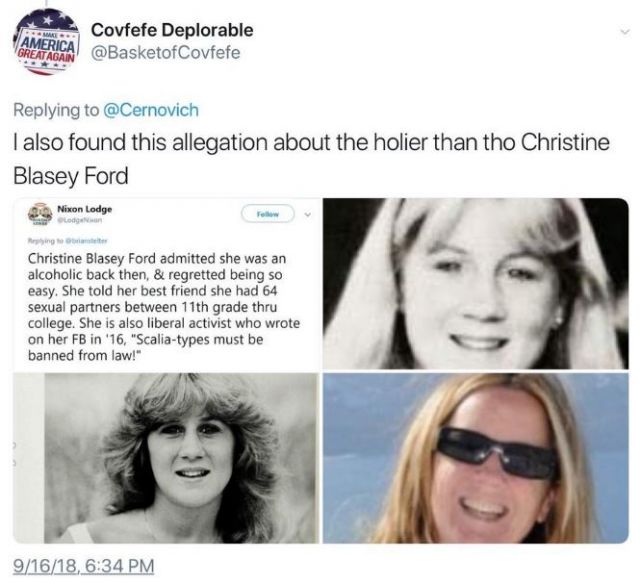

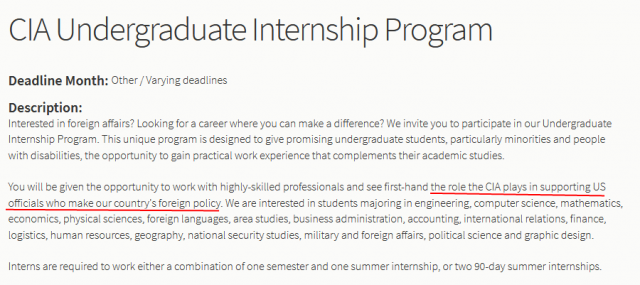
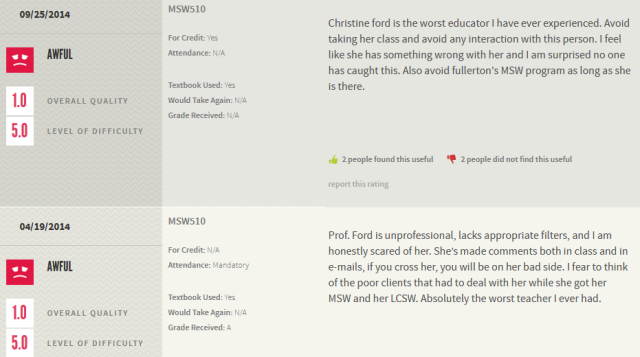
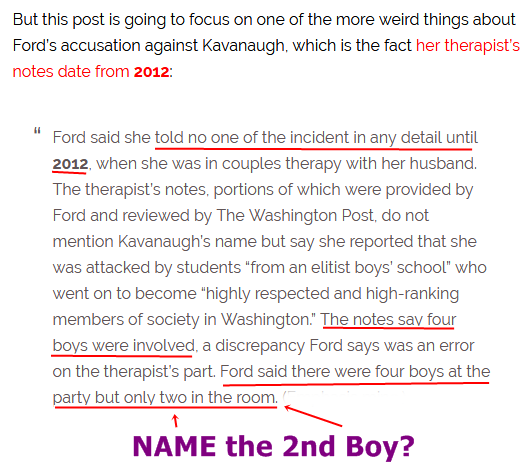
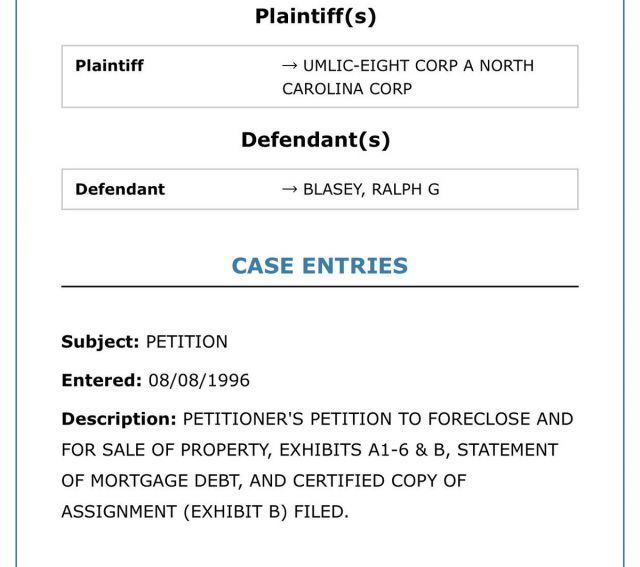
%20worked%20for%20Baker%20%26%20Hostetler%20LLP%20(firm%20made%20payments%20to%20Fusion%20GPS)%20-%202018-09-18_17_11_34.jpg)
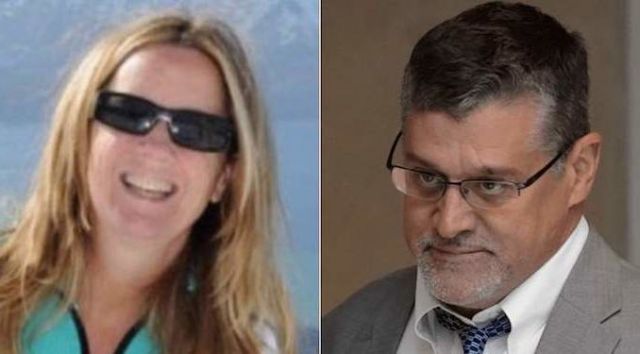
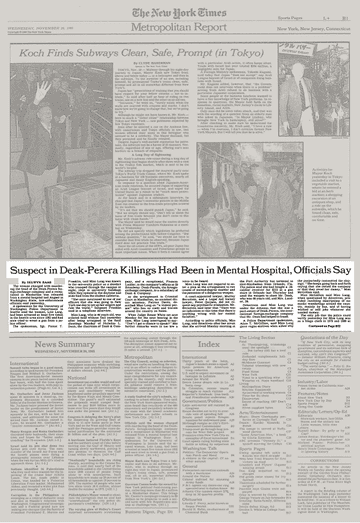

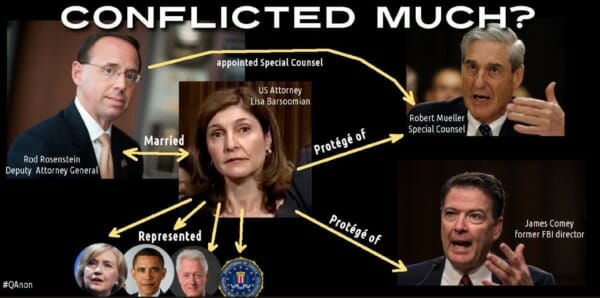


You must be logged in to post a comment.