Analysis: 4.9 Million Illegal Aliens Have Crossed our Borders Since President Biden Took Office(August 16, 2022, Washington, D.C.) — The issued the following statement, as well as a deeper dive into the growing border crisis, based on data quietly released yesterday by the Biden administration:Earlier this month, President Biden took credit for the July inflation rate being “only” 8.5 percent. Now that July border numbers are finally public, the White House may take credit for the fact that “only” 199,976 illegal aliens crossed our border, down from 207,416 in June. A minor drop in border encounters is not encouraging. Traditionally, numbers drop in the hottest summer months, and last month’s figures actually represent a 325 percent increase over the average number of July apprehensions under the Trump administration. More significantly, July numbers bring the total of illegal aliens crossing our borders since President Biden took office to 4.9 million, including some 900,000 “gotaways” who eluded apprehension and have since disappeared into American communities.“Roughly the equivalent of the entire population of Ireland has illegally entered the United States in the 18 months President Biden has been in office, with many being released into American communities. In that time, the Biden administration has blamed an unprecedented surge of illegal immigration on all sorts of external factors, except their own sabotage of our nation’s immigration laws. The endless flow of illegal aliens and the incursion of lethal narcotics pouring across our border will not end until this administration demonstrates a willingness to enforce our laws,” said Dan Stein, president of FAIR.FAIR Border Snapshot for July 2022 Since President Biden took office, nearly 4.9 million illegal aliens have crossed our borders.This includes the 3.9 million nationwide total reported by CBP – which includes a whopping 3.4 million at our Southwest border – as well as approximately 900,000 gotaways who have entered the country undetected per agency sources.CBP had 199,976 encounters at the Southwest border in July 2022, including 134,362 single adults, 51,822 family units, and 13,299 unaccompanied minors.This is a 325 percent increase from the average number of July apprehensions under President Trump.CBP has encountered more illegal aliens in just 10 months of FY 2022 than in the entirety of FY 2021.July was the 17th straight month with more than 150,000 encounters.CBP reports that 10 individuals on the FBI’s terror watchlist were apprehended between ports of entry at the Southwest border in July, bringing the total for the current fiscal year to 66.The Biden administration continues its crusade to end the Title 42 public health authority, despite extending other COVID-related national emergencies.In July, CBP expelled only 37 percent of illegal aliens using Title 42, a 7 percent drop compared to last month.2,071 pounds of fentanyl and 12,989 pounds of methamphetamine were seized at the southern border in July, with much more getting through because Border Patrol agents are busy processing illegal aliens.The amount of fentanyl seized in July is equivalent to 469 million lethal doses.
Posted inUncategorized|Comments Off on AT THE RATE BIDEN IS ENCOURAGING UNDOCMENTED ALIENS TO ENTER THE UNITED STATES THE DEMOCRATS WILL SOON HAVE AN UNBEATABLE MAJORITY IN EVERY ELECTION
Beware Of Transgender Psychologists August 16, 2022 Catholic League president Bill Donohue comments on the need to be wary of transgender psychologists: Boston was the epicenter of the clergy sexual abuse scandal in the Catholic Church, and now it is the epicenter of child abuse again, although this time it is the medical profession that is the culprit. Gender Multispeciality Service (GeMS) is part of Boston Children’s Hospital. The unit is known as one of the most advanced and prominent institutions of its kind in the United States that provides sex-reassignment operations on children. If we were serious about combating the sexual abuse of minors, we would shut it down. A psychologist who works there, Kerry McGregor, claims that “most of the patients that we have in the GeMS clinic actually know their gender, usually, around the age of puberty. But, a good portion of children do know as early as, seemingly, from the womb.” What she said is not simply wrong—it is impossible. Children do not decide their gender—culture does. Gender is a sociological term meaning the appropriate roles for males and females as determined by the culture we are born into. Notice the tentativeness of her remarks. A “good portion of children”—a quarter, half, more?—know “as early as, seemingly, from the womb” their gender. “Seemingly”? So apparently unborn children not only know their sex, they know whether they are satisfied with it. But how does she know that human beings she cannot interview—they cannot yet talk—are content with being a boy or a girl? Got to give her credit for one thing: If kids are that smart at that age, abortionists should be prosecuted for murder. There’s more. McGregor holds that some children choose their gender [which they really can’t] “as soon as they can talk.” What’s that? “They might say phrases, such as ‘I’m a girl’ or ‘I’m a boy’ or ‘I’m going to be a woman’ or ‘I’m going to be a mom.’ Kids know very, very early.” That’s funny, the first word out of my daughter’s mouth was “Dada”; it is easier to say than “Mama.” Looks like my kids were not an anomaly. A survey last year asked over 11,000 parents what their baby’s first words were. Here are the 15 most common: 1. Dad (or Dada, Daddy, Papa, etc.) 2. Mom (or Mama, Mommy, Mum, etc.) 3. Hi (or Hiya, Hey, Heya, Hello) 4. Buba (or Bub or Baba) 5. Dog (or Doggy, Puppy) 6. Ball 7. No 8. Cat (or Kitty) 9. Nana 10. Bye 11. Duck 12. Ta (or Tata) 13. Baby 14. Uh oh 15. Car “I’m a boy” or “I’m going to be a mom” never made the cut, nor did “I’m going to be an astronaut.” But perhaps McGregor meant they “seemingly” made such pronouncements. Love, she says, is “the biggest protector” against “negative mental health effects such as depression, suicidality, anxiety that we worry about for our gender diverse kids and young adults.” It is always good for parents to love their children, but she does not say why these children are more likely to be depressed or suicidal, for if she did it would blow up the narrative that these children are just like ordinary kids. They need help. What they don’t need is tampering with their bodies. Dr. Paul McHugh and Dr. Lawrence S. Mayer are two well-respected psychiatrists who are experts in this field. They concluded that the idea that “a person might be a man trapped in a woman’s body,” or vice versa, “is not supported by scientific evidence.” So why subject children to this kind of “treatment”? In the video where McGregor made her comments (it has since been taken down), she addresses parents who have children with gender dysphoria, and in doing so she unwittingly falls into a trap of her own making. She made reference to children whose gender is “other than the one that they were assigned at birth.” Wait a minute! Forget the fact that gender is never assigned—it is biologically determined by the father—how could it be possible for gender to be assigned at birth when she previously told us that “a good portion” of babies “in the womb” know what it is? She can’t have it both ways. The results of a big survey of psychologists was recently published in Perspectives on Psychological Science. Itfound that “80 percent of respondents said yes to [having] broad mental health difficulties,” and that “a little under half” admitted to being diagnosed by a professional. That says it all. There are, of course, many competent psychologists. However, parents need to exercise caution before selecting a psychologist to treat their children about any malady, never mind gender dysphoria. Some of them may just drive them crazy.
Posted inUncategorized|Comments Off on Boston was the epicenter of the clergy sexual abuse scandal in the Catholic Church, and now it is the epicenter of child abuse again, although this time it is the medical profession that is the culprit.
Ione posted this article on her blog about 8 years ago. It is excellent and reveals volumes about Ira Byock.
Dr. Ira Byock is making the rounds within the Catholic Church. This week he is in LA. The archbishop of LA wants Byock to train his priests on end of life. Next month Byock is scheduled to appear in FL.
The bishops are cooperating with the devil. I would say most bishops have watered down the 5 Commandment to make life easier for themselves. The one exception is Bishop Gracida who is copied on this email.
Sally, you sent a letter to ALL the US bishops re this issue and did not hear back in substance from a single one.
A few years ago I had the experience of working directly against a representative of the Church in the Diocese of Raleigh on legislation re End of Life.
Bishop Gracida came to Raleigh in 2015. Bishop Burbidge tried to tell me that his visit should not have happened since no permission to come was given by Bishop Burbidge. Wrong! Private visits are not controlled by the local bishop.
We stand with the truth. That is the best we can do. MOST OF ALL, THANK YOU Bishop Gracida for telling the truth about what has happened to the papacy.
Praying to the Holy Ghost for inspiration in these dark days. B
Growing up in the United Methodist Church I was blissfully unaware of liturgical debates and differences within Christianity. Our church was what I’d call “Middle Church”—we didn’t embrace all the liturgical riches of High Church Anglicanism, nor did we succumb to the antics of Low Church Evangelicalism. In other words, we were solidly Midwest Boring.
When I became Catholic in the early 1990s, the Mass I attended wasn’t much different in tone than what I experienced at my Methodist Church. There was no incense, no bells, no chant; nor was there extemporaneous prayers and modern music. So I felt comfortable in that setting. Although I had converted to Catholicism, my liturgical understanding was still predominantly Methodist.
Advertisement – Continue Reading Below
A few years after my conversion my pastor invited me to an ecumenical meeting of Catholics and Eastern Orthodox. Soon after that meeting I attended my first Eastern (Catholic) Divine Liturgy. I was mesmerized. This experience opened my eyes to what a liturgy could—and should—be. I began to read more and more about the liturgy, from both Eastern and Western Christian sources, and began a path to a decidedly “High Church” outlook to liturgy which eventually led me to where I am now: a regular attender of the traditional Latin Mass (TLM).
Perhaps because it began in the East and ended in traditional Rome, my liturgical path never led me to think that one specific liturgy was the only one all Christians should attend. I loved the diversity of the Eastern rites, while also appreciating the traditional Roman Rite. As I studied more liturgical history, in fact, I began to wish that the West had kept its own diversity more than it did.
Before the 16th century Protestant Reformation, the Catholic Church had no one set Western liturgy: the Roman, the Ambrosian, the Dominican, the Sarum, and other rites were commonly celebrated across Western Europe. Even within each rite existed differences around the continent. All these liturgies were interrelated, of course, but with various differences that had developed over time.
In response to the chaos of the Reformation, Pope Pius V made the Roman Rite (what we today call the traditional Latin Mass) the primary liturgy of the Church. He allowed exceptions for liturgies over 200 years old, but in practice the Roman Rite became the sole rite of the Latin Church.
Advertisement – Continue Reading Below
While the pope’s decision was sensible in the face of widespread doctrinal, sacramental, and liturgical confusion, I can’t help but think it was unfortunate that Western liturgical diversity was squelched.
In traditional Catholic circles, liturgical diversity today is understandably held in suspicion, as it typically points to the endless options of the Novus Ordo or cooked-up liturgies like the “Amazonian Rite” that have no connection to Catholic tradition. But authentic and organic Catholic liturgical development has historically resulted in diversity.
Organic and diverse development is what happened with the various Eastern liturgies, and that’s what happened in the West as well, at least before Pius V restrained that development. (In fact, it could be argued that the radical and inorganic liturgical changes of the 1960’s were in part an unfortunate result of bottled-up legitimate desires for liturgical development and diversity over the previous 400 years.)
One of the most significant ways liturgy organically develops is by taking on aspects of the culture in which it is celebrated. Diversity is found in the significant differences between the Western and Eastern rites, and it’s also seen in the various differences between the many Eastern rites themselves. Liturgical differences involve language, tone, and temperament, which reflect the culture of those who participate in it. Again, these differences aren’t something invented at meetings of professional liturgists, but develop naturally over time.
Advertisement – Continue Reading Below
As a Western Christian, I have always been most comfortable at Western liturgies. I absolutely love the Eastern rites, but they’ve never felt as “natural” as the traditional Latin Mass does to me. For me, attending the Eastern Divine Liturgy is like a wonderful vacation, but the ancient Roman Rite is home—I am decidedly Western in temperament.
But I’m not just a Western Christian; my background is more specific than that. Methodism is an offshoot of Anglicanism, being founded in England by the Anglican priest John Wesley in the 18th century. Further, my ancestry is deeply English, and because of that, I am quite the Anglophile American. So what about a Catholic liturgy that is not only Western, but English? Wouldn’t that be something?
Well, such a liturgy exists: the Ordinariate Mass. The history of this liturgy is a bit confusing, but I’ll give the basics here. In 2009, Pope Benedict XVI established what are called the “Ordinariates,” which were ecclesial structures for Anglican converts with Anglican-influenced liturgical practices. Many Anglicans, both cleric and lay, were becoming Catholic, but they lamented that they had to abandon many of their Anglican traditions that weren’t contradictory to Catholicism. So the pope generously set up a means by which they could continue to celebrate those traditions within the Catholic Church.
One of these traditions is a liturgy based on the Book of Common Prayer (BCP), which is the controlling liturgical and prayer book of the Anglican Church. The BCP dates back to the 16th century, and it is well-known for containing some of the most beautiful English-language prayers in existence—it brought Elizabethan English, the language of Shakespeare, to the liturgy. The BCP liturgy was also originally based on the Sarum Rite, a liturgy originating in medieval Salisbury, England and closely related to the Roman Rite. The goal of the Ordinariate then was to merge this beautiful linguistic and liturgical tradition with a fully Catholic theology and outlook.
Advertisement – Continue Reading Below
As can be seen, the Ordinariate Mass has had an eclectic history, encompassing the English Sarum Rite, the Anglican Book of Common Prayer, and the ancient Roman Rite, with some (unfortunate) influences from the modern Novus Ordo liturgy as well.
I had heard about and was intrigued by the Ordinariate Mass for a long time, but recently I was traveling in a town where the Ordinariate Mass is celebrated. So with my family I attended for the first time.
Since I regularly attend a TLM in a beautiful church and with wondrous sacred music, I was not awestruck by the Ordinariate Mass as Catholics who regularly attend a typical Novus Ordo might be. I am used to reverence in the liturgy, ad orientem worship, and theologically rich prayers.
In fact, because of my association with the TLM, it was jarring to witness a Western liturgy in English that was not irreverent. Decades of attending Novus Ordo Masses conditioned me to expect a certain casualness and even sloppiness to be attached to an English-speaking liturgy (yes, there are Novus Ordo exceptions, but these are few and far-between). In the Ordinariate Mass you have all the reverence and deep theology you find in the traditional Latin Mass, but the whole liturgy is in English.
Advertisement – Continue Reading Below
I know many faithful TLM-goers argue that a liturgical language like Latin is superior to the vernacular, and I respect those arguments. Latin is the language of the Latin Church, and it should always be given a certain pride of place. But I am not someone who believes the Latin language should be required for all Western liturgies. Also, it’s important to remember that the Ordinariate Mass is not in common English, it is a sacral English. For example, here is the Collect for Purity said at the beginning of Mass:
Almighty God, unto whom all hearts be open, all desires known, and from whom no secrets are hid: Cleanse the thoughts of our hearts by the inspiration of thy Holy Spirit, that we may perfectly love thee, and worthily magnify thy holy Name; through Christ our Lord.
This is not how we speak to each other, and it is fitting that we use more formal language to liturgically pray to God. It reminds our brains that what we do in the liturgy is not common speech, but the worship of Almighty God. You find a similar principle in the Eastern liturgies, which are often celebrated in old forms of the vernacular, such as Church Slavonic.
I have to admit I prefer the liturgy in this sacral English rather than Latin. I found it helped me to focus on what was being said better than Latin does, while still retaining the mystery one should find in a Catholic liturgy. But I acknowledge that this is a personal preference, and others have good reasons for their preferences. This is where legitimate liturgical diversity should be fostered. It’s not a matter of creating test-tube liturgies in committees and then foisting them upon the people; instead, cultures influence the development of liturgies over time, under the watchful eye of the Church.
Advertisement – Continue Reading Below
Many have described the Ordinariate Mass as “the traditional Latin Mass but in English.” While not completely accurate, I can understand why this is a common descriptor. Many of the prayers and the structure of the Ordinariate Mass are similar (or identical) to the TLM, and it’s much closer to the TLM than the Novus Ordo. In fact, attending an Ordinariate Mass exposes the common misunderstanding among many Catholics that the only difference between the Novus Ordo and the TLM is the language in which they are celebrated. By seeing firsthand how different the Ordinariate Mass is from the Novus Ordo, you understand quite clearly that the Novus Ordo is not the TLM in English; the Novus Ordo is, in fact (unlike the Ordinariate Mass) a radically different liturgy from the TLM.
While the Ordinariate Mass is far more similar to the TLM than the Novus Ordo, it has its own history and its own liturgical specifics that differ from the TLM. For example, the Ordinariate Mass does not require the penitential prayers at the foot of the altar at the beginning of Mass as the TLM does. However, it does have a Collect for Purity and a Summary of the Law immediately following the opening Sign of the Cross, and then a Penitential Rite after the Creed and before the Offertory:
Almighty God, Father of our Lord Jesus Christ, maker of all things, judge of all men: We acknowledge and bewail our manifold sins and wickedness, which we from time to time most grievously have committed, by thought, word, and deed, against thy divine majesty, provoking most justly thy wrath and indignation against us. We do earnestly repent, and are heartily sorry for these our misdoings; the remembrance of them is grievous unto us, the burden of them is intolerable. Have mercy upon us, have mercy upon us, most merciful Father; for thy Son our Lord Jesus Christ’s sake, forgive us all that is past; and grant that we may ever hereafter serve and please thee in newness of life, to the honour and glory of thy Name; through Jesus Christ our Lord. Amen.
This is followed by a “Prayer for Pardon” and some “Comfortable Words” which repeat a few Scriptural passages about the mercy of God.
Advertisement – Continue Reading Below
The Anglican history of the Ordinariate has led some Catholics to be hesitant about embracing the Catholicity of the Ordinariate Mass; after all, the BCP and Anglicanism itself were founded on a rejection of the papacy and the ruthless suppression of Catholicism in England. How can this be redeemed? Isn’t this just an example of watered-down Catholicism, of ecumenism gone amok?
Although I am a fierce critic of the modern ecumenical movement, I think this particular ecumenical move was a good one. The whole point of the ecumenical movement should be to unite Christians into one body, and as Catholics we know (or should know) that it is only in the Catholic Church that unity can occur. So to give a means by which non-Catholics can more easily enter the Catholic Church, without compromising our faith, is a wonderful thing. And if you look closely at the Ordinariate Mass, you can see it is fully and unapologetically Catholic.
While I am completely happy with attending the TLM at my parish, I hope and pray for the growth of the Ordinariate. First and foremost, it makes available a clear path for the conversion of Anglicans to Catholicism. It also makes reverent, theologically-rich liturgies available to more Catholics. And finally, it brings about more legitimate liturgical diversity within Western Catholicism.
To be clear, this is not intended to present the Ordinariate Mass as an alternative to the TLM if the latter is shut down, nor even as a replacement for the Novus Ordo. The Ordinariate Mass is not a “safety valve” for Trads. That’s not fair to the Ordinariate Mass, nor is it realistic. There are rumors, after all, that the Vatican will crack down on the Ordinariates after it finishes abolishing the TLM, since Traditionis Custodes argues that there should be only one form of the Roman Rite (I would argue that the Ordinariate Mass is not a form of the Roman Rite but a separate Western rite, but such details are rarely considered in the current push for liturgical uniformity). The Ordinariate Mass should stand on its own, as one of many Western liturgical rites.
There’s legitimate reason to worry about the future of all the ancient rites of the Church, but for now I’m thankful that the Ordinariate is available to English-speaking Catholics. It is my prayer that the traditional Latin Mass and the Ordinariate Mass—as well as the Eastern liturgies and other ancient Western liturgies—all flourish in the Church, glorifying God in diverse ways.
No other solemnity breathes, like this one, at once triumph and peace; none better answers to the enthusiasm of the many and the serenity of souls consummated in love. Assuredly that was as great a triumph when our Lord, rising by his own power from the tomb, cast hell into dismay; but to our souls, so abruptly drawn from the abyss of sorrows on Golgotha, the suddenness of the victory caused a sort of stupor to mingle with the joy of that greatest of days. In presence of the prostrate Angels, the hesitating Apostles, the women seized with fear and trembling, one felt that the divine isolation of the Conqueror of death was perceptible even to his most intimate friends, and kept them, like Magdalene, at a distance.
Mary’s death, however, leaves no impression but peace; that death had no other cause than love. Being a mere creature, she could not deliver herself from that claim of the old enemy; but leaving her tomb filled with flowers, she mounts up to heaven, flowing with delights, leaning upon her Beloved. Amid the acclamations of the daughters of Sion, who will henceforth never cease to call her blessed, she ascends surrounded by choirs of heavenly spirits joyfully praising the Son of God. Nevermore will shadows veil, as they did on earth, the glory of the most beautiful daughter of Eve. Beyond the immovable Thrones, beyond the dazzling Cherubim, beyond the flaming Seraphim, onward she passes, delighting the heavenly city with her sweet perfumes. She stays not till she reaches the very confines of the Divinity; close to the throne of honor where her Son, the King of ages, reigns in justice and in power; there she is proclaimed Queen, there she will reign for evermore in mercy and in goodness.
Here on earth Libanus and Amana, Sanir and Hermon dispute the honor of having seen her rise to heaven from their summits; and truly the whole world is but the pedestal of her glory, as the moon is her footstool, the sun her vesture, the stars of heaven her glittering crown. “Daugher of Sion, thou art all fair and sweet,” cries the Church, as in her rapture she mingles her own tender accents with the songs of triumph: “I saw the beautiful one as a dove rising up from the brooks of waters; in her garments was the most exquisite odor; and as in the days of spring, flowers of roses surrounded her and lilies of the valley.”
The same freshness breathes from the facts of Bible history wherein the interpreters of the sacred Books see the figure of Mary’s triumph. As long as this world lasts a severe law protects the entrance to the eternal palace; no one, without having first laid aside the garb of flesh, is admitted to contemplate the King of heaven. There is one, however, of our lowly rare, whom the terrible decree does not touch; the true Esther, in her incredible beauty, advances without hindrance through all the doors. Full of grace, she is worthy of the love of the true Assuerus; but on the way which leads to the awful throne of the King of kings, she walks not alone; two handmaids, one supporting her steps, the other holding up the long folds of her royal robe, accompany her; they are the angelic nature and the human, both equally proud to hail her as their mistress and lady, and both sharing in her glory.
Advertisement – Continue Reading Below
If we go back from the time of captivity, when Esther saved her people, to the days of Israel’s greatness, we find our Lady’s entrance into the city of endless peace, represented by the Queen of Saba coming to the earthly Jerusalem. While she contemplates with rapture the magnificence of the mighty prince of Sion, the pomp of her own retinue, the incalculable riches of the treasure she brings, her precious stones and her spices, plunge the whole city into admiration. There was brought no more, says the Scripture, such abundance of spices as these which the Queen of Saba gave to King Solomon.
The reception given by David’s son to Bethsabee, his mother, in the third Book of Kings, no less happily expresses the mystery of today, so replete with the filial love of the true Solomon. Then Bethsabee came to King Solomon … and the king arose to meet her, and bowed to her, and sat down upon his throne: and a throne was set for the king’s mother: and she sat on his right hand. O Lady, how exceedingly dost thou surpass all the servants and ministers and friends of God! “On the day when Gabriel came to my lowliness,” are the words St. Ephrem puts into thy mouth, “from handmaid I became Queen; and I, the slave of thy divinity, found myself suddenly the mother of thy humanity, my Lord and my Son! O Son of the King who hast made me his daughter, O thou heavenly One, who thus bringest into heaven this daughter of earth, by what name shall I call thee?” The Lord Christ himself answered; the God made Man revealed to us the only name which fully expresses him in his two-fold nature: he is called The Son. Son of Man as he is Son of God, on earth he has only a Mother, as in heaven he has only a Father. In the august Trinity he proceeds from the Father, remaining consubstantial with him; only distingushed from him in that he is Son; producing together with him, as one Principle, the Holy Ghost. In the external mission he fulfills by the Incarnation to the glory of the Blessed Trinity—communicating to his humanity the manners, so to say, of his Divinity, as far as the diversity of the two natures permits—he is in no way separated from his Mother, and would have her participate even in the giving of the Holy Ghost to every soul. This ineffable union is the foundation of all Mary’s greatnesses, which are crowned by today’s triumph. The days within the Octave will give us an opportunity of showing some of the consequences of this principle; today let it suffice to have laid it down.
“As Christ is the Lord,” says Arnoldof Bonneval, the friend of St. Bernard, “Mary is Lady and sovereign. He who bends the knee before the Son, kneels before the Mother. At the sound of her name the devils tremble, men rejoice, the Angels glorify God. Mary and Christ are one flesh, one mind, and one love. From the day when it was said The Lord is with thee, the grace was irrevocable, the unity inseparable; and in speaking of the glory of Son and Mother, we must call it not so much a common glory as the self-same glory.” “O thou, the beauty and the honor of thy Mother,” adds the great deacon of Edessa, “thus hast thou adorned her in every way; together with others she is thy sister and thy bride, but she alone conceived thee.”
Rupert in his turn cries out: “Come then, O most beautiful one, thou shalt be crowned in heaven Queen of saints, on earth Queen of every kingdom. Wherever it shall be said of the Beloved that he is crowned with glory and honor, and set over the works of his Father’s hands, everywhere also shall they proclaim of thee, O well beloved, that thou art his Mother, and as such Queen over every domain where his power extends; and, therefore, emperors and kings shall crown thee with their crowns and consecrate their palaces to thee.”
Advertisement – Continue Reading Below
Mass.—Who is this King of glory? asked the keepers of the eternal gates, on the day of Emmanuel’s triumphant Ascension. Their question is twice repeated in the Psalm, and a third time in Isaias, who cries out in the name of the heavenly citizens: Who is this that cometh from Edom, with dyed garments from Bosra, this beautiful one in his robe, walking in the greatness of his strength? In like manner do the Angelic Princes twice express their admiration of the Virgin Mother. It is the sacred Canticle that tells us so. Who is she that cometh forth as the morning rising? This first question, as St. Peter Damian says, refers to Mary’s birth, which put an end to the night of sin.
She had fulfilled her mission, accomplished the prophecy, crushed the head of the serpent. The blessed spirits who accompanied her, cried out to the guardians of the heavenly ramparts, in the words of the triumphant Psalm: “Open your gates!” So Judith, a type of Mary returning victories, had cried: Open the gates, for God is with us, who hath shown his power in Israel. The eternal gates were lifted up, and all the inhabitants of heaven, from the least to the greatest, went forth to meet the second Judith coming up from the earth’s lowly valley; and they rejoiced with far greater exultation than did Israel brought the figurative Ark into the holy city.
Introit
Advertisement – Continue Reading Below
Let us echo the heaven’s joy, and with our solemn Introit as a triumphal march, usher Mary into the true Jerusalem. The Verse is taken from the forty-fourth Psalm, the Epithalamium, thus linking the chants of the Holy Sacrifice with last night’s Lessons from the sacred Canticle.
Let us all rejoice in the Lord, celebrating a festival day in honor of the Blessed Virgin Mary, for those whose Assumption the Angels rejoice and give praise to the Son of God.
Ps. My heart hath uttered a good word: I speak my works to the King. ℣. Glory, &c. Let us all.
Collect
The following Prayer asks for the pardon and salvation through the intercession of the Mother of God. Its apparent want of harmony with the mystery of the feast might surprise us, did we not remember that it is only the second Collect for the day, in the Sacramentary; the first, which we have given above, and which was said over the faithful at the beginning of the assembly, expressly declares that Mary could not be held by the bonds of death.
Pardon, we beseech thee, O Lord, the sins of thy servants; that we, who are not able to please thee by our deeds, may be saved by the intercessions of the Mother of thy Son. Who lives, &c.
Epistle
In all things I sought rest, and I shall abide in the inheritance of the Lord. Then the creator of all things commanded, and said to me: and he that made me, rested in my tabernacle, And he said to me: Let thy dwelling be in Jacob, and thy inheritance in Israel, and take root in my elect. From the beginning, and before the world, was I created, and unto the world to come I shall not cease to be, and in the holy dwelling place I have ministered before him. And so was I established in Sion, and in the holy city likewise I rested, and my power was in Jerusalem. And I took root in an honourable people, and in the portion of my God his inheritance, and my abode is in the full assembly of saints. I was exalted like a cedar in Libanus, and as a cypress tree on mount Sion. I was exalted like a palm tree in Cades, and as a rose plant in Jericho: As a fair olive tree in the plains, and as a plane tree by the water in the streets, was I exalted. I gave a sweet smell like cinnamon. and aromatical balm: I yielded a sweet odour like the best myrrh.
The Epistle we have just read is closely connected with the Gospel that is to follow. The rest that Mary sought is the better part, the repose of the soul in the presence of the Peaceful King; and when a soul is thus full of peace, she forms the choicest part of her Lord’s inheritance. No creature has attained so nearly as our Lady to the eternal, unchangeable peace of the ever-tranquil Trinity; hence no other has merited to become, in the same degree, the resting place of God.
A soul occupied by active works cannot attain the perfection or the fruitfulness of one in whom our Lord takes his rest, because she is at rest in him; for this is the nuptial rest. As the Psalm says: “When the Lord shall give sleep to his beloved, then shall their fruit be seen.”
Advertisement – Continue Reading Below
Let us, then, who became Mary’s children on the day the Lord first rested in her tabernacle, understand these magnificent expressions of Eternal Wisdom; for they reveal to us the glory of her triumph. The branch that sprang from the stock of Jesse bears the divine Flower on which rests the fullness of the Holy Ghost; but it has taken root also in the elect, into whose branches it passes the heavenly sap, which transforms them and divinizes their fruit. These fruits of Jacob and of Israel, i.e., the works of the ordinary Christian life or of the life of perfection, belongs therefore to our Blessed Mother. Rightly then does Mary enter today upon her unending rest in the eternal Sion—the true holy city and glorified people—the Lord’s inheritance. Her power will be established in Jerusalem and the Saints will forever acknowledge that they owe to her the fullness of their perfection.
But the plenitude of Mary’s personal merits far surpasses that of all the Saints together. As the cedar of Libanus towers above the flowers of the field, far more does our Lad’s sanctity, next to that of her divine Son, surpass the sanctity of every other creature. In a homily for this Feast, the Angelic Doctor says: “The trees to which the Blessed Virgin is compared in this Epistle may be taken to represent the different orders of the blessed. This passage therefore means: that Mary has been exalted above the Angels, Patriarchs, Prophets, Apostles, Martyrs, Confessors, Virgins, and all the Saints, because she possesses all their merits united in her single person.”
Gradual
The Gradual is taken, as was the Verse of the Introit, from the 44th Psalm. In it we sing those perfections of the Bride that have caused the King of kings to call her to himself. The Alleluia Verse tells us how the angelic army hailed the entrance of its Queen.
Because of truth, and meekness, and justice, and thy right hand shall conduct thee wonderfully.
℣. Hearken, O daughter, and see, and incline thy ear: for the King hath greatly desired thy beauty.
Alleluia. Alleluia.
℣. Mary is assumed into heaven: the host of Angels rejoiceth. Alleluia.
Gospel
At that time: Jesus entered into a certain town; and a certain woman named Martha, received him into her house. And she had a sister called Mary, who sitting also at the Lord’ s feet, heard his word. But Martha was busy about much serving. Who stood and said: Lord, hast thou no care that my sister hath left me alone to serve? speak to her therefore, that she help me. And the Lord answering, said to her: Martha, Martha, thou art careful, and art troubled about many things: But one thing is necessary. Mary hath chosen the best part, which shall not be taken away from her.
To this Gospel the Roman Liturgy formerly added, as the Greek and the Mozarabic still add, the following verses from another chapter of St. Luke: As he spoke these things, a certain woman from the crowd lifting up her voice said to him: Blessed is the womb that bore thee, and the paps that gave thee suck. But he said: Yea, rather, blessed are they who hear the word of God, and keep it.
Advertisement – Continue Reading Below
The words thus added turned the people’s thoughts towards our Lady; still the episode of Martha and Mary in the Gospel of the day remained unexplained. We will use the words of St. Bruno of Asti to express the reason tradition gives for the choice of this Gospel. “These two women,” he says, “are the leaders of the army of the Church, and all the faithful follow them. Some walk in Martha’s footsteps, others in Mary’s; but no one can reach our heavenly fatherland unless he follows one or the other. Rightly then have our fathers ordained that this Gospel should be read on the principal feast of our Lady, for she is signified by these two sisters. For no other creature combined the privileges of both lives, active and contemplative, as did the Blessed Virgin. Like Martha she received Christ—yea, she did more than Martha, for she received him not only into her house, but into her womb. She conceived him, gave him birth, carried him in her arms, and ministered to him more frequently than did Martha. On the other hand, she listened, like Mary, to his words, and kept them for our sake, pondering them in her heart. She contemplated his Humanity and penetrated more deeply than all others into his Divinity. She chose the better part, which shall not be taken away from her.”
“He,” continues St. Bernard, “whom she received at his entrance into this poor world, receives her today at the gate of the holy City. No spot on earth so worthy of the Son of God as the Virgin’s womb: no throne in heaven so lofty as that whereon the Son of Mary places her in return. What a reception each gave to the other! It is beyond the power of expression, because beyond the reach of our thought. Who shall declare the generation of the son, and the Assumption of the Mother?”
In honor of both Mother and Son, let us put this Lesson of the Gospel into practice in our lives. When our soul is troubled, like Martha, or distracted with many anxieties, let us always remember, as Mary did, that there is but one thing necessary. Our Lord alone, either in himself or in his members, should be the one object of our thoughts.
Every human thing is of more or less importance in proportion to its relation to God’s glory; we should value everything in this proportion, and then the grace of God which surpasseth all understanding will keep our hearts and minds in Christ Jesus.
Offertory
Advertisement – Continue Reading Below
Today the Church on earth, represented by Martha, complains that she has been left alone to struggle and labor; but our Lord defends Mary, and confirms her in her choice of the better part. The Angels are keeping a great feast in heaven; the Offertory once more tells of their joy.
Mary is assumed into heaven, the Angels rejoice, praising together they bless the Lord. Alleluia.
Secret
We must not allow anything like regret or envy to cast a shadow over our hearts. Mary has finished her pilgrimage and left our earth; but now that she has entered into her glory, she still prays for us. So says the Secret.
May the prayer of the Mother of God assist thy people, O Lord; though we know her to have passed out of this world, may we experience her intercession for us with thee in the glory of heaven. Through the same Lord, &c.
Preface
It is truly meet and just, right and available to salvation, that we should always, and in all places, give thanks to thee, O holy Lord, Father Almighty, eternal God: and that we should praise, bless and glorify thee on the Assumption of the blessed Mary, ever a Virgin, who by the overshadowing of the Holy Ghost, conceived thy Only Begotten Son, and the glory of her Virginity still remining, brought forth to the world the eternal Light, Jesus Christ our Lord. By whom the Angels praise thy majesty, the Dominations adore it, the Powers tremble before it; the heavens and the heavenly Virtues, and the blessed Seraphim, with common jubilee, glorify it. Together with whom, we beseech thee that we may be admitted to join our humble voices, saying: Holy! Holy! Holy!
Communion
If you loved me, said our Lord to his disciples when about to leave them, you would indeed be glad because I go to the Father. Let us, who love our Lady, be glad because she goes to her Son, and, as we sing in the Communion Anthem, the better part is hers forever.
Mary hath chosen for herself the best part: which shall not be taken from her for ever.
Postcommunion
The sacred Bread, for which we are indebted to Mary, remains always with us. May It, through her intercession, preserve us from all evils!
Having been made partakers of a heavenly banquet, we implore thy mercy, O Lord our God: that we who celebrate the Assumption of the Mother of God, may by her intercession be delivered from all threatening evils. Through the same Lord, etc.
Thou didst taste death, O Mary! But that death, like the sleep of Adam at the world’s beginning, was but an ecstasy leading the Bride into the Bridegroom’s presence. As the sleep of the new Adam on the great day of salvation, it called for the awakening of resurrection. In Jesus Christ our entire nature, soul and body, was already reigning in heaven; but as in the first paradise, so in the presence of the Holy Trinity, it was not good for man to be alone. To-day at the right hand of Jesus appears the new Eve, in all things like to her Divine Head, in His vesture of glorified flesh: henceforth nothing is wanting in the eternal paradise.
O Mary, who according to the expression of thy devout servant John Damascene, has made death blessed and happy, detach us from this world, where nothing ought now to have a hold on us. We have nothing ought now to have a hold on us. We have accompanied thee in desire; we have followed thee with the eyes of our soul, as far as the limits of our mortality allowed; and now, can we ever again turn our eyes upon this world of darkness? O Blessed Virgin, in order to sanctify our exile and help us to rejoin thee, bring to our aid the virtues whereby, as on wings, thou didst soar to so sublime a height. In us, too, the must reign; in us, they must crush the head of the wicked serpent, that one day they may triumph in us. O day of days, when we shall behold not only our Redeemer, but also the Queen who stands so close to the Sun of Justice as even to be clothed therewith, eclipsing with her brightness all the splendours of the saints!
The Church, it is true, remains to you, O Mary, the Church, who is also our Mother, and who continues thy struggle against the dragon with its seven hateful heads. But she, too, sighs for the time when the wings of an eagle will be given her, and she will be permitted to rise like thee from the desert and to reach her Spouse. Look upon her passing, like the moon, at thy feet, through her laborious phases; hear the supplications she addresses to thee as Mediatrix with the divine Sun; through thee may she receive light; through thee may she find favour with Him who loved thee, and clothed thee with glory and crowned thee with beauty.
Dom Prosper Guéranger (1805 – 1875) was the Benedictine Abbot of the monastery of Solesmes, France. After the horrors of the French Revolution, Guéranger helped to revive the Church by means of monasticism and in particular liturgical piety. His magnum opus, The Liturgical Yearis a pious meditation on the spiritual, doctrinal, and historical aspects of the Roman Rite as it was passed down by our fathers. He also revived Gregorian Chant at a time when it had fallen into disuse, even in Rome. His work on the liturgy forms the heart and soul of the Catholic Counter-Revolution after 1789 and the true nature of the Catholic liturgical movement. As such his works are promoted by OnePeterFive as we fight against the iconoclasm which still haunts our churches and liturgies. See our editorial stance to read about all the “godfathers” of Traditionalism that we promote.
2Shares
2
Posted inUncategorized|Comments Off on THE TRIUMPH AND PEACE OF THE ASSUMPTION OF THE BLESSED VIRGIN MARY
“An act of love…the ultimate way to be a good man.” This is the language used by Doug Stein, the “Vasectomy King,” and others marketing the procedure, according to a Washington Postarticle. Stein told Bloomberg that requests for vasectomies have nearly tripled in his practice since the Supreme Court decision Dobbs v. Jackson Women’s Health Organization, which holds that the Constitution does not confer a right to abortion; Roe and Casey are overruled; and the authority to regulate abortion is returned to the people and their elected representatives.
This limitation on abortion access has moved Democrats to put the pressure back on men to get permanently sterilized. Echoing the 2020 bill by Alabama Representative Rolanda Hollis requiring vasectomies to “neutralize” abortion bans, Pennsylvania State Rep. Christopher Rabb introduced a “satirical” bill in October 2021 that will “require all inseminators to undergo vasectomies within six weeks from having their third child or 40th birthday.” Rabb hoped the legislation would “spark conversation in response to bills restricting abortion rights across the nation,” but instead it was met with backlash.
ADVERTISEMENT – CONTINUE READING BELOW
But it’s not only politicians and pro-abortion activists who are reacting out of fear that limitations on abortions will lead to limitations on birth control and sterilizations. Vasectomies are becoming more commonplace in many average American households, and open conversations about them are no longer taboo.
After my husband and I had our fourth child, we were at a cookout when a practical stranger reported to us in detail about her husband’s vasectomy and how she had required it of him to preserve the marriage. I felt awful for her husband, as she prodded him to share about his weekend with a bag of frozen peas. Not long after that, a Facebook post popped up in our neighborhood moms’ group. It read, “Alright ladies—where did your husbands go for vasectomy? I’m done with babies! (Mother’s Day gift, anyone?)” I was shocked. But apparently, I was alone in my shock because the post attracted much jovial attention followed by many referrals.
Through the post, I discovered that a good number of the men in our neighborhood have had vasectomies. One woman even boasted sitting in on her husband’s procedure, in order to make sure that he went through with it. This prompted me to ask other women I respect if they have had similar experiences. A friend responded, sharing that her college friend’s husband actually live-tweeted his vasectomy.
ADVERTISEMENT – CONTINUE READING BELOW
And so, I return to the original question of male sterilization being “an act of love” and “the ultimate way to be a good man.” Is this seemingly altruistic mutilation an act of love by virtue of saving the one he loves from undergoing an abortion or sterilization of her own? Certainly not! There exists a lie in this argument based on a “warped understanding of love.” While love selflessly wills the good of the other, it also preserves the virtue and goodness of both.
As Theresa Notare of the USCCB puts it, “Love is selfless, not selfish! Love wills the good of the other person. Love cherishes who the other person is and how the other person is made (e.g., one’s fertility is not rejected or harmed). Love lives virtues like sacrifice, self-discipline, generosity, and goodness for both. Love builds the family and hopes for the future.” With real love in a relationship, sex will be a lie if it stands upon a union determined to destroy any life born of its embrace. This notion that the sterilized man is “stepping up” in responsibility by saving the woman from an unwanted pregnancy sadly hinders his love sterile as well.
To be a good man requires one first to be a man, in every way (physical, mental, spiritual). These elements of a man should be developed and improved upon; and they should only be medically hindered when necessary for the man’s health and to remove or prevent the spread of disease, such as penile and testicular cancer. The man’s goodness certainly gains merit on his selfless care and protection of others and putting their needs above his own needs and desires.
ADVERTISEMENT – CONTINUE READING BELOW
In the case of sex, a good man would grow in patience as he learns his wife’s fertility cycle, abstain when there is a need, and remain open to new life even when utilizing infertile windows in her cycle. The truth of this act of love is not spoken with the horror of another conception and limitations on terminations but, rather, a love spoken with total self-gift and the invitation for an unshattered communion.
We’re left deciding what’s worse—women demanding retribution for their erroneously perceived right being stripped away, or men kowtowing to meet the demands of their retribution through the willing mutilation of their own flesh. In the wake are crumbling marriages and relationships resting loosely on the uneven ground of power grabs, resentment, and lack of respect and responsibility. These decaying social foundations practically cry out for unjust laws and ridiculous bills such as presented by Hollis and Rabb.
Planned Parenthood, the nation’s top abortion provider, also offers vasectomies, a fact many Americans may be unaware of. And yet, urologists such as Marc Goldstein, director of the Center for Male Reproductive Medicine and Microsurgery at Weill Cornell Medical Center in New York, reported seeing “twice as many patients per week for vasectomy reversals compared to vasectomies.” Unlike an abortion, this said “act of love” is reversible, and, according to Stanford Medicine, “Up to six percent of men (approximately 30,000 men each year), change their minds after vasectomy and wish to father children again.”
Kimberly Cook is the author of Motherhood Redeemed: How Radical Feminism Betrayed Maternal Love, as well as the host of the podcast, The Dignity of Women. Her marriage workbook on the virtues earned her the Catholic Writers Guild Seal of Approval, and her Workbook for Single Women has been used internationally. Kimberly holds an MA in Systematic Theology and runs KimberlyCook.ME, which challenges modern feminism. She lives in Virginia with her husband and their children.
“Pope Pius XII… on the cusp of the descent of both the world & the Church into the filth of the sexual revolution, solemnly defined the Bodily Assumption of Mary into Heaven”
The Assumption of Mary had been strongly believed
since the earliest times of Church history
(in the East as well as in the West).
Above is an Egyptian Coptic icon in the Church of St Menas, Cairo.
We must keep fighting for the restoration of the Church by exposing the falsehoods and evil that have entered the Church.
We must keep doing this, but we will fail if we don’t pray at Mass and outside Mass for the restoration.
Jesus Christ will restore the Church through His Mother. Independent scholar James Larson explains why:
Rosary to the Interior: For the Purification of the Church
“The Lord possessed me in the beginning of his ways, before he made anything from the beginning…. I was with him, forming all things: and was delighted every day, playing before him at all times. Playing in the world: and my delights were to be with the children of men. (Proverbs 8: 22, 30-31).
“For we know that every creature groaneth and travaileth in pain, even till now. And not only it, but ourselves also, who have the first-fruits of the Spirit, even we ourselves groan within ourselves, waiting for the adoption of the sons of God, the redemption of our body.” (Romans 8: 22-23).
The two above-quoted passages from Holy Scripture present absolutely contrasting images of human life on this earth. The first, which is applied by the Church to Mary on the Feast of the Immaculate Conception (in the Missal of the Traditional Latin Mass), depicts the delight of spiritual childhood, playing before God with the innocence and purity which began for Mary on this earth with the Immaculate Conception, and which culminated with Her Glorious Assumption, Body and Soul, into Heaven. The second resonates with the loss of this spiritual childhood through both original and actual sin, which is the experience of each one of us. The first speaks of radiant perfection and joy achieved; the second, of painful labor, waiting, and hope.
It is of great significance that St. Paul weds the final answer and solution to all our pains and sorrows in this life not only to our adoption as the sons of God, but also to the redemption of our bodies (which unlike Mary’s Bodily Assumption, will not occur until the Final Judgment). Nor is it an accident of history that Pope Pius XII, in the year 1950, on the cusp of the descent of both the world and the Church into the filth of the sexual revolution, solemnly defined the Bodily Assumption of Mary into Heaven.
We might tend to think that Mary’s Bodily Assumption is merely an additional privilege granted to Her by a merciful God, and we might further possess what is probably a mostly unconscious attitude which considers the presence of our own bodies in Heaven as being a not-all-that- important adjunct to our attaining to the Vision of God’s Essence (the Beatific Vision). In this, we would be very wrong. As St. Paul also writes, “For we who live are always delivered unto death for Jesus’ sake; that the life also of Jesus may be made manifest in our mortal flesh.” And lest we are tempted to believe that this “life of Jesus in our mortal flesh” refers only to the soul and its presence in mortal flesh during this life, we also have the following from St. Paul:
Behold, I tell you a mystery. We shall all indeed rise again: but we shall not all be changed. In a moment, in the twinkling of an eye, at the last trumpet: for the trumpet shall sound, and the dead shall rise again incorruptible: and we shall be changed. For this corruptible must put on incorruption; and this mortal must put on immortality. (1 Cor. 15: 51-53).
What we are dealing with here is an extraordinary work of God’s Mercy, a mercy which applies not only to our souls, but also to our bodies which must eventually be gloriously united to our souls in order to constitute what it means to be fully human.
St. Thomas, in considering the question as to what constitutes the greatest act of God’s Mercy, writes the following:
“A work may be called great in two ways: first, on the part of the mode of action, and thus the work of creation is the greatest work, wherein something is made from nothing; secondly, a work may be called great on account of what is made, and thus the justification of the ungodly, which terminates at the eternal good of a share in the Godhead, is greater than the creation of heaven and earth, which terminates at the good of mutable nature.” (ST I-II, Q. 113. A, 9)
The angels were created, and offered a simple choice – whether to submit to God and His plan for creation, or not. Depending on this single choice – yes, or no – they were either instantly admitted to the Beatific Vision, or were irremediably sentenced for all eternity to Hell. The reason for this is that the angels are pure spirits who apprehend and will “immovably”, and therefore their initial choice, either for or against God and His divine order, was immovable and unchangeable. There could therefore be for them no “justification of the ungodly”.
A very different situation exists with human beings. As long as any man is alive, he exists with a potentiality either to accept or reject God and His Ways. The work of “justification of the ungodly” is therefore exclusively reserved to men. God’s greatest work, His supreme act of Mercy, was therefore reserved for men.
It can be of great profit to us to meditate a bit on the mystery of God’s mysterious creation of such “flesh-bound”, fragile, moveable, changeable creatures as are men. God certainly could have created only purely spiritual creatures (angels) from nothing; and, in St. Thomas’s words, this would have still been the greatest work according to its mode (the creation of something from nothing). But in creating man, he chose to unite an eternal, spiritual soul to what is virtually the smallest, weakest, and inconsequential thing imaginable – a mutable physical body possessing an incredible dependence upon the working of an enormous complexity of fragile and intricate parts and systems with all their growth and change, all of this being integrated with an extraordinarily rich complexity of neurological reactions and sensations, and united to an intellect and will, ever subject to change, and which is called upon to make fundamental free choices in the midst of all this mutability. It might almost seem to us as though God’s mercy could not rest until he reached out and offered Beatitude to the smallest and weakest thing conceivable.
At the very center of this Great Mystery stands Jesus Christ in Whom, for all eternity, was willed the unity of God with man – the Incarnation. And alongside Him, willed and conceived for all eternity in the Heart of the Trinity, was the creation of the Immaculate Body and Soul of a Woman Who was to be His Mother, completely united with Him in His work of redemption, and therefore also the Mother of all men. What began to be on this earth with the Immaculate Conception of Mary within the womb of her mother Anne, was present with God from endless ages. Appropriately, in the first reading for the Feast of the Immaculate Conception in the Traditional Latin Mass missal (and tragically omitted from this Feast in the Novus Ordo Mass) is the following description of both this eternal design, and the fundamental choice which inevitably must be made by every human being:
“The Lord possessed me in the beginning of his ways, before he made any thing from the beginning. I was set up from eternity, and of old before the earth was made. The depths were not as yet, and I was already conceived. neither had the fountains of waters as yet sprung out: The mountains with their huge bulk had not as yet been established: before the hills I was brought forth:
“He had not yet made the earth, nor the rivers, nor the poles of the world. When he prepared the heavens, I was present: when with a certain law and compass he enclosed the depths: When he established the sky above, and poised the fountains of waters: When he compassed the sea with its bounds, and set a law to the waters that they should not pass their limits: when be balanced the foundations of the earth; I was with him forming all things: and was delighted every day, playing before him at all times. Playing in the world: and my delights were to be with the children of men. “Now therefore, ye children, hear me: Blessed are they that keep my ways. Hear instruction and be wise, and refuse it not. Blessed is the man that heareth me, and that watcheth daily at my gates, and waiteth at the posts of my doors. He that shall find me, shall find life, and shall have salvation from the Lord:
“But he that shall sin against me, shall hurt his own soul. All that hate me love death.” (Proverbs *: 22-36)
The last two paragraphs of this passage of scripture set before us an eternal enmity. On the one hand are those who attain to spiritual childhood, find our Lady (and of course also Wisdom, Our Lord, and the Holy Spirit), keep her ways, and find life; and, on the other hand, are those who sin against her, “hurt” their own souls by so doing, and “love death”. It is the same enmity which we read about in the Garden of Eden between the Woman Who shall crush Satan’s head, and the Serpent who “lies in wait for her heel”. (Genesis 3:15). In Mary this victory is fully accomplished in Her Immaculate Conception and Her Assumption, Body and Soul, into Heaven. In each and every man and woman, and in the Church, this victory awaits those who “keep her ways”, and die to this world and the ways of “fallen flesh” in order “that the life also of Jesus may be made manifest in our mortal flesh.”
Stop for a moment of silence, ask Jesus Christ what He want you to do now and next. In this silence remember God, Father, Son and Holy Ghost – Three Divine Persons yet One God, has an ordered universe where you can know truth and falsehood as well as never forget that He wants you to have eternal happiness with Him as his son or daughter by grace. Make this a practice. By doing this you are doing more good than reading anything here or anywhere else on the Internet.
Francis Notes:
– Doctor of the Church St. Francis de Sales totally confirmed beyond any doubt the possibility of a heretical pope and what must be done by the Church in such a situation:
“[T]he Pope… WHEN he is EXPLICITLY a heretic, he falls ipso facto from his dignity and out of the Church, and the Church MUST either deprive him, or, as some say, declare him deprived, of his Apostolic See.” (The Catholic Controversy, by St. Francis de Sales, Pages 305-306)
– LifeSiteNews, “Confusion explodes as Pope Francis throws magisterial weight behind communion for adulterers,” December 4, 2017:
The AAS guidelines explicitly allows “sexually active adulterous couples facing ‘complex circumstances’ to ‘access the sacraments of Reconciliation and the Eucharist.'”
– On February 2018, in Rorate Caeli, Catholic theologian Dr. John Lamont:
“The AAS statement… establishes that Pope Francis in Amoris Laetitia has affirmed propositions that are heretical in the strict sense.”
– On December 2, 2017, Bishop Rene Gracida:
“Francis’ heterodoxy is now official. He has published his letter to the Argentina bishops in Acta Apostlica Series making those letters magisterial documents.”
Pray an Our Father now for the restoration of the Church by the bishops by the grace of God.
What is needed right now to save America from those who would destroy our God given rights is to pray at home or in church and if called to even go to outdoor prayer rallies in every town and city across the United States for God to pour out His grace on our country to save us from those who would use a Reichstag Fire-like incident to destroyour civil liberties. [Is the DC Capitol Incident Comparable to the Nazi Reichstag Fire Incident where the German People Lost their Civil Liberties?: http://catholicmonitor.blogspot.com/2021/01/is-dc-capital-incident-comparable-to.html?m=1 and Epoch Times Show Crossroads on Capitol Incident: “Anitfa ‘Agent Provocateurs‘”: http://catholicmonitor.blogspot.com/2021/01/epoch-times-show-crossroads-on-capital.html?m=1]
Pray an Our Father now for the grace to know God’s Will and to do it.SHARESHARE
Posted inUncategorized|Comments Off on WHY SHOULD YOU BE SURPRISED TO LEARN THAT GOD PRESERVED THE BODY THAT GAVE BIRTH TO THE PHYSICAL BODY OF THE INCARNATE LORD AND SAVIOR JESUS CHRIST FROM PHYSICAL DECAY
Francis in his fixation with the devil and feces as well as heresy appears to be possessed by the spirit of Martin Luther who never stopped talking about excrement and talking to the devil:
“”Devil, I have just s*** in my trousers. Have you smelled it?” -Martin Luther (Queenmobs.com, “Fecal Fridays: Martin Luther on the Toilet,” December 1, 2017)
Luther had continuous visions of the devil and of excrement as all Luther scholars know:
“The filthy language of Luther… a vocabulary of excrement… -against Satan… in his later years the violence and frequent obscenity… directed at his human foes.” (“Martin Luther,” by Michael A. Mullet, page 338)
Besides the Francis’s fixation on the devil and feces, it appears that he has, also, joined Luther in believing in the heresy of imputed grace justification.
Luther’s image of imputed grace was that man was a pile of dung covered with snow.
Protestant “justification” for him was totally corrupted man being covered by grace and unfree because of his corruption to fulfill the moral law.
The pro-Francis Bishop Robert Barron wrote Martin Luther is “a mystic of grace” and “the religious movement he launched was ‘a love affair.'”
Francis’s love affair with Luther’s justification heresy goes even farther than Barron who said “I disagree with lots of his ideas.”
Francis referring to Luther said:
“Lutherans and Catholics, Protestants, all of us agree on the doctrine of justification. On this point, which is very important, he did not err.” (patheos.com/blog/scotticalt, “Pope Francis is Wrong about Luther and Justification,” April 5, 2017)
Francis and Barron need to explain what part of man being a pile of dung covered with snow (grace) so corrupt that he isn’t free to fulfill the moral law is “not err” and a “love affair” of a “mystic of grace.”
Theologian Dr. E. Christian Brugger and First Thing editor Elliott Milco agree that Francis’s grace/justification teachings in Amoris Laetitia and his Argentine letter apparently are condemned as heretical by the Council of Trent.
Milco in his article “Francis’s Argentine Letter And The Proper Response” counters Francis’s idea of grace with the infallible Catholic teaching which says:
Trent’s doctrine of infused grace said “that graces truly sanctify and liberates, and that baptized Christians are always free to fulfill the moral law, even when they fail to do so.”
Francis is denying the very concept of Catholic sanctifying grace and justification.
This is the greatest material error by any antipope or pope is the entire history of the Church.
It needs to be “loudly and forcefully condemned” or it will lead to apostasy and will destroy the vast majority of Catholicism like it did European Protestantism.
Former Congregation for the Doctrine consultor Msgr. Nicola Bux under Pope Benedict XVI told Vatican expert Edward Pentin that Francis is spreading “apostasy”: denies
“Pope Francis could stem the ‘confusion and apostasy”… by ‘correcting’ his own ‘ambiguous and erroneous words and acts.” (lifesitenews.com, “Only Pope Francis can end the ‘apostasy’ his words caused: Italian monsignor,” June 21, 2017)
Moreover, is Lutheran Francis a liberal Protestant?
The great Catholic theologian Reginald Garrigou-Lagrange showed that liberal Catholics (which is another name for Modernist Catholics) and liberal Protestants claim that Jesus’ divinity isn’t proven from the bible:
State Of The Question. In our days what claims first attention is the opinion that Modernists and a number of liberal Protestants have about Christ. What they think is known from the propositions condemned in the decree Lamentabili.[19] Some of these read: “The divinity of Jesus Christ is not proved from the Gospels, but it is a dogma deduced by the Christian conscience from the notion of the Messias” (prop. 27). “In all the Gospel texts the expression ‘Son of God’ is equivalent merely to the name ‘Messias’; it does not at all, however, signify that Christ is the true and natural Son of God” (prop. 30). “The doctrine of the sacrificial death of Christ is not evangelical, but originated with St. Paul” (prop. 38).
A number of rationalists, such as Renan, B. Weiss, H. Wendt, Harnack, recognize some divine sonship in Christ that is superior to His Messiahship, but they deny that Jesus, in virtue of this sonship, was truly God.[20]
Among conservative Protestants, however, several, such as F. Godet in Switzerland, Stevens and Sanday in England, defended in recent times the divinity of Christ, not only from the Fourth Gospel and the Epistles of St. Paul, but even from the Synoptic Gospels.[21] [http://www.documentacatholicaomnia.eu/03d/1877-1964,_Garrigou_Lagrange._R,_The_Third_Part_Of_St_Thomas%27Theological_Summa,_EN.pdf]
Part of the reason for this among liberal Catholics like Francis is that they are very Lutheran in their ideas and Martin Luther was a Nominalist as the Called to Communion website revealed:
The nominalist roots of Luther’s theology are undeniable. Historian and theologian, Heiko Oberman says quite forthrightly, “Martin Luther was a nominalist, there is no doubt about that.”5 Even a cursory glance through Luther’s Heidelberg Disputation and his Disputation Against Scholastic Theology reveals that his primary interlocutors were precisely the nominalist magistri, William of Ockham and Gabriel Biel. One might attempt to distance Luther from Nominalism, arguing that by criticizing Ockham and Biel in his Disputation Against Scholastic Theology he was moving away from philosophy as a whole and towards Scripture alone. Yet, a closer look at the Disputation reveals Luther’s continuing debt to the movement. Luther contests certain views held by his magistri but nowhere does he challenge the fundamentally Nominalist orientation that he shared with them. In 1520, in good Nominalist fashion, Luther would write, “I demand arguments not authorities. That is why I contradict even my own school of Occamists, which I have absorbed completely.”6 We turn, therefore, to the question ‘quid est?’ What is this philosophy which prepared the fertile soil for Luther’s Reformation?
Nominalism, as it is commonly understood, is the philosophical view in which universals are regarded as having no objective weight, and no intrinsic correspondence to individual, concrete things. For instance, according to Nominalism, to say that Peter has a human nature and that John has a human nature is simply to say that both have extrinsically predicated of them a common name (nomen), which happens to be “human nature.” To predicate the same ‘human nature’ to both John and Peter is not to say that they share any metaphysical reality or nature in common. [https://www.calledtocommunion.com/2014/01/post-tenebras-lux/]
If one is a Nominalist, it appears that it might be difficult to say Jesus had both a human nature and divine nature since they don’t seem to believe a human nature even exists.
One can see why Pope Pius X condemned Nominalistic Modernist Catholics according to the Soul-Candy website:
What started as an intellectual tendency much earlier in the history of Western thought became first “codified” in philosophical terms by an aberrant English Franciscan Scholastic, William of Ockham or Occam (c. 1287–1347), with his subjectivist and relativist advocacy of nominalism, which, later in time, was also fairly called (appropriately enough) Occamism. And, as Richard M. Weaver had noted long ago, ideas have consequences. (Ed. Ask the victims of the Nazis, the Communists, the Khmer Rouge, if they do, fair reader?)
Admittedly, nominalism, which ultimately leads to nihilism, is very epistemologically seductive and even most of its adherents rarely, if ever, become conscious of its supremely thoroughgoing hold upon them.
For instance, the needed denunciation of the gigantic religious/theological heresy of Modernism, by Pope St. Pius X, would have been impossible to truly comprehend (as to the precise reason for the condemnation’s vital need) without the prior success of the development of the important intellectual error known as nominalism in cognition, for there is no greater deception than self-deception…(Ed. nor none more rampant, gentle reader.)
The Matter Itself Defined
But, what is nominalism? Simply put, it is the explicit denial of there being any universals; the doctrine that general ideas or abstract concepts, meaning as being mere necessities of thought or conveniences of language, are simply names without any true corresponding reality and that, in fact, only particular objects exist; there are, therefore, no universal essences whatsoever.
The nominalist contends, e. g., that one can see an individual man, a human being, but there can be no universal term that talks about man as an abstract category as if it possessed any reality. Thus, an individual person has a human nature qua real being; but, the universality of a human nature qua nature of humanity does not philosophically exist. There are, as other examples, individual dogs or cats; there is, however, no universal “thing” that can be specified as dog or cat. Words such as liberty, freedom, truth, beauty, justice, etc. are said to be mere abstractions qua semantic devices having no true substance whatsoever.
The inherent and integral and unavoidable contradictions and conundrums, involved in such a bold contention, get rudely pushed aside in the subjective-relativist rush toward upholding the nominalist asseveration, meaning totally regardless of the actuality of the matters discussed. Objectivity and subjectivity, among other basic noetic results, get necessarily reversed within the scope of human understanding and comprehension, not surprisingly. It is, in short, Occam’s Razor gone mad.
Thus, ultimately, it is the extremely anomalous positing that metaphysics can exist without any reference to a metaphysical order (as if a river could be composed without any water); a once truly radical or extremist point of view that, today, is held to be completely normal. It is, therefore, as to its logical consequences, a world seeking to be entirely bereft of God and, finally, of sanity itself in the cause of pursuing nominalism to its final epistemological conclusion.
One can see, as with, e. g., Communism, how an ersatz religion (or the oddity of a secularist religion) qua ideology can induce people to murder millions of their fellow human beings, though not ever thinking that such slaughter is clearly indicative of insanity. If this can be understood, however, then the true meaning, implications, and ramifications of modernity [Modernism] are then revealed.[https://soul-candy.info/2014/12/history-of-thought-nominalism/]
Getting back to Nominalistic Lutheran-like Protestants, it appears that in a sense they may dislike religious imagery such as Christmas scenes or the The Passion of the Christ Movie because they implicitly deny the Incarnation of Jesus Christ as shown by the Shameless Popery blog:
Properly understood, then, the Incarnation answers the error of iconoclasm. The infinite and immortal God, beyond all imagination, has taken on our humanity, that we might come to Him and share in His Divinity (2 Peter 1:4). In other words, God isn’t just telling us that Creation isn’t evil. He’s positively telling us that Creation is good. Christ becomes the visible Image of God in a perfect way. Nehushtan is replaced by Our Crucified Lord. St. Paul puts it simply (Col. 1:15): “the Son is the image of the invisible God, the firstborn over all creation.” Imagery of the invisible God is no longer prohibited, because we can now envision God: Jesus Christ.
So in a nutshell, if religious images elevate your spirit, if they draw you towards God, they’re fine. In fact, they’re better than fine. You should use them. But if you can’t tell the difference between religious images and God Himself, then you shouldn’t.
III. The Dangers of Iconoclasm
The prohibition against religious art and imagery isn’t harmless. To the left is a picture of the doorway to a Dutch church (St. Stevens), that was vandalized by Protestants in the 16th century. They cut the heads off of the statues of Jesus and the saints, and the angels from the doorway.
Thank God that they didn’t find the Ark of the Covenant, because I can think of no coherent reason why they’d be against statues of angels in the doorway to a church, but fine with statues of angels on the Ark of the Covenant.
Now, obviously, Protestants today aren’t roving around destroying Catholic art. But iconoclasm has ongoing negative impacts. When The Passion of the Christ came out, it was condemned as idolatry, with commenters making sweeping claims like “all pictures, statues or portrayals of our Lord are idolatrous.” Taken seriously, this goes a lot further than outlawing the local Nativity play (or creche).
If re-enacting the words and actions of Christ constitutes idolatry, it’s hard to see how even Protestant Lord’s Suppers wouldn’t be idolatry, since the pastor speaks the words of Christ in the first person. For that matter, why is it okay to read the words of Christ out loud from the Gospels? It’s about as likely that someone hears their pastor reading Scripture and mistakes him for Jesus as is it that they’ll mistake Jim Caviezel for Jesus Christ.
Can you get to Christ without visible imagery? Certainly. The blind do it all the time. But step back and consider the countless number of people brought to Christ by The Passion of the Christ, or by the Oberammergau Passion Play, or by the numerous Nativity scenes and even Christmas school plays. Those souls would be lost in the dreary world of the iconoclast. That’s far from harmless.
And take heed, Christian. The Seventh Ecumenical Council, accepted by Catholics and Orthodox alike, and one of the seven that many Protestants give at least some weight to, actually declared “Anathema to those who do not salute the holy and venerable images.” This is a real problem for those who pay lip service to the Seven Councils while ignoring what those Councils actually taught.
Conclusion
So, here’s what we know:
The Old Testament prohibits idols, not images;
God sometimes commanded religious images in worship;
In using religious images, we’re not to worship them (obviously);
The mere fact that religious images could be (and sometimes were) abused as idolatry didn’t stop God from ordering them;
The one major religious image taboo the Jews had, about the creation of Images of God Himself, is resolved in the Incarnation, since “the Son is the image of the invisible God, the firstborn over all creation” (Col. 1:15).
Iconoclasm (the total rejection of images) has prevented untold scores of people from coming to Christ;
The Church, in a Council accepted by Catholics, Orthodox, and many Protestants, orders the use of religious images. [https://shamelesspopery.com/does-the-bible-prohibit-religious-images/]
Finally, a hint of this is even found among conservative Protestants as a friend of the Lutheran-like C.S. Lewis, Christopher Derrick, showed when he said that Lewis said “Catholicism… press[ed] the incarnation… too far.” I suspect that Lewis never became a Catholic because he was like many Protestants a practical Arian.
Robert Gotcher explains that Protestant anti-Mary doctrines incline them towards “practical Arianism”:
The usual response to a Protestant objection to our veneration of Mary is to say we don’t “worship” her, but give her honor not unlike we give special people honor and we don’t pray to her, but ask her to pray for us. All well and good, but that doesn’t get to the heart of the problem. In fact, Catholics do treat Mary as a kind of divinity.
Newman helped me see why this is the case and why it is not really a problem. Specifically, the honors paid Mary are paid to a creature just as the Arians considered Christ a creature, although far above us. Mary is above us because she has experienced transforming power of the resurrection of the body known as theosis or divinization. She participates in the divine nature in a way that we only will at the second coming, but even so to a greater degree.
And as containing all created perfection, she has all those attributes, which, as was noticed above, the Arians and other heretics applied to our Lord, and which the Church denied of Him as infinitely below His Supreme Majesty….Christ is the First-born by nature; the Virgin in a less sublime order, viz. that of adoption. Again, if omnipotence is ascribed to her, it is a participated omnipotence (as she and all Saints have a participated sonship, divinity, glory, holiness, and worship). (Ch. 11, Section II.10)
Newman asserted that Arius had opened up for the Church a “place” in her thinking for an exalted creature like that which Arius ascribed to Christ. That place was filled in her speculation and piety by the Blessed Virgin Mary.
And thus the controversy opened a question which it did not settle. It discovered a new sphere, if we may so speak, in the realms of light, to which the Church had not yet assigned its inhabitant..…Thus there was “a wonder in heaven:” a throne was seen, far above all other created powers, mediatorial, intercessory; a title archetypal; {144} a crown bright as the morning star; a glory issuing from the Eternal Throne; robes pure as the heavens; and a sceptre over all; and who was the predestined heir of that Majesty? Since it was not high enough for the Highest, who was that Wisdom, and what was her name, “the Mother of fair love, and fear, and holy hope,” “exalted like a palm-tree in Engaddi, and a rose-plant in Jericho,” “created from the beginning before the world” in God’s everlasting counsels, and “in Jerusalem her power”? The vision is found in the Apocalypse, a Woman clothed with the sun, and the moon under her feet, and upon her head a crown of twelve stars. The votaries of Mary do not exceed the true faith, unless the blasphemers of her Son came up to it. The Church of Rome is not idolatrous, unless Arianism is orthodoxy. (Chapter 4)
Newman’s sense was that the common devotion to Christ, though nominally orthodox, was de facto Arian or worse:
Yet it is not wonderful, considering how Socinians, Sabellians, Nestorians, and the like, abound in these days, without their even knowing it themselves, if those who never rise higher in their notions of our Lord’s Divinity, than to consider Him a man singularly inhabited by a Divine Presence, that is, a Catholic Saint,—if such men should mistake the honour paid by the Church to the human Mother for that very honour which, and which alone, is worthy of her Eternal Son. (Ch. 4, Section II.9)
[I]t must be asked, whether the character of much of the Protestant devotion towards our Lord has been that of adoration at all; and not rather such as we pay to an excellent human being, that is,no higher devotion than that which Catholics pay to St. Mary, differing from it, however, in often being familiar, rude, and earthly. Carnal minds will ever create a carnal worship for themselves; and to forbid them the service of the Saints will have no tendency to teach them the worship of God. (Ch. 11, Section II.3)
This leads them to mistake the Catholic devotion to Mary for idolatry… Protestant practical Arianism.[https://www.lightondarkwater.com/2015/08/52-authors-week-31-newman.html]
Pray an Our Father now for reparation for the sins committed because of Francis’s Amoris Laetitia.
Pray an Our Father now for the restoration of the Church as well as the Triumph of the Kingdom of the Sacred Heart and the Immaculate Heart of Mary.
Stop for a moment of silence, ask Jesus Christ what He wants you to do now and next. In this silence remember God, Father, Son and Holy Ghost – Three Divine Persons yet One God, has an ordered universe where you can know truth and falsehood as well as never forget that He wants you to have eternal happiness with Him as his son or daughter by grace. Make this a practice. By doing this you are doing more good than reading anything here or anywhere else on the Internet.
Francis Notes:
– Doctor of the Church St. Francis de Sales totally confirmed beyond any doubt the possibility of a heretical pope and what must be done by the Church in such a situation:
“[T]he Pope… WHEN he is EXPLICITLY a heretic, he falls ipso facto from his dignity and out of the Church, and the Church MUST either deprive him, or, as some say, declare him deprived, of his Apostolic See.” (The Catholic Controversy, by St. Francis de Sales, Pages 305-306)
– If Francis betrays Benedict XVI & the”Roman Rite Communities” like he betrayed the Chinese Catholics we must respond like St. Athanasius, the Saintly English Bishop Robert Grosseteste & “Eminent Canonists and Theologians” by “Resist[ing]” him: https://www.thecatholicmonitor.com/2021/12/if-francis-betrays-benedict-xvi.html
– LifeSiteNews, “Confusion explodes as Pope Francis throws magisterial weight behind communion for adulterers,” December 4, 2017:
The AAS guidelines explicitly allows “sexually active adulterous couples facing ‘complex circumstances’ to ‘access the sacraments of Reconciliation and the Eucharist.'”
– On February 2018, in Rorate Caeli, Catholic theologian Dr. John Lamont:
“The AAS statement… establishes that Pope Francis in Amoris Laetitia has affirmed propositions that are heretical in the strict sense.”
– On December 2, 2017, Bishop Rene Gracida:
“Francis’ heterodoxy is now official. He has published his letter to the Argentina bishops in Acta Apostlica Series making those letters magisterial documents.”
Pray an Our Father now for the restoration of the Church by the bishops by the grace of God.
What is needed right now to save America from those who would destroy our God given rights is to pray at home or in church and if called to even go to outdoor prayer rallies in every town and city across the United States for God to pour out His grace on our country to save us from those who would use a Reichstag Fire-like incident to destroy our civil liberties. [Is the DC Capitol Incident Comparable to the Nazi Reichstag Fire Incident where the German People Lost their Civil Liberties?: http://catholicmonitor.blogspot.com/2021/01/is-dc-capital-incident-comparable-to.html?m=1 and Epoch Times Show Crossroads on Capitol Incident: “Anitfa ‘Agent Provocateurs‘”: http://catholicmonitor.blogspot.com/2021/01/epoch-times-show-crossroads-on-capital.html?m=1]
Pray an Our Father now for the grace to know God’s Will and to do it.SHARESHARE
Posted inUncategorized|Comments Off on ONLY GOD CAN ANSWER THIS QUESTION, BUT WE WILL PROBABLY NOT BE SURPRISED WHEN GOD DOES GIVE US HIS ANSWER
Fellow Trump Supporter, Biden’s FBI crossed a redline, invading the home of President Trump.
Biden and the Democrats have weaponized the FBI to go after their political enemies. And now they’ve turned their sights on President Trump because they know he’s their strongest opponent.
Fellow Trump Supporter, there’s no going back. The Democrats have shown how far they’re willing to go to silence Conservatives even if it means throwing them in jail. This is an emergency all-hands-on-deck situation.
Remember, BLM and ANTIFA continue to operate open and freely despite countless acts of violence and threats to President Trump. Fellow Trump Supporter, our Bikers are needed now more than ever to hold ever corrupt Leftist accountable for this assault on President Trump.
DEFEND PRESIDENT TRUMP RUSH EMERGENCY DONATION Bikers for Trump was founded for this exact moment. We’ve gotten results taking on ANTIFA and BLM at every turn. But the stakes were just raised by the ANTIFA sympathizers in the FBI and DOJ.
Paid for by Bikers for Trump Not authorized by any candidate or candidate’s committee. www.BikersforTrump.com
Posted inUncategorized|Comments Off on BIKERS FOR AMERICA PLAN TO KEEP THEIR MEMBERS ON THE ROAD READY TO MOBILIZE PRESIDENT DONALD TRUMP’S BASE IN SUPPORT OF HIS ANTICIPATED RUN FOR THE PRESIDENCY







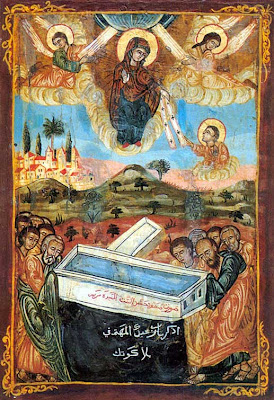
 ABYSSUS ABYSSUM INVOCAT / DEEP CALLS TO DEEP

You must be logged in to post a comment.