That’s what we tend to do, internally/mentally if not physically, when surrounded by deluded, deranged libbers. In 1945, then young liberal Democrat crooner Frank Sinatra recorded a song about the meaning of America, “The House That I Live In”. He continued crooning that tune as his voice and his politics matured and moved rightward. These are the lyrics: The howdy and the handshake,The air of feeling freeAnd the right to speak my mind out,That’s America to me. How quaint that Americans used to believe that. The list of topics that can be discussed in public, even in moderate and respectful ways, shrinks by the day. Conservatives of all stripes are increasingly reluctant to express their views and beliefs in public and even on the internet, that medium whose early proponents often championed as a vehicle for unfettered freedom of expression. Indeed, many on the right had seen the internet as the key to bypassing the leftist domination of the other media. In 2020, however, the internet became just another venue in which the Left could assert its cultural dominance, as tech companies used algorithms, content warnings, suspensions and bans to limit the spread of ideas they didn’t like, a process that came to include even a sitting President of the United States. The impact of such open censorship is amplified by massive self-censorship, as people learn about careers sidetracked and even ended by the discovery of stray remarks made years before. Something of this nature happened to Chris Harrison, the host of the ABC dating game show, The Bachelor, after he wondered aloud whether it was fair to bar a contestant for attending a party in 2018 in which the guests dressed like planters from the antebellum South. Harrison was forced to take a leave of absence as the censors took leave of their senses. Harrison will be replaced in the show’s future seasons. Even more pointedly, a member of a folk-rock band, Mumford & Sons was forced to take a leave of absence after it became known that they had dared praise Andy Ngo’s book, Unmasked, which is critical of Antifa, These examples could be multiplied many times over, but the point is clear enough that Sinatra’s “air of feeling free” is now a suffocating miasma, and “The House I Live In” has become “The House I hide In”. There is an overarching attempt to cut off any appeal to the past, and American history is being buried. When the censors are compelled to allow us to see anything from the past they don’t like, warning labels are applied and commentary is applied to put them “in context” so the censors themselves are not censored by those who lord it over them and they can feel confident in their virtue- “Cancel Culture” is running on full throttle right now, running on all cylinders, as it throttles us. The only way to throttle the cancel culture short of throttling its purveyors is to keep telling the truth as you see it–not recklessly, nor provocatively, but insistently. It doesn’t take long for beliefs that everyone knows to be true but that no one is willing to defend in public–to vanish. This has been the fate of of what the so-called conservative movement purportedly is out to conserve since that “movement” from its conception has been shot through with tactical timidity. If we can’t stand up and defend what we know to be true, we may as well be locked in our homes.
Posted inUncategorized|Comments Off on THE LIST OF TOPICS THAT CAN BE DISCUSSED IN PUBLIC, EVEN IN MODERATE AND RESPECTFUL WAYS, SHRINKS BY THE DAY
Fake Science: The “End of Science” is truly here if the Catholic Metaphysics of “Aristotle… Modified by Aquinas” is not the Model for Science
“It has become tediously fashionable, in the dispiriting context of the Covid-19 crisis, to point out that there is no such thing as ‘the Science.'” – Sean Walsh
“Reductive science is the most destructive heresy of our times. But it is more than a heresy. It is, as I have already pointed out, an ambience, a poisoned atmosphere, which modern man takes in with virtually every breath. This poison convinces modern man not only that material realities are reducible to accidental and quantifiable being, but it also creates that intellectual ambience which convinces him that he himself is reducible to accidental properties – that his love is reducible to hormonal reactions; his aspirations for truth reducible to conditioned responses; his belief in God a neurological reaction to fear and uncertainty…
… It is not that analytical science is intrinsically evil, but rather that it is intrinsically superficial simply because quantitative analysis can never touch or understand the nature of any substance created by God out of nothing.” – James Larson
The independent scholar James Larson before his death explained to me in an email exchange the problem with fake science’s denial of substantial reality:
Catholic Monitor:
Have you read Richard Weaver’s Ideas have Consequences? He traces all the problems that we have to the Franciscan Ockham’s Nominalism. Other scholars show Luther appeared to be a Nominalist. Please keep connecting dots because it appears as if Ockham’s and Luther’s Nominalism may be what lead to many evils including Modernism.
James Larson: Haven’t read Weaver. We must always realize that behind the word “Nominalism” and its definition as the denial of “universals” is the fact that what it really means is the denial of our real knowledge of the substantial being of things. Nominalism has a certain “paternity” in the world of ideas in relation to Modernism, but I do not see it as the source of all problems. Even in the world of ideas, we could equally trace such origins back to Plato, or even to Democritus.
But there is another, and much more important, way of looking at all this. Most likely, if I would place a banana before any 13 year old. and ask him what really made it to be a banana, he would reply that its particular particular molecules, atoms, etc. made it to be a banana. We may presume he has not studied Ockham, but he is yet totally immersed in what makes for Modernism. In other words, the wholesale denial of substantial reality now existing under the sway of “Modernism”, and its almost universal victory over human consciousness.
Larson pointed to the fact that fake science “is the the most destructive heresy of our times”:
The Greek perversion has as its root cause one fundamental metaphysical error: belief that the nature of substance is quantifiable by the human mind. It was the genius of Aristotle and St. Thomas to see that this is not the case. But such a conclusion should not have taken genius. It is really a matter of common sense. The notion, for instance, that the marvelous substance which we call water could in any way be equated with, or reduced to, a particular atomic structure is absolutely absurd. There is simply no reasonable way that the human mind can equate electrons, spinning at comparatively immense distances around protons and neutrons, with what it knows as the substance water.
But there remains one more level to be explored in our attempt to understand the metaphysical constitution of created, material substances. The proper distinction between substantial and accidental being, while freeing us from the absurdity of trying to equate substance with any sort of quantification or measurement, does not yet reveal to us what substance is in itself. It does not reach to the depths of the reality constituted by physical things. It therefore remains for us to look more deeply into the reality of substance itself…
… Reductive science is the most destructive heresy of our times. But it is more than a heresy. It is, as I have already pointed out, an ambience, a poisoned atmosphere, which modern man takes in with virtually every breath. This poison convinces modern man not only that material realities are reducible to accidental and quantifiable being, but it also creates that intellectual ambience which convinces him that he himself is reducible to accidental properties – that his love is reducible to hormonal reactions; his aspirations for truth reducible to conditioned responses; his belief in God a neurological reaction to fear and uncertainty.But its most destructive effect is that it eliminates that fundamental mysteriousness about life and creation which leads a person to think about and hunger after God. This is why there is now so much indifference towards God. And this is also why, despite all the scientific and technological advance of our time, man becomes more and more confused not only as to his own nature, but also as to the nature of the smallest substance. It is not that analytical science is intrinsically evil, but rather that it is intrinsically superficial simply because quantitative analysis can never touch or understand the nature of any substance created by God out of nothing.
That modern, reductive analytical science has generated superficiality, confusion, and despair is not my conclusion alone. Anyone interested in this subject would do well to read John Horgan’s best-selling book The End of Science (Broadway Books, 1996). Mr. Horgan, former senior writer at Scientific American, interviewed several dozen of the most famous and prize-winning scientists in the world as to their views regarding the “meaning of science”, the “end of science”, etc. He discovered and chronicles what he calls a world of “ironic” science: a world in which virtually no one is sure of any reality, or that there even is such a thing; there is total confusion in regard to the science of epistemology – whether there is or can be any true correspondence between the human mind and objective reality. [http://coalitionforthomism.blogspot.com/2010/09/restoration-of-supernatural.html?m=1]
The scholarly British website The Critic explains that the “end of science” is truly here if the Catholic metaphysics of “Aristotle… modified by Aquinas” is not the model for science:
“I think Aristotle should be considered for a posthumous Nobel Prize for his discovery of the principle implied in DNA” – Max Delbrück, biophysicist and Nobel Laureate.
It has become tediously fashionable, in the dispiriting context of the Covid-19 crisis, to point out that there is no such thing as “the Science”. This should not count as a revelation, although it is frequently presented as one…
… But there is a deeper point: you cannot do physics without (even if unconsciously) doing metaphysics. To claim that there is no such thing as “the Science” is to allude to something more interesting than transient disputes between epidemiologists. The deeper controversies concern what science is; what are the metaphysical assumptions that are in play when scientists do whatever it is they do? What is the nature of the reality it claims to describe?..
… Flew’s reply to Dummett discloses a conception of causation which was bequeathed to us by Galileo, Newton, and the other High Priests of modern science, and which was given a philosophical ratification by the great (yet frequently misguided) Enlightenment philosopher David Hume. Hume argued that there is no design in nature and that to say that A causes B is to say little more than when you get A, then B will follow. Causation does not involve “necessary connection” but “contiguity and succession”.
There is, on this modern orthodoxy, no more to causation than mechanism. Causal laws describe regularities in nature, and this is where explanation comes to an end. The natural world contains no intrinsic purpose, meaning or value. To use a current cliché: it is what it is. Any appearance of value is a chimera, a sort of projection by our minds onto the world, rather than an objective feature of it. And those same minds are ultimately in themselves no more than brains, susceptible to the very same mechanistic “explanations”…
… This is a depressingly reductive worldview. It is also a comparatively recent one. Like the teenager who assumes he knows better than his parents, post-Enlightenment science takes it as given that what’s new must be better than what came before it, a principle which is neither scientifically testable nor self-evidently true. There is an alternative view of causation, one which is metaphysically richer than theHumean analysis, and which validates our intuition that there is more to the natural order than mere mechanism. This alternative can be traced back to Aristotle, was modified by Aquinas, and is in no way vitiated by its antiquity.
For Aristotle, the mechanistic (or as he put it the “efficient”) causation described by Hume presupposes and is dependent on what he calls “final” causality. You strike a match, and it sets light. The efficient cause of the lit match is that it was struck, but there is more to it than that. The match itself has an essential property of being disposed to catch fire when lit. It is this intrinsic potentiality, its “final”, directed causality, that makes the efficient causation possible in the first place….
… The mechanistic worldview of Hume is in stark contrast to the Aristotelian vision of a world rinsed in purpose and value.
And it is the Aristotelian metaphysics which has been gaining in plausibility as science develops, particularly (and pertinently, given the current crisis) in the areas of molecular biology and in our understanding of the galactic complexity of the living cell. It is exceedingly difficult to describe the intricacies of DNA replication without using the language of purpose, a linguistic resource which is not available to defenders of the mechanistic worldview.
Developments in the harder sciences: mathematical physics, cosmology and molecular biology seem to inculcate a reconnection with an Aristotelian conception of causation. Science may progress in utilitarian terms – we can do more with it now than 100 years ago – but it does not follow that its underlying assumptions evolve in the same way. The most prominent philosopher of science at work today, the atheist Thomas Nagel, argued in his book Mind and Cosmos, that it is pretty hard to develop some science-based, plausible worldview which has been voided of teleological explanation. For Nagel, this teleology is a mysterious brute fact, as he is temperamentally and intellectually resistant to draw the obvious theistic conclusions.
As science “progresses”, the antiquated assumptions of 2,500 years ago become increasingly vindicated. We shouldn’t be surprised. Truth is truth and, sub specie aeternitatis, we are talking about the mere blink of an eye. And this is significant because, if the Aristotelian vision is correct, then science is an examination of threads of purposewhich have been placed from elsewhere[God].[https://thecritic.co.uk/why-aristotle-was-right-about-causation/]
Stop for a moment of silence, ask Jesus Christ what He want you to do next. In this silence remember God, Father, Son and Holy Ghost – Three Divine Persons yet One God, has an ordered universe where you can know truth and falsehood as well as never forget that He wants you to have eternal happiness with Him as his son or daughter by grace. Make this a practice. By doing this you are doing more good than reading anything here or anywhere else on the Internet.
Francis Notes:
– Doctor of the Church St. Francis de Sales totally confirmed beyond any doubt the possibility of a heretical pope and what must be done by the Church in such a situation:
“[T]he Pope… WHEN he is EXPLICITLY a heretic, he falls ipso facto from his dignity and out of the Church, and the Church MUST either deprive him, or, as some say, declare him deprived, of his Apostolic See.” (The Catholic Controversy, by St. Francis de Sales, Pages 305-306)
– LifeSiteNews, “Confusion explodes as Pope Francis throws magisterial weight behind communion for adulterers,” December 4, 2017:
The AAS guidelines explicitly allows “sexually active adulterous couples facing ‘complex circumstances’ to ‘access the sacraments of Reconciliation and the Eucharist.'”
– On February 2018, in Rorate Caeli, Catholic theologian Dr. John Lamont:
“The AAS statement… establishes that Pope Francis in Amoris Laetitia has affirmed propositions that are heretical in the strict sense.”
– On December 2, 2017, Bishop Rene Gracida:
“Francis’ heterodoxy is now official. He has published his letter to the Argentina bishops in Acta Apostlica Series making those letters magisterial documents.”
Pray an Our Father now for the restoration of the Church by the bishops by the grace of God.
Posted inUncategorized|Comments Off on … It is not that analytical science is intrinsically evil, but rather that it is intrinsically superficial simply because quantitative analysis can never touch or understand the nature of any substance created by God out of nothing.” – James Larson
The independent scholar James Larson before his death explained to me in an email exchange the problem with fake science’s denial of substantial reality:
Fake Science: The “End of Science” is truly here if the Catholic Metaphysics of “Aristotle… Modified by Aquinas” is not the Model for Science
“It has become tediously fashionable, in the dispiriting context of the Covid-19 crisis, to point out that there is no such thing as ‘the Science.'” – Sean Walsh
“Reductive science is the most destructive heresy of our times. But it is more than a heresy. It is, as I have already pointed out, an ambience, a poisoned atmosphere, which modern man takes in with virtually every breath. This poison convinces modern man not only that material realities are reducible to accidental and quantifiable being, but it also creates that intellectual ambience which convinces him that he himself is reducible to accidental properties – that his love is reducible to hormonal reactions; his aspirations for truth reducible to conditioned responses; his belief in God a neurological reaction to fear and uncertainty…
… It is not that analytical science is intrinsically evil, but rather that it is intrinsically superficial simply because quantitative analysis can never touch or understand the nature of any substance created by God out of nothing.” – James Larson
The independent scholar James Larson before his death explained to me in an email exchange the problem with fake science’s denial of substantial reality:
Catholic Monitor:
Have you read Richard Weaver’s Ideas have Consequences? He traces all the problems that we have to the Franciscan Ockham’s Nominalism. Other scholars show Luther appeared to be a Nominalist. Please keep connecting dots because it appears as if Ockham’s and Luther’s Nominalism may be what lead to many evils including Modernism.
James Larson: Haven’t read Weaver. We must always realize that behind the word “Nominalism” and its definition as the denial of “universals” is the fact that what it really means is the denial of our real knowledge of the substantial being of things. Nominalism has a certain “paternity” in the world of ideas in relation to Modernism, but I do not see it as the source of all problems. Even in the world of ideas, we could equally trace such origins back to Plato, or even to Democritus.
But there is another, and much more important, way of looking at all this. Most likely, if I would place a banana before any 13 year old. and ask him what really made it to be a banana, he would reply that its particular particular molecules, atoms, etc. made it to be a banana. We may presume he has not studied Ockham, but he is yet totally immersed in what makes for Modernism. In other words, the wholesale denial of substantial reality now existing under the sway of “Modernism”, and its almost universal victory over human consciousness.
Larson pointed to the fact that fake science “is the the most destructive heresy of our times”:
The Greek perversion has as its root cause one fundamental metaphysical error: belief that the nature of substance is quantifiable by the human mind. It was the genius of Aristotle and St. Thomas to see that this is not the case. But such a conclusion should not have taken genius. It is really a matter of common sense. The notion, for instance, that the marvelous substance which we call water could in any way be equated with, or reduced to, a particular atomic structure is absolutely absurd. There is simply no reasonable way that the human mind can equate electrons, spinning at comparatively immense distances around protons and neutrons, with what it knows as the substance water.
But there remains one more level to be explored in our attempt to understand the metaphysical constitution of created, material substances. The proper distinction between substantial and accidental being, while freeing us from the absurdity of trying to equate substance with any sort of quantification or measurement, does not yet reveal to us what substance is in itself. It does not reach to the depths of the reality constituted by physical things. It therefore remains for us to look more deeply into the reality of substance itself…
… Reductive science is the most destructive heresy of our times. But it is more than a heresy. It is, as I have already pointed out, an ambience, a poisoned atmosphere, which modern man takes in with virtually every breath. This poison convinces modern man not only that material realities are reducible to accidental and quantifiable being, but it also creates that intellectual ambience which convinces him that he himself is reducible to accidental properties – that his love is reducible to hormonal reactions; his aspirations for truth reducible to conditioned responses; his belief in God a neurological reaction to fear and uncertainty. But its most destructive effect is that it eliminates that fundamental mysteriousness about life and creation which leads a person to think about and hunger after God. This is why there is now so much indifference towards God. And this is also why, despite all the scientific and technological advance of our time, man becomes more and more confused not only as to his own nature, but also as to the nature of the smallest substance. It is not that analytical science is intrinsically evil, but rather that it is intrinsically superficial simply because quantitative analysis can never touch or understand the nature of any substance created by God out of nothing.
That modern, reductive analytical science has generated superficiality, confusion, and despair is not my conclusion alone. Anyone interested in this subject would do well to read John Horgan’s best-selling book The End of Science (Broadway Books, 1996). Mr. Horgan, former senior writer at Scientific American, interviewed several dozen of the most famous and prize-winning scientists in the world as to their views regarding the “meaning of science”, the “end of science”, etc. He discovered and chronicles what he calls a world of “ironic” science: a world in which virtually no one is sure of any reality, or that there even is such a thing; there is total confusion in regard to the science of epistemology – whether there is or can be any true correspondence between the human mind and objective reality. [http://coalitionforthomism.blogspot.com/2010/09/restoration-of-supernatural.html?m=1]
The scholarly British website The Critic explains that the “end of science” is truly here if the Catholic metaphysics of “Aristotle… modified by Aquinas” is not the model for science:
“I think Aristotle should be considered for a posthumous Nobel Prize for his discovery of the principle implied in DNA” – Max Delbrück, biophysicist and Nobel Laureate.
It has become tediously fashionable, in the dispiriting context of the Covid-19 crisis, to point out that there is no such thing as “the Science”. This should not count as a revelation, although it is frequently presented as one…
… But there is a deeper point: you cannot do physics without (even if unconsciously) doing metaphysics. To claim that there is no such thing as “the Science” is to allude to something more interesting than transient disputes between epidemiologists. The deeper controversies concern what science is; what are the metaphysical assumptions that are in play when scientists do whatever it is they do? What is the nature of the reality it claims to describe?..
… Flew’s reply to Dummett discloses a conception of causation which was bequeathed to us by Galileo, Newton, and the other High Priests of modern science, and which was given a philosophical ratification by the great (yet frequently misguided) Enlightenment philosopher David Hume. Hume argued that there is no design in nature and that to say that A causes B is to say little more than when you get A, then B will follow. Causation does not involve “necessary connection” but “contiguity and succession”.
There is, on this modern orthodoxy, no more to causation than mechanism. Causal laws describe regularities in nature, and this is where explanation comes to an end. The natural world contains no intrinsic purpose, meaning or value. To use a current cliché: it is what it is. Any appearance of value is a chimera, a sort of projection by our minds onto the world, rather than an objective feature of it. And those same minds are ultimately in themselves no more than brains, susceptible to the very same mechanistic “explanations”…
… This is a depressingly reductive worldview. It is also a comparatively recent one. Like the teenager who assumes he knows better than his parents, post-Enlightenment science takes it as given that what’s new must be better than what came before it, a principle which is neither scientifically testable nor self-evidently true. There is an alternative view of causation, one which is metaphysically richer than theHumean analysis, and which validates our intuition that there is more to the natural order than mere mechanism. This alternative can be traced back to Aristotle, was modified by Aquinas, and is in no way vitiated by its antiquity.
For Aristotle, the mechanistic (or as he put it the “efficient”) causation described by Hume presupposes and is dependent on what he calls “final” causality. You strike a match, and it sets light. The efficient cause of the lit match is that it was struck, but there is more to it than that. The match itself has an essential property of being disposed to catch fire when lit. It is this intrinsic potentiality, its “final”, directed causality, that makes the efficient causation possible in the first place….
… The mechanistic worldview of Hume is in stark contrast to the Aristotelian vision of a world rinsed in purpose and value.
And it is the Aristotelian metaphysics which has been gaining in plausibility as science develops, particularly (and pertinently, given the current crisis) in the areas of molecular biology and in our understanding of the galactic complexity of the living cell. It is exceedingly difficult to describe the intricacies of DNA replication without using the language of purpose, a linguistic resource which is not available to defenders of the mechanistic worldview.
Developments in the harder sciences: mathematical physics, cosmology and molecular biology seem to inculcate a reconnection with an Aristotelian conception of causation. Science may progress in utilitarian terms – we can do more with it now than 100 years ago – but it does not follow that its underlying assumptions evolve in the same way. The most prominent philosopher of science at work today, the atheist Thomas Nagel, argued in his book Mind and Cosmos, that it is pretty hard to develop some science-based, plausible worldview which has been voided of teleological explanation. For Nagel, this teleology is a mysterious brute fact, as he is temperamentally and intellectually resistant to draw the obvious theistic conclusions.
As science “progresses”, the antiquated assumptions of 2,500 years ago become increasingly vindicated. We shouldn’t be surprised. Truth is truth and, sub specie aeternitatis, we are talking about the mere blink of an eye. And this is significant because, if the Aristotelian vision is correct, then science is an examination of threads of purposewhich have been placed from elsewhere[God].[https://thecritic.co.uk/why-aristotle-was-right-about-causation/]
Stop for a moment of silence, ask Jesus Christ what He want you to do next. In this silence remember God, Father, Son and Holy Ghost – Three Divine Persons yet One God, has an ordered universe where you can know truth and falsehood as well as never forget that He wants you to have eternal happiness with Him as his son or daughter by grace. Make this a practice. By doing this you are doing more good than reading anything here or anywhere else on the Internet.
Francis Notes:
– Doctor of the Church St. Francis de Sales totally confirmed beyond any doubt the possibility of a heretical pope and what must be done by the Church in such a situation:
“[T]he Pope… WHEN he is EXPLICITLY a heretic, he falls ipso facto from his dignity and out of the Church, and the Church MUST either deprive him, or, as some say, declare him deprived, of his Apostolic See.” (The Catholic Controversy, by St. Francis de Sales, Pages 305-306)
– LifeSiteNews, “Confusion explodes as Pope Francis throws magisterial weight behind communion for adulterers,” December 4, 2017:
The AAS guidelines explicitly allows “sexually active adulterous couples facing ‘complex circumstances’ to ‘access the sacraments of Reconciliation and the Eucharist.'”
– On February 2018, in Rorate Caeli, Catholic theologian Dr. John Lamont:
“The AAS statement… establishes that Pope Francis in Amoris Laetitia has affirmed propositions that are heretical in the strict sense.”
– On December 2, 2017, Bishop Rene Gracida:
“Francis’ heterodoxy is now official. He has published his letter to the Argentina bishops in Acta Apostlica Series making those letters magisterial documents.”
Pray an Our Father now for the restoration of the Church by the bishops by the grace of God.
Posted inUncategorized|Comments Off on It is not that analytical science is intrinsically evil, but rather that it is intrinsically superficial simply because quantitative analysis can never touch or understand the nature of any substance created by God out of nothing.
Phone Mania Is Ubiquitous May 28, 2021 Catholic League president Bill Donohue shares his thoughts about our obsession with phones: Mohammad Anwar, 66, was recently driving his Uber Eats car in Washington, D.C. when two young girls, 13 and 15, took out a stun gun and tased him. The carjackers took command and drove away, leaving the immigrant from Pakistan hanging on, wedged between the door and the driver’s seat. After he was flung from the car, the automobile rolled over and crashed into two other cars. CNN called it an “accident.” The cops called it murder. They copped a plea. This story is bad enough without adding anything to it, but my reason for mentioning it has to do with something less important, though nonetheless disturbing. After the car crashed, one of the girls was upset, but not about what she and her friend just did. She was upset because she thought she lost her phone. There are pictures of her literally walking nonchalantly past the victim’s body looking for her phone. We are a nation obsessed with our phones. This is especially true of young people. When I was a kid, phones served one purpose: they were vehicles of conversation. Now they are used for entertainment as well. This is a desire that can never be satisfied. It’s a mania. What else can we call it? There are news stories of people walking into trains because they are staring at their phone. They have fallen off of cliffs because of this plague. Many more have caused car accidents. When exiting an elevator, it often happens that some phone maniac walks directly into me. This also happens when I walk across the street in New York City. I’m not a small guy—I’m 6’2″ with broad shoulders. Yet people keep walking into me. Most of the time they’re young women looking down at their phone. Many are also wearing earphones, compounding their distraction. They just have to be entertained. I even saved some fool’s life a few years ago. He was walking across a busy intersection, looking down at his phone, when a car came right at him. Lucky for him, I have a loud voice and he heard me scream. He stopped on a dime. Think he thanked me? Not a chance. He just kept on walking (with phone in hand, of course). When I go to Washington, D.C., I take the train. Our office is across the street from Penn Station so it makes sense to take Amtrak instead of flying out of La Guardia. I always get there early so I can get a seat in the “Quiet Car”; no phones or loud talking are allowed. Otherwise I would go mad. The same is true of the Long Island Rail Road. I take it to and from work every day. However, there is only one “Quiet Car,” and unlike Amtrak, it is always the last car, making it a less attractive alternative. At least once a week, I have to get up and move to another car because of someone speaking loudly. On more than one occasion I have resorted to yelling at them. Others on the train are appreciative. I like pubs and restaurants. Pubs are short for “public houses,” or places where people congregate to enjoy alcoholic beverages. Ideally, they are places where people go to laugh and partake in conversation. In short, they are forums where sociability excels. Back in the day, that is. Now it is commonplace to see young men and women sit at the bar, or at a table, and never speak. They are on their phone. It never ceases to amaze me. They make a point of meeting their friends at a specific pub at a specific time, and as soon as they get there they start talking to someone on their phone who isn’t there. And when they meet with that person, he or she gets the same treatment. The game is ongoing. Seeing family members sitting at a table in a restaurant and not speaking to each other is also commonplace. Father, mother and children are all on their phone, oblivious to one another. What was the point of going out for dinner? Just to eat? The only time they speak is when they need the salt and pepper. As a sociologist, I find this to be troubling. We are so self-absorbed that we have lost what it means to be a social animal. Social animals interact, they engage, they dialogue—they don’t ignore their family and friends. As noted, the self-absorption often takes the form of being entertained. Phones feed this desire—it functions as a need for many—making us more and more dependent on technology to fill our emptiness. In extreme cases, this qualifies as an addiction, leaving the individual socially retarded. Social media and video games only make our insularity worse. The anonymity they afford is a national problem, one that can only be cured by insisting on something novel: We need to talk to each other. And we need to do it live and without dependence on contraptions of any kind.
From Coast to Coast, North and South, in all of our major cities and towns, all we seem to read and hear about is hatred for Jews. We see indiscriminate violence towards Jews and unbridled hatred for them. Why? Well, one of the more recent reasons is because Israel had the audacity to respond militarily towards Hamas in Gaza for their launching some 4,000 rockets directed to cities and towns in Israel. Israel decided to defend itself as any nation would do. But “the Squad”, Ilhan Omar, Rashida Talib, Alexandria Ocasio-Cortez, buttressed by Senator Bernie Sanders, a Jew, and others immediately denounced Israel’s response as “unnecessary and bullying”. I am a practicing Roman Catholic of Italian descent. But I find it a stain on American honor to see Americans demonstrating such anti-Semitism today. It is disgraceful behavior and un-American to boot. Watching mobs of people beat Jewish citizens in our streets should anger Americans. It angers me. I have traveled extensively in Israel and I can tell you unequivocally that this small nation, about the size of New Jersey, is a diamond in the rough. I have walked through Jerusalem, visited Masada, Galilee, Golgotha, Tel Aviv, and the marvel of the Dead Sea Scrolls, and stayed on a kibbutz. I can tell you Israelis are among the most industrious and innovative people on earth. They have turned a desert into a source of farming and crop production. They are leaders in science, engineering, mathematics, the arts, and entertainment and have earned a remarkable number of Nobel Prizes in every major field. So why is it that people would look to attack Jews who have given so much to the world? Shouldn’t we be telling Americans about some of the things Israel has done to benefit mankind rather than showering people and nations who threaten its very survival? Consider the following: ● Israel is renowned for its achievements in the field of security, IT, smart mobility, and start-ups, which earned the country the nickname of Silicon Wadi, the Silicon Valley of the Middle East. Lately, the country has also gained great recognition for its contributions to the world of biotechnology. ● Israeli biotech initially started in 1901 with the creation of Teva Pharmaceutical Industries – a very small structure at the time – which became one of the world’s largest pharmaceutical companies. ● There is a consensus that the main source of innovation originates in the medical centers and the seven universities of the country. These scientific hubs opened the way for medical innovation and led to the creation of over 1400 Israeli companies in the life science sector today. ● One of the most recent Israeli breakthroughs is the first fully personalized tissue implant, using a patient’s own stomach cells, which significantly reduces the risk of an adverse immune response. This new technology makes it possible to engineer any kind of tissue implant, whether it is for the spinal cord, the heart, or brain, from one small tissue biopsy. This discovery was led by researcher Prof. Tal Dvir from Tel Aviv University’s Center for Nanoscience and Nanotechnology and Sagol Center for Regenerative Biotechnology. The positive implications for people with disabilities and motor functions are enormous. ● In Israel, 3D is not only for movies, it also applies to med- tech. The Israeli company CollPlant in cooperation with major American biotech firms is making printed human organs and 3D bio-printed lungs will soon be available for global transplants. And the biggest surprise, the main ingredient for the 3D “Ink” is made from Tobacco. ● Another Israeli startup iNNOGING enables physicians to capture ultrasound videos and perform a virtual dynamic exam, without the patient being present. The iNNOGING software and hardware were invented in the Kinematics and Computational Geometry Lab at Israel’s Ariel University. ● Israeli researchers discovered that positive emotions can shrink cancer tumors. After artificially activating the reward system in the brains of mice with two types of cancer, researchers at the Technion-Israel Institute of Technology found that the size of their tumors dramatically decreased. ● Israeli technology pioneered the development of drone-based emergency intervention for patients impacted by stroke or heart attack. The drone is dispatched from a hospital with radio and visual contact by an emergency physician able to diagnose and treat such conditions remotely on-site. Using the drone speeds up the time-to-patient avoiding traffic delays so critical in saving lives. ● The real beneficiaries from all of this research and innovation will be the millions of people whose lives will be changed by Israel’s life science revolution that enables the development of next-generation treatments. In addition to the above discoveries and innovations, below are just a few drugs pioneered by Israeli medical scientists which have been shared with the world for the benefit of humankind:● Development of Azilect, a drug for Parkinson’s disease, by Moussa Youdim and John Feinberg from the Technion – Israel Institute of Technology, and commercialized by Teva Pharmaceutical Industries. ● Development of the Copaxoneimmunomodulator drug for treating multiple sclerosis. It was developed in the Weizmann Institute of Science in Israel by Michael Sela, Ruth Arnon, and Deborah Teitelbaum. ● Development of the Interferonproteins by Michel Revel from the Weizmann Institute of Science in Israel. ● Development of Taliglucerase alfa (Elelyso), a recombinant glucocerebrosidase enzyme produced from transgenic carrot cell cultures. Taliglucerase alfa won approval from the U.S. Food and Drug Administration in May 2012 as an orphan drug for the treatment of Type 1 Gaucher’s disease. Beyond this, I would venture a guess that the names Sigmund Freud, Albert Einstein, Jonas Salk, Robert Mendelson, Yitzhak Perlman, all Jews, might be readily recognizable by their noteworthy contributions to mankind in science, mathematics, entertainment, and medicine.These are just a few…a handful actually… of the contributions Israel has made to the world. Is there a comparable list of contributions from Palestine, Iraq, Iran, Yeman? If so, what are they? Who are they? How about contributions from China and Russia? Can you name any? Yet, all we see is hatred of Jews on a scale we have not seen for many years and this hatred is based on what? Is it because Israel, a nation the size of New Jersey, surrounded by people who hate and despise them, responded to unprovoked rocket attacks on its citizens, launched from Gaza? If you lived in Delaware and someone from Maryland launched rockets and missiles into your state destroying homes and businesses, how would you feel? The next time you see anti-Semitism raise its ugly head again, as it surely will as long as we continue to elect hypocrites, morons, and stupid, ignorant people as our representatives in Washington, remember what is written on these pages. Maybe it is time to insist that our newspapers and TV talking heads focus attention on the good that the nation of Israel has contributed to the world, and match that against the terror, killing, and hatred of people who lack the education to understand and appreciate it. And, here in our streets, maybe it is time to take the kid gloves off and have police use their nightsticks and tasers to bring these criminals to their knees because that is the only thing these ignorant troublemakers understand. They are baseless cowards who prey on people who cannot defend themselves. I am fed up with it. Get on a megaphone and tell AOC, Ilhan Omar, and Rashida Talib to shut the hell up. If they do not like it here, they don’t have anchors on their asses. Just leave and take their hatred someplace else.
The most striking geopolitical feature of the past four years has not been bipolarity or multipolarity—or even great-power conflict. It has been the spectacle of major economies pursuing self-sufficiency and a partial retreat from globalization in order to ensure their security, innovative capacity, domestic stability, and economic prospects. The United States, China, and India are each now engaged in what seems like a paradoxical enterprise: the quest to increase their global status while also turning inward to become more self-sufficient. After the Cold War, the conventional wisdom held that a global economic convergence was inevitable—that countries would only grow more economically interdependent. In hindsight, it is clear this was not the case. Yet few would have predicted even a few years ago that three of globalization’s leading beneficiaries would turn to variations of autarky—or that a global trend toward self-sufficiency would come to dominate geopolitics. China, India, and the United States are now the world’s three most populous countries and their largest economies. Together, they account for about 60 percent of the global economy, a far greater share than they did during the Cold War era. Yet the United States under President Donald Trump embraced “economic nationalism,”while China under President Xi Jinping and India under Prime Minister Narendra Modi opted for “self-sufficiency”: zili gengsheng in Mandarin and atmanirbhar in Hindi. Unlike most major economies, all three countries have increased their GDP per capita over the past decade while reducing their trade exposure, as measured by their trade-to-GDP ratio. This pattern of differential globalization points to the rise of a new autarky that could prevail among these major economies for the next decade or more. AN AUTARK TRADITION?Although they embraced globalization in the 1990s and the first decade of the new millennium, all three would-be autarks have long-standing traditions of relative isolation from world markets. The United States has always been an importer of capital and labor and an exporter of commodities, but its main source of growth has been its domestic market. In the 1960s, trade accounted for just ten percent of U.S. GDP, not far off from the rigidly autarkic communist societies of the Soviet Union (four percent) and China (five percent). The United States was unique among its rich peers in this respect. Other wealthy countries with smaller domestic markets had much higher trade-to-GDP ratios in the 1960s—25 percent in France, for instance, and 41 percent in the United Kingdom. The United States grew steadily more globalized until 2011, when its trade-to-GDP ratio peaked at nearly 31 percent. It has since declined to 27 percent, and President Joe Biden’s policies seem destined to continue this downward trajectory. Self-sufficiency has long been a goal in China as well, albeit an often elusive one. From the late seventeenth century to the mid-nineteenth century, imperial China cultivated the productivity of its domestic market, as well as a controlled but lucrative export sector. But its internal march of progress ended abruptly with the beginning of the Opium War in 1839, when China entered a “century of humiliation”at the hands of foreign powers. This century ended in 1949 with the Chinese Communist Party’s victory over its nationalist rivals and their foreign supporters, notably the United States. But as early as 1945, communist leader Mao Zedong stressed the nationalist and sovereign aspect of self-reliance: “On what basis should our policy rest? It should rest on our own strength, and that means ‘regeneration through one’s own efforts’ (zili gengsheng).” President Xi Jinping revived this idea in 2018, claiming that “unilateralism and trade protectionism have risen, forcing us to travel the road of self-reliance.” In this spirit, Xi has championed the development of a high-technology military-industrial base that will prevent a second humiliation of China, this time by the power of U.S. technical innovation. Like the United States and China, India has nurtured a vision of itself as a nation that can prosper on the strength of its large domestic market, with a judicious measure of exports. India produced almost a quarter of global GDP around 1700, according to historians, but then endured two centuries of humiliation during which the United Kingdom steadily degraded its industrial base in order to extract raw materials and create a market for British manufactures. After independence in 1947, India developed a government-led semi-autarky under the guise of “nonalignment,” which began as a political and military policy but grew into a development model that embraced the then fashionable ideas of infant-industry protection and import substitution. India began to open its economy in the early 1990s, but through a managed process that became increasingly Hindu nationalist after Modi’s election as prime minister in 2014. Home to almost 18 percent of the world’s population, India remained committed to nonalignment through the era of globalization, making use of both Chinese and U.S. technology and investment to develop its own alternatives. The goal of Modi’s atmanirbhar is to achieve something like China’s level of indigenous innovation and self-sufficiency, creating a secure home base from which Indian companies can pursue foreign business, much as their Chinese (and, more distantly, U.S.) predecessors have done. COMPETITIVE SELF-SUFFICIENCYChina, India, and the United States all have traditions of self-sufficiency that set the stage for the recent turn toward autarky—but more proximately, all three nations are responding to new security concerns that have emerged as competition among major powers intensifies. China’s core narrative since the 1980s has been security based, focusing on a return to great-power status after its subjugation at the hands of Western powers and then Japan. In 2015, Beijing announced a policy of “civil-military fusion,” which explicitly framed national-industrial development as part of China’s plan to free itself from dependence on outside powers and secure a future of technological self-sufficiency. Confronted with China’s military modernization and the extraordinary success of its technology sector, the United States began to find the presence of Chinese technology in U.S. defense supply chains alarming and became increasingly suspicious of China’s role in constructing Internet infrastructure around the world. The prospect of large swaths of the digital world map falling under Chinese influence pushed the United States to take a much more security-driven approach to China’s economic rise. Soon, both nations began to exert more government control over even the most dynamic and globalized parts of their economies. China brought its tech giants to heel through a campaign of “rectification,” while the United States engaged in a bipartisan “techlash” against the power of Silicon Valley. Security concerns are increasingly driving India’s tech policies as well, as Modi’s government pursues what might be characterized as “digital nonalignment.” Over the last 20 years, Chinese tech companies and venture capitalists, and to a lesser extent their Western counterparts, built much of India’s tech sector and infrastructure. Now that Indian tech companies are able to compete, however, Modi’s government has begun to manage the foreign presence—in the Chinese case, even expel it—with the goal of fostering India’s technological self-reliance and safeguarding Indian security. THE AUTARK DIFFERENCEAll three of these countries have found autarky a viable response to increasing security concerns in part because of the size of their economies. They have large enough domestic markets to sustain broad diversification across industries without sacrificing the benefits of specialization—in other words, to be relatively self-sufficient. But size alone does not explain how these countries have managed to become less dependent on trade while most other large economies have become more dependent on it. In India and China, culture, industrial policy, and other structural factors have further facilitated an autarkic turn. Both countries have very large labor markets with high levels of mobility, low levels of worker organization, strong top-down policies that disperse industry geographically, and cultures that value skill and entrepreneurship. They also have at least two generations of businesspeople who believe that their prosperity depends on participating in global value chains, acquiring intellectual property, and selling products into the domestic market. These qualities are not unique to India and China, but India and China are the only countries that combine them with large domestic markets and active government support for local companies. The governments in both countries not only protect domestic firms from foreign competitors but also work to prevent companies from monopolizing particular sectors at home. In this way, they preserve at least some of the benefits of domestic competition. Nonetheless, China and India depend on aspects of the networked, globalized economy. They are both deeply enmeshed in the disaggregated global supply chains that made their growth possible. Their engines of prosperity were not the huge state-industrial projects that powered the rise of Japan and South Korea in an earlier era of globalization but rather the networked, mix-and-match world of replaceable vendors competing across borders for each and every link in the global supply chain. Yet as Xi said in a July 2020 speech to entrepreneurs in Beijing, what differentiates China from other countries is its “domestic super-large market,” which he intends to boost “through the prosperity of the domestic economy and unblocking the domestic cycle . . . [to] drive the recovery of the world economy.” Self-sufficiency, in this sense, is an objective of Chinese foreign policy. Among other things, Xi intends to harness domestic demand for final and intermediate goods to make his country a sustainable, protected, and controllable market that can engage internationally at its discretion. His aim is not globalization, in other words, but a globalized, networked mercantilism, which is also the goal of Modi’s atmanirbhar. The picture is somewhat different in the United States, where the slide into economic nationalism has stemmed less from cultural or structural factors than from rising popular dissatisfaction with neoliberalism, which in turn helped build political support for new industrial policies. Trump’s “economic nationalism” mostly manifested itself in the form of detrimental tariffs and trade wars (his campaign promises of major infrastructure spending never materialized). But these policies broke the spell of globalization—and at a seemingly low price. U.S. consumer confidence hit a historic high prior to the COVID-19 pandemic, while unemployment hit a low of 3.5 percent. Average worker pay grew by three percent annually in the first three years of Trump’s presidency. Job gains went disproportionately to Black and Hispanic Americans, particularly women, bringing excluded groups further into the economy. Middle-class incomes grew, and GDP growth outpaced that of peer economies. Trump’s apparent economic success helped legitimize the idea of government intervention in the economy. In 2020, Jake Sullivan, a veteran of the Obama administration who would soon be Biden’s national security adviser, cowrote an article in Foreign Policy observing that “advocating industrial policy (broadly speaking, government actions aimed at reshaping the economy) was once considered embarrassing—now it should be considered something close to obvious.” On the campaign trail, Biden promised to spend $400 billion on procurement in a “Buy American” policy and $300 billion on state-directed research and development aimed at increasing technological self-reliance and securing the defense-industrial base. Now that Biden is in office, his administration has advocated enormous investments in increasing domestic capacity, particularly in infrastructure. “Not a contract will go out,” Biden said as he unveiled his $2 trillion infrastructure proposal, “that will not go to a company that is an American company with American products, all the way down the line, and American workers.” THE INNOVATION CHALLENGEHow long this new era of autarky will last depends in part on the length and intensity of major-power competition. The “Big Three” governments will likely continue to push for self-sufficiency for as long as there is heightened security competition—which in the case of the United States and China, and of India and China, could be a very long time. But while political forces seem likely to reinforce the trend toward economic nationalism, market forces could work in the opposite direction. Autarky stifles innovation and, by extension, long-term growth. India’s hopes for sustained growth hinge on the continued good fortunes of its information technology sector and its capacity to innovate. The U.S.-Chinese rivalry is itself propelled by the imperative to innovate, in the sense that each country fears the other will outdo it technologically and thereby militarily. But innovation often requires heavy private investment—especially in India, which lacks the government and academic research and development infrastructure of China and the United States—and private investment requires markets. The logic applies to China’s Huawei, which built itself in foreign markets, as much as to the United States’ Qualcomm, which gets two-thirds of its revenue from China. U.S. tech giants earn roughly half of their revenues in foreign markets. Without such revenues, large tech companies struggle to finance their own R & D while also maintaining their competitive edge. And of the top ten large U.S. companies with China exposure, only one—Wynn Resorts—is not a highly innovative tech company. The technologies that these U.S. companies produce, and which China consumes, have military as well as commercial applications, and China’s dependency on them is a source of American leverage. Beijing seeks to undermine that leverage by becoming more technologically self-sufficient. As those efforts progress, U.S. companies on which the U.S. military and the U.S. economy rely will themselves lose revenue. American innovation will suffer unless companies can find alternative markets to replace China. The result will be stiffer competition between U.S. and Chinese tech companies outside of their domestic markets and heightened efforts by the governments of both countries to exert some level of control over technology in order to mitigate security concerns. The United States will focus on richer, allied nations in North America, Europe, and Asia. China and India will focus on the poorer parts of Asia, the Middle East, Africa, and perhaps Latin America. If Western and East Asian companies neglect those regions, then Chinese, Indian, and other non-Western tech companies will increasingly shape globalization in the age of autarky. This new globalization will not be like the old globalization. It will be based as much on self-sufficiency as on openness, and it will replace internationalism with nationalism, mercantilism, and something approaching imperialism. NOT YOUR PARENTS’ GLOBALIZATIONSuch a world would not necessarily be more dangerous. Major-power autarky is, after all, chiefly defensive and could lead to military conservatism and industrial competition that would benefit everyone. The greater danger is that major powers might attempt to block their competitors’ access to resources, as China has repeatedly threatened to do with the rare-earth metals necessary for many high-tech products. More subtly, major powers might try to hoard intellectual property or prevent technological diffusion by continuously widening the definition of “strategic resources” to include, for example, anything having to do with artificial intelligence chip design. The United States did something like this to the Soviet Union during the Cold War, prompting both a decline in the Soviet economy and large-scale Soviet industrial espionage. It is hard to see that drama recurring in quite the same way. There are too many important players outside the Big Three who would much prefer technological nonalignment and can generate innovations of their own. Moreover, the autarks’ companies need foreign revenues for their own defense-industrial bases. As paradoxical as it sounds, in that sense, the autark that globalizes best will be the autark that thrives. “Economic self-sufficiency,” the American historian George Louis Beer wrote in 1917, “contemplates a state of war.” The world was then halfway through the worst war in history, a war driven in part by the efforts of major powers to avoid dependence on one another. A little more than a century later, the diffusion and fragmentation of production across borders has made a repeat of this tragedy much less likely. Yet major powers longing for autonomy should be careful what they wish for, as self-reliance can be a source of weakness as well as strength.
Posted inUncategorized|Comments Off on “Economic self-sufficiency,” the American historian George Louis Beer wrote in 1917, “contemplates a state of war.” The world was then halfway through the worst war in history, a war driven in part by the efforts of major powers to avoid dependence on one another. A little more than a century later, the diffusion and fragmentation of production across borders has made a repeat of this tragedy much less likely. Yet major powers longing for autonomy should be careful what they wish for, as self-reliance can be a source of weakness as well as strength.
Mark Steyn, host of The Mark Steyn Show, writes regularly at steynonline.com and has contributed to numerous publications, including the Daily Telegraph, The Irish Times, The Wall Street Journal, and The Jerusalem Post. He is the author of several books, including Lights Out: Islam, Free Speech, and The Twilight of the West, America Alone: The End of the World As We Know It, and The [Un]documented Mark Steyn. A frequent guest host of Tucker Carlson Tonight, he was for 15 years a guest host of The Rush Limbaugh Show. His albums include Making Spirits Bright, with Jessica Martin, and Feline Groovy: Songs for Swingin’ Cats. From 2008 to 2013, he was a Eugene C. Pulliam Distinguished Visiting Fellow in Journalism at Hillsdale College.
The following is adapted from a speech delivered on April 26, 2021, at a Hillsdale College National Leadership Seminar in Franklin, Tennessee.
I live about 20 minutes south of the Canadian border, which used to be called the longest undefended frontier in the world. People moved freely back and forth across it all day every day. But now it’s been closed for over a year. At one point my daughter asked me to drive her up there, because there was a 30-minute opportunity for people on one side to talk to their friends on the other. “Sad!” as President Trump would say. It was like Checkpoint Charlie in Berlin during the Cold War, except that both sides are now like East Berlin.
I don’t know how this happened, but it is just one indication that America, and the West in general, have become almost unrecognizable from what they were not that long ago.
Look at just three things we have lost.
One is equality before the law, something absolutely essential to a free society. In its place, we now have politicized law. If a policeman fatally shoots someone, whether his name is released to the public depends on whether the shooting is consistent with the preferred narrative of the ruling class. A policeman recently took down a young woman who was threatening the life of another young woman with a knife, and that policeman was immediately identified—indeed, his photo was posted and he was threatened by NBA superstar LeBron James on Twitter. On the other hand, we know nothing of the policeman who shot dead an unarmed woman in the U.S. Capitol on January 6. His name will apparently never be released to the public.
Second, border control. Functioning societies, at least since the Peace of Westphalia three centuries ago, have borders. America has no southern border and no plans to get one. The official position of our government seems to be that any of the seven billion persons on this planet has a right to come and stay in the U.S. for three years, until his or her assigned court date comes up. As the number of people with pending cases continues to grow, that three years will extend out to five or seven or 15 years. If we get all seven billion people to come here, the court system will break down entirely and maybe we can go back to having a functioning border.
And third, dare I bring up the fact that it is a real question whether we can go back to agreeing to have open and honest elections? And if we don’t have open and honest elections, control of our borders, and equality before the law, then we don’t have the conditions for politics or free government.
And here’s the thing. It is not at all clear to me that many of America’s conservative politicians understand the seriousness of all this. You can see it in the fact that they go around trying to scare people with the specter of a “radical socialist agenda.” For well over a year now, we have been living in a world in which it’s accepted as normal that the state has essentially unlimited power—and in which our freedom to decide for ourselves has been diminished almost to invisibility. Why do these conservative politicians think the words “radical socialist agenda” still scare anyone in a time when the state can tell us whether we can have Aunt Mabel over for Christmas? They are completely out of touch.
Over the same period as the pandemic lockdowns, we have seen an escalation of so-called wokeness. And if you look at one of the most startling manifestations of this, transgender fanaticism—which involves, after all, the abolition of biological sex and, I’m sorry to have to say it, the physical mutilation of children—one notices that America is farther down this road than any other country in the Western world. In other words, at this moment of crisis for Western Civilization, or for what we used to call Christendom, the leading country of the free world is pulling the wrong way.
Think of it. Your daughter has been training since she was a little girl to run in school sports. Now at 17, she’s in the state high school track championships, and you are forbidden even to notice that she’s competing against a woman who is 6’2” with thighs like tugboats, a great touch of five o’clock shadow on her face, and the most muscular bosom you’ve ever seen. You’re not supposed to notice the craziness of this, and the craziness is at its craziest right here in America.
We traditionally think of France as being a bit screwy, but today there are French intellectuals who regard themselves as hardcore leftists and yet who think America has gone bonkers on this transgender issue. President Macron himself has said that American wokeness is an existential threat to the French Republic, and he even found bureaucrats in France’s education bureaucracy who agreed. There is not a single bureaucrat in the Department of Education in Washington, D.C., who would agree, but there are apparently a few in Paris.
If you look further east in Europe to the lands that were once behind the Iron Curtain—to Hungary, Poland, and the Czech Republic, which still function as conventional nation-states calculating their best interests—you find tremendous fear of the threat of wokeness that is being exported, sometimes aggressively, from America. So it is here in the U.S. where we have to put the stake through these ideas.
But again, even most of our conservative leaders and institutions seem oblivious. School districts in America are talking about revising their curricula to cover transgender issues from grade school on. Now, I went to an English boys’ school, and we were expected to pick up sexuality on our own time. In those days people would have looked puzzled if you had said, “We’re going to have to cancel geography or Latin, because we need to put gay studies in there.” These days, instead of going off behind the bike shed during recess to learn about sex, kids need to sneak behind the bike shed to do a little bit of closeted geography or closeted Latin. It’s completely backwards. And yet what do we hear from most conservative politicians? That it would be nice to offer people a tax cut!
We are way beyond tax cuts. We’re broke. We’re just a smidgen away from $30 trillion in federal debt—something with no historical precedent. Talking about tax cuts today is like talking about VAT tax refunds on the Titanic. It’s not actually what’s necessary at the moment.
Another big issue that should take our minds off tax cuts is China. I can’t get over the way we in the U.S. have been ordered by our governors and the CDC to punish ourselves by living small, shrunken lives, while the people in China who loosed this pandemic on the world have paid no price for it.
Dr. Fauci has been a federal government bureaucrat since 1968. He’s the J. Edgar Hoover of public health. He talks about the COVID virus as if we’re at war. But he seems to think a country wins a war by taking it out on its own population rather than the enemy, which is what we’ve done.
Which do you think was the only major economy to grow in 2020? It’s not a hard question. America’s economy shrank 3.5 percent last year. The economies of Germany and Japan shrank almost five percent. France’s, Italy’s, and India’s economies all shrank over eight percent, and the economy of the United Kingdom was down ten percent. China’s economy, on the other hand, grew 2.3 percent in 2020, and first quarter growth for 2021 in China set a new world record—it was up over 18.3 percent. The COVID pandemic has been hugely profitable for China.
U.S. policy towards China since the 1990s represents perhaps the biggest strategic miscalculation by any great power in human history. Just as communism was wobbling and beginning to fall everywhere else, we helped Beijing come up with the first economically viable form of communism.
At first we were told it was only our manufacturing that we would ship to China. After all, we were told, it wasn’t economically viable for Americans to make widgets. Remember the talk in the ’90s? We were going to be the “knowledge economy.” All the clever people told us this. We weren’t going to have mills and factories, but we were going to be the knowledge economy. Well, in case you haven’t noticed, China’s got the entire knowledge economy for itself now. It makes our laptops and our smartphones and it’s out front with Huawei and 5G. It also makes the batteries that power our gizmos and the chips that run our cars. When COVID struck, we found out fast that the Chinese not only make our viruses, they also make the personal protective equipment that protects us against the viruses—and all of our medicines to boot! Those wily Chinese get you both coming and going.
China is now the number one global power. You can define this militarily, where it now has the largest surface fleet on the planet. You can define it economically. But the way I define it is to look at who gets its way in the world. New Zealand has just effectively pulled out of the Five Eyes intelligence-sharing arrangement—an arrangement between the U.S., the U.K., Canada, Australia, and New Zealand, the oldest such arrangement on the planet. New Zealand has pulled out with respect to China because it doesn’t want to offend China. I would think Canada might be the next to go. Or look at the World Health Organization. America pays for it, but Chairman Xi in Beijing calls the shots. China gets its way now, and the U.S. doesn’t.
We need politicians with a sense of urgency about these problems, but all they seem to have is urgency about things that aren’t urgent. Look at climate change. People say we need to take action over climate change or else rising sea levels are going to overwhelm the Maldives in the Indian Ocean in the 22nd century. That’s the century after this one, which is still quite young. These same people say about the immediate crisis on the southern border that it’s “a natural phenomenon beyond the control of politicians.” But changing the weather in order to lower the sea levels that will threaten the Maldives in the Indian Ocean in the next century is within the power of politicians? In general, our leaders are urgent about nothing that matters and not in the least bit urgent about things that matter very much.
The things our news media talks about incessantly, whether it’s transgender bathrooms or Confederate statues being toppled or the totally dishonest national conversation on race—nothing like this is heard in China as it goes along steadily strengthening its position as the world’s leading power. The Chinese don’t find themselves stuck in these sterile, drain-circling, dishonest public conversations about identity politics. These conversations are a waste of time. And one thing we should demand of our politicians is that they talk about things that aren’t a waste of time.
At the root of our problems is that we have seen the emergence of a true ruling class, like Grand Dukes in medieval Europe. Its members intermarry. They send their kids to the same schools. They circulate back and forth between government and the private sector. And over time it has become increasingly easy to identify members of this class.
John Kerry gave a commencement address a couple of years ago in which he told the students, “You are going to be the first generation to live in a borderless world.” And for the elite, the idea of a borderless world rings true. A typical member of the ruling class will get a job with a firm like Goldman Sachs, work for a couple of years in Hong Kong, then move on for a couple of years in Geneva, and then maybe come back to America. What are borders to such a person? Meanwhile, for the common American, COVID has literally ended, to a large degree, any freedom of movement. They live in the farthest thing from a borderless world. Oftentimes they’re trapped in a town that is dying because of the open-border, cheap-labor policies advocated by people like John Kerry.
Our political division in America today is a class division, and we need to expose it as such whenever we see it. The ruling class tries to keep racial and other forms of division stirred up in our politics so that we don’t notice the class protection racket they are running. Look at that guy from Twitter, Jack Dorsey, who wears a beard like he’s playing the hobo in a Charlie Chaplin silent film. I wouldn’t mind betting that when he’s called to testify in Congress, he has his valet hook on the beard and lower him into the clothes that make him look like he’s been sleeping in a dumpster. Then at night after the cameras are off he’s like Lord Grantham in Downton Abbey, spending an hour being dressed for dinner. Our elites have become incredibly good at theater.
Getting back to the southern border, it perfectly symbolizes the bifurcation of our society. We’re told there’s a health emergency. We’re told we can’t open our businesses or attend weddings or funerals. Yet at the same time, every day, thousands of people pour across the southern border, test positive for COVID, and are then driven to a nice hotel and put up there at taxpayers’ expense.
It’s also interesting to compare the southern border with the northern. Prior to the pandemic, when the border with Canada was open, my kids had their Kinder Eggs confiscated by the Department of Homeland Security when we would cross the border going south into Vermont. Kinder Eggs are chocolate eggs with a kid’s toy inside. They are sold in Canada, but they are banned in the U.S. because the Food and Drug Administration calls the toy a “non-nutritive embed”—and that’s good enough to send Homeland Security agents swinging into action! There is always a big crackdown before Easter on Kinder Eggs. So at the northern border there are lots of things, down to Kinder Eggs, that are illegal. But at the southern border you can come in with pretty much anything you want, including COVID. Why is that? It is because some groups serve the needs of the ruling class and others don’t. License is extended to the former and not the latter.
People ask me, “Why are you going on about Kinder Eggs? They’re not important. It’s more important that so-and-so is up two points in Iowa and three points in New Hampshire. That could be a real game changer.” To which I answer no, that’s not how it works. If they take the small freedoms away from you, whether it’s the freedom to eat Kinder Eggs or to enjoy a high pressure shower, you will lose all the larger freedoms, which is the world we’re in now.
I used to get occasional pushback when I’d talk about rights. “Rights are abstract things,” people would say—“they don’t have anything to do with our real lives.” Well, after the last year, we know they have everything to do with our real lives. When you’re told you can’t open your hair salon, when you’re told you can’t have family or friends over for dinner, when you’re told you must wear a mask in your own garden, there’s nothing abstract about it. This is where all the stupid Kinder Egg laws have been trending for years. And it’s why we need to push back.
I made a little joke earlier about studying transgenderism in grade school, but it’s not a laughing matter. Education is the biggest structural defect in our society. We have an almost entirely corrupt and abusive education establishment. And in one corner of Governor Whitmer’s Michigan, of all places, Hillsdale College stands against this. Hillsdale’s literature, I’ve noted through the years, talks a lot about the College’s 177 years of being rooted in the soil of Michigan. And this reminds me of the fact that if you do not have roots, you are not a functioning society. You can’t just be flotsam and jetsam, bobbing around on the currents of the age, wheresoever they tend. If you do that, you’re cut off from your roots.
This is what’s so frightening about the trends in education today. Cromwell told his portrait painter, “Paint me, warts and all.” That’s not what is happening in America, where the trend in education is to paint only America’s warts. So even the great Kate Smith, who sang “God Bless America” for years, is having her statue taken down because she made a racially insensitive record in 1931. Well you know who really had a racially insensitive record in 1931? The Democratic Party. But unlike Kate Smith’s statue, it’s still around.
President Macron of France is not my favorite chap—he’s a sinister globalist for one thing. But he made an admirable stand when he announced that not one French statue would be taken down and not a single French street name would be changed, because they are all part of French history. And “Bingo!” as Peter Navarro likes to say, the statue toppling and street-name changing in France went away. Why can’t American conservatives show that kind of strength? The Senate Minority Leader says he personally would not be bothered if the historical names of U.S. military bases are changed. The editor of National Review says that he wouldn’t be bothered about taking down Confederate statues. But of course it doesn’t stop there—now they’re going for all the statues. Washington, Jefferson, Lincoln, McKinley, and on and on. The point conservatives need to grasp is, unless you’re prepared to surrender everything, don’t surrender anything.
I’ll end by pointing out that the Left wins because it seizes language. Take the policy of letting people vote who are not U.S. citizens and shouldn’t be voting. The Left calls this policy “counting every vote.” Therefore someone who wants to make sure voters are citizens is opposed to “counting every vote.” If we don’t take back the language, we will lose the truth. Even on FOX News, I have noticed, news anchors now talk about “gender assigned at birth,” as if that’s something different from one’s biological sex. There may be 57 genders, but there are only two biological sexes.
Don’t surrender the language. Reclaim the language. It’s the first step to recovering our civilization.
Posted inUncategorized|Comments Off on The Left wins because it seizes language. Take the policy of letting people vote who are not U.S. citizens and shouldn’t be voting. The Left calls this policy “counting every vote.” Therefore someone who wants to make sure voters are citizens is opposed to “counting every vote.” If we don’t take back the language, we will lose the truth. Even on FOX News, I have noticed, news anchors now talk about “gender assigned at birth,” as if that’s something different from one’s biological sex. There may be 57 genders, but there are only two biological sexes.
The Left constantly argues that gun control prevents crime. This ignores two pertinent facts.
First, that criminals don’t tend to obey laws and you might need a gun to protect yourself. And it ignores the fact that gun control also removes power from individuals to band together to defend themselves against tyrannical governments. Democracies do have an ugly tendency to go too radical from time to time. So, weapons in the hands of the population help guarantee against that, as the founders knew.
By restricting the conversation to gun crime itself, the Left generally bases its belief on two things. First, gun crime statistics, rather than general crime statistics; and two; comparing non-comparable populations.
The Left argues that nations like Great Britain have nearly no gun deaths. That’s true in many countries with heavy gun laws because there are fewer guns. But that also neglects the fact that Great Britain has far higher violent crime rates than the United States — which does make sense since guns tend to deter crime. According to Politifact, for England and Wales, the rate of violent crime was 775 per 100,000 as of 2013. For the United States, the rate was 383 violent crimes per 100,000 people. The UK had approximately double the rate of the United States.
Also worth noting: if more guns equal more crime, it’s very odd that the United States’ rates of gun ownership have skyrocketed in recent decades, while our rate of violent homicide by gun has sliced in half.
Second, the Left makes comparisons between non-comparable population groups — populations that differ in terms of age and culture, for example. The Left will claim that European countries that are largely homogenous and middle class have lower gun violence rates than the United States.
But let’s take a look at Vermont. Vermont has the lowest incarceration rate in the United States and has always had the lowest levels of murders in the United States. As Charles Cooke of National Review points out, in 2012, there were eight murders there — just two of which involve firearms.
With those stats, you would probably assume there are no guns in Vermont. Nope. Vermont has virtually no gun laws. Nearly three-quarters of all Vermonters own firearms. As Cooke points out, well we can absolutely say that A) an abundance of firearms and a set of loose regulations do not inevitably lead to more crime, and B) that the widespread suggestion that they do is dishonest.
Leah Libresco is a former gun control advocate and data cruncher for FiveThirtyEight. She wrote in The Washington Post in October 2017, “My colleagues and I at FiveThirtyEight spent three months analyzing all 33,000 lives ended by guns each year in the United States. The best ideas left standing were narrowly tailored interventions to protect subtypes of potential victims, not broad attempts to limit the lethality of guns.”
According to Libresco, neither Britain nor Australia experienced drops in mass shootings or other gun-related crimes that could be attributed to their buybacks and bans.
What about Joe Biden’s supposed “common-sense” assault weapons ban?
ProPublica — far from a right-wing source — found in 2014 that the 1994 Assault Weapons Ban didn’t affect gun crime in any meaningful way. Nearly all researchers agree with that assessment.
One of the most bizarre arguments that you hear from people in the anti-gun community is only the police should have guns. The reality is that what guns are for in private hands is to respond before the police can. The police can only respond if somebody calls the police. If, however, somebody arrives at your house, and they intend to do you harm, many times you don’t actually have the ability to call a cop, and when you’re looking at major cities that are generally under policed, the best available defense may be your ability to wield a firearm — which is why during the riots of last year, there were a lot of people who were going out and buying guns and standing on top of their businesses, and basically warning people away.
There are some folks who argue that if you require a license to drive, certainly you should go through a bunch of hoops if you want to legally own a gun. Now, pretty much everybody agrees that if you have a criminal history, you shouldn’t own a gun. However, if the argument is that “in order to defend myself, I have to have the state give me a license” — that is a very different argument than “in order for me to transport myself faster, I ought to have a license to drive.”
The Second Amendment was written specifically in order to ensure that states were able to resist predations. That is why the language of the Second Amendment suggests that a well-armed militia — being necessary for the preservation of a free state — the people have a right to keep and bear arms.
The reason that the well-regulated militia clause is in there is that it is a justificatory clause: it is there to justify. The goal of that clause is to suggest that you should join a well-regulated militia — not a well “legally-regulated militia,” a “militia” that trains a lot. Like, they regulate. They were called regulars.
If you get together and you train a lot and you form a militia, then you are able to stand up to grand federal predations. This was the explicit purpose of the Second Amendment.
There are some morons who suggest that the Second Amendment ought not to apply to modern weapons; that it only applies to muskets. This is sort of like saying that freedom of the press only applies to printing presses because the founders never could have anticipated that people would be able to print things off of the computer. Freedom of the press was not restricted to the mechanisms of distribution of information, nor is the freedom to keep and bear arms restricted to the arms in common practice at that time.
People on the Left are constantly attempting to avoid the consequences of their own position, but the reality is that for many on the Left, they just don’t like the Second Amendment and would like to see it go away. But a lot of them will say, “I love the Second Amendment, I love guns and firearms, I go hunting.” And then the first move they make is “let’s get rid of assault weapons,” without any evidence that it will be effective.
The reality is the vast majority of murders committed in the United States with guns are committed with handguns. None of this makes any sort of internal sense; if they were just going to be consistent, they would admit full-scale what they really want is gun confiscation.
Ayn Rand once wrote, “Potentially, a government is the most dangerous threat to man’s rights: it holds a legal monopoly on the use of physical force against legally disarmed victims.” That, of course, is exactly right; there is a reason why tyrannical states use, as their first move, an attempt to disarm the population. In Nazi Germany, gun regulations were high on the list of priorities. In Soviet Russia, gun regulations: high on the list of priorities. Tyrannies are constantly seeking to remove all possible threats of resistance, which is one of the reasons why tyrannical governments are so often in favor of gun control.
A lot of gun control advocates deny the possibility that we might need guns to protect ourselves against a tyrannical government. They’ll say things like, “well, could you really fight back against a nuclear armed force?” Well, I mean, the fact is that small arms have generally been a pretty good defense against overwhelming power going all the way back to Vietnam. Guerilla warfare has been a successful tactic since the days of George Washington.
But the broader question is whether governments tend to go tyrannical at all. To ignore the history of governments going tyrannical is to ignore pretty much all of history. Germany was a democracy before it was a dictatorship. Russia, after the tsarist regime, turned into a socialist democracy for a brief period of time before it turned into a full-scale USSR dictatorship. China was run not by Mao Tse Tung in the immediate aftermath of World War II, but rather by Chiang Kai-shek, who ended up actually founding Taiwan. Japan had a certain root level of democracy before it was a dictatorship.
Countries routinely go through stages where they are democracies, and then they slide into dictatorship. So, the basic idea that you should never feel a threat from the government is simply an evolutionary hangover of the fact that the United States has never been — thank God — a dictatorship.
One of the great things about our Constitution, of course, is that there is plenty of play in the joints when it comes to how local officials address issues with regard to guns. The general question as to whether the federal government ought to be involved in the gun issue at all is basically obviated by the Constitution, but the federal constitution was never actually meant to apply to the states.
So, if you wanted a locality that really didn’t like guns, theoretically you could have that locality. Now, there have been some experiments along these lines. It turns out that if you ban guns in a particular community, and everybody knows that guns are banned, you know where criminals are more likely to rob a house? However, if everybody in the community has a gun, you know where criminals don’t actually want to rob a house in the middle of the night?
One of the big talking points people on the right use, of course, is the idea that Chicago has heavy gun regulations, and yet gun deaths continue to be extraordinarily high in Chicago. The same thing is true of Washington, DC, for example.
And it keeps getting worse: the Left will suggest that this is because people in Chicago go to the outlying areas, they purchase their guns, they bring them back to Chicago. If we could just shut down gun sales in the entire general region, then you wouldn’t have murder in Chicago. This ignores the fact that plenty of places — like these exact towns — where people buy guns and don’t kill each other. The real problem in Chicago is the lack of policing.
A lot of people are worried about security at schools. Many are concerned that if you ban guns in the broader community, that maybe this will increase security at the schools themselves.
That, of course, is pretty ridiculous. Most of the cases of school shootings that we’ve seen are people who have either violated the law in some way and obtained their gun illegally; or, alternatively, obtained their gun legally, and then violated the law to go into the school in the first place. Once again, criminals generally do not actually follow the law.
Security at schools can be improved pretty easily: you need armed guards at schools. Every major Jewish day school in America — at least in the Orthodox community — has serious security standing outside. There is no reason we can’t have the same thing at schools around the country. If you want a job creation program, that would be a job creation program.
Many on the Left believe that if you get rid of guns, you create a safer society. And to a certain extent, you sort of understand the logic. If guns are used to shoot people, what if there just were no guns? Sort of like their argument about nuclear weapons: if you don’t want to go nuclear war, do you just get rid of all the nuclear weapons?
Well, it’s pie in the sky in both situations. The idea that you’re gonna cleanse a society like the United States — in which there are over 300 million guns in circulation — of those guns, and this will generally lower the crime rate, is not supported by the data.
One of the weirdest things about American public opinion with regard to guns is that it’s so conflicting.
So every time there’s a shooting and it gets a lot of media coverage, people will say, “we are very much in favor of gun regulations” — and then, as soon as you ask them, “how about this specific gun regulation,” they’re like, “nope, not interested in that one.”
The reality is that guns in the hands of a bad person are a weapon that can be used for bad things; and guns in the hands of a good, law-abiding person are weapons that can be used for good purposes. Guns are, like most other inanimate objects, tools. What really matters is who wields them.
As somebody who’s frequently threatened, I do own firearms. I don’t own them because I go hunting or because I enjoy target shooting; really not my thing. But I do own enough guns to protect myself and protect my family.
The Left constantly argues that gun control prevents crime. This ignores two pertinent facts. First, that criminals don’t tend to obey laws and you might need a gun to protect yourself. And it ignores the fact that gun control also removes power from individuals to band together to defend themselves against tyrannical governments. Democracies do have an ugly tendency to go too radical from time to time. So, weapons in the hands of the population help guarantee against that, as the founders knew. By restricting the conversation to gun crime itself, the Left generally bases its belief on two things. First, gun crime statistics, rather than general crime statistics; and two; comparing non-comparable populations. The Left argues that nations like Great Britain have nearly no gun deaths. That’s true in many countries with heavy gun laws because there are fewer guns. But that also neglects the fact that Great Britain has far higher violent crime rates than the United States — which does make sense since guns tend to deter crime. According to Politifact, for England and Wales, the rate of violent crime was 775 per 100,000 as of 2013. For the United States, the rate was 383 violent crimes per 100,000 people. The UK had approximately double the rate of the United States. Also worth noting: if more guns equal more crime, it’s very odd that the United States’ rates of gun ownership have skyrocketed in recent decades, while our rate of violent homicide by gun has sliced in half. Second, the Left makes comparisons between non-comparable population groups — populations that differ in terms of age and culture, for example. The Left will claim that European countries that are largely homogenous and middle class have lower gun violence rates than the United States. But let’s take a look at Vermont. Vermont has the lowest incarceration rate in the United States and has always had the lowest levels of murders in the United States. As Charles Cooke of National Review points out, in 2012, there were eight murders there — just two of which involve firearms. With those stats, you would probably assume there are no guns in Vermont. Nope. Vermont has virtually no gun laws. Nearly three-quarters of all Vermonters own firearms. As Cooke points out, well we can absolutely say that A) an abundance of firearms and a set of loose regulations do not inevitably lead to more crime, and B) that the widespread suggestion that they do is dishonest. Leah Libresco is a former gun control advocate and data cruncher for FiveThirtyEight. She wrote in The Washington Post in October 2017, “My colleagues and I at FiveThirtyEight spent three months analyzing all 33,000 lives ended by guns each year in the United States. The best ideas left standing were narrowly tailored interventions to protect subtypes of potential victims, not broad attempts to limit the lethality of guns.” According to Libresco, neither Britain nor Australia experienced drops in mass shootings or other gun-related crimes that could be attributed to their buybacks and bans. What about Joe Biden’s supposed “common-sense” assault weapons ban? ProPublica — far from a right-wing source — found in 2014 that the 1994 Assault Weapons Ban didn’t affect gun crime in any meaningful way. Nearly all researchers agree with that assessment. One of the most bizarre arguments that you hear from people in the anti-gun community is only the police should have guns. The reality is that what guns are for in private hands is to respond before the police can. The police can only respond if somebody calls the police. If, however, somebody arrives at your house, and they intend to do you harm, many times you don’t actually have the ability to call a cop, and when you’re looking at major cities that are generally under policed, the best available defense may be your ability to wield a firearm — which is why during the riots of last year, there were a lot of people who were going out and buying guns and standing on top of their businesses, and basically warning people away. There are some folks who argue that if you require a license to drive, certainly you should go through a bunch of hoops if you want to legally own a gun. Now, pretty much everybody agrees that if you have a criminal history, you shouldn’t own a gun. However, if the argument is that “in order to defend myself, I have to have the state give me a license” — that is a very different argument than “in order for me to transport myself faster, I ought to have a license to drive.” The Second Amendment was written specifically in order to ensure that states were able to resist predations. That is why the language of the Second Amendment suggests that a well-armed militia — being necessary for the preservation of a free state — the people have a right to keep and bear arms. The reason that the well-regulated militia clause is in there is that it is a justificatory clause: it is there to justify. The goal of that clause is to suggest that you should join a well-regulated militia — not a well “legally-regulated militia,” a “militia” that trains a lot. Like, they regulate. They were called regulars. If you get together and you train a lot and you form a militia, then you are able to stand up to grand federal predations. This was the explicit purpose of the Second Amendment. There are some morons who suggest that the Second Amendment ought not to apply to modern weapons; that it only applies to muskets. This is sort of like saying that freedom of the press only applies to printing presses because the founders never could have anticipated that people would be able to print things off of the computer. Freedom of the press was not restricted to the mechanisms of distribution of information, nor is the freedom to keep and bear arms restricted to the arms in common practice at that time. People on the Left are constantly attempting to avoid the consequences of their own position, but the reality is that for many on the Left, they just don’t like the Second Amendment and would like to see it go away. But a lot of them will say, “I love the Second Amendment, I love guns and firearms, I go hunting.” And then the first move they make is “let’s get rid of assault weapons,” without any evidence that it will be effective. The reality is the vast majority of murders committed in the United States with guns are committed with handguns. None of this makes any sort of internal sense; if they were just going to be consistent, they would admit full-scale what they really want is gun confiscation. Ayn Rand once wrote, “Potentially, a government is the most dangerous threat to man’s rights: it holds a legal monopoly on the use of physical force against legally disarmed victims.” That, of course, is exactly right; there is a reason why tyrannical states use, as their first move, an attempt to disarm the population. In Nazi Germany, gun regulations were high on the list of priorities. In Soviet Russia, gun regulations: high on the list of priorities. Tyrannies are constantly seeking to remove all possible threats of resistance, which is one of the reasons why tyrannical governments are so often in favor of gun control. A lot of gun control advocates deny the possibility that we might need guns to protect ourselves against a tyrannical government. They’ll say things like, “well, could you really fight back against a nuclear armed force?” Well, I mean, the fact is that small arms have generally been a pretty good defense against overwhelming power going all the way back to Vietnam. Guerilla warfare has been a successful tactic since the days of George Washington. But the broader question is whether governments tend to go tyrannical at all. To ignore the history of governments going tyrannical is to ignore pretty much all of history. Germany was a democracy before it was a dictatorship. Russia, after the tsarist regime, turned into a socialist democracy for a brief period of time before it turned into a full-scale USSR dictatorship. China was run not by Mao Tse Tung in the immediate aftermath of World War II, but rather by Chiang Kai-shek, who ended up actually founding Taiwan. Japan had a certain root level of democracy before it was a dictatorship. Countries routinely go through stages where they are democracies, and then they slide into dictatorship. So, the basic idea that you should never feel a threat from the government is simply an evolutionary hangover of the fact that the United States has never been — thank God — a dictatorship. One of the great things about our Constitution, of course, is that there is plenty of play in the joints when it comes to how local officials address issues with regard to guns. The general question as to whether the federal government ought to be involved in the gun issue at all is basically obviated by the Constitution, but the federal constitution was never actually meant to apply to the states. So, if you wanted a locality that really didn’t like guns, theoretically you could have that locality. Now, there have been some experiments along these lines. It turns out that if you ban guns in a particular community, and everybody knows that guns are banned, you know where criminals are more likely to rob a house? However, if everybody in the community has a gun, you know where criminals don’t actually want to rob a house in the middle of the night? One of the big talking points people on the right use, of course, is the idea that Chicago has heavy gun regulations, and yet gun deaths continue to be extraordinarily high in Chicago. The same thing is true of Washington, DC, for example. And it keeps getting worse: the Left will suggest that this is because people in Chicago go to the outlying areas, they purchase their guns, they bring them back to Chicago. If we could just shut down gun sales in the entire general region, then you wouldn’t have murder in Chicago. This ignores the fact that plenty of places — like these exact towns — where people buy guns and don’t kill each other. The real problem in Chicago is the lack of policing. A lot of people are worried about security at schools. Many are concerned that if you ban guns in the broader community, that maybe this will increase security at the schools themselves. That, of course, is pretty ridiculous. Most of the cases of school shootings that we’ve seen are people who have either violated the law in some way and obtained their gun illegally; or, alternatively, obtained their gun legally, and then violated the law to go into the school in the first place. Once again, criminals generally do not actually follow the law. Security at schools can be improved pretty easily: you need armed guards at schools. Every major Jewish day school in America — at least in the Orthodox community — has serious security standing outside. There is no reason we can’t have the same thing at schools around the country. If you want a job creation program, that would be a job creation program. Many on the Left believe that if you get rid of guns, you create a safer society. And to a certain extent, you sort of understand the logic. If guns are used to shoot people, what if there just were no guns? Sort of like their argument about nuclear weapons: if you don’t want to go nuclear war, do you just get rid of all the nuclear weapons? Well, it’s pie in the sky in both situations. The idea that you’re gonna cleanse a society like the United States — in which there are over 300 million guns in circulation — of those guns, and this will generally lower the crime rate, is not supported by the data. One of the weirdest things about American public opinion with regard to guns is that it’s so conflicting. So every time there’s a shooting and it gets a lot of media coverage, people will say, “we are very much in favor of gun regulations” — and then, as soon as you ask them, “how about this specific gun regulation,” they’re like, “nope, not interested in that one.” The reality is that guns in the hands of a bad person are a weapon that can be used for bad things; and guns in the hands of a good, law-abiding person are weapons that can be used for good purposes. Guns are, like most other inanimate objects, tools. What really matters is who wields them. As somebody who’s frequently threatened, I do own firearms. I don’t own them because I go hunting or because I enjoy target shooting; really not my thing. But I do own enough guns to protect myself and protect my family.
Posted inUncategorized|Comments Off on The idea that you’re gonna cleanse a society like the United States — in which there are over 300 million guns in circulation — of those guns, and this will generally lower the crime rate, is not supported by the data. One of the weirdest things about American public opinion with regard to guns is that it’s so conflicting.
Does Our Diversity Portend Disintegration?Is there no limit to the racial, religious, ideological, political, cultural, and ethnic diversity the nation can accommodate before it splinters into its component parts?
By Patrick J. Buchanan
May 28, 2021
Hat Tip: Rip McIntosh
After nine people were shot to death by a public transit worker, who then killed himself in San Jose, the latest mass murder in America, California Governor Gavin Newsom spoke for many on the eve of this Memorial Day weekend.“What the hell is going on in the United States of America? What the hell is wrong with us?” Good question. Indeed, it seems that the country is coming apart. In May, Congress, to address a spate of criminal assaults on Asian Americans, enacted a new hate crimes law to protect them. May also witnessed a rash of assaults on Jewish Americans to show the attackers’ hatred of Israel and support for the Palestinians in the Gaza war. The terms “racist” and “racism” are now commonplace accusations in political discourse and a public square where whites are expected to ritually denounce the “white privilege” into which they were born. In the year since the death of George Floyd and the rise of the Black Lives Matter “Defund the Police!” campaign, the shootings and killings of cops and citizens in our great cities have skyrocketed. In March, and again in April, 167,000 immigrants were caught crossing our southern border illegally. The invaders are now coming not only from Central and South America but also from Africa, the Islamic world, and the largest and most populous continent, Asia. And their destiny may be to replace us. For as the endless invasion proceeds, native-born Americans have ceased to reproduce themselves. Not since the birth dearth of the Great Depression and WWII, when the Silent Generation was born, has the U.S. population experienced such a birth decline as today. At the same time, a war of all against all in America seems to raise the question, to which recitation of the cliche — “Our diversity is our greatest strength” — no longer seems an adequate response. Is there no limit to the racial, religious, ideological, political, cultural, and ethnic diversity the nation can accommodate before it splinters into its component parts? In professions of religious belief, atheists, agnostics, and secularists have become our largest “congregation,” followed by Catholics and Protestants, both of which are in numerical decline. Diversity of faiths leads to irreconcilable, clashing opinions about morality on the most divisive social issues of our era: abortion, homosexuality, same-sex marriage, etc. Racial diversity, too, is bringing back problems unseen since the 1960s. America was almost 90% white in 1960, but that figure is down to 60% and falling. In 25 years, we will all belong to racial minorities. Are we Americans still united in our love of country? Do we still take pride in what we have done for our own people and what America has done for the world in the 400 years since Jamestown? Hardly. Part of the nation buys into the academic and intellectual elites’ version of history, tracing America’s birth as a nation to the arrival of the first slave ship in Virginia in 1619. We not only disagree about our history; some actually hate our history. That hate can be seen in the statues and monuments destroyed, not just of Confederate military heroes but of the European explorers who discovered America, the Founding Fathers who created the nation, and the leaders, from Thomas Jefferson to Andrew Jackson to Teddy Roosevelt, who built the America we became. Yet, tens of millions from all over the world still see coming to America as the realization of a life’s dream. Some look at Western civilization as 500 years of colonialism, imperialism, genocide, slavery, and segregation — practiced against people of color. This is the source of the West’s wealth and power, it is said, and that wealth and power should be redistributed to the descendants of the victims of Western rapacity. For many, equality of opportunity is no longer enough. We must make restitution, deliver reparations and guarantee a future where an equality of rewards replaces an equality of rights. Meritocracy must yield to equity. Elite high schools, such as Thomas Jefferson in Virginia, Stuyvesant in New York, and Lowell in San Francisco, must abandon their emphasis on grades, tests, and exams to gain admissions and prove progress. And these schools must be remade to mirror the racial and ethnic composition of the communities where they reside. And a new cancel culture has taken root in America. Former U.S. Senator Rick Santorum, a CNN commentator, was fired for suggesting that Native American institutions and culture played no significant role in the foundation and formation of the American Republic.“We birthed a nation from nothing. I mean, there was nothing here. I mean, yes, we have Native Americans,” Santorum said, adding: “There isn’t much Native American culture in American culture.” Impolitic though this rendition was, was it wholly false? Something is seriously wrong with a country that professes to be great but whose elite cannot abide the mildest of heresies to its established truth.
Posted inUncategorized|Comments Off on Something is seriously wrong with a country that professes to be great but whose elite cannot abide the mildest of heresies to its established truth.
Tennessee gov. signs bill to separate school bathrooms based on biological sex
Gov. Bill Lee on Monday also signed a bill requiring businesses to post notices if they let people use bathrooms designated for the sex other than their own.Tue May 18, 2021 – 12:56 pm EST
Bathroom doors Shutterstock
By Raymond Wolfe
NASHVILLE, Tennessee, May 18, 2021 (LifeSiteNews) – Gov. Bill Lee of Tennessee (R) has signed bills to separate school bathrooms according to biological sex and crack down on policies that increase the risk of sexual assault and other harm in private spaces.
On Friday, Lee signed the “Tennessee Accommodations for All Children Act,” or House Bill 1233, allowing students to sue for damages if they are exposed members of the opposite sex in school bathrooms, locker rooms, or sleeping quarters. HB 1233 mandates that students “unwilling or unable” to use facilities based on their immutable sex may not be granted access to facilities for the other sex.
Legislation at odds with the LGBT movement would put “our collective economic success at risk,” the letter said.SUBSCRIBEto LifeSite’s daily headlinesSUBSCRIBEU.S. Canada World Catholic
Tennessee lawmakers openly dismissed the corporate threats. “I think at some point that the people of this state and the legislature have got to decide whether we bow down to corporate people or bow down to the LGBTQ crowd, or do what we think is best for Tennesseans,” Sen. Mike Bell (R-Riceville), senate sponsor of the accommodations act, told the Chattanooga Times Free Press.
“We still have all kinds of businesses and corporations coming to Tennessee because we’re such a great place to do business in, a great place to raise families in and low taxes,” he said.
“People that were born a certain sex ought to respect everybody else and observe the bathrooms as we have them set up,” Sen. Todd Gardenhire (R-Chattanooga) told the Chattanooga Times. “And just because somebody thinks they’re something doesn’t mean they are something.”
Gov. Lee on Monday also signed HB 1182, which requires businesses to post notices if they let people use bathrooms designated for the sex other than their own.
Any public or private entity that “allows a member of either biological sex to use any public restroom” must make that policy clear “at the entrance of each public restroom and at each entrance of the building accessible by the general public,” HB 1182 states. The bill applies to facilities “where a person would have a reasonable expectation of privacy,” including locker rooms and showering facilities.
Hutchison noted that “access policies to restrooms based on ‘gender identity’ create real and significant public safety and privacy risks, especially in women’s and children’s restrooms/dressing rooms. These incidents are already occurring.”
In 2018, for example, a “gender-fluid” male student sexually assaulted a 5-year-old girl after a public school in Georgia liberalized bathroom policies without notifying parents. Similar incidents have been recorded across the U.S., as well as in Canada.— Article continues below Petition —PETITION: Biological males don’t belong in girls’ sports – #IStandWithSelina
In addition to signing HB 1233 and HB 1182, Gov. Bill Lee notably approved a pro-life bill this month stipulating that babies be either buried or cremated after abortion.
“Final disposition of fetal remains from a surgical abortion at an abortion facility must be by cremation or interment,” declares The Unborn Child Dignity Act. The mother has the right to determine the manner and location of the baby’s disposition under the bill.
“I am very grateful this legislation was passed by the General Assembly and has now been signed into law,” said Sen. Janice Bowling (R-Tullahoma), who sponsored the bill. “It is a tragedy in Tennessee that we regulate how veterinarians properly dispose of the remains of animals, but there are no regulations regarding human babies.” Eleven states have approved similar laws to date.
Other child protection and pro-family policies enacted by Tennessee this session include a bill mandating that students compete in sports based on biological sex and a measure that lets parents opt out of LGBT ideology in public schools.
Two week ago, Tennessee lawmakers passed a ban on life-threatening, sterilizingcross-sex hormones — a major component of transgender “transitions” — for children. Lee has indicated that he will sign the bill, the Chattanooga Times said.
Posted inUncategorized|Comments Off on GOD BLESS THE GOVERNOR AND LEGISLATURE OF THE STATE OF TENNESSEE!!!!!!!!!!!!!!!!!!!!!!!!!!!!!!!!!!!!!!!!!!!!!!!!!!!!!!!!!!!!!!!!!!!!!!!!!!!!!!!!!!!


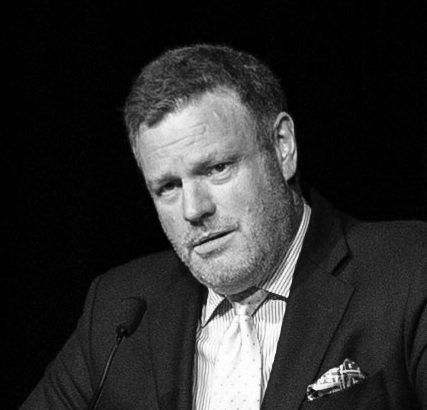 Mark Steyn, host of The Mark Steyn Show, writes regularly at steynonline.com and has contributed to numerous publications, including the Daily Telegraph, The Irish Times, The Wall Street Journal, and The Jerusalem Post. He is the author of several books, including Lights Out: Islam, Free Speech, and The Twilight of the West, America Alone: The End of the World As We Know It, and The [Un]documented Mark Steyn. A frequent guest host of Tucker Carlson Tonight, he was for 15 years a guest host of The Rush Limbaugh Show. His albums include Making Spirits Bright, with Jessica Martin, and Feline Groovy: Songs for Swingin’ Cats. From 2008 to 2013, he was a Eugene C. Pulliam Distinguished Visiting Fellow in Journalism at Hillsdale College.

 ABYSSUS ABYSSUM INVOCAT / DEEP CALLS TO DEEP
You must be logged in to post a comment.