Here are five really short and easy to answer dubia questions which hopefully aren’t too complicated for Steve Skojec, publisher of the One Peter Five website, to answer.
To make it really easy for the publisher of One Peter Five it has been formatted so that he only has to answer: yes or no.
1. Doctor of the Church St. Francis de Sales said “The Pope… when he is explicitly a heretic… the Church must either deprive him or as some say declare him deprived of his Apostolic See.” Was St. Francis de Sales a Sedevacantist or a Benevacantist? Answer: yes or no.
2. “Universal Acceptance” theologian John of St. Thomas said “This man in particular lawfully elected and accepted by the Church is the supreme pontiff.” Was John of St. Thomas for saying “the supreme pontiff” must be BOTH “lawfully elected and accepted by the Church” a Sedevacantist or a Benevacantist? Answer: yes or no.
3. Do you think that a “supreme pontiff” if “universally accepted” is still Pope if, to quote papal validity expert Arnaldo Xavier de Silveira on “dubious election[s]”, that he is “a woman… a child… a demented person… a heretic… a apostate… [which] would [thus] be invalid[ed] by divine law”? Answer: yes or no.
4. Renowned Catholic historian Warren Carroll agreed with Bishop René Gracida on the determining factor for discerning a valid conclave for a valid papal election besides divine law. Carroll pronounced:
“But each Pope, having unlimited sovereign power as head of the Church, can prescribe any method for the election of his successor(s) that he chooses… A papal claimant not following these methods is also an Antipope.”
Are renowned historian Carroll and Bishop Gracida for saying this Sedevacantists or Benevacantists? Answer: yes or no.
5. Is Bishop Gracida really only a pawn of the legendary and notorious “Sedevacantist and Benevacantist” mastermind Ann Barnhardt for convincingly demonstrating that there is valid evidence that Pope John Paul II’s conclave constitution “Universi Dominici Gregis” which “prescribe[d].. [the] method for the election of his successor(s)” was violated and must be investigated by Cardinals? Answer: yes or no.
Please feel free to answer these dubia questions in any manner you decide, Mr. Skojec, except for the following ways:
1. Do not answer the dubia questions by posting a comment in the Catholic Monitor comment section because you are banned until you allow a free forum for debate on these dubia questions on the One Peter Five comment section.
If you attempt to post on the Catholic Monitor comment section before you allow a free forum at your website your post will be deleted.
2. Do not answer the dubia questions by emailing the publisher of the Catholic Monitor until you allow a free forum for debate on these dubia questions on the One Peter Five comment section.
If you attempt to email me before allowing a free forum at your website your email will be deleted and unread.
Pray an Our Father now for the restoration of the Church.
Did Parolin Threaten Nuncios that they might end up like Pell & was the Mafia Involved?
Francis’s Vatican News reported that Vatican Secretary of State Cardinal Pietro Parolin in a interview said that Apostolic Nuncios cannot “criticize the Pope,” quoting Francis, and must “maintain unity” which appears to be a implicit threat:
“Regarding the part of his speech in which the Pope said a nuncio is called to be a ‘man of God’, a representative of the Church and of the Pontiff, thus it is inherently incompatible with his mission to ‘criticize the Pope, write blogs or join groups that are hostile to the Pope and to the Church’, Cardinal Parolin said there can never be a total uniformity of thought, and that there are issues that need to be discussed as upheld by the ancient axiom that says in necessariis unitas, in dubiis libertas, in omnibus caritas (“unity in necessary things; freedom in doubtful things; love in all things”).”
It is unlikely everyone with intelligence in the Vatican didn’t see what appeared to be a implicit threatanddidn’t remember what happened to the last Vatican top official to criticize Francis, not “maintain unity” with him and duel with Parolin.
Not too long after Pell criticized Francis he got a invitation to a secret trial in Australia and not too long after that he ended up in prison from a verdict which according to one observer of the actual trail was a “absurd” kangaroo court.
According to Patrick Coffin:
“Peter Westmore is the former President of the National Civic Council, and a writer for News Weekly. Westmore attended both trials of Cardinal Pell (and the appeal last week) and heard all the evidence provided to the court—twice… [and explains that the] entire case against Cardinal Pell rests on one man’s say-so, featuring multiple layers of improbability if not complete impossibility… even Pell’s ideological foes feel this the guilty verdict is absurd.” [https://www.patrickcoffin.media/the-appeal-of-cardinalpell/]
But, getting back to the Secretary of State, everyone in the Vatican knows that Parolin and Pell were in a power struggle before the “absurd” kangaroo court. Cardinal Pell was suppose to reform the Vatican corruption including the Secretary of State’s finances and the Vatican diplomat’s finances. The power structure of the Vatican diplomats is called the “old guard.” Parolin is a entrenched member of the old guard in the Vatican.
Parolin according to the Catholic Herald in a “series of power struggles” ended the outside audit and Vatican financial reform “even before” Pell was forced to return to Australia on old sex-abuse allegations. (Catholic Herald, “How Cardinal Parolin won the Vatican civil war,” November 9, 2017)
In the Pell power struggle shady and suspicious actions were taken by a employee of Parolin (Archbishop Angelo Becciu) on former Auditor General Libero Milone. The Auditor suspecting that he was being spied on brought in a external contractor who “determined” his computer was “infected with file copying spyware” according to LifeSiteNews.com in its September 28, 2017 article “Former Vatican auditor accused of spying says ‘shady games’ going on in Rome.”
“When I was in Australia last month, I found myself in a conversation one evening with someone about all this. (I had a lot of Pell conversations, as you might imagine.) I shared with my interlocutor my suspicion that Pell was set up to take him off the Vatican Bank case. The man across the table said, ‘ That’s interesting. You may not know it, but the ‘Ndrangheta is quite well established in Australia, especially in Victoria. That’s where the cardinal was charged.”
‘Senior Calabrian Mafia investigator Nicola Gratteri, whose investigative zeal has forced him to live with police protection since 1989, has said the pope’s plans to reform Vatican structures, including the Vatican bank, the IOR, could prove a problem for the ’Ndrangheta, Italy’s most powerful Mafia.’
‘… For those with real economic power it is obvious this could be a huge disadvantage . . . Given that in the past we’ve had collusion at the highest level between church and Mafia, this exposes the pope.'”
“Months after this report, Cardinal George Pell was named by Francis to reform the IOR. In 2014, Pell said his team found nearly two billion euros hidden away in various Vatican accounts, off the balance sheets. In November 2015, with the Pope’s approval, Pell issued new guidelines for running all Vatican offices, to bring them up to international standards for financial transparency.”
“In April 2016, without consulting Pell, the Vatican Secretary of State suspends an external audit of Vatican finances. The National Catholic Register quotes an unnamed source as saying that officials are afraid of what the audit will find, and want to get rid of Pell. A year later, Pell was charged in Melbourne with sexual abuse. And that was the end of the Pell threat to the Vatican Bank insiders.”
“This mafia thing, it could all be a coincidence, and in any case, there are other factors in play in the persecution of George Pell, who was widely hated by Australian anti-clericalists. But it’s curious all the same. George Pell was the No. 1 enemy of the ‘Ndrangheta in the Vatican, and he showed early on in his tenure, when he uncovered all the hidden euros, that he meant business. Now George Pell sits in solitary confinement in a prison cell in Melbourne, convicted on pathetically shabby charges. The old guard in the Vatican won. The world is as it always was.”[https://www.theamericanconservative.com/dreher/cardinal-pell-the-mafia/]
Moreover, everyone with intelligence in the Vatican, also, probably understands what is apparently implicit in Parolin’s call for unity. It is a call to be effeminate like the sex abuse cover-up bishops.
Former federal investigator Leon J. Podles, Ph.D., thinks that the bishops don’t behave like men.
Being amazed at how bishops in the Church are effeminate, Podles wrote:
“Mark Serrano confronted Bishop Frank Rodimer, asking why he had let his priest-friend Peter Osinski sleep with boys at Rodimer’s beach house while Rodimer was in the next bedroom: ‘Where is your moral indignation?’”
“Rodimer’s answer was, ‘Then I don’t get it. What do you want?’ What Serrano wanted Rodimer to do was to behave like a man with a heart, a heart that is outraged by evil. But Rodimer couldn’t; his inability to feel outrage was a quality that had helped make him a bishop. He would never get into fights, never rock the boat, never ‘divide’ but only ‘unify.’” [http://www.touchstonemag.com/archives/article.php?id=22-06-012-v]
President Donald Trump’s former strategic adviser predicts an “existential crisis of trust” in the Church will worsen, especially if Pope Francis fails to dialogue with those he considers to be his opponents.
Widely recognized as a pioneer of the “sovereigntist” movement which claimed a number of victories in the recent European Parliament elections, Bannon believes an absence of such dialogue will lead to growing disaffection in the pews, the Vatican becoming increasingly a “green” political party of the “far-left,” and a possible schism within the Church.
The media executive, political figure and former investment banker sees a need for nuance to overcome widespread polarisation, and proposes a major conference in Rome bringing together faithful from all sides to discuss a way forward. Dialogue, he says, “is the way we hold the Church together.”
In this June 4 telephone interview, Bannon, who comes from “working-class Irish Catholic Democrats” in Virginia, also discusses the controversial China deal with the Vatican, why he wholeheartedly rejects accusations of being anti-Semitic and a fascist, and his project to create an academy to defend the Judeo-Christian West at a 13th century Cistercian monastery near Rome.
Mr. Bannon, judging by the recent European Parliament elections and other examples, the Holy Father seems clearly unwilling to engage with the “sovereigntist movement.” What, according to you, has been his approach exactly?
STEVE BANNON: This has been going on for a while. To analyse it correctly I think you’ve got to bifurcate the Pope as the vicar of Christ on Earth, and the theological and dogma of the Church, versus the administrative side.
The Pope has been blatant since the very beginning. He made a distinct effort to sway the 2016 presidential election when he went to Mexico and celebrated Mass at the border. And what he said on the flight back was just incredible [the Pope said“a person who only thinks about building walls, wherever they may be, and not building bridges, is not Christian”]. He’s never been really called out for the that. I think by not having people stand up and say: “You crossed a boundary there,” it has just led to this continuation.
I think what’s most disturbing is that you have had these horrific, biblical, tragic situations in sub-Saharan Africa, North Africa, the Middle East and Central America, where people are being forced north because of economic conditions, but the burden of that is falling upon, or has fallen upon, working-class people in southern Europe, whether that is Greece, or in Italy, or in Hungary. And in the United States, around Texas, New Mexico, Arizona and California. It’s crushed the social safety net, and it’s crushed the working-class people there.
Who is mostly responsible for this?
It’s really the global elite. And what’s most disturbing is that the Pope is continually using the same language, and the same coded references, as the “party of Davos.” He’s essentially siding with the global elites here, not the poor, because he’s not talking about a solution. He continues to talk about open migration. He continues to talk about open borders. He’s essentially driving what would be a situation of anarchy.
Do you think he has become more strident in this regard in recent years?
From the 2016 presidential election to the 2019 European Parliamentary election, what’s most disturbing is that the Pope has thrown in hard with the globalists, the global elite, and the party of Davos. He now is in a situation where [he says] all the ailments of the world are because of the populist nationalist sovereignty movement and that is driving all the problems of the world. That is just categorically not true. It’s just categorically not true, and I think that he’s playing a very dangerous game here.
What crisis is the Church now facing, in your view?
The Church has an existential crisis, right now, of trust. Within this crisis, he has abjectly failed to deal with the administrative and financial problems of the Church. To be brutally direct, his current inaccurate statements on the McCarrick situation, his inaccurate statements about Chile, call into question his veracity. I don’t think he has the bandwidth right now to go and try to essentially confront politicians like [Hungarian Prime Minister Viktor] Orban, [Italian vice premier Matteo] Salvini, [Brexit Party leader Nigel] Farage, [President of France’s National Rally Party Marine] Le Pen, [US President Donald] Trump, [Indian President Narendra] Modi. He’s basically taken it upon himself to be the front man for the party of Davos, going against the sovereignty movement.
He is lying about his actions in dealing with the most existential crisis I think the Church has ever been in. This is going to rapidly lead, and I have said this consistently now for a year, towards an even bigger crisis. That crisis is now inextricably linked with this Pope. I have been his biggest supporter as far as the direct succession and not resigning when [Archbishop Carlo Maria] Vigano came out with the memo [his August 2018 testimony calling on Francis to resign for rehabilitating McCarrick]. I was the first conservative to say, when there was this braying for his resignation, “No.” I said: “He is the successor to Christ. He’s the vicar of Christ. There’s been a logical succession. You can’t do that. We can’t have guys resigning. We can’t have popes resigning.”
But the situation now is going to pick up momentum and is going to get worse, and he is fixated on issues like climate change and other issues. And concerning this issue of sovereignty, on which he continues to hammer the people, the little guys in the aisle — he is avoiding it, and/or misrepresenting what this is. The [Vatican abuse of minors] summit [of bishops in February] was a failure. The summit was a failure because he failed to say “zero tolerance.” He failed to say there was a failure of transparency. He failed to say total accountability, and he failed at getting civil authority to, basically, rectify this and rectify the legal situation. Listen, I think this is a huge problem and it’s metastasizing.
How so?
I think there’s a crisis of government. Listen, people have to understand we’re living in historical times in the Church. We had the dubia presented a few years ago by some of the most accomplished theologians and experts in Church canon law, and he’s failed to respond to them. I believe it’s the first time a dubiahas not been addressed, number one. That’s out there. That’s a marker. The dubia has not been addressed. He’s blown it off.
We had 19 [now over 80] of the most impressive theologians accuse him of the crime of heresy, and headed by [Dominican] Father Aidan Nichols, a man of global prominence. The letter listed not simply the crime of heresy. It listed, I think, associates that he had to stop associating with that were also a problem. He laughed that off. In fact, I think he said it amused him.
In the history of the Church, you have to go back. When has any of this happened before? At the same time, he’s now wandering into a crisis in the Church on paedophilia. To wit, in Dallas the other day, they’re serving warrants. They’re raiding Church properties. You hear that there’s a wave of grand juries that potentially are going to be publishing reports. This is sweeping through the United States 25 or 30 years after this crisis first took place, with no resolution. Let’s be brutally frank. You were there at the summit. It was a disaster.
I want to add one more thing: The world is looking at us and at the same time, we are cutting a secret deal with the Chinese Communist Party, the most virulently totalitarian surveillance state in the history of mankind. To wit, we just had an exhibit in Beijing of Vatican art, and we’ve had the [Vatican] Secretary of State saying he’s going to continue to work with them, and we’ve had [criticism from] Cardinal Zen. This is a crisis, and it’s brewing, and he refuses to back off [criticizing] the sovereignty movement.
How do you think the faithful should respond to this crisis?
I think people ought to understand that it is incumbent upon laypeople in the Church to get engaged with this now or we’re going to lose the Church that’s been bequeathed to us for 2,000 years. When you look at everything that’s going on, if you go back 20 years, from John Paul II to where we are today, theologians are issuing letters accusing a pontiff of heresy, canonical lawyers, the former head of the Church’s Supreme Court, is issuing a dubia that essentially calls him a heretic, there’s the crisis of the paedophilia situation and the lack of response to it, you see civil authorities in the United States, you see other issues now in Latin America, like Chile and other places. There’s a firestorm brewing in Latin America.
There’s widespread concern among Italians that the Vatican is becoming like a political party.
There’s absolutely no doubt. Listen, in the European Parliamentary elections, your readers, and particularly readers in the United States, should know he threw his hat in. He became politically active, and he is part of the global establishment, climate change, he’s a Green. He’s not even a center-leftist. It’s a political party that’s on the far left. It’s a political party that supports the Greens, which to me, is essentially a theological movement. It’s obvious. It’s pantheism, and the Church has thrown its lot in with it. All of his language absolutely is the Greens.
And this goes beyond Italy’s borders?
He is actively becoming a political party not just in Italy but this is across Europe. He was active in France. He’s definitely active in Italy because Italy, as I have said, and I was the first to say this, Italy is the center of politics in the world right now, because you have a populist party on the left and a nationalist party on the right that have formed a government. There’s a big article in I think it’s La Repubblica about me, where I’m just saying the government ought to try to stay together. I’ve been a big supporter of trying to make this work. Listen, we’re not naïve. The Church has always had a fundamentally big role in playing politics. Everybody knows that. This is something different, though. The Church has always had a very big and very large role in politics, as it has in the United States, but it’s been a different role. It’s been a cultural role.
How does this differ from the Church you remember in your youth?
I come from working-class Irish Catholic Democrats, Kennedy Democrats. We were there as little kids walking the precinct here, and all the virulently anti-Catholic stuff they were throwing up at Kennedy. The Irish Catholic working class in particular was very strong. Now, with the life movement, it’s become politically right. It’s a big supporter of Trump, and split. Progressive Catholics are very big, but the life movement is one of the basic parts of the Trump movement.
So, [the Church] has always been engaged in politics. We’re not naïve. This is something different. It’s different in degree, and it’s different in kind. Here’s what’s interesting: There’s been a counter reaction. I have never seen an Italian politician, a major Italian politician, take on the symbols of the Church like Salvini, with the rosary, the Bible, and calling young people to a lived Christianity in defense of the Judeo-Christian West.
Why is the Pope joining up with the “far left,” as you say?
This should be brought up, that he is a Latin American Jesuit inculcated in liberation theology. Liberation theology is nothing more than cultural Marxism with a thin veneer of the Gospel of Matthew on top of it, right? It’s Jesus as social justice warrior. The cultural Marxism of the liberation theology movement and the cultural Marxism of the Greens is the linkage of the Pope’s political movement. It’s quite natural for him. He’s both a Peronist and a Jesuit at the same time.
How significant is it, this particular venture into politics by the Pope?
It is very important. I think it’s got to be debated. This is going to be the next hot topic. I’ve gone around Europe. I just spent months in Europe in the European Parliamentary elections. I have spent so much time in Italy. I’m back in the States. People are going to fight this. I don’t want to use the ‘S’ word, but I’m going to use it. I believe that we potentially could be heading to a schism. I don’t say that lightly. This has got all the underpinnings. You see the theology. You see people talking about dogma, and the Pope is not going to back off this, I don’t think.
Do you also think that a big part of the problem is polarization and a lack of nuance on all sides?
This is it. That’s why I’m saying we’re hurtling towards something that I think could be far deeper, because there’s no nuance here. You’re either on one side of this or the other. That’s the issue: that you either believe in the Westphalian nation-state and the underpinnings of a free citizenry, which is what the sovereignty movement is, or you believe the Church politically came to a resolution of this, from the Reformation, and the Enlightenment, and all that. That is a global organization religiously but not politically. What he has done is reverse this now. He’s thrown in. He’s a globalist. He’s a political globalist. He speaks with all the nomenclature of the globalists. He supports all the policies of the globalists.
What your audience in the United States has to understand, from the pulpit in Europe they are absolutely throwing down harder than politicians. There were more negative things said from Catholic pulpits by bishops, archbishops, and cardinals in Europe about this previous election than the centrist candidates on the center-left and center-right. They were kind of wishy-washy. The Church threw in with the anti-sovereignty movement. This is not going to end well.
But do you think the answer could be to inject more nuance, for the Church as well but everybody to say, for example, “Well, we don’t agree on the science of climate change, but we do need to do more to safeguard the environment”?
Here’s what I think we ought to do: What is the Pope’s number one thing he always talks about? Dialogue. Where’s the dialogue with the sovereignty movement? Where’s the dialogue with the populists? You want subtlety? Pope Francis, you turn around and say dialogue. You go everywhere throughout the world. You’re down in Abu Dhabi and you say we’ve got to dialogue with the Muslims. I’m for that, absolutely. But how about this? How about you dialogue with members of your flock who happen to be sovereigntists instead of demeaning them, instead of saying that they’re the problem? Remember, a huge part of the sovereignty movement is in the pews every Sunday. This is what he’s talking about. This is his Church.
In the United States, a huge part of the Trump movement is working-class Catholics. Salvini’s movement is made up of working-class Catholics. Throughout Europe, the working-class Catholics are a big part of Marion Marechal and Le Pen’s movement. These are working-class Catholics. Alternative for Deutschland, working-class Catholics. The Pope wants to dialogue with everybody except his flock.
Including traditionalists, and those who are perceived to be on the right?
Listen, there should be another Vatican Council, but if the Pope believes in dialogue, there should be dialogue. If you want subtlety and you want rapprochement, we should immediately convene a conference. It should start with regional conferences that lead up to one in Rome. It should be a dialogue with the traditionalists and a dialogue with the sovereigntists, and by the way, with the Greens and everything like that. That’s the way we hold the Church together. If you don’t do this, we’re heading towards a split. As night follows day it’s going to happen, because it’s getting more intense. The intensity is picking up.
If people don’t feel listened to, then they will break away?
Yeah, 100%.
People find it bizarre that the Holy Father speaks to everyone but those who uphold the Church’s teaching, who are orthodox.
I don’t think it’s bizarre at all. I think the apparatus of the Church is in control, is controlled now by a group that comes out of liberation theology. People should understand it was dismissed in the great centers of learning in Paris and in Germany back in the 1960s as being not a serious thing. It took root in Latin America and with the Jesuits. People have got to start calling it what it is. The Church is now inculcated at the highest levels with cultural Marxism of the liberation theology movement, and everything it does. The Frankfurt School is now in Rome, right? It’s in Rome. Everything that they do, it’s Gramsci. It’s culture uprooted from politics. This is the hegemony.
One thing I will tell you, I know all the traditionalists and I know all the sovereignty movement members, etc. are not going to back down. They believe this in the marrow of their bones, of the Church that’s been bequeathed to them, and also the underpinnings of the Westphalian system: that the nation-state directly comports to Catholic teaching on subsidiarity, that the citizen is empowered. It is those two intellectual constructs that merge in this, and I think they’re prepared to engage, but they are not prepared to retreat.
But what can be done practically speaking, if the Vatican and the others just don’t want to listen to all sides, how can this be resolved?
I don’t know if it can be resolved, but I’m prepared to listen. First off, what people should know is that it has to be [up to] the laity. I say this wearing my investment banker hat, and someone who’s worked in restructurings and bankruptcies, and seeing organizations that collapse. The financial and administrative side of the Church is currently run by the clergy who are incapable of solving this crisis. The laity is going to have to get more and more engaged.
That is just to say that the administrative, financial, and material. Leave the moral questions aside, which are so horrific. I’m just trying to be practical. If you don’t get engaged in that, we’re talking about a radically different Church in 10-20 years. I don’t think people understand the depths of what this could lead to. Remember, this has been bequeathed to us for thousands of years. This is really the hard work of all those little people, the little guy in the pew, the men and women who sacrificed for the Church, and all of that could all be wiped out in a decade.
But even then, what can the laity do? What power does the laity have?
First off, number one, I think you’ve got to cut off the money. The donors have to cut off. If they won’t listen, if you don’t have these committees that are trying to engage, then they will listen to one thing, and that is if you cut off the money. That means you directly give to the building or whatever is in your parish to make sure that your parish continues to thrive, but you cut off any giving that would go to a diocese and back to Rome.
I hate to say it, you have the leverage point. I do this for a living. The laity has tremendous leverage in this situation. The number one leverage the guy in the pew has is stop giving money. As soon as you cut off the cash, you will force them to listen.
And make it conditional that the abuse crisis is properly addressed?
I don’t even think we’ve even started the process. I think you’ll see a lot more [abuse cases] in Latin America, I think in Cuba, I think in sub-Saharan Africa, and in south Asia, and Europe. I think we’re at the very beginning of addressing this crisis in the Church on the pedophilia crisis. I don’t believe the spin that it’s all behind us. It’s not all behind us, and it’s got to be addressed, and it has got to be addressed now. I just think it’s a tragedy, but it’s a bigger tragedy if you just don’t do anything about it.
The Vatican made a controversial secret agreement signed last September with China on the appointment of bishops, one which many Chinese Catholics felt was a betrayal of their loyalty to Rome. Given your long experience and wide knowledge of China, what do you say to Cardinal Parolin’s view that this is just the beginning, we have to give it time, and the Chinese government will come around to respecting religious freedom?
He’s absolutely dead wrong. He is absolutely wrong on every level. Look at Tiananmen. We’ve just commemorated the 30th anniversary of Tiananmen. All the wishful thinking that got us here is the wishful thinking from the late ’90s and early 2000s about trade, about Most Favored Nation, that as they get wealthy, they’ll get more liberal. All the evidence shows the exact opposite. In fact, let’s look at the activity that they’ve done since we signed this.
They’ve demolished churches. More people are intimidated. They’re trying to hunt down bishops. Cardinal [Joseph] Zen is one of the most holiest men in the world. He has been adamant about this. I say this as an authority in China, I am leading the effort in the United States and throughout the world about confrontation with this radical cadre. This is not about the Chinese people. The Chinese people are the ones who are being suppressed.
What are the wider consequences of this agreement do you think?
What the Church has done is made a pact with the devil. Actually, they’re hurting the Chinese people. The Chinese people hate this deal. The Chinese people, secular people, are saying, “What is the Church doing? Why is the Church giving legitimacy to a totalitarian surveillance state?” How can you sit there when you see the Uyghurs, the Dalai Lama, the Tibetan Buddhists, Falun Gong, the underground evangelical church, and then you who represent the underground Catholic Church throw them under the bus? How can you even do that in light of what’s happening with the other religious beliefs?
People should note, it was after we signed this and announced it that the Chinese went to the Dalai Lama on sinicisation, which is a phrase Parolin uses all the time. He uses their phrase. They went to the Dalai Lama and said, because of sinicisation, Beijing has to approve the reincarnation of the Dalai Lama for the first time. These things are all interconnected, and the Pope and Parolin are engaging in dangerously naïve thinking.
Here’s what they’re doing: They’ve jeopardized the lives of living saints, the living saints of the underground Catholic Church. They’re putting all religious believers in jeopardy by giving a false cover to a murderous regime. The radical nature of the CCP is coming forward every day as they’re confronted in this economic war with the West. Now, the one proponent they’ve got on the world stage is the Catholic Church and the Vatican? This is outrageous.
The agreement remains secret.
This is the other thing that’s outrageous. At the [February abuse] summit, it was all about transparency and accountability, and they [the Vatican] are now opening the Secret Archives of Pius XII to see what arrangements were made with fascist Italy and Nazi Germany. In this context, how can we possibly be in a situation to sign a deal with Beijing that’s secret? Here’s why it’s secret. I’m calling out Parolin on this. Everybody knows why it’s secret: because it contains secret codicils on full diplomatic relations between the Vatican and Beijing.
How does that work exactly?
It will essentially throw Hong Kong and Taiwan under the bus. Look what’s happening in Hong Kong: On June 9 they had a massive rally against the extradition treaty. The Hong Kong deal, they’ve torn up. The one country—two systems is gone. They’re imposing now an extradition law so they can essentially snatch free citizens from Hong Kong and put them in prisons in China. That’s being protested in the streets. Joshua Wong was just sentenced for five more weeks, a brave young man. He notified people he’s got five more weeks in jail, so he would not be there for the rally. They’ve given him five more weeks in jail, one of the bravest young men in the world.
So no, please show me the evidence, any evidence that they are liberalizing. This deal is because of this Pope, and this is because of McCarrick … It was McCarrick who made this deal. All I say is look at Cardinal Zen, one of the most respected individuals in all Asia, not just among Catholics, he’s considered by every person I know in Asia as a good and holy man. Look at Zen he’s the biggest advocate of getting rid of this thing. I tell you, I am so focused on having this deal quashed, because I spend 50% of my time on this Chinese situation because of my deep affinity and love for the Chinese people
Why do so many people throw the fascist label at you, and the anti-Semitic label, xenophobia, and so on. Why don’t you perhaps come back more strongly against that?
Because it’s about your actions. Obviously, they smear because they’re afraid of the message that I support and I bring. Along with [Trump’s Jewish son-in-law] Jared [Kushner], we were the ones that pushed against the American government to have the Riyadh conference, to bring all the Muslim nations together, to work together to stop radical Islamic jihad. With Breitbart, I was the leading voice on stopping the BDS movement and the suppression of this crisis of the Jews in Europe, which is horrific. In Berlin, I just met with a Jewish organization was the first to start telling people how, under Merkel’s government, they can’t wear the yarmulkes in Berlin because they’re afraid. My record on Jewish matters is unimpeachable.
What about the fascist label?
It’s the same thing. They’re going to call everybody fascists. Remember, when I said, “One of the tenets of us is the deconstruction of the administrative state.” We’re actually the anti-fascists. Remember, fascism worships the state. We don’t worship the state. We think you need a strong nation, and you need a strong state apparatus to support what you’re doing, but it can’t be overwhelming. In fact, here, deconstruction of the administrative state is one of our guides. That’s what separates us populists — right-wing and left-wing populists. We don’t believe in an overwhelming state. The fascists worship the state. The fascists want it to be in every part of your life. We argue the exact opposite. I want Church life to be Church life. People should have their own spiritual lives. They shouldn’t be guided by the state in this regard, right?
That’s one of my concerns with the Pope. He is now so engaged in the anti-sovereignty movement, but the fascist underpinnings are really in the Green movement. That’s because they want to take all forces of government and all forces of society, and combat what they think is an apocalyptic climate change. They’ve actually given a date of 10, 12, 11 years, or whatever it is. The Green movement is quite radicalized. They want to bring all forces of government into it. That, to me, is the underpinnings of fascism.
What is the best way to counter that?
I’ve said the exact opposite. In Italy, specifically, I have said you have to start to take apart this bureaucracy. It’s too all-encompassing in people’s lives. State capitalism, as you have in China, combined with big government leads you to fascism. I’m for the entrepreneur. I’m for breaking it up. Every one of my actions is the “anti” of this.
What they want to do is smear you. But here’s the great thing: I am not about to back off. I’m just a tough, ornery Irishman. I was taught at a very early age, if you want something, you’ve got to fight for it. I’m fighting for this. I’m not backing off one iota.
If Bannon’s a fascist, why would he be the guy who went to Milan, sat down with Salvini, and said, “Don’t do a deal with Berlusconi. Do a deal with [Luigi] Di Maio [of Italy’s leftist Five Star Movement]. Bring in and parley with this young, vibrant Five Star Movement that’s populist, that is anti-crony capitalist, that wants to throw the bums out.” On the front pages of the Italian papers today, I argue, “Don’t let this coalition fail. It’s not perfect. You’ve got to focus on the economy. You have made yourself the center of politics because you have a new politics that’s beyond left and right.” Would a fascist do that? No, a fascist would not do that. A fascist would say, “Get rid of the Five Star Movement.” I’m saying the exact opposite.
By the way, as you know, I don’t see eye-to-eye with the Five Star guys on everything, such as with the culture minister. They’ve got some cultural Marxists, but that’s okay. That’s what a free government, that’s what democracy, is about. It’s not perfect. You can have arguments, and things are going to happen, but that’s okay. When they snap at you, you know what they’re afraid of? They’re afraid that people can come together, that the populists on the left and the nationalists on the right can work together for this sovereignty movement, for the good of their country. That scares them. The [elites] just had all their power taken away in Brussels since the last election, and now they’re going to fight.
If you get your feelings hurt by having names called at you, then you’re in the wrong line of work. They’re going to say the worst things. If you want to have a humbling experience, just read my Twitter feed every day!
Regarding the monastery at Trisulti that you’re wanting to turn into an academy to defend the Judaeo-Christians West, what are you going to do to fight a recent threat by the Italian government to withdraw the lease?
They started a process. It’s fine. All the papers are correct. We’ve done everything exactly like they laid out. Benjamin Harnwell [founder of the Dignitatis Humanae Institute in charge of the monastery] is a very thorough, systematic guy. We’re going to fight this, but here’s what your readers should know. The Academy of the Judeo-Christian West is an entity today. We’re going to do it, and we’re going to start training people. That is going to happen. Now, I’m going to fight to the death to make sure it happens at Trisulti because it happens to be a perfect place for it, but if we have to be in Rome or anywhere, it’s not going away.
Here’s what I love so much about the Academy and about Trisulti: As much as I trigger the left and the cultural Marxists, whether it’s the politics in Europe, China, whether it’s Trump, your audience should understand that nothing has triggered them like the Trisulti academy. Why is that? Because they fear a situation where people have been trained in the underlying tenets of the Judeo-Christian West, and they’re taught how to bring that into modern secular life. They fear that more than anything, and they will go to any extreme to destroy it. Well, it’s not going to be destroyed. It’s a living thing, and we’re going to make sure that we continue to nurture it.
The treatment of Cardinal Pell would seem to have exceeded the bounds of justice and ventured into the field of intimidation and humiliation. And the public attacks preceding the trial surely offended the eighth commandment, without any noticeable opposition. There exists the idea that Australians might expect that someone would feel strongly enough to at least raise this unAustralian behaviour with the authorities. Who among our bishops believes that Cardinal Pell is innocent, and is prepared to defend him publicly?
Keith Windschuttle When George Pell arrived at the Victorian Supreme Court on June 5 for the hearing of his appeal against his conviction for child sexual abuse, guards put him in handcuffs.
As he walked the few steps from his prison van into the courthouse, press photographers captured this compelling symbol of his fall from grace. Fairly obviously, the paparazzi were at the right place at the right time thanks to someone who leaked inside knowledge. Moreover, the scene had nothing to do with security. No one could have seriously regarded Pell as a flight risk who, if left with his hands free, might have knocked down his guards and bolted from the courthouse to freedom.
Nor could this display of his degradation reflect some egalitarian policy of treating all convicted prisoners alike. Only a minority of them make appeals and few of these are dangerous enough to warrant the security precautions taken with Pell. Moreover, it must have been apparent to those responsible that the image would be captured on that evening’s television news and the next morning’s front pages, to both shock Pell’s supporters and delight his detractors. In short, it smacks of a put-up job.
The appeal was not the first time something like this happened. After Pell was sentenced, and before he was led off to prison, he was required to sign the Victorian Register of Sex Offenders. Under the Sex Offenders Act 2004, there are three options for the length of time someone remains on the register and reports his movements to the authorities: eight years, fifteen years or “the remainder of his or her life”. Sentencing judge Peter Kidd gave Pell the last option: “By virtue of you committing these offences,” he said, “your reporting period as a registered sex offender is for life.”Kidd was obliged by state law to do this. However, seeing that an appeal against the conviction was immediately lodged, couldn’t the addition of Pell’s name to this odious file have waited?
Moreover, if his appeal is successful, is his name then erased from the list? What if he is exonerated but there is a subsequent appeal to the High Court? How long would his listing remain intact? It is not hard to see that for genuine, serial pedophiles there is a need for an index of this kind, but in a disputed case like Pell’s it can remain an awful and lengthy defamation of an innocent man.
Under the Australian system of justice, punishment is said to be limited to the deprivation of liberty. Once an offender has served his time, he is supposed to be restored to his normal place in society. However, the above two symbols of the way Pell has been treated have added stains to his name that are indelible. And this is despite the fact that, at the time of writing, the outcome of his appeal has not been decided.
It must be emphasised that most informed observers of this case regard the conviction as highly contestable. This is true even of Pell’s most prominent enemies and haters, like journalist David Marr, who wrote in The Guardian on June 1 that “George Pell stands a good chance of winning his appeal next week.” (Marr’s long-term hope is that the question will eventually go to the High Court where he claims legal precedents would make Pell’s prospects more difficult.)Hence, the symbolic punishments of humiliation and dishonor already handed to Pell are both unwarranted and unfair.
They make it seem that those responsible have used the opportunity to inflict additional punishments on the accused while they still could, and well before the full processes of the law were exhausted.This brings me to a different issue about one point of evidence in the trial that questions the soundness of the jury’s decision. It is a matter I thought might be raised in the appeal but, as far as I can tell, was overlooked. It is an issue which, in the absence of a published transcript of the evidence of the complainant, is not easy for lay observers to resolve. However, there are enough clues in the existing documentation to show that some of the case against Pell was obvious and uncontestable rubbish.
In his sentencing of Pell, Peter Kidd in Paragraph 26 described part of the abuse of the complainant as follows:You then committed further indecent acts with J. You told J to take off his pants and you started touching his genitalia with your hands. This is charge 3 on the Indictment. While this was occurring, you began touching your own genital area with your other hand. These acts occurred over a minute or two. This is charge 4 on the Indictment. Both charges 3 and 4 are Indecent Act charges. [my emphasis]Now, George Pell is a man with only two hands. If he started touching the boy with his “hands”, then “while this was occurring” he would not have been able to touch his own genitals with his “other hand”. He would need three hands to do what the judge asserted. When a Quadrant reader alerted me to this, describing the scene as “surrealist nonsense”, I thought there must be an error in the transcript. So I replayed the video of Kidd’s remarks and found there is no doubt that he said Pell was touching the boy’s genitals with his hands, plural. Now, this is no slip of the tongue that doesn’t matter. The judge’s description of what happened at the time is the substance of Charges Three and Four against Pell which, as Kidd’s footnote assures readers, is “contrary to s 47(1) of the Crimes Act 1958 (as amended by the Crimes (Sexual Offences) Act 1991)”.
Moreover, if you read the response by the prosecution to Pell’s appeal on June 5–6, you find that Kidd’s terminology closely followed what the complainant, Witness J, originally told the jury himself:The applicant then instructed the complainant to undo his pants and to take them off. The complainant dropped his pants and underwear. The applicant started touching the complainant’s penis and testicles with his hands. (Charge 3) As he did this, the applicant was using his other hand to touch his own penis. (Charge 4) The applicant was sort of crouched, almost on a knee. These two instances of touching took a minute or two. [my emphasis
]In short, the jury certainly got it wrong about Charges Three and Four, which raises the obvious question among those of us who can still read plain English: what else did they get wrong too? Well, there’s more. Those who have followed this case closely in the press will be aware that, while all the above was supposedly taking place, Pell was doing something else with his hands too: he was pushing up, or pushing aside (depending on who you believe), his archbishop’s vestments involving several layers of clothing: not only his trousers and underwear but also an alb (an ankle length tunic with no opening down the front) and a chasuble (a knee-length robe like a poncho). Both normally required Pell to have an assistant to robe and disrobe him. Pell’s defence described them as follows: “the alb was tightly tied in place by a cincture (a rope like belt) which was also attached to a stole (a piece of material around the neck) and a microphone — meaning it could not be moved around the front of the body”.
During proceedings on June 6, President of the Court of Appeal, Justice Chris Maxwell, took issue with defence counsel Bret Walker’s claim that the acts attributed to Pell were “literally and logically impossible”. Maxwell said this might be true if someone was in New Zealand at the time the offences allegedly occurred but, given the timescales involved in the locale of Saint Patrick’s Cathedral — five or six minutes after the Mass concluded — they might be improbable but not logically beyond belief. Unfortunately, no one asked his honour whether a man with three or more hands might not be beyond logical belief too.
Historically, courts in the English-speaking world have relied upon the concept of “the majesty of the law” to impose both authority and respect for their institution. This always depended on deep traditions that were essentially theatrical props and gestures — wigs, gowns, titles, language, standing, seating and bowing. The televising of Pell’s sentencing and appeal has added a new dimension to the courtroom stage show. The audience can now watch it all from the comfort of their own home and, if they need to, can click their remote control for documentary backup on their screens.Those of us who still believe the traditional notion of the law’s majesty remains an essential social pillar that helps preserve us from barbarism can only hope that the B-grade spectacle we have witnessed at so many places in the persecution of George Pell is an aberration and not a portent of some squalid, unwatchable future.https://quadrant.org.au/opinion/qed/2019/06/the-majesty-of-the-law/
Posted inUncategorized|Comments Off on IN ENGLAND AND ITS COMMONWEALTH COUNTRIES THE ADMINISTRATION OF JUSTICE IS SURROUNDED BY MAJESTY AND POMP. IN THE TRIAL OF CARDINAL George Pell IT WAS SURROUNDED BY FARCE AND SICK COMMEDY
Organizers of “Gay Pride” events have successfully conditioned the media and the public to talk about these parades as if they were simply celebrations of “equality.” However, even some people who are fully on board with the LGBT agenda have pointed out the obvious: these parades are often less about celebrating equality than they are about celebrating promiscuous sex – the more debauched the better.
A few years ago an openly homosexual columnist in a major Canadian newspaper defended themuch-derided declaration by Toronto’s former mayor that the world-famous Toronto Pride parade is just an event where “middle-aged men with pot bellies” run down the street “buck naked.” “I’d say that was just an accurate description of what goes on,” admitted Josh Dehaas. “Disturbingly, more and more parents are bringing young children to watch the parade, exposing them to provocative displays of sexuality that no child should witness. If a politician believes in family values, why would he or she want to be associated with such debauchery?”
Truth be told, I still have a hard time wrapping my head around the fact that any parent, no matter how liberal, would bring their kids to these parades. A lot of things happen at so-called “gay pride” parades that aren’t fit for polite adult conversation, let alone for the eyes of children. It seems to me that keeping Pride parades child-free should be something that liberals and conservatives could easily agree on. After all, what benefit could there possibly be to exposing children to public nudity, simulated sex acts, highly sexualized displays of affection and dancing, etc.?
Alas, there is no such common ground to be found. After all, we now live in a world where parents openly and proudly encourage their three and four-year-old children to explore “diverse” sexualities, helping them cross-dress in sexually provocative clothing, or bring their pre-pubescent children to gay bars to dance for money, or to appear on national TV shows, where they are lauded and feted by sycophantic hosts and cheering audiences. Furthermore, we have now reached a point where even the mildest expression of dissent from even the most extreme instantiations of the LGBT agenda is greeted with rage 11-year-old ‘drag kid’ dances in popular NYC gay club as patrons toss mo…’This should not be legal,’ one self-described ‘liberal democrat’ tweeted.
Recently, one of the United States’ Catholic bishops learned the hard way just how bad things have gotten. One June 1, the first day of a month that has been co–opted as “Pride month” by LGBT activist, Bishop Thomas Tobin sent out a tweet reminding Catholics that they should not be supporting or attending “Pride” events, which, he said, “promote a culture and encourage activities that are contrary to Catholic faith and morals.” Such events “are especially harmful for children,” noted the bishop.
Courtesy of Twitter
The response to this rather mild tweet was extraordinary. As of this writing, there are over 95,000 responses to the tweet – the vast majority of which are deeply, even violently critical. For simply doing the bare minimum of what his job entails – i.e., stating and defending what the Catholic Church believes and has always taught – the bishop found himself in the international spotlight, portrayed as an odious purveyor of hatred and bigotry.
Articles about his tweet appeared on CNN, The Daily Mail, the Irish Post, and countless other news publications. Famous actors and actresses took to Twitter to vent their outrage. The mayor of Providence Rhode Island, and the governor of the state, both issued statements condemning the bishop’s remark. One of the priests in Bishop Tobin’s own diocese was featured in numerous news articles, after he pleaded with homosexual parishioners not to leave the Church over the bishop’s tweet.
The next day, Bishop Tobin issued a statement expressing “regret,” not so much for the tweetitself, as the way it was received. “The Catholic Church has respect and love for members of the gay community, as do I,” the bishop stated. “Individuals with same-sex attraction are beloved children of God and our brothers and sisters.” However, he added, “As a Catholic Bishop…my obligation before God is to lead the faithful entrusted to my care and to teach the faith, clearly and compassionately, even on very difficult and sensitive issues.”
The Lessons We Can Learn
This disturbing episode is illuminating in more ways than one. Unfortunately, some of the lessons to be learned are far from encouraging.
In the first place, it seems that we are now at a point in which a completely straight-forward, non-emotional, impersonal, and non-confrontational expression of Catholic teaching – and, for that matter, moral common sense – is widely viewed as de facto intolerance, bigotry and hatred. The organized venom aimed at Bishop Tobin is – and, one suspects, was meant to be – a message sent to every faithful Christian in the country: the mere fact that you believe what Christians have always believed about sexuality makes you an enemy and a persona non grata. Either change your views and conform or be prepared to be hounded into silence. Bishop Tobin of the Diocese of Providence (courtesy of LifeSite News)
Indeed, the thing that stands out most strongly to me is how mild Bishop Tobin’s tweet was. To anyone with an ounce of common sense, it is clear that Gay Pride parades are harmful to the innocence of children. And to anyone who understands an iota of Catholic moral teaching, it is clear that Gay Pride parades are completely incompatible with life as a faithful Catholic. Bishop Tobin stated both of these facts in a calm, straightforward manner, without a hint of animosity. He was, in other words, doing what any priest or bishop charged with leading a flock should be expected to be doing on a regular basis – instructing the faithful in how to be better Catholics. Given the filth that young children are routinely exposed to at these parades, the bishop could easily have been justified in using stronger language.
As Catholic journalist Phil Lawler recently observed, “what is remarkable about Bishop Tobin’s tweet is that it was so unusual—that other bishops and pastors have not routinely issued similar cautions.” Indeed, one discouraging effect of Bishop Tobin’s tweet has been to highlight how rare it has become for Catholic shepherds to speak unpopular moral truths, particularly on sexual matters. If our priests and bishops were routinely catechizing the faithful on the totality of Catholic moral teaching, then the media would have had a very difficult time making Bishop Tobin’s tweet into a national story. Instead, the good bishop would have been just one among countless other bishops and priests saying exactly the same thing.
We are awash in extremist LGBT propaganda. This is especially true now, in this month of June, when nearly all the large corporations use LGBT-themed marketing, which fills our streets and airwaves. Understandably, many Catholics in the pews simply don’t know what to think, or how to respond. They do not realize how Catholic teaching is grounded in an authentic compassion for homosexual individuals, or how Catholic teaching promotes the happiness and flourishing of individuals and societies by showing how God’s gift of sexuality is best put to use: in a loving union of a man and a woman oriented towards the begetting and raising of children. In the absence of clear voices from the pulpit presenting Catholic teaching in a compelling and unapologetic way, many Catholics are simply being swept away by the prevailing message in the culture. They feel overwhelmed, confused, and brow beaten.
“[W]e wish to make it clear that departure from the Church’s teaching, or silence about it, in an effort to provide pastoral care is neither caring nor pastoral. Only what is true can ultimately be pastoral. The neglect of the Church’s position prevents homosexual men and women from receiving the care they need and deserve.”
The Church’s teachings on sexuality provide the road map for human fulfillment. For a pastorto remain silent out of a fear of losing social esteem or of “offending” Catholics in the pews is to abandon the sheep to the wolves.
Indeed, a natural response to the controversy over Bishop Tobin’s tweet would have been for every other priest and bishop in the country to re-tweet the exact same message, or, at the very least, to issue a public statement supporting the bishop, and explaining Catholic teaching in a loving, compassionate way. What a great opportunity for evangelization that would have been! What a powerful message that would have sent! Instead, as the wolves circled for the kill, Bishop Tobin had more the look of a lone sheep than a shepherd among shepherds.
Even worse, the day after Bishop Tobin posted his Tweet, one extremely prominent Catholic cleric, who even enjoys an advisory role at the Vatican, tweeted out a message saying, “Catholics need not be wary of June’s #PrideMonth.” The previous day this same cleric posted a message wishing a “Happy #PrideMonth”. This is a breathtaking form of moral blindness. The Catholic Church’s vision of sexuality, which has remained consistent since the earliest days of the Church, is one characterized by wholesomeness, fruitfulness, modesty, self-giving and joy. “Pride” celebrations proclaim a diametrically opposed message. It is quite true that we require creative thinkers to pursue pastoral approaches to reach out to homosexual persons in compassion and love in an effort to help them arrive at the fullness of Christian truth. However, there are simply no compelling arguments that supporting participating in wholly worldly public celebrations of sin does anything except spread confusion, at the enormous cost of souls. The hyper-sexualization of children – including the expectation that parents should bring their children to “Pride” events that is increasingly a feature of the LGBT movement is especially dismaying.
As Catholics we have to support our pastors when they speak difficult truths, as well as challenge them to speak up when they remain silent. A petition supporting Bishop Tobin has received over 25,000 signatures. That’s a good start. I hope you will join me in praying for Bishop Tobin, and all of the Church’s pastors, including myself, that we will be filled with the courage that comes from the Holy Spirit, and that we will imitate the early Apostles by fearlessly proclaiming the totality of the Gospel, regardless of the personal cost.
From Ratzinger To Bergoglio. Two Political Visions Light Years Apart
*
[The following text is the talk given by Sandro Magister at the study conference organized on June 4 2019 in Rome, at Palazzo Giustiniani, by the Fondazione Magna Carta, on the theme: “Catholics, politics, and the challenges of the third millennium”].
*
About politics Joseph Ratzinger has written and said a great deal, as theologian, as bishop, as pope. But to grasp his overall vision it is enough to review the speech that he gave on September 22 2011 in Berlin, to the Bundestag, on the last of his journeys to Germany.
He began by citing the prayer of the young king Solomon on the day of his ascent to the throne, when he did not ask God for success or wealth but “a listening heart so that he may govern God’s people, and discern between good and evil” (1 Kings 3:9). A request that is “the decisive issue facing politicians and politics today”.
Then Benedict XVI summarized as follows, in history, the role that Christianity has played in this question:
“Unlike other great religions, Christianity has never proposed a revealed law to the State and to society, that is to say a juridical order derived from revelation. Instead, it has pointed to nature and reason as the true sources of law – and to the harmony of objective and subjective reason, which naturally presupposes that both spheres are rooted in the creative reason of God. Christian theologians thereby aligned themselves with a philosophical and juridical movement that began to take shape in the second century B.C. In the first half of that century, the social natural law developed by the Stoic philosophers came into contact with leading teachers of Roman Law. Through this encounter, the juridical culture of the West was born, which was and is of key significance for the juridical culture of mankind. This pre-Christian marriage between law and philosophy opened up the path that led via the Christian Middle Ages and the juridical developments of the Age of Enlightenment all the way to the Declaration of Human Rights.”
But today, he continued, this construction has gone to pieces:
“There has been a dramatic shift in the situation in the last half-century, of which Hans Kelsen was a great theoretician. A “positivist conception of nature” has been imposed, from which “no ethical indication of any kind can be derived” and in which “the classical sources of knowledge for ethics and law are excluded.” With the result that we find ourselves living as if in “a concrete bunker with no windows, in which we ourselves provide lighting and atmospheric conditions, being no longer willing to obtain either from God’s wide world.”
But we need not resign ourselves to this outcome: “The windows must be flung open again, we must see the wide world, the sky and the earth once more and learn to make proper use of all this.” With a journey of reconstruction that Benedict XVI described as follows, with a surprising reference to ecology:
“I would say that the emergence of the ecological movement in German politics since the 1970s, while it has not exactly flung open the windows, nevertheless was and continues to be a cry for fresh air which must not be ignored or pushed aside, just because too much of it is seen to be irrational. […] We must listen to the language of nature and we must answer accordingly. Yet I would like to underline a point that seems to me to be neglected, today as in the past: there is also an ecology of man. Man too has a nature that he must respect and that he cannot manipulate at will. Man is not merely self-creating freedom. Man does not create himself. He is intellect and will, but he is also nature, and his will is rightly ordered if he respects his nature, listens to it and accepts himself for who he is, as one who did not create himself. In this way, and in no other, is true human freedom fulfilled.”
Which leads to the final question: “Is it really pointless to wonder whether the objective reason that manifests itself in nature does not presuppose a creative reason, a ‘Creator Spiritus’?”
It is difficult, if not impossible, to find even a trace of Ratzinger’s vision in the idea of politics that is ingrained in Pope Francis, born instead from his experience of life, beginning with the Argentine ’68:
In Argentina, the student and labor uprisings flared up shortly after those in Paris or Los Angeles, in 1969, the year in which Bergoglio celebrated his first Mass, and immediately the militias joined the fray, the Montoneros, who in 1970, when he took his vows, kidnapped and executed former president Pedro Aramburu.
Precociously appointed novice master, the then 34-year-old Bergoglio completely espoused the cause of bringing back Juan Domingo Perón, who in those years was in exile in Madrid. He became the spiritual director of of the young Peronists of the Guardia de Hierro, who had a powerful presence at the Jesuit Universidad del Salvador. And he continued this militancy after his surprise appointment as provincial superior of the Jesuits of Argentina in 1973, the same year in which Perón returned to the country and won his triumphant reelection.
Bergoglio was among the writers of the “Modelo nacional,” the political testament that Perón wanted to leave after his death. And for all of this he drew the ferocious hostility of a good half of the Argentine Jesuits, more leftist than he, especially after he surrendered the Universidad del Salvador, which was put up for sale in order to stabilize the finances of the Society of Jesus, to none other than his friends of the Guardia de Hierro.
It was in those years that the future pope developed the “myth” – his word – of the people as protagonist of history. A word that by its nature is innocent and a bearer of innocence, a people with the innate right to “tierra, techo, trabajo” and that he sees as overlapping with the “santo pueblo fiel de Dios.”
But in addition to his experience of life, Bergoglio’s political vision also took shape thanks to the instruction of a teacher, as he confided to the French sociologist Dominique Wolton in a book-length interview that Wolton also edited, entitled “Politique et societé,” released in 2017:
“There is a thinker that you should read: Rodolfo Kusch, a German who lived in northwestern Argentina, an excellent philosopher and anthropologist. He made one thing clear: that the word ‘people’ is not a logical word. It is a mythical word. It is not possible to speak of people logically, because that would mean making only a description. In order to understand a people, to understand what are the values of this people, one must enter into the spirit, into the heart, into the work, into the history, and into the myth of its tradition. This point is truly at the basis of the theology called ‘of the people.’ That is to say, to go with the people, see how it expresses itself. This distinction is important. The people is not a logical category, it is a mythical category.”
An author of both anthropological and theatrical works, Rodolfo Kusch(1922-1979) took his inspiration from Heidegger’s philosophy to distinguish between “being” and “dwelling,” describing with the first category the rationalistic and domineering vision of Western man and with the second the vision of the indigenous Latin American peoples, in peace with nature and animated by none other than a “myth.”
For Kusch, the first of the two visions, the Eurocentric one, is intolerant and incapable of understanding the second, which he instead wanted to accentuate and to which he dedicated his most important studies. For this reason too he found himself at the margins of the culture of the dominant elites and instead found an admirer in Bergoglio.
So according to Bergoglio, “it takes a myth to understand the people.” And he has recounted this myth, as pope, above all when he called around him the “popular movements.” He has done it three times so far: the first time in Rome in 2014, the second in Santa Cruz de la Sierra, Bolivia, in 2015, the third again in Rome, in 2016. Every time he rouses the audience with endless speeches, of around thirty pages each, which when put together now form the political manifesto of this pope.
The movements that Francis calls to himself are not ones that he created, they preexist him. There is nothing overtly Catholic about them. They are in part the heirs of the memorable anti-capitalist and anti-globalization gatherings in Seattle and Porto Alegre. Plus the multitude of rejects from which the pope sees bursting forth “that torrent of moral energy which springs from including the excluded in the building of a common destiny.”
It is to these “discards of society” that Francis entrusts a future made of land, of housing, of work for all. Thanks to a process of their rise to power that “transcends the logical proceedings of formal democracy.” To the “popular movements,” on November 5, the pope said that the time has come to make a leap in politics, in order “to revitalize and recast the democracies, which are experiencing a genuine crisis.” In short, to upend the powerful from their thrones.
The powers against which the people of the excluded are rebelling, in the vision of the pope, are “the economic systems that in order to survive must wage war and thus restore economic balance,” they are “the economy that kills”. This is his key for explaining the “piecemeal world war” and even Islamic terrorism.
It can be added that at the first meeting in Rome and at the one in Santa Cruz there was present, in his capacity as “cocalero” activist, president of Bolivia Evo Morales, a champion of the populist left in Latin America.
Who was again invited to Rome, in April of 2016, as a speaker at the conference organized by the pontifical academy of sciences for the twenty-fifth anniversary of the social encyclical of John Paul II “Centesimus Annus,” together with fellow populist leader Rafael Correa, the president of Ecuador, neo-Malthusian economist Jeffrey Sachs, and the far-left Democratic candidate for the American presidency, Bernie Sanders:
Pope Francis received as a gift from him a letter from unspecified representatives of the “popular movements” and three books on the health benefits of coca, of which Morales himself is a fervent cultivator. And the farewell between the two – the agencies reported – was “very affectionate,” just the contrary of the opposition that the bishops of Bolivia have been carrying out against him there, going so far as to accuse him openly of “bringing drug trafficking into the structure of the state.” With the result that, back in Bolivia, Morales advised the bishops to “form openly a pro-capitalist and pro-imperialist party.” While on his side he exhibits the pope. Who “is content with what we have done and has told me: You always stand with the people”.
To the drawn-out speeches to the “popular movements” can be added the one Pope Francis gave on November 27, 2015 to the young people of the Nairobi slums, there too with the exaltation of the native “wisdom found in poor neighbourhoods,” as also, in the same perspective, his incessant gestures, journeys, and speeches concerning migrants.
But one must also take the same tack in reinterpreting the speech Bergoglio gave at the summit of Latin American judges convened at the Vatican in early June of 2019 – one year after a similar summit held in Buenos Aires – on the theme of social rights and of “Franciscan doctrine” (in reference not to Saint Francis of Assisi but to the pope who bears his name).
This too was a long speech, with extensive references to the second of the three addressed to the “popular movements,” the one given in Bolivia, and plainly written by a hand not his own even if in full agreement, perhaps by one of the Argentine judges present, Raúl Eugenio Zaffaroni, a prominent figure, member of the Inter-American Court of Human Rights, and supporter of a “critical theory” of criminology that traces the genesis of crime and the nature of justice back to the structure of the social classes and to inequality.
“There is no democracy with hunger, there is no progress with poverty, there is no justice with inequality”: this is how Francis summarized his vision, to thunderous applause.
At this point, how to evaluate Francis’s political vision? Among the most persuasive critical voices it should suffice to cite here that of Sergio Belardinelli, professor of the sociology of cultural processes at the university of Bologna and a former protagonist of that “Cultural Project” which occupied the Italian Church during the years of Cardinal Camillo Ruini’s leadership.
Belardinelli says, in the book he wrote together with his sociologist colleague Angelo Panebianco, “At the dawn of a new world,” published by Mulino on the eve of the European elections of 2019:
“We do admit that the magisterium of the pontiffs previous to Pope Francis has been too concentrated on so-called ‘nonnegotiable’ themes, like life and family. But are we sure that the fact of now favoring other themes, like environmentalism, the critique of market capitalism or third-worldism, is to be considered a step forward? […] I have the impression that the denunciation of the causes of these evils that is coming from the Church today is too ‘human.’ It is a bit as if pointing out the market and laissez-faire as the main culprits – charges that for that matter are rather debatable – attenuates the tremendous, tragic seriousness of the evil that is being denounced. With the result that the prophetic impulse of the denunciation is weakened precisely through the fact of appearing too bound to the logic of the world, too political and not eschatological enough.”
And further on – in the footsteps of Niklas Luhmann, according to whom in a secularized society it is natural that “religion, politics, science, economy, in a word, all the social systems, specialize more and more in their own function” – Belardinelli writes:
“Secular society, as surprising as the thing may seem, has an urgent need that somewhere there should be someone who talks about God in a language that is not too mundane. […] But of what God must one speak? With Pascal it is certainly opportune to get out of the unjust perspective of the ‘God of the philosophers’ and get into that of the ‘God of Abraham and of Jesus Christ.’ However, it does not seem reasonable to me that this God who is love and mercy should be conceived of in stark contrast with ‘the perfect being, creator and lord of heaven and earth,’ as recited in the catechism. […] A God who is not all-powerful and did not create the world cannot be God. As Leo Strauss and Joseph Ratzinger well understood, just to mention two significant names, the world has meaning only because it was created by God. […] But in order that this God may return to being a concept generative of forms of ecclesial and social life, what is needed above all is faith.”
The citation of Ratzinger is not a coincidence here. One should reread his speech to the Bundestag to understand why.
I ask you to accept this post on abyssum.org in lieu of a personal letter thanking you for your birthday greetings on the occasion of my celebration yesterday, June 9, of my 96th Birthday. I have received so many birthday greetings from around the world that it is simply impossible for me to acknowledge each individually so I will make this post more personal than I would otherwise in order to compensate for my inability to address you personally.
I celebrated my Mass of Thanksgiving yesterday in my private chapel in my residence.
It was, of course, the Liturgy of the Solemnity of Pentecost. I thanked God for giving me the opportunity for celebrating my Birthday Mass with the Liturgy of the Birthday of His Church, for the Catholic Church was born on Pentecost Day. Since this could well have been the last time that I would be able to celebrate the Holy Sacrifice of the Mass on my birthday, it was all the more meaningful for me.
All things considered, I am in good health. I do not take any prescription medication and I am still reasonably mobile.
My principle ailment in recent years has been sciatica caused by spinal stenosis. That was taken care of by the implantation of three Superion titanium devices in my spine last year which relieved the pressure on my spinal cord.
Unfortunately the physical therapy ordered by my spine surgeon enabled the therapist at the physical therapy center to leave me unattended on “Saint Catherine’s Rack” and the mechanical table popped my Sacroilliac Joint and so now I am crippled.
I have managed to bring my macular degeneration under control by scrupulously following a strict diet. I have 20/15 vision in my left eye and 20/100 vision in my right eye. Unfortunately my right eye is my hunting eye and so I am no longer able to hunt feral hogs that do so much damage to farm crops.
My Type II diabetes is kept under control by avoiding sugar in my food and drink.
My days are spent working in my garden and on my computer and reading. I am currently reading Wolfgang Smith’s book, THE QUANTUM ENIGMA, in pursuit of answers to the riddle of gravity. Gravity is, I believe, a manifestation of the power of God to hold all of creation in relation to every part of creation. I do not expect to find the answer of the origin of gravity in my lifetime but hopefully God will reveal it to me in my afterlife.
In closing this letter I will share with you my reliance on a meditation/prayer of Blessed John Henry Newman, soon to be canonized:
God has created me to do Him some definite service:
He has committed some work to me,
which he has not committed to another.
I have my mission – I may never know it in this life
But I shall be told it in the next.
I am a link in a chain,
a bond of connection between persons.
He has not created me for naught.
I shall do His work. I shall do good.
I shall be an angel of peace,
a preacher of truth in my own place,
while not intending it – if I do but keep His commandments.
Therefore I will trust him.
Whatever, wherever I am, I can never be thrown away.
If I am in sickness, my sickness may serve Him;
If I am in sorrow, my sorrow may serve Him.
He does nothing in vain. He knows what He is about.
He may take away my friends. He may throw me among strangers.
He may make me feel desolate, make my spirits sink, Hide my future from me
TWELVE VALID CARDINALS, i.e. CARDINALS APPOINTED BY POPES BENEDICT XVI AND SAINT JOHN PAUL II, MUST ACT SOON TO REMOVE FRANCIS THE MERCIFUL FROM THE THRONE OF SAINT PETER BEFORE HE DAMAGES THE INSTITUTIONAL CHURCH EVEN MORE THAN HE HAS ALREADY DAMAGED IT.
++++++++++++++++++++++++++++++++++++++++++++++++++++++++++++++++++++++++++++++++++++++++++++++++++++++++++++++++++AN OPEN LETTER TO THE CARDINALS OF THE HOLY ROMAN CATHOLIC CHURCH AND OTHER CATHOLIC CHRISTIAN FAITHFUL IN COMMUNION WITH THE APOSTOLIC SEE
Recently many educated Catholic observers, including bishops and priests, have decried the confusion in doctrinal statements about faith or morals made from the Apostolic See at Rome and by the putative Bishop of Rome, Pope Francis. Some devout, faithful and thoughtful Catholics have even suggested that he be set aside as a heretic, a dangerous purveyor of error, as recently mentioned in a number of reports. Claiming heresy on the part of a man who is a supposed Pope, charging material error in statements about faith or morals by a putative Roman Pontiff, suggests and presents an intervening prior question about his authenticity in that August office of Successor of Peter as Chief of The Apostles, i.e., was this man the subject of a valid election by an authentic Conclave of The Holy Roman Church? This is so because each Successor of Saint Peter enjoys the Gift of Infallibility. So, before one even begins to talk about excommunicating such a prelate, one must logically examine whether this person exhibits the uniformly good and safe fruit of Infallibility.
If he seems repeatedly to engage in material error, that first raises the question of the validity of his election because one expects an authentically-elected Roman Pontiff miraculously and uniformly to be entirely incapable of stating error in matters of faith or morals. So to what do we look to discern the invalidity of such an election? His Holiness, Pope John Paul II, within His massive legacy to the Church and to the World, left us with the answer to this question. The Catholic faithful must look back for an answer to a point from where we have come—to what occurred in and around the Sistine Chapel in March 2013 and how the fruits of those events have generated such widespread concern among those people of magisterial orthodoxy about confusing and, or, erroneous doctrinal statements which emanate from The Holy See.
His Apostolic Constitution (Universi Dominici Gregis) which governed the supposed Conclave in March 2013 contains quite clear and specific language about the invalidating effect of departures from its norms. For example, Paragraph 76 states: “Should the election take place in a way other than that prescribed in the present Constitution, or should the conditions laid down here not be observed, the election is for this very reason null and void, without any need for a declaration on the matter; consequently, it confers no right on the one elected.”
From this, many believe that there is probable cause to believe that Monsignor Jorge Mario Bergoglio was never validly elected as the Bishop of Rome and Successor of Saint Peter—he never rightly took over the office of Supreme Pontiff of the Holy Roman Catholic Church and therefore he does not enjoy the charism of Infallibility. If this is true, then the situation is dire because supposed papal acts may not be valid or such acts are clearly invalid, including supposed appointments to the college of electors itself.
Only valid cardinals can rectify our critical situation through privately (secretly) recognizing the reality of an ongoing interregnum and preparing for an opportunity to put the process aright by obedience to the legislation of His Holiness, Pope John Paul II, in that Apostolic Constitution, Universi Dominici Gregis. While thousands of the Catholic faithful do understand that only the cardinals who participated in the events of March 2013 within the Sistine Chapel have all the information necessary to evaluate the issue of election validity, there was public evidence sufficient for astute lay faithful to surmise with moral certainty that the March 2013 action by the College was an invalid conclave, an utter nullity.
What makes this understanding of Universi Dominici Gregisparticularly cogent and plausible is the clear Promulgation Clause at the end of this Apostolic Constitution and its usage of the word “scienter” (“knowingly”). The Papal Constitution Universi Dominici Gregis thus concludes definitively with these words: “. . . knowingly or unknowingly, in any way contrary to this Constitution.” (“. . . scienter vel inscienter contra hanc Constitutionem fuerint excogitata.”) [Note that His Holiness, Pope Paul VI, had a somewhat similar promulgation clause at the end of his corresponding, now abrogated, Apostolic Constitution, Romano Pontifici Eligendo, but his does not use “scienter”, but rather uses “sciens” instead. This similar term of sciens in the earlier abrogated Constitution has an entirely different legal significance than scienter.] This word, “scienter”, is a legal term of art in Roman law, and in canon law, and in Anglo-American common law, and in each system, scienter has substantially the same significance, i.e., “guilty knowledge” or willfully knowing, criminal intent.
Thus, it clearly appears that Pope John Paul II anticipated the possibility of criminal activity in the nature of a sacrilege against a process which He intended to be purely pious, private, sacramental, secret and deeply spiritual, if not miraculous, in its nature. This contextual reality reinforced in the Promulgation Clause, combined with: (1) the tenor of the whole document; (2) some other provisions of the document, e.g., Paragraph 76; (3) general provisions of canon law relating to interpretation, e.g., Canons 10 & 17; and, (4) the obvious manifest intention of the Legislator, His Holiness, Pope John Paul II, tends to establish beyond a reasonable doubt the legal conclusion that Monsignor Bergoglio was never validly elected Roman Pontiff.
This is so because:1. Communication of any kind with the outside world, e.g., communication did occur between the inside of the Sistine Chapel and anyone outside, including a television audience, before, during or even immediately after the Conclave;2. Any political commitment to “a candidate” and any “course of action” planned for The Church or a future pontificate, such as the extensive decade-long “pastoral” plans conceived by the Sankt Gallen hierarchs; and,3. Any departure from the required procedures of the conclave voting process as prescribed and known by a cardinal to have occurred:each was made an invalidating act, and if scienter (guilty knowledge) was present, also even a crime on the part of any cardinal or other actor, but, whether criminal or not, any such act or conduct violating the norms operated absolutely, definitively and entirely against the validity of all of the supposed Conclave proceedings.
Quite apart from the apparent notorious violations of the prohibition on a cardinal promising his vote, e.g., commitments given and obtained by cardinals associated with the so-called “Sankt Gallen Mafia,” other acts destructive of conclave validity occurred. Keeping in mind that Pope John Paul II specifically focused Universi Dominici Gregis on “the seclusion and resulting concentration which an act so vital to the whole Church requires of the electors” such that “the electors can more easily dispose themselves to accept the interior movements of the Holy Spirit,” even certain openly public media broadcasting breached this seclusion by electronic broadcasts outlawed by Universi Dominici Gregis. These prohibitions include direct declarative statements outlawing any use of television before, during or after a conclave in any area associated with the proceedings, e.g.: “I further confirm, by my apostolic authority, the duty of maintaining the strictest secrecy with regard to everything that directly or indirectly concerns the election process itself.” Viewed in light of this introductory preambulary language of Universi Dominici Gregis and in light of the legislative text itself, even the EWTN camera situated far inside the Sistine Chapel was an immediately obvious non-compliant act which became an open and notorious invalidating violation by the time when this audio-visual equipment was used to broadcast to the world the preaching after the “Extra Omnes”. While these blatant public violations of Chapter IV of Universi Dominici Gregis actuate the invalidity and nullity of the proceedings themselves, nonetheless in His great wisdom, the Legislator did not disqualify automatically those cardinals who failed to recognize these particular offenses against sacred secrecy, or even those who, with scienter, having recognized the offenses and having had some power or voice in these matters, failed or refused to act or to object against them: “Should any infraction whatsoever of this norm occur and be discovered, those responsible should know that they will be subject to grave penalties according to the judgment of the future Pope.” [Universi Dominici Gregis, ¶55]
No Pope apparently having been produced in March 2013, those otherwise valid cardinals who failed with scienter to act on violations of Chapter IV, on that account alone would nonetheless remain voting members of the College unless and until a new real Pope is elected and adjudges them.
Thus, those otherwise valid cardinals who may have been compromised by violations of secrecy can still participate validly in the “clean-up of the mess” while addressing any such secrecy violations with an eventual new Pontiff. In contrast, the automatic excommunication of those who politicized the sacred conclave process, by obtaining illegally, commitments from cardinals to vote for a particular man, or to follow a certain course of action (even long before the vacancy of the Chair of Peter as Vicar of Christ), is established not only by the word, “scienter,” in the final enacting clause, but by a specific exception, in this case, to the general statement of invalidity which therefore reinforces the clarity of intention by Legislator that those who apply the law must interpret the general rule as truly binding. Derived directly from Roman law, canonical jurisprudence provides this principle for construing or interpreting legislation such as this Constitution, Universi Dominici Gregis. Expressed in Latin, this canon of interpretation is: “Exceptio probat regulam in casibus non exceptis.” (The exception proves the rule in cases not excepted.) In this case, an exception from invalidity for acts of simony reinforces the binding force of the general principle of nullity in cases of other violations. Therefore, by exclusion from nullity and invalidity legislated in the case of simony: “If — God forbid — in the election of the Roman Pontiff the crime of simony were to be perpetrated, I decree and declare that all those guilty thereof shall incur excommunication latae sententiae. At the same time I remove the nullity or invalidity of the same simoniacal provision, in order that — as was already established by my Predecessors — the validity of the election of the Roman Pontiff may not for this reason be challenged.”
His Holiness made an exception for simony. Exceptio probat regulam in casibus non exceptis. The clear exception from nullity and invalidity for simony proves the general rule that other violations of the sacred process certainly do and did result in the nullity and invalidity of the entire conclave. Comparing what Pope John Paul II wrote in His Constitution on conclaves with the Constitution which His replaced, you can see that, with the exception of simony, invalidity became universal.
In the corresponding paragraph of what Pope Paul VI wrote, he specifically confined the provision declaring conclave invalidity to three (3) circumstances described in previous paragraphs within His constitution, Romano Pontfici Eligendo. No such limitation exists in Universi Dominici Gregis. See the comparison both in English and Latin below:Romano Pontfici Eligendo, 77. Should the election be conducted in a manner different from the three procedures described above (cf. no. 63 ff.) or without the conditions laid down for each of the same, it is for this very reason null and void (cf. no. 62), without the need for any declaration, and gives no right to him who has been thus elected. [Romano Pontfici Eligendo, 77: “Quodsi electio aliter celebrata fuerit, quam uno e tribus modis, qui supra sunt dicti (cfr. nn. 63 sqq.), aut non servatis condicionibus pro unoquoque illorum praescriptis, electio eo ipso est nulla et invalida (cfr. n. 62) absque ulla declaratione, et ita electo nullum ius tribuit .”] as compared with:Universi Dominici Gregis, 76: “Should the election take place in a way other than that prescribed in the present Constitution, or should the conditions laid down here not be observed, the election is for this very reason null and void, without any need for a declaration on the matter; consequently, it confers no right on the one elected.” [Universi Dominici Gregis, 76: “Quodsi electio aliter celebrata fuerit, quam haec Constitutio statuit, aut non servatis condicionibus pariter hic praescriptis, electio eo ipso est nulla et invalida absque ulla declaratione, ideoque electo nullum ius tribuit.”]Of course, this is not the only feature of the Constitution or aspect of the matter which tends to establish the breadth of invalidity.
Faithful must hope and pray that only those cardinals whose status as a valid member of the College remains intact will ascertain the identity of each other and move with the utmost charity and discretion in order to effectuate The Divine Will in these matters. The valid cardinals, then, must act according to that clear, manifest, obvious and unambiguous mind and intention of His Holiness, Pope John Paul II, so evident in Universi Dominici Gregis, a law which finally established binding and self-actuating conditions of validity on the College for any papal conclave, a reality now made so apparent by the bad fruit of doctrinal confusion and plain error. It would seem then that praying and working in a discreet and prudent manner to encourage only those true cardinals inclined to accept a reality of conclave invalidity, would be a most charitable and logical course of action in the light of Universi Dominici Gregis, and out of our high personal regard for the clear and obvious intention of its Legislator, His Holiness, Pope John Paul II. Even a relatively small number of valid cardinals could act decisively and work to restore a functioning Apostolic See through the declaration of an interregnum government. The need is clear for the College to convene a General Congregation in order to declare, to administer, and soon to end the Interregnum which has persisted since March 2013. Finally, it is important to understand that the sheer number of putative counterfeit cardinals will eventually, sooner or later, result in a situation in which The Church will have no normal means validly ever again to elect a Vicar of Christ. After that time, it will become even more difficult, if not humanly impossible, for the College of Cardinals to rectify the current disastrous situation and conduct a proper and valid Conclave such that The Church may once again both have the benefit of a real Supreme Pontiff, and enjoy the great gift of a truly infallible Vicar of Christ. It seems that some good cardinals know that the conclave was invalid, but really cannot envision what to do about it; we must pray, if it is the Will of God, that they see declaring the invalidity and administering an Interregnum through a new valid conclave is what they must do. Without such action or without a great miracle, The Church is in a perilous situation. Once the last validly appointed cardinal reaches age 80, or before that age, dies, the process for electing a real Pope ends with no apparent legal means to replace it. Absent a miracle then, The Church would no longer have an infallible Successor of Peter and Vicar of Christ. Roman Catholics would be no different that Orthodox Christians. In this regard, all of the true cardinals may wish to consider what Holy Mother Church teaches in the Catechism of the Catholic Church, ¶675, ¶676 and ¶677 about “The Church’s Ultimate Trial”. But, the fact that “The Church . . . will follow her Lord in his death and Resurrection” does not justify inaction by the good cardinals, even if there are only a minimal number sufficient to carry out Chapter II of Universi Dominici Gregis and operate the Interregnum. This Apostolic Constitution, Universi Dominici Gregis, which was clearly applicable to the acts and conduct of the College of Cardinals in March 2013, is manifestly and obviously among those “invalidating” laws “which expressly establish that an act is null or that a person is effected” as stated in Canon 10 of the 1983 Code of Canon Law. And, there is nothing remotely “doubtful or obscure” (Canon 17) about this Apostolic Constitution as clearly promulgated by Pope John Paul II. The tenor of the whole document expressly establishes that the issue of invalidity was always at stake. This Apostolic Constitution conclusively establishes, through its Promulgation Clause [which makes “anything done (i.e., any act or conduct) by any person . . . in any way contrary to this Constitution,”] the invalidity of the entire supposed Conclave, rendering it “completely null and void”. So, what happens if a group of Cardinals who undoubtedly did not knowingly and wilfully initiate or intentionally participate in any acts of disobedience against Universi Dominici Gregis were to meet, confer and declare that, pursuant to Universi Dominici Gregis, Monsignor Bergoglio is most certainly not a valid Roman Pontiff. Like any action on this matter, including the initial finding of invalidity, that would be left to the valid members of the college of cardinals. They could declare the Chair of Peter vacant and proceed to a new and proper conclave. They could meet with His Holiness, Benedict XVI, and discern whether His resignation and retirement was made under duress, or based on some mistake or fraud, or otherwise not done in a legally effective manner, which could invalidate that resignation. Given the demeanor of His Holiness, Benedict XVI, and the tenor of His few public statements since his departure from the Chair of Peter, this recognition of validity in Benedict XVI seems unlikely. In fact, even before a righteous group of good and authentic cardinals might decide on the validity of the March 2013 supposed conclave, they must face what may be an even more complicated discernment and decide which men are most likely not valid cardinals. If a man was made a cardinal by the supposed Pope who is, in fact, not a Pope (but merely Monsignor Bergoglio), no such man is in reality a true member of the College of Cardinals. In addition, those men appointed by Pope John Paul II or by Pope Benedict XVI as cardinals, but who openly violated Universi Dominici Gregis by illegal acts or conduct causing the invalidation of the last attempted conclave, would no longer have voting rights in the College of Cardinals either. (Thus, the actual valid members in the College of Cardinals may be quite smaller in number than those on the current official Vatican list of supposed cardinals.) In any event, the entire problem is above the level of anyone else in Holy Mother Church who is below the rank of Cardinal. So, we must pray that The Divine Will of The Most Holy Trinity, through the intercession of Our Lady as Mediatrix of All Graces and Saint Michael, Prince of Mercy, very soon rectifies the confusion in Holy Mother Church through action by those valid Cardinals who still comprise an authentic College of Electors. Only certainly valid Cardinals can address the open and notorious evidence which points to the probable invalidity of the last supposed conclave and only those cardinals can definitively answer the questions posed here. May only the good Cardinals unite and if they recognize an ongoing Interregnum, albeit dormant, may they end this Interregnum by activating perfectly a functioning Interregnum government of The Holy See and a renewed process for a true Conclave, one which is purely pious, private, sacramental, secret and deeply spiritual. If we do not have a real Pontiff, then may the good Cardinals, doing their appointed work “in view of the sacredness of the act of election” “accept the interior movements of the Holy Spirit” and provide Holy Mother Church with a real Vicar of Christ as the Successor of Saint Peter. May these thoughts comport with the synderetic considerations of those who read them and may their presentation here please both Our Immaculate Virgin Mother, Mary, Queen of the Apostles, and The Most Holy Trinity, Father, Son and Holy Spirit.N. de Plume Un ami des Papes
UTRUM RENUNTIATIO PAPAE BENEDICTI XVI SECUNDUM ACTUM EXPRESSUM IN DECLARATIONE, NON SOLUM PROPTER, VALIDA AD EFFICIENDAM PAPATUS RENUNTIATIONEM SIT.
by Br. Alexis Bugnolo
State of the Question:
Recently, the noted Vatican theologian, and former member of the Congregation for the Faith, Msgr. Nichola Bux publicly opined1 that the validity of the resignation of Pope Benedict XVI should be studied in regard to the question of what appears to be substantial error in the formula of resignation2. (For a correct English translation of the formula3).
Msgr. Bux was not the first to raise this issue. In fact, doubts as to the validity of the act of resignation were raised immediately upon the news being made known. Flavien Blanchon, a French journalist working at Rome, writing only 2 days afterwards, cited an eminent Latin scholar4 who pointed out errors in the text of abdication, and who noted that the presence of any error, according to canonical tradition, was held to be a sign of lack of deliberation, rendering the act null and void. These errors in the Latin were also reported by Luciano Canfora, Corriere della Serra, Feb. 12, 2013, p. 17.5
More importantly, the famous Italian Philosopher, Prof. Enrico Radaelli wrote a supplication to Pope Benedict XVI, on Feb. 18, begging him to withdraw the resignation, because, inasmuch as it was done in a secular fashion, it would result in the consequent election of an Anti-Pope. His article was entitled:Perché Papa Ratzinger-Benedetto XVI dovrebbe ritirare le sue dimissioni: non è ancora tempo per un nuovo papa, perché sarebbe quello di un Anti-Papa.6 Which warning, alas, was ignored, even by myself at the time, for frivolous reasons.
Then a year later, Antonio Socci openly speculated7 that the resignation might be invalid on account of the lack of interior will given by Benedict. In the same year, a very noteworthy study published by a Professor in canon law at the Theological Institute of Legano, Switzerland, in 2014 by Fr. Stefano Violi, which discussed canonically the renunciation: The Resignation of Pope Benedict XVI Between History, Law and Conscience,8 without, however, raising the question of its invalidity. (Its a must read on account of its rich citation to the canonical history of papal resignations.) However, the study, by identifying the matter of the renunciation to regard the active ministry, not the munus, made it clear that
the question of substantial error invalidating the resignation was a real question, founded upon the text of the act itself.
On Nov. 14, 2014, in a public conference,9 Fr. Nicholas Gruner, “the Fatima Priest” affirmed of Pope Benedict, on Feb 11, 2013, that “whatever he was doing, he was not resigning the papacy”.
However, on June 19, 2016, Ann Barnhardt raised specifically the question of a doubt arising from canon 188, which cites substantial error as sufficient grounds to establish the grounds for a canonical determination of invalidity in any resignation. She did this following the remarkable comments10 by Pope Benedict’s personal Secretary on May 20th earlier, in which he claimed that Benedict still occupied the Papal Office (Full Text, English Translation11).
Then the blogger, Sarmaticus, discussed the issue raised by Ganswein’s words on August 5, 2016, with a post drawing out the significance of what the Archbishop had said at the Gregorian University, in a post entitled: “Ockham’s Razor Finds: Benedict Still Pope, Francis Is False Pope, Universal Church in State of Necessity since 24 April, 2005.”12
Msgr. Henry Gracida, Bishop Emeritus of Corpus Christi, Texas, in the United States, and a former member of Opus Dei, has also sustained this same doubt13 and others regarding the validity of the resignation. I understand that the Bishop has written many members of the Sacred Hierarchy and Curia about these matters urging action be taken (He suggests a public declaration by 12 pre-Bergoglian Cardinals).
According to Ann Barnhart,14 in the following year, Attorney Chris Ferrara and Mrs. Anne Kreitzer also sustained this same doubt. The historian Richard Cowden Guido15 opined the same on May 11, 2017. And, the famous Italian controversialist, Antonio Socci quoted Violi at length on May 31, 2017 and sustained the same thesis.16
On August 11, 2017, the popular Catholic TV program, Cafe con Galat, in an English edition,17discussed why Pope Benedict XVI is still the true pope. While this program emphasizes the lack of freedom in the act, it does include the matter regarding the lack of conformity to Canon 332 §2 and canon 188.
Sometime before March of this year, Fr. Paul Kramer sustained18 also that canon 188 nullified the resignation, on account of the lack of the resignations conformity to canon 332 §2 in mentioningministerium rather than munus.
In May of this year, at the latest, Fr. Juan Juarez Falcon expounded the canonical reason for the invalidity of the resignation, on the basis of substantial error, in an article entitled, “Dos Graves Razones”.19 Finally, Pope Benedict XVI in his private letters to Cardinal Brandmueller,20 published in the summer of 2018, openly asks for suggestions for a better way to resign, if he did not do it correctly.
There being a number of notable Catholics sustaining this doubt, and since Msgr. Bux called for an investigation of this matter, I will add here in Scholastic Form, some arguments in favor of sustaining it, in course of which will refute all substantial arguments against it.
All the arguments for and against should be understood in context of canon 124 §1, which reads: For the validity of a juridic act it is required that the act is placed by a qualified person and includes those things which essentially constitute the act itself as well as the formalities and requirements imposed by law for the validity of the act.
Can. 188, A resignation made out of grave fear that is inflicted unjustly or out of malice,substantial error, or simony is invalid by the law itself.
And Canon 322 §2: If it happens that the Roman Pontiff resigns his munus, it is required for validity that the resignation is made freely and be properly manifested (rite manifestatur), butnot that it be accepted by anyone at all.
Its also important to note, for native speakers of German, that the German translation of the Code of Canon Law gives the erroneous translation of munus as Dienst in canon 145 §1, where munus if it be translated at all, should be rendered Verantwortung, which is a proper synonym of the Latin munus, as an onus. Moreover, the correct sense of munus in canon 332 §2 is “office, charge and gift of grace” (Amt, Verantwortung, Geschenk der Gnade), not ministry or service (dienst), for only this full sense of munus, as an officium, onus, donum reflects the magisterial teaching of Pope Boniface VIII in his rescript, Quoniam.21
Whether Pope Benedict XVI by means of the act expressed in his address, “Non solum propter”, resigned the office of the Bishop of Rome?
And it seems that he did not:
1. First, because substantial error, in an act of resignation, regards the vis verborum, or signification of the words, as they regard the form and matter of the act. But the act of renouncing a ministry regards one of the proper accidents of the office (canon 41) by which that ministry can be rightfully exercised. Therefore, if one renounces a ministry, he does not renounce the office. And if he believes to have renounced the office, by renouncing one of the ministries, he is in substantial error as to the signification of the words he has used. But in the text, Non Solum Propter,22 Benedict XVI renounces the ministerium which he received as Bishop of Rome, when he was elected. Therefore, to understand that act as a renunciation of the office is to be in substantial error as to the effect of the act. Therefore as per canon 188, the resignation is invalid.
2. Saint Peter the Apostle exercised many ministries in many places. But no one is the real successor of Saint Peter except the Bishop of Rome (canon 331). If one renounces a petrine ministry, therefore, he does not renounce the office of Bishopric of Rome (cf. canons 331 & 332), who has other ministries in virtue of his office. Therefore, if one believes he has renounced the Bishopric of Rome by renouncing a petrine ministry, he is in substantial error, and thus as per canon 188, the resignation is invalid.
3. According to Saint Paul (1 Corinthians 12) there are diverse graces, ministries and offices in the Church, inasmuch as the Church is the Body of Christ. Therefore, since the Bishop of Rome can exercise several of these ministries, it follows that one does not renounce the Bishopric of Rome if one renounces one of these ministries, since no one ministry is coextensive with the Bishopric of Rome. Ergo in such a renunciation, if one believes he has sufficiently signified the renunciation of the Bishopric of Rome, he is in substantial error. Therefore, as per canon 188, the resignation is invalid.
4. According to Seneca (Moral Essays, vol. 3, John W. Basore, Heineman, 1935), one must distinguish between benefices, offices and ministries. Benefices are that which are given by an alien, offices by sons, mothers and others with necessary relationships, and ministries by servants who do what superiors do not do. The Petrine ministry is a service to the Church. But the office of the Bishop of Rome is a duty to Christ. If one renounces the ministry of a servant, he does not renounce the office of a son. Ergo in such a renunciation etc…
5. The validity of an act of resignation cannot be founded upon the subjective definition of words, or the mere intention of the one renouncing. If that were the case, the interpretation would make the act an act of resignation. The act itself would not declare it. But the Church is a public society founded by the Incarnate Living God. Therefore, the renunciation of offices must be not only intentional but public, to give witness to the fact that the office was established by the Living and Incarnate God. But the office of the Bishop of Rome is such an office. Ergo in such a renunciation etc..
6. As Msgr. Henry Gracida argues on his blog, abyssum.org: If Christ did not accept the resignation of Benedict as valid, because the act itself was not canonically valid per canon 188, then Christ would be obliged in justice to deprive Bergoglio of grace, so that his lack of being pope be most evident to all with Faith, Hope and Charity. But it is most evident to everyone, even non Catholics, that he has notthe grace of God in him or in his actions. Ergo, either Christ is unjust, or Christ is just. He cannot be unjust. Ergo, Bergoglio is not pope. But the Cardinals hold that his election was in accord with the procedures required by the Papal Law on Elections. Therefore, if he is not the pope, it can only be because someone else is still the Pope. Therefore, Benedict is still the pope, because in a resignation of this kind, the substantial error of renouncing the ministry, rather than the munus, renders it invalid.
7. Likewise, Christ prayed for Peter that his faith might not fail, and so that he could confirm his brethren in the Apostolic College. Now this prayer of Christ must be efficacious, since Christ is God and the Beloved Son of the Eternal Father, and because of the office of Saint Peter is not something merely useful to the Body of Christ, but necessary in matters of faith and unity. Therefore, Christ’s prayer for the Successors of Saint Peter must be efficacious in some manner as regards the faith and unity of the Church. But Bergoglio manifestly attacks both the faith and unity of the Church. Far be it, therefore, to judge that in this one man Christ’s prayer was not intended to be effective. Ergo, Bergoglio is not a valid successor of Saint Peter. But the Cardinals hold that his election was etc…
8. From the text of the act of resignation. Pope Benedict admits in the first sentence that he holds themunus petrinum. But further down, he says he renounces the ministerium which he had received as Bishop of Rome. Therefore, he has not renounced the munus. But munus means office and gift of grace (cf. Canon 145 §1 and Paul VI, Christus Dominus23). Therefore, he has not stated that he has renounced the office and gift of grace. Therefore, in such a resignation etc..
9.From the sense of the Latin tongue, which lacks the definite and indefinite article. When you say:Renuntio ministerio, you do not say whether you have renounced the ministry or a ministry. Therefore, you leave unsaid what ministry you have renounced. Therefore, in such a resignation etc..
10.From the papal law Universi Dominici Gregis, on Papal elections: One is not elected to the Petrine Ministry, but to be the Bishop of Rome.24 Therefore, unless one renounce the Bishopric of Rome one has not vacated the See of Saint Peter. But in public statements25 Pope Benedict XVI after March 2013 says only that he has renounced the ministerium. Therefore, he is in substantial habitual error as regards what is required in an act of resignation of the office of the Bishopric of Rome. Therefore, in such a resignation etc..
11. From the Code of Canon Law: Canonical resignations are valid if 3 things are valid: liberty from coercion, right intention, unambiguous signification. This is confirmed in canon 332, § 2 which expressly denies that the acceptance of a resignation affects is validity or non-validity. But Pope Benedict admits in his letters to Cardinal Brandmueller26 that his intent was to retain something of the Pontifical Dignity. His private secretary also publicly has affirmed that he occupies the See of Peter
but shares the Petrine Ministry still. This is incontrovertible evidence that the act of resignation is ambiguous. For either it means he has renounced the See or has not renounced the See, that he has renounced the ministry, or has not renounced the ministry. Therefore, in such a resignation etc..
12. From Pneumetology, that is, from the theology of the Holy Spirit. After Feb 2013 the whole Church still recognizes and accepts Pope Benedict with the title of pope and with papal prerogatives. All call him Benedict, not Ratzinger or Joseph. But the whole Church cannot be deceived. Nevertheless, according to Divine Institution, the Papacy cannot be held by more than one person at one time. And he who holds it first, has the valid claim to the office. Therefore, the Church does not understand the act as one which renounces the office. Therefore, in such a resignation etc..
13. From insufficiency of intention: If a Pope renounces eating bananas, he has not renounced the office of Bishopric of Rome. Therefore, if he says, “I have renounced eating bananas, to vacate the See of Rome”, he is in substantial error as to the effect of his act. But in his text of renunciation he says he has renounced the ministry so as to vacate the see of Saint Peter [ut sedes Sancti Petri vacet]. But that is a substantial error, since the ministry is only a proper accident of the Bishopric of Rome, for to be the Bishop of Rome is the first act of its being [esse primum], to exercise the ministries of the Bishopric of Rome is the second act of its being [esse secundum]. Therefore, since the second act of being is in potency to the first act, and potency is divided from act as accident to substance, to renounce a or all ministries of an office is an act regarding the accidents not the substance of the office. Therefore, one could just as well renounce any or all of its ministries and retain the office. Therefore, by renouncing a or the ministry he does not renounce the office. Indeed, in public statements, he explicitly affirms only to have renounced the ministry.27 Therefore, his insufficiency of expressed intention does not save the act from substantial error. Therefore, in such a renunciation etc..
14. The Pope is not more powerful than God the Son. But God the Son in becoming the Most Blessed Sacrament of the Altar, at the moment of Consecration, renounces all the accidents and action of His Sacred Humanity, yet remains still God and Man. Hence, even if a Pope were to renounce all his actions and ministries as Pope, he remains the Pope. But Pope Benedict XVI in his declaration of Feb. 11, 2013, renounces only the ministerium of his office, not the office. Therefore, he remains the Pope.
15. If you get up from your chair, but to not give the chair to another, the chair becomes vacant but remains your property. Now the office of St. Peter’s Successor is to Saint Peter’s Successor as a throne is to the one enthroned. So if a Pope renounces the ministry of his office, but not the office, even if he intends by such a renunciation that the Throne of St. Peter be vacant, he does not cede his right and holding of the office. So when Pope Benedict writes declaro me ministerio … renuntiare ita ut Sedes Petri vacet its clear that while he renounces serving as Pope, he does not renounce the Papacy.
16. If any President, Prime Minister or father of a family renounces fulfilling the duties of his office, he nevertheless has not ceased to be President, Prime Minister or father. Likewise with the Pope, if he textually renounces only the ministry of his office, he has not lost his office.
17. God, who is Being, as the institutor of the Office of Peter, cannot regard as resigned from the office of the Successor of Saint Peter, any Roman Pontiff, validly elected, who only renounces accidents or second acts of the being of that office. But Pope Benedict XVI renounced only the ministerium, or
exercise of the office, which he had received, not the munus, which is the office itself. Therefore, since the exercise of office is the second act of the being of the office, God cannot acknowledge such a resignation as valid. And if God does not recognize it as valid, neither can the Church. Therefore, in such a resignation, etc..
18. The essence of ‘being the Pope’ is the dignity of the office held. The essence of a ministry is the service rendered. Therefore, just as renunciation of a service does not cause the loss of dignity, so the renunciation of the Petrine Ministry does not cause the loss of Papal office. Therefore, in such a resignation, etc..
19. In Canon Law ministerium is not the locus of right (ius), that is found only in sacraments (sacramenta) and offices (munera). Therefore, he who renounces ministerium, renounces no right. But Pope Benedict XVI in his renunciation, Non solum propter, renounces the ministerium he received from the hands of the Cardinals. Therefore, he does not renounce any right. And if he renounces no right, he retains all rights, and thus remains the Pope. If it be objected, that he renounced theministerium so as to vacate the See of St. Peter (ita ut Sedes S Petri vacet), it must be responded that, since vacare, in Latin has 2 senses: that of conceding right and that of simply going away, as on a vacation, the assertion of renouncing ministerium so as to vacet the Roman See implies no necessity of signifying a renunciation of right. Therefore, in such a resignation etc..
20. As the learned canonist Juan Juárez Falcó argues:28 Canon 332 which is the only canon regarding Papal renunciations speaks of the renunciation of the munus, not of the ministerium. But Benedict XVI speaks only of renouncing the ministerium, not the munus. Ergo per canon 188, the renunciation is invalid to effect a renunciation of munus. But as per canon 145, the munus is the office. Therefore, in such a resignation, etc..
IN CONTRARIUM: And it seems that he did:
1. Because, Pope Benedict XVI as pope is above Canon Law. Therefore, he does not need to resign according to the form of Canon 332 §2. Therefore, he resigned validly.
Ad obj. 1: To argue that the Pope is above Canon Law, and therefore the resignation is valid, is a sophism, which when examined is equivalent to 2 other erroneous propositions, namely: “The Pope as pope is above canon law, ergo etc.”, and “The Pope as the man who is the pope is above the Law, ergo etc.” To the first, I say: In the first case it is true that the Pope as pope is above canon law. However, the Pope when renouncing his office, does not renounce as Pope, but as the man who is the pope. Therefore the argument is praeter rem. To the second, I say: It is false to say the Pope as the man who is pope is above Canon Law, because the mind of the Legislator of the Code of Canon law, Pope John Paul II, in canon 332 §2, expressly declares when a papal resignation is such and is to be regarded as valid. Therefore, if a pope resigned in a way which was valid, but which the Faithful had to regard as invalid according to the norm of that Canon, there would be chaos in the Church. However, in interpreting the mind of a legislator, one cannot presume any thesis which would make the law defective. Therefore, Pope
John Paul II did intend to bind the man who is pope, in a papal resignation. Therefore, the second is false also.
2. Because it is clear that Pope Benedict wanted to resign. Therefore, he did resign. Therefore, his resignation is valid.
Ad obj. 2.: To argue that the Pope wanted to resign, therefore he did resign, is to employ a sophism which conceals an undistributed middle term. For if the pope wanted to resign theministerium of the office, then he did resign the ministerium. But such a resignation is not conform with Canon 332 §2, since it does not resign the munus. Therefore, it is invalid. Likewise, if the pope wanted to resign the munus, then he did NOT resign the munus if he said ministerium. And then even if he thought he did, its invalid, per canon 332 §2 according to the act, and according to canon 188 on account of substantial error.
3. Because Pope Benedict, after his resignation, publicly declared that he validly resigned. Therefore, he validly resigned.
Ad obj. 3.: To argue that the Pope resigned validly because after his resignation he publicly declared that he resigned validly, is to employ a subterfuge. Because in that public declaration he declares that he resigned the Petrine ministry validly. That he resigned the Petrine ministry validly, is not disputed. But if that is what he resigned, then he did not resign the munus. Therefore, that act did not effect a resignation of the office. Therefore if it be asserted to be a valid papal resignation, the assertion is false according to canon 332 §2.
4. Because, Pope Benedict, after his resignation, publicly declared that he freely resigned, therefore he resigned.
Ad obj. 4.: It is true that liberty in a resignation is one of the necessary conditions of a papal resignation according to Canon 332 §2, but it is not true that it is the only condition. The first condition is that it be a resignation of munus. It was not. Therefore, this argument is praeter rem.
5. Because, Cardinal Sodano, as Dean of the College of Cardinals, in convoking the College, acted as if it were valid, therefore it is valid.
Ad obj. 5: There is no Canon of the Church or special delegation by the Roman Pontiff which makes the decision of the Cardinal Deacon to call a conclave efficacious of the validity of an invalid resignation, or authoritatively determinative of the validity of a resignation. Therefore, that he did so, proves nothing. Nay, canon 332 §2 expressly denies this.
6. Because the College of Cardinals convened to elect a Successor of Pope Benedict, therefore by that act declared or made the resignation valid.
Ad obj. 6.: There is no Canon of the Church or special delegation by the Roman Pontiff which makes the decision of the College of Cardinals to conclave or elect a Pope, efficacious of the validity of an invalid resignation, or authoritatively determinative of the validity of a resignation. Therefore, that they did so, proves nothing. Nay, canon 332 §2 expressly denies this.
7. Because the whole College of Cardinals after the resignation and after the Conclave of 2013 acts and holds that Jorge Mario Bergoglio is the true and valid pope.
Ad obj. 7: I reply the same as for obj. 7. 8. Because the whole world accepts that Jorge Mario Bergoglio is Pope Francis.
Ad obj. 8: Canon 332 §2 in saying, “and not whether it be accepted or not by anyone whomsoever” in its final phrase, expressly denies this. Therefore, it is false.
9. Because, a Catholic must hold as Pope, whomsoever the Cardinals, or the Bishops, or the Clergy of Rome, hold to be the Pope.
Ad obj. 9.: I reply the same, as to obj. 8. 10. Because the election of a Pope by the Cardinals is a dogmatic fact, which all Catholics must accept.
Ad obj. 10.: While it be true that the valid election of a Pope by the Cardinals is a dogmatic fact which all Catholics must accept, it is not true if the election were invalid. But an election is invalid if the previous pope is still living and has not yet validly resigned. Therefore, this objection is invalid, inasmuch as the resignation be invalid. Therefore, of its self it is insufficient to prove the point argued.
11. Because the resignation of Pope Benedict XVI is a papal act, which cannot be questioned, according to the addage: prima sedes a nemini iudicatur.
Ad obj. 11.: While it is true that the acts of the Roman Pontiff are juridical acts which cannot be questioned, it is not true that declarations made in the first person by the man who is pope, which are the matter of such acts or declarations, cannot be judged. That such an act can be judged is proven by Canon 332 §2 which judges such acts. That such matter of the papal act is not an act of the pope as pope, has already been proven above.
12. Because, a Catholic in good conscience must presume, that if the resignation were not valid on account of the use of the word ministerium not munus in the key phrase of the act, that the Cardinals, in accord with canon 17, either demonstrated to themselves that he sufficiently resigned the papacy, or held private council with the Holy Father, Pope Benedict, to know his mind and meaning, at which time he privately signified that he had resigned the papacy in resigning the ministry of the Papacy.
Ad obj. 12.: While it is true that a Catholic should be disposed to presume such, such presumption does not make an invalid resignation valid. Nay, in accord with Canon 332 §2, one must note that the final cause of an invalid resignation is that it not be manifested according to the norm of law (rite manifestastur). Which norm requires a public act, that is, an act witnessed by at least 2 witnesses and made verbally. Such an act has never been published. So even if it were made, its a secret act, and it would not make an invalid resignation, valid.
13. Because Pope Benedict said, “I declare that I renounce the ministry which I had received from the hands of the Cardinals, … so that the See of St. Peter be vacant on …”, he clearly indicated that his
renunciation was to effect a loss of office (munus), therefore his resignation was in accord with Canon 332 §2, despite not explicitly using the word munus, as that Canon requires for validity. Therefore, the resignation was valid.
Ad obj. 13.: This objection was refuted in the arguments of the First Part, but its complexity deserves a fuller answer for those minds which cannot understand how it is invalid. First, as demonstrated in the First Part of this Article, a resignation is valid if it includes a resignation of munus; it is not valid if it does not. And according to Canon 17, if there is any doubt as to whether munus is included in canon 332 §2 as a sine non qua condition or according to its signification in a broader sense, one must have recourse to other parts of the Law, the canonical tradition, and to the mind of the Legislator (John Paul II) of the Code. As has been shownelsewhere, there is no basis for an argument from canon 17 that ministerium can mean munus. However, since ministerium is followed by 2 subordinate clauses, the argument that it is invalid, must respond to that condition. For in Latin, some subordinate clauses can alter the signification of the main clause. And it is true that there is a poetical form, in which part of a thing can substitute for the whole, as when at Mass in the Latin Rite we say, “Come under my roof” to mean “come into my soul”. However, as regards the Latin of the text of the renunciation, to say, “which I received from the hands of the Cardinals” imposes no necessity of reference to the Petrine Ministry per se, because Ratzinger also at that time received the Episcopal and Pastoral Ministry for the Diocese of Rome. The second clause, “so that the See of St Peter be vacant”, has been shown in Part I to necessitate no necessity. For those who do not understand Latin grammar, this needs to be explained. Because, in a subordinate clause such as “so that … be vacant”, the clause is a clause of purpose of the kind which begins with the particle “ut”, and thus is a pure clause of purpose which indicates only a goal. If the subordinate clause of purpose had begun with “in the kind of way which” (quomodo) or “in such a way as to” (in tali modo quod) it would have been a purpose clause of characteristic which has the power to alter the manner of signification in the main clause, and allow the use of metynomic signification, that is, when a part refers to the whole. Since Pope Benedict did not say anything of that kind, this way of reading the subordinate clause is not possible. Hence it remains invalid. However, even if a metonymic signification was had, it remains invalid per canon 332 §2, since it would not be duly manifested. Because just as if one were to pronounce marriage vows by saying, “I take you to be my Viennese strudel” instead of saying “I take you to be my wife”, an interpretation would be necessary to be resorted to, to make the phrase signify taking a wife, so in an act of resignation a metonymic manner of signification renders the act invalid because it publicly does not duly manifest the intention.
14. In his act of resignation Pope Benedict XVI declared two things. The First regarding his resignation, the second regarding the convocation of a Conclave “that a Conclave to elect a new Supreme Pontiff be convoked by those whose duty it is”. He would not have said this, if his intention was not to resign the office of the Papacy. Therefore, he did resign the office of the papacy.
Ad obj. 14.: This argument is a conflation of two arguments, one of which has previously been refuted, viz. that one which regards his intention, which was refuted in Ad obj. 2. Here I will respond to the other, that which regards the papal command to convene a Conclave. That the Pope declared that a conclave be convened to elect a new Roman Pontiff forms the second independent clause of his verb, “I declare”. Thus it is logically independent and bears no necessity in the alteration of the signification of the first clause, which regards the resignation. Thus if the resignation not be duly manifested in accord with Canon 332 §2, that
the Pope declares a Conclave be called is a papal declaration which is totally vitiated by the substantial error in his first declaration. Thus canon 188 invalidates the execution of this command. This is especially true, because in the declaration of convocation he does not require the convocation to take place before or after he ceases to be pope, or on a specific date or even during his life time. To see this more clearly, recall the example from the arguments against the validity, wherein a hypothetical pope declares, “I renounce bananas so that on Feb. 28, at 8 PM, Roman Time, the see be vacant” and simply add, “and that a Conclave be convened to elect a new Roman Pontiff”. As can be seen in this hypothetical, the second declaration does not make the first valid, it just continues the substantial error: a substantial error which also makes the Conclave of 2013 and all the acts of Bergoglio as pope invalid.
15. Canon 332 §2 does require the resignation of office. But ministerium also means office. Therefore, when Pope Benedict renounced the ministerium, he renounced the munus.
Ad obj. 15.: Canon 332 §2 reads as follows: If it happens that the Roman Pontiff renounce his munus, there is required for its validity alone that it be freely made and manifested rite, and not that it be accepted by anyone whomsoever. As can be seen from this Canon — which is the only one dealing with papal resignations — the fundamental condition is that the Pope resign his “munus”. Now while some modern translations translate that as office (English), others as charge (Spanish), others as function (Italian), its clear from the Code of Canon Law that its primary canonical meaning is office. This can be seen from its use in the Headings of the New Code for chapters on Ecclesiastical Offices. This is confirmed by a direct citation of canon 145 §1, where every ecclesiastical office is called a “munus”, not a ministerium. An examination of the Code also reveals that a ministerium is never called an “office”. Now since the Code of Canon Law requires in Canon 17, that the Code itself be read in accord with the tradition of canonical texts, the sources of canon law and the mind of its legislator (Pope John Paul II), these facts should be sufficient evidence to exclude the possibility that “ministerium” can be read as munus. This is confirmed by the comparison of Canon 332 §2 with the corresponding canon in the Code of Canon Law promulgated under Pope Benedict XV, where it speaks of a Pope renouncing, but does not say what he renounces. Its evident and significant that Pope John Paul II in the 1983 code added the word “munus” to specify what must be renounced to effect a papal resignation. Its also evident that in that Code of Canon Law “ministerium” refers to the exercise of an office. Furthermore, if one examines all previous papal resignations for which there is textual evidence of the formula of resignation, the words which signify office are always found: onus, munus. Ministerium is not found. Proper names for the office are found, such as episcopatus or papatus. Or the dignity resulting from the office is named with the words honor or dignitas. Thus, in accord with Canon 17, all the sources of authoritative interpretation conclude upon 1 result: that a Pope only resigns when he resigns the munus, the office, not the execution of the office, ministerium. Therefore, even if Pope Benedict intended, and in private afterwards asserted or asserts or will assert, that he intended to use “ministerium” for munus, his act of renunciation is invalid on account of that substantial error, in virtue of canon 188, and it cannot be made valid by any subsequent act. It would have to be redone with the word, “munus”. So the argument is invalid by a sophistry, of reading “munus” in its major according to its Latin signification, but reading “ministerium” in the minor according to its vernacular usage. Thus, its conclusion is reached through an undistributed middle term, and thus is invalid also.
16. There is no petrine ministerium without a petrine office, for the two are inseparable according to right and being [secundum ius et esse]. Therefore, although Canon 332 §2 does require that a Pope renounce his munus to validly resign, nevertheless, a renunciation of ministerium is sufficient to effect this, because though “munus” names the papal office in relation to God’s gift of grace and duty, “ministerium” names the same office according to its relation to the Church. Therefore, to renounce the petrine ministerium, is to renounce the petrine munus.
Ad. obj. 16.: It must be said, that this argument must be responded to by interemption, for it is false in both its major and minor propositions. In its minor, it is false in being founded upon an error of interpreting the obligations of Canon 332 §2 according to the general custom of the science of theology, and not according to the norm of law. In its major, or premise, it is furthermore false in asserting that ministerium is not separable from office according to right and being [secundum ius et esse]. — In regard to the first, one must respond thus: For in the science of theology, words can have differing significations in respect of the same or dissimilar things. But all this is praeter rem in regard to a discussion of the canonical signification of an act of resignation of ecclesiastical office, even more so, in regard to an office established by the Incarnate Word of God. For in such a matter, the argument must turn upon the office according to its being in the Divine Will and Intention, not upon the office as it is understood according to the personal theology of the man who is Roman pontiff. This is also true in regard to the Roman Church, whose Bridegroom is not the Roman Pontiff, but Christ Jesus Himself, now reigning in Glory. For that reason, not only is She bound to give the consent of Her will to the Redeemer, but also the assent of Her mind. Therefore, one would propose a manner of observing canon law which would be tantamount to adultery, if one held that it was licit for the Roman Church to regard the signification of a canonical act after the manner of the world, the flesh, or even private interpretation. Thus, not only is Christ by His promise to Saint Peter bound by canon 332 §2, promulgated by His Vicar, Pope John Paul II, to not withdraw the grace and office [munus] unless it be explicitly renounced, so also the Roman Church, which is His most faithful virgin Bride and virgin Spouse. Therefore, the Church must regard the obligations of canon 332 §2 as requiring a renunciation of munus, inasmuch as canon 17 requires that term to be understood in canon 145 §1. Nowhere in the Code of Canon law is a ministerium regarded as the office itself. So even if it was the intention of the author of Non Solum Propter, inasmuch as he was man, to signify the Papal Office in its relation to the service it renders, it does not by that fact alone become an act which the Church can accept as rite manifestatum, for an interpretation would have to be resorted to, and a reading of the text, outside the rules of signification of the Code of Canon law would have to be employed. And as such, it would not be canonically valid, even if one could sustain that it was theologically sufficient. Nevertheless, even if one were to grant that the words ministerium …. commissum spoke of the munus petrinum in its relation to the Church, since nothing is renounced but what is explicitly renounced, the act would effect nothing more canonically speaking than a renunciation of the office inasmuch as it is in such a relation, not of the office itself. And thus it would not be efficacious to renounce nor sufficient to signify the renunciation of the office in its relation to God and His gift of grace. But since this very relation refers to it according to its principle of being [secundum essendi principium] – for it is a gift immediately from Christ and established by an act of His will – such a renunciation does not effect what is essential to it. The act remains, therefore, vitiated by substantial error in its manner of signification, and thus is invalid ipso iure, by canon 188. — Finally, in
regard to the premise of the argument, namely, that ministerium is not separable from office secundum ius et esse, it must be said that this is falsified by liturgical and canonical law. For since the suppression of minor orders, the state of the acolyte and lector are termed “ministries” [Canon 230 §1], yet such ministries confer no right to exercise such service at any time, but only the suitability to do so at the request of the celebrant of a liturgical act. Therefore, ministeria are separable in right and being from munus. — Thus, in conclusion, it appears obvious that the entire argument is false, since a conclusion which is drawn from a false premise and a false minor is entirely falsified.
17. The peaceful and universal acceptance of a Pope is caused by and is the effect of a valid papal election. Therefore, since 6 years have passed, even if the resignation of Pope Benedict XVI were invalid, his de facto silence at the usurpation of the Papal Office by Bergoglio is tantamount to a resignation. Therefore, whether the resignation was invalid or not, it now must be regarded as valid.
Ad obj. 17.: Though, in common law, possession is nine tenths of right, and thus, usurpation can lead to acquisition of right; and though in Roman Law usucapione can obtain legal right to property after a long time, such a principle is not valid for two reasons. First, it is not valid theologically in regard to an ecclesiastical office which was established by Jesus Christ, the Incarnate Word, by an immediate personal act. Of which kind is the office of Pope. The theological reason is this: that no one can snatch anythingout of the Hand of the Living God (John 10:28). And thus, no usurpation of the papal office can constrain the Godhead, Who is Infinite Justice and Omnipotence Himself, to transfer the grace of the Papal munus to another. To hold otherwise, would be a theological impossibility and absurdity. — Second, it is not valid canonically, on account of Canon 359, which specifies that the College of Cardinals has authority to elect a Roman Pontiff only during a sede vacante. Therefore, if the resignation of Pope Benedict XVi was invalid, there was no sede vacante, and therefore the College had no authority to elect a successor. — As for tacit acquiescence: it is clear from Church History, that against the claims of an Anti-Pope no rightful claimant of the Apostolic See was considered to have relented merely for not prosecuting his right. Moreover, the argument of tacit acquiescence, however, has no application in the case under dispute, because that one acts on substantial error does not constitute tacit acquiescence, since tacit acquiescence requires the capacity of consent, a thing which is impossible through invincible ignorance in the case of substantial error. — Finally, as regards the universal and peaceful acceptance of a papal election: while this principle is certainly a valid reflex principle for troubled consciences in the case of a valid election, there is no possibility of a valid election when the College had no right to act, for it is contrary not only to Canon Law but to Divine Law to elect another Roman Pontiff while the Pope still lives and has not validly resigned. It is also not valid, as regards its implicit minor: namely, that there has been a peaceful and universal acceptance of the Papal resignation. There has not, as the preface to this disputed question demonstrates. Hence, the application of this reflex principle to the present case is at best praeter rem, and worse a subterfuge.
18. Benedict’s renunciation of ministerium validly effects a resignation of office, because, on account of Canon 10, which expressly says only those conditions of invalidity cause an act to be invalid, since canon 332 §2 speaks of invalidity only regard to liberty from coercion and due manifestation, not the naming of the office, since it was Benedict’s intention to name the papal office, as is evident from his accepting the title of Pope Emeritus, the naming of the ministerium instead of munus does not make the
act of renunciation invalid. Furthermore, Benedict as pope is the supreme legislator, therefore he officially interprets the law (cf. Canon 16 §1), therefore he is able to resign the Petrine munus by resigning the Petrine miniserium.
Ad obj. 18.: While it is true that canon 332 §2 speaks of invalidity only in regard to the conditions of the act, nevertheless canon 188 speaks expressly of invalidity of resignations which are vitiated by a substantial error. Now, there is no more substantial of an error in resigning an ecclesiastical office, than to resign an accident of it or its second act of being (ministerium) and believe that in doing so one sufficiency signifies the office (munus). Furthermore, Canon 18 requires that the terms of canon 332 §2 be understood strictly, since the latter canon restricts the one who is renouncing. Therefore, the renunciation must explicitly regard the munus of the papal office, which in that canon and in canon 749 §1, like all episcopal offices (cf. Paul VI, Christus Dominus) in the entire Code, is referred to exclusively as a munus, because it is not merely an ecclesiastical office (officium) or service (ministerium) established by custom or the Church, but is a gift of grace and office(munus) established by the Living God by an immediate Personal Act (cf. Matthew 16:18 ff). That each such office (munus) can exercise one or more ministeria is not only NOT an argument for the validity of Benedict’s resignation, but nay rather an argument againstthe validity, on account of canon 188, canon 17 and canon 41 (in the Latin), the latter of which expressly associates ministerium with the mere execution of an ecclesiastical office; and this, because the execution of an office or its services can be renounced by the infirm, who still wishes to retain the dignity of the office, as the history of the Church demonstrates. Thus, in virtue of canon 17, which explicitly requires that the texts of each Canon be understood according to the proper meaning of the words they contain as the context of the Code of Canon Law uses them, the argument drawn from canon 10, here, is invalid because it is praeter rem, that is, applicable only to the conditions of invalidity in canon 332 §2, not canon 188. — If you say, yes, Canon 10 applies only to the terms of validity expressed in Canon 332 §2 and thus allows a broad interpretation of the conditional clause which speaks of a resignation of the petrine munus: then it must be responded, that such a reading of canon 10 would nullify the requirements of canon 17, that terms must be understood properly, or at least fails from insufficiency, since the broad meaning of munus in the Code of Canon Law is officium not ministerium; which sense of officium refers to office, not execution of a ministry. — Regarding Canon 16 §1, it must be said, that yes, Pope Benedict as Pope is the supreme legislator and interpreter of canon law. But he is only legislator, when he legislates; whereas Canon 332 §2 was legislated by Pope John Paul II. Furthermore, though any Pope can officially interpret Canon Law, he must do so by a papal act, not by a substantial error. Thus, canon 16 does not apply in such a case. Nay, rather, Canon 38 expressly rules in this case, when it says:An administrative act, even if it be enacted by a rescript given Motu Proprio, lacks effect to the extent that it harms the rights of another or is contrary to the law or proven custom, unless the competent authority expressly has added a derogating clause. — Finally, as regards the Pope’s manifest intention to resign the papal munus, I have responded to this above in the reply to objections 2, 3 and 4.
19. As Dr. Taylor Marshall sustains on his video, “The Resignation of Pope Benedict: an Analysis”, “ministerium” and “munus” name the same thing: the papal office, therefore to renounce the one is to renounce the other. Therefore, the resignation is valid.
Ad obj. 19.: To a gratuitous assertion, no reply need be made, because it is not an argument. However, against this assertion, one must respond, since it attacks the very nature of reality itself. For words have meaning, otherwise they would not be signs of communication. And different words can have different meaning, or there would be no reason to use them. Thus human language of necessity sustains the assertion thatministerium and munus can have different significations. Any dictionary of Latin also sustains this, as anyone can demonstrate who has one. But that ministerium and munus in Canon Law mean the same thing, is entirely false, as has been demonstrated above by referring, in accord with the requirements of canon 17, to the Code itself which in canon 41 associates “ministerium” with the mere exercise of office, and canon 145 §1 which defines an ecclesiastical office as a “munus,” not a ministerium. Thus, the Code of Canon Law itself uses the terms in different senses, and do not equate their significations as referring to an ecclesiastical office, in the sense that “bishopric” or “papacy” refer to an office. — This is a sufficient refutation according to the norm of Canon Law. But since the assertion conceals a grave error of the kind of Nominalism promoted at Tübingen, it merits to be refuted according to the science of philosophy. For just as there are 10 categories of being according to the Philosopher in his Praedicamenta, so words can be said in reference to one or more category of being. Now in canon 145 §1, the Supreme Legislator predicates munus of every ecclesiastical office. But no where in the Code does he predicate ministerium of any ecclesiastical office, only of roles or services rendered by one who holds an office or in his stead. Therefore it is clear from canon 17 that this represents in the mind of the Legislator that munus signifies the being of something real, namely an office, but ministerium signifies the action or service rendered by one who holds such an office. Therefore, munus is said to be a substance itself, and ministerium is said of a substance in act. But this is the distinction of being and act, of substance and accident, according to the Praedicamenta. Therefore, there is a real distinction between munus andministerium, in the senses used in Canon 332 §2, 145 §1 and canon 41, just as there is a real distinction between any agent and the actions of the agent, though the latter inheres in the former. If this be denied, then the walking of Peter, which in Peter is Peter, when imitated perfectly by Paul would be just as much Peter in Paul as Peter in Peter, which is absurd. Therefore, the walking of Peter in Peter is not a substance but an accident, like the color of Peter’s skin or the accent of his voice, which can be duplicated in other things, without making them Peter. Likewise, the Petrine ministry, which is the action or service which the one who holds the Petrine Office should and can render, can be perfectly imitated in another, without making that other the Pope. This is the entire basis for the Roman Curia’s collaboration with every true Pope, when He delegates the execution of some part of his Petrine Munus to Cardinals and Bishops and priests at the Vatican or elsewhere. Therefore, to name the Petrine munus it does not suffice to name the Petrine Ministry (even if it be conceded that Benedict did this, which I have shown is not the case in the arguments of the first part), because just as when Peter renounces his walking, he remains Peter, so when the Pope renounces his ministry, he remains the pope. The semiotic rationale or ratio significandi for this is, that just as substance and accident are separable, so their unity is not necessary; therefore, the signification of the one which is the accident in the other signs no necessary or determinative reference to the one which is the substance. Therefore, in accord with canon 332 §2, which requires a manifestation of liberty and intention which is accord with the norm of law, such a manner of signification is invalid, because it requires an interpretation which the Law does not sustain as possible in accord with canon 17.
In summation:
As the eminent Canon Lawyer, Fr. Juan Ignacio Arrieta, says, commenting on Canon 126: When the ignorance or error regards the essential object of the act, … then the act must be considered as never having been posited, invalid. (Codice di Diritto Canonico, e Leggi Complementari: Commentato, Coletti a San Pietro, 2004, commentary on canon 126).
RESPONDEO: It must be said, from the arguments against the validity, that it appears, that if a Pope were to intend to retire from active ministry, but retain the Papal Office in all its fullness, that he could just as well read out loud the statement made by Pope Benedict XVI, Non solum propter, since the vis verborum of that text is that he renounced the ministry of the office of the Bishop of Rome, but not the office. Herein lies the substantial error, and thus that act of Benedict XVI on Feb. 11, 2013 must be judged to be invalid, as per canon 188, if it be asserted to be an act of resignation of the office of Bishop of Rome. However, if one were to assert that it is only the act of renunciation of active ministry, not of office, then yes, it should be said to be a valid act, containing no substantial error.
In Conclusion, Philosophical Reason
Though there can be many kinds of substantial error in an act of resignation, there is NONE more SUBSTANTIAL than the one which involves confusing the accidents of the office to be resigned as sufficient terms to signify the substance of the office itself. Now, according to canon 188, where substantial error is present in such an act, the act is invalid in its effect “by the law itself”. Therefore, the text of Non solum propter, of Benedict XVI does not effect validly his resignation from the office of the Bishopric of Rome.
In Conclusion, Canonical Reason
This is corroborated by undisputed facts of law, namely that the only Canon in the Code of Canon Law, Canon 322 §2, which speaks expressly of a papal resignation, requires that the man who is pope resign the munus and do so rite (i.e. properly according to the norms of law). But the text of Benedict’s resignation speaks only of a renunciation of ministerium. Therefore, since it regards an act wholly outside the meaning of Canon 332 §2, the act is invalid to effect a Papal resignation. It is also thus invalid to effect the same by the law itself, according to Canon 188, and by canon 126.
Indeed, the inherent separability of ministerium from munus in Ecclesiastical history and canonical tradition is the fundamental reason why no renunciation of ministerium can be equated in law as a due manifestation of the resignation of an office. For that reason, the resignation of Pope Benedict XVI made through the act, Non solum propter, of February 11, 2013 A.D., has no valid canonical effect regarding the office of the Papacy. He remains the Pope, therefore, with all rights and privileges.
Pope Francis has set up a special Vatican committee to provide a new modernist translation of the Lord’s prayer, and we were privileged to hear (by means of an Ecclesbug (TM)) an account of their discussions.
Right, guys, Pope Francis wants a new translation of this prayer. We could start with the New Testament Greek if you like?
Oh no, that’s all squiggles to me. How about using the Latin? Does anyone speak it?
I did a bit at school. Caesar adsum jam forte. Pompey aderat. That sort of stuff.
Caesar adsum jam forte. Pompey aderat.
Great! We can probably work that in somewhere. Now, let’s start.
Pater noster, qui es in caelis.
Our holy Father who is… er, in caelis?
In the cellar? That’s where he lives now that he has become even more humble.
Sanctificetur nomen tuum.
Sanctified be your, er nomen. Gnome? Is this a reference to Austen Ivereigh?
Adveniat regnum tuum.
Adveniat, er, Advent? Advent rules you? How about “Advent rules OK”?
Fiat voluntas tua.
Your wish was a Fiat. I think the Pope wanted a really humble car, you see.
My other car is a Fiat.
Sicut in caelo et in terra.
Does he play the cello? Well I’ve heard of Maradiaga on the fiddle… So far I’ve got “As the cello on the ground” – doesn’t seem to mean much.
Look, if we aim for a meaningful translation we’ll be here all day, and we’ll miss Cocco’s party. Shove it down as it is.
Panem nostrum quotidianum da nobis hodie.
This is the bit about bread, isn’t it? Shall we make the prayer more up-to-date by changing it to “pizza”? Give us some pizza today?
Et dimitte nobis debita nostra sicut et nos dimittimus debitoribus nostris.
Something to do with debts and nostrils? Help us pay for our cocaine?
Hurry up, Cocco’s party’s starting soon.
Et ne nos inducas in tentationem.
We all know what he wants there. Do not let us fall into temptation.
Why not “fall into the Thames”? That would be snappier, wouldn’t it?
Sed libera nos a malo.
Malo is apple, I’m fairly sure. Is this a reference to Adam and Eve?
Free us from apples!
Free us from apples!
So, what we’ll give the punters from now on is:
Our holy Father, who is in the cellar,
Sanctified be your gnome.
Advent rules OK.
You wanted a Fiat
As the cello on the ground.
Give us some pizza today,
And help us pay for our cocaine.
Do not let us fall into the Thames,
But free us from apples!


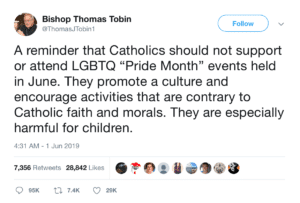


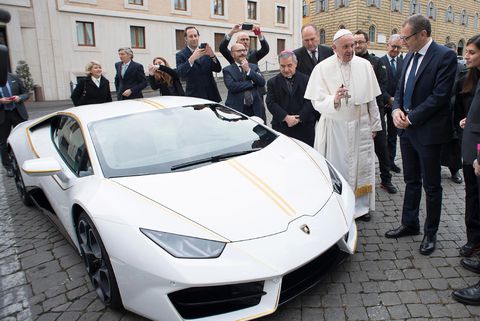



You must be logged in to post a comment.